Squares, Cubes, and Special Powers Review
 Call Kai
 Learn
Learn Practice Test
 Spaced Repetition
 Match
Match Flashcards
 Knowt Play
1/24

Earn XP
Description and Tags
Flashcards covering squares, cubes, special powers, square root approximations, fraction-to-decimal conversions, and arithmetic shortcuts based on the lecture notes.
Name | Mastery | Learn | Test | Matching | Spaced | Call with Kai | Chat |
|---|
No analytics yet
Send a link to your students to track their progress
25 Terms
, the value of 132 is __________.
169
the value of 142 is __________.
196
the value of 152 is __________.
225
the value of 252 is __________.
625
the value of 63 is __________.
216
the value of 26 is __________.
64
the value of 35 is __________.
243
the value of 44 is __________.
256
the value of 54 is __________.
625
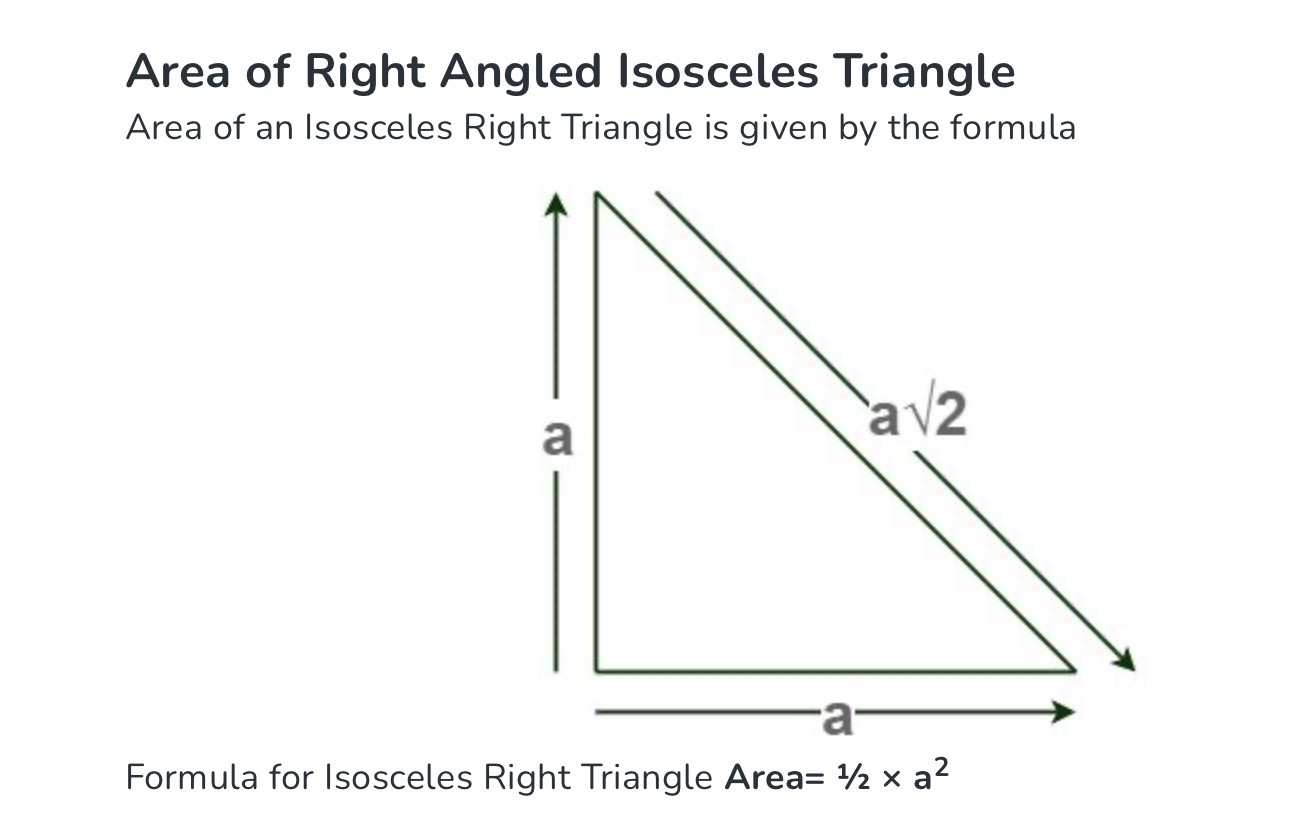
In geometry, the side ratios of a Right Isosceles (45−45−90) triangle are represented as x:x: __________.
xv2
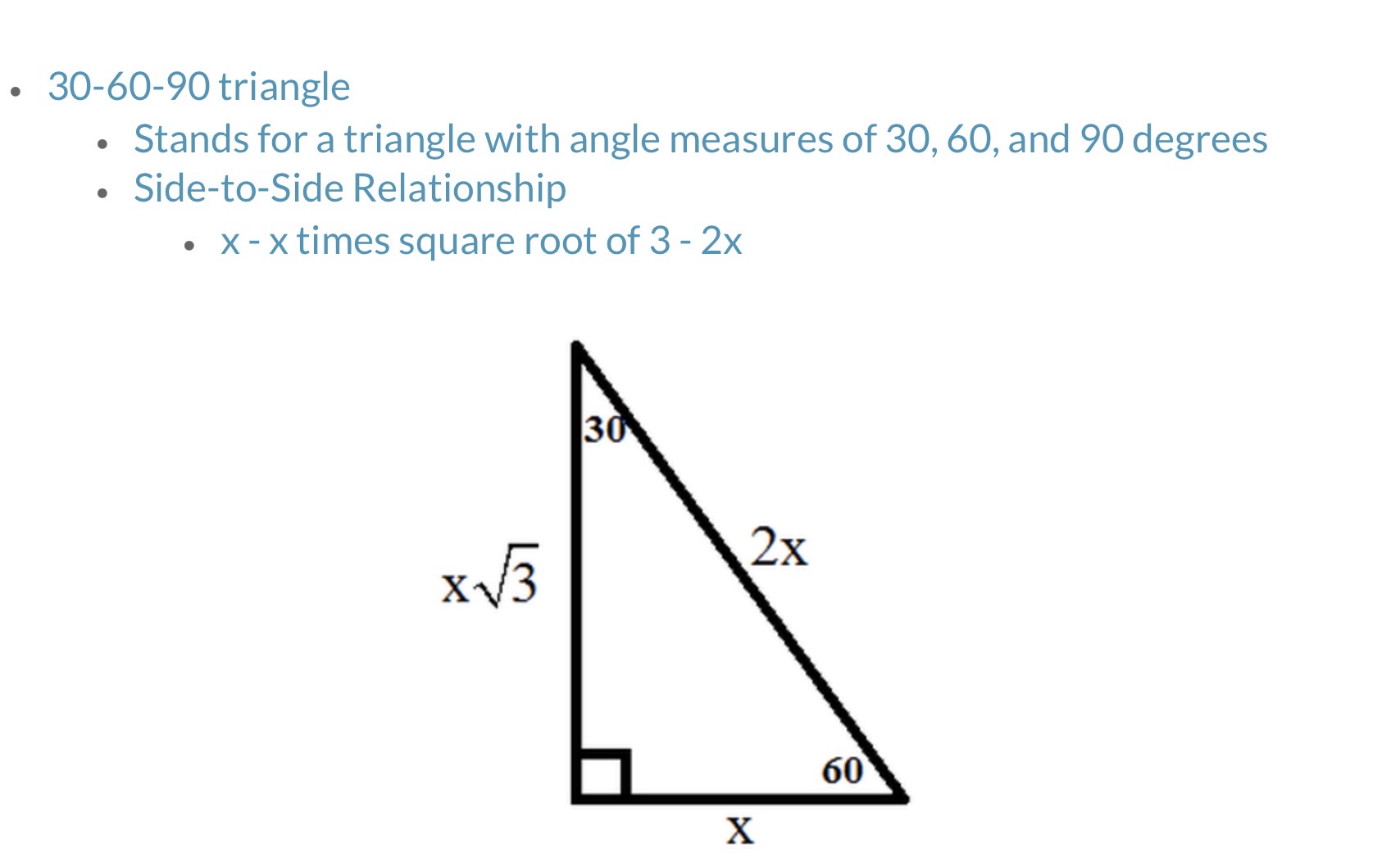
In geometry, the side ratios of a 30−60−90 triangle are represented as __________.
2x
The approximate value of sqrt{2}} in the Roots Approximation List is __________.
1.4
The approximate value of \text{\sqrt{3}} in the Roots Approximation List is __________.
1.7
The approximate value of \text{\sqrt{7}} in the Roots Approximation List is __________.
2.6
The approximate value of \text{\sqrt{10}} in the Roots Approximation List is __________.
3.2
For values larger than \text{\sqrt{4}}, the Memory Rule for square roots suggests adding approximately __________ per digit.
0.2
For values smaller than \text{\sqrt{4}}, the Memory Rule for square roots suggests subtracting approximately __________.
0.3
In the sample problem analysis, the approximate sum of \text{\sqrt{2}} + \text{\sqrt{6}} + \text{\sqrt{8}} is calculated as __________.
6.6
The decimal equivalent of the fraction 61 is approximately __________.
0.16
The decimal equivalent of the fraction 81 is __________.
0.125
The decimal equivalent of the fraction 121 is approximately __________.
0.08
If 111=0.0909..., then the derived decimal value for 113 is __________.
0.2727...
In the decimal equivalent of 113, the 16th digit after the decimal is __________ because all even-placed digits follow this pattern.
7
The arithmetic shortcut known as __________ involves breaking numbers into manageable parts that are multiples of the divisor, such as calculating 168÷14 as (140+28)÷14.
Chunking
Using the Multiplication Trick, 12×12.5 is solved as 12(12+0.5)=144+6= __________.
150