ACAA and TARMAC DELAY
 Call Kai
 Learn
Learn Practice Test
 Spaced Repetition
 Match
Match Flashcards
 Knowt Play
1/136

There's no tags or description
Looks like no tags are added yet.
Name | Mastery | Learn | Test | Matching | Spaced | Call with Kai | Chat |
|---|
No analytics yet
Send a link to your students to track their progress
137 Terms
Non-Discrimination on the Basis of Disability in Air Travel
U.S. D.O.T. 14 Code of Federal Regulations Part 382
Prohibits discrimination based on disability in air travel.
Air Carrier Access Act
This department has a rule defining the rights of passengers and the obligations of airlines under this law.
Department of Transportation
Prohibition of Discriminatory Practices
Airlines may not refuse transportation to people based on disability.
Airlines may exclude anyone from a flight if carrying the person would be inimical to the safety of, or if the person’s condition would pose a direct threat to, the flight.
If a carrier excludes a person with a disability on safety grounds, the carrier must provide a written explanation of the decision.
Airlines may NOT limit the number of persons with disabilities on a flight.
Airlines may not require a person with a disability to travel with another person, except in certain limited circumstances where the rule permits the airline to require a safety assistant.
If a passenger with a disability and the airline disagrees about the need for a safety assistant, the airline can require the assistant (for passenger with a mental disability, severe mobility impairment, or severe hearing and vision impairment) but cannot charge for the transportation of the assistant.
The airline however can charge for an assistant for a passenger traveling in a stretcher or incubator.
But if the passenger himself voluntarily chooses to travel with a safety assistant, airlines may charge for the assistant.
You must not require a passenger to submit a medical certificate as a condition to be provided transportation except for certain conditions (stretcher/incubator, medical oxygen, if condition requires extraordinary medical assistance).
Airlines may not keep anyone out of a specific seat based on disability or require anyone to sit in a particular seat based on disability, except to comply with FAA or foreign-government safety requirements.
FAA's rule on exit row seating says that airlines may place in exit rows only persons who can perform a series of functions necessary in an emergency evacuation.
Airlines must not ask passengers with disabilities to sign releases and waivers as condition to be transported, or for damage to wheelchairs or assistive devices, or for loss or injury to their service animals.
Airlines must not charge for use of equipment facilities. But can charge a passenger for the use of more than one seat if the passenger's size or condition (e.g., stretcher) requires more than one seat.
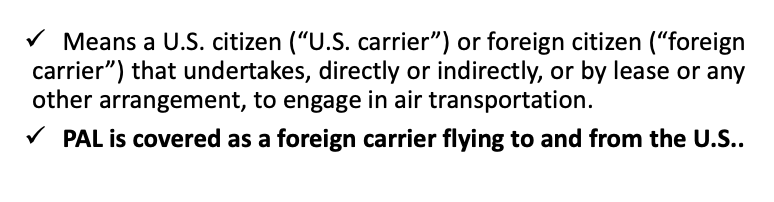
Carrier
The new civil penalty is _____ per violation of Part 382.
$37,377
As defined by US Department of Transportation (DOT) and American with Disabilities Act (ADA), ______ are as any individuals who were currently diagnosed a physical or mental impairment on a permanent or temporary basis, that substantially limits one of more major life activities.
Individuals who has a record of physical or mental impairment that substantially limits one or more major life activities.
Disability
Types of Impairment
Physical Impairments
Mental Impairments
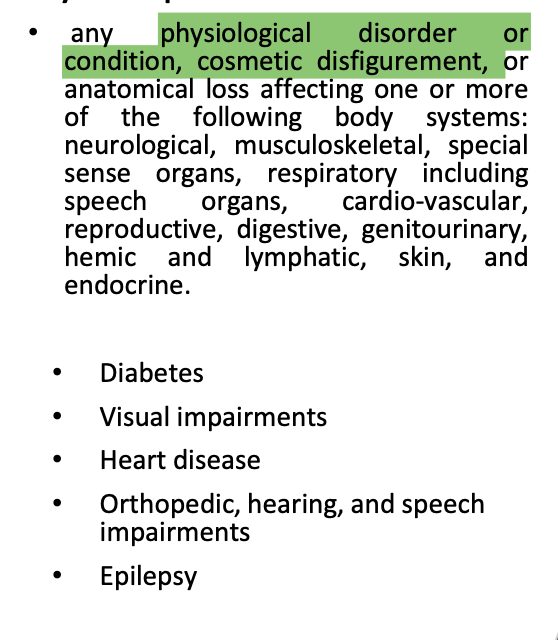
Physical Impairment
Mental Impairment
The term ______ historically been used to label individuals with disabilities themselves and is now considered old fashioned and offensive.
"handicapped"
MYTH vs. REALITY
People with disabilities are special
MYTH
MYTH vs. REALITY
All disabilities are the same.
MYTH

MYTH vs. REALITY
People with disabilities are sick.
MYTH
MYTH vs. REALITY
People with disabilities are dependent.
MYTH
Types of Disabilities
Reduced or Restricted Disability
Ambulatory (Mobile)
Non-Ambulatory (Non-Mobile)
Hearing Loss
Deaf
Hard of Hearing
Vision Loss
Blind
Low Vision
Hearing and Vision Loss
Speech and Language Disabilities
Language Disability
Intellectual Disabilities
Cognitive Disabilities
Developmental Disabilities
Psychiatric Disabilities
Medical Disabilities
Non-Visible Disabilities
Reduced or Restricted Disability
Types of Paralysis
1.Monoplegia
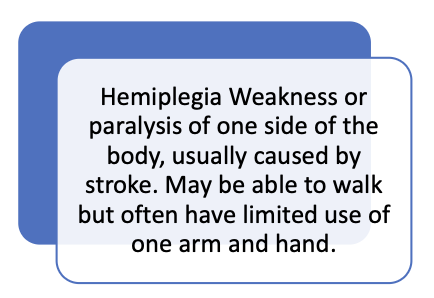
Hemiplegia
Diplegia
Paraplegia
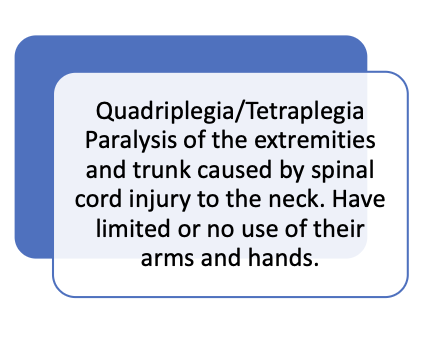
Quadriplegia
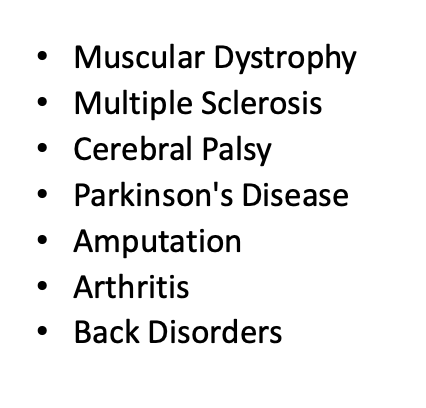
Other Main Causes of Restricted Mobility
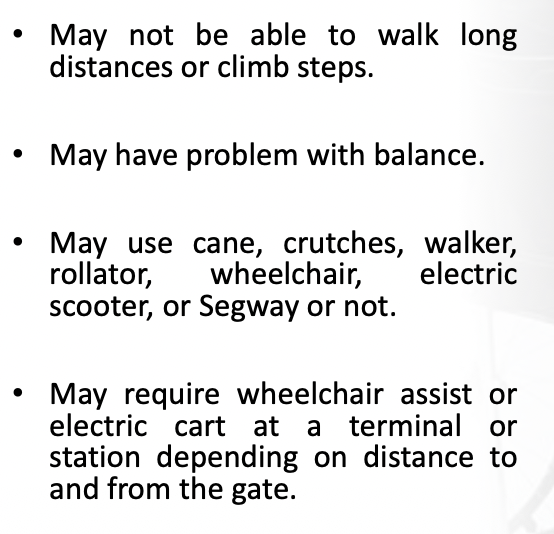
Ambulatory (Mobile)
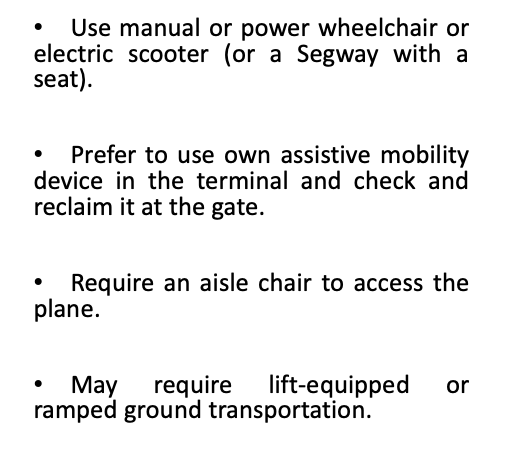
Non-Ambulatory (Non-Mobile)
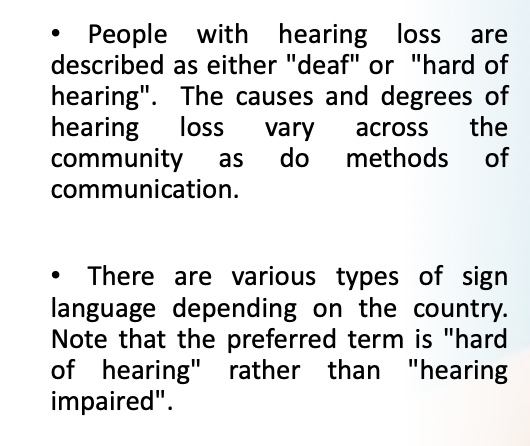
Hearing Loss
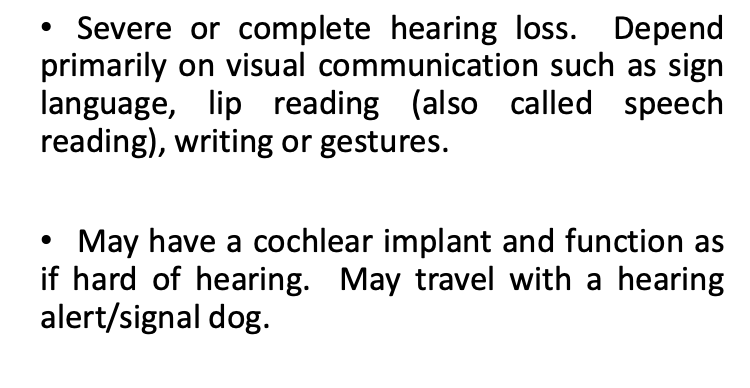
Deaf
Hard of Hearing
Vision Loss
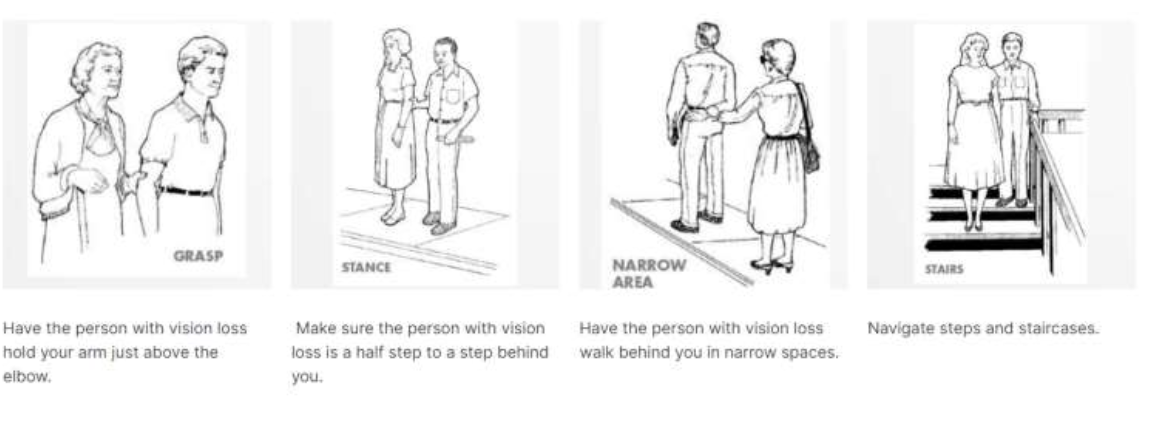
4 ways to walk with a person with vision loss
Blind
Low Vision
Hearing and Vision Loss - Deaf Blind
Speech and Language Disabilities
Language Disability
Some Causes of Speech and Language Disabillities

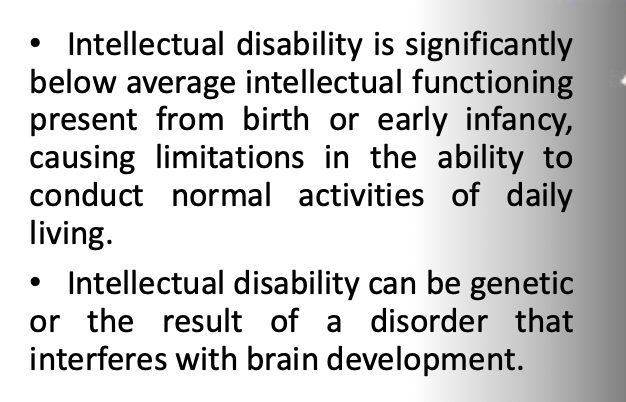
Intellectual Disabilities
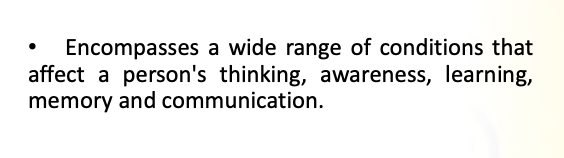
Cognitive Disabilities
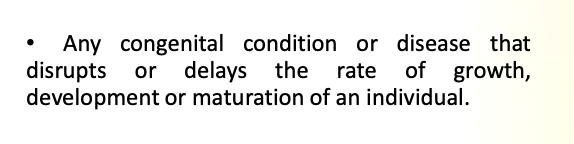
Developmental Disabilities
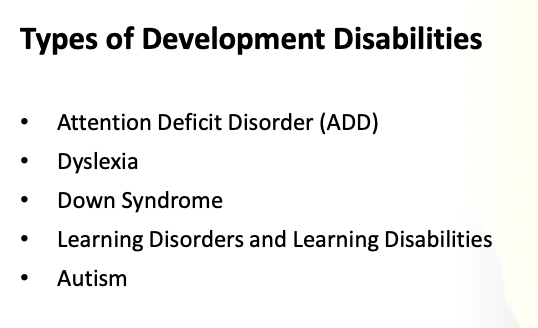
Types of Developmental Disabilities
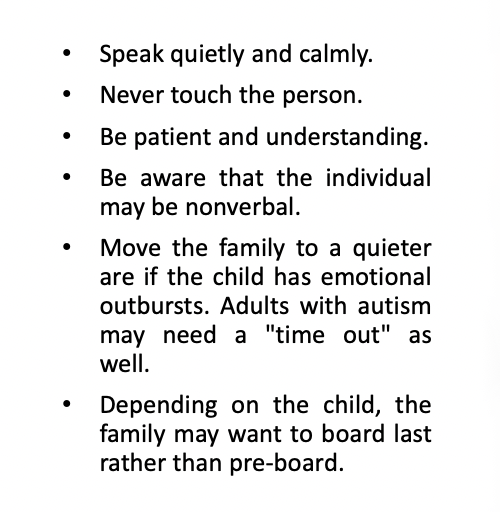
Assisting Persons with Autism
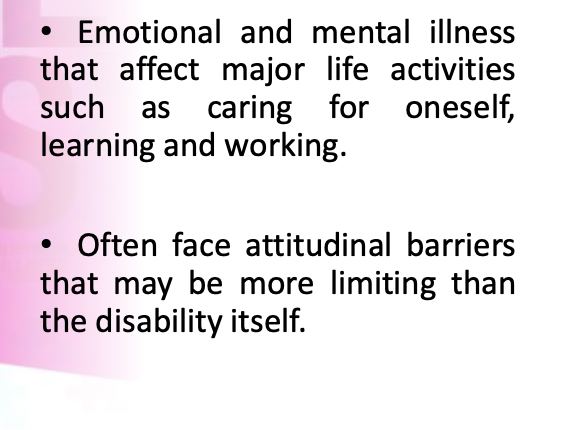
Psychiatric Disabilities
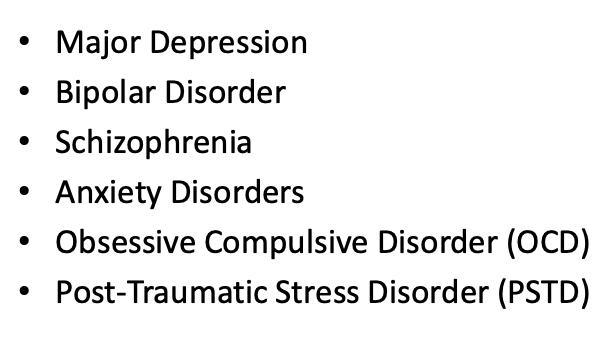
Common Psychiatric Disabilities:
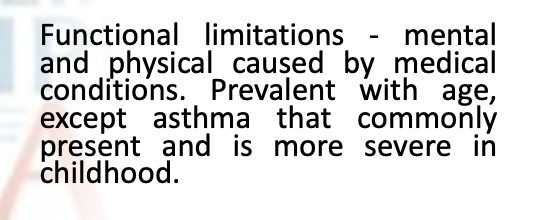
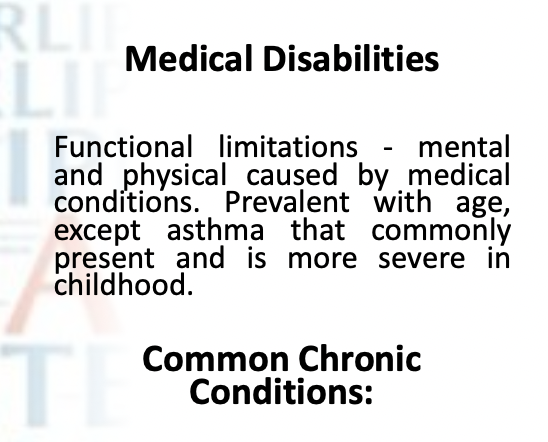
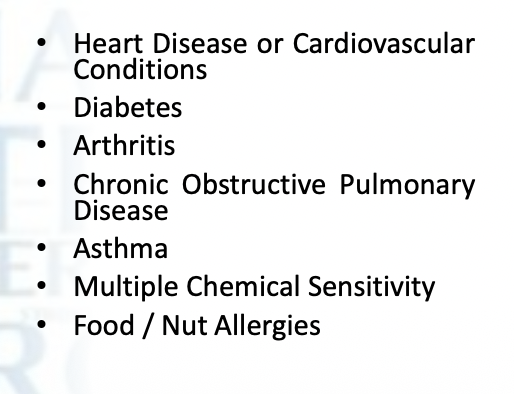
Medical Disabilities
A globally recognized symbol for non-visible disabilities, also known as hidden disabilities or invisible disabilities. Not all disabilities are visible–some are not immediately obvious
Sunflower
Not all disabilities are visible–some are not immediately obvious
Non-Visible Disabilities
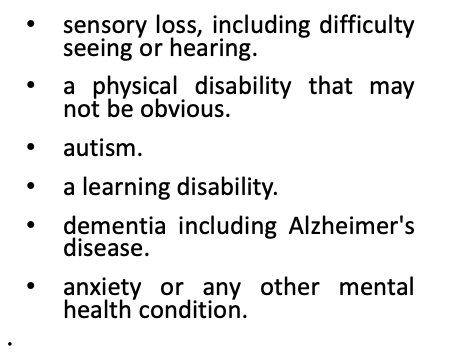
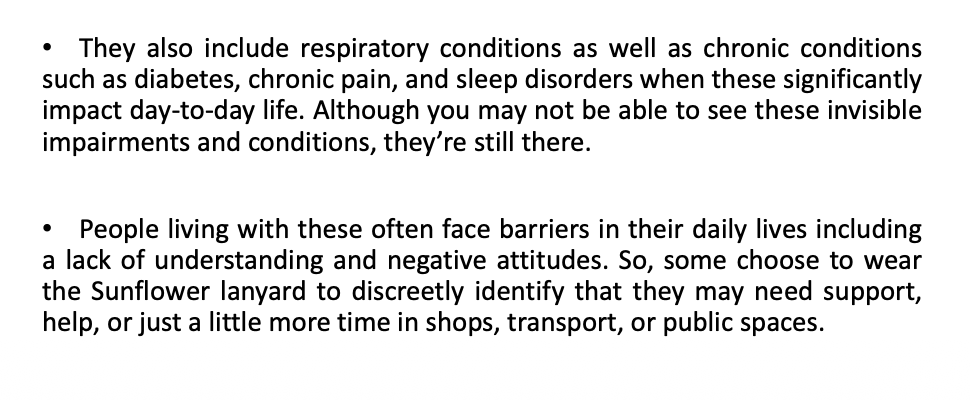
What disabilities does the sunflower lanyard cover?
Non-Visible Disabilities
Each Person's Disability is Unique.
• Disabilities vary widely in severity as does each person's ability to
cope with their disability.
• So does the type and extent of the help each person requires.... SO
________
ALWAYS ASK FIRST!
Guidelines to Effective Interaction and Communication with or about People with Disabilities:
Speak ___ to the person with a disability.
directly
Guidelines to Effective Interaction and Communication with or about People with Disabilities:
Do not refer to a person’s disability unless it is relevant. Focus on the word ______ not “handicapped” or even “disability.
“accessibility”
Guidelines to Effective Interaction and Communication with or about People with Disabilities:
Most people with disabilities prefer “person-first” terminology such as: _________ since this acknowledges them as people first.
“person who is blind,”
“people with disabilities”
Guidelines to Effective Interaction and Communication with or about People with Disabilities:
Avoid referring to groups of people by their condition or disability such as______ etc.
“the blind,” “the deaf,”
Guidelines to Effective Interaction and Communication with or about People with Disabilities:
Introduce and identify yourself and ask, “_______
“How may I assist you?”
Guidelines to Effective Interaction and Communication with or about People with Disabilities:
Wait for instructions on the ______ and follow the instructions.
help needed
Guidelines to Effective Interaction and Communication with or about People with Disabilities:
Let people know, especially those who are blind or have low vision, where they are and where you are taking them; _____
be descriptive.
Guidelines to Effective Interaction and Communication with or about People with Disabilities:
Do not pet service animals as they are _______. Provide escort or descriptive instructions to an animal relief area if requested.
working
Remember, your attitude can _______ someone’s experience.
make or break
Guidelines to Effective Interaction and Communication with or about People with Disabilities:
Never say anything that ______
you would not want said to or about yourself
Guidelines to Effective Interaction and Communication with or about People with Disabilities:
Respect the ________ of people.
privacy, individual preferences and independence
Guidelines to Effective Interaction and Communication with or about People with Disabilities:
If you say something wrong, _______, do not try to deflect.
apologize and move on
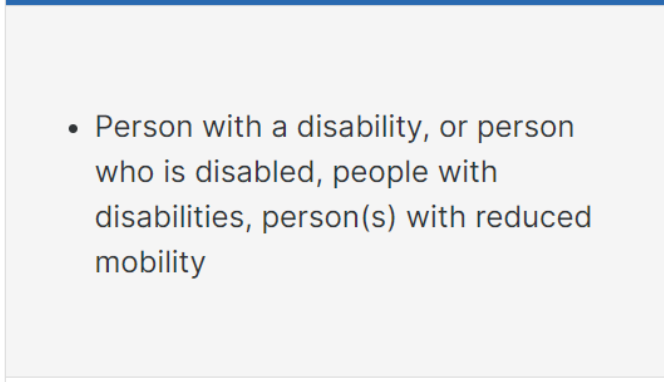
ACCEPTABLE OR UNACCEPTABLE LANGUAGE?
ACCEPTABLE
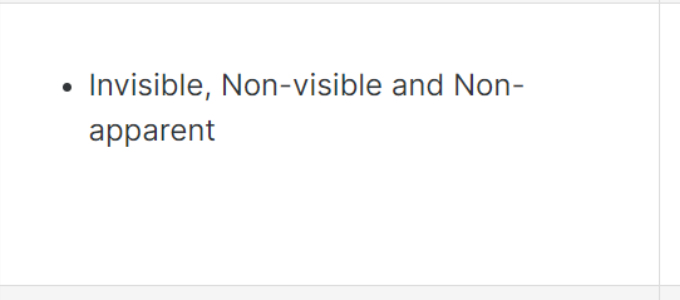
ACCEPTABLE OR UNACCEPTABLE LANGUAGE?
ACCEPTABLE
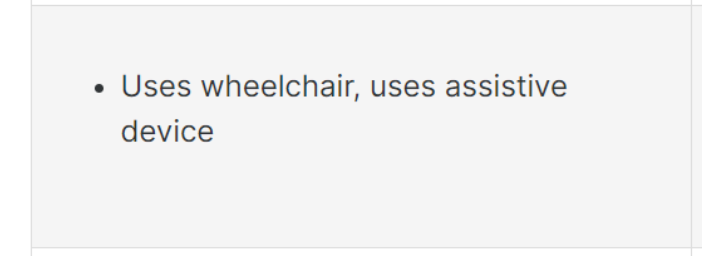
ACCEPTABLE OR UNACCEPTABLE LANGUAGE?
ACCEPTABLE
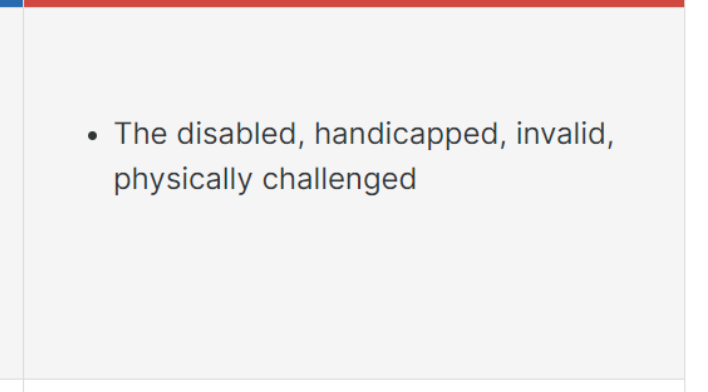
ACCEPTABLE OR UNACCEPTABLE LANGUAGE?
UNACCEPTABLE
ACCEPTABLE OR UNACCEPTABLE LANGUAGE?
UNACCEPTABLE
ACCEPTABLE OR UNACCEPTABLE LANGUAGE?
UNACCEPTABLE
ACCEPTABLE OR UNACCEPTABLE LANGUAGE?
ACCEPTABLE
ACCEPTABLE OR UNACCEPTABLE LANGUAGE?
ACCEPTABLE

ACCEPTABLE OR UNACCEPTABLE LANGUAGE?
ACCEPTABLE
ACCEPTABLE OR UNACCEPTABLE LANGUAGE?
ACCEPTABLE
ACCEPTABLE OR UNACCEPTABLE LANGUAGE?
ACCEPTABLE
ACCEPTABLE OR UNACCEPTABLE LANGUAGE?
UNACCEPTABLE
ACCEPTABLE OR UNACCEPTABLE LANGUAGE?
UNACCEPTABLE

ACCEPTABLE OR UNACCEPTABLE LANGUAGE?
UNACCEPTABLE
ACCEPTABLE OR UNACCEPTABLE LANGUAGE?
UNACCEPTABLE
ACCEPTABLE OR UNACCEPTABLE LANGUAGE?
UNACCEPTABLE
ACCEPTABLE OR UNACCEPTABLE LANGUAGE?
UNACCEPTABLE
ACCEPTABLE OR UNACCEPTABLE LANGUAGE?
UNACCEPTABLE
ACCEPTABLE OR UNACCEPTABLE LANGUAGE?
UNACCEPTABLE
ACCEPTABLE OR UNACCEPTABLE LANGUAGE?
ACCEPTABLE
ACCEPTABLE OR UNACCEPTABLE LANGUAGE?
ACCEPTABLE
ACCEPTABLE OR UNACCEPTABLE LANGUAGE?
ACCEPTABLE
Common Courtesies for Older Adults
Common Courtesies for Older Adults:
• Use _____ unless told otherwise.
• Be friendly but not overly ____
• Treat them as adults, do not talk _____
• Allow older passenger to remain as ______ as possible, while being mindful of their safety.
• Always ask first. Don't assume______
• Provide _____ if possible.
• Do not use the term _____
Mr or Mrs
Familiar
Down or be Patronizing
They need help
Choices
Disability
Older Travelers
Common Courtesies for Person with Disabilities
Common Courtesies for Person with Disabilities
Common Courtesies for Person with Disabilities
Common Courtesies for Person with Disabilities
What does the WALL stands for?
Sample Assistive Devices

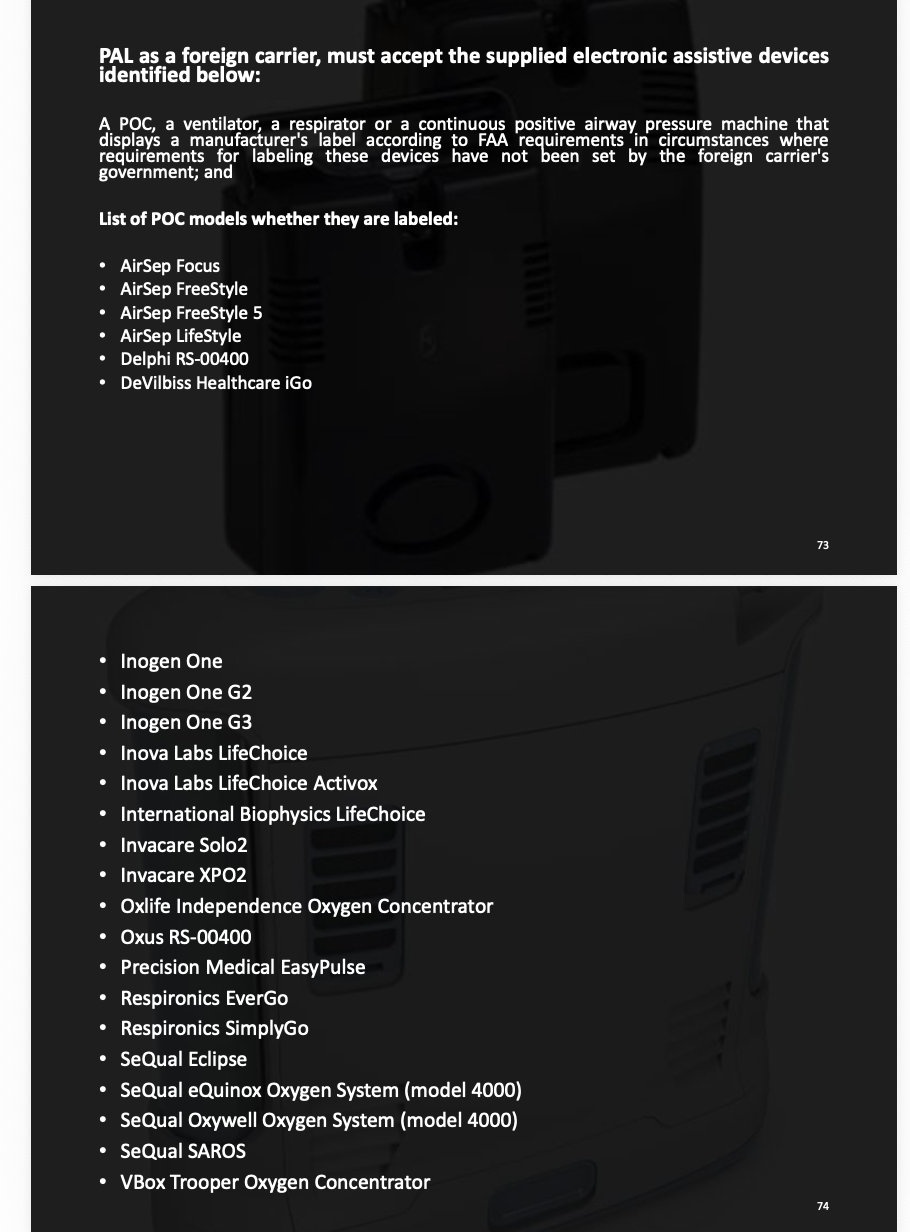
Carrier may require an individual to bring an adequate number of fully charged batteries onboard, based on the battery manufacturer's estimate of the hours of battery life while the device is in use and the information provided in the physician's statement, to power the device for not less than _____ of the expected maximum flight duration.
150%
Carrier must inform any individual who has advised that he or she plans to operate his/her device in the aircraft cabin, _____ of his/her making a reservation or ______ the scheduled departure date of his/her flight, whichever date is earlier, of the expected maximum flight duration of each segment of his/her flight itinerary.
within 48 hours , 24 hours before
Carrier may deny boarding the individual who ______ of a medical portable electronic device. In that event, the carrier must provide a written explanation to the individual in accordance with Part 382.
does not comply with the conditions for acceptance
Baggage Liability Limits Apply to ______
Mobility Aids and other Assistive Devices.
With respect to transportation to which 14 CFR part 254 applies, the limits to liability for loss, damage, or delay concerning wheelchairs or other assistive devices provided in part 254 _____
do not apply.
The basis for calculating the compensation for a lost, damaged, or
destroyed wheelchair or other assistive device shall be ______
the original purchase price of the device.