BIO 120 Chapter 4 - Tissues
 Call Kai
 Learn
Learn Practice Test
 Spaced Repetition
 Match
Match Flashcards
 Knowt Play
1/44

There's no tags or description
Looks like no tags are added yet.
Name | Mastery | Learn | Test | Matching | Spaced | Call with Kai | Chat |
|---|
No analytics yet
Send a link to your students to track their progress
45 Terms
Tissue
Groups of cells and the surrounding extracellular substances working together to carry out a common function
Histology
The study of tissues
4 primary tissue types
Epithelial
Connective
Muscular
Nervous
Epithelial
Covers body surface
Lines hollow organs and body cavities
Forms glands
Connective
Binds organs together
Stores energy as fat reserves
Transports protects and supports
Muscular
Specialized for contraction and generation of force
Generates heat
Nervous
Detects changes
Communicates with nerve impulses to activate muscles or glands
What is the structure of epithelial tissue
Composed of cells that are close together
Avascular
Does not have its own blood supply (epithelial tissue)
Epithelial Tissue - Function
Protects structures from abrasion
Acts as barrier
Permits diffusion of certain substances
Glands secretion
Squamous
Cell shape
Thin/ flat
Cuboidal
Cell shape
Cube like
Columnar
Cell shape
Longer than it is wide
Simple
1 layer
Pseudostratified
False stratified
Actually 1 layer but nuclei appear at different heights
Stratified
Multiple layers
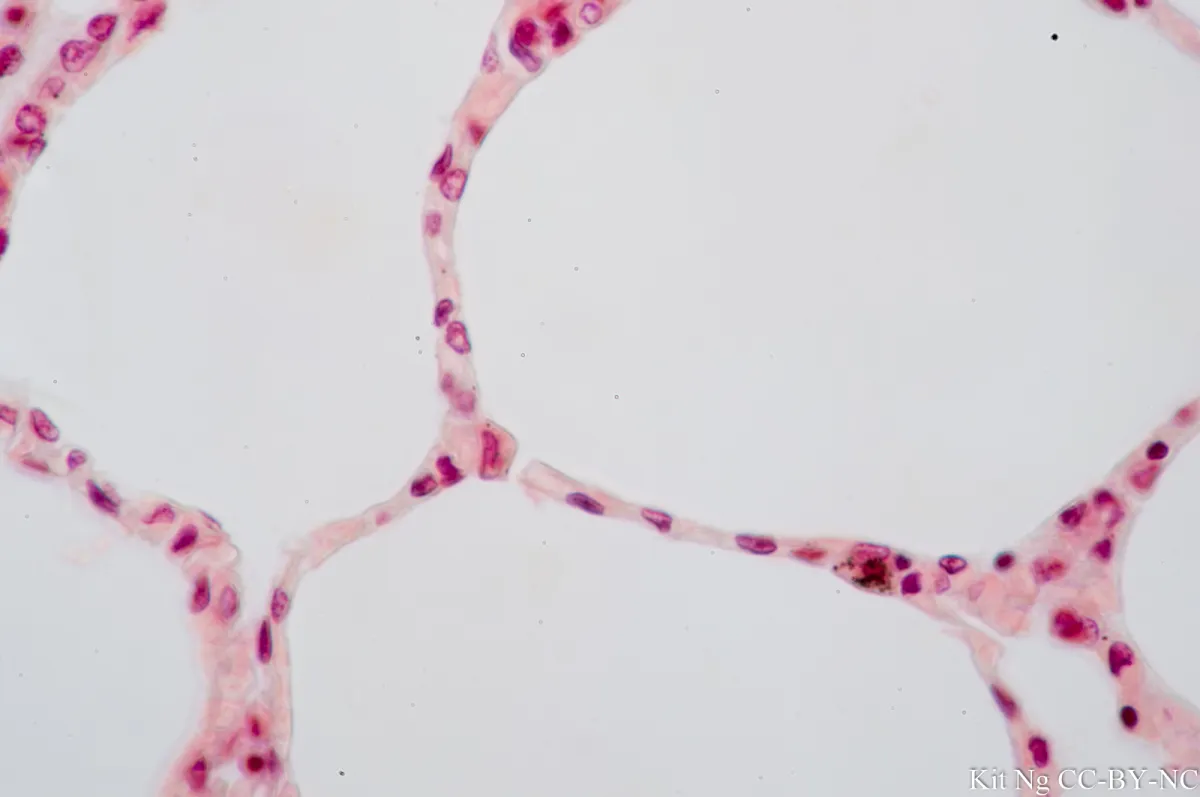
Simple Squamous ET
Structure: 1 layer of thin cells
Function: Creates a minimal barrier which is great for quick diffusion
Location: Areas where substances must easily pass from point A to point B
Alveoli of lungs
Inner lining of blood vessels

Simple Cuboidal ET
Structure: 1 layer of cube cells
Function: Absorption and secretion
Location: Lining of glands and tubules
Renal tubes in kidney
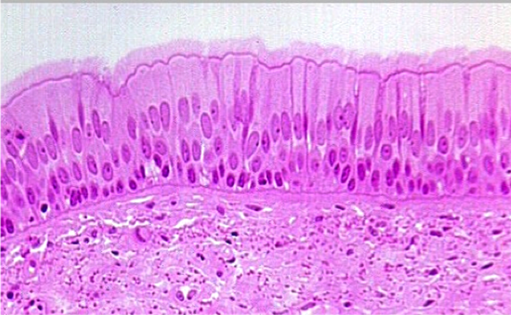
Simple and pseudostratified columnar ET
Structure: 1 layer of tall cells
Function: Absorption, secretion, and transportation
Locations: Digestive tract, respiratory tract, reproductive tract
Microvilli
Microscopic finger like extensions of the plasma membrane
Increased surface area of cell
increase rate of absorption
Cilia
Microscopic hair like projections
wave to create movement of fluid outside of the cell
aids in transportation
Goblet cells
Single celled glands that secrete mucus
Serves as lubricant and protection
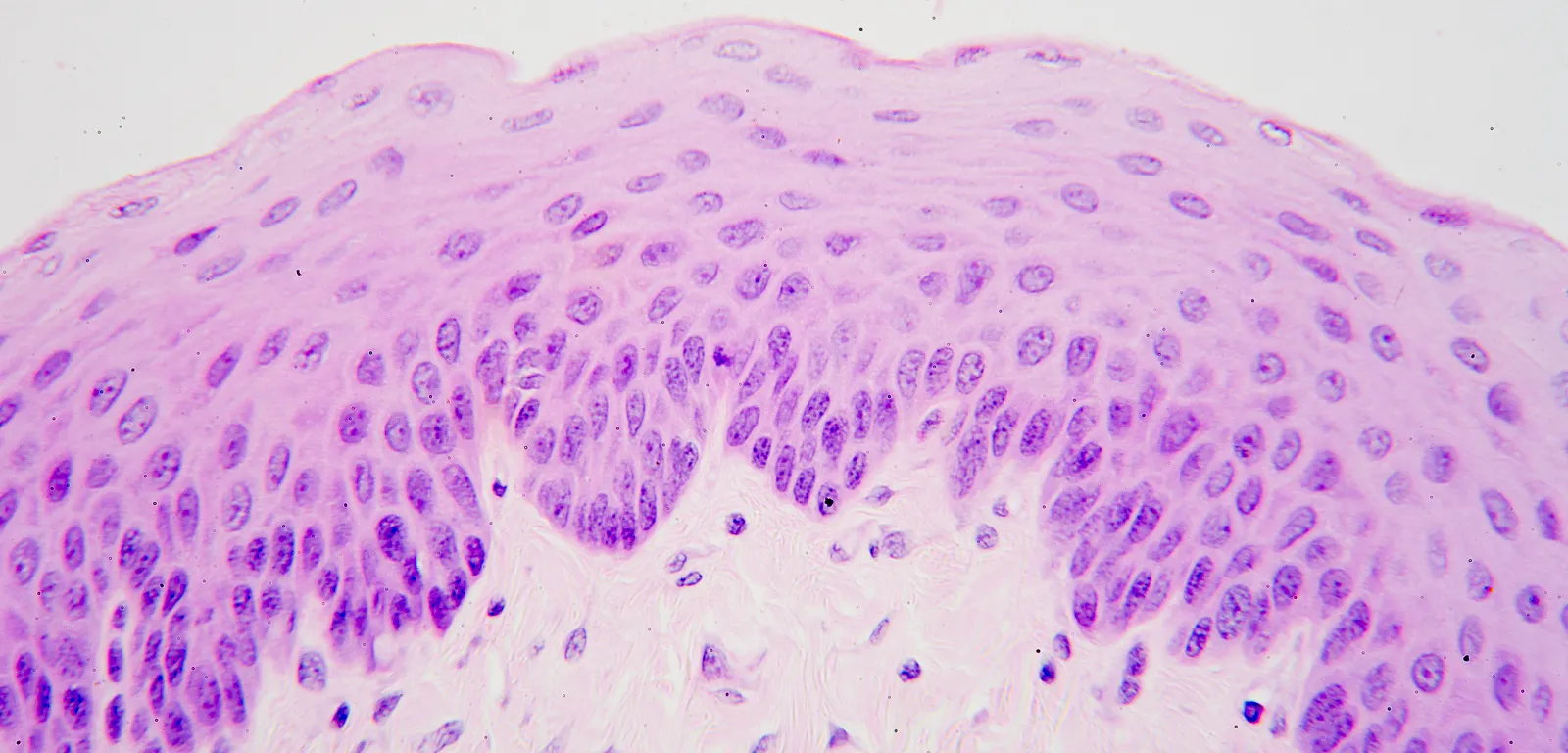
Stratified Squamous ET
Structure: Multiple layers of flat cells
Function: Protection from abrasion, water loss and pathogens
Locations: Areas of high friction
skin, mouth, esophagus, anus, vagina

Transitional ET
Structure:
Low fluid volume/relaxed/ empty bladder= columnar or cuboidal shape
High fluid volume/stretched/ full bladder= squamous shape
Function: Accommodates stretching without tearing // allows for a fluctuation in the volume of fluid filling space
Desmosomes
Desmo = bond
Found between cells
holds cells together
Hemidesmosome
Hemi= half
tiny, stud-like cellular structures that anchor the bottom of epithelial cells to the underlying extracellular matrix or basement membrane
Tight junctions
prevent leakage between cells
Gap junctions
a specialized intercellular connection that forms a tunnel-like channel directly linking the cytoplasm of neighboring animal cells

Exocrine glands
has ducts
secretes substances onto a body surface or into a body cavity
Ex- sweat, oil, earwax, mucous, saliva
Endocrine glands
No ducts
secretes substances (hormones) directly into bloodstream
Connective tissues
widely scattered cells within large extracellular matrix
Functions
enclose organs and separate organs into layers
connect tissues to one another
support and movement
storage
cushion and insulate
transport
protect
Areolar
Loose connective tissue
cushion for most organs
attaches skin to underlying tissues
loose arrangement of fibers
Adipose
loose connective tissue
contains adipocytes
small amount of extracellular matrix
heat insulator and energy storage
Dense connective tissue
collagen fibers tightly packed and running in same directions
can withstand great pulling force due to tensile strength and stretch resistance
Ligaments
connect bone to bone
Tendons
connect muscle to bone
Specialized connective tissue : cartilage
hyaline cartilage
elastic cartilage
fibrocartilage
Specialized connective tissue : Bone
compact bone
spongy bone
Compact bone
solid no space between layers
provides bone with strength and rigidity
forms outer layer of bones
concentric circles=lamellae
Spongy bone
spaces between trabeculae
weighs less than compact bone
filled with hemopoietic tissue
interior layer of bone
Specialized connective tissue : Blood
fluid matrix // lacks protein fibers // RBC, WBC, platelets
transports gases, wastes, and hormones
protects body from infection and helps regulate body temp
Muscular tissue
responsible for movement of and within the body
has the ability to contract and generate force
Mucous membranes
moist tissue linings that cover body cavities and internal passageways open to the outside environment
Serous membranes
a thin, smooth tissue layer that lines closed internal body cavities and covers the organs inside them to reduce friction
Synovial membranes
a specialized layer of connective tissue that lines the inner cavities of freely movable joints, tendon sheaths, and bursae