MODULE 8 CELLULAR RESPIRATION, FLUID, ELECTROLTE, AB BALANCE AND ENDOCRINE
 Call Kai
 Learn
Learn Practice Test
 Spaced Repetition
 Match
Match Flashcards
 Knowt Play
1/36

There's no tags or description
Looks like no tags are added yet.
Name | Mastery | Learn | Test | Matching | Spaced | Call with Kai | Chat |
|---|
No analytics yet
Send a link to your students to track their progress
37 Terms
Cellular respiration
Oxidation of glucose to produce ATP
Cellular Respiration formula
Glucose + 6O2 —> 6CO2 + 6H2O + ATP
LEO goes GER
- Loss of Electrons is Oxidation
- Gain of Electrons is Reduction
Steps of cellular respiration
1 gluocse —> 2 pyruvic acid and a few ATP and NADH are produced.
NADH carries electrons to step 4
Pyruvic acid —> Acetyl CoA (fuel for krebs cycle) CO2 is breathed out. A few NADH produced
Organic acids are getting oxidized as electron carriers are getting reduced. Some CO2 and ATP produced
O2 accepts electrons. H2O and ATP are used in the body
electron transport chain
Energy is released as electrons are being passed along the chain. Some energy is used to pump protons into intermembrane space and some released as heat
protons diffuse back into the matrix through ATP synthase which triggers and catalyzes this reaction ADP + P —> ATP
What % of the body is water?
45%-75% depending on age, body condition and gender
Fluid homeostasis
intake of 2.5L/day balances output
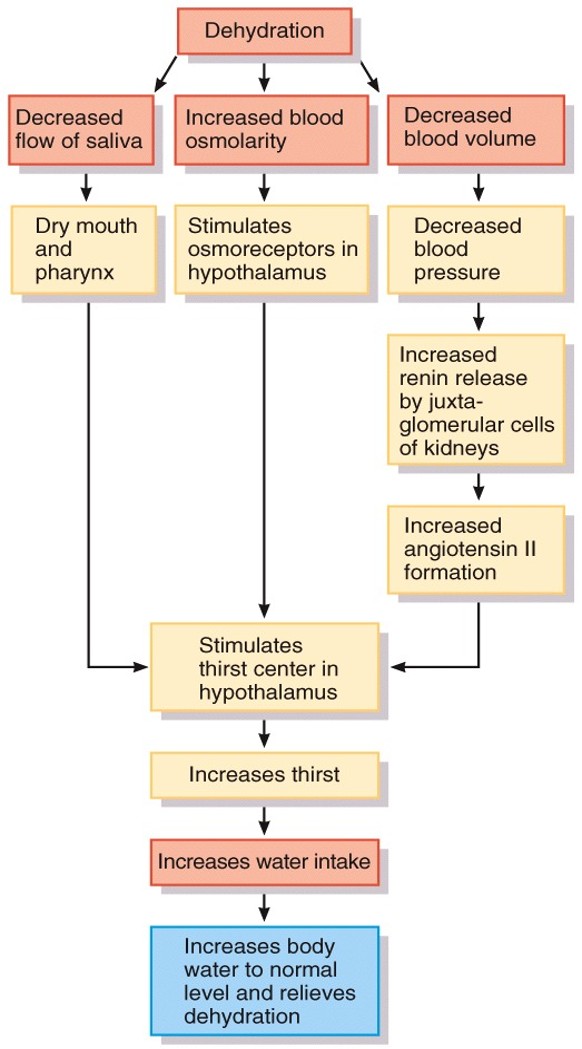
Thirst center location
Hypothalamus
Electrolytes
Chemical compount that dissociate into ions in water (NaCl)
acid base balacne
electrical current
controls osmosis of water between fluid compartments
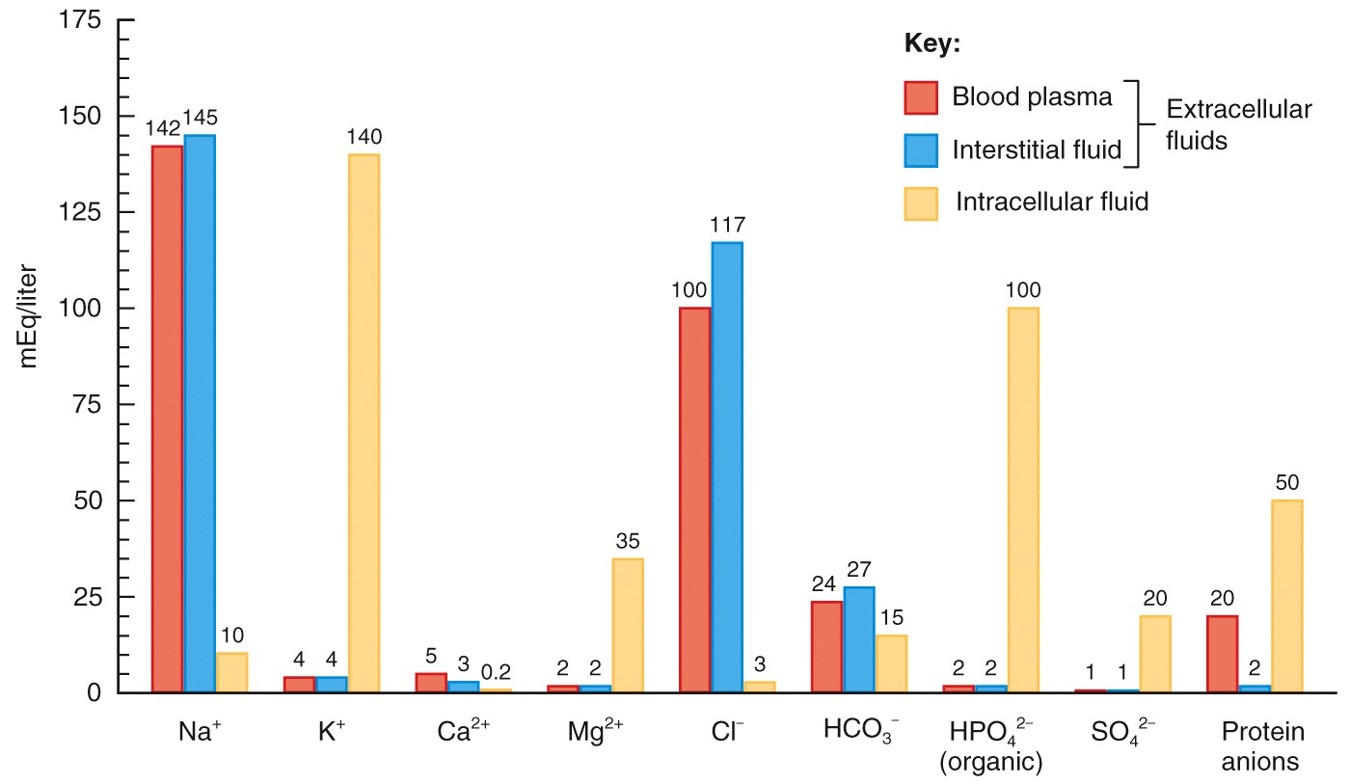
Electrolytes in body fluids
Na+ most abundant in blood plasma and interstitial fluid (sodium potassium pump)
K+ most abundant in intracellular fluid (sodium potassium pump)
Arterial blood pH
7.35 - 7.45
Buffer systems
consist of weak acid (H+ donor) and weak base (H+ acceptor)
prevent rapid drastic changes in pH by converting strong acids and bases to weak acids and bases
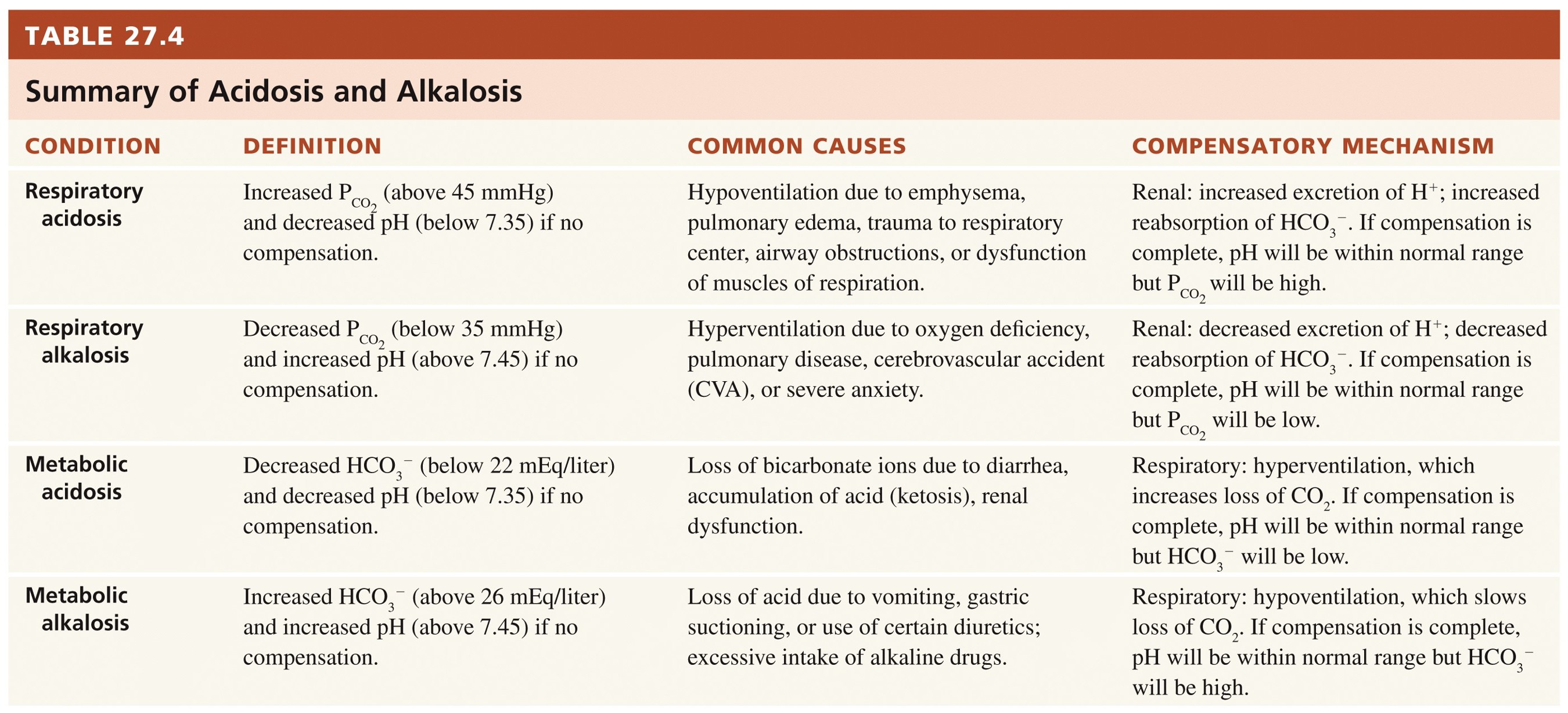
Acidosis
blood pH<7.35
Respiratory Acidosis —> hypoventilation
Metabolic acidosis —> increased acid metabolic products, loss of bicarbonate
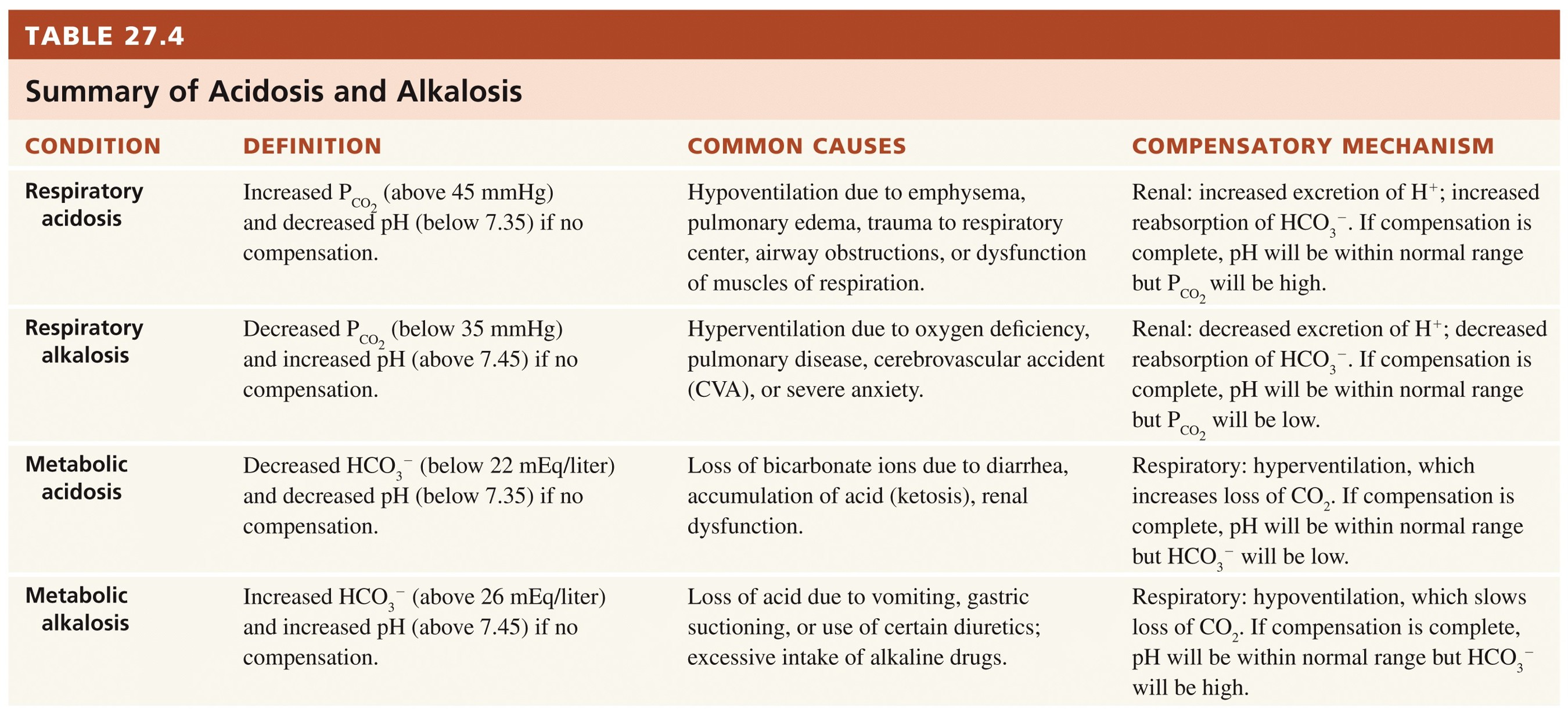
Alkalosis
Blood pH > 7.45
Respiratory alkalosis —> hyperventilation
Metabolic alkalosis —> loss of acid, alkaline drugs
Thyroid Gland secretes
Thyroid hormone, Calcitonin
Pineal Gland
Melatonin
Pancreas
Glucagon, Insulin
Hypothalamus/posterior pituitary
Antidiuretic hormone (ADH), Oxytocin
Anterior pituitary
Thyroid stimulating (TSH), Follicle stimulating (FSH), Adrenocorticotrophic (ACTH), melanocyte stimulating (MSH), Human growth (HGH), Prolactin (PRL), Luteinizing hormone (LH)
Adrenal Glands
Cortisol, adrenalin, aldosterone
Parathyroid
parathyroid hormone
Human growth hormone
Stimulates hormones that stimulate body growth and metabolism
adrenocorticotrophic hormone
stimulates secretion of adrenal cortical hormones
(nor)Adrenalin
Fight or flight
Thyroid stimulating hormone
stimulates secretion of thyroid hormones
Thymosin
Maturation of T cells for immune response
Melatonin
helps set biological clock (Sleep)
Calcitonin
decreases blood calcium
Cortisol
increase resistance to stress, blood glucose and decreases inflammation
Parathyroid hormone
increases blood calcium levels
oxytocin
stimulates uterine contractions and milk ejection
T3,T4
increases basal metabolic rate
Insulin
decreases blood glucose
melanocyte stimulating hormone
darkens skin pigment
antidiuretic hormone
decreases water loss from body
glucagon
increases blood glucose
Prolactin
stimulates production and secretion of milk