3.4.1 - DNA, genes and chromosomes (PPQs at flashcard 20)
 Call Kai
 Learn
Learn Practice Test
 Spaced Repetition
 Match
Match Flashcards
 Knowt Play
1/38

There's no tags or description
Looks like no tags are added yet.
Name | Mastery | Learn | Test | Matching | Spaced | Call with Kai | Chat |
|---|
No analytics yet
Send a link to your students to track their progress
39 Terms
similarities between DNA in eukaryotic cells and DNA in prokaryotic cells
what structure is identical?
how?
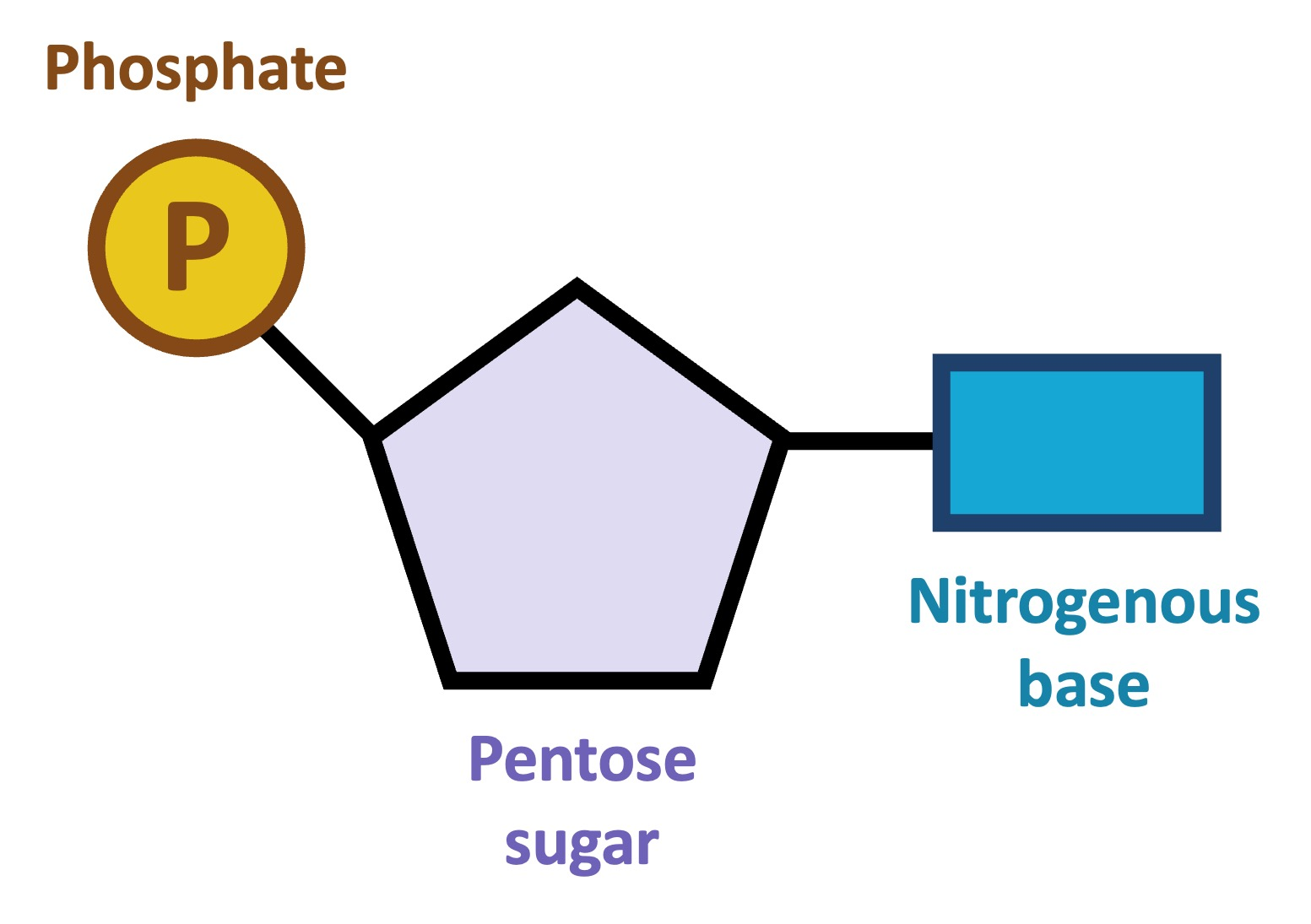
nucleotide
deoxyribose attached to a phosphate and a base
similarities between DNA in eukaryotic cells and DNA in prokaryotic cells
what are adjacent nucleotides joined by?
what are complementary bases joined by?
phosphodiester bonds
H bonds
similarities between DNA in eukaryotic cells and DNA in prokaryotic cells
name the two eukaryotic organelles that contain DNA that has the same structure as DNA in prokaryotes
mitochondria
chloroplasts
differences between DNA in eukaryotic cells and DNA in prokaryotic cells
describe the three features of DNA in prokaryotic cells
short
circular
not associated with proteins
differences between DNA in eukaryotic cells and DNA in prokaryotic cells
describe the three features of DNA in eukaryotic cells
long
linear
associated with proteins (histones)
differences between DNA in eukaryotic cells and DNA in prokaryotic cells
what does eukaryotic DNA contain that prokaryotic DNA does not (hint: these need to be removed)
introns
what is a chromosome
where is it found
a DNA molecule + its associated proteins
in the nucleus of eukaryotic cells (NOT prokaryotes!)
what is a gene
a base sequence of DNA
what two things does a gene code for
the amino acid sequence of a polypeptide chain
a functional RNA (including ribosomal RNA and tRNA)
a gene occupies a fixed position on a particular DNA molecule. what is this called?
a locus
what is a triplet
a sequence of three DNA bases that codes for a specific amino acid
three features of the genetic code
universal
non-overlapping
degenerate
universal meaning
the same base triplets code for the same amino acids in all organisms
non-overlapping meaning
each base is part of only one triplet so each triplet is read as a discrete unit
degenerate meaning
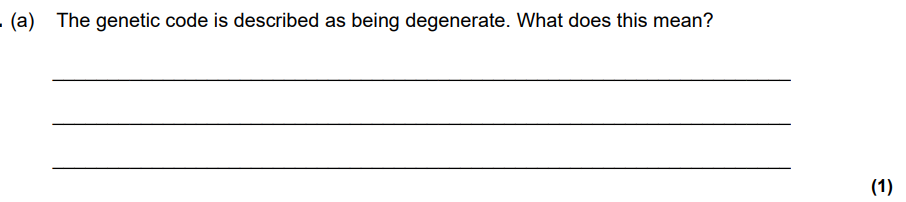
an amino acid can be coded for by more than one base triplet
what are ‘non-coding base sequences’
DNA that does not code for amino acid sequences / polypeptides
where are they found (2 places)
between genes —→ eg. non-coding multiple repeats of base sequences
within genes —→ introns
what is an exon
what is an intron
base sequence of a gene coding for amino acid sequences
base sequence of a gene not coding for amino acid sequences. introns separate exons within a gene.

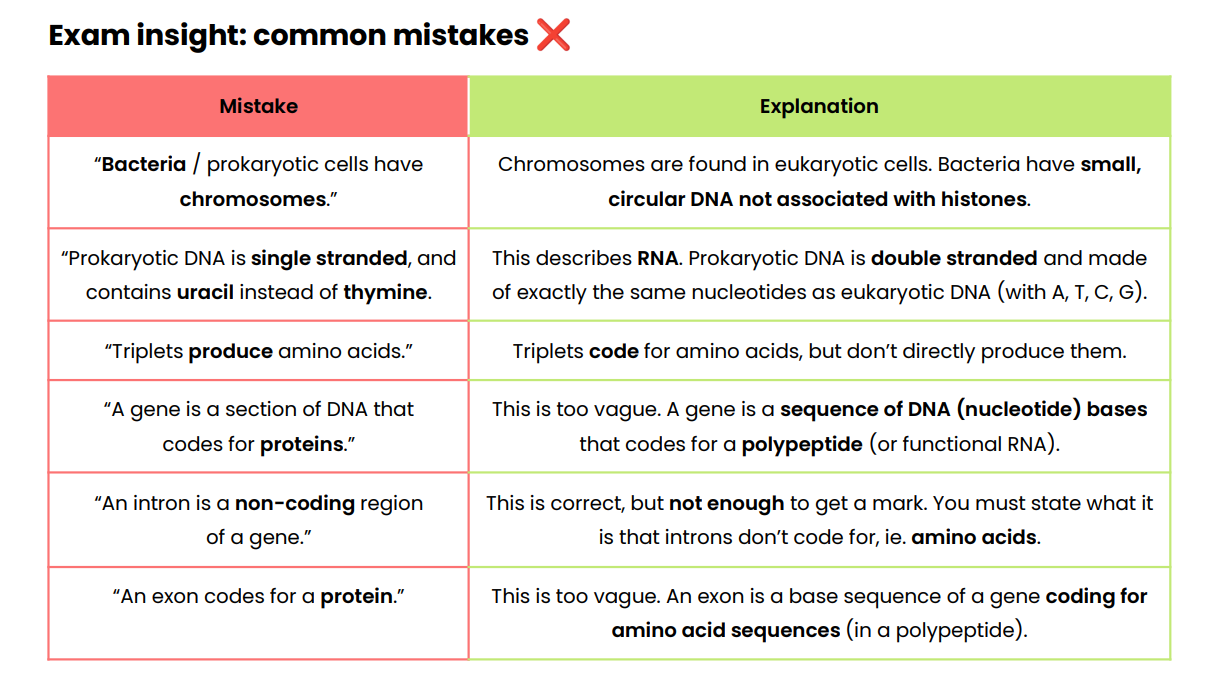
common mistakes in exam!
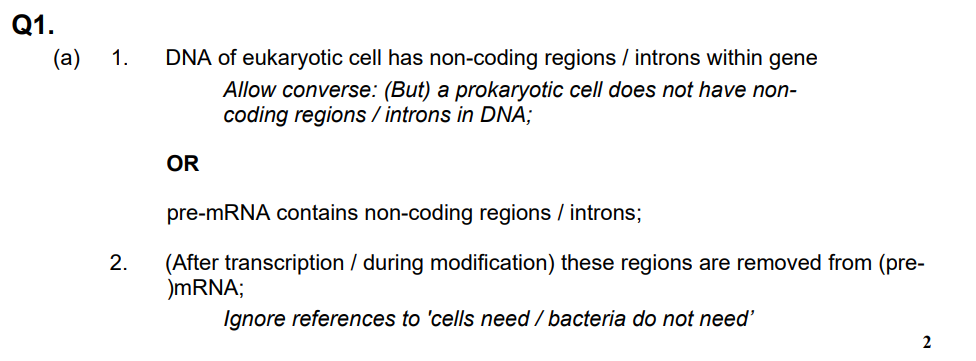
In a eukaryotic cell, transcription results in a molecule of pre-mRNA that is modified to produce mRNA. In a prokaryotic cell transcription produces mRNA directly.
(a) Explain this difference. (2 marks)
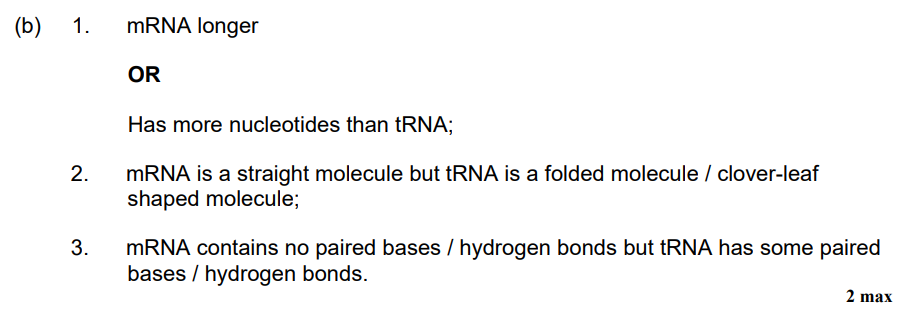
Give two differences between the structure of mRNA and the structure of tRNA. (2 marks)
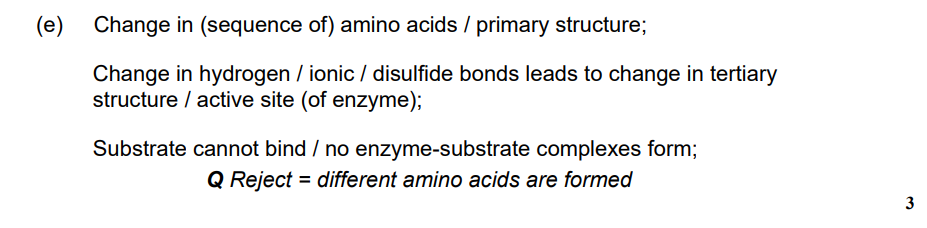
Explain how a change in a sequence of DNA bases could result in a non-functional enzyme. (3 marks)
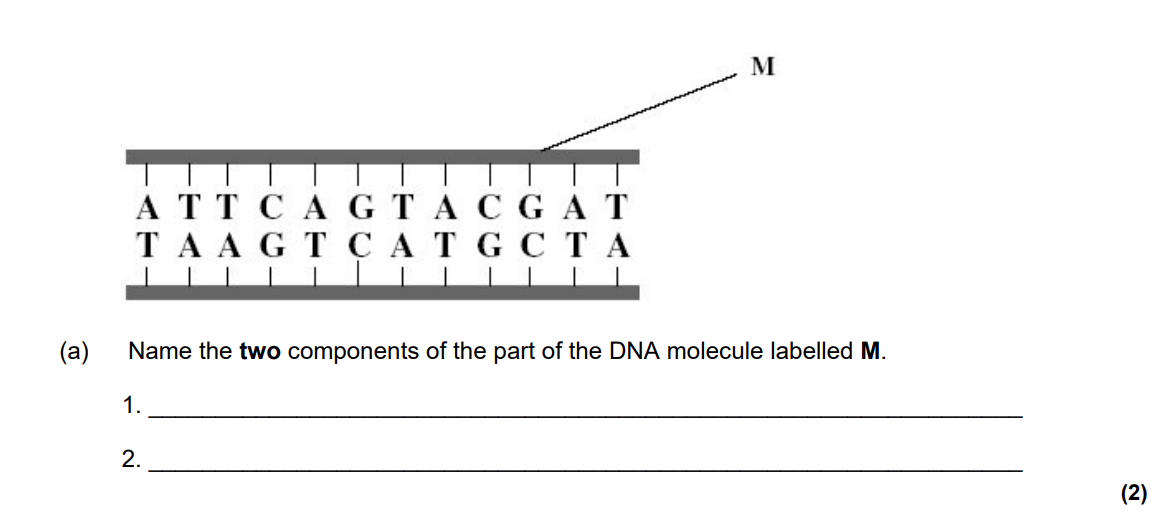
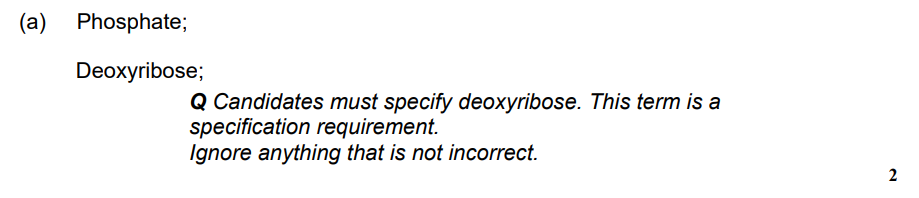
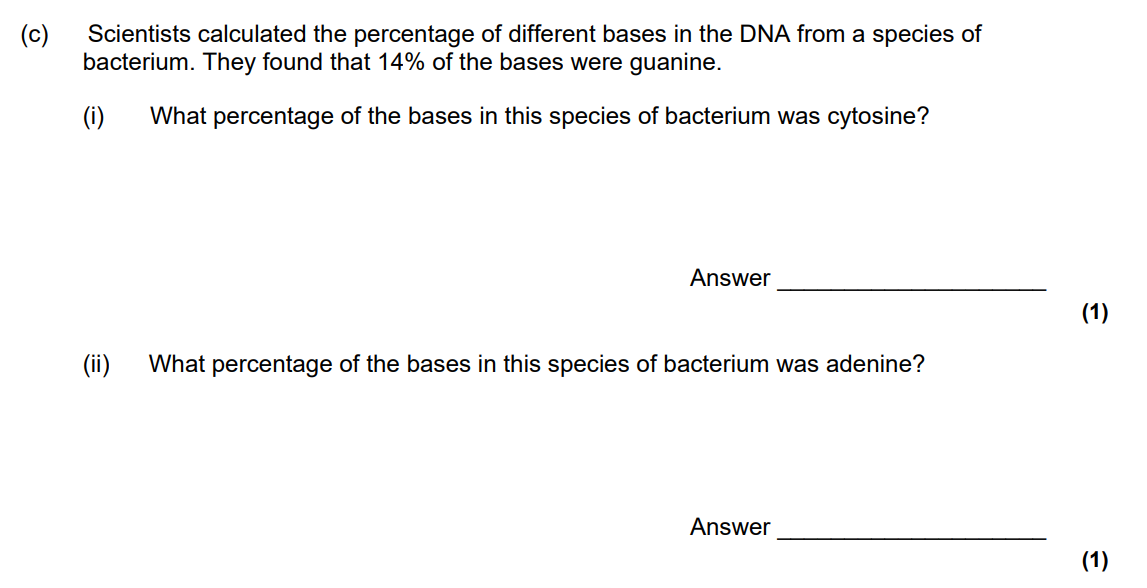
14
36
The scientists found that, in a second species of bacterium, 29% of the bases were guanine. Explain the difference in the percentage of guanine bases in the two species of bacterium (2 marks)

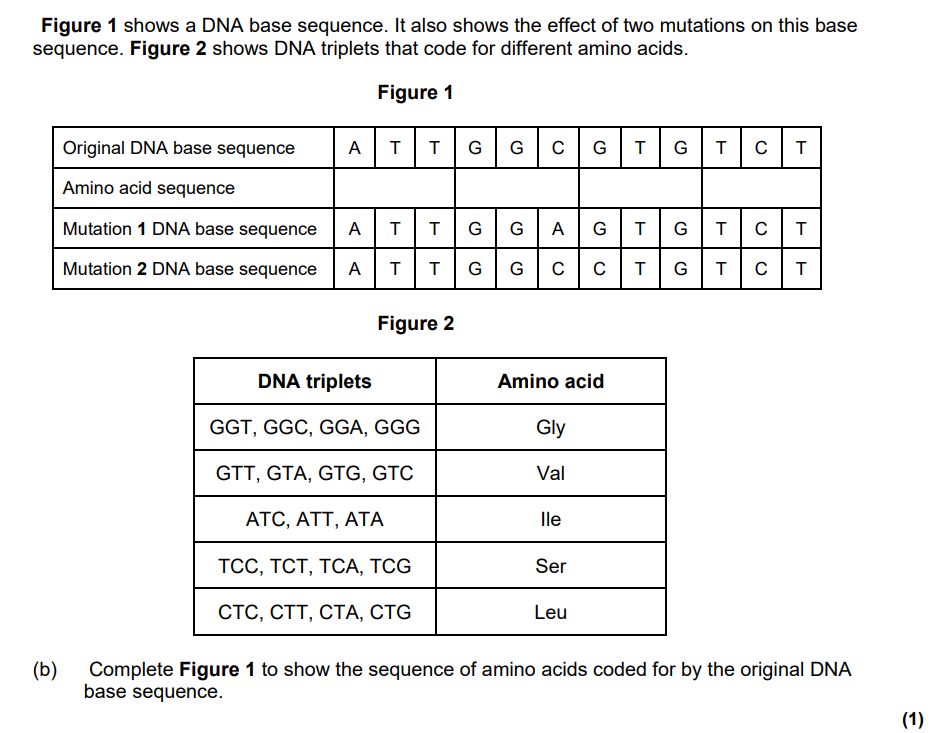
(b) Ile Gly Val Ser
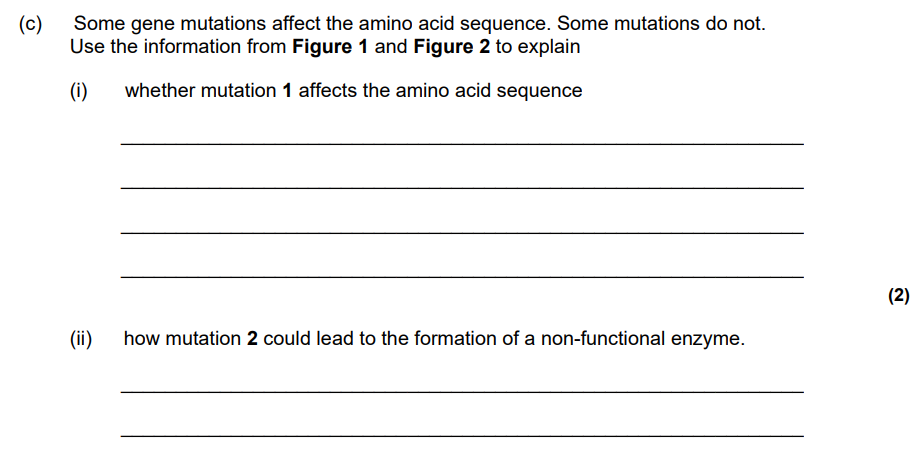
c)ii) is 3 marks
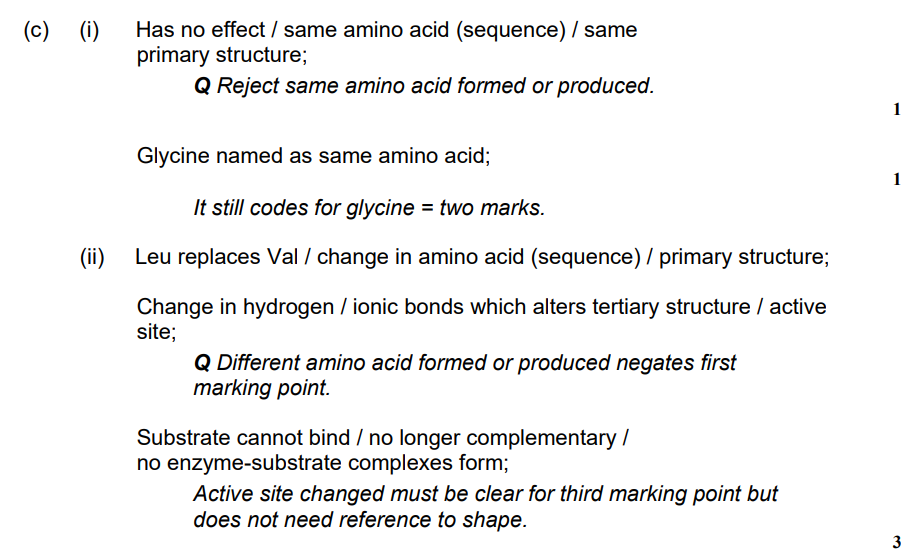
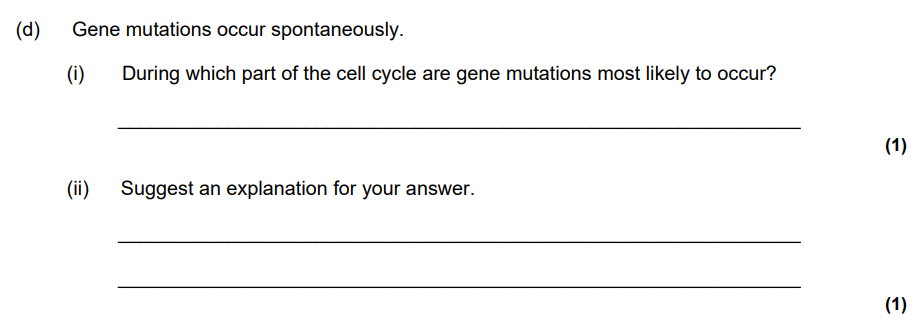
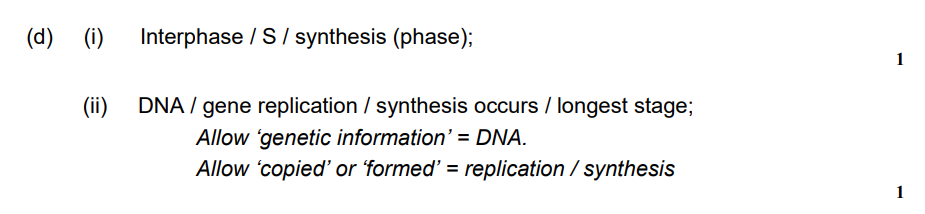
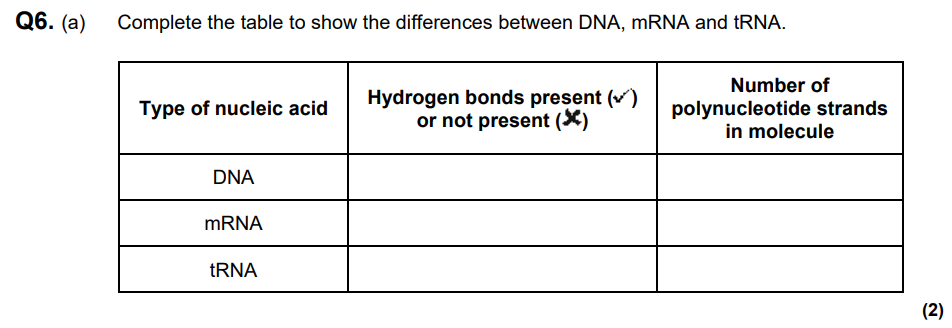
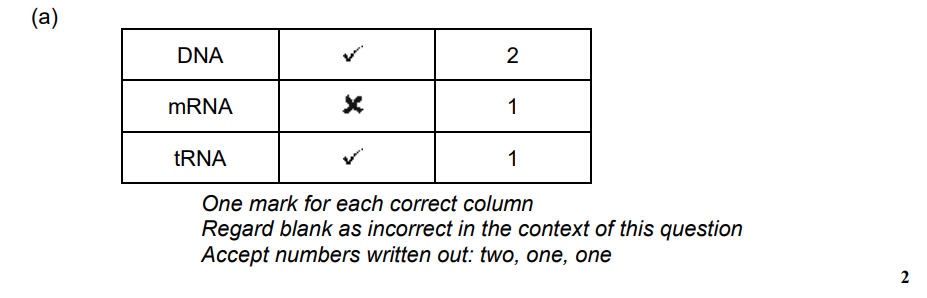
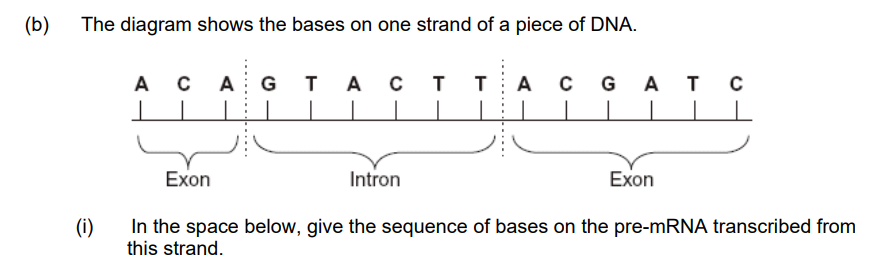
(2 marks)
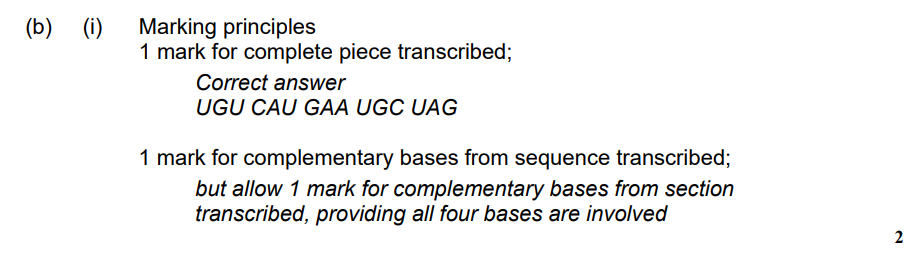
(ii) In the space below, give the sequence of bases on the mRNA produced by splicing this piece of pre-mRNA. (1 mark)
Marking principle
1 mark for bases corresponding to exons taken from (b)(i)
Correct answer UGU UGC UAG If sequence is incorrect in (b)(i), award mark if section is from exons. Ignore gaps.

141
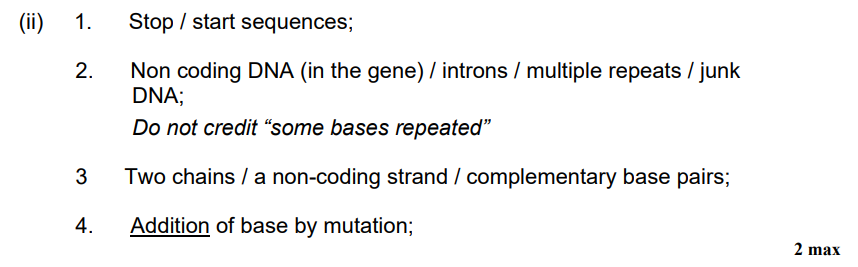
The total number of bases in the DNA of the α-polypeptide gene is more than 423. Page 9 of 36 Give two reasons why there are more than 423 bases. (2 marks)



What is a codon? (2 marks)