partial and inverse agonists
 Studied by 0 people
 Call Kai
 Learn
Learn Practice Test
 Spaced Repetition
 Match
Match Flashcards
 Knowt Play
1/12

There's no tags or description
Looks like no tags are added yet.
Name | Mastery | Learn | Test | Matching | Spaced |
|---|
No study sessions yet.
13 Terms
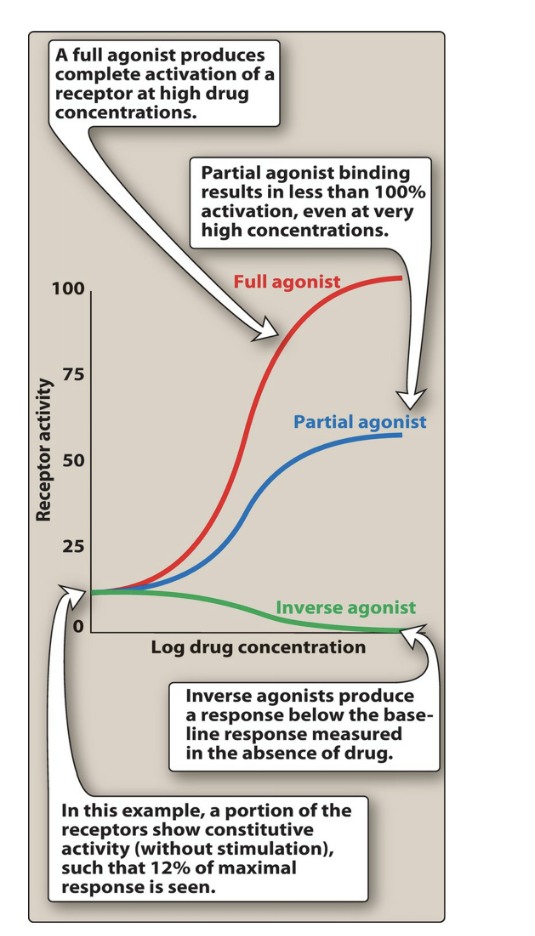
full agonist vs partial agonist vs inverse agonist
full agonist = produces complete activation of a receptor at high drug concentrations
partial agonist = less than 100% activation EVEN at very high concentrations
inverse agonists = produce a response below the baseline response measured in the absence of drug
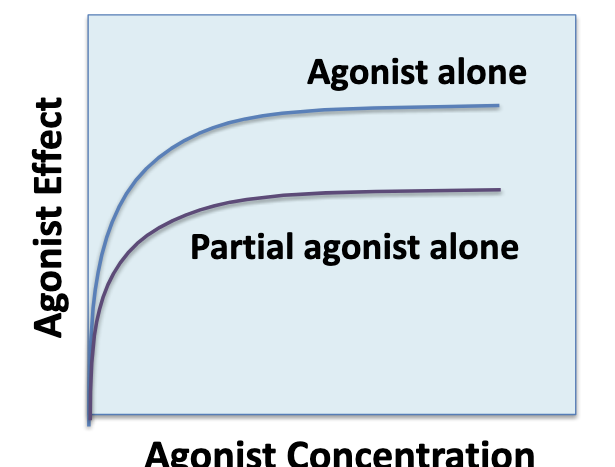
partial agonists
partial agonist = molecules that activate receptors but are unable to elicit the max response of the receptor system even when all of the receptors are occupied (bound) by the agonist
b/c partial and full agonists bind to the same receptor site → a partial agonist can reduce the response produced by a full agonist → sometimes called “partial antagonists” or “mixed agonist-antagonists”
partial agonists can be used therapeutically to buffer a response by inhibiting excessive receptor stimulation WITHOUT totally abolishing receptor stimulation
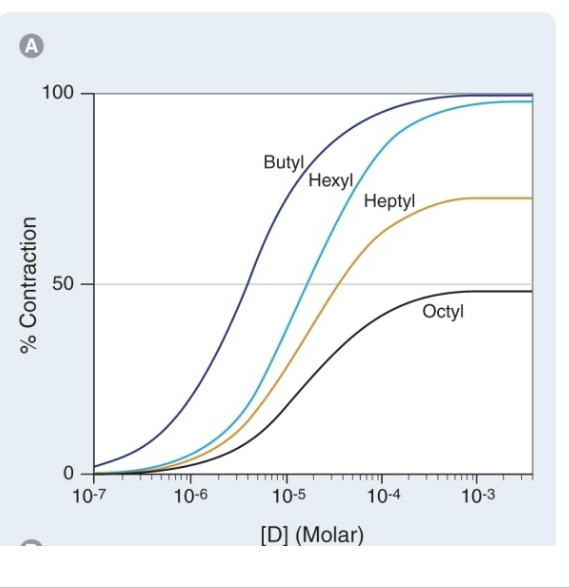
partial agonist and derivatives of trimethylammonium
derivatives of trimethylammonium stimulate muscarinic acetylcholine (ACh) receptors to cause muscle contraction in gut
ligand = acetylcholine (not shown)
full agonists = butyl and hexyl
partial agonists = heptyl and octyl
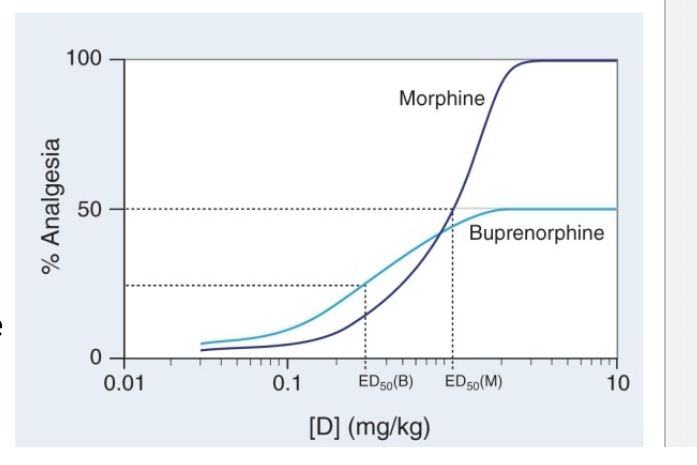
partial agonists vs full agonists
partial agonists can be more or less potent than full agonists
full agonist = morphine
ED50 = 1 mg/kg
partial agonist = buprenorphine
ED 50 = 0.3 mg/kg
but does NOT receive same max response
how do partial agonists work?
hypothesis 1 = stabilize DR form so there is a mixture of DR (inactive) and DR* (active forms)
hypothesis 2 = receptors may have multiple DR* conformations; each with a different intrinsic activity
hypothesis 3 = receptor may require a ‘priming’ change BEFORE activation → partial agonist may be less efficient at inducing primed conformation
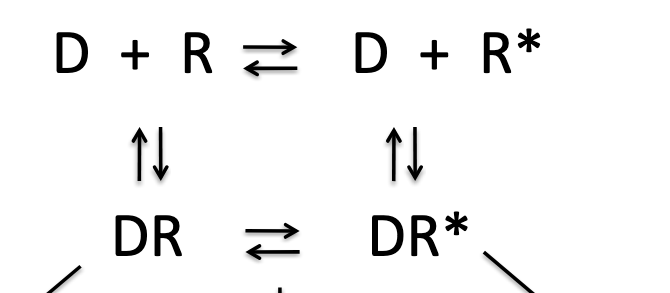
partial agonist/antagonist
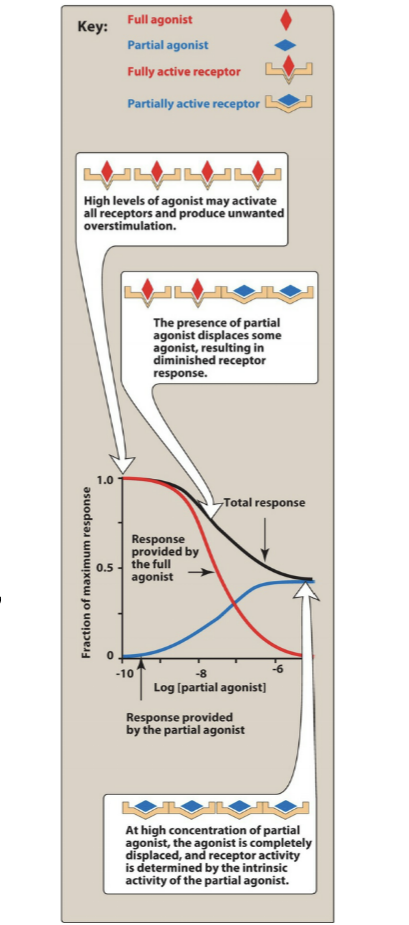
partial agonists can also act as partial antagonists of full agonists
as the # of receptors occupied by the partial agonist increases, the # of receptors that can be bound by full agonist decreases
decrease in Emax
high levels of agonist may activate all receptors and produce unwanted overstimulation
presence of partial agonist displaces some agonist → results in diminished receptor response
at high concentrations of partial agonist, the agonist is completely displaced and receptor activity is determined by the intrinsic activity of the partial agonist
partial agonists as drugs
aripiprazole (atypical antipsychotic) = partial agonist for some dopamine receptors
overactive dopamine pathways are inhibited by aripiprazole and underactive pathways are stimulated → leads to improved schizophrenia symptoms with a relatively low risk of adverse effects
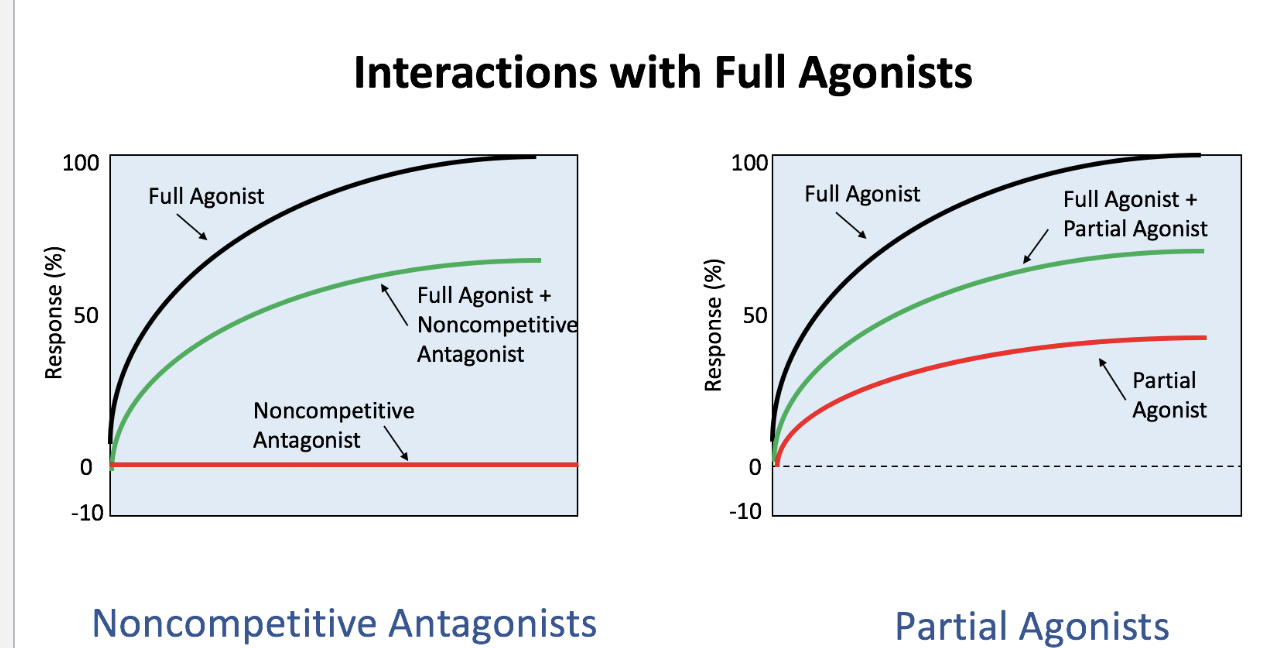
noncompetitive antagonist vs partial agonist curves
inverse agonists
inverse agonist = molecule that binds the same binding site on a receptor as an agonist and reverses the intrinsic constitutive activity of the receptor
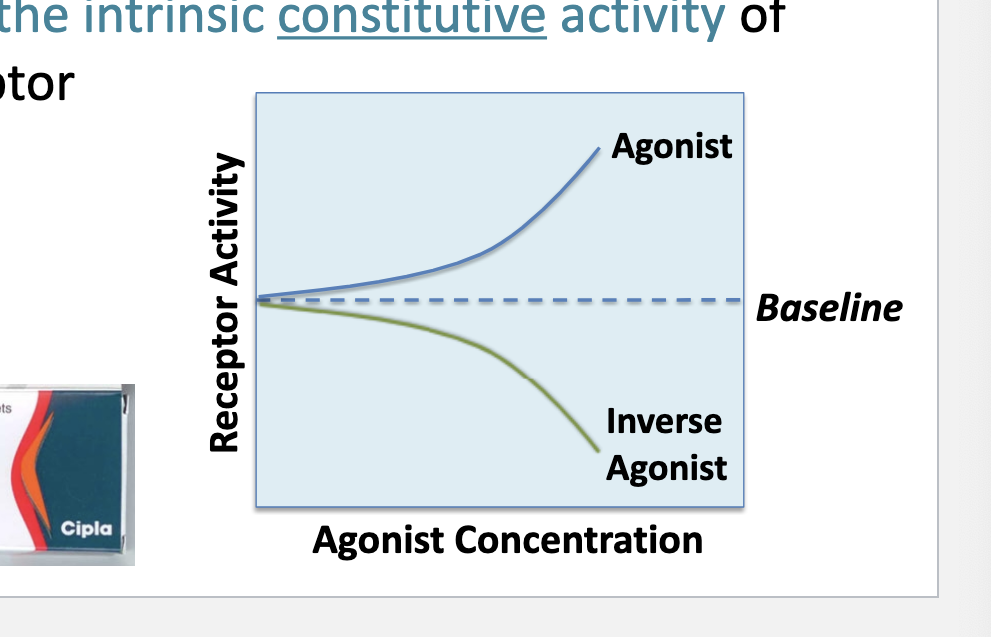
how do inverse agonists work?
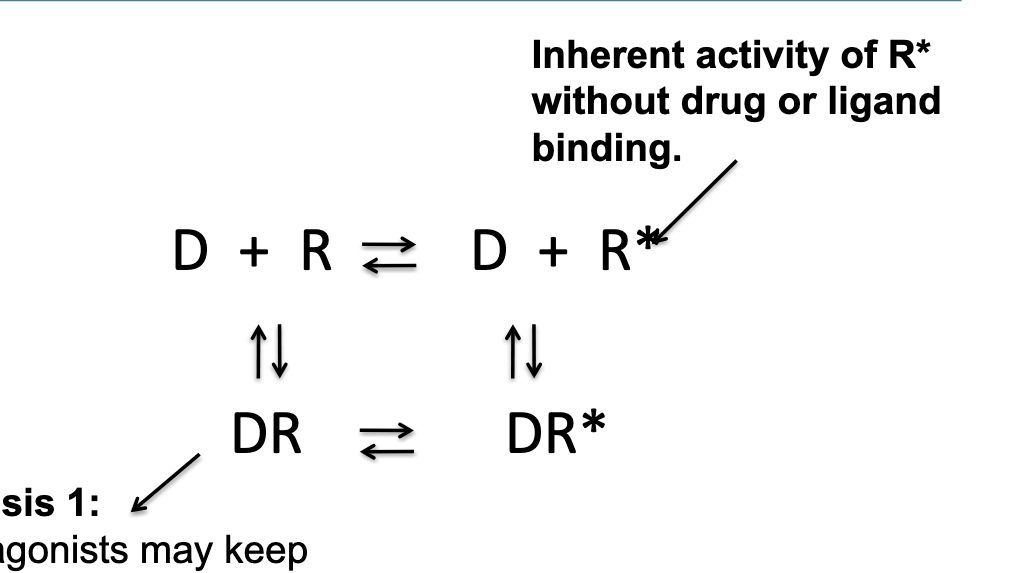
hypothesis 1 = inverse agonist may keep receptor in bound, inactive complex that prevents baseline R* activity
R* = inherent activity of R* WITHOUT drug or ligand binding
inverse agonist targets
receptors that have constitutive activity and are sensitive to inverse agonists include benzodiazepine, histamine, opioid, cannabinoid, dopamine, bradykinin, and adenosine receptors
in systems that are NOT constitutively active or in the presence of a full agonist, inverse agonists will behave like competitive antagonists
summary
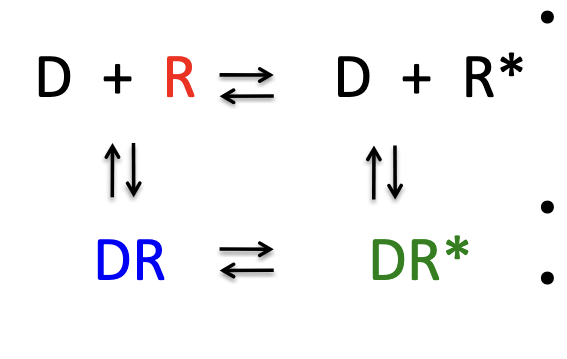
full agonists stabilize DR*
partial agonists stabilize DR AND DR* (or alternate forms of DR* or primed forms of DR)
inverse agonists stabilize DR
competitive antagonists stabilize R by preventing full, partial and inverse agonists from binding to receptor
efficacy review
full agonists: efficacy = 1
partial agonists: 0<efficacy<1
inverse agonists: efficacy<0
competitive antagonists: efficacy = 0