SDPA- Neoplasms
 Call Kai
 Learn
Learn Practice Test
 Spaced Repetition
 Match
Match Flashcards
 Knowt Play
1/35

There's no tags or description
Looks like no tags are added yet.
Name | Mastery | Learn | Test | Matching | Spaced | Call with Kai | Chat |
|---|
No analytics yet
Send a link to your students to track their progress
36 Terms
what is a sign of Leser-Trélat
sudden appearance of multiple SKs (commonly associated with gastric adenocarcinoma)
What is the hyperpigmented papules on face of dark-skinned individuals called
Dermatosis papulosa nigra
What is Leser-Trélat a sign of
gastric adenocarcinoma
white keratotic papules (typically less than 4 mm in diameter) on the lower extremities of lighter-skinned individuals is called what
stucco keratosis
What is the autosomal dominant disorder characterized by numerous flat, wart-like papules on the dorsal aspects of the hands and feet.
Acrokeratosis Verruciformis
Acrokeratosis verruciformis is related to what other disease
Darier disease
ATP2A2 mutation can lead to what two diseases
Darier disease
Acrokeratosis verruciformis

a red papule or plaque with a shiny surface, usually located on the lower extremity, and it may have a peripheral collarette of scale
Clear cell acanthoma
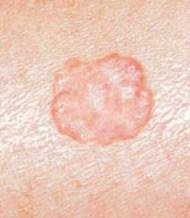
what is this
large cell acanthoma
acanthoma originates where
epidermal prickle cell layer, stratum spinosum
How to manage a large cell acanthoma
cryotherapy
close monitoring and histopath eval due to the uncertain behavior of these tumors
Unclear if it will behave benignly or malginantly
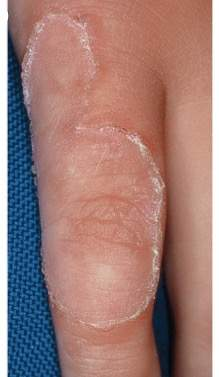
Large plaque arising in infancy or childhood on distal extremities, several centimeters in diameter
this is what
porokeratosis of Mibelli
Multiple pink-brown papules and plaques with peripheral scale that arises in sun-exposed areas like forearms and shins
may have autosomal dominant inheritance
Disseminated superficial actinic porokeratosis (DSAP)
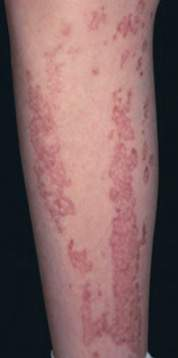
streaks along the lines of Blaschko
Arises early in life and is associated with higher risk of SCC
linear porokeratosis
why is linear porokeratosis important
arises early in life and can be associated with risk of SCC
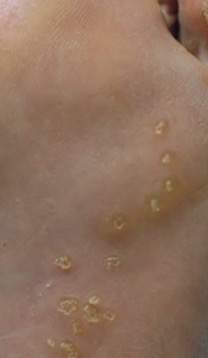
these papules on palms and soles, typically appearing during adolescence or adulthood
punctate porokeratosis
Palmoplantar papules with involvement of trunk, extremities, and sometimes mucous membrane with Onset during childhood or adolescence, what kind of porokeratosis
porokeratosis palmaris et plantaris et disseminata
porokeratotic plaques and papules within the gluteal cleft or folds is called what
porokeratosis ptychotropica
how do you treat DSAP
Topical treatments, such as retinoids, imiquimod, fluorouracil, and 2% lovastatin (with or without 2% cholesterol), are options, though recurrence is common.
Inflammatory linear verrucous epidermal nevus looks like what other condition
psoriasis

a type of epidermal nevus. It is characterized by a linear plaque composed of grouped comedones.
nevus comdionicus
what type of nevus is associated with a mutation in fibroblast growth factor receptor 2 (FGFR2)
nevus comidonicus

what is Flegel disease
hyperkeratosis lenticularis perstans
keratotic papules on the lower legs
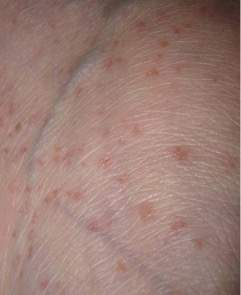

hyperkeratosis lenticularis perstans is also known as what
Flegel disease
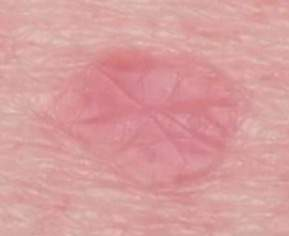
______ appears as a pink to brown papule or plaque. It may mimic non-melanoma skin cancer (NMSC), such as BCC, and typically occurs on actinically damaged skin
lichen planus-like keratosis

scaly to verrucous hyperpigmented plaques. It has a reticular (net-like) appearance at the periphery
Favors neck, chest and submammary areas
Confluent and Reticulated Papillomatosis (of Gougerot and Carteaud)
how do you treat CARP
oral tetracyclines
what is CARP
scaly to verrucous hyperpigmented plaques. It has a reticular (net-like) appearance at the periphery

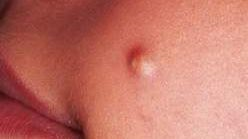
pilomatricoma
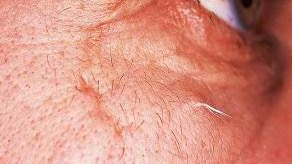
trichofolliculoma
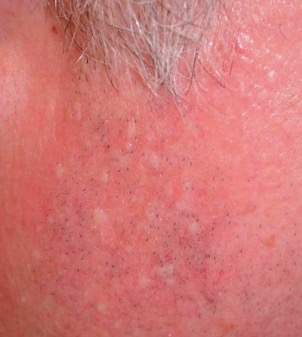
fibrofolliculoma

If you see this, what syndrome would you might think it is associated with
Birt-Hogg-Dubé syndrome
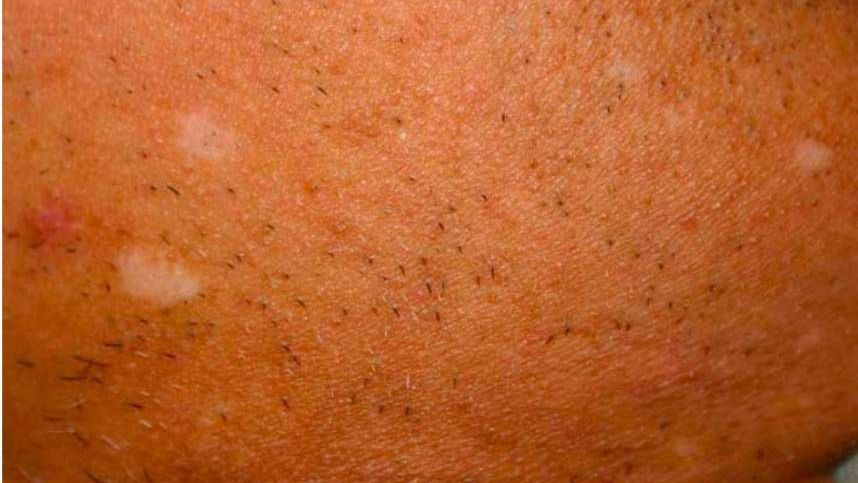
Tumor of the follicular infundibulum
what does the tumor of follicular infundibulum overlap with
superficial basal cell carcinoma
__________ is a pink-red to skin-colored papule or nodule most commonly found on the face and less frequently on the upper trunk. It is associated with Brooke-Spiegler syndrome (BSS), a rare familial autosomal dominant condition caused by a defect in the CYLD gene.
Trichoepithelioma
what to tell a patient about risk of metastasis from invasive SCC
2-4% risk of nodal mets depending on area:
lip, ear, genitalia
tumor diameter >2cm
poor diff
invasion beyond subcu fat
perineural invasion