APUSH Exam Review - TP 3 (REVOLUTION)
 Multiple Choice & FRQ
 Call Kai
1/52

Earn XP
Description and Tags
1754-1800; includes British policies, revolutionary war, the foundation of American government; George Washington through John Adams
Name | Mastery | Learn | Test | Matching | Spaced | Call with Kai | Chat |
|---|
No analytics yet
Send a link to your students to track their progress
53 Terms
What is the span of the “Revolution period” (TP3)?
1754 (French and Indian War) - 1800 (Revolution of 1800)
French and Indian War
Last colonial war between England and France for land; started because the British wanted to kick the French out of Pennsylvania
Washington tried to attack French, but had to retreat.
They were Indians on both sides, but mostly French, but the British one and most of French America was ceded to the British
Pontiac’s Rebellion
The attack on British forts because France did not consult them before seating the territory
Inspired by a native prophet, who believed that native should break ties with the British
Proclamation of 1763
A royal proclamation that prevented settlement west of the Appalachian mountains because of Indian conflict; it also banned the sale of native lands
The colonists resented it
Albany Plan of Union
A proposal to unite Northern colonies under a royally appointed president against the French
It was rejected, but remained a predecessor to modern democracy
Virtual Representation
The idea that American colonies deserved a virtual representation in Parliament
Sons of Liberty
Radical group formed by Samuel Adams and John Hancock to resist the British in response to the stamp act
Boston Massacre
Between crowd with snowballs and British soldiers with guns
Five ended up dying, including Crispus Attucks
Paul Revere dramatized the event in his painting
March 5, 1770
Boston Tea Party
Sons of liberty dressed as Indians through 300+ crates of tea into the ocean at Boston Harbor leading to the intolerable act
December of 1773
First Continental Congress
Colonial representatives met in Philadelphia in 1774 to plan against British policies and was attended by future leaders
Writs of assistance
General search warrant that allowed customs officials to search anywhere they chose for smuggled goods
1763
Sugar Act
1764
Reduce the existing tax on molasses important into North America, but established ways to and smuggling by colonial merchants, which was widespread by strengthening the admiralty courts that could try without jury
Currency Act
reaffirmed the earlier ban on colonies issuing their own paper money as legal tender
1764
Quatering Act
Required the colonists to provide food and living quarters for British shoulders stationed in the colonies
1765
Stamp Act
Required all printed material like newspapers, books, court documents, land deeds, almanacs, playing cards and commercial papers to carry a stamp purchased from the authorities
Raised money directly from the colonies instead of regulating trade
1765
Declaratory Act
Repealed the stamp act but rejected Americans claims that only their elective representatives could levy taxes. It asserted Parliament right to past laws and taxes that applied to the colonists.
1766
Townshend Acts
A new set of taxes imposed on the Americans that taxed tea, glass and paper imported to the colonies. It also created a new board of customs commissioners that would collect the taxes and suppress smuggling.
1767
Tea Act
A series of rebates and tax exemptions issued to the British East India company, then enabled it to dump low price tea on the American market, undercutting established merchants and smugglers
1773
Intolerable Acts a.k.a. coercive acts
Closed the port of Boston to all trade as a response to the Boston tea party. It also restricted town meetings, increase the power of the governor and expanded the quartering act.
Included Quebec act which extended the southern boundary of the Canadian province to the Ohio river and granted toleration to the Roman Catholic Church there, which put Ohio land claims into question and made it look like Parliament was trying to strengthen Catholicism
1773 - 74
Second Continental Congress
Convened in May 1775
-authorized the raising of a continental army, printed money to pay for it and appointed George Washington as it’s Commander
Lexington and Concord
British soldiers marched from Boston to Concord
Bostonians warned locals and gathered militia men,
- the first shots fired in the revolutionary war
-known as the shots heard around the world
Bunker Hill
First major battle of the war, where the British forced the colonist to give up Breeds Hill
Both side sides had many casualties
Loyalist vs Patriots
Loyalists were loyal to the king of Great Britain
Patriot supported the cause of independence
Saratoga
Turning point of the war
Americans defeated John Burgoyne and his troops in Saratoga New York on October 17, 1777
Boosted American morale
Valley Forge
American encampment during a horrible winter
Many died because of unchecked disease like influenza and typhoid
More deadly than most battles
Yorktown
Last battle of the war
General Lord Charles Cornwallis surrendered in Virginia on October 17, 1781
Republican Motherhood
Ideology that task woman with cultivating republican virtues within their children, especially sons
Elevated woman’s status and gave them better education
Articles of Confederation (definition and weaknesses)
First outline of government and a priest cursor to the constitution from 1781 to 1788. Included a week, central authority, and very little government control.
WEAKNESSES:
Unable to levy taxes in order to pay debts and loans from the war
Could not control trade (more imports than exports)
Unable to enforce laws
Had no military influence
Only one branch that was decentralized
Couldn’t protect property rates
Northwest Ordinance
Created Northwest territory and established conditions for self government in the Ohio area
eventually led to statehood
prohibited slavery
Shay’s Rebellion
A Massachusetts farmer and friends wanted paper currency and lower taxes
Targeted state courts that did not prevent farm foreclosures
Highlighted the weaknesses of the article to confederation
Constitutional Convention
A meeting in Philadelphia to revise the article articles of confederation and eventually created the new constitution
Attended by representatives from every colony, except Rhode Island, including major leaders and founding fathers
Included many compromises
Virginia vs New Jersey Plan
Virginia suggested a two house legislature and a strong central government
New Jersey contributed a plan for a single body with equal representation
Great Compromise
Combined the two plans to created a bicameral Congress with equal state representation in the Senate and population based representation in the House of Representatives
Federalism
System of government where power is separated between central government and state government, also known as the division of powers
3/5 compromise
Part of the constitution that said that 3/5 of the slave population would be used in determining representation in the House of Representatives and votes for president
made to satisfy the big states with large slave populations in the small states with small slave populations
Federalist papers
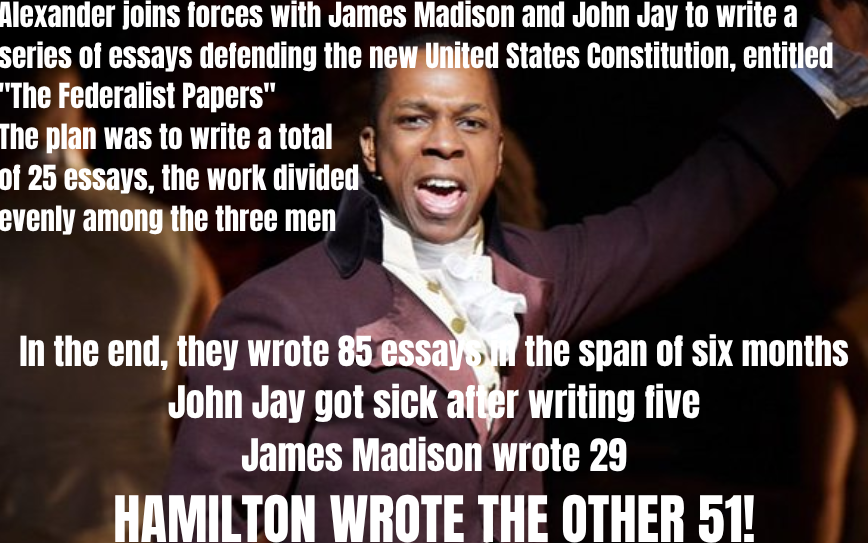
85 essays written by John J, James Madison and Alexander Hamilton in support of the constitution and published in the book the Federalist
Advertised that the constitution would protect liberties
Anti-Federalists
People who thought the constitution was a limitation on rights and demanded a bill of rights
Bill of Rights
The first 10 amendments created in 1791 which guaranteed individual rights protect protection from infringement
Gradual emancipation
Ask pass to graduate free slaves
They were freed after a certain age or years of “apprenticeships”
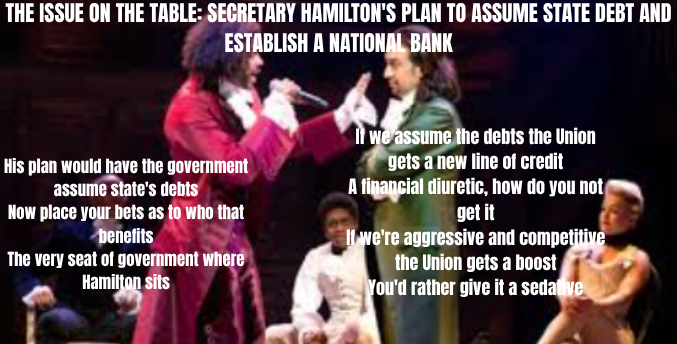
Hamilton’s financial plan
1 Established credit by purchasing lands (federal government pays off debt)
2 new national debt, where the old debts were replaced by bonds
3 create the Bank of America with a uniform currency that could make loans and collect taxes
4 tax whiskey to gain profit
5 impose tariffs, and build factories
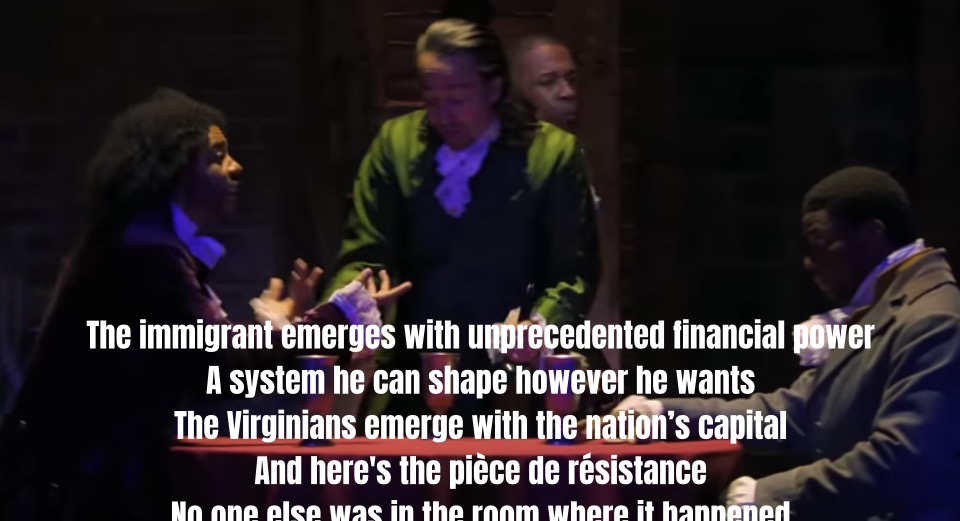
Jefferson-Hamilton Bargain (Compromise of 1790)
Jefferson would accept Hamilton‘s plan in exchange for the capital to be moved to the Potomac River (from NY to DC)
Jay Treaty
A treaty with Britain that ceded forts in the northwest territories and led to opposing political parties
Pinckney Treaty
A treaty with Spain that agreed to open the lower Mississippi river and New Orleans to American trade so they could transfer cargoes in New Orleans without paying duties to the Spanish government. Spain also accepted the border of Florida where the US claimed (the 31st parallel)
Whiskey Rebellion
Pennsylvania farmers protested against the tax on whiskey
Washington and his men went out and quickly squashed the rebellion using force
Federalist Party
Favored a strong central government
Led by George Washington and included Adams and Hamilton
Supported by merchants, farmers and lawyers, in addition to political leaders
Had elite views
Democratic-Republican Party
Democratic self-government
Criticize social inequality and was more accepting of expanded political participation
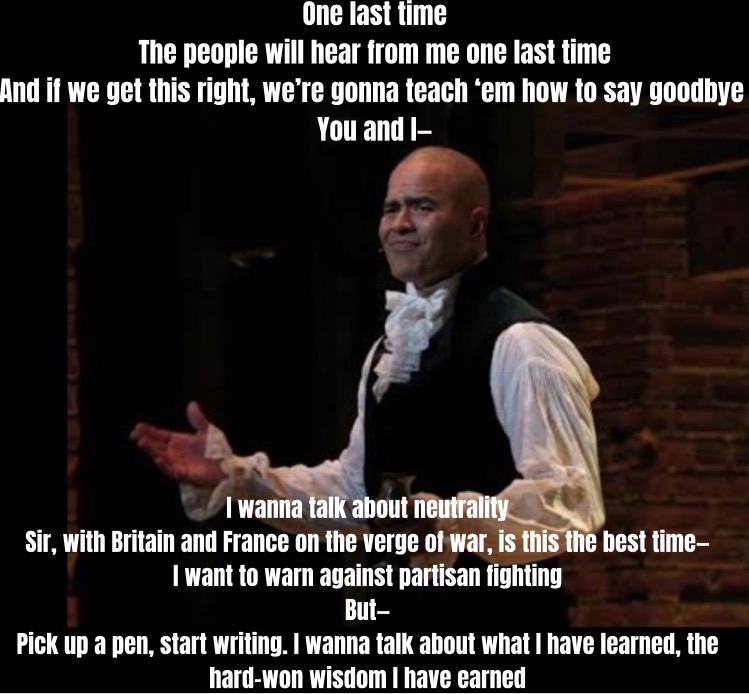
Washington’s farewell address
Defended administration and warned against party division and advised neutrality
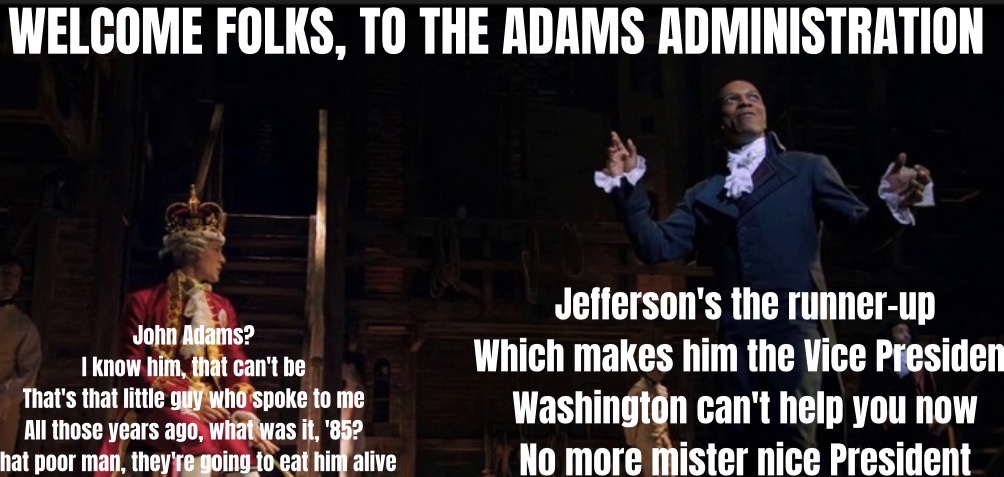
Election of 1796
John Adams and Thomas Pinckney against Thomas Jefferson and Aaron Burr
Adams won with Jefferson as vice president
XYZ affair
French foreign ministers agents demanded payments to stop French plundering American ships
America refused and led to an undeclared sea war in 1797 into 1798
Alien and Sedition Acts
During the undeclared sea war with France atoms, limited the rights of non-citizens
The alien act allowed deportation of “dangerous”immigrants
The sedition act authorized the prosecution of anyone who criticize the government
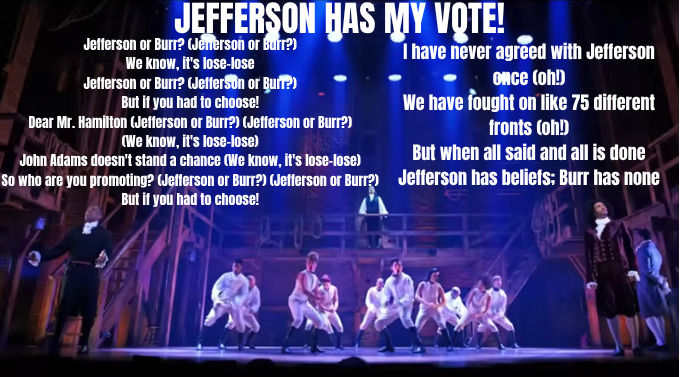
Election (Revolution) of 1800
Jefferson beat Adams, but tied with Aaron Burr with 73 electoral votes each
The election came down to the House of Representatives, which was heavily influenced by Alexander Hamilton
Though Hamilton did not like Jefferson, he knew that Jefferson wouldn’t affect the federal system so that’s who he voted for (this eventually led to the duel that killed Hamilton)
Precedents under Washington
Federal court system
Hamilton’s financial system which included the national bank
Neutrality
Two terms
No parties
Precedents under Adams
Federalist versus democratic Republicans
Avoided war in the XYZ affair and maintain the diplomatic relationship with France
Alien and sedition act which restricted rights