Fluid balance
 Call Kai
 Learn
Learn Practice Test
 Spaced Repetition
 Match
Match Flashcards
 Knowt Play
1/71

There's no tags or description
Looks like no tags are added yet.
Name | Mastery | Learn | Test | Matching | Spaced | Call with Kai | Chat |
|---|
No analytics yet
Send a link to your students to track their progress
72 Terms
Side effect of ventolin
Beta-2
bronchodilation + increase hr -> tachycardia
Could have parkinson effects -> tremors
Lower potassium (pulls glucose into cells with K+)
List reasons why children are considered at greater risk for fluid volume imbalance (1-4 important)
1. High BSA (insensible loss)
2. Increased metabolic demand
3. Immature kidney function (can't concentrate solutes)
4. Intracellular allocation (high ECF)
5. Skin differences
6. Infants/small kids can't verbalize thirst
7. Toddlers -> physiological anorexia (picky eaters)
Sensible fluid loss
Urine and bowels
Insensible fluid loss
skin and respirations
Most common cause dehydration
Gastroenteritis
Viral causes of gastroenteritis
Rota, Adenovirus (conjuctivitis/fever), Norovirus
Rota virus prevention
PO vaccine @ 2, 4, 6 months
Called R5
Is a live attenuated vaccine and requires teaching regarding hand washing 10 days post adminstration
R5 complications of intussusception
Bacterial causes of gastroenteritis
E. Coli, Shigella, Salmonella, Campylobacter
Ova and parasite causes of gastroenteritis
Giardia
Occult gastroenteritis
HUS
Ask if on iron supplement as it could cause false + on occult
Other causes of diarrhea
Antibiotics (ampicillin)
Cows milk protein allergy
Juice
Extracellular fluid volume deficit
dehydration
Euvolemia
Most common
Extracellular fluid volume excess
Saline excess related to IV fluid overload, aldosterone, or glucocorticoids
Interstitial fluid volume excess
Edema related to ECF volume excess
Causes of fluid volume imbalance
Vomiting, diarrhea, poor oral intake, infants of low-birth weight in warmers
Excessive activity in heat (BSA), ineffective sweat capability
Isotonic dehydration
Equal loss of Na to water in ECF
Causes of isotonic dehydration
Acute emesis, diarrhea, hemorrhage
Hypotonic dehydration
ECF Na loss with osmotic shift to ICF
Causes and treatmentof hypotonic dehydration
Prolonged gastric loses, burns, furosemide, nephrotic syndrome, hypo-based fluids
Replace slowly to reduce central pontine myelinolysis
Hypertonic dehydration
water loss in higher proportion to Na loss
Causes of hypertonic dehydration and treatment
diabetes insipidus, DKA, prolonged diarrhea, fever, younger infants
Remember to repair slowly to reduce cerebral edema (ICP)
Mild dehydration
loss of
S/S of mild dehydration
Restlessness (infant cry)
thirst (hypothalamus)
Urea upper normal range
MM may be sticky
Urine output will be less frequent
Pulse, resp, BP, skin turgor, tears, fontanel, specific gravity, pH all normal
Moderate dehydration
loss of 6-9% of body weight
Moderate dehydration S/S
Tachcardia
Increased respirations
Decreased BP
U/O
Specific gravity in moderate dehydration
1.020- 1.030
Blood pH in moderate dehydration
7.3 - 7.10
Severe dehydration
>10% body weight loss
S/S of severe dehydration
Rapid, weak pulse
Grunting rapid respirations
Hypotension
Anuria
Tenting skin
Very dry MM
Absent tears
Concave fontanel
Mental status stuporous or coma
Very sunken eyeballs
Urea high
Specific gravity in severe dehydration
>1.030
Blood pH in severe dehydration
7.10
Normal urine output (if less than 12)
1-5 ml/kg/hr
Normal urine output (if >12y)
>0.5ml/kg/hr (same as adults)
Serious potential consequence of dehydration
Hypovolemic shock
First intervention for dehydration (if mild)
Oral rehydration (ex: pedialyte)
Intervention for moderate-serious dehydration
IV fluid administration and electrolytes
Use of antiemetics and antidiarrheals?
Don't use antidiarrheals - gets rid of virus and don't want to cause constipation.
If vomiting give antiemetic (ondansetron)
differences of preterm, sepsis, and SGA infants
Decreased glycogen stores, decreased adipose tissue, immature metabolic pathways (gluconeonegesis), and increased metabolic demands
Gluconeogensis vs. glycogenolysis
Gluconeogenesis creates new glucose from non-carbohydrates like amino acids and glycerol
Glycogenolysis breaks down stored glycogen into glucose
Isotonic fluid solution
NS (NaCl 0.9%)
When is NS used
Vascular resuscitation (shock)
D5W
Technically hypotonic (uncommonly used by itself)
D10W
Treatment of hypoglycemia
Most common IV fluid used
0.9%NaCl D5W with additive 20mmol/L K+
Treatment of resuscitation of shock
Delivery of fluid bolus
10-20ml/kg (IV or IO)
Often give 10 if congenital heart defect
What to assess for fluid bolus
Cap refil, auscultate lungs, vitals will react quickly (~15 mins)
Potential complications with fluid bolus
Increased ICP]
Peripheral and pulmonary edema (if weak heart, kidneys)
lb to kg conversion
1 kg = 2.2 lb
A drop in BP is a ___ sign of shock in infants
Late
Shock definiton
Inadequate cardiac output and insufficient oxygenation of tissues to meet metabolic demands
Key intervention for developing shock
Oxygen administration
Early oxygen prevents rapid deterioration and supports CO.
Start on O2 even if spO2 is till high
Method of O2 delivery during shock
Nasal cannula if spO2 is still high
Non-rebreather if low
2 types of distributive shock (vasodilation)
Septic shock
Anaphylactic shock
Hypovolemic shock patho
Fluid loss -> decreased circulating blood volume -> D preload -> compensatory mechanisms of I hr and redistribution of blood (peripheral vasoconstriction; RAAS; ADH)
Ineffective interventions lead to myocardial dysfunction, ischemia, organ failure and death
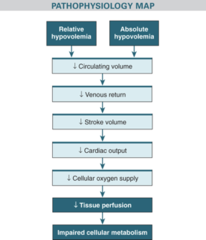
two stages of hypovolemic shock
early - compensated
Late - uncompensated or hypotensive
Symptoms of compensated hypovolemic shock
BP normal with narrow pulse pressure
I hr
I RR
Pale or mottled skin
Normal or prolonged CRT
Normal or weak peripheral pulses with strong central pulses
Cool extremities
LOC - may be irritable
Normal or decreased U/O
Symptoms of uncompensated (hypotensive) shock
Decreased systolic BP
Absent or D peripheral/central pulses
Lactic acidosis
Prolonged CRT
LOC - lethargy
Anuria
Nursing care goals for hypovolemic shock
Improve tissue perfusion - fluid bolus (vascular resuscitation)
oxygen/glucose (maintain or restore pH)
6 interventions for hypovolemic shock
1. Reposition (high fowlers or trendelenburg if loosing blood), suction and apply O2
2. Initiate IV and resuscitate with isotonic fluids
3. Monitor and frequent assessments (q15)
4. Consider Rx medications and interventions
5. Consider DI, labs (CBC, electrolytes), tests
6. Subspecialty consult (maybe STEP team)
What lab values would be important for hypovolemic shock
Coags, hbg, hct, lactate, BUN/Cr ratio, K (elevated in acidosis related hypoxia vs. low in prolonged gastric losses)
Septic shock pathophysiology
Body's response to infection -> decrease SVR -> maldistribution of blood flow to extremities (cytokine dump) -> warm phase -> SVR increases -> cold phase
Nursing care goals with septic shock
1. Improve tissue perfusion, O2/glucose delivery to restore pH (vascular resuscitation)
2. Hemodynamic stability / prevent end-organ failure
3. Investigate and treat cause
Two phases of septic shock
Early - warm phase - compensated
Late - cold phase - decompensated
S/S of warm phase septic shock
Tachycardia
Tachypnea
Fever
Warm extremities
Bounding pulses
Normal CRT
Normal or increased systolic BP
Wide pulse pressure (20-30 mm Hg over normal)
Normal U/O
Fussy, irritable
Normal coagulation
Neonates/young infants temperature in septic shock
Neonates and young infants may be hypothermic in septic shock (no fever)
S/S of cold phase of septic shock
Tachycardia
Respiratory depression
Hypothermia
Cool, pale extremities
Decreased pulses
Prolonged CRT
hypotension
Narrow pulse pressure (10-20)
Oliguria (
Nursing care interventions for septic shock
Reposition, O2, fluid resuscitation, monitor frequently, start antibiotics (broad spectrum until C/S comes back), watch labs (CBC, clotting/coags, lactate, differential)
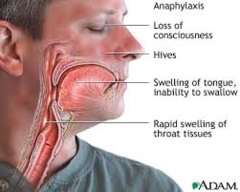
Anaphylactic shock
Manifested by hypotension (early sign), generalized urticaria, angioedema, and laryngeal edema
Vasodilation due to loss of vasomotor tone and capillary leak resulting from the release of mediators from tissue cells in an immediate hypersensitivity reaction
maculopapular
rash or hives (flat red area covered with small raised bumps)
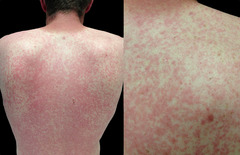
Order of treatment for anaphylactic shock
1. O2 (non-rebreather) + epinephrine
2. Ventolin (only if having resp compromise)
3. IV fluids
4. Corticosteroids (for biphasic reaction)
5. Certirizine (antihistamine - long acting)
If hr > 60 but < 100
Provide ventilation/oxygen support, no compressions yet
If hr < 60 with poor perfusion despite effective ventilation
Begin CPR (compressions + breaths)