Fear & Anxiety
 Studied by 0 people
 Call with Kai
 Learn
Learn Practice Test
 Spaced Repetition
 Match
Match Flashcards
 Knowt Play
1/47

There's no tags or description
Looks like no tags are added yet.
Name | Mastery | Learn | Test | Matching | Spaced | Call with Kai |
|---|
No study sessions yet.
48 Terms
individual to collective experiences
Individual structures - group identity and dynamics
Collective threat perception - moral panic, prejudice and altruism
Has an impact on group identity and dynamics, can promote prejudice and prosocial behaviour
e.g. political advertising (visceral images brings attention to the message and is a message for prosocial behaviour)
(PART1) fear, anxiety and survival
fear and anxiety evolved to help organisms detect and respond to threat
is is a survival mechanism seen in many organisms!
key question: how should we research the neural mechanisms of fear and anxiety?
definitions of fear, anxiety and defensive behaviours
fear: response to present and immediate threat
anxiety: response to a potential or imagined threat
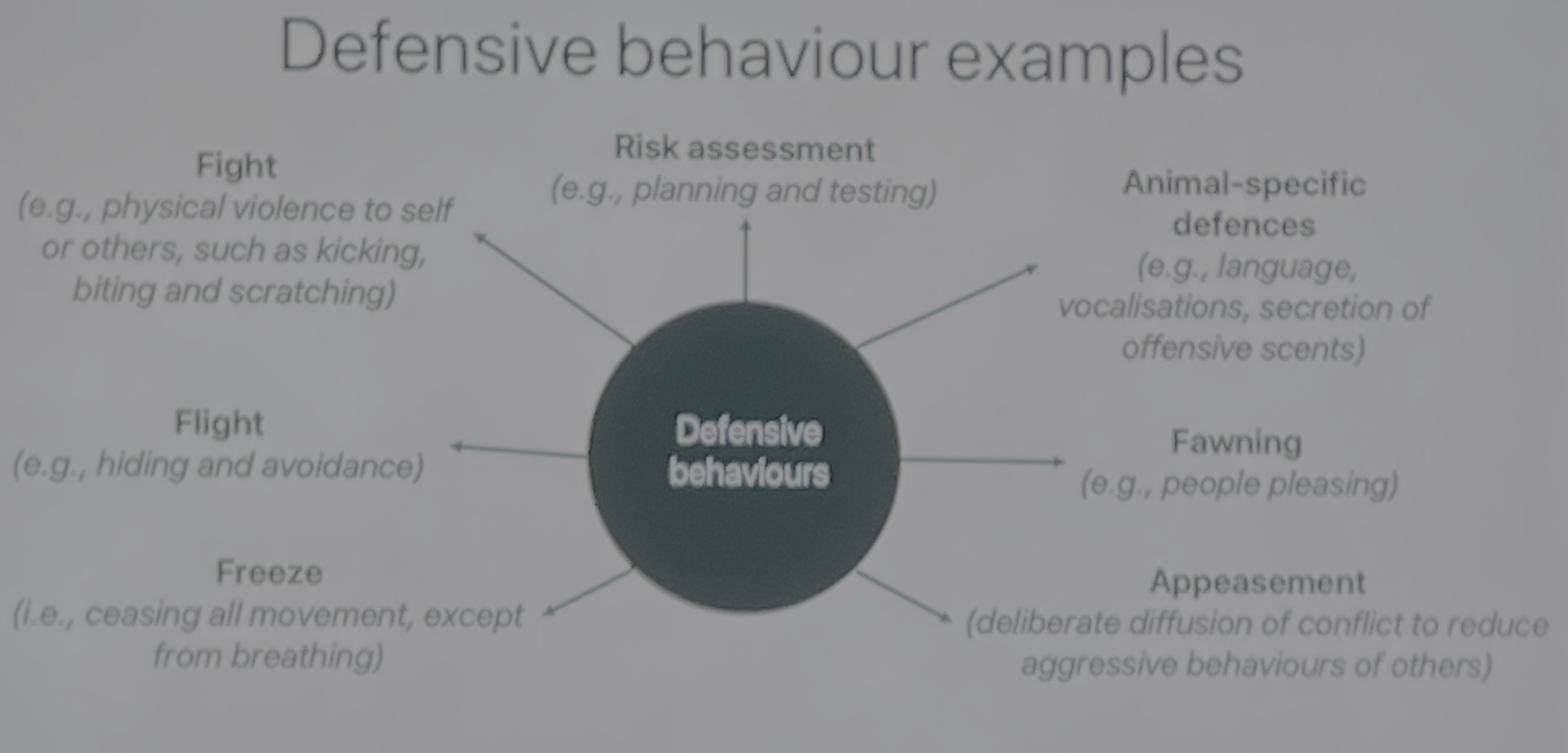
defensive behaviours: A range of behaviours motivated by the need to avoid or minimise harm caused from real (or imagined) threats
Set of behaviours conserved throughout evolution (e.g. the ss)
Other emotions also have these defensive behaviours
defensive behaviours link to predation
predation is a key threat to survival
adaptation for flexible defensive behaviours
prey animals provide plenty of insight into fear
(PART2) classical fear conditioning - associative learning
associative learning: learning by forming connections between events- one stimulus or behaviour comes to predict another
Classical conditioning (Pavlovian) - learning an association between two stimuli. A neutral stimulus comes to predict an unconditioned stimulus. Often considered passive, as responses are elicited automatically rather than controlled by the learner
Operant conditioning (instrumental) - learning an association between behaviour and its consequences. A behaviour is strengthened by reinforcement or weakened by punishment. Considered active, as the learner’s actions directly influence the outcome
what is classical fear conditioning?
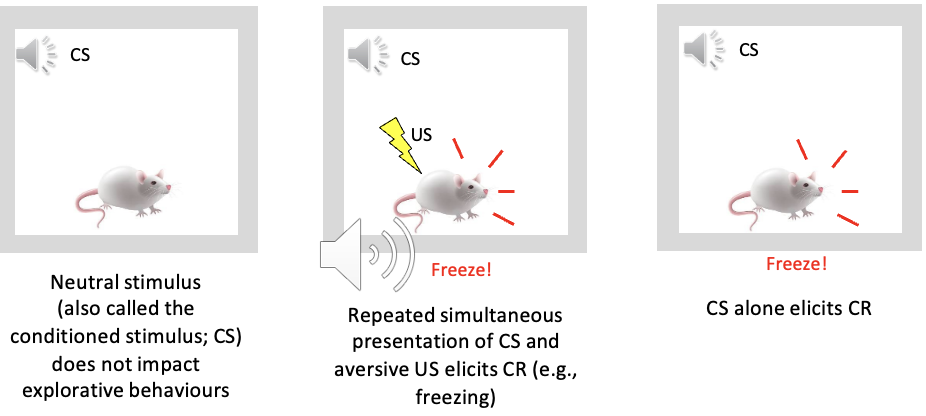
Classical fear conditioning: associative learning that occurs after the consistent pairing of (an initially neutral) conditioned stimulus (CS) with an aversive unconditioned stimulus (US).
this CS-UCS association results in the occurrence of a conditioned response (CR; e.g., defensive behaviour) being evoked by the mere presence of the CS (i.e., CS in the absence of the US)
e.g. auditory fear conditioning paradigm
what are the neural mechanisms for learning fear?
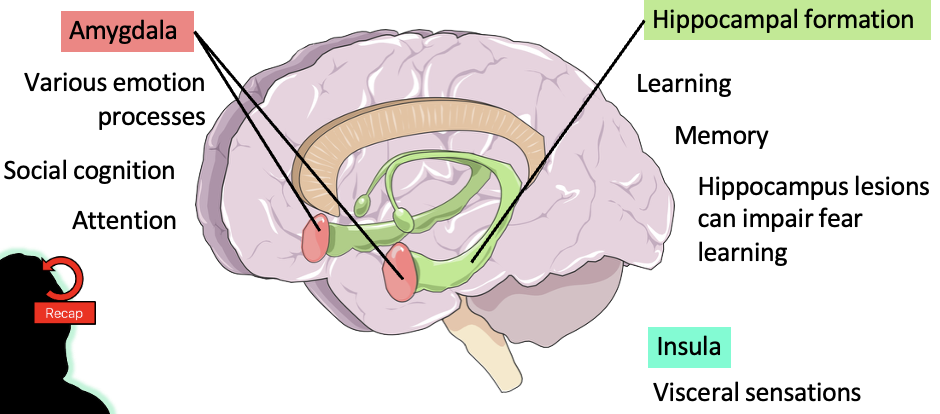
these are the brain regions of interest:
amygdala
hippocampal formation
insula
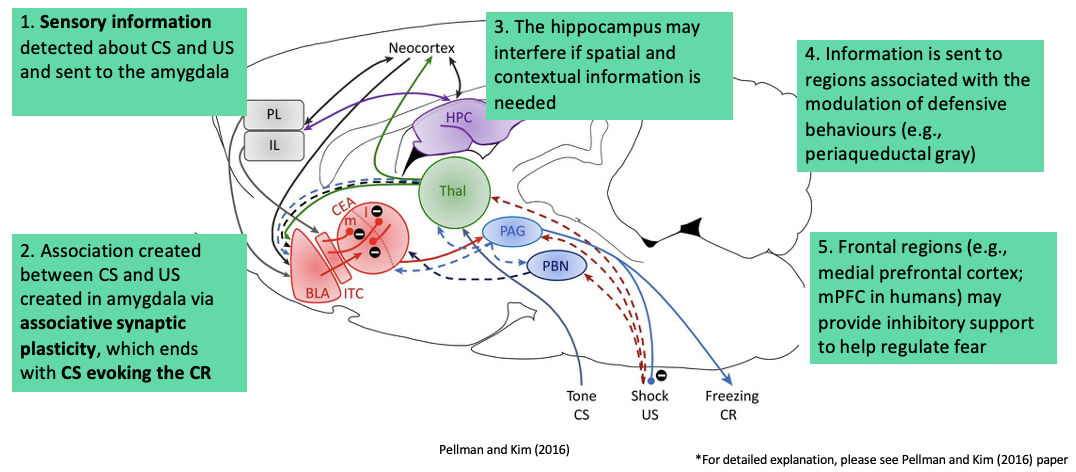
contemporary fear conditioning circuit
just need to be familiar with the brain regions from this
Information goes to the amygdala but some goes to the thalamus, UCS goes to PAG and Parabrachial nucleus (PBN) (involved in quick movement and pain)
Association is made influenced by the amygdala, information goes to the PAG (responsible for pain)
Hippocampus also involved by providing context to the response
Information is sent out to the body and response occurs
fear conditioning in humans
Administer electrical shocks to body (e.g. hands) and the US
Pain can be unpleasant but must be bearable
These studies have helped elucidate neural circuitry and mechanisms that may be associated with chronic clinical anxiety conditions as we can understand:
Fear acquisition
Fear extinction
examples of fear conditioning in humans = anxiety disorders
PTSD
specific phobias
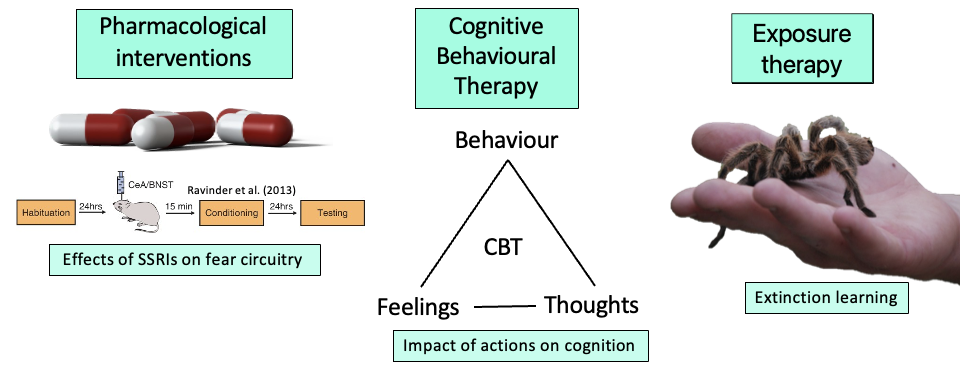
clinical anxiety interventions for consequences of fear conditioning in humans
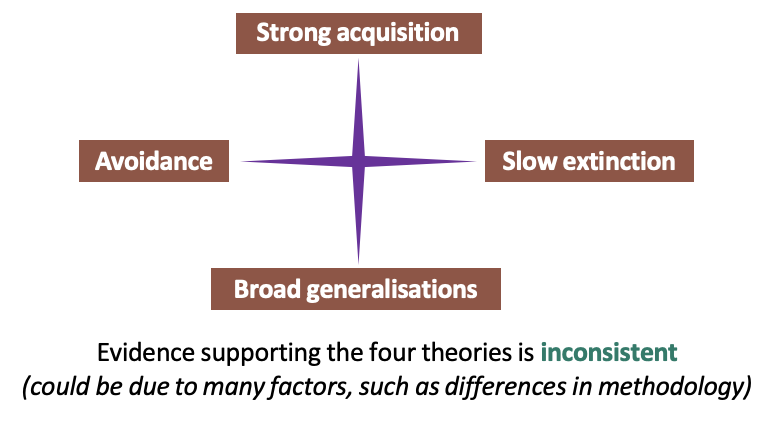
fear to anxiety theories
Strong acquisition
Those with anxiety disorders create stronger associations between CS and US - learn fear in a stronger way
Broad generalisations
Those with anxiety disorders are more likely to generalise the CR to the CS (and stimuli that are similar to the CS) (e.g. dog fear, also scared of wolves)
Slow extinction
Those with anxiety disorders take longer to disassociate (or unlearn) the relationship between CS and US
Avoidance
Those with anxiety disorders are more prone to avoidance defensive behaviours which make it difficult to undertake extinction processes (i.e., unlearning association between the CS and US)
but emotions are psychophysiological so need to consider the peripheral aspects such as:
Startle reflex (humans -> eyes, rodents -> whole body)
Heart rate variability
Pain sensitivity (fear induced pain analgesia)
Pupillary response (index of emotional arousal)
Cortisol levels
Skin conductance response
impacts of fear conditioning
Established experimental paradigms
Robust effects
Valuable insights into anxiety therapies
limitations of classical and fear conditioning - how well does CC explain fear?
unconditioned fear
non-human → human research
experimental realism
ethical considerations
dynamic nature of the environment
first limitation
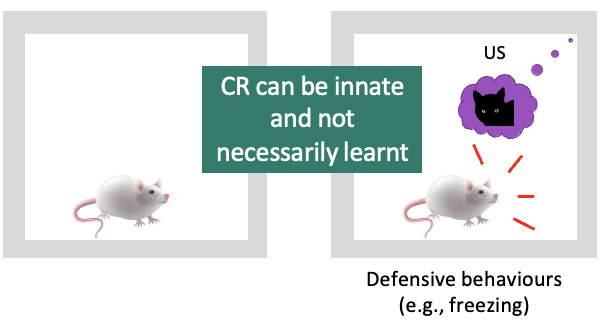
unconditioned fear -
How are children getting these fears? - there are certain fears people have without having to experience
Associative learning has a time cost
It takes a while and if we had to learn fear through having to experience things, we would not survive
The trial and error nature of associative learning may increase chances of failed attempts
example of unconditioned fear
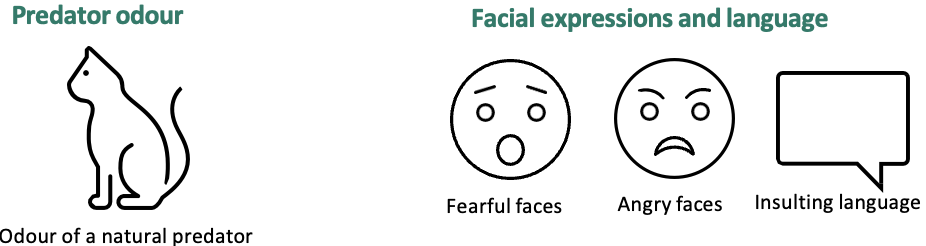
predator odour
Odours of predators increases defensive behaviours in prey animals
Associated with the activation of related defensive neural networks
Predator odour fear conditioning involves the use of a natural unconditioned stimulus (e.g. cat odour) as opposed to aversive foot shock
second limitation of classical and fear conditioning in explaining fear
non-human → human research
we can translate animal research to model human brain activity but there are some methodological differences to consider
e.g. Species-specific unconditioned stimuli
Natural unconditioned stimuli differs which may impact how information is processed in the brain
sensory modality of CS - human studies typically use a visual CS whereas rodent studies tend to use auditory CS
third limitation
experimental realism
Can we truly induce emotional states in the lab with the use of certain stimuli
Ethical considerations (particularly with vulnerable participants)
Can we accurately measure emotional states in real-world situations
Environmental confounding variables and technological limitations
fourth limitation
ethical considerations
human participants, relative to rodents, are less naive to the experimental procedure for ethical reasons which may affect emotional salience in the brain
numero 5
dynamic nature of the environment
The real world is more complex than lab environments - ecological validity
The same defensive strategy demonstrated in a lab may not always work in diverse world environments
(PART3) threat imminence framework - what are the advantages and disadvantages of studying fear in lab conditions
advantages:
greater control over extraneous variables
easier to replicate lab environments
disadvantages:
fear eliciting stimuli is not static on spatiotemporal dimensions - low ecological validity
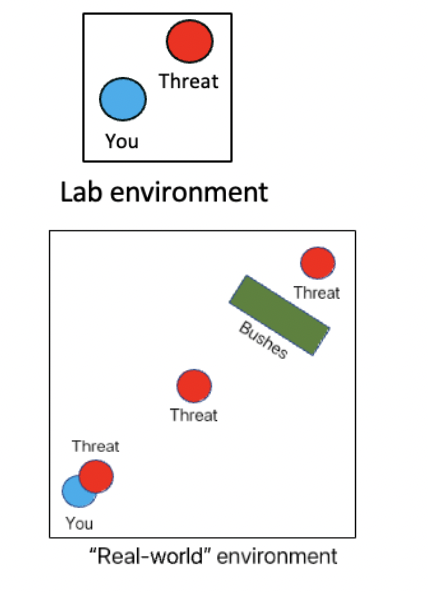
why does the dynamism of the environment matter? - RECAP
need to refocus neuroscience on complex, naturalistic behaviours and functional circuitry over mental categories and individual brain regions
emphasise HOW (context) instead of WHAT (specific brain regions)
why does the dynamism matter? - ecological validity
variance in defensive behaviours - they are not always the same and differ depending on the environment
The brain processes which may differ due to these different situations (in the ss):
motor processing - e.g. action readiness
executive functioning - e.g. planning
space and time
Cost-benefit decisions in dynamic environments (can i hide vs, where can i hide and is there enough time to hide)
classic fear conditioning paradigm research can highlight key regions (e.g., hippocampus)
but, it can limit the ability to identify nuanced brain patterns (e.g., foraging behaviours and hippocampal place cell remapping; Kim et al., 2012)
threats in the wild - threats exist in varied space and time
choice of defensive behaviours on spatial and temporal properties of the threat
there isn't a single defensive behaviour strategy - why anxiety interventions don't work for everyone
threats are dynamic not static
SPACE + TIME = DEFENSIVE BEHAVIOURS
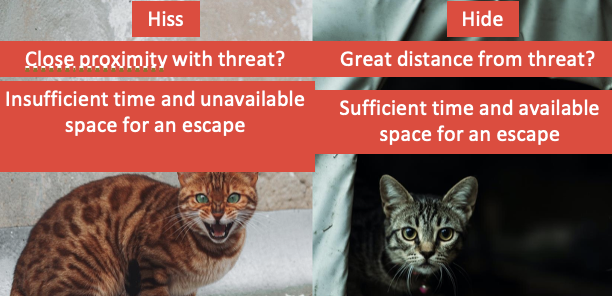
what is the threat imminence framework?
threat imminence framework: threat and fear-based theoretical framework that explains how animals (including humans) employ defensive behaviours depending on their perception of where the threat exists in space and time
The way animals respond to threatening situations depends on where the threat is in space and time
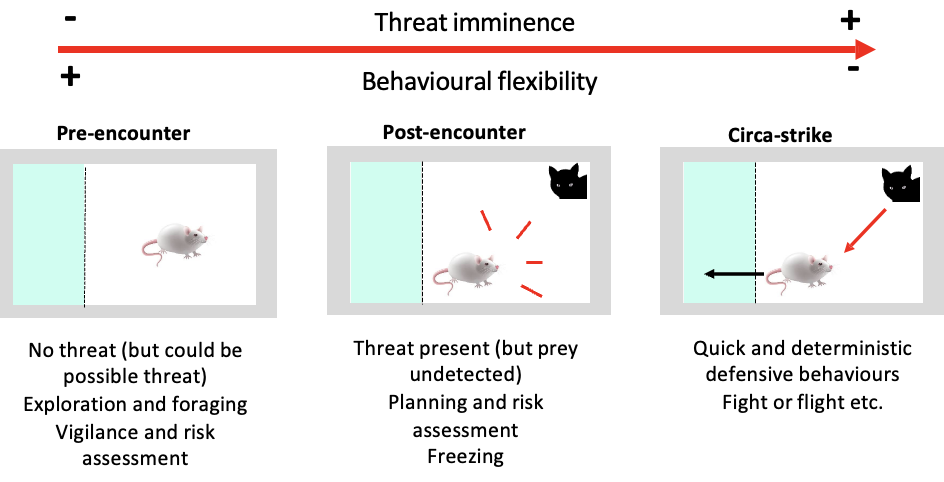
Imminence of the threat determines how you respond
TIF core stages
circa strike → when you are face to face with the threat
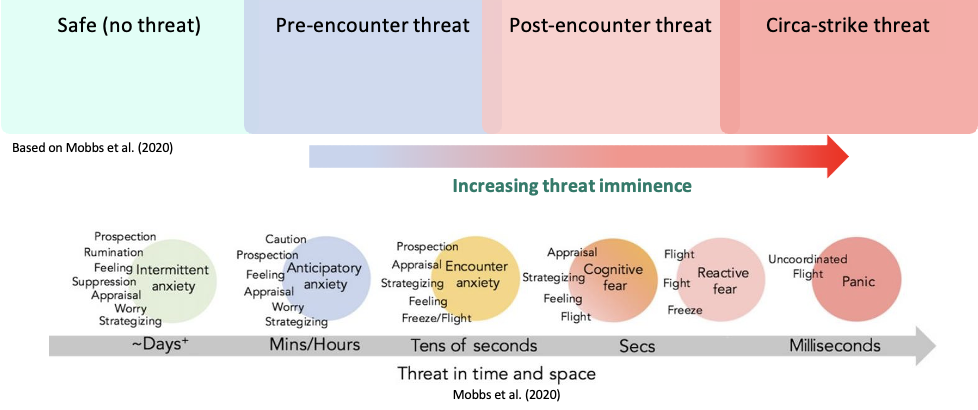
the graded defensive responses in the TIF
Goes from being cognitively based to physical- graded defensive responses
Cognitive- thinking / planning
Physical- narrow thinking and more limited in defensive strategies (cognitive flexibility decreases)
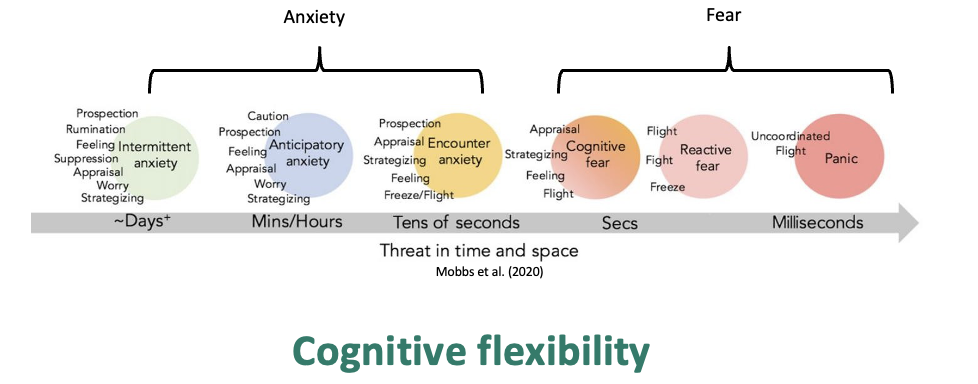
how do we decide to respond to threats? - the different decision based strategies
cognitive flexibility is theorised to be both
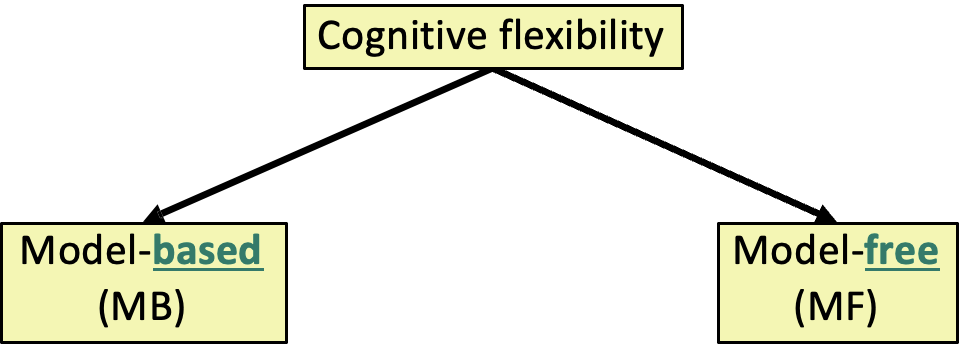
what is the model based (MB) decision strategy
Planning ways to avoid or deal with threat by building internal models of the environments dynamics (spatial configuration) - making decisions based on hypotheticals
Internal models are used to simulate and plan future actions
Allows for refinement of defensive strategies
Slow process may not be helpful when threat is imminent
e.g. planning an alternative route home at night for safety
what is the model free (MF) decision strategy
Reliance on well-established defensive behaviours that are innate or usually learnt from direct interactions with the environment
Defensive behaviours may not be as informed by understanding the full environment’s dynamics
Well-established defensive behaviours may become maladaptive for varying situations
Fast to employ when a threat is imminent as it is innate
e.g. avoidance behaviours
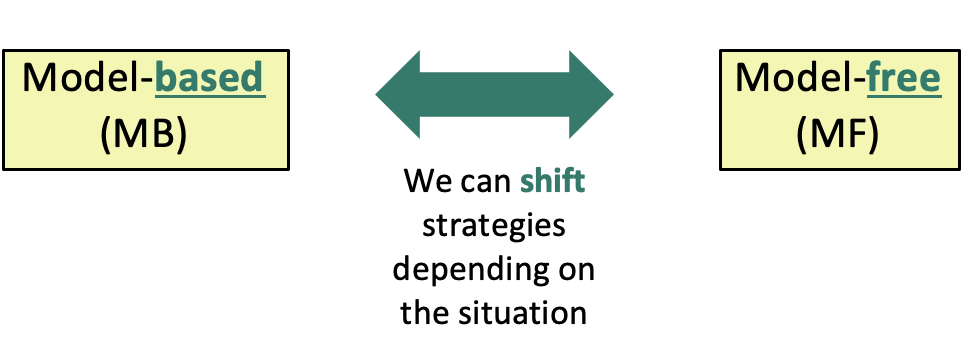
can we shift between the two decision strategies?
YES - we can shift depending on the situation
this shifting defines and effective animal - need to be able to use both
the more imminent the threat, the less flexible we become so will use MF
threat imminence and behavioural flexibility
the TIF attempts to provide a neural network that describes how the brain dynamically responds to threats varying in imminence
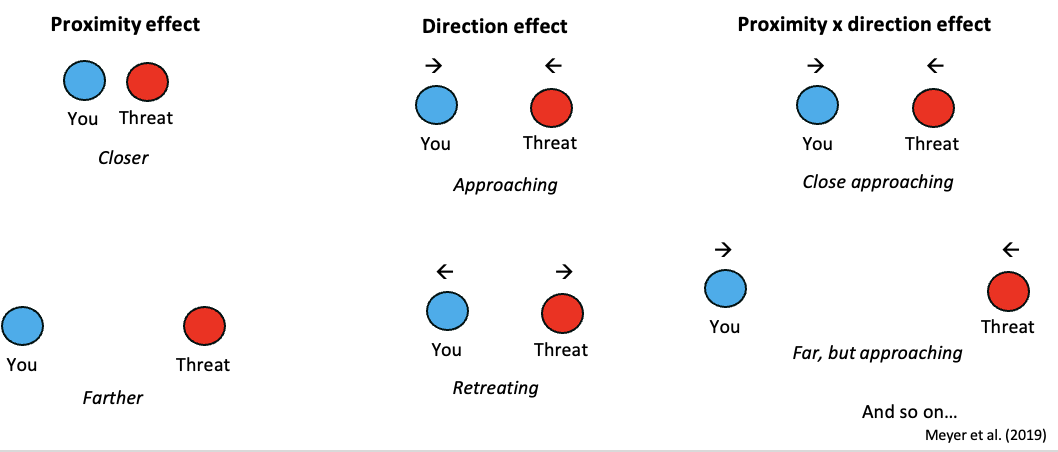
TIF experimental realism - ways to investigate perception of imminence
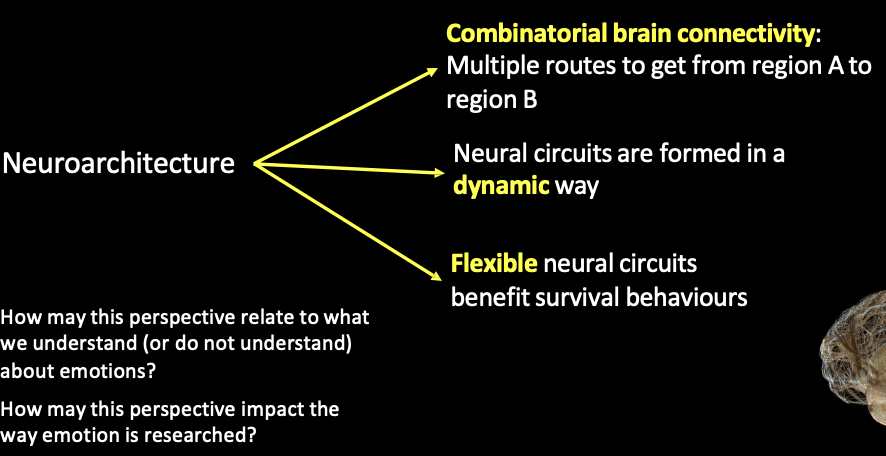
TIF perspectives on neural circuitry (how different brain circuits are involved at each stage of threat) - RECAP of neuroarchitecture
combinatorial brain connectivity - multiple routes to get from regions A to B
neural circuits are formed in a dynamic way
flexible neural circuits benefit survival behaviours
TIF based paradigm activation pattern
forebrain to do with planning
midbrain evolutionarily shared

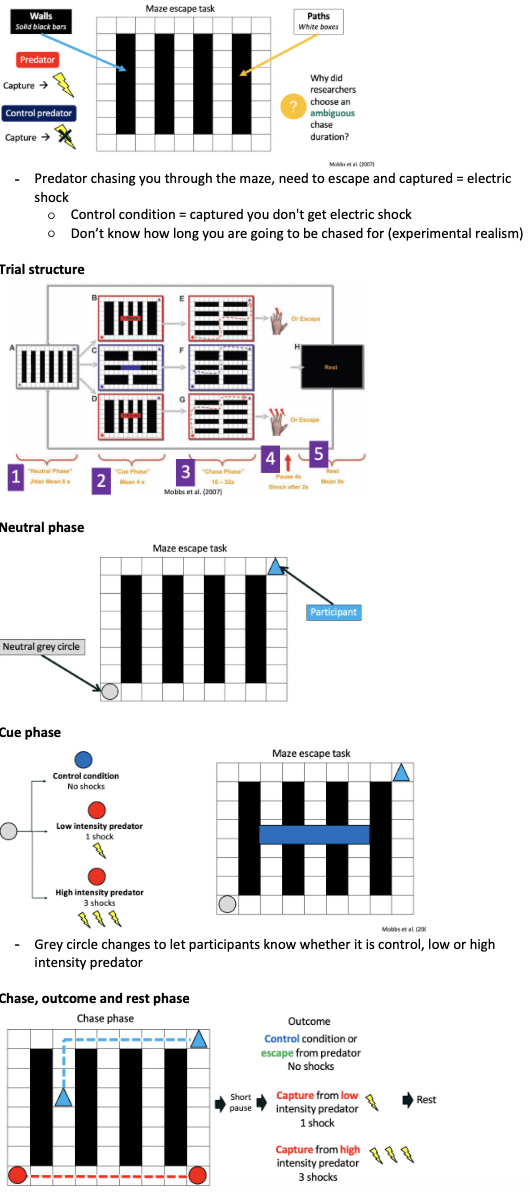
Mobbs et al (2007) - virtual predator paradigm
shows us how cognitive flexibility is represented in the brain
phase effects
cue phase:
predator cues activated prefrontal regions linked to anticipation and regulation
increase in activity in:
rostral and ventral anterior cingulate cortex
medial orbitofrontal cortex (mOFC)
ventral ACC
ventromedial PFC (vmPFC)
chase phase:
predator trials recruited midbrain and thalamic linked to coordination, sensory integration and defensive reactions
increase in activity in:
cerebellum
periaqueductal grey (PAG)
posterior thalamus
pulvinar
control trials instead engaged forebrain regions
increase in activity in:
medial PFC
right vmPFC
amygdala
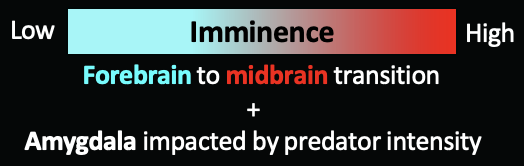
predator distance effects
high and low intensity predators showed similar distance effects
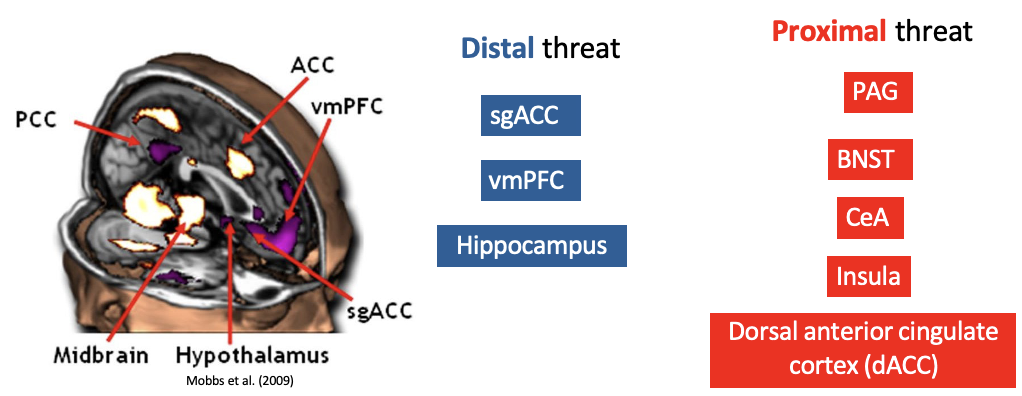
distal threat = increase vmPFC (including subgenual ACC)
proximal threat = increase PAG
high intensity predators also recruited the CeA and BNST (in basal forebrain) - regions associated with emergency / high salience situations
predator intensity effects
Predator intensity modulated neural responses
High intensity predators -> PAG, CeA, BNST activation
Distal high intensity predators -> basolateral amygdala activation
Low intensity predators -> vmPFC, BLA activity
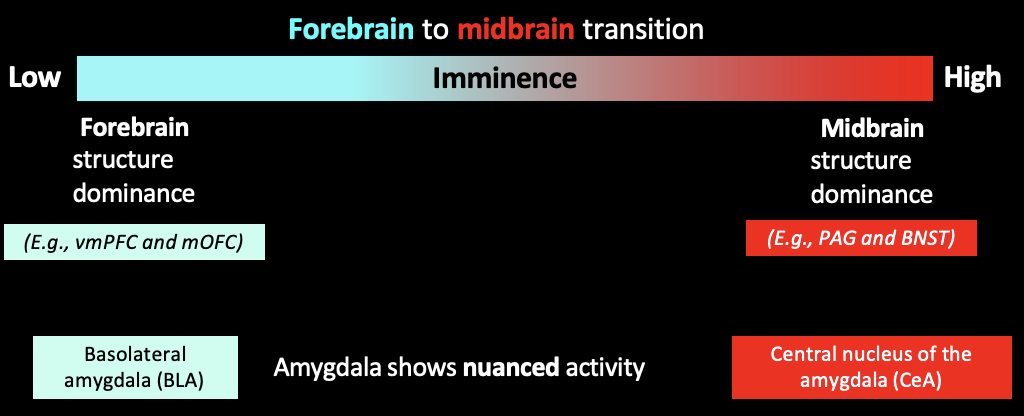
so what is the overall pattern found from the virtual predator paradigm
BL amygdala only recruited for low intensity
high imminence = central amygdala
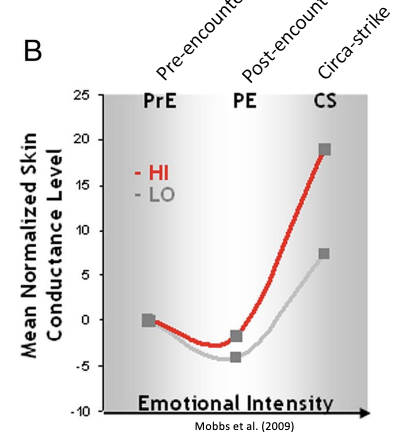
what is skin conductance
skin conductance: changes in electrical activity on the skin typically measured through sweat gland activity modulated by the sympathetic nervous system
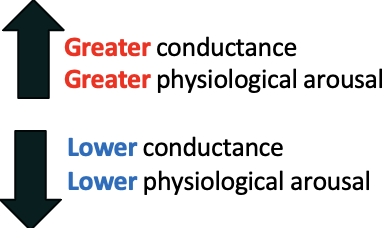
findings of skin conductance in the virtual predator paradigm / TIF
drops for a second - represents the body getting ready
then increases with physiological arousal
this shows us its not just going on the the brain, but happening in the body too!
replication of the virtual predator paradigm
criticism of this study
they used a computer based predator, so could ask will brain responses to natural threats be impacted by TI (e.g. proximity effects)
are there different types of fear?
Cognitive fear - time to consider our defensive strategy (e.g. slow moving threat)
Reactive fear - little time to consider our defensive strategy (e.g. fast moving threat)
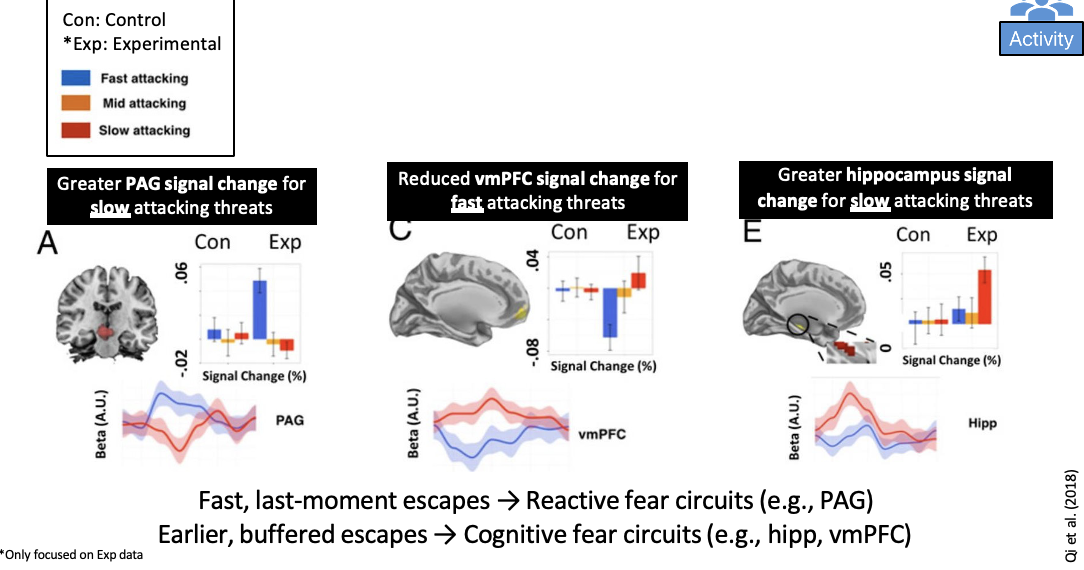
virtual predator based paradigm - asks how does the brain respond to fast, mid and slow attacking predators
difference in brain representations for cognitive and reactive fear
Qi et al (2018) - this study looked at virtual predator experiment
PAG = increased activation for fast attacking
But for slow attacking PAG almost deactivated
Decreased activation for vmPFC fast attacking - less time to plan
Hippocampus active when slow attacking - organise oneself in space and time
suggests the brain activates dependent on imminence!
TIF using naturalistic stimuli
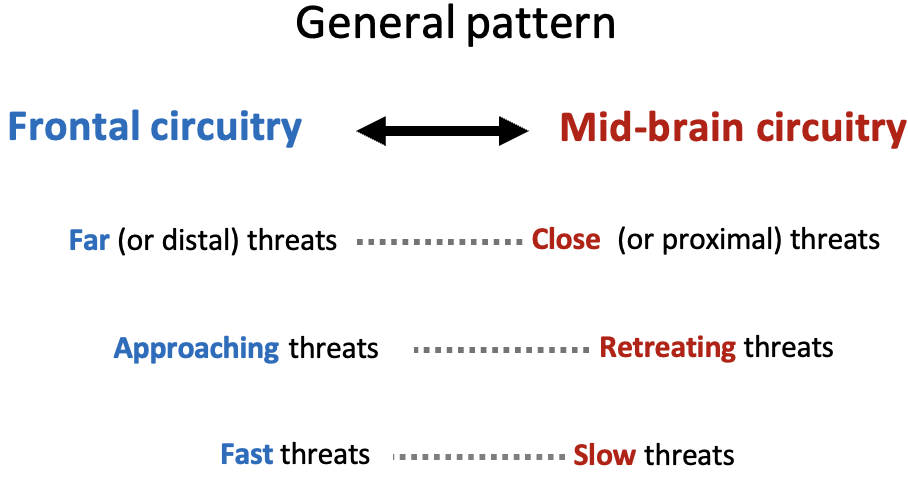
again, closer = midbrain, and further = forebrain
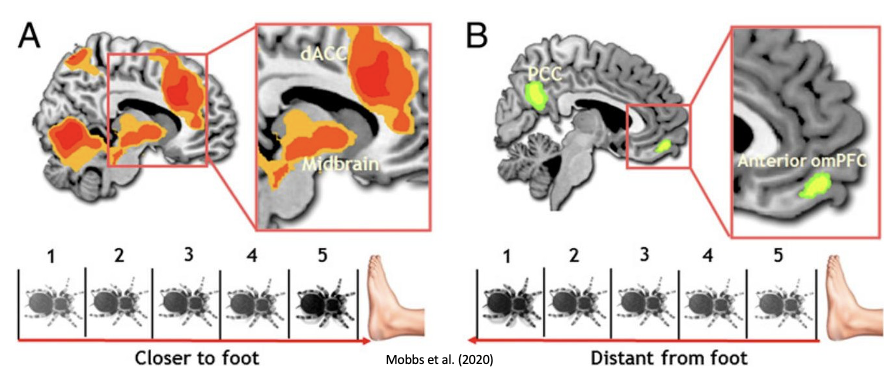
what is the general pattern of findings?
*swap approaching and retreating and fast and slow!
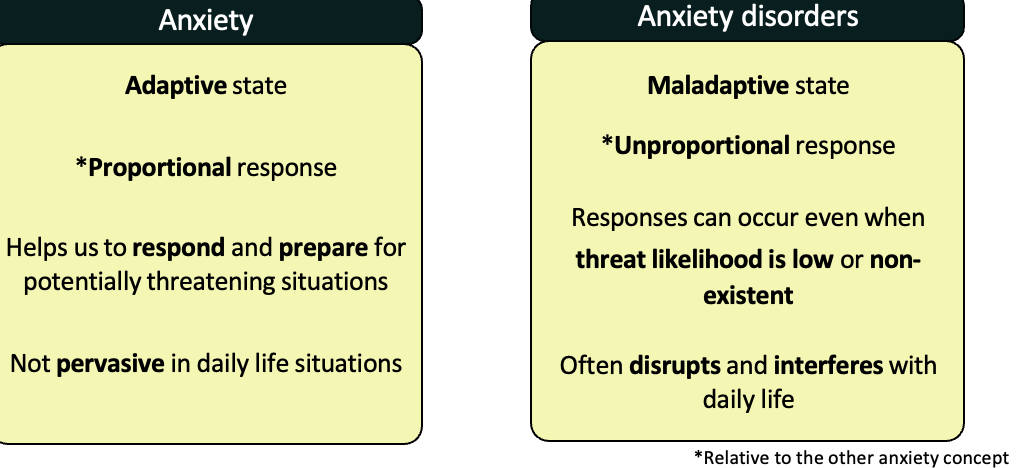
TIF and anxiety disorders - difference between anxiety and anxiety disorders
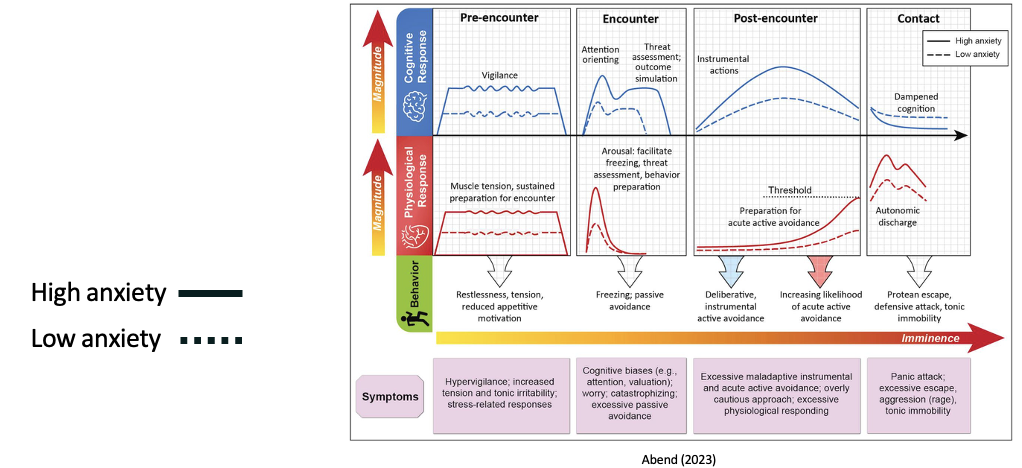
do anxiety disorders affect one or more stages of the TIF
those with high levels of anxiety are more cognitively aroused in general and when they meet the threat
takes them longer to calm down from the threat
response to threat in those with anxiety disorders is more intense and takes them longer to recover than those with lower anxiety
critiques / alternatives to TIF
The framework may oversimplify anxiety by focussing on external (rather than internal) threats
Feeling a certain way can induce anxiety
How well does the TIF explain sudden panic attacks?
Does the existence of hardwired defensive circuits challenge constructivist claims, or can they be integrated?
If there is a specific pattern the brain goes through, what does this mean for constructivist claims - are certain threats attenuated in certain cultures