AQA A level Bio 4.7 Investigating Diversity
 Call Kai
 Learn
Learn Practice Test
 Spaced Repetition
 Match
Match Flashcards
 Knowt Play
1/4

Earn XP
Description and Tags
Name | Mastery | Learn | Test | Matching | Spaced | Call with Kai | Chat |
|---|
No analytics yet
Send a link to your students to track their progress
5 Terms
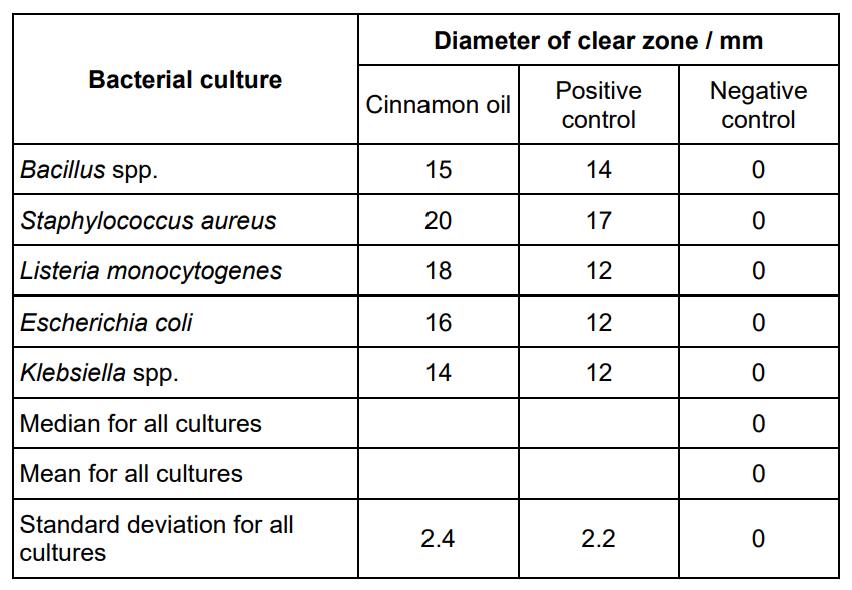
A student investigated the use of cinnamon oil as an antimicrobial substance. She investigated the effect of cinnamon oil on the growth of five different bacterial cultures grown on agar plates.
The student measured the diameter of the clear zone with no bacterial growth around each well. She made these measurements to the nearest whole mm
The table shows her results
Suggest exactly what the student added to the wells to get the positive control and negative control results (2)
(Positive control)
Antimicrobial/antibacterial (solution) (1)
(Negative control)
Sterile water OR Oil (w/o cinnamon) (1)
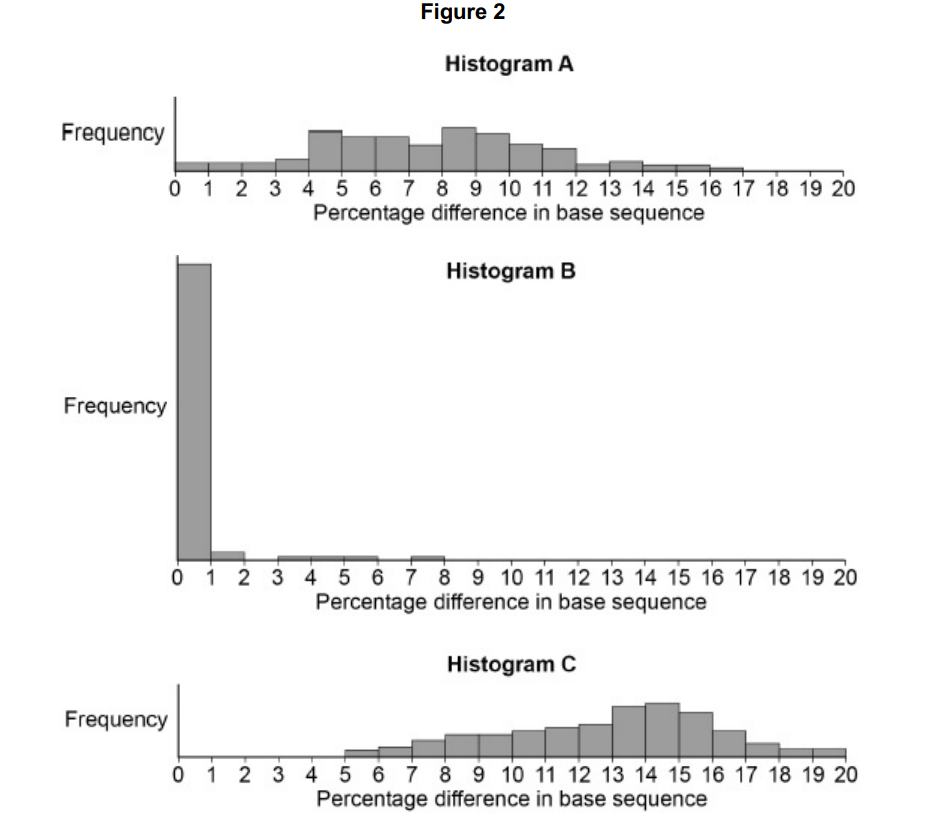
To calculate the percentage difference in base sequences, the scientists first counted the number of bases and the number of base differences. What statistical test should the scientists use to test whether the number of base differences between birds in histogram A and birds in histogram C is statistically significant? (2)
Student’s t-test (1)
Comparing mean of data sets/histograms (1)
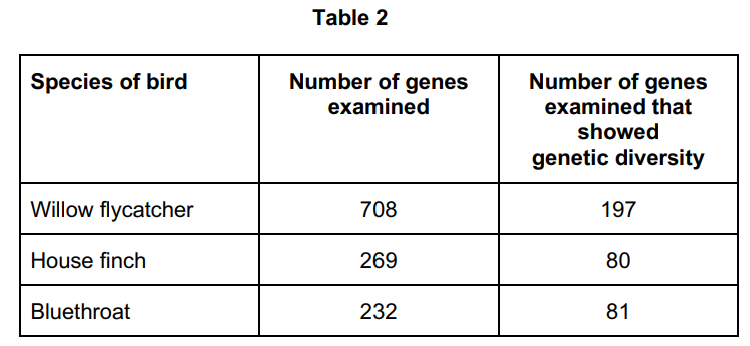
A group of scientists investigated genetic diversity in different species of bird. For each species, the scientists:
• collected feathers from a large number of birds
• extracted DNA from cells attached to each feather
• analysed the samples of DNA to find genetic diversity. Table 2 summarises their results.
In this investigation, what is meant by genetic diversity? (1)
Number of different alleles of each gene (1)
Littorina littorea is a species of snail found on rocky sea shores. A student investigated variation in snail shell height in two populations of snails. Give two ways in which the student could ensure his samples would provide a reliable measure of the variation between individuals in each population. (2)
Use a large sample (1)
select at random
A student compares the mean surface area of leaves on the ground from two populations of wild cherry trees. Describe and explain how the student should collect these leaves to obtain valid data. (2)
Random sample so no bias (1)
Large sample/number so can calculate reliable mean (1)