AP Bio Unit 2.1 MCQ Quiz
 Call Kai
 Learn
Learn Practice Test
 Spaced Repetition
 Match
Match Flashcards
 Knowt Play
1/56

There's no tags or description
Looks like no tags are added yet.
Name | Mastery | Learn | Test | Matching | Spaced | Call with Kai | Chat |
|---|
No analytics yet
Send a link to your students to track their progress
57 Terms
Concentration gradient
A difference in concentration of a substance, consisting of areas with higher and lower concentration

Passive transport
Occurs when molecules disperse across a membrane, done through two ways of diffusion
Simple diffusion
Molecules that can diffuse directly through the cell membrane/lipid bilayer. Molecules that move by this method are generally nonpolar, uncharged, and smaller, like oxygen and carbon

Facilitated diffusion
The diffusion of a molecule through a cell membrane by a transport protein. Molecules that move by this method are generally polar, charged, and larger

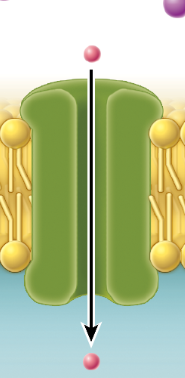
Channel protein
A protein used for facilitated diffusion that has an opening on both sides allowing for molecules to pass through
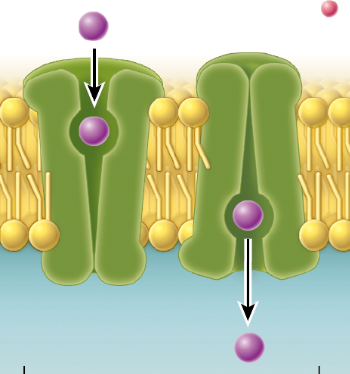
Carrier protein
A protein that binds to specific molecules to transfer them across the cell membrane
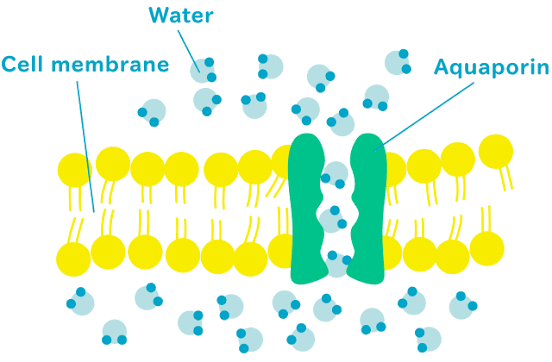
Aquaporin
A water channel in the cell, so that water can enter and exit by facilitated diffusion
Active transport
The movement of substances against the concentration gradient
Primary active transport
A transport protein uses the cellular energy from the breakdown of ATP to pump molecules against the concentration gradient, eg. potassium and sodium ions

Secondary active transport
Proteins are first pumped across the membrane by ATP, which creates an electrochemical gradient that allows protons to move down the gradient, eg. hydrogen ions

Exocytosis
A transport method used to remove waste, where vesicles bud to a membrane to release their contents

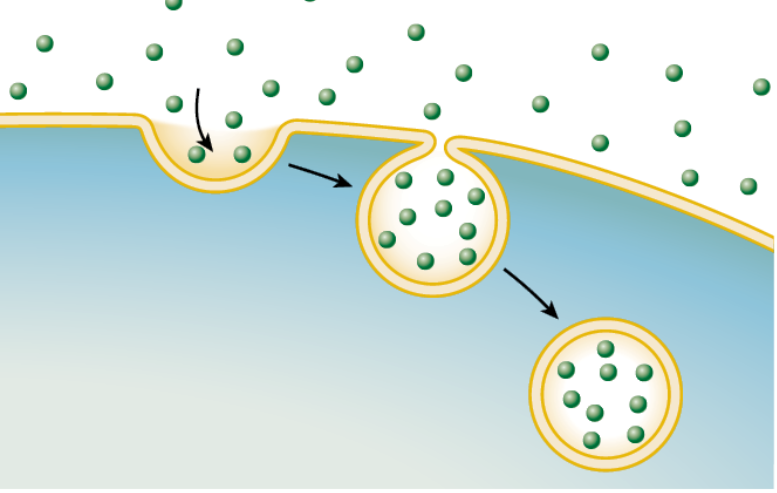
Endocytosis
A transport method where vesicles collect material from outside of the cell and brings it in
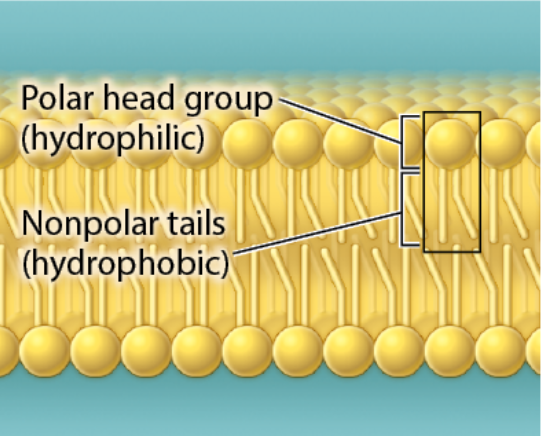
Lipid bilayer
A structure composed of two layers of lipids, where hydrophilic heads are on the outside, interacting with water, and hydrophobic tails isolated on the inside
Transport protein
Membrane proteins that move ions or molecules across the membrane

Receptor protein
Membrane proteins that allow cells to receive signals from the environment

Integral membrane protein
Proteins that are permanently associated with the cell membrane and cannot be removed without destroying the cell membrane

Peripheral membrane protein
Proteins that are temporarily associated with the lipid bilayer or integral membrane proteins due to weak covalent bonds. Can be easily removed from the membrane

Transmembrane protein
Most integral membrane proteins that have two hydrophilic regions and the interior hydrophobic region
Glycolipid
A carbohydrate covalently attached to a lipid

Glycoprotein
A carbohydrate covalently attached to a protein
Fluid mosaic model
A model depicting how the lipid bilayer moves laterally

Cell theory
All organisms are made up of cells
The cell is the fundamental unit of life
Cells come from pre-existing cells
Homeostasis
The process where the cell maintains a stable internal environment
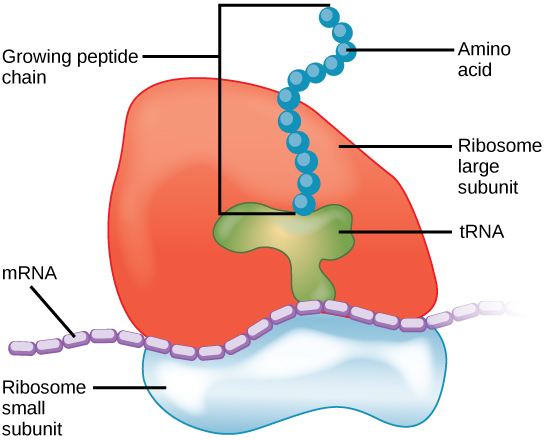
Ribosome
A particle within a cell that is made up of ribosomal RNA (rRNA) and proteins. Its function is to synthesize protein according to the mRNA sequence
Metabolism
The set of chemical reactions that occur to provide energy and life
Catabolism
A metabolic process that breaks down large molecules and produces energy in the form of ATP
Anabolism
The metabolic process that builds complex molecules and requires energy, like ATP
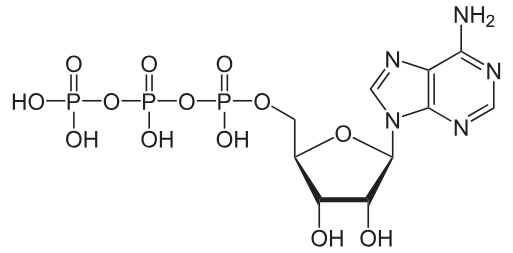
Adenosine triphosphate (ATP)
The “energy currency” of cells, stores and transfers energy between cells
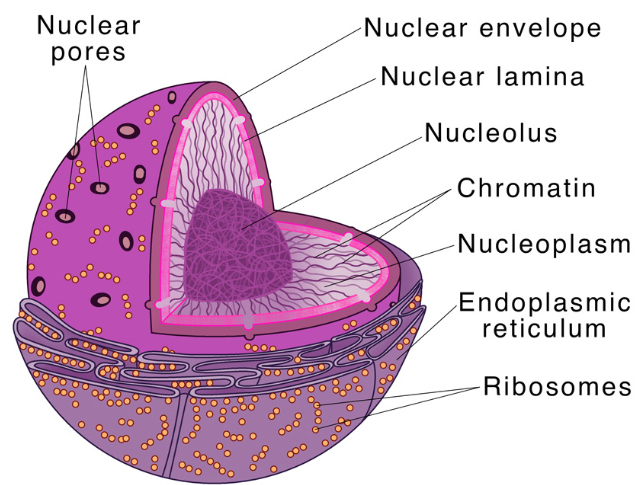
Nucleus
Membrane-bound organelle within eukaryotic cells that stores DNA
Cytoplasm
The gel fluid between the nucleus and outer cell membrane, its job is to provide structural support
Prokaryotic
Cells without a nucleus, contain Bacteria and Archaea
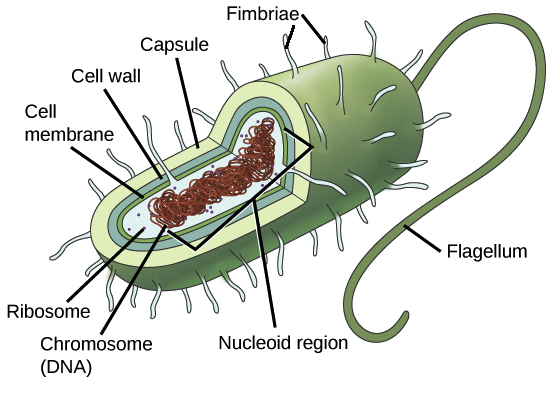
Eukaryotic
Cells that contain a nucleus, relies on internal organelles to function

Domain
Groups of organisms
Bacteria
Single-cell micro organisms found everywhere, some good, some spread disease. A domain of prokaryotes
Archea
Single-cell micro organisms, that are a domain of prokaryotes
Eukarya
A third domain of life, consists of eukaryotes
Organelle
A specialized structure within a cell that preforms specific functions
Cytosol
Jelly like material within cells that holds organelles
Surface area
The total amount of area of the outer surface of an object
Vesicle
Small membrane-bound sacs that connect endomembrane systems by transporting and storing materials

Endomembrane system
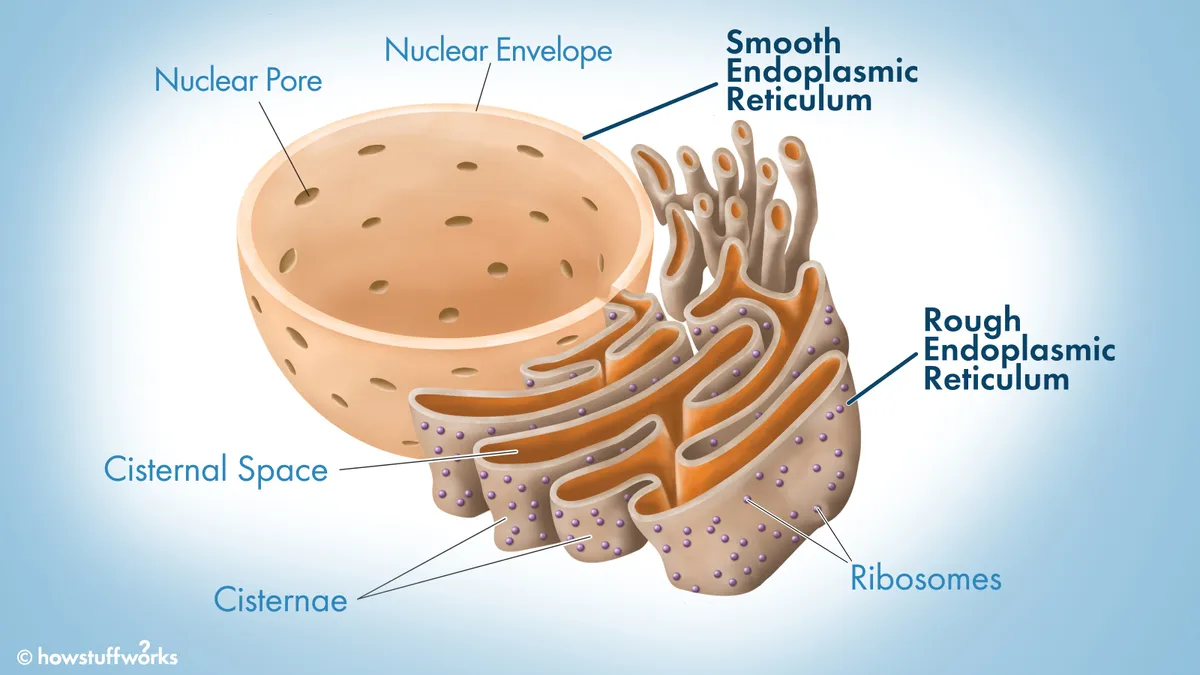
A network of membranes and organelles in an eukaryotic cell that modify and transport lipids and proteins.

Nuclear envelope
The double membrane that separates the nucleus from the exterior and acts as a boundary
Endoplasmic reticulum (ER)
A membrane-bound organelle that consists of a smooth ER and rough ER. The smooth ER detoxifies and creates lipids, the rough ER has ribosomes attached to its membrane and packages proteins
Enzyme
A catalyst that speeds up chemical reactions, lowers the activation energy
Golgi apparatus
An organelle that folds, modifies and packages proteins and lipids. It is made up of flattened sacs called cisternae
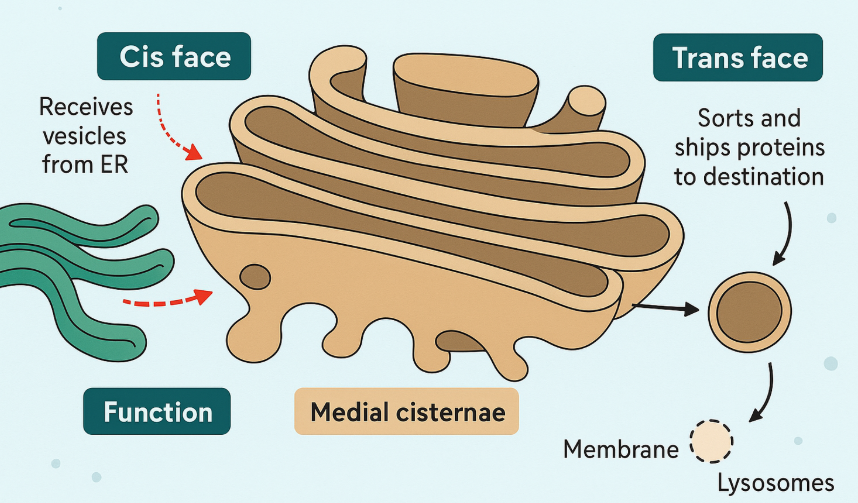
Lysosome
A membrane-bound organelle that aids in digestion though its hydrolytic enzymes

Mitochondrium
A membrane-bound organelle that produces ATP energy and works in cellular respiration
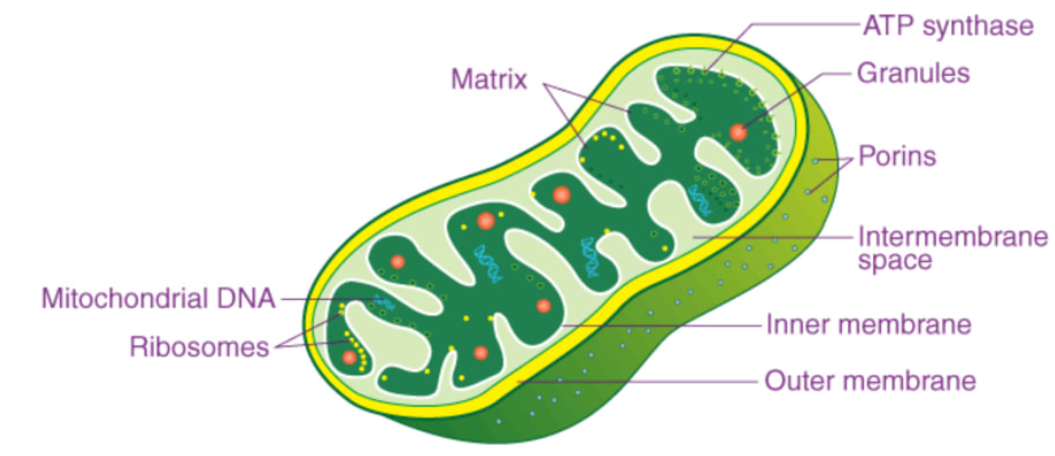
Cellular respiration
A series of reactions where organic molecules are broken down and the energy is converted to ATP
Mitochondrial matrix
The fluid space in the inter membrane of a mitochondria
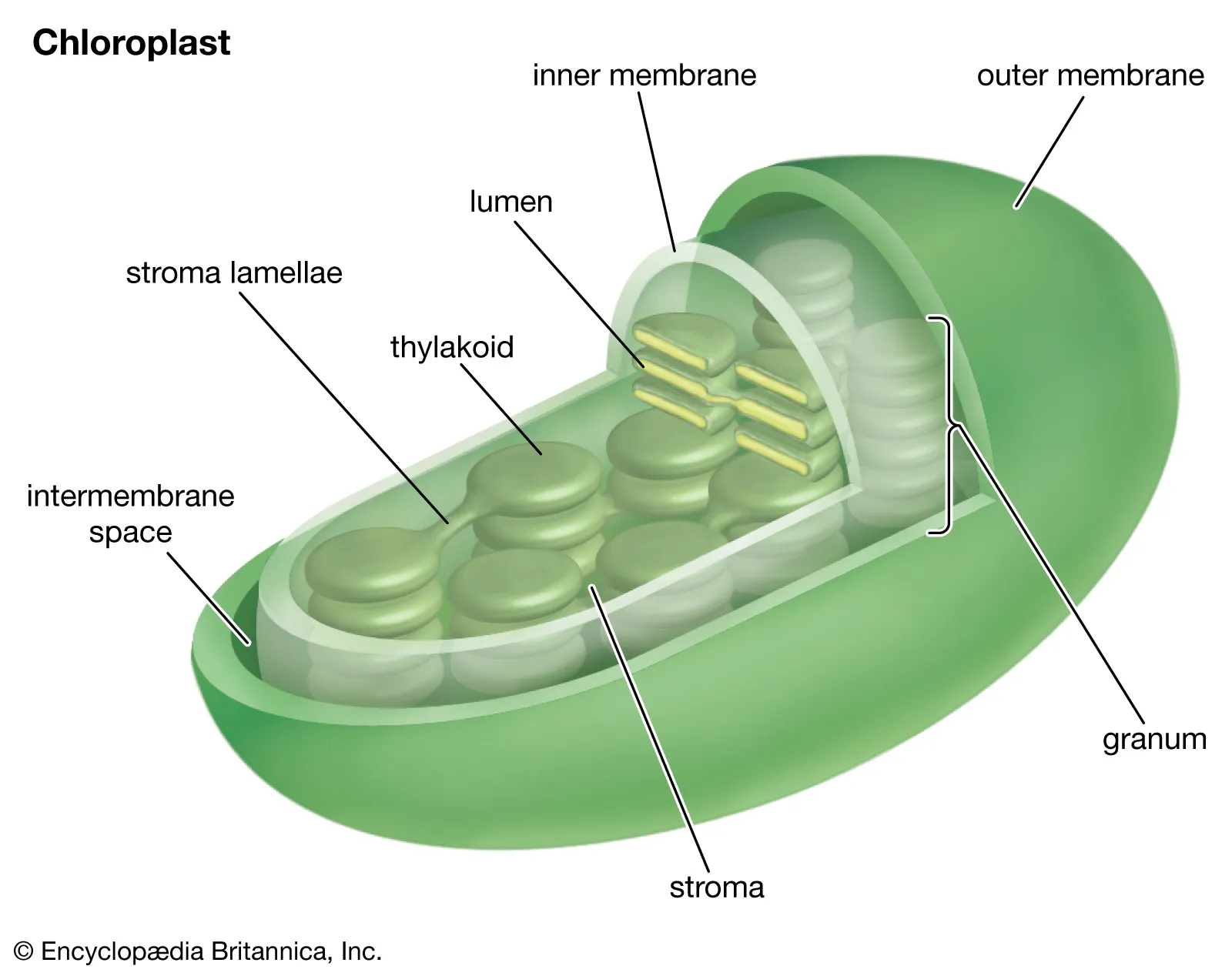
Chloroplast
An organelle in plant and algae cells the conducts photosynthesis
Photosynthesis
The process where plants and algae capture sunlight and turn it into stored chemical energy
Thylakoid
The flattened sacks within chloroplasts that create stacks called grana
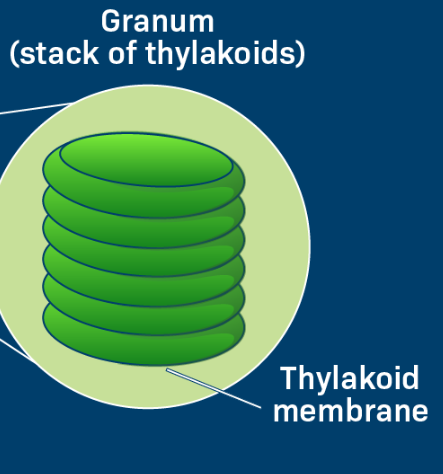
Grana
Stacks of thylakoids where photosynthesis occurs
Chlorophyll
The green pigment that collects light for photosynthesis
Cytoskeleton
The structural protein fibers that help determine a cells shape and stabalize. Consists of microfilaments and microtubules

Turgor pressure
When water interacts ith cells and the cell walls
Vacuole
A membrane-bound organelle that stores water and waste products.
