Cell division, cell diversity and cellular organisation
 Call Kai
 Learn
Learn Practice Test
 Spaced Repetition
 Match
Match Flashcards
 Knowt Play
1/10

There's no tags or description
Looks like no tags are added yet.
Name | Mastery | Learn | Test | Matching | Spaced | Call with Kai | Chat |
|---|
No analytics yet
Send a link to your students to track their progress
11 Terms
Cell cycle
The cell cycle is the process by which a cell grows, copies its DNA, and divides to produce two genetically identical diploid daughter cells.
Interphase is the longest stage of the cell cycle and consists of:
G₁ (Gap 1): The cell grows, carries out normal metabolic activities, and replicates proteins and organelles.
S (Synthesis): DNA is replicated to give 46/ 23 pairs double X chromosomes (two genetically identical sister chromatids in one chromosone attached via centromere)
G₂ (Gap 2): The cell continues to grow, produces proteins needed for cell division, and checks that DNA has been copied correctly.
After interphase, the cell undergoes mitosis, where the nucleus divides, followed by cytokinesis, where the cytoplasm divides to produce two genetically identical daughter cells.
Check points in the cell cycle
G₁ checkpoint: Checks that the cell is large enough, has enough nutrients, and that the DNA is undamaged before DNA replication begins.
G₂ checkpoint: Ensures DNA has been fully and accurately replicated before the cell enters mitosis.
M (spindle) checkpoint: Checks that all chromosomes are correctly attached to the spindle fibres before they separate during mitosis.
G0
G₀ (Gap 0) is a resting phase in which cells leave the cell cycle, carry out their normal functions, and do not divide unless stimulated to re-enter the cycle.
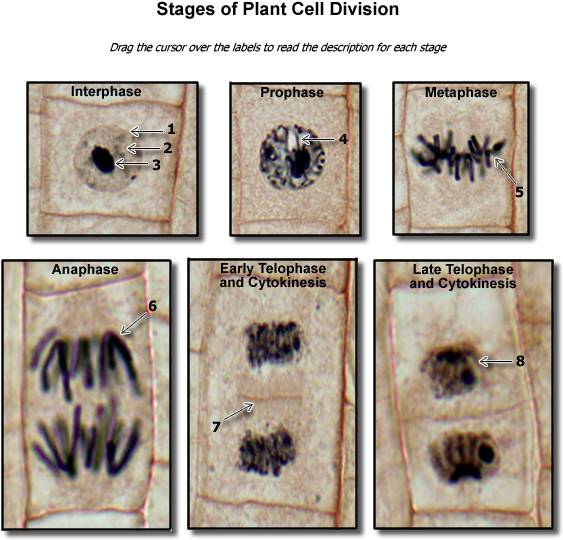
Mitosis stages
Prophase: Chromosomes super coil/ condense and become visible (before that is a mass of DNA called chromatin), each consisting of two sister chromatids joined at the centromere. The nuclear envelope breaks down, centrioles (anchors for spindle fibers made of microtubules) move to opposite poles, and spindle fibres begin to form.
Metaphase: Spindle fibres attach to the centromeres, and chromosomes line up along the equator (middle) of the cell.
Anaphase: The centromeres divide, allowing sister chromatids to separate. Spindle fibres shorten, pulling the chromatids to opposite poles of the cell.
Telophase: Chromatids reach opposite poles and are now called chromosomes (1 double chromosome splits into 2 chromosomes as sister chromatids pulled apart in anaphase). The spindle fibers breaks down, nuclear envelopes reform around each set of chromosomes, and the chromosomes uncoil.
Cytokinesis (post mitosis): The cell membrane pinches in (in animal cells; a cleavage furrow forms) or a cell plate forms (in plant cells), dividing the cytoplasm to produce two genetically identical daughter cells.
Stages of mitosis micrograph
Significance of mitosis
Growth
Increases the number of cells, allowing an organism to grow from a single fertilized cell into a multicellular organism.
Tissue repair and replacement
Replaces damaged, worn-out, or dead cells.
Mitosis occurs in meristem of the plant (root and shoot tips)
Examples: healing cuts, replacing skin cells, and repairing tissues.
Asexual reproduction
Produces genetically identical offspring (clones) from a single parent.
Occurs in:
Plants: vegetative propagation (e.g., runners, tubers, bulbs)
Animals: some simple animals such as hydra reproduce by budding and for example, jellyfish.
Fungi: many fungi reproduce asexually by producing spores through mitosis.
Stages of meiosis (interphase)
Same as mitosis interphase
G₁ (Gap 1): The cell grows, carries out normal metabolic activities, and replicates proteins and organelles.
S (Synthesis): DNA is replicated to give 46/ 23 pairs double X chromosomes (two genetically identical sister chromatids in one chromosone attached via centromere)
G₂ (Gap 2): The cell continues to grow, produces proteins needed for cell division, and checks that DNA has been copied correctly.
Meiosis I
Separate homologous chromosomes, reducing the chromosome number from diploid (2n) to haploid (n).
Prophase I
Chromosomes condense/ supercoil and become visible.
Homologous chromosomes pair up (synapsis) to form bivalents.
Crossing over occurs:
Non-sister chromatid exchange sections of DNA.
This creates new combinations of alleles (genetic variation).
Nuclear envelope breaks down.
Spindle fibres form
Centrioles move to either poles to hold spindles in place
Metaphase I
Homologous pairs line up along the equator attached to spindle via centrome
The orientation of each pair is random (independent assortment).
Spindle fibres attach to centromeres.
Anaphase I
Homologous chromosomes separate.
Sister chromatids remain joined together.
One chromosome from each pair moves to opposite poles (each end is now haploid)
Telophase I
Chromosomes reach opposite poles.
Nuclear envelopes may reform.
Spindle fibers breakdown
Cytokinesis divides the cell.
Two haploid cells are produced.
Each chromosome still consists of two sister chromatids and have 23 chromosomes
Meiosis II
Separate the sister chromatids and keeps each cell at 23 chromosomes
Prophase II
Chromosomes condense/ supercoil again becoming visible
Nuclear envelope breaks down (if it reformed).
Spindle fibres form.
Metaphase II
Chromosomes line up individually at the equator.
Spindle fibres attach to opposite sides of each centromere
Anaphase II
Centromeres divide.
Sister chromatids separate.
Each chromatid is now an individual chromosome.
They move to opposite poles.
Telophase II
Chromosomes arrive at opposite poles.
Nuclear envelopes reform.
Spindle fibers breakdown
Chromosomes decondense.
Cytokinesis occurs.
Products mitosis vs meiosis
Mitosis:
2 daughter cells
Diploid (2n) – same chromosome number as the parent cell 46
Genetically identical to each other and to the parent cell (except for rare mutations)
Meiosis:
4 daughter cells
Haploid (n) – half the chromosome number of the parent cell 23
Genetically different from each other and the parent cell
Uses and variation of meisosis
Genetic variations from overlapping and recombination
Genetic variation from independent assortment
Produces genetically different haploid gametes/ sex cells
Females gametes have 23rd chromosome XX and male gametes have 23rd chromosome XY and fuse to form diploid 46 chromosome zygote