HCI 3 - M3.1 - Change Identification
 Call Kai
 Learn
Learn Practice Test
 Spaced Repetition
 Match
Match Flashcards
 Knowt Play
1/46

There's no tags or description
Looks like no tags are added yet.
Name | Mastery | Learn | Test | Matching | Spaced | Call with Kai | Chat |
|---|
No analytics yet
Send a link to your students to track their progress
47 Terms
What are the 4 capabilities that must move together when conducting change?
Knowledge capability
Organization capability
Process capability
Environmental capability
T or F:
"New" products, process, organizations, and initiatives rise and decay at an ever faster rate
True
What is change?
The events/activities and/or steps that can be put into a project plan
When starting with "endings" what is the first thing that people must do?
Let go of the old ways and identity
Going through an in-between time when the old is gone and the new is not fully operational is called what?
Neutral zone
What are the 5 needs to in the heirarchy of needs in Maslow's hierarchy?
Physiological needs
Safety needs
Love
Esteem needs
Need for self-actualization
How is the basal ganglia involved with change?
handles the tried-and-tested outcomes; used to things that we are used to
What part of the brain is charge of processing new information and change; is is very energy intensive
Prefrontal cortex
What are the 3 models of the change process?
Lewin's three-stage model
Kotter's eight-step model
Senge's systems thinking model
What does Lewin's three-stage model show?
How collective mindsets are broke down to allow change
What does Kotter's eight step model show?
A road map for change based on common errors made by organizations
What does Senge's systems thinking model show?
how profound change can be achieved through learning
T or F:
Culture will always over power the benefits of change.
True
What is the "far environment" for strategy development?
Big external drivers and trends
"what business are we in?"
What is the "near environment" for strategy development?
concerns for competitior organizations
"how do we compete?"
acronym for the "far environment"
PESTLE
- Political
- Economic
- Social
- Technology
- Legal
- Environment
3 unique strategies for near environment
Overall cost leadership
Differentiation
Focus
What are the 3 questions of all change analysis?
Where are we now?
Where do we want to go?
How do we get there?
What are the 3 tools that are used to answer the 3 questions of change analysis?
The five forces model at the industry level
SWOT analysis
Lewin's force-field analysis
In the SWOT tools, what are typically viewed as "internal" to the organization?
Strengths
Weaknesses
In SWOT tools, what is typically viewed as "external" to the organization?
Opportunities
Threats
What kind analysis tool should be used in collaboration with key stakeholders to ensure a variety of viewpoints and perspectives?
Force Field Analysis
In power/influence matrix, who is high power and high influence?
Key players
In power/influence matrix, who is high power, low interest?
Influential observers; keep satisfied
In power/influence matrix, who is low power, high influence?
Active players; keep informed
In power/influence matrix, who is low power, low influence?
Spectators
How to combat confirmation bias?
Communicate with objective evidence and include losses and problems that will be avoided
How to combat status quo bias?
Ensure what things will stay the same and what is changing
How to combat availability bias?
Communicate how and when issues are going to be dealt with
How to combat the Bandwagon effect?
communicate success stories early
Which phase is the most important part of negotiation?
Preparation (1st phase)
What is the change readiness formula?
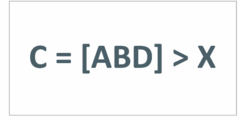
What does each variable mean in the change readiness formula?
C = [ABD] > X
C = change
A = level of dissatisfaction with the status quo
B = desirability of the proposed change or end state
D = practicality of the change (knowledge of the next practical steps, minimal risk and disruption
X = perceived "cost" of the change
What does each letter of ADKAR mean?
Awareness
Desire
Knowledge
Action
Reinforcement
What does ADKAR measure in an organization?
Measures engagment
What are the 5 concepts of emotional intelligence?
Self-awareness
Self-regulation
Motivation
Empathy
Social skill
What is self-awareness?
ability to recognize and understand your moods and emotions and how it affects others
What is self-regulation?
ability to control or redirect disruptive impulses; to think before acting
What is motivation?
A passion to work for things
What is empathy?
ability to understand the emotional state of others and treating people according to their reactions
What is social skill?
proficiency in managing relationships and building networks; an ability to find common ground and build rapport
What are the 5 types of conflict management styles?
Competing
Accomodating
Avoiding
Collarborating
Compromising
What are the 4 types of cognitive bias?
Confirmation bias
Status quo bias
Availability bias
Bandwagon effect
What is confirmation bias?
a tendency for people to pay attention only to the information that confirms their beliefs
What is status quo bias?
A preference for people to keep things the way they are and avoid change
What is Availability bias?
Tenedency to perceive the more memorable/easily available information as the most significant
What is the bandwagon effect?
The more people come together and believe something, the more it causes others to hop on the bandwagon