PHAR 343 Exam 2 (Final)
 Call Kai
 Learn
Learn Practice Test
 Spaced Repetition
 Match
Match Flashcards
 Knowt Play
1/116

There's no tags or description
Looks like no tags are added yet.
Name | Mastery | Learn | Test | Matching | Spaced | Call with Kai | Chat |
|---|
No analytics yet
Send a link to your students to track their progress
117 Terms
Glulisine
rapid, intermediate, or long acting
Rapid
Insulin Detemir
rapid, intermediate, or long acting)
Long-acting
NPH
rapid, intermediate, or long acting
(Bonus; Alternate name(s)? )
Intermediate
(Insulin Isophane, Humulin N, Novolog M)
Degludec
rapid, intermediate, long acting?
Long-acting
Glargine
rapid, intermediate, or long acting
long-acting
Aspart
rapid, intermediate, long acting?
Rapid-acting
Insulin Lispro
rapid, intermediate, long acting?
rapid
What should you give to a pt w/ diabetes if they are unconscious due to hypoglycemia?
Insulin Glargine
Insulin Aspart
Glucose Oral Tablets
Glucagon
Glucagon
(Oral glucose tabs OK if they are CONSCIOUS)
Which of the following insulins has the longest time to peak effect?
Regular Insulin
Insulin Aspart
Insulin Lispro
Insulin glulisine
Regular Insulin
Which of the following insulins has the shortest time to a peak effect? SELECT ALL THAT APPLY
Regular insulin
Insulin aspart
Insulin lispro
Insulin glulisine
Lispro, Aspart, Glulisine
Which of the following is true about mixing insulins in the same syringe?
you can mix lispro and glargine in the same syringe- mix cloudy (glargine) before adding clear (lispro)
you can mix glulisine and NPH in the same syringe- mix cloudy (NPH) before adding clear (glulisine)
you can mix lispro and NPH in the same syringe- mix clear (NPH) before adding cloudy (lispro)
you can mix aspart and NPH in the same syringe- mix clear (lispro) before adding cloudy (NPH)
you can mix aspart and NPH in the same syringe- mix clear (lispro) before adding cloudy (NPH)
(Rapid acting mixed w/ intermediate acting)
Which of the following has the longest duration?
Degludec
Glargine
Aspart
NPH
Degludec (Long-acting)
How many grams of carbohydrates should a patient with diabetes eat/drink at the first sign of a mild hypoglycemic episode? (Bonus: what kind of carb?)
5 grams
15 grams
25 grams
35 grams
15 g
(Fast-acting carbs like fruit juice (4oz) )
Which of the following is an appropriate source of 15 grams of fast-acting carbohydrate to initially treat a mild hypoglycemic episode?
12 ounces of diet soda
4 ounces of fruit juice
1 slice of whole wheat bread
1 cup of cooked pasta
4 oz fruit juice
Which of the following is NOT a sign/symptom of hypoglycemia?
Sweating
Tremors
Irritability
Polyuria
Polyuria (a s/sx of hyperglycemia)
Which of the following insulin doses should you advise your patient to skip IF they skip a meal?
NPH 10 units
Glargine 10 units
Glulisine 10 units
Degludec 10 units
Glulisine (RAPID ACTING)
Never skip Intermediate or Long acting insulin doses (unless consult w/ Dr.)
Why is Intermediate acting insulin (ex. NPH) dose not skipped if a patient is skipping a meal?
Intermediate acting insulin treats and controls baseline bs
What is the initiation dose for the total daily dose of insulin for a patient with Type 1 DM?
0.5 units/kg/day
1.5 units/kg/day
2 units/kg/day
2.5 units/kg/day
0.5 units/kg/day
JM is a 18 year old male (BMI=19) who presents to the clinic with symptoms of increased thirst and increased urination that just started a few days ago. He does not have any other medical conditions. He reports losing 8 pounds in the last week or so and is not sure why. His current fasting blood glucose is 168 mg/dL.
This patient is most likely presenting with which of the following?
Pre-Diabetes
Type 1 Diabetes
Type 2 Diabetes
Gestational Diabetes
Type 1
(Young, sudden onset, unexplained weightloss)
A 48-year-old Asian American male with type 2 diabetes is currently taking Rosuvastatin 10 mg once daily. Patient had a stroke 2 years ago but does not have any other past medical history. The following laboratory values were observed today:
Total cholesterol: 198 mg/dL
HDL cholesterol: 39 mg/dL
LDL cholesterol: 133 mg/dL
Triglycerides: 100 mg/dL
A1c: 7.4%
Which of the following interventions is recommended per ADA guidelines?
Initiate Icosapent Ethyl (Vascepa) 1 gram, PO twice daily
Initiate Ezetimibe 10 mg, PO once daily
Increase to Rosuvastatin 20 mg, PO once daily
No interventions needed at this time
Increase to Rosuvastatin 20 mg, PO once daily
(Patient had a stroke 2 years ago which means they need secondary prevention. Patient currently on moderate intensity and needs to be on high-intensity statin. After they are on high-intensity statin - then add ezetimibe if still not at LDL goal of <70. )
JJ is 51 year old male newly diagnosed with diabetes type 2. Which of the following screening tests is recommended according to ADA standards of care?
10-g monofilament test
apgar score
prostate-specific antigen (PSA)
urea breath test
10-g monofilament test
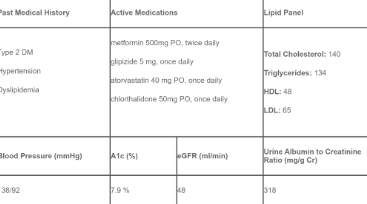
SD is a 64-year-old female with type 2 diabetes (goal A1c <7%) who comes to clinic for follow up. Below is her current medical record and labs from today’s visit.
Which of the following drug classes would be the most appropriate for add-on therapy?
ACE inhibitors
Beta Blockers
dihydropyridine calcium channel blockers
thiazide-like diuretics
ACE inhibitors
(Beta blockers do not provide renal benefits)
(ARB would be equally as correct to ACEi)
LK is a 51-year-old female with a 7-year history of type 2 diabetes and hypertension. Her eGFR is 52 mL/min/1.73m² and UACR is 320 mg/g. She has a history of myocardial infarction 2 years ago.
According to ADA 2026 guidelines, what is the most appropriate blood pressure goal for LK?
<120/80
<130/80
<140/80
<150/80
<120/80
(Intensified goal bc of renal risks and CV risks)
What is Standard BP control (when pt has no other complications)?
<130/80
RT is a 64 year old white male with type 2 diabetes (goal A1c <7%) who comes to clinic for follow up. Upon questioning, he complains of dry skin, urgency in urination, tingling pain in his feet, and pain in his knees when he stands for a long period of time. Which of the following medications might be considered for symptom control of the neuropathy he is experiencing?
midodrine
sildenafil
metoclopramide
duloxetine
Duloxetine
(Gabapentin, amitriptyline, lamotrigine)
BT is a 54 year old African American female with diabetes type 2. Assuming she received all her childhood vaccines and has no other risks, which of the following are indicated per ADA guidelines?
Measels, Mumps, Rubella (MMR)
Hepatitis A
Hepatitis B
Varicella
Hep B
(CHIP-RTZ)
Acronym for Diabetes Vax recommendation?
CHIP-RTZ
MT is a 47 year old female patient with type 2 diabetes. Her current eGFR is 55 and UACR is 330. Which of the following antihyperglycemic drug classes should be recommended?
Dipeptidyl Peptidase-4 Inhibitors (DPP-4 inhibitors)
Sulfonylureas (SU)
Sodium-Glucose Co-Transporter-2 Inhibitors (SGLT2i's)
Thiazolidinedione (TZDs)
SGLT2i
(pt has T2DM w/ CKD; eGFR 55ml/min/1.73m² (Stage 3a), and UACR 330 mg/g)
Of the following, who is at greatest risk for type 2 diabetes?
Someone who has osteoporosis and psoriasis
Someone who has dyslipidemia and is 55 years old
Someone with family members who have hypertension and celiac disease
Someone who has a history of severe and chronic hypoglycemia
Someone who has dyslipidemia and is 55 years old
LP is a 58-year-old male with type 2 diabetes, hypertension, and dyslipidemia. He has no history of ASCVD or MI. He is a current smoker.
What is the most appropriate antiplatelet recommendation for LP per ADA 2026?
Dual antiplatelet therapy with aspirin and a P2Y12 inhibitor
Aspirin 81 mg PO daily
Clopidogrel 75 mg PO daily
Antiplatelet therapy is not recommended at this time
Aspirin 81 mg po qd
(pt is 50-70 w/ risk factors, if NO risk factors, NO Aspirin (risks outweigh benefits)
(give clopidogrel is pt has ASA allergy)
BT is a 66-year-old male with T2DM and a prior MI. He is on atorvastatin 80 mg with well-controlled LDL-C. His fasting TG is 380 mg/dL.
Which of the following is the MOST appropriate next step per ADA 2026?
Add omega-3 fish oil supplements to his statin
Add niacin to further reduce TG and CV risk
Add icosapent ethyl (Vascepa)
Add fenofibrate to his current statin regimen
Add icosapent ethyl (Vascepa)
(DO NOT ADD FIBRATE, NIACIN, OR n-3Fatty Acids TO STATIN THERAPY!!!)
(If pt not on statin, icosapent would still be correct)
WB is a 64-year-old male with type 2 diabetes and newly diagnosed heart failure with reduced ejection fraction (HFrEF) - NYHA Class III. His A1C is 8.2% and his BP is 124/76 mmHg. He is currently on metformin only.
Which of the following antihyperglycemic medication classes is MOST appropriate to add per ADA 2026 guidelines?
Sulfonylureas (ex: glipizide)
Sodium-glucose co-transporter-2 inhibitors (ex: empagliflozin)
Thiazolidinediones (ex: pioglitazone)
Dipeptidyl peptidase-4 inhibitors (ex: sitagliptin)
Sodium-glucose co-transporter-2 inhibitors (ex: empagliflozin)
(BC OF HEART PROBLEM)
GG is a 65 year old female with Type 2 diabetes mellitus. Her A1c is currently 8.7% (goal <7%). She was recently initiated on twice daily pre-mixed insulin but has been experiencing hypoglycemia in the afternoons and before bedtime. The PCP wants to switch her to a 4 injection long acting/rapid acting insulin regimen. How would you convert her current therapy to glargine and insulin aspart?
Current regimen: Humalog 50/50 30 units twice daily
glargine 15 units at bedtime, insulin aspart 5 units three times daily with meals
glargine 24 units at bedtime, insulin aspart 10 units three times daily with meals
glargine 30 units at bedtime, insulin aspart 10 units three times daily with meals
glargine 60 units at bet time, insulin aspart 20 units three times daily with meals
glargine 24 units at bedtime, insulin aspart 10 units three times daily with meals
STEPS:
total daily insulin
30 u BID = 60 u daily
for basal (Intermediate)
60 × 50% = 30 u (reduce total basal dose by 20%) (1-0.2 = 0.8)
30 x 0.8 = 24 u
For mealtime (30 u) (Rapid acting)
30 u / Three meals = 10 u each meal
(10 u TID w/ meals)
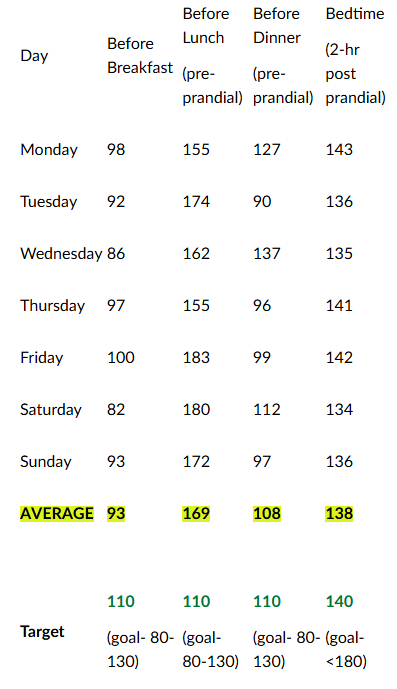
BB is a 63 year old male with type 2 diabetes mellitus who comes to the pharmacy clinic with his self-monitored blood glucose log for follow up - all outliers have already been removed. He has been on insulin therapy for 3 years and his current A1c is 7.3 % (goal A1C of <7%), target blood glucose level for pre-prandial is <110 mg/dL (goal is 80-130) and 2-hour post prandial is <140 mg/dL (goal is <180). His current insulin regimen is as follows:
insulin glargine 38 units before bedtime
insulin lispro 7 units before breakfast, insulin lispro 7 units before lunch, and lispro 8 units before dinner.
Which of the following change in an insulin dose would be most appropriate if the patient’s other insulin doses were to remain the same?
NOTE: Use the “rule of thumb” to calculate insulin dose adjustment
Type 1 DM - 1 unit lowers BG by 50
Type 2 DM - 1 unit lowers BG by 30
Change to insulin lispro 9 units before breakfast
(Pt bs is still high after breakfast meal even w/ current insulin, so incr # of u before breakfast)
EL is a 15 year old male with type 1 diabetes who returns to the clinic and has been on insulin therapy for 2 years. He joined the soccer team 1 month ago. He reports several episodes of hypoglycemia in the afternoon, one of which required admission to the hospital. He sometimes will skip lunch because he is too busy. He has gotten used to the needles and is no longer afraid to take the injections. EL’s current A1c is 7.9% (goal A1c<7%) and is on the following insulin regiment at this time:
NPH insulin 15 units and insulin aspart 7 units before breakfast and
NPH insulin 8 units and insulin aspart 7 units before dinner
Which of the following is the most appropriate insulin regimen for EL at this time?
Insulin lispro 7 units before breakfast and NPH insulin 8 units and insulin lispro 7 units (mixed) before dinner
NPH insulin 15 units and insulin lispro 7 units (mixed) before breakfast and NPH insulin 8 units and insulin lispro 7 units (mixed) before dinner
Insulin glargine 23 units at bedtime and insulin lispro 4 units just prior to eating breakfast and 5 units prior to eating lunch and dinner
Insulin glargine 18 units at bedtime and insulin lispro 4 units just prior to eating breakfast and 5 units prior to eating lunch and dinner
Insulin glargine 18 units at bedtime and insulin lispro 4 units just prior to eating breakfast and 5 units prior to eating lunch and dinner
(Current, is intermediate and rapid → switch to long acting and rapid due to inconsistent meal times, skip Aspart (rapid) if skipping meal)
(TDD lowered from 37u to 32u to prevent further hypoglycemia)
(The 23 u option does not lower TDD, which is why it’s incorrect)
(NPH and Aspart require maintaining strict eating schedule!!)
XZ just got diagnosed with Type 1 DM. He is an 8 year old male, 4’2”, 25 kg and his fasting blood glucose today was 152 mg/dL. He has no other medical problems. He eats breakfast and dinner at home and takes his lunch to school with him. Mother reports some days he returns home with half of his lunch still in the bag.
Which of the following recommendations would be most appropriate for XZ’s initial insulin regimen that provides the appropriate dose, decreased risk of hyoglycemia and the most glycemic control?
Insulin glargine 13 units at bedtime
NPH insulin 5 units and insulin lispro 3 units (mixed in syringe) before breakfast and NPH insulin 2 units and insulin lispro 2 units (mixed in syringe) before dinner
Insulin detemir 12 units at bedtime, insulin Aspart 6 units three times daily with meals
Insulin detemir 6 units at bedtime and insulin lispro 2 units three times daily with meals
Insulin detemir 6 units at bedtime and insulin lispro 2 units three times daily with meals
(follows the 0.5u/kg/day for T1DM)
(two strict meal times is better than three bc pt doesn’t always finish lunch, lower units per meal?)
Jack is a 19-year-old man with Type 1 diabetes. Currently, his total daily dose (TDD) of insulin is 36. Jack calculated his carb coverage and then checks his blood glucose right before he eats lunch and finds it to be 215 mg/dL - his pre-prandial blood glucose (goal is 80-130 mg/dL - target is 110 mg/dL).
How many units of rapid-acting insulin should be added to his dose to correct his current blood glucose level using the insulin sensitivity/correction factor - "rule of 1800"?
2u
4u
6u
12u
2 UNITS
(Correction Factor:
1800 ÷ TDD= 1 unit of insulin will reduce BG by X amount
1800 / 36 units = 50 = 1 unit of insulin will reduce this patient's BG by 50 mg/dl
Current BG is 215 and need to get to 110 target (80-130 range)
215 - 50 (1 unit) = 166 - still not at goal
215- 100 (2 units) = 115 - puts patient at goal and close to target of 110)
(4, 6, 12 u too much!)
WS is a 66 year old man with a history of hypertension and type 2 diabetes. He had a myocardial infarction 1 year ago. His current BMI is 30.8 kg/m2 and his A1c is 8.1% (goal A1c <7%). He has been taking metformin 1000 mg PO twice daily for the past 2 years. His kidney and liver functions are normal.
Which of the following recommendations would be the most appropriate for add on therapy?
Glipizide
Sitagliptin
Semaglutide
Detemir
Semaglutide
(pt has high BMI (Obese) and has prev heart complications (MI))
An otherwise healthy 68-year-old female is new to the area and presents for follow up care of her Type 2 diabetes. She was diagnosed with diabetes 6 months ago and was started on glyburide 5 mg PO daily. She complains of frequent bouts of hypoglycemia. Her HA1c is 7.3% (Goal <7%). Her kidney and liver functions are normal and other past medical history. She has NKDA. What is the best course of action for her?
Decrease the glyburide to 2.5 mg PO daily
Discontinue glyburide and start metformin 500 mg BID
Discontinue glyburide and start glipizide 5 mg PO daily
Continue glyburide and start metformin 500 mg BID
Discontinue glyburide and start metformin 500 mg BID
(Glyburide, 1st gen sulfonylurea → no bueno, better options)
(Metformin 1st line, 500mg BID, titrate to 1000mg BID
FY is a 57 year old male, (BMI= 31.7) who came to the clinic with complaints of blurry vision. Upon further evaluation he has had polyuria and polydipsia for the past 6 months. His current A1c is 10.3%. All other labs within normal limits. He has hypertension and dyslipidemia for 10 years and is currently at goal BP and LDL.
FY was diagnosed with Type 2 diabetes.
In addition to Metformin, which would be the most appropriate initial therapy for FY at this time?
Glipizide and Semaglutide
Canagliflozin and Prandial Insulin
Pioglitazone and Liraglutide
Basal Insulin and GLP-1 agonist
Basal Insulin and GLP-1 agonist
(Even though T2DM, bc A1c over 10%, start with basal insulin, GLP-1 added bc pt is obese)
James is a 68-year-old man with type 2 diabetes and a past medical history of dyslipidemia, heart failure and arthritis. His current medications include metformin 1000 mg twice daily, bisoprolol 10 mg once daily, enalapril 20 mg once daily, and acetaminophen 325 mg PO every 4-6 hours as needed. His HbA1c level is 8.1% (goal <7%).
According to the ADA Standards, what would be the most appropriate adjustment to James's diabetes pharmacotherapy?
Initiate insulin therapy
Add sitagliptin
Add empagliflozin
Increase dose of Metformin
Add empagliflozin
(bc of HF)
Lisa is a 52-year-old woman diagnosed with type 2 diabetes two years ago. Her A1c is 7.8% (goal A1c <7%) and her blood pressure is at goal. She mentions that cost is a significant concern since she recently lost her health insurance, which needs to be considered for future therapy.
She is currently taking Metformin 1,000 mg PO twice daily.
Which of the following recommendations would be most appropriate to add on?
Glimepiride
Liraglutide
Canagliflozin
Glyburide
Glimepiride
(bc it’s cheaper than the other options)
(pt recently lost their health insurance)
(Consider others like TZDs and certain insulins too)
Mark is a 47-year-old man who was recently diagnosed with type 2 diabetes. His HbA1c level is 10.2% (goal A1c <7%). He presents with symptoms of extreme thirst, frequent urination, and significant weight loss. After confirming the diagnosis, his healthcare provider determines that therapy is necessary to quickly address his elevated blood glucose levels. He does not have any other past medical history.
What would be the most appropriate recommendation at this time per ADA guidelines?
Initiate metformin monotherapy
Initiate basal insulin therapy and metformin
Initiate empagliflozin and metformin
Initiate glipizide and metformin
Initiate basal insulin therapy and metformin
(Basal insulin recommended in T2DM w/ A1c over 10%, metformin is first line therapy as well)
Sandy is a 43-year-old woman with type 2 diabetes and a current A1c of 8.2% (goal <7%). She is currently taking Metformin 1,000 mg PO twice daily. She has a BMI of 30 kg/m², her blood pressure and lipid levels are within normal ranges. She does not have any past medical history. She just got referred to a nutritionist and is motivated to lose weight and make lifestyle behavior changes.
According to the ADA Standards of Care, which of the following would be the most effective add-on therapy?
Initiate insulin therapy
initiate canagliflozin
initiate tirzepatide
initiate pioglitazone
Initiate Tirzepatide
(GIP / GLP-1)
(INSULIN NOT RECOMMENDED BC PT A1C NOT OVER 10%)
(Pt obese, tirzepatide good for weightloss, they want to lose weight and are willing to make the necessary changes(
Molly is a 55-year-old woman with type 2 diabetes. She has been on Metformin, basal insulin (long-acting insulin), and Dulaglutide for glycemic control. She reached her fasting blood glucose goal, but her A1c still remains elevated at 7.6% (goal A1c <7%).
According to ADA guidelines, what would be the most appropriate recommendation at this time if she were to remain on her current therapy?
Increase the dose of basal insulin
Add glipizide
Add prandial dose with the largest meal of the day
Add prandial insulin dose with breakfast, lunch and dinner
Increase the dose of basal insulin
KO is a 63 year old, 5’10”, 200 pound male who has type 2 DM and has come to the clinic for follow up. His A1c at diagnosis was 8.9%, currently his A1c is 10.1% (goal A1c <7%). His fasting/pre-prandial blood glucose levels ranging from 170-200 mg/dL and 2-hour post-prandial blood glucose levels ranging from 200-250 mg/dL. He was recently hospitalized for an MI 9 months ago. He has had controlled hypertension for 5 years and current BP is 120/76. His renal and hepatic function is normal. He is complaining of frequent diarrhea and bloating occurring recently that’s intolerable, tingling in his feet and blurred vision.
Current medications include:
Glucophage 1000 mg PO twice daily (x12 years)
Glipizide 10 mg PO twice daily (x 10 years)
Acarbose 100mg PO three times daily (x 1 month)
Lisinopril 20 mg PO once daily (x 5 years)
Atorvastatin 40 mg PO once daily
Which of the following drug therapy recommendations is the most appropriate therapy for KO at this time?
Continue current therapy
Add SGLT-2 inhibitor to current therapy
Discontinue acarbose and glipizide, continue metformin, add DPP-4 inhibitor
Discontinue acarbose and glipizide, continue metformin, add GLP-1 and basal insulin
Discontinue acarbose and glipizide, continue metformin, add GLP-1 and basal insulin
HINT: basal insulin bc pt A1c at 10% (3% above goal))
(GLP-1 for CV benefit)
(Acarbose intolerance — bloating and frequent diarrhea)
(Glyburide — D/C if giving pt basal insulin and GLP-1, pt been on this med for 12 yrs and no benefit)
Why is it necessary to delay insulin therapy in a hyperglycemic crisis if the potassium level is below 3.5 mEq/L?
Insulin therapy increases risk of hyperkalemia
Insulin therapy can cause a rapid drop in blood glucose levels
Insulin therapy can further decrease potassium levels, leading to severe hypokalemia
Insulin therapy is ineffective when potassium levels are low
Insulin therapy can further decrease potassium levels, leading to severe hypokalemia
(Insulin drives potassium into cells, removing K from blood, further decreasing K levels)
Which of the following clinical features might be found in a patient presenting with diabetic ketoacidosis but not commonly found in patients with hyperosmolar-hyperglycemic state?
Severe dehydration
Kussmaul respirations
Altered mental status
Blood glucose levels >600mg/dL
Kussmaul respirations
(deep, rapid breathing; breathing off CO2 to compensate for metabolic acidosis)
(ketones are acid)
The hallmark of hyperglycemic hyperosmolar state (HHS) is:
hyperglycemia with low serum osmolality
severe hyperglycemia, dehydration, hyperosmolarity with minimal or absent ketones or acidosis
little or no ketones in serum with rapidly escalating ketonuria
hyperglycemia, ketone body production, and metabolic acidosis
severe hyperglycemia, dehydration, hyperosmolarity with minimal or absent ketones or acidosis
The first treatment for DKA and HHS is:
IV crystalloids
IV Insulin
potassium replacement
dextrose therapy
IV crystalloids
(BUT, check pt K levels 1st before starting insulin!)
A patient has a 10-year history of diabetes mellitus. The patient is admitted to the critical care unit with complaints of increased lethargy. Serum laboratory values validate the diagnosis of diabetic ketoacidosis (DKA). Which of the following symptoms is most suggestive of DKA?
weight gain
Kussmaul respirations
vomiting
polydipsia
Kussmaul Respirations
A patient is found to have a blood glucose of 375 mg/dL, urine ketones 3+, and blood pH of 7.25. Which condition is this patient likely presenting with?
hyperglycemic hyperosmolar state (HHS)
diabetic ketoacidosis (DKA)
DKA
(acidic blood)
A patient with Hyperglycemic Hyperosmolar State would likely have all of the following signs and symptoms EXCEPT?
dry mucous membranes
polyuria and polydipsia
blood glucose of 600 mg/dL or more
fruity odor in breath
Fruity odor on breath
Which of the following conditions happens gradually and is more likely to affect older adults?
DKA
HHS
HHS
A patient with a history of Type 2 Diabetes has developed a foot infection and reports not checking their blood glucose or regularly taking their prescribed metformin. What condition is this patient MOST at risk for?
HHS
DKA
Metabolic alkalosis
Metabolic acidosis
HHS
Which of the following is NOT part of standard therapy for every patient with HHS?
IV regular insulin
IV fluids
SC rapid-acting insulin
IV potassium
SC rapid-acting insulin
You should delay starting insulin therapy for DKA/HHS until the initial potassium level is at least:
2.3 mEq/L
3.5 mEq/L
4.3 mEq/L
5.3 mEq/L
3.5 mEq/L
(the min lab value)
When do you need to need to add 5% dextrose to IV fluids in the treatment of HHS? When ________
potassium level reaches 4 mEq/L
bicarbonate reaches < 18 mmol/L
Blood glucose reaches 250 mg/dL
Insulin IV infusion rate is 0.1 unit/kg/hr
Blood glucose reaches 250 mg/dL
What additional information from TT would be helpful in performing a risk assessment and calculation of a FRAX score
for osteoporosis?
A. Family history of osteoporosis
B. Cigarette smoking history
C. Past or present systemic corticosteroid therapy
D. Past or present aspirin therapy
A, B, C
Stacy is a 62-year-old woman with a family history of osteoporosis. Her DXA scan results revealed a T-score of -1.8 at her
lumbar spine and -1.5 at her hip. Secondary causes of osteoporosis were ruled out, and all other tests came back within
normal ranges. She reports that she has not experienced any fractures or major injuries in the past. Based on this
information, how would you classify her bone density?
a. normal
b. osteopenia
c. osteoporosis
d. severe osteoporosis
B. Osteopenia
Which of the following recommendations is the most appropriate counseling point for a bone healthy lifestyle?
A. weight bearing exercise is not recommended due to increased fracture risk
B. Try to limit alcoholic beverages to less than 4 drinks per day
C. Calcium supplementation is preferred over dietary calcium intake
D. Calcium carbonate requires acid for absorption and must be taken with food
D. Calcium carbonate requires acid for absorption and must be taken with food
Jasmin is a 73 year old female that was recently diagnosed with osteoporosis. After reviewing her typical daily diet, you
calculate her dietary calcium intake to be 300 mg/day. Upon questioning, she just recently purchased a calcium carbonate
supplement that contains 300 mg elemental calcium per tablet. What would you recommend to ensure her calcium
supplementation is meeting (or slightly exceeding) the recommended daily calcium intake?
A. Take 3 tabs PO once daily on an empty stomach before breakfast
B. Take 1 tab PO twice daily with breakfast and dinner
C. Take 1 tab PO three times daily with meals
D. No further supplementation is necessary
Take 1 tab PO three times daily with meals
• Patient is >51 years old- recommended daily intake is 1,200 mg/day
• 1,200 mg – 300 mg (dietary intake)= 900 mg needed to supplement
Max dose of 500-600 mg at a time due to absorption- need to separate dosing
Nancy is a 67 year old female who was recently diagnosed with osteoporosis. She has a past medical history of
hypertension, dyslipidemia, GERD, seasonal allergies.
Medications: Diphenhydramine, Prilosec (PPI), Simvastatin (Statin), Metoprolol (Beta-Blocker)
Which of Nancy’s current medications might be a contributing factor to a secondary cause of osteoporosis?
A. Diphenhydramine (antihistamine)
B. Prilosec (PPI)
C. Simvastatin (Statin)
D. Metoprolol (beta-blocker)
Prilosec (PPI)
Nancy is a 67 year old female who was recently diagnosed with osteoporosis. She has a past medical history of
hypertension, dyslipidemia, GERD, seasonal allergies.
Medications: Diphenhydramine, Prilosec (PPI), Simvastatin (Statin), Metoprolol (Beta-Blocker)
Which of Nancy’s current medications might increase her risk of fallin?
A. Diphenhydramine (antihistamine)
B. Prilosec (PPI)
C. Simvastatin (Statin)
D. Metoprolol (beta-blocker
A. Diphenhydramine (antihistamine)
(Sedative??)
Lucy is a 82 year old female who returns to the clinic for her follow up BMD. She was diagnosed with osteoporosis with a T-
score of -2.5 with no history of hip fractures. She was initiated on Risedronate and has been treated for 5 years. She has not had
any fractures since the initiation of therapy, and they found an increase in her BMD. Which of the following would be the most
appropriate recommendation for Lucy at this time?
A. Continue Risedronate
B. Continue Risedronate and initiate Teriparatide
C. Discontinue Risedronate and initiate Zoledronic Acid
D. Discontinue Risedronate and continue to monitor BMD
D. Discontinue Risedronate and continue to monitor BMD
If BMD increases and no fractures- Consider drug holiday- discontinuing after 3-6 years (10 years for patients at
very high risk on PO Bisphosphonates)
Manuel is a 71 year old man who was just diagnosed with osteoporosis. Which of the following drugs would NOT be appropriate
to use in Manuel for the treatment of osteoporosis?
A. Alendronate
B. Teriparatide
C. Raloxifene
D. Denosumab
C. Raloxifene
• This is mixed estrogen agonist/antagonist and should not be used in men
• First line therapy in men: Bisphosphonates (Alendronate/Risedronate)
What is the most appropriate initial first-line therapy for corticosteroid-induced osteoporosis?
A. Denosumab
B. Zoledronic Acid
C. Raloxifene
D. Risedronate
D. Risedronate
First line therapy in corticosteroid-induced osteoporosis is Bisphosphonates PO (Alendronate/Risedronate)
Liz is a 75 year old postmenopausal woman who was diagnosed with osteoporosis with a T-score of -3.2. Two months ago, she
woke up to go to the bathroom late at night and fell and broke her hip. What is the most appropriate first-line therapy for her
osteoporosis?
A. Initiate Alendronate
B. Initiate Risedronate
C. Initiate Raloxifene
D. Initiate Teriparatide
D. Initiate Teriparatide
Consider “very high risk” due to T-score of -3.2 and history of fracture- first line therapy includes: Anabolic
Treatment (PTH Analogs (Teriparatide, Albaloparatide, Romosozumab)
HIGH RISK (< -2.5) → GIVE -paratide or zumab)
t score level indications
>1.0 = High BMD
-1.0 to 1.0 = normal BMD
-2.5 to -1.0 = Osteopenia
<2.5 = Osteoporosis
t score
yours compared to healthy 25 y/o individual
z score
your score compared to someone similar to you
DG is a 68 year old postmenopausal woman. One years ago she had a BMD which revealed a T-score of -2.58 with a history of
multiple fractures. She was initiated on Romosozumab at that time. A repeat BMD test today reveals a T-score of -2.01. What is
the most appropriate recommendation for DG at this time?
A. Continue Romosozumab
B. Continue Romosozumab and add Teriparatide
C. Discontinue Romosozumab and initiate Denosumab
D. Discontinue Romosozumab and initiate Alendronate
D. Discontinue Romosozumab and initiate Alendronate
Patient on Romosozumab for 1 year- hit the max duration with this therapy should be switched to antiresorptive therapy (Alendronate)
Jane is a 45-year-old female presenting to the clinic with fatigue, weight gain, cold intolerance, and recent memory issues. She has a
medical history of asthma and osteopenia. Her current medications also include albuterol 2 puffs every 4 hours as needed, daily
multivitamin and calcium carbonate 500 mg BID. She has no known drug allergies. Jane is diagnosed with primary hypothyroidism
and started on levothyroxine therapy.
Lab results are as follows:
• TSH: 8.0 mIU/L (0.4-4.0 mIU/L)
• Free T4: 0.4 ng/dL (0.8-1.8 ng/dL)
1. Which of the following would be the most appropriate levothyroxine initial maximum dose for Jane?
A. 25 mcg daily
B. 50 mcg daily
C. 75 mcg daily
D. 100 mcg daily
50mcg daily
Which of the following is a key counseling point for the administration of levothyroxine?
A. Take levothyroxine with a high-fat meal to enhance absorption.
B. Take levothyroxine at bedtime with a glass of milk.
C. Take levothyroxine with calcium supplement to prevent side effects.
D. Take levothyroxine on an empty stomach, 1 hour before breakfast.
D. Take levothyroxine on an empty stomach, 1 hour before breakfast.
When should Jane's thyroid function test (TSH) be rechecked after starting levothyroxine?
A. 2 weeks
B. 4-6 weeks
C. 3 months
D. 6 months
B. 4-6 weeks
If Jane's follow-up TSH level after 6 weeks of levothyroxine therapy is 6.0 mIU/, what is the most appropriate next step?
A. Increase the levothyroxine dose by 25 mcg and recheck in 4-6 weeks
B. Maintain the current dose and recheck TSH in another 6 weeks
C. Switch from levothyroxine to liothyronine
D. Add a second thyroid medication
A. Increase the levothyroxine dose by 25 mcg and recheck in 4-6 weeks
Which of the following symptoms is LEAST likely to be associated with hyperthyroidism?
A. Palpitations
B. Weight gain
C. Heat intolerance
D. Tremors
B. Weight Gain
(Typically, it’s weight loss)
Nancy is currently taking Methimazole for her hyperthyroidism. What routine monitoring should be performed to ensure
safe and effective treatment?
A. Complete blood count and liver function tests
B. Electrolyte panel and renal function tests
C. Lipid panel and urinalysis
D. Bone density scan and serum calcium levels
A. Complete blood count and liver function tests
Liz is a 31 year old female and returns to the clinic after finding out she is in her first trimester of pregnancy. She is currently
taking Methimazole (MMI). What adjustment to her hyperthyroidism treatment should be considered?
A. Continue Methimazole without changes
B. Switch to Propylthiouracil (PTU) for the first trimester and then switch back to MMI for the 2nd and 3rd trimester
C. Discontinue all antithyroid medication
D. Increase the dose of Methimazole
B. Switch to Propylthiouracil (PTU) for the first trimester and then switch back to MMI for the 2nd and 3rd trimester
Molly is a 47-year-old female who presents with severe symptoms of tachypnea, tremors and palpitations. She was
diagnosed with thyroid storm. Which medication would be most appropriate to manage these specific symptoms?
A. Radioactive iodine
B. Levothyroxine
C. Beta Blockers
D. Methimazole
C. Beta Blockers
(RAI can be added alongside — adjunctively)
Bone Remodeling
continuous cycle that maintains bone density and strength through Resorption, Reversal, and Formation
Resorption
Osteoclasts break down old bone tissue
Reversal
Transitional cells prepare the surface for growth
Formation
Osteoblasts deposit new collagen and minerals (build)
Osteoporosis — Type 1
Increased osteoclast activity and bone resorption
Osteoporosis — Type 2
Decreased osteoblast activity and bone formation, decreased Gastrointestinal Ca++ absorption
Osteoporosis — Type 3
Drug or disease related
Osteoblasts
cells that are responsible for creating new bone through collagen and mineral deposits
Osteoclasts
cells responsible for bone resorption through acidic dissolution of bone mineral hydroxyapatite
hydroxyapatite
main calcium containing bone mineral
Bisphosphonate (ex. Alendronate) MOA
embed in the bone matrix and directly enter and inactivate mature osteoclasts
Denosumab MOA
Monoclonal antibody that binds to RANKL, prevents it from activating pre-osteoclasts
Bisphosphonate examples
(bonus: Which one is IV only?)
Alendronate (Fosamax), Ibandronate (Boniva), Zoledronic acid (Reclast)
(Zoledronic acid is the IV only drug)
Bisphosphonate discovery
synthetic, non-hydrolyzable analogs of endogenous pyrophosphate
Backbone Modifications (Bisphosphonates)
Replace central oxygen atom in pyrophosphate (P-O-P) with a carbon atom (P-C-P) prevents enzymatic degradation by alkaline phosphatase
Target Affinities (Bisphosphonates)
stable P-C-P core binds w/ high affinity to hydroxyapatite crystals in the bone matrixF
Functional groups
attached R1 and R2 side chains can be chemically varied to optimize bone-binding affinity and antiresorptive potency, respectively
Bisphosphonates core pharmacophore
(-) charges required for coordinating with Ca++ ions in bone
sp2 nitrogen likes to coordinate with metal ions (Ca++, Mg++, Zn++)
WHEN R1 IS REPLACED BY “-OH” → MAXIMIZES BONE BINDING
if R2 is replaced by imidazole ring (5 member 2 nitrogen ring) → exponentially increases antiresorptive power by inhibiting FPPS enz
Non-Nitrogen BPs
lack a nitrogen (makes it less potent)
possesses lower therapeutic potency
first gen, older
ex. etidronate, clodronate, tiludronate
Nitrogen-Containing BPs
newer
possess amine group or nitrogen containing heterocycle in their structure
ex. Pamidronate, alendronate, Ibandronate, risedronate, zoledronate