Network Communications
 Call Kai
 Learn
Learn Practice Test
 Spaced Repetition
 Match
Match Flashcards
 Knowt Play
1/78

Earn XP
Name | Mastery | Learn | Test | Matching | Spaced | Call with Kai |
|---|
No analytics yet
Send a link to your students to track their progress
79 Terms
DataBase Server
Firewall

Internet/ISP

Laptop
File Server
Modem

Router
Switch

Tablet/phone
WAP (Wireless Access Point)

Workstation
Types of networks
Centralised, Distributed
What is a centralised network and characteristics
all runs of central device, exposed to attacks
What is a distributed network and characteristics
decentralised network/All devices working together, data sent through mesh network, made up of independently operated networks, distributed packet switched network, any device can communicate with any other device
How do devices communicate with each other?
Binary (0’s and 1’s)
How can binary be sent
Electricity, Light, Wireless (generally on = 1, off = 0 with timer)
Data via electricity (how, pros and cons)
Unshielded twisted pair (UTP) e.g. ethernet, + Cheap, - high signal loss
Data via light (how, pros and cons)
Fibre optic cable, + fast, barely any signal loss, - expensive and hard to work with
Data via Radio (how, pros and cons)
Wireless machines emitting radio waves (e.g. WAP) + mobile, - short range
What is a protocol and what does it allow
a well known set of rules and standards used to communicate between machines allowing the internet to adapt and absorb new technologies
What is DNS
Domain Name system, associates links with IP addresses, computer uses DNS to find correlated IP for links.
How is DNS set up
Distributed hierarchy, split up major domains (.com, .org etc)
What is the problem with DNS
public open communication protocol, susceptible to cyber attacks (spoofing where hacker changes correlated IP for a link sending user to a fake site)
How does data travel
Data is broken down into IP Packets (addressed and return address), routers manage and move packets (send them on cheapest path) TCP ensures everything is sent, destination reorders packets
Whys is sending data reliable
Router has multiple paths, making it fault tolerant and able to change paths based on traffic, routers and TCP are scalable (more routes and routers = more reliable) and won’t interrupt service
What is TCP and it’s role
Transmission Control Protocol, manages sending and receiving of data, checks all packets arrive (otherwise won’t verify and server resends missing packets)
Explain the layers of the networking system
HTTP and DNS manage sending + receiving web files, TCP/IP and routing breaks down and transports packets, packets are made up of Binary code that’s sent physically (electricity, wireless, light)
What does URL stand for
Uniform Resource Locator
What is HTTP
Hyper Text Transfer Protocol, language used to talk between browser and servers, made up of get requests (get {name of doc}), images and files require separate get requests. For device sending info (filling details into form) sends Post request in plaintext
what is HTML
Hyper Text Markup Language, language telling browser how to make page look
What are cookies
Associates login with ID number to save users info and is automatically attached to requests
Risks of HTTP and safety methods
all in plain text so people are able to see if you send personal info, SSL, TLS, and HTTPS
What is SSL and TLS
Secure sockets layer, Transport Layer Security, request private channels that add layer of security
What is HTTPS
Hyper Text Transfer Protocol Secure, provides digital certificate for site that confirms legitimacy (handed out by trusted entities that verify sites) if no certificate, browser warns
Printer
What is a Network
A number of electronic devices connected together so they can communicate and share data
What are the reasons for a network
share files, data and resources, communicate between users, central repository for data
Stages of a network
sending device sends data
coms device encodes data for transmission
transmission channel - method for physically transfer data
com device decodes data into form receiving can understand
receiving device receives data
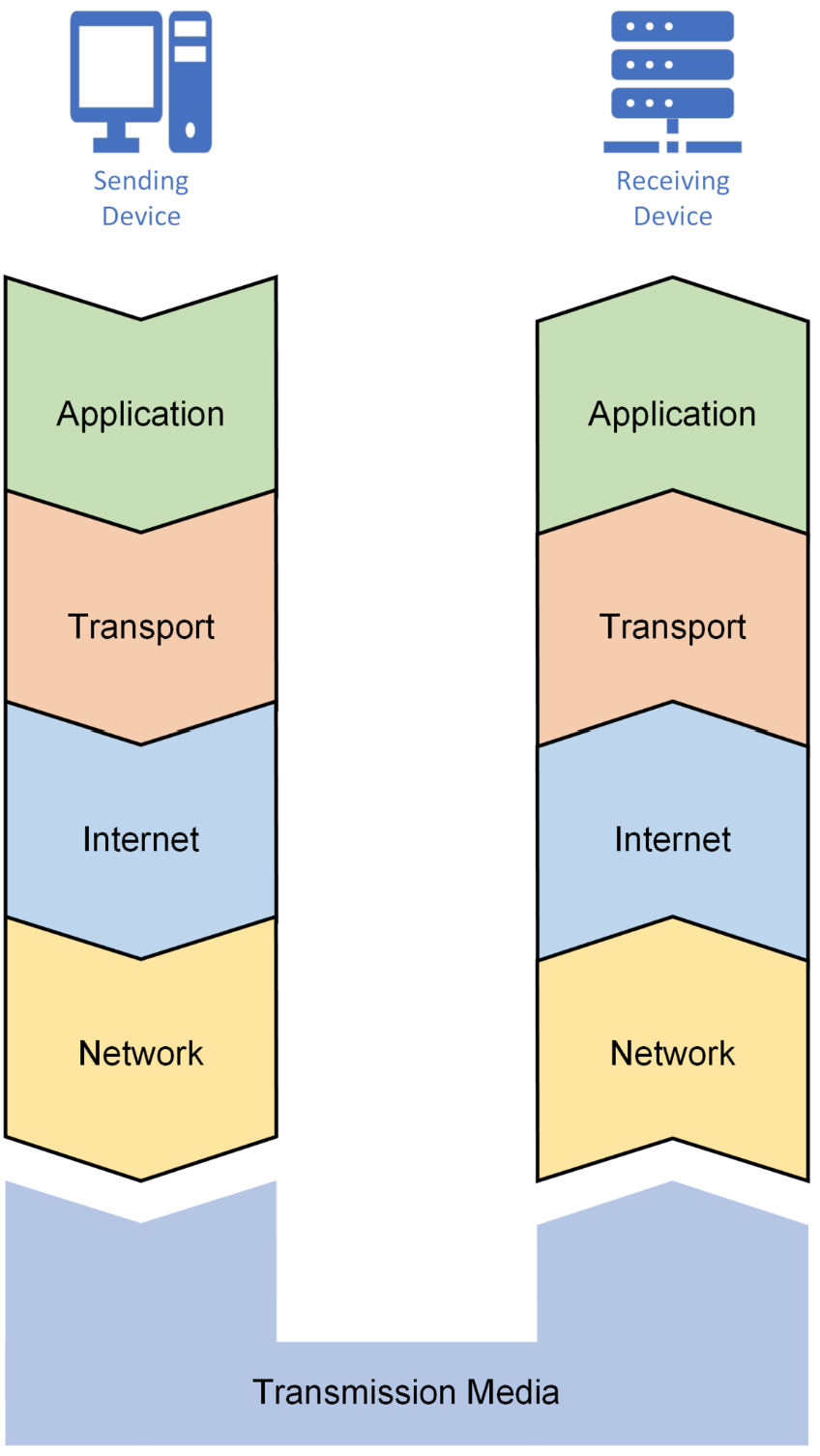
Layers of TCP/IP model
split functionality of network into different stages, each layer for different sending data aspect
What is UDP
User Datagram Protocol, doesn’t establish a connection before sending data, allowing it to start transmitting immediately, does not guarantee delivery, order, or error correction. Packets can be lost, duplicated, or arrive out of sequence, faster than TCP (online gaming, live streams)
Network layer of TCP IP Model, protocols and devices
allows data to travel across interconnected networks, manages routing, addressing and packet forwarding, sends and receives packets, protocol: HTTP, devices: Web Server
Transport layer of TCP IP Model, protocols and devices
manages end to end communication, ensures data delivered reliably, handles flow control, error correction and segmentation of data into packets, protocols: UDP and TCP, devices: Firewall
Internet layer of TCP IP Model, protocols and devices
directs network traffic, addresses and routes packets, protocol IP, devices: router
Application layer of TCP IP Model, protocols and devices
defines protocols for communication, allows users and applications to interact with network
What is IP
Internet protocol, fundamental protocols that allow network to function, provides devices unique identifiers, allows other devices to share data
Differences of IPv4
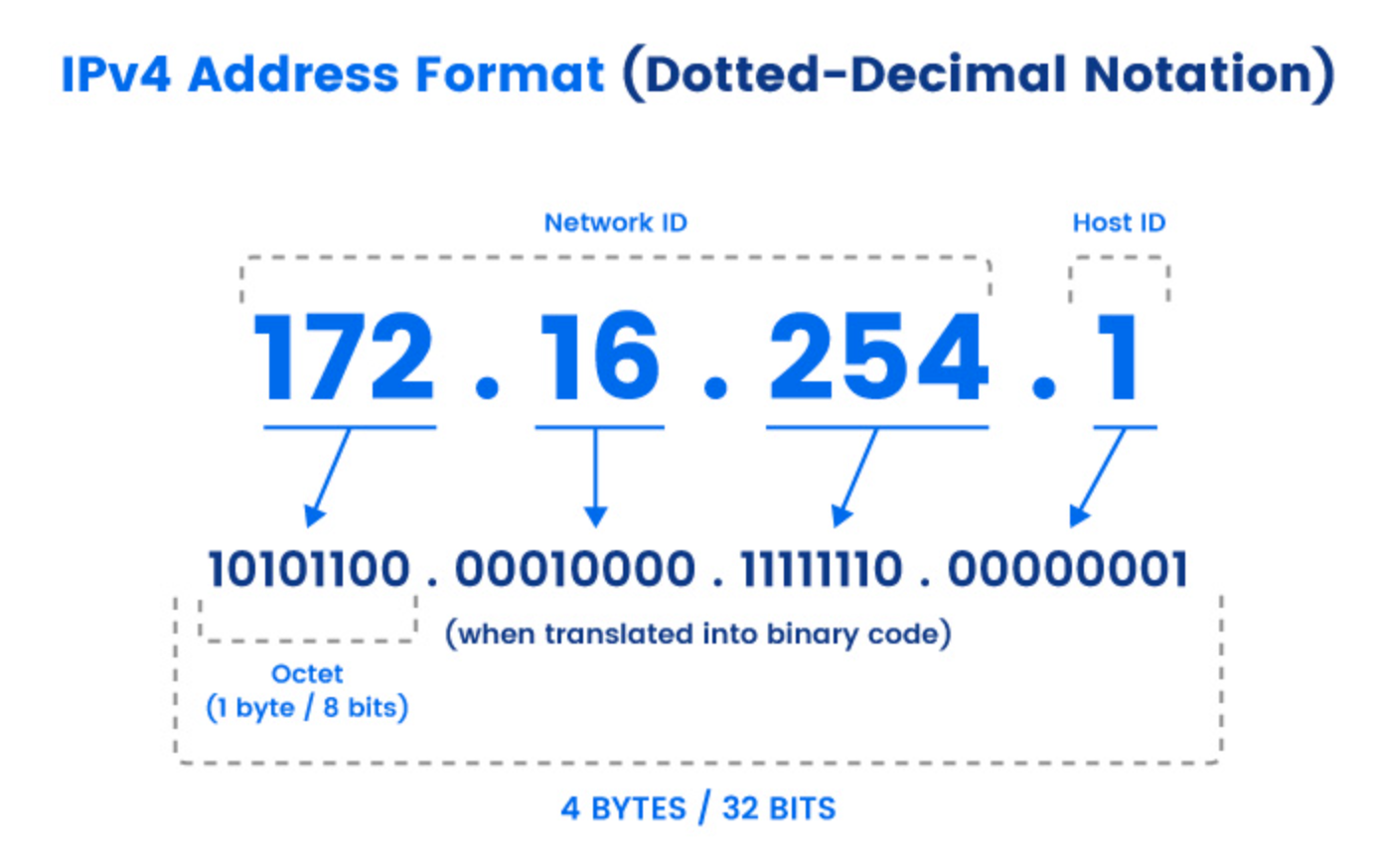
32 bit address, 4 groups (each a byte) separated by full stops, 2 parts: Network ID 1st 3 octets(indicates network), Host ID last octet (indicates device, router is 1), 4 bil unique addresses (232)
Differences of IPv6
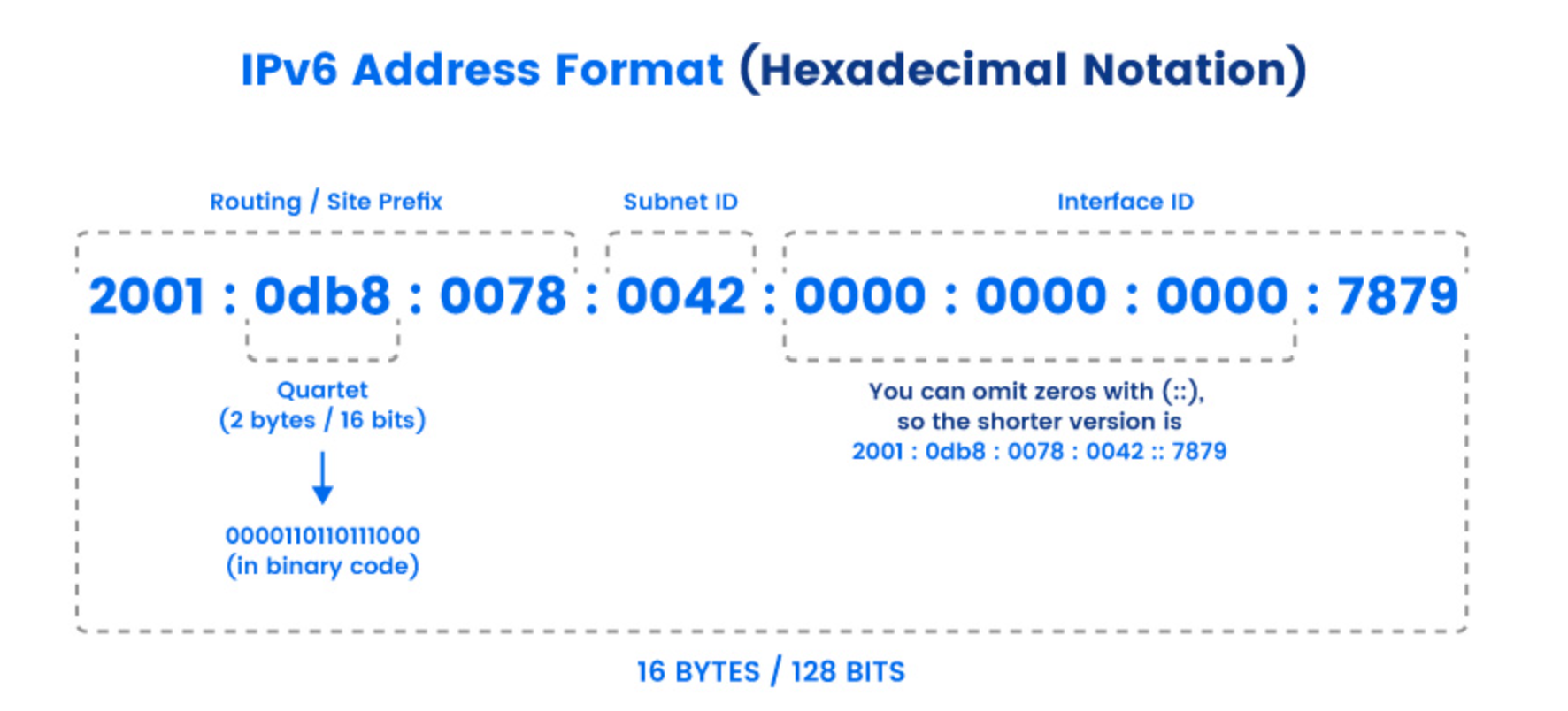
340 Undecillion unique addresses (2128), 128 bit hexadecimal, 8 16 bit quartets (alphanumeric) separated by colons, omits leading 0’s as ::
What is subnetting
dividing large networks into smaller logical networks called subnets
How does subnetting work
departments assigned individual subnets, department devices communicate on subnet, interdepartment traffic goes through router, broadcast traffic limited to each subnet,
Necessity of subnets
enables single IP networks to be divided into smaller logical networks, efficient IP usage, improved performance, enhanced security and manageability
What is a subnet mask
a 32-bit number used in IP addresses to separate network portion from host portion, determines which part refers to network and which part refers to location.
Benefits of subnetting
Better security: Isolates departments preventing unauthorised access, traffic prioritisation: critical subnets have priority, Easier maintenance: smaller segmented networks easier management
Drawbacks of Subnetting
Extra Overhead: each subnet wastes two IP addresses (subnet ID, direct broadcast ID) Higher Cost: requires extra devices, Extra Complexity: extra steps and planning
What is transmission medium and types
method used to physically move data (electricity (UTP/Ethernet), light (fibre optic) radiowaves (wireless))
What are the network components
Transmission media, Router, Switch, WAP, Firewall
What is a router
directs data between networks, uses destination IP to send data on it’s net leg of journey to destination, operates at internet layer.
What is a Switch
connects several devices together using UTP to form network, records MAC address and port of each device to send packets, part of network layer
What is a WAP
Wireless Access Point, allows devices to wirelessly connect to network, allows flexibility (num of devices not limited to physical ports, devices have freedom to move), network layer
What is a firewall and role
prevents unauthorised access to network, monitors and records network traffic ensures meets organisation security rules, blocks traffic, Internet transport layers
Need for network security
prevents people accessing confidential info (user data, business info, personal/business financials) prevents malicious actors disrupting network services, prevents damage to physical infrastructure,
Methods for network security
Monitor traffic (prevent and allow), authenticate users, encrypt network traffic an documents on network
Role of operating systems
provides authentication (only authorised users access), monitors for vulnerabilities, analyses usage patterns to detect anomalies, takes measures to prevent attacks, manages utilities such as anti malware software
what is the point of network diagrams
shows logical design of network, indicates devices and order
What is bandwidth and how is it measured
Maximum transmission capacity of a device measured by bit rate (num of bits/second in Kbps, Mbps or Gbps) or latency (time it takes for bit to travel from one place to another)
What happens when Bandwidth is increased
more data sent/received at once, faster downloads, smooth streaming, better performance
What happens when Bandwidth is decreased
increased loading times, buffering and congestion
What is network design
Process of planning computer networks to meet user and organisation requirements.
What does network design include
selecting hardware, topology, protocols, security measures. make network efficient, reliable, scalable, designed using network diagrams
What is a data collision
when 2 or more devices attempt to transmit data on same network channel at same time, leading to signal interfering and corrupting data
where does data collision occur and what happens
on shared networks, data discarded and resent, frequent collisions reduce network efficiency, performance, lead to higher latency and congestion
What is CSMA/CD
Carrier Sense Multiple Access with Collision Detection, devices listen before transmit for clear channel, then transmit. if collision occurs it stops transmitting, waits, then resends data
How to reduce data collisions
switches instead of hubs (separate collision domains), full duplex communication (simultaneous send/receiving to stop collisions) improved network design and segmentation
What is Excess Traffic and impact
high volume of broadcast messages sent over the network, causing congestion and potential collisions. Leads to reduced Throughput (successful data sent in time period) increased latency, network congestion
what is a broadcast message
sent to every device on a network segment, all devices process broadcast, too many broadcast overload network
Causes of excess traffic
large network with no segmentation, misconfigured devices/protocols, excessive use of broadcast messages
how to reduce network traffic
router to separate network and broadcasts, replace hubs with switches (limit unnecessary traffic), config devices and protocols correctly
What is a WAN
a wide area network is a large computer network that connects groups of computers over large distances. The Internet itself is considered a WAN.
What is a LAN
A local area network (LAN) is a network confined to a small, localised area. Home WiFi networks and small business networks are common examples of LANs.
What is a WLAN
A wireless LAN (WLAN) is a type of LAN that uses wireless communication to connect any type of network client or device. e.g. Wi-fi