Challenges of Ambulating
 Call Kai
 Learn
Learn Practice Test
 Spaced Repetition
 Match
Match Flashcards
 Knowt Play
1/71

There's no tags or description
Looks like no tags are added yet.
Name | Mastery | Learn | Test | Matching | Spaced | Call with Kai | Chat |
|---|
No analytics yet
Send a link to your students to track their progress
72 Terms
What is toe touch weight bearing (TTWB) or touch down weight bearing (TDWB)?
0% WB; foot may rest on the floor but extremity does not bear weight
Toe touch weight bearing is used for _____ rather than _____?
support; functional ambulation
How can toe touch pose a potential problem?
when it is used for prolonged periods, it can facilitate an abnormal gait pattern
How are bathroom scales used to monitor weight bearing?
patient shift weight from one scale to the other for feedback about static WB
When using an LLM what must you make sure of?
that the footwear of the FWB LE is equal in height to the LLM
The more _____ an assistive device is the less mobile it is.
stable
Unilateral WBAT generally allows assistive device selection of what?
any unilateral or bilateral device
What is a swing-to gait pattern?
when both LEs advance simultaneously with the forward swing and land in line with the assistive device
What is a discontinuous gait?
when LEs progressively stop-and-start while assistive device is advanced
Where might patients need to be encouraged to look during gait?
ahead instead of at their feet
During forward gait, what should you encourage?
relaxed, upright posture and forward gaze
What is a good rule of thumb when guarding a patient?
always be between the patient and the floor
What is non-weight bearing (NWB)?
0% WB; toes and foot do not touch the ground
What is partial weight bearing (PWB)?
30-50% WB
What is weight bearing as tolerated (WBAT)?
50-100% WB; limited only by the patient's tolerance
What is weight bearing (WB)?
100% WB; no limitations
UE WB restrictions can affect what if UE is used to compensate for LE limitations?
gait
What do you do if a patient has a WB restriction of the UE?
they must use a unilateral assistive device or forearm platform
What does LLM stand for?
limb load monitor
What does a limb load monitor do?
provides audible feedback to patient and clinical regarding WB during gait; adjust sensitivity as needed
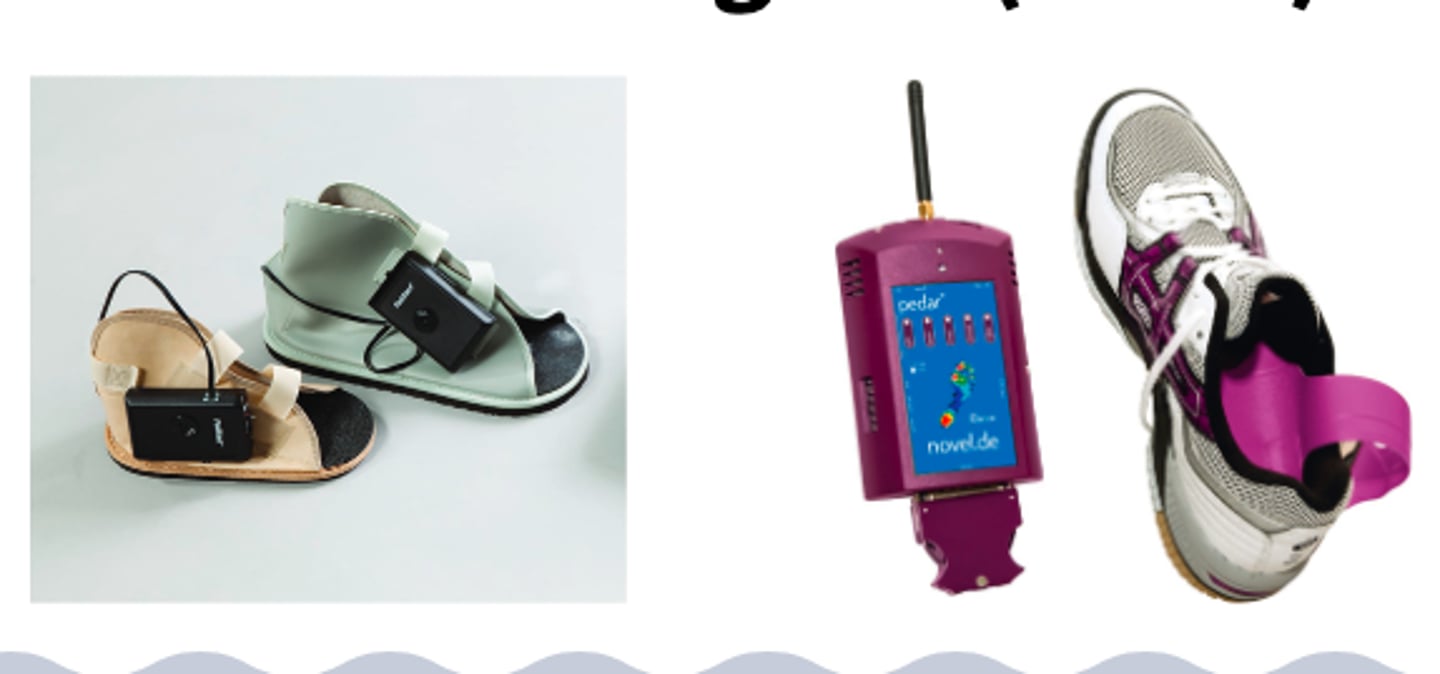
What is a not recommended way to asses WB status?
placing your finger under a patient's foot; provides limited data and can cause injury to the therapist
What are assistive devices typically used for?
to increase support load and stability through an enlarged BoS
The more _____ an assistive device is, the less stable it is.
mobile
What is the most supportive assistive device?
parallel bars
What is the least supportive assistive device?
Single point cane (SPC)
Unilateral LE TTWB or NWB allows assistive device selection of what?
walkers or bilateral crutches
Unilateral LE PWB generally allows assistive device selection of what?
walkers or bilateral crutches
What can significantly reduce the stability of any device and compromise the user's safety?
friction between contact points (Ex: worn tips and slick floors)
What might people with Parkinson's disease experience during gait?
"freezing"; sudden, brief inability to move their feet forward despite the intention to walk
What are common symptoms of Parkinson's disease?
tremors, slowed movement, increase muscle stiffness, and balance disturbances
Gait deviations tend to increase what?
energy expenditure
Who tends to expend more energy walking long distances?
older adults
What requires more energy expenditure, standard walkers or rolling walkers/canes?
standard walkers
When fitting a patient for an assistive device, what should you have them do?
be in good posture and wear their typical footwear
How do you guard a patient when walking them?
slightly behind them on their weak side with one hand on the gait belt and the other hand contralaterally hovering the shoulder
The handle of the assistive device should be where on the patient?
bend of the wrist
What should you do when fitting a patient for an assistive device before you begin functionally walking with them?
always confirm the fit is correct
What degree should the elbow be at when a patient is gripping the handle of an assistive device?
20-30 degrees
After the fit of an assistive device has been confirmed, do you still need to check at every patient visit?
yes
What is a gait pattern?
ordered process of advancing the LEs and assistive devices
What does laterality refer to?
the side of the body on which the assistive device is used
What is a step-to-gait pattern?
when the step by the 2nd foot land in line with the assistive device
What is a step-through gait pattern?
when the step lands beyond the assistive device
What is the swing-through gait pattern?
when both LEs advance simultaneously with the forward swing and land beyond the assistive device
What is a reciprocal gait?
when opposite arm and leg move forward at the same time
What is a continuous gait?
when LEs continuously progress forward while assistive device is advanced
How do you instruct a patient during gait?
-demonstrate technique
-encourage mental rehearsal and "teach back"
-begin with simple tasks and progress in complexity/challenge
-provide external and internal cues
-instruct in care/maintenance of assistive device
How does a patient go from sit to stand?
-scoot forward
-position feet as far back as possible while maintaining full contact with floor
-lean trunk forward
-push hands down on armrest (never on AD)
-extend hips and knees intro upright position
How do a patient go from stand to sit?
-back up fully to chair
-if WB restricted, move affected LE forward before sitting
-reach back for chair one hand at a time
-control descent with LEs and UEs
If a patient has weak quadricep muscles or is reluctance to lean forward, how might them compensate on sit to stand?
-relying heavily on UE strength
-rocking for momentum
-bracing lower legs against fixed seat for leverage
-pressing knees together (adducting hips) for leverage
What UE muscles are used for standing/sitting?
-shoulder depressors
-shoulder extensors/flexors
-elbow extensors
-wrist stabalizers
What LE muscles are used for standing/sitting?
-hip extensors
-hip abductors/adductors
-knee extensors
What trunk muscles are used for standing/sitting?
-trunk extensors
-upper/lower trunk stabilizers
Gait training on a treadmill provides what?
gait speed data that directly relates to functional mobility
During forward gait, how should you begin?
level, clear surfaces and progress to more challenging enviornments
When inquiring about a handrail at a patient's home, what should you do?
determine whether the handrail is sturdy and reliable
What is the typical rule when ascending and descending stairs?
up with the good foot, down with the bad foot
What is the exception to the "up with the good" rule when ascending a curb?
using a walker
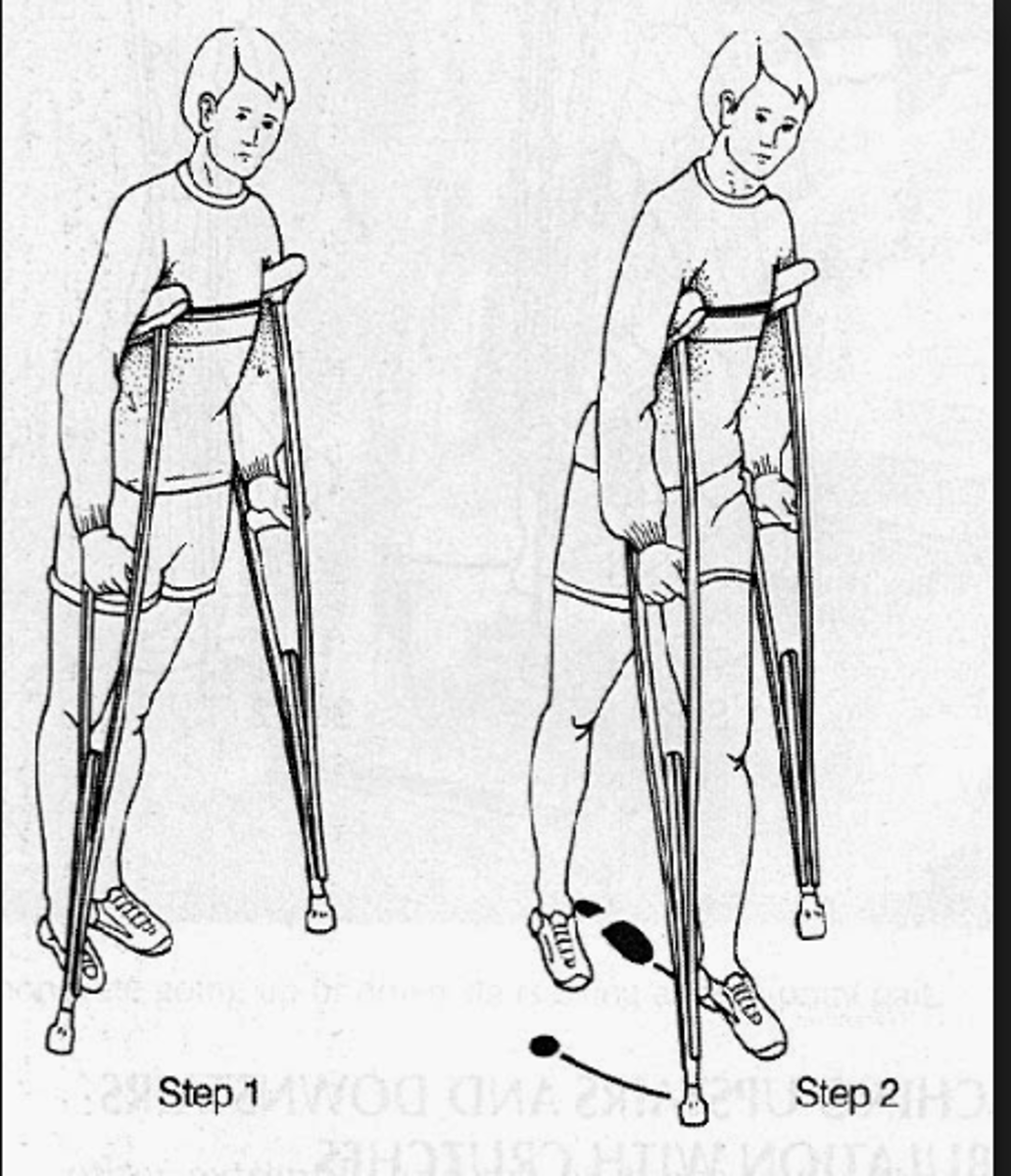
What is a two-point gait?
two points of contact; AD and stronger LE advance together
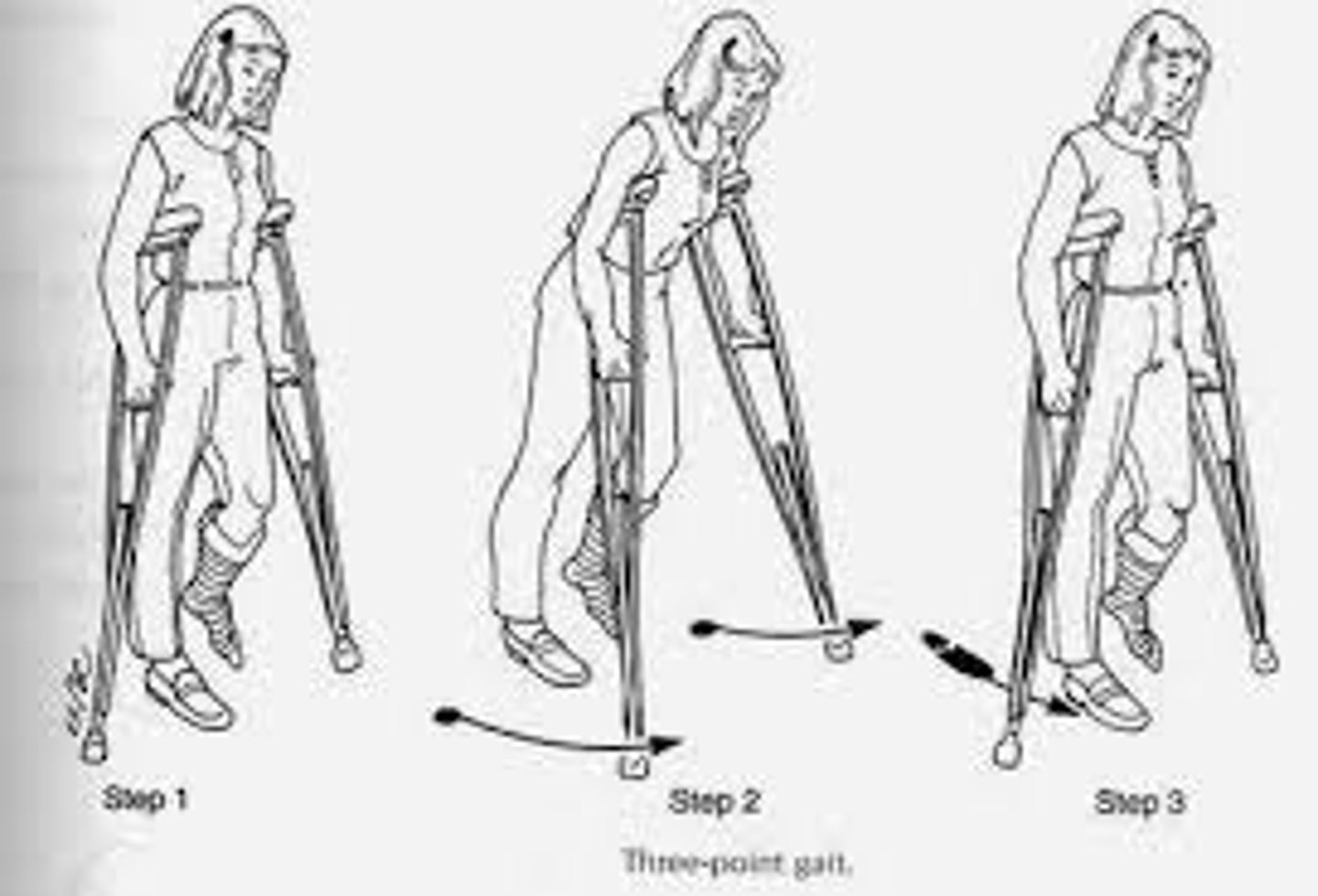
What is a three-point gait?
three points of contact; AD is advanced followed by limited LE then stronger LE
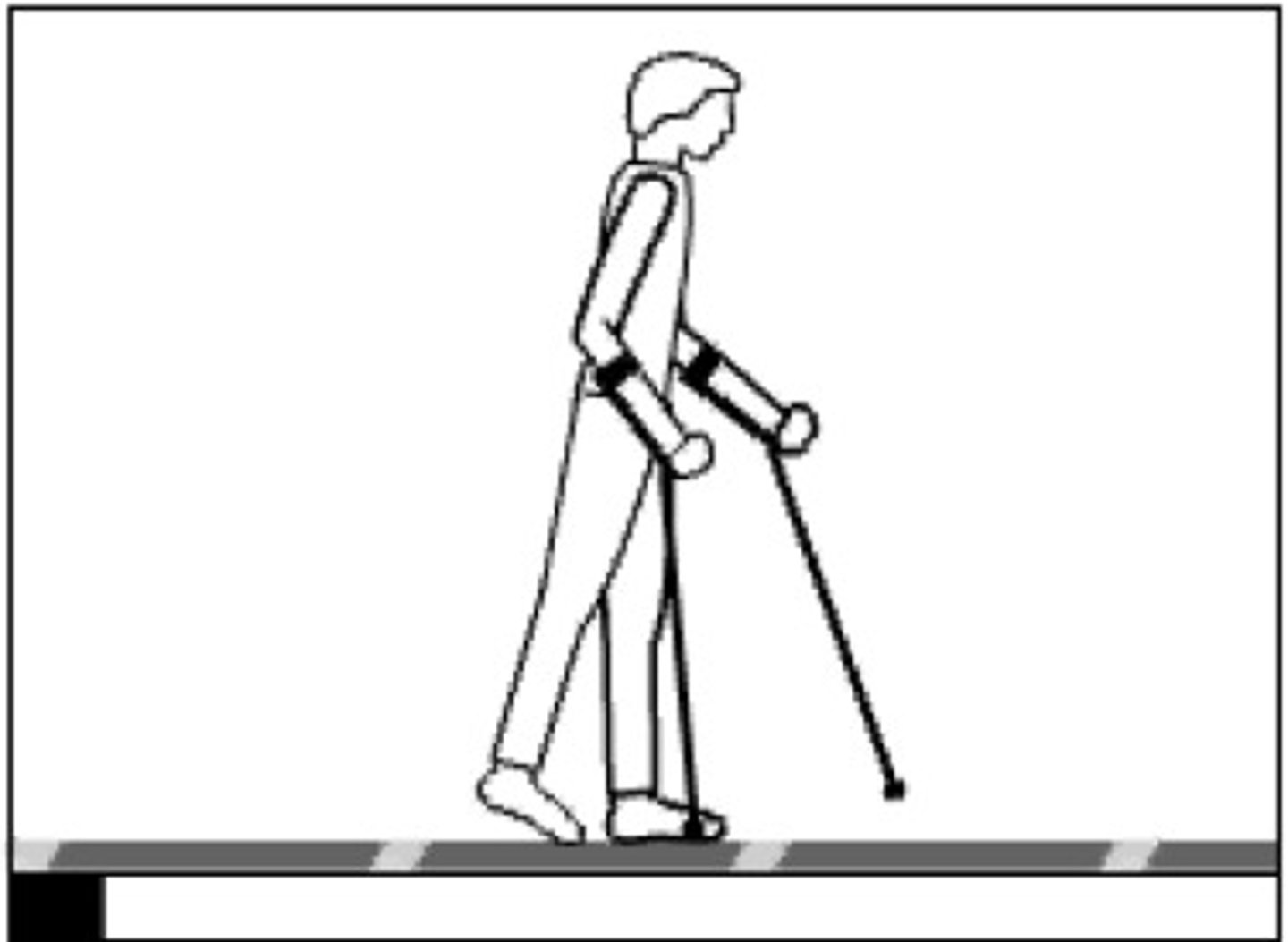
What is a four-point gait?
four points of contact; AD, opposite LE, other AD, opposite LE
Gait speed has been associated with what?
functional ability and overall health
When should the clinician pull on the patient's gait belt?
only when it is necessary to help recover the patient balance
What do you do if a patient begins to fall?
the clinician moves closer and lifts slightly on the gait belt, bringing the CoM back over the BoS, to help the patient regain support
How do you manage a fall?
deepen your stride and rest the patient on your forward thigh or carefully lower the patient to the floor (squatting down to maintain good spinal alignment)
When helping a patient go up the stairs, where do you guard?
from behind
When helping a patient go down the stairs, where do you guard?
in front
If it always a good idea to check what on an assistive device during a patient's visit?
tips of cane, crutch, or walker
What are common problem areas on assistive devices?
-loose fasteners
-worn rubber tips
-loose or worn handgrips & pads
What should a patient do when walking on inclines with assistive devices?
-lean forward when ascending
-take slightly long steps when ascending
-take slightly shorter steps when descending
How can a patient reduce the steepness when walking on an incline?
follow zigzag path
Still learning (71)
You've started learning these terms. Keep it up!