HOSA BH - The Mind
 Call Kai
 Learn
Learn Practice Test
 Spaced Repetition
 Match
Match Flashcards
 Knowt Play
1/57

There's no tags or description
Looks like no tags are added yet.
Name | Mastery | Learn | Test | Matching | Spaced | Call with Kai |
|---|
No analytics yet
Send a link to your students to track their progress
58 Terms
Central Nervous System (CNS)
The body’s main control center, consisting of the brain and the spinal cord. Protected by cerebrospinal fluid.
Peripheral Nervous System (PNS)
The nerves around/separate from the CNS.
Divided into the somatic (voluntary, e.g. movement and sensory) and autonomic (automatic, e.g. heart rate) nervous systems.
The three types of neurons are:
Sensory - information about environment or body
Motor - commands to muscles and glands
Interneurons - neither sensory nor motor, the “middle man” that connects sensory and motor pathways.
Lateralization
The division of labor between the two hemispheres of the brain, where each hemisphere has specialized functions.
Allows for multitasking and language, but may allow for schizophrenia and ASD in extremes.
sensation from one side of the body is processed by the opposite hemisphere
Brainstem
Contains the midbrain, pons and medulla
Connects the cerebrum to the spinal cord
Medulla
Part of the brainstem
Controls essential functions, such as heart rate, breathing and blood pressure
Pons
part of the brainstem
located between the medulla and the midbrain
controls alertness, such as sleep, arousal, pain signals and facial expressions
Cerebrum
divided into four lobes
split into two hemispheres connected by the corpus callosum
Corpus callosum
a band of nerve fibres
connects the right and left hemispheres of the cerebrum
cerebral cortex
the outer layer of neural tissue in the cerebrum
performs localized functions
Parietal lobe
top of the brain, behind the frontal lobe
processes sensory information, especially touch, pain and temperature (somatosensory cortex)
temporal lobe
located above the brainstem
processes auditory information (auditory cortex), language comprehension (Wernicke’s area) and memory
contains the amygdala
Occipital lobe
back of the brain
processes visual information, such as colour, shape, depth perception (visual cortex)
Frontal lobe
the largest lobe, by the forehead
controls complex stuff, such as decision making, impulsivity, problem solving and speech/language (Broca’s area)
Not fully developed until mid 20s
Limbic system *sub-colour
located beneath the temporal lobe
contains a set of subcortical structures, including the amygdala and nucleus accumbens
performs a variety of functions related to memory, emotion, behaviour and smell
nucleus accumbens
the “reward center”
processes pleasure, motivation, reward
implicated in addiction, anxiety, depression and OCD
part of the limbic system
amygdala
processes emotional responses and decision-making
part of the limbic system
cingulate cortex
above the corpus callosum
processes emotions and connects the right and left of the cerebrum
part of the limbic system
hippocampus
responsible for long-term memory formation and spatial navigation
impacted by alzheimer’s
part of the limbic system
Hypothalamus
located below the thalamus
the body’s main regulator of homeostasis
controls thirst, hunger, temperature, sexual behaviour and aggression
part of the limbic system
Basal ganglia
a collection of subcortical structures
voluntary movement control
affected by Parkinson’s
part of the limbic system
Thalamus
a subcortical structure
located above the brainstem
relays sensory and movement information, and regulates alertness
part of the limbic system
Cerebellum
the “little brain”
located behind the brainstem at the back of your head
controls balance, posture, coordination and motor learning
Endocrine system
The system of glands and organs that produce/secrete hormones.
Pineal gland
produces melatonin, regulates sleep/wake cycles
Pituitary gland
master gland, controls the other glands in the endocrine system
also releases/triggers release of growth hormones, sex hormones, and social/behavioural hormones (oxytocin and vasopressin)
Adrenal glands
Release cortisol and adrenaline
Thyroid gland
regulates growth and metabolism
can cause similar symptoms to depression if not working properly
Islets of Langerhans
Release insulin for digestion
when attacked by T-cells, causes T1D
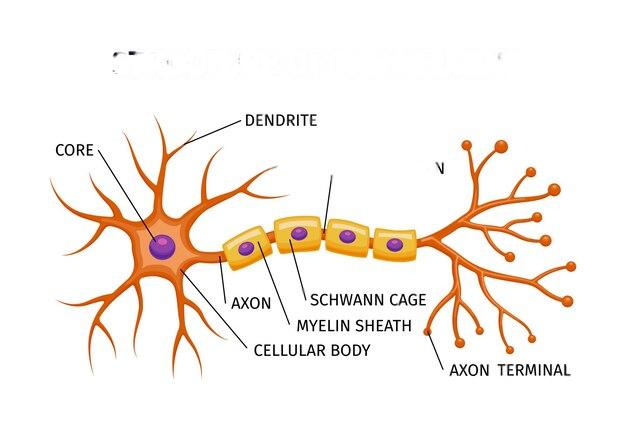
Explain this
Reuptake
The process in which a neurotransmitter in the synapse is recycled to the axon it was released from
Acetycholine
a neurotransmitter crucial for learning, memory and movement
Alzheimer’s causes a deficiency of this
Norepinephrine
a neurotransmitter that controls arousal and fight-or-flight
elevated in BP mania and PTSD
Dopamine
a neurotransmitter that regulates reward, motivation and movement
lower levels in ADHD and Parkinson’s, higher in schizophrenia
Serotonin
a neurotransmitter that regulates happiness, sleep and appetite
lower levels in depression and anxiety, sleep issues
Endorphins
neurotransmitters that help with pain relief and mood boosting after stress or pain
deficiencies associated with depression and anxiety,
Transduction
When sensory information is turned into neural signals
Sensory adaptation vs selective attention
sensory adaptation - ignoring non-changing stimuli (background noise) in favour of changing stimuli
selective attention - prioritizing specific stimuli
Bottom-up vs top-down processing
bottom up - building perceptions from simple input
top down - using prior knowledge/memories to interpret input
absolute threshold vs difference threshold
absolute - the smallest detectable amount of stimulus
difference - the smallest detectable different between two stimuli
Signal detection & four outcomes
Separating certain stimuli from background noise
Hit - stimuli present and correctly detected
Correct rejection - stimuli present but not detected
Miss - stimuli not present and not detected
False alarm - stimuli not present but accidentally detected
Information processing continuum
The three steps of memory: encoding, storage and retrieval
Types/stages of memory *e.g. short-term
Sensory - incoming sensory information, very brief memory (a few seconds)
Short-term memory - small amount of information for a short time, includes working memory (information in active use)
Long-term memory - large amounts of information held for a long time
Types of long term memory
semantic - general knowledge
episodic - personal history
autobiographical - combination of semantic and episodic relating to the self
procedural - skills/abilities
memory decay vs interference
decay - harder to access memories that haven’t been used recently
interference - harder to access memories due to competition with other memories, either more recent or older
Classical vs Operant conditioning
Classical - Pavlov’s dogs - associating two stimuli to produce an involuntary response
Operant conditioning - Skinner box - associating a behaviour with punishment or reward to elicit or eliminate the behaviour
James-Lange theory
A theory that emotions occur after the body’s physical reactions to stimuli, as a response to the reaction
Stimuli → physical reaction → interpretation → emotion
Cannon-Bard theory
A theory that emotions and the body’s physical reactions to stimuli occur at the same time
Stimuli → physical reaction + emotion
Schacter-singer theory
A theory that the body’s physical reactions to stimuli work in combination with the brain’s assessment of the stimuli to produce emotions, based on cues and past experiences
Stimuli → physical reactions + assessment —> emotions
SAME model of emotion
A theory that different stimuli need different physical and cognitive processes to produce emotion. (Essentially a combination of James-Lange, Cannon-Bard and Schacter-Singer)
Leptin
A hormone that controls appetite. High leptin levels causes satiety/fullness
Default mode network
A brain network that activates when an individual is not focused on the outside world (e.g. daydreaming, self-reflecting)
What are the three waking brain waves detected by EEG?
Alpha - relaxed, 2-12 cycles per second
Beta - alert, 15-30 cycles per second
Gamma - intense focus >30 cycles per second
What are the 4 stages of N-REM sleep?
Stage 1 - unaware they are sleeping, theta waves 4-7 cycles per second
Stage 2 - may sleep through stimuli, theta waves 4-7 cycles per second
Stage 3 and 4 - deep sleep, delta waves 1-4 cycles per second
REM sleep
the dreaming stage
rapid eye movement and muscle twitches
called paradoxical sleep because brain activity is like being awake
Narcolepsy vs cataplexy
Narcolepsy is daytime sleepiness + sleep attacks
Cataplexy is temporary muscle paralysis, but the person maintains consciousness
Partial vs generalized seizures
Partial starts in a specific spot of the brain, generalized starts in both hemispheres at once
Tonic-clonic vs absence seizures
Tonic-clonic - lost consciousness, violent muscle contractions, often temporary cessation of breathing
Absence - lost consciousness but aware of surroundings, blinking and eye movements instead of large contractions

