Bennett Biology - Macromolecules
 Call Kai
 Learn
Learn Practice Test
 Spaced Repetition
 Match
Match Flashcards
1/20

There's no tags or description
Looks like no tags are added yet.
Name | Mastery | Learn | Test | Matching | Spaced | Call with Kai | Chat |
|---|
No analytics yet
Send a link to your students to track their progress
21 Terms
organic
A word used to describe most molecules that contains the element Carbon. Also called a biomolecule
biomolecules
Organic molecules such as proteins, nucleic acids, carbohydrates, and lipids.
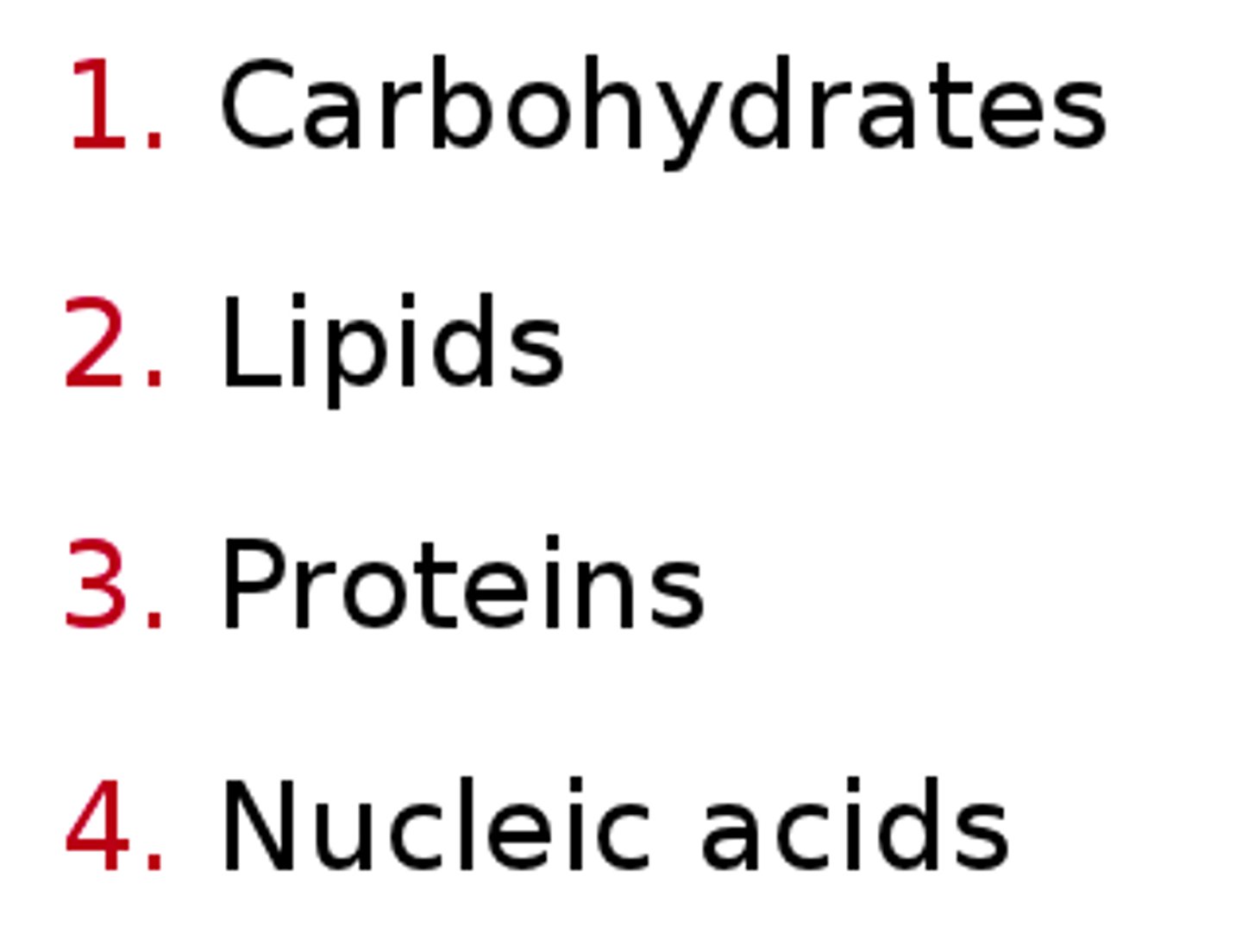
macromolecule
Synonym for biomolecule
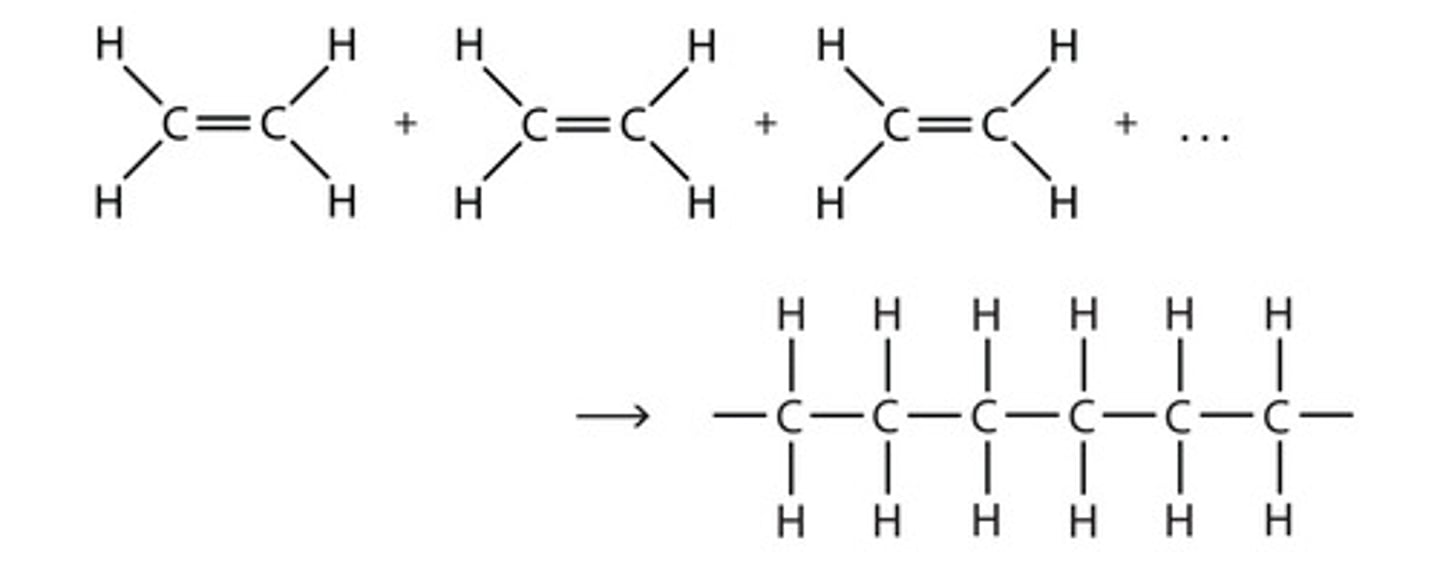
polymer
A large molecule formed by many repeating monomers.
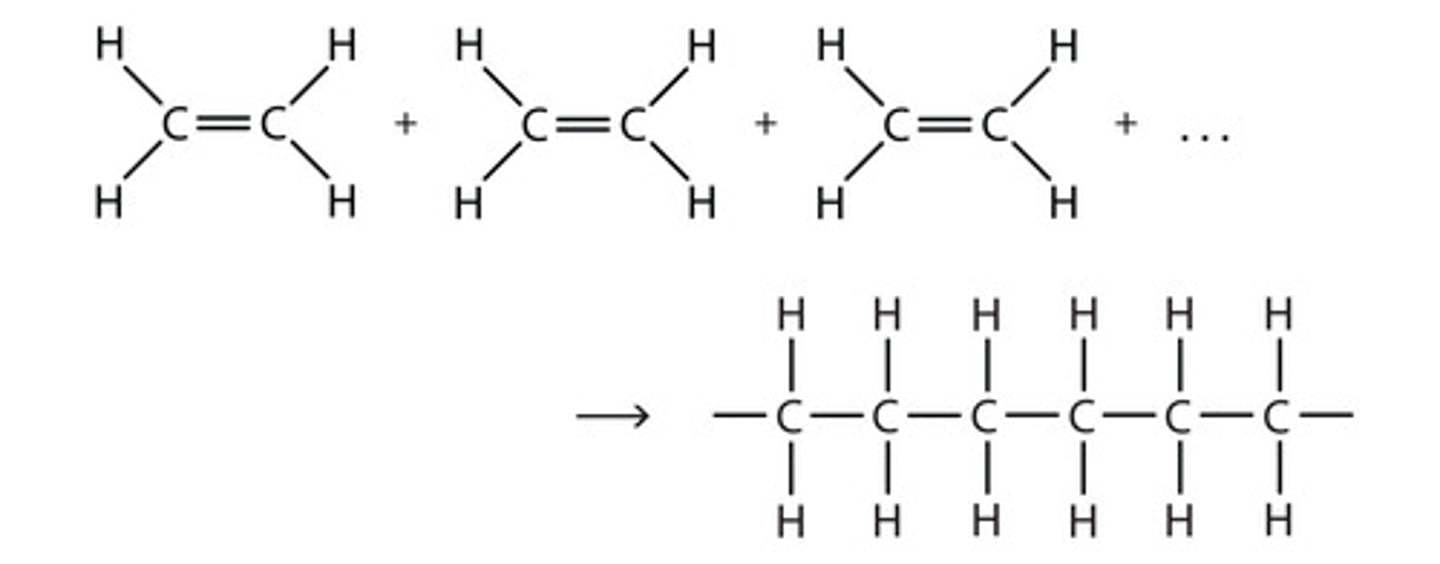
monomer
A smaller unit that is the BUILDING BLOCK of a polymer.
protein
macromolecules that contain carbon, hydrogen, oxygen, nitrogen and are needed to build and repair body structures and to regulate processes in the body.
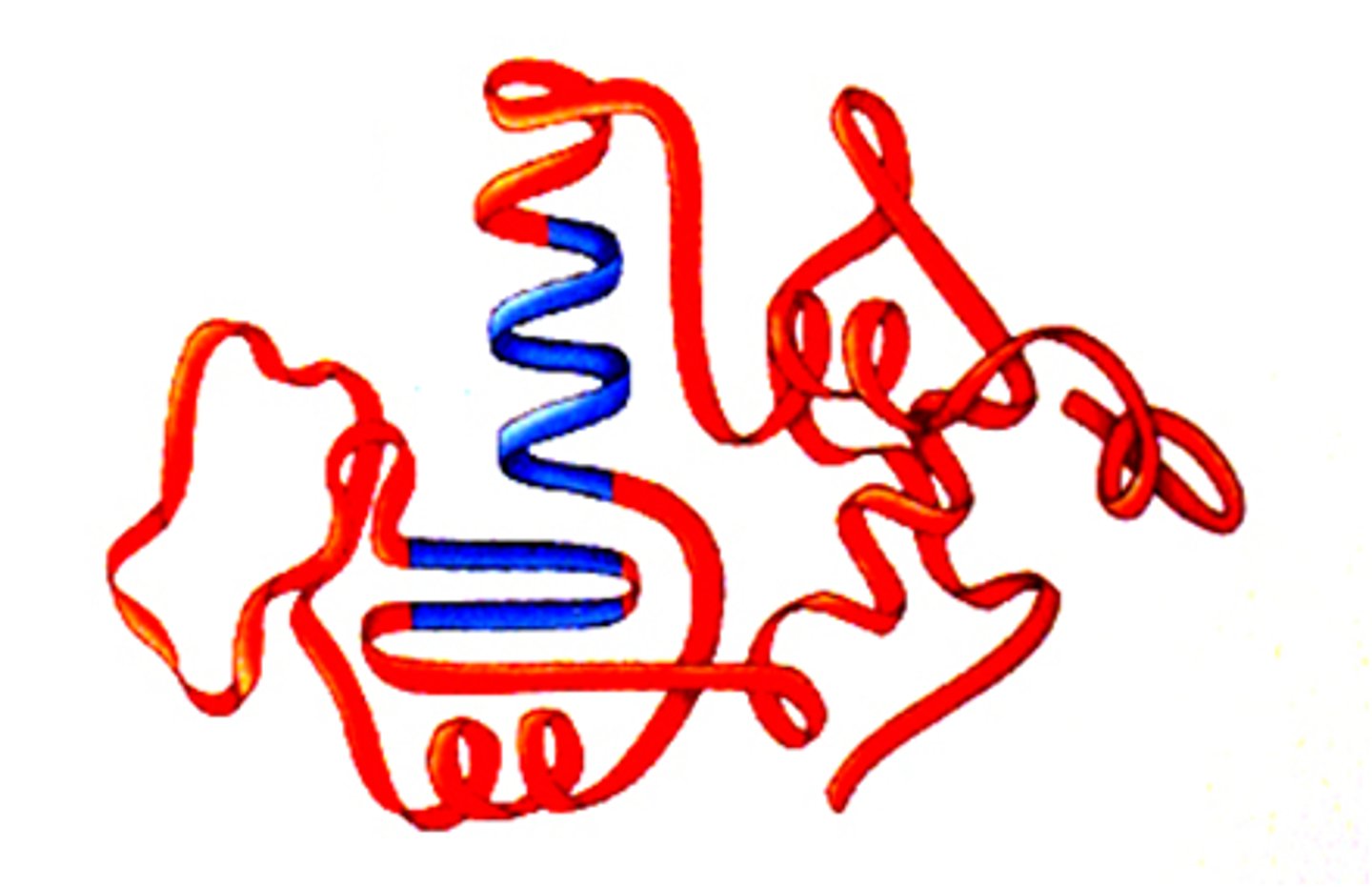
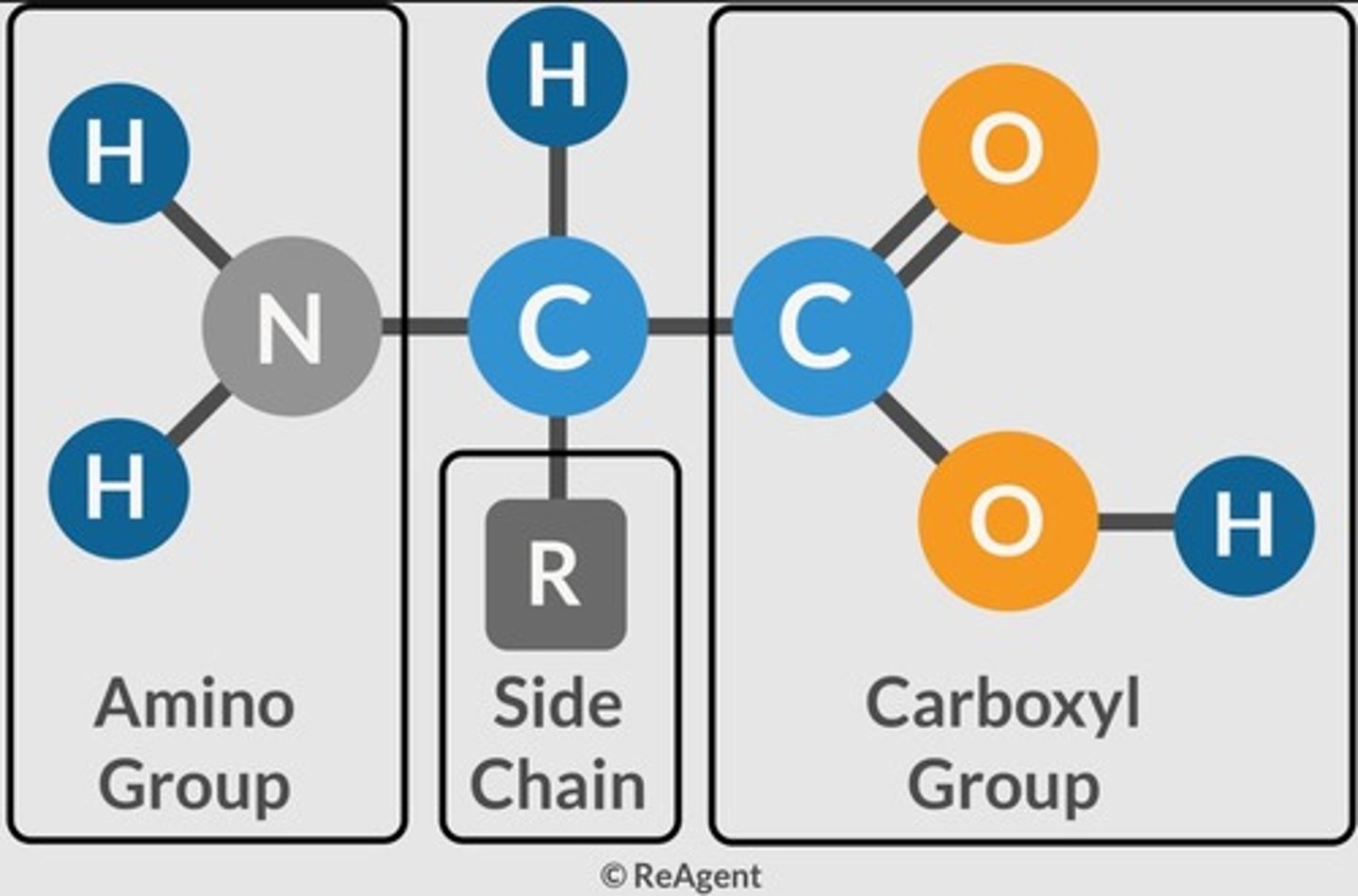
amino acid
The monomer/building block for proteins.
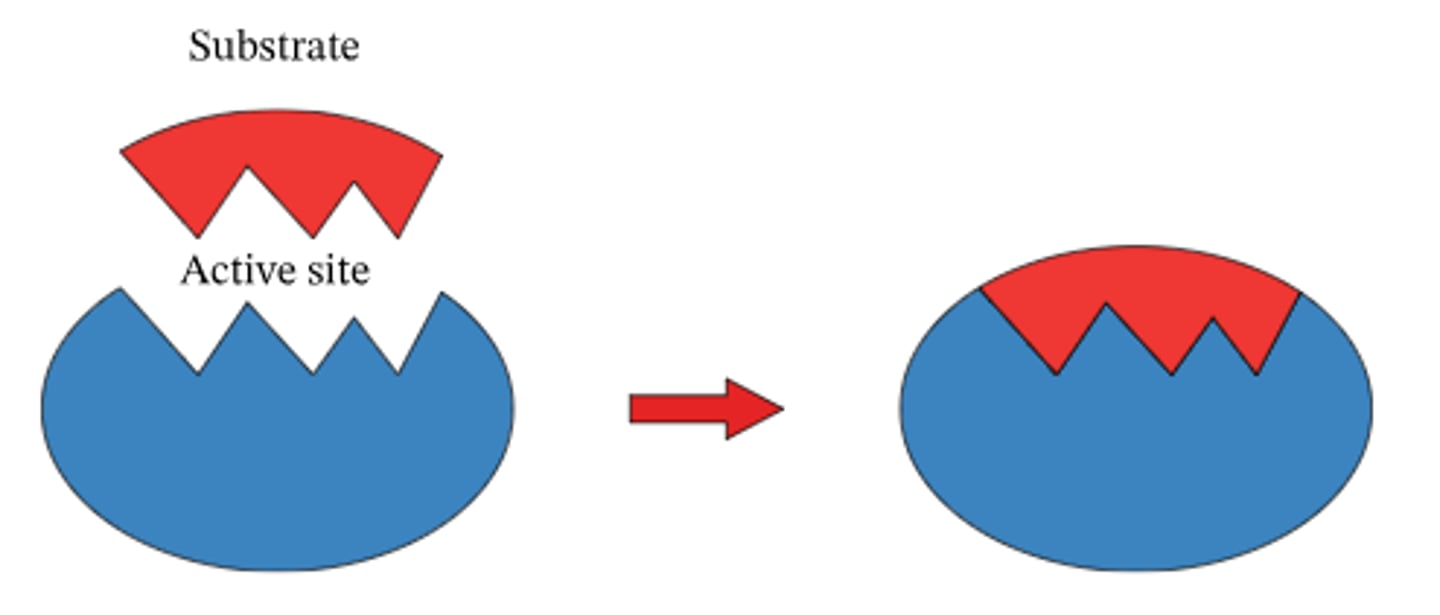
enzyme
A specialized protein that catalyzes (speeds up) the chemical reactions of a cell.
carbohydrate
Biomolecule that includes sugar, starch, or cellulose and it serves as a major energy source in the diet of animals. These compounds contain only C, H, and O.
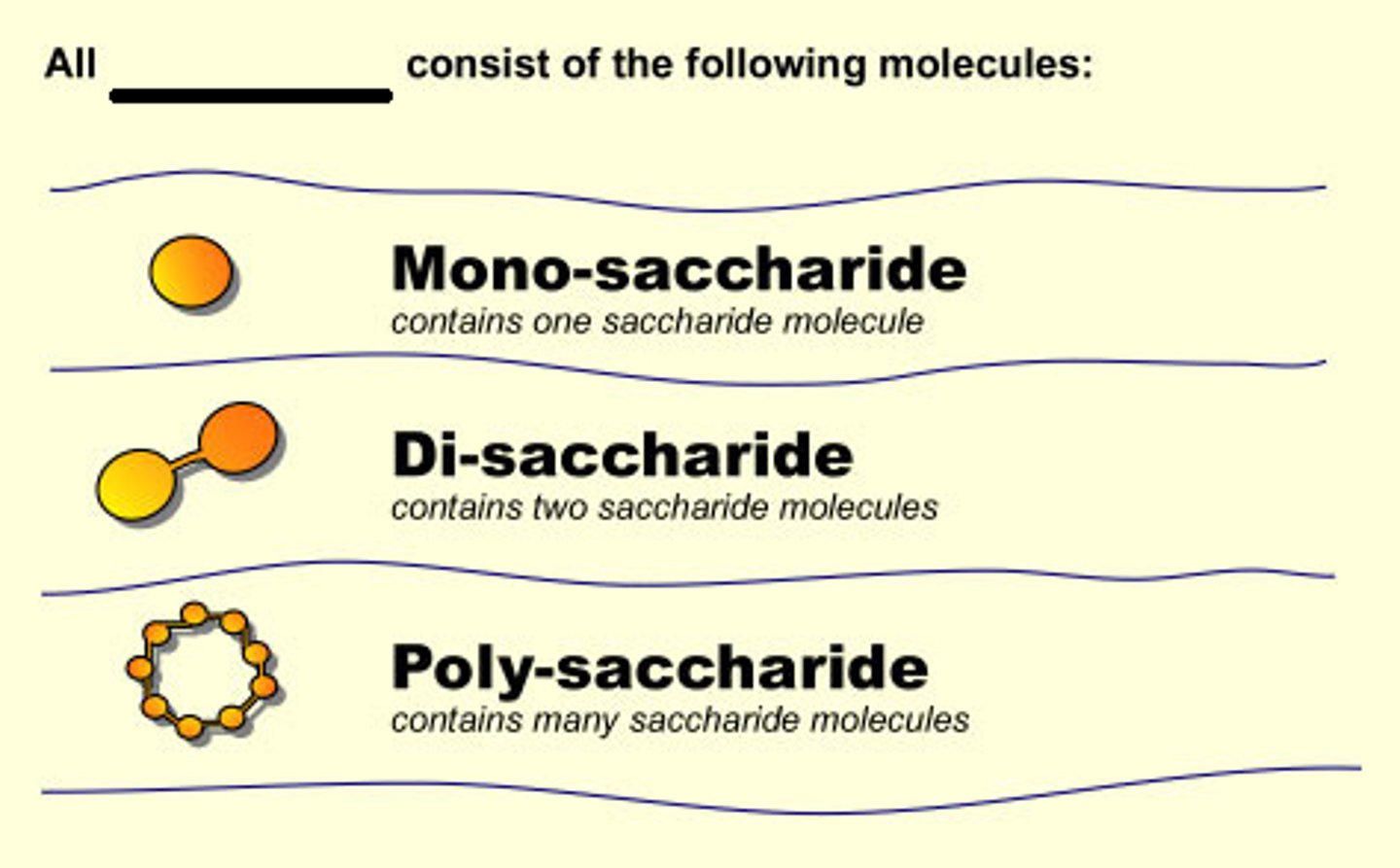
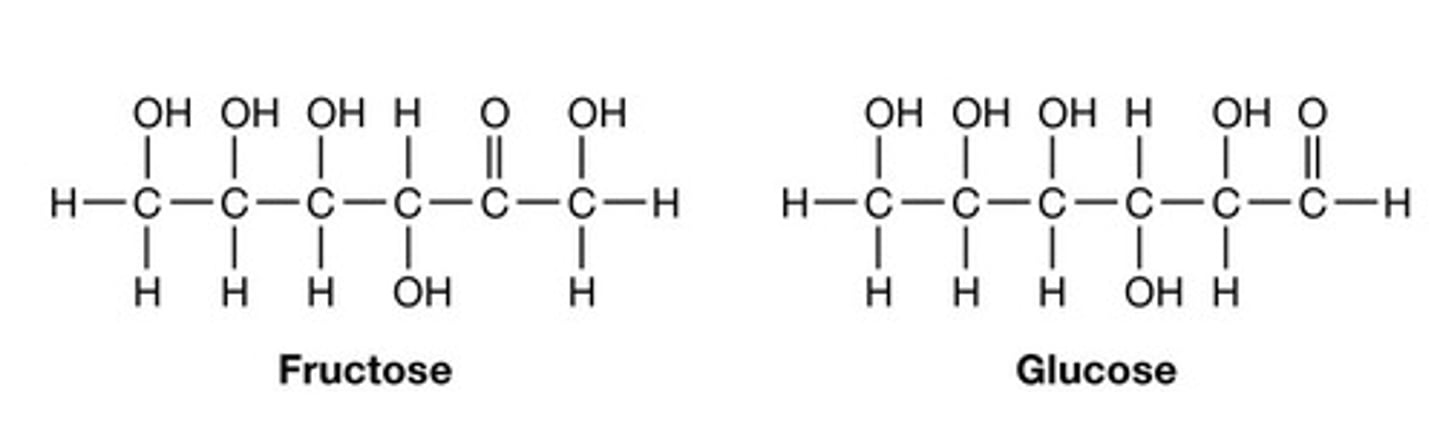
monosaccharide
The building block of a carbohydrate; a single sugar.
Ex. Glucose, Ribose
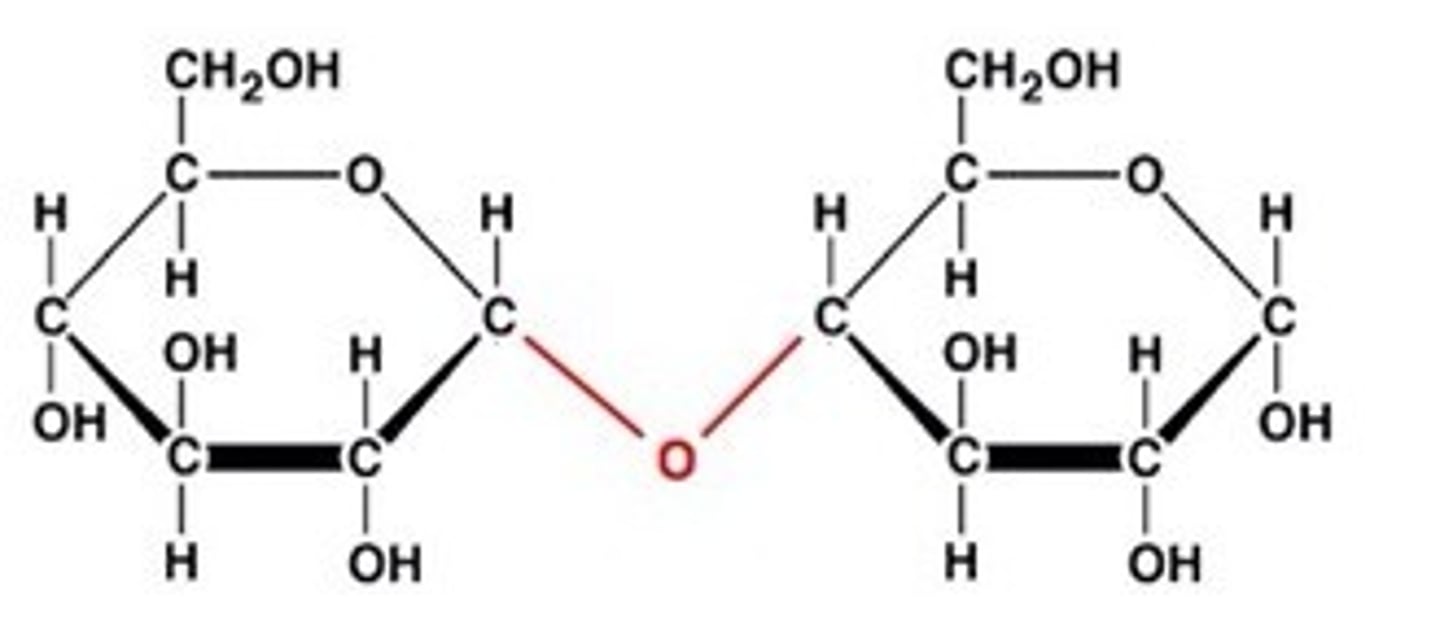
disaccharide
A molecule formed by joining TWO monosaccharides through dehydration synthesis.
Ex. Sucrose (table sugar), and Lactose.
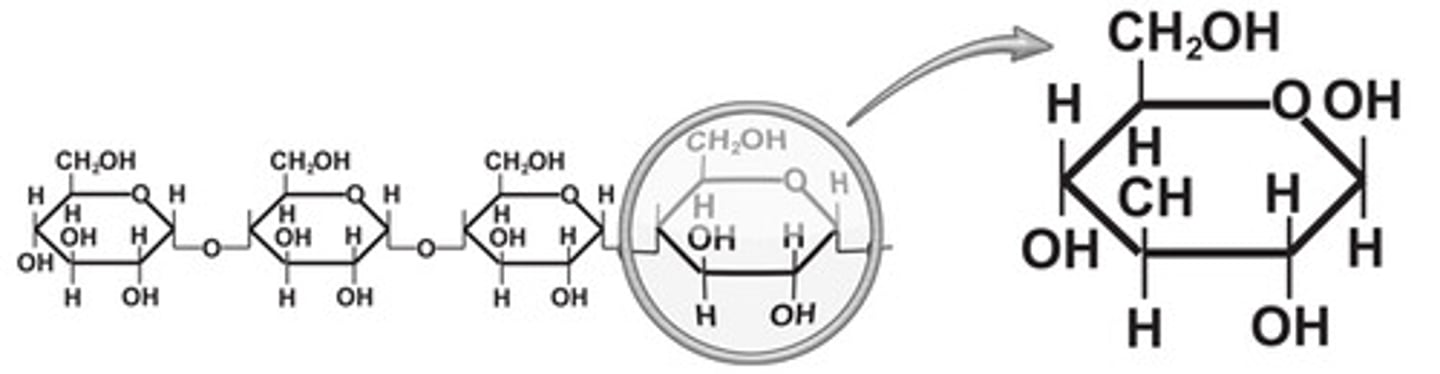
polysaccharide
A polymer of 3 or more monosaccharides, formed by dehydration reactions.
Ex. Starch, Cellulose
hydrolysis
A reaction with water that breaks a polymer into two smaller molecules.
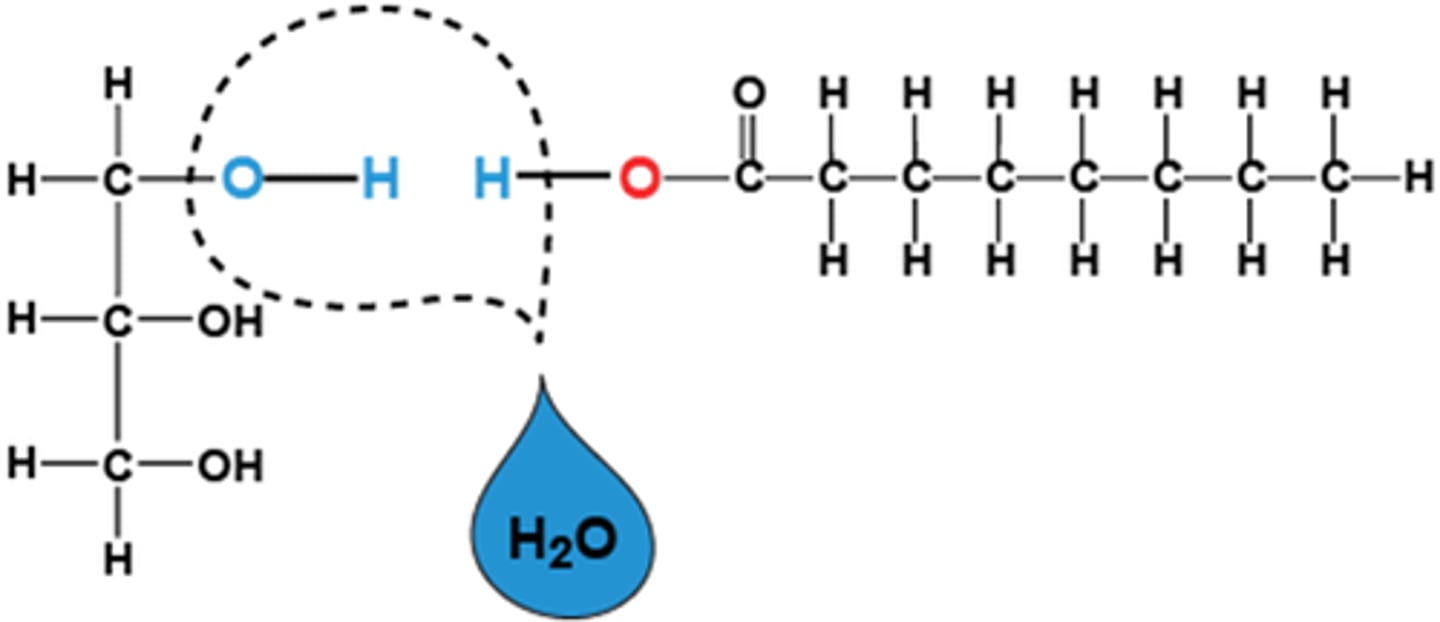
dehydration synthesis
A chemical reaction in which two monomers are bonded together with the removal of a water molecule.
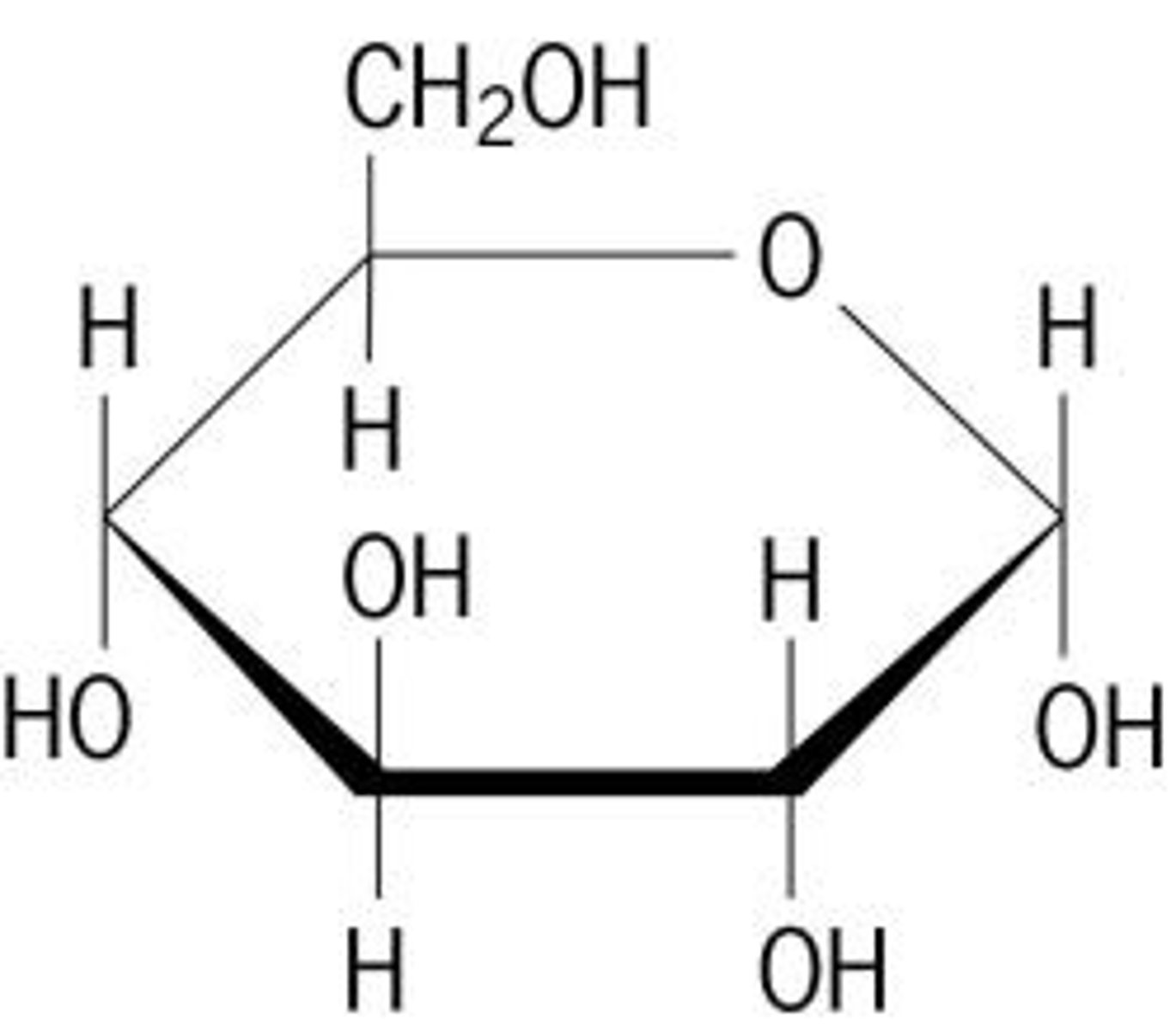
glucose
A carbohydrate (C₆H₁₂O₆) produced by photosynthesis. It is the form of sugar that is used by the body for energy.
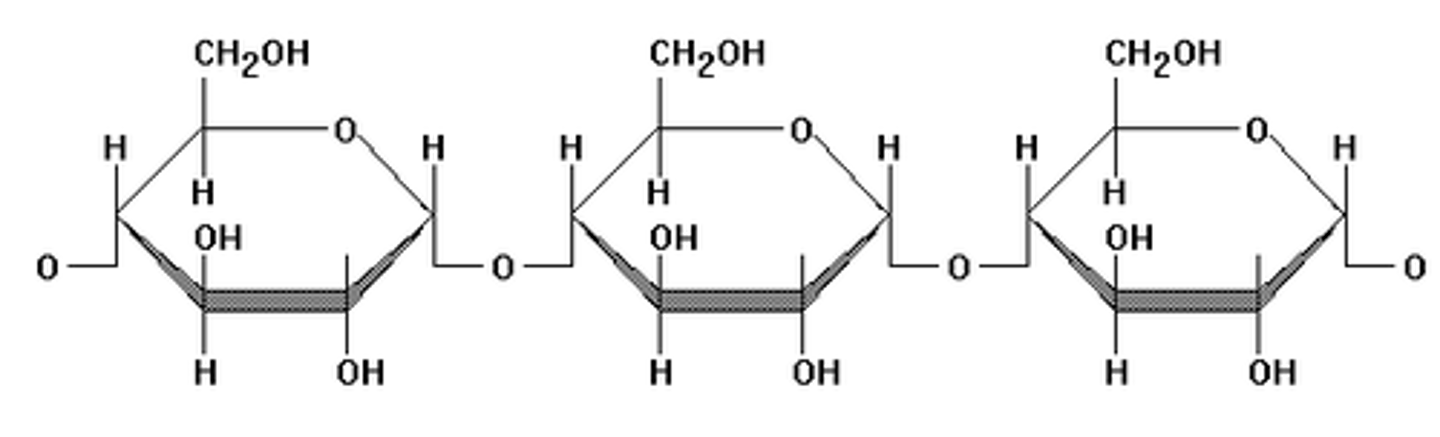
starch
Polysaccharide made up of a chain of glucose (monosaccharide) molecules.
A complex carbohydrate in which plants store energy
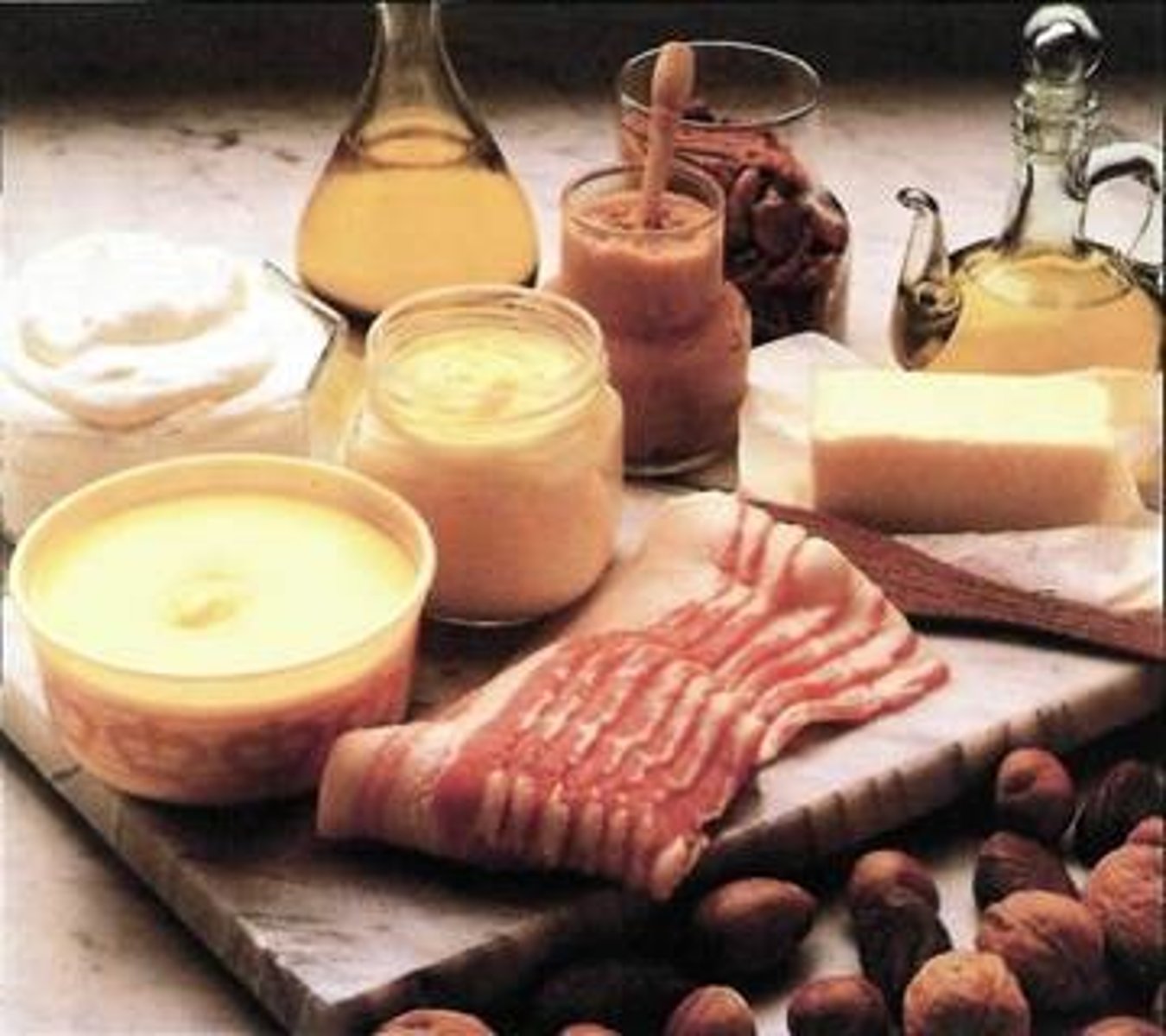
lipid
Molecule consisting of CH and a little O includes: fats, oils and waxes. Its monomers are a glycerol and three fatty acids.
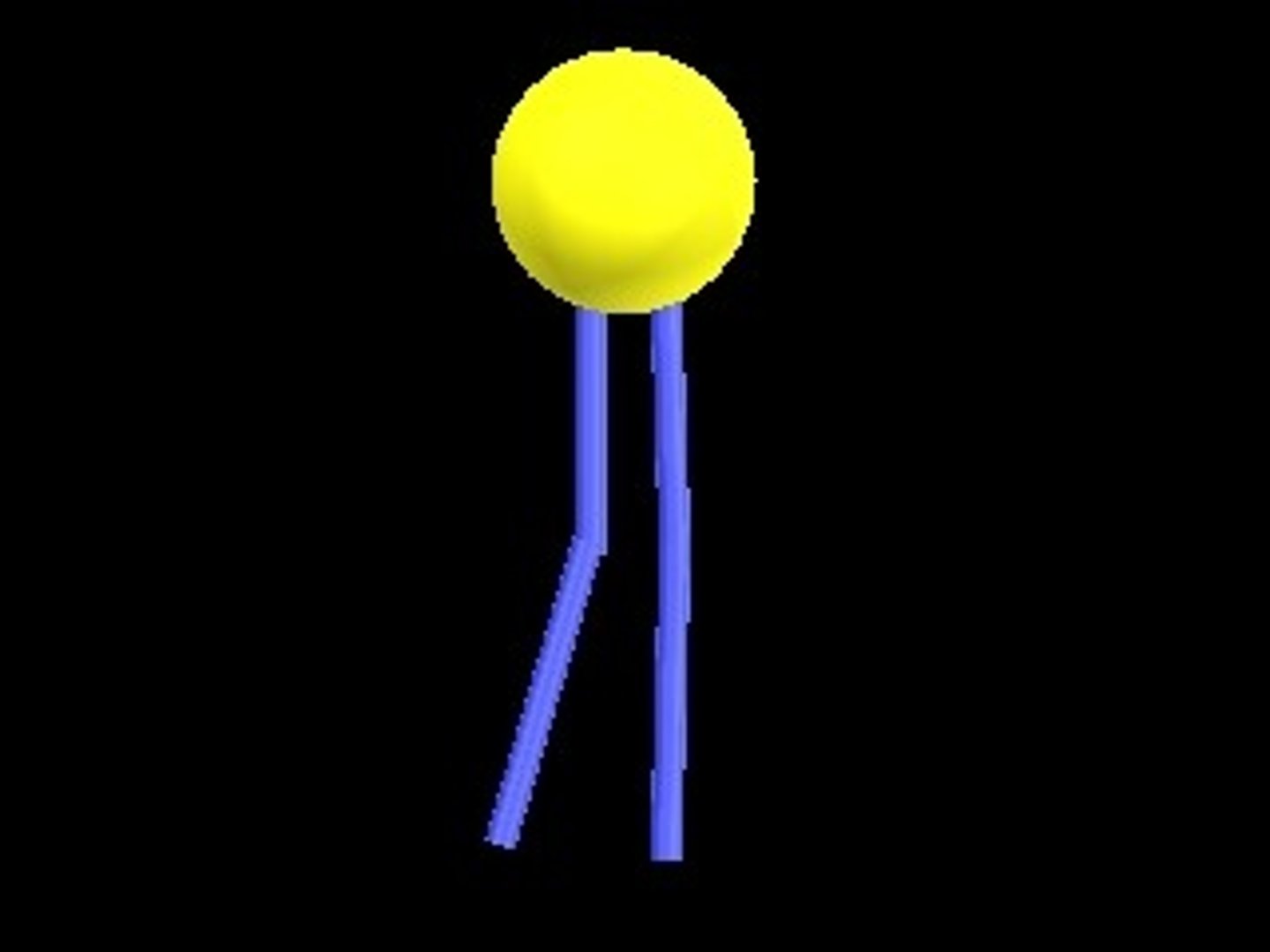
phospholipid
A lipid made of a phosphate group and two fatty acids. Consists of a hydrophilic polar head and two hydrophobic non-polar tails. Forms cell membranes.
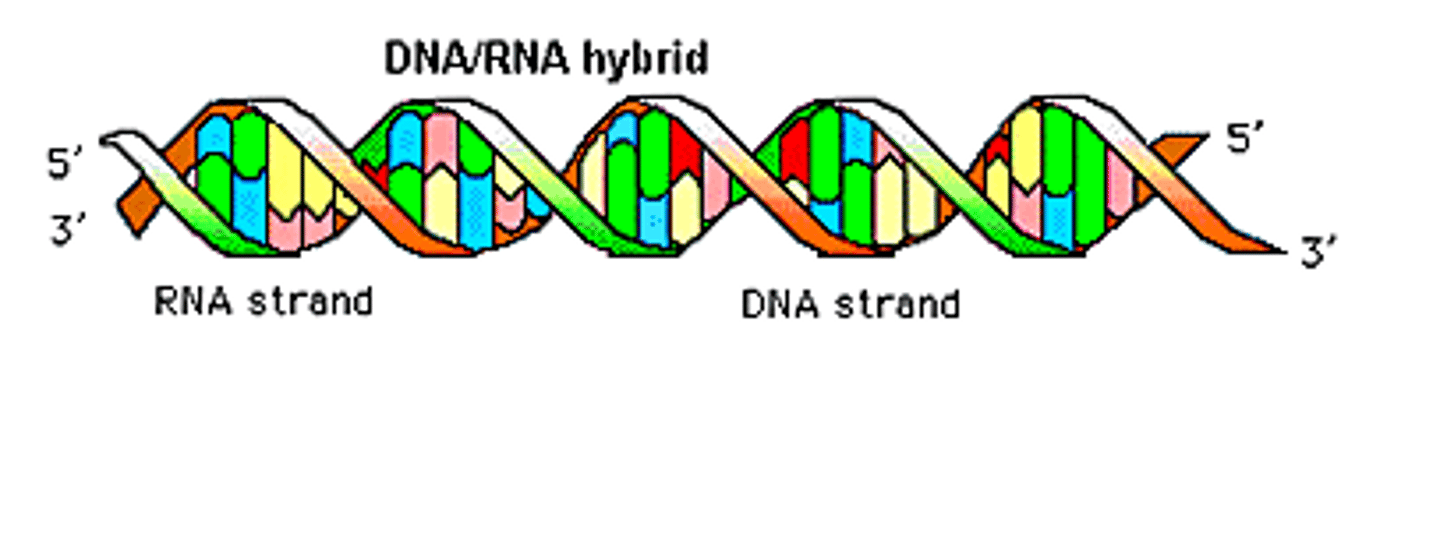
nucleic acids
Hold our genetic information. Examples are DNA and RNA. Molecules consist of many nucleotides linked in a long chain.
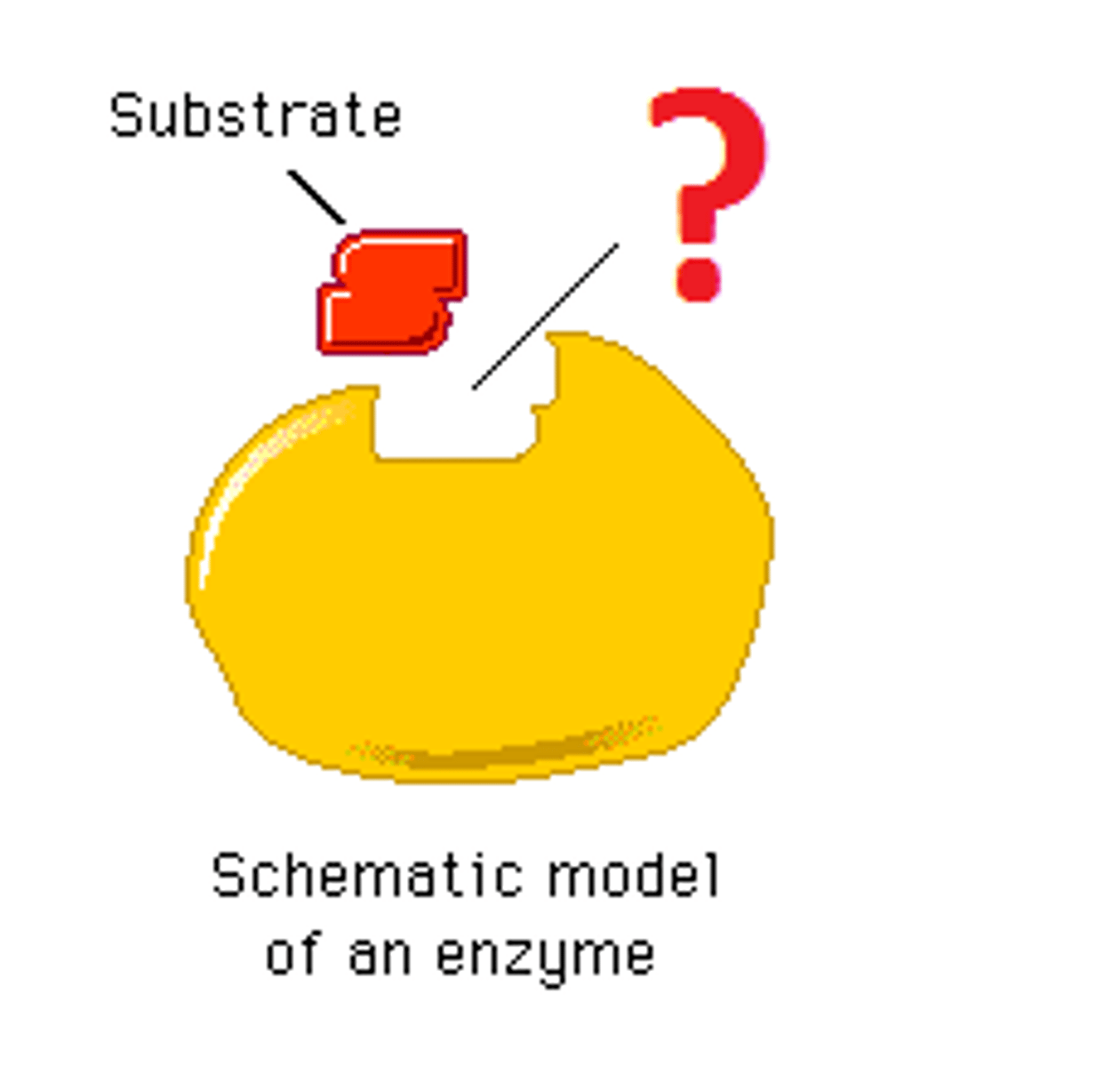
substrate
The reactant molecule upon which an enzyme acts
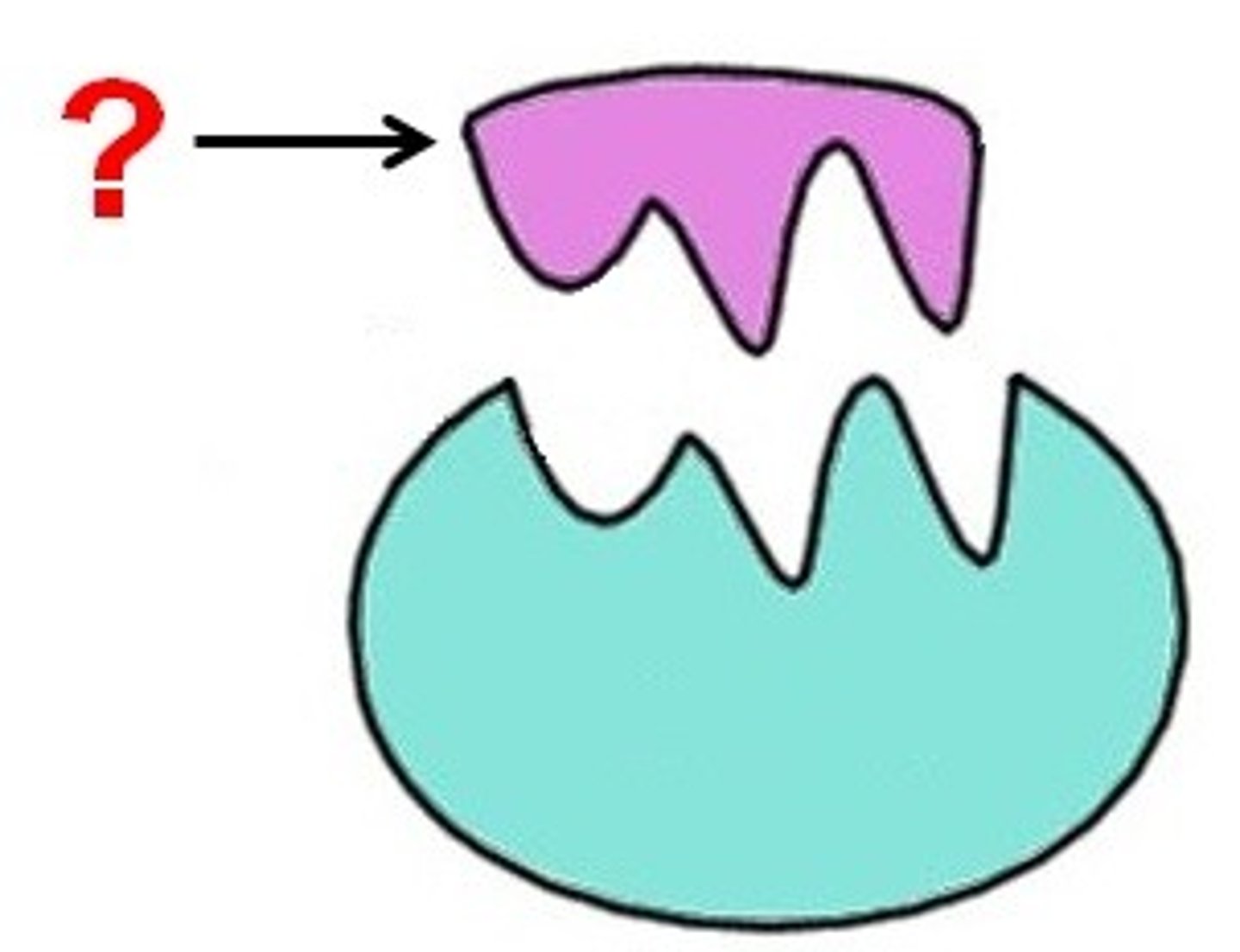
active site
Location on enzyme which binds a particular molecule (called its substrate).