20. Surgical Treatment of Thyroid disease
 Call Kai
 Learn
Learn Practice Test
 Spaced Repetition
 Match
Match Flashcards
 Knowt Play
1/30

Earn XP
Description and Tags
Thyroid nodules are more common in women, but a thyroid nodule in a man has a higher relative risk of malignancy.
Name | Mastery | Learn | Test | Matching | Spaced | Call with Kai | Chat |
|---|
No analytics yet
Send a link to your students to track their progress
31 Terms
Radiation exposure (childhood) ⭐
Family history of thyroid cancer (MEN2, medullary)
Rapid growth
Male sex (fewer nodules but higher malignancy risk)
risk factors for thyroid malignancy
Neck fullness
Dysphagia
Dyspnea (tracheal compression)
Hoarseness
symptoms of goiter
Graves disease
hypervascular thyroid
bruit heard over an enlarged thyroid →

stepwise approach to when to find a thyroid nodule
Disorder | First-line treatment |
|---|---|
Graves disease | Methimazole (± RAI) |
Toxic adenoma | RAI or surgery; RAI commonly used definitive treatment |
Toxic multinodular goiter | RAI or surgery |
Papillary thyroid cancer | Surgery → ± RAI afterward |
Follicular thyroid cancer | Surgery → ± RAI afterward |
Medullary thyroid cancer | Surgery |
Anaplastic thyroid cancer | Multimodal/palliative treatment; often systemic therapy ± radiation/surgery |
Thyroiditis | Usually supportive; β-blocker for hyperthyroid symptoms |
Solid + hypoechoic
Irregular/infiltrative margins
Microcalcifications / punctate echogenic foci
Taller-than-wide shape
Extrathyroidal extension
Suspicious cervical lymph nodes
suspicious ultrasound features of a thyroid nodule

fine needle aspiration
gold standard for diagnosis of thyroid nodule

HOT nodules
the hyperfunctioning thyroid nodules seen on a nuclear medicine study that are almost always benign
-no FNA needed
“Cancer, Compression, or Function.”
Cancer → malignant/suspicious cytology (goes off bethesda stages)
Compression → dysphagia, dyspnea, large/substernal mass
Function → symptomatic toxic nodule
surgical indications for a thyroid nodule

toxic multinodular goiter
(decr TSH, incr T3,4)
-one/more nodules in multinodular goiter become TSH-independent
-NO exophthalmos/pretibial myxedema/ab’s
-Beta-blocker ± methimazole
-Radioactive iodine or surgery for definitive treatment
Older patient + hyperthyroidism + irregular multinodular thyroid + patchy radioactive iodine uptake —>
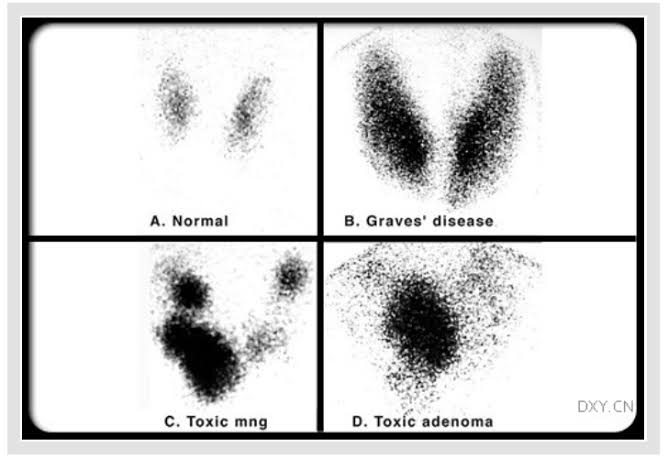
toxic adenoma
(decr TSH, incr T3,4)
Single autonomously functioning thyroid ‘hot’ nodule → produces thyroid hormone independent of TSH → hyperthyroidism.
-benign, no need for FNA
-Beta-blocker ± methimazole
-Radioactive iodine or surgery for definitive treatment

radioactive iodine
Used for hyperthyroidism and thyroid cancer
Absorbed by thyroid and destroys its cells
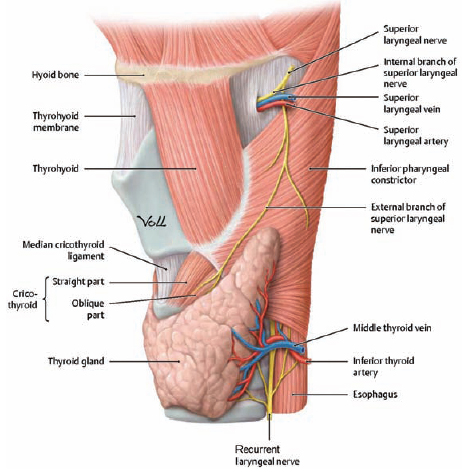
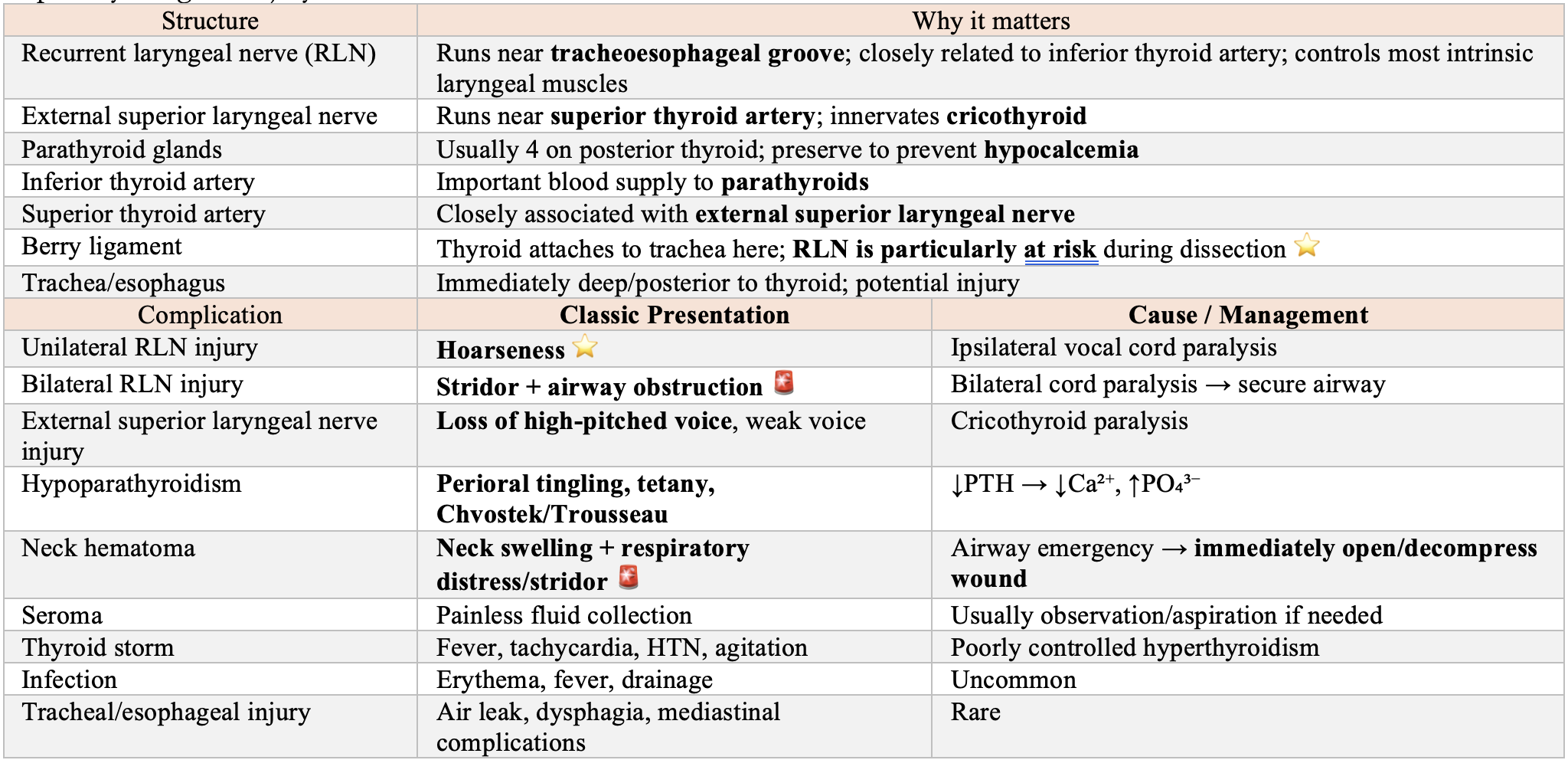
tracheoesophageal groove
the recurrent laryngeal nerve runs in this groove
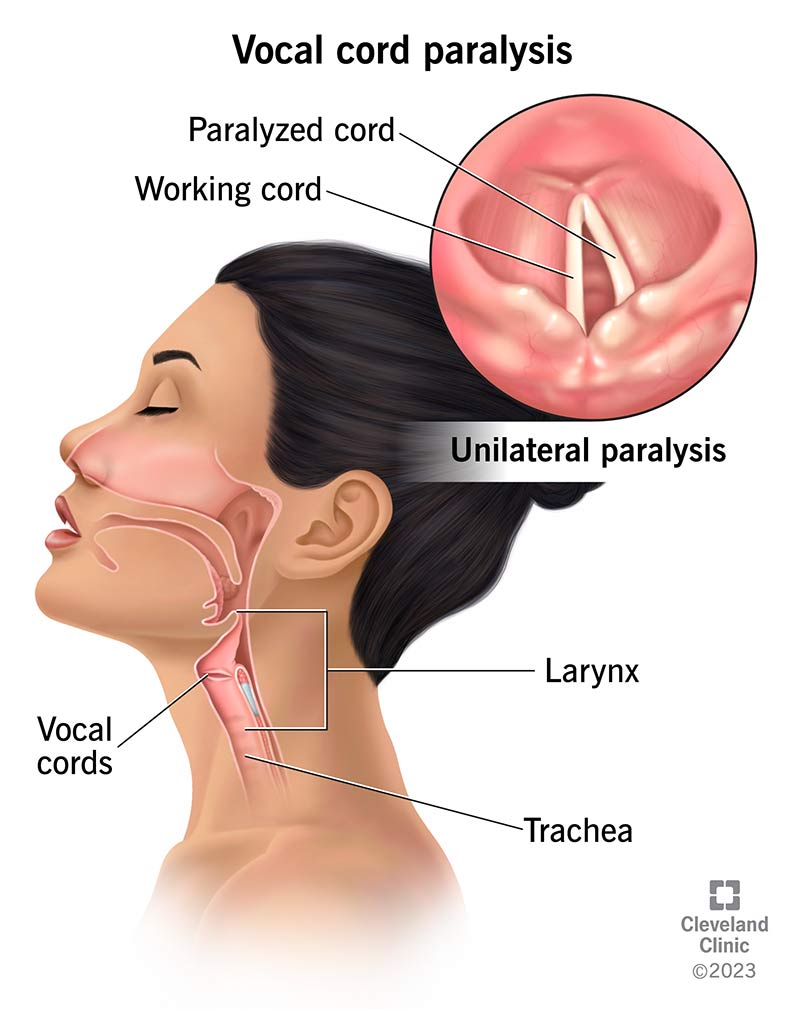
hoarseness
unilateral RLN injury resluts in
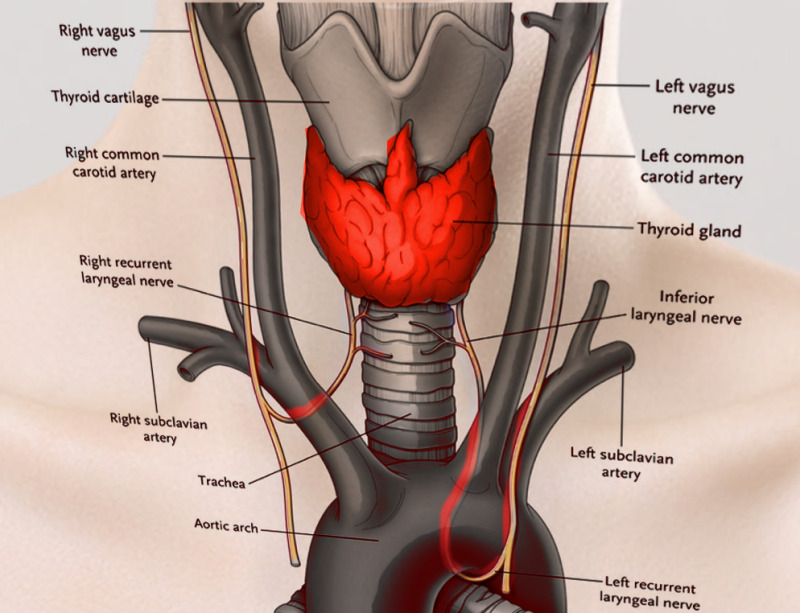
Bilateral vocal cord paralysis → STRIDOR + AIRWAY OBSTRUCTION
(may require urgent intubation/tracheostomy).
bilateral recurrent laryngeal nerve injury results in
↓ PTH → HYPOCALCEMIA
(increase phosphate)
Symptoms: Perioral/fingertip tingling, muscle cramps, tetany
Chvostek sign: Facial twitch after tapping facial nerve
Trousseau sign: Carpal spasm with BP cuff inflation
Severe complications: Laryngospasm, seizures, prolonged QT, arrhythmias
note: Transient hypocalcemia is relatively common after thyroidectomy due to temporary parathyroid dysfunction; permanent hypoparathyroidism is less common.
signs of parathyroid injury from thyroid surgery
replace the calcium:
Acute symptomatic treatment: IV calcium gluconate
Chronic treatment: Oral calcium + calcitriol
how to treat parathyroid injury from thyroid surgery

papillary = popular
most common thyroid cancer
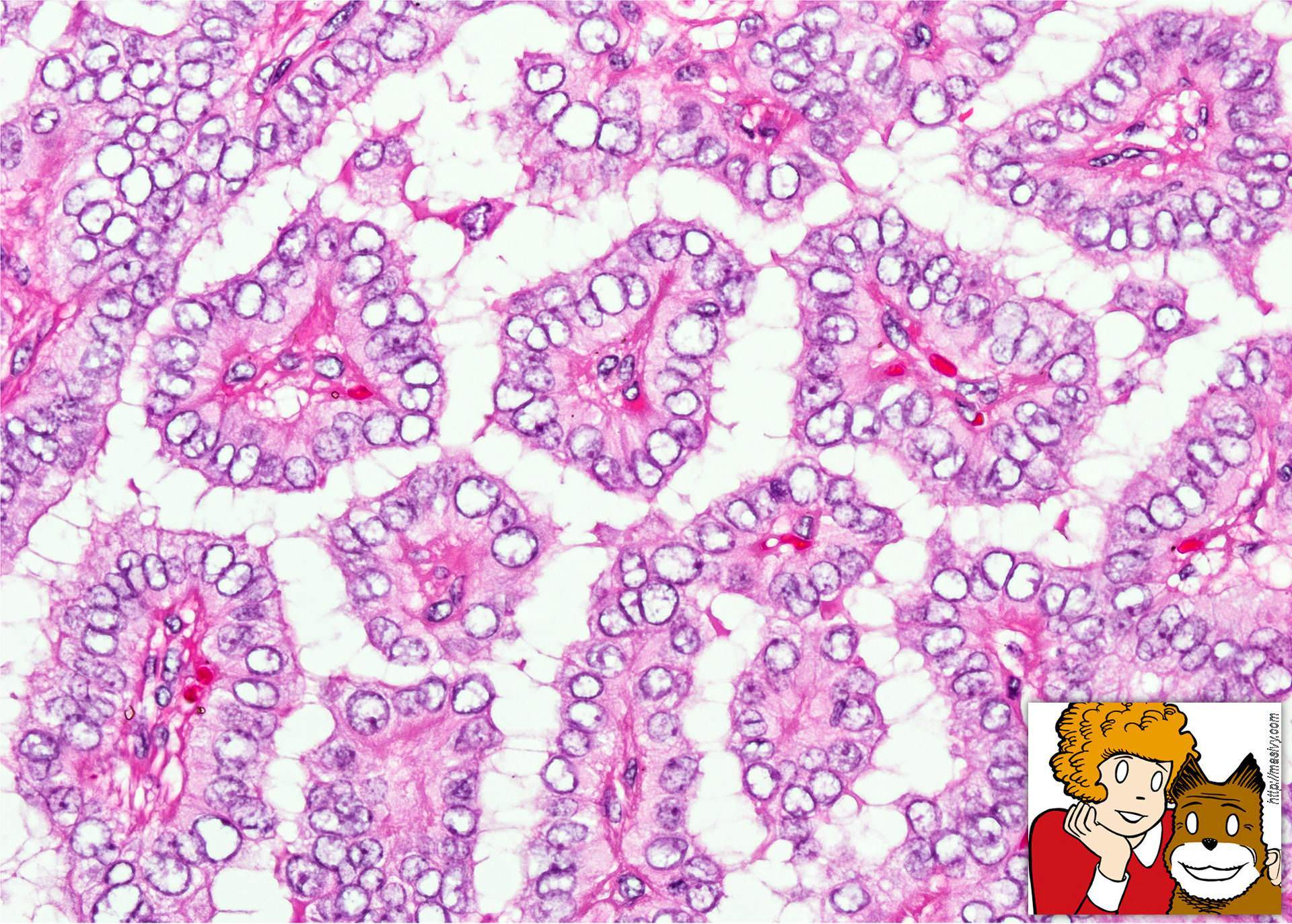
Orphan Annie eye nuclei → clear/empty-appearing nuclei
Psammoma bodies → laminated calcifications
Nuclear grooves
Intranuclear cytoplasmic inclusions
Papillary architecture
histology of papillary thyroid cancer
Lymphatic → cervical lymph nodes
spread of papillary thyroid cancer
Papillary thyroid ca
Popular
Palpable lymph nodes
Psamma bodies/ orPhan annie
Prior Rad
Painless thyroid nodule
Usually euthyroid → normal TSH/T3/T4
May have painless cervical lymphadenopathy due to lymphatic spread
Often found incidentally on imaging
Typically occurs in younger/middle-aged adults
History of childhood head/neck radiation is an important risk factor
Common mutation: BRAF**; RET/PTC rearrangements can also occur.
excellent prognosis

follicular thyroid carcinoma
A well differentiated tumor of uniform follicular cells of the thyroid gland. It is a slowly growing, painless, cold nodule.
“Flows out” - capsular/vascular invasion —> mets to lung/bone
+RAS, PAX8-PPARG rearrangements related.
good prognosis
follicular thyroid carcinoma
because ==> FNA cannot distinguish follicular adenoma from carcinoma because you must see capsular/vascular invasion → requires surgical pathology
FNA can dx all thyroid neoplasms.. except for ??
Hematogenous (bone/lung)
spread of follicular thyroid cancer
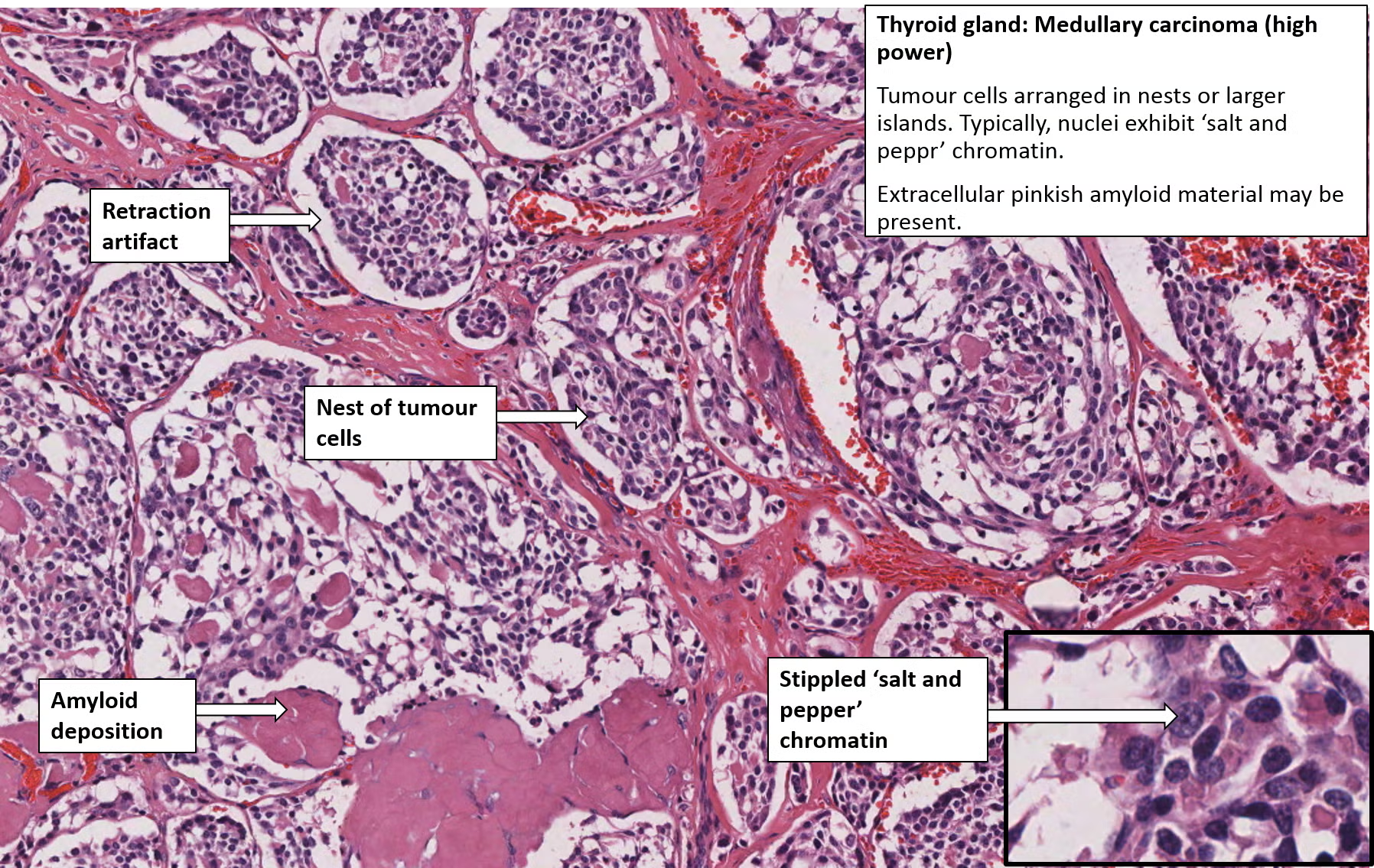
medullary thyroid cancer
“C” cells of the parafollicular cells (neuroendocrine)
+calcitonin
+congo-red staining- amyloid stroma (sheets of polygonal cells)
Cervical lymph nodes
associated w/ MEN 2A and 2B syndromes & RET mutations
{2 MEN makes C’s & RETurns}
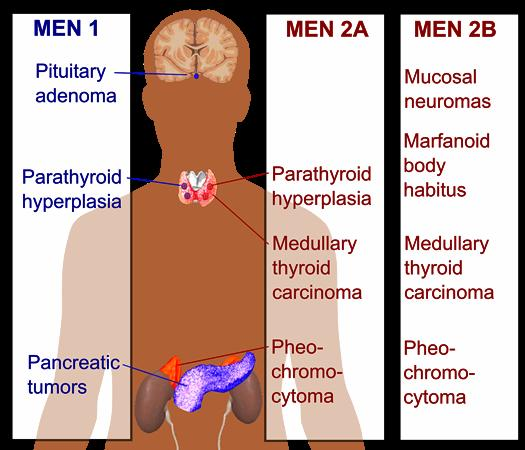
MEN2a & MEN2b
disease associated with medullary thyroid carcinoma
Total thyroidectomy
Does NOT respond to radioactive iodine because C cells do not take up iodine
Major board pearl:
Before thyroidectomy in MEN2/MTC → rule out pheochromocytoma first
Otherwise surgery can precipitate a hypertensive crisis.
treatment of medullary thyroid carcinoma
intermediate
prognosis of medullary thyroid cancer

anaplastic thyroid cancer
Rare <1%,, MC in males >65
Local and distant METS; may invade trachea
aggressive, Poor prognosis*
tx: most are not able to be resected, chemo and radiation
THINK; OLD / FAST / DEAD = TP53 MUT.
palliative
treatment of anaplastic thyroid cancer
Thyroid Surgery — General Conduct
Pre-op
Confirm diagnosis/indication and thyroid function
Ultrasound ± FNA
Assess vocal cord function if indicated
If medullary/MEN2 → rule out pheochromocytoma FIRST ⭐
Correct significant hyperthyroidism before elective surgery
Position
Supine, Neck extended with shoulder roll
Incision
Transverse Kocher collar incision in a natural skin crease
Expose thyroid
Divide/retract strap muscles, Mobilize thyroid lobe
Control vessels
Superior thyroid vessels ligated close to thyroid → protects external branch of superior laryngeal nerve
Inferior thyroid artery branches handled carefully → preserve parathyroid blood supply
Identify & preserve ⭐⭐⭐
Recurrent laryngeal nerve (RLN)
External branch of superior laryngeal nerve
Parathyroid glands + their blood supply
Remove appropriate amount of thyroid → lobectomy vs total thyroidectomy ± lymph node dissection.
Obtain hemostasis and close.
overview of TX’s
Papillary → surgery ± radioactive iodine; not routine chemo
Follicular → surgery ± radioactive iodine; not routine chemo
Medullary → surgery; NO radioactive iodine; advanced disease → targeted systemic therapy (especially RET inhibitors)
Anaplastic → systemic therapy/targeted therapy + radiation; surgery if resectable
extra: