AP Chem 2 unit 2
 Call Kai
 Learn
Learn Practice Test
 Spaced Repetition
 Match
Match Flashcards
 Knowt Play
1/78

Earn XP
Description and Tags
chemical reactions & Mole/Stoichiometry Calculations Test Review
Name | Mastery | Learn | Test | Matching | Spaced | Call with Kai | Chat |
|---|
No analytics yet
Send a link to your students to track their progress
79 Terms
Goggles
used to protect the eyes from chemical splashes and debris during laboratory experiments
Test Tube Tongs
Tools used to handle hot test tubes safely and prevent burns.
Test Tube
A cylindrical glass container used to hold, mix, or heat small quantities of liquid in laboratories.
Test Tube Rack
A stand designed to hold multiple test tubes upright during storage or experiments, preventing spillage and breakage.
Erlenmeyer Flask
A type of laboratory flask with a flat base, a tapered neck, and a wide body, used for mixing, heating, and storing liquids.
Florence Flask
A round, bulbous flask with a long neck, ideal for heating and storing liquids, and known for its even heating properties.
Beaker
A cylindrical container with a flat bottom and a spout, commonly used for mixing, measuring, and heating liquids in a laboratory setting.
Graduated cylinder
A tall, narrow container marked with measurement lines, used for accurately measuring the volume of liquids.
Funnel
A conical-shaped tool used to facilitate the pouring of liquids or fine-grained substances into containers with small openings, often used in laboratories.
Crucible and Cover
A ceramic or metal container used for heating substances to very high temperatures, often in chemical reactions or metalworking.
Mortar and Pestle
A tool consisting of a bowl (mortar) and a heavy club-shaped object (pestle) used to crush, grind, and mix substances, commonly used in laboratories for preparing chemicals.
Evaporating Dish
A shallow, flat dish used to evaporate solvents from solutions, facilitating the concentration or separation of substances in laboratory experiments.
Volumetric Glass
A type of laboratory glassware designed to measure precise volumes of liquids, usually featuring a narrow neck and a flat bottom, often calibrated for accuracy.
Clay Triangle
A piece of laboratory equipment made of a triangular piece of metal wire with a ceramic material used to support a crucible while it is heated over a flame.
Wire Gauze
A flat piece of mesh or netting, typically made of metal, used to evenly distribute heat from a flame to a container placed above it, providing support for glassware such as flasks or beakers.
Watch Glass
A circular piece of glass used to cover beakers or evaporating dishes, typically to prevent contamination and to hold small samples or solids.
Dropper
A laboratory tool used to transfer small amounts of liquid, typically equipped with a rubber bulb and a thin glass or plastic tube.
Fire Extinguisher
A safety device used to put out or control small fires, often containing chemicals or water to suppress flames. It is essential in laboratories to ensure safety during experiments.
Benson Burner
A device used to produce a controllable flame for heating substances in a laboratory. It typically uses gas as fuel and is adjustable to control the flame intensity.
Scoopula
A laboratory tool used to scoop or transfer solid chemicals, typically made of metal or plastic, with a long handle for easy maneuverability.
Fire Extinuisher
A portable device that expels extinguishing agents to suppress small fires, crucial for laboratory and safety protocols.
Striker
A device used to create a spark for igniting flammable gases or materials, commonly found in laboratories for lighting Bunsen burners.
Triple Beam Balance
A precision instrument used for measuring mass by balancing an object against known weights on three beams, commonly used in scientific laboratories.
Thermometer
An instrument used to measure temperature, typically containing mercury or alcohol that expands and contracts in response to temperature changes.
Apron
A protective garment worn over the front of one's clothes to shield against spills, stains, and heat, commonly used in laboratory environments.
Glass Stirring Rod
A slender glass tube used in laboratories to mix, stir, or agitate liquids during experiments.
Rubber Stoppers
Small, cylindrical plugs made of rubber used to seal laboratory glassware, preventing contamination or evaporation of the contents.
Chemical Shower
An emergency safety device used in laboratories to flush chemicals from the body in case of exposure or spills, delivering a large volume of water.
Wire Brush
A tool with bristles attached to a handle, used in laboratories for cleaning glassware and equipment.
Iron Ring
A circular metal ring that is used to support lab equipment, such as flasks, during heating or other experiments.
Ring Stand
A metal support structure used to hold and stabilize laboratory equipment such as beakers, flasks, and test tubes during experiments.
24-Well Plate
A flat plate with multiple small wells used in laboratories for various experiments, including cell culture and chemical reactions.
Digital Scale
An electronic device used to measure the weight of objects with precision, commonly used in laboratories for accurate mass measurements.

GHS Health Hazard Pictogram
A symbol used to indicate the potential health hazards of chemicals, including toxicity and carcinogenicity, in accordance with the Globally Harmonized System (GHS) of Classification and Labeling.

GHS Gas Cylinder Pictogram
A symbol indicating the presence of gases under pressure in accordance with the Globally Harmonized System (GHS), which warns of potential explosion hazards.

GHS Flame Over Circle Pictogram
A symbol indicating that a substance is an oxidizer, which can cause or enhance the combustion of other materials, as per the Globally Harmonized System (GHS) of Classification and Labeling.
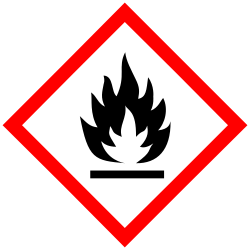
GHS Flame Pictogram
A symbol indicating that a substance is flammable or presents a fire hazard, according to the Globally Harmonized System (GHS) of Classification and Labeling.

GHS Corrosion Pictogram
A symbol indicating that a substance can cause skin corrosion, eye damage, or corrosion of metals, in line with the Globally Harmonized System (GHS) of Classification and Labeling.
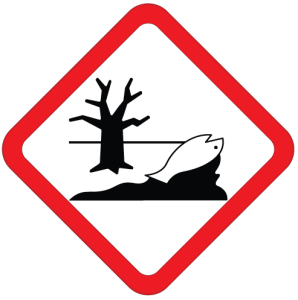
GHS Environment Pictogram
A symbol indicating that a substance may cause harm to aquatic life or the environment, as per the Globally Harmonized System (GHS) of Classification and Labeling.

GHS Exclamation Mark Pictogram
A symbol indicating that a substance may cause less severe health effects, such as irritation or sensitization, in accordance with the Globally Harmonized System (GHS) of Classification and Labeling.

GHS Exploding Bomb Pictogram
A symbol indicating that a substance is explosive or self-reactive, or an organic peroxide, posing hazards such as risk of explosion or sudden release of pressure, as defined by the Globally Harmonized System (GHS) of Classification and Labeling.

GHS Skull & Crossbones Pictogram
A symbol indicating that a substance is toxic or fatal if ingested or inhaled, as per the Globally Harmonized System (GHS) of Classification and Labeling. (Acute Toxicity)

GHS Radioactive Pictogram
A symbol indicating that a substance is radioactive and poses hazards associated with radiation exposure, as mandated by the Globally Harmonized System (GHS) of Classification and Labeling.
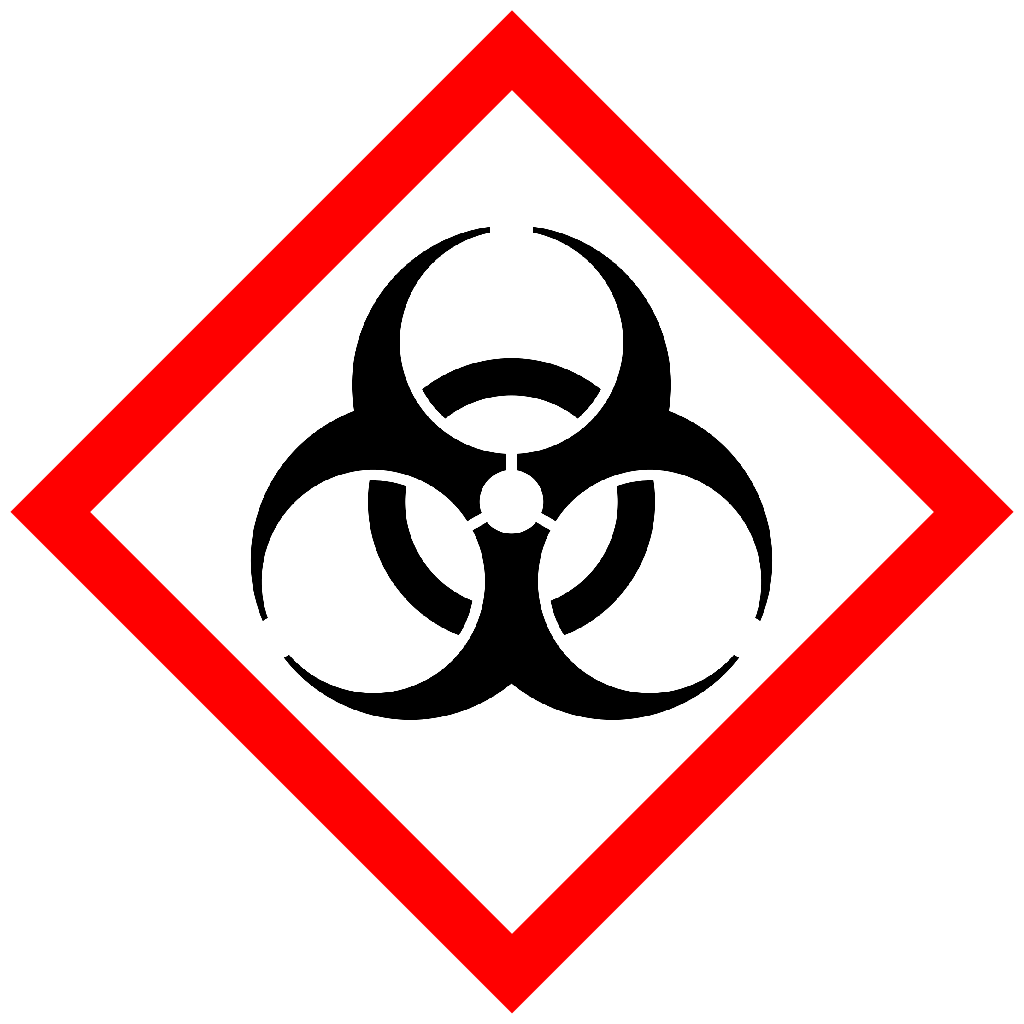
GHS Bio-Hazard Pictogram
A symbol indicating that a substance may cause infection, especially in humans, and is associated with biological hazards, as defined by the Globally Harmonized System (GHS) of Classification and Labeling. (dangerous to any living thing)
What does GHS stand for and how was it founded?
GHS stands for the Globally Harmonized System of Classification and Labeling of Chemicals. It was developed by the United Nations to create a consistent framework for classifying chemical hazards and communicating safety information globally.
What is the best price of equipment to measure volume of a liquid precisely?
Graduated Cylinder
What is the best way to Measure the mass of a solid?
using a balance scale.
NFPA Diamond Red meaning
Indicates flammability hazards, specifically the degree of fire risk associated with a substance.
NFPA Diamond Blue Meaning
Indicates health hazards, specifically the level of risk to human health associated with a substance.
NFPA Diamond Yellow Meaning
Indicates reactivity hazards, specifically the potential for a substance to react or explode when exposed to certain conditions.
NFPA Diamond White Meaning
Indicates specific hazards, such as radiation, that may require additional precautions or safety measures.
NFPA Diamond 0-4 Rating Meaning
The NFPA Diamond 0-4 rating system is a standardized method for identifying the severity of health, flammability, and reactivity hazards of materials, with 0 indicating minimal or no hazard and 4 indicating a severe hazard.
Section 1. SDS
provides identification information including the product name, recommended use, and manufacturer details.
Section 2. SDS
Hazard(s) identification
Section 3. SDS
Composition/information on ingredients
Section 4. SDS
First-Aid Measures
Section 5. SDS
Firefighting Measures
Section 6. SDS
Accidental Release Measures
Section 7. SDS
Handling and Storage
Section 8. SDS
Exposure controls/ personal protection
Section 9. SDS
Physical and Chemical Properties
Section 10. SDS
Stability and Reactivity
Section 11. SDS
Toxicological Information
Section 12-15 SDS
Environment,disposal, transport, and regulatory information
Section 16. SDS
Other Information, including date of preparation and any revisions made.
Combustion Reaction
Organic compound + O2(fuel) → CO2 + H2O
Decomposition
Requires Energy! One Reactant →Several Products
Synthesis
Two or more reactants → One product
Single Replacement
Element + Compound → Element + Compound (switches) *Check Activity Series!!
Double Replacement
Two compounds → Two compounds (exchange partners)
Metal Combustions
synthesis reaction
If in a single replacement partners cant switch write?
NO REACTION
Which laboratory tools can be used to handle small objects or chemicals?
Forceps and tweezers/scoopula
Which laboratory tools are useful when heating a liquid in a test tube?
Test tube tongs.
what tools would you use for measuring liquid in a test tube? unit of measurement?
Graduated cylinder or pipette. The unit of measurement is typically milliliters (mL).
what would you use to measure the length of a leaf?
A ruler or meter stick. The unit of measurement is typically centimeters (cm) or meters (m).
what would you use to measure the temp of water in a lake?
A thermometer. The unit of measurement is typically degrees Celsius (°C) or Kelvin
what would you use to measure the mass of a paperclip
A balance. The unit of measurement is typically grams (g).