FRNSC 413 Exam V
0.0(0)
Studied by 3 people Call Kai
 Learn
Learn Practice Test
 Spaced Repetition
 Match
Match Flashcards
 Knowt Play
Card Sorting
1/30

Earn XP
Description and Tags
Last updated 4:36 AM on 12/6/22
Name | Mastery | Learn | Test | Matching | Spaced | Call with Kai | Chat |
|---|
No analytics yet
Send a link to your students to track their progress
31 Terms
1
New cards
saliva
colorless body fluid secreted by 3 pairs of glands in the human mouth
2
New cards
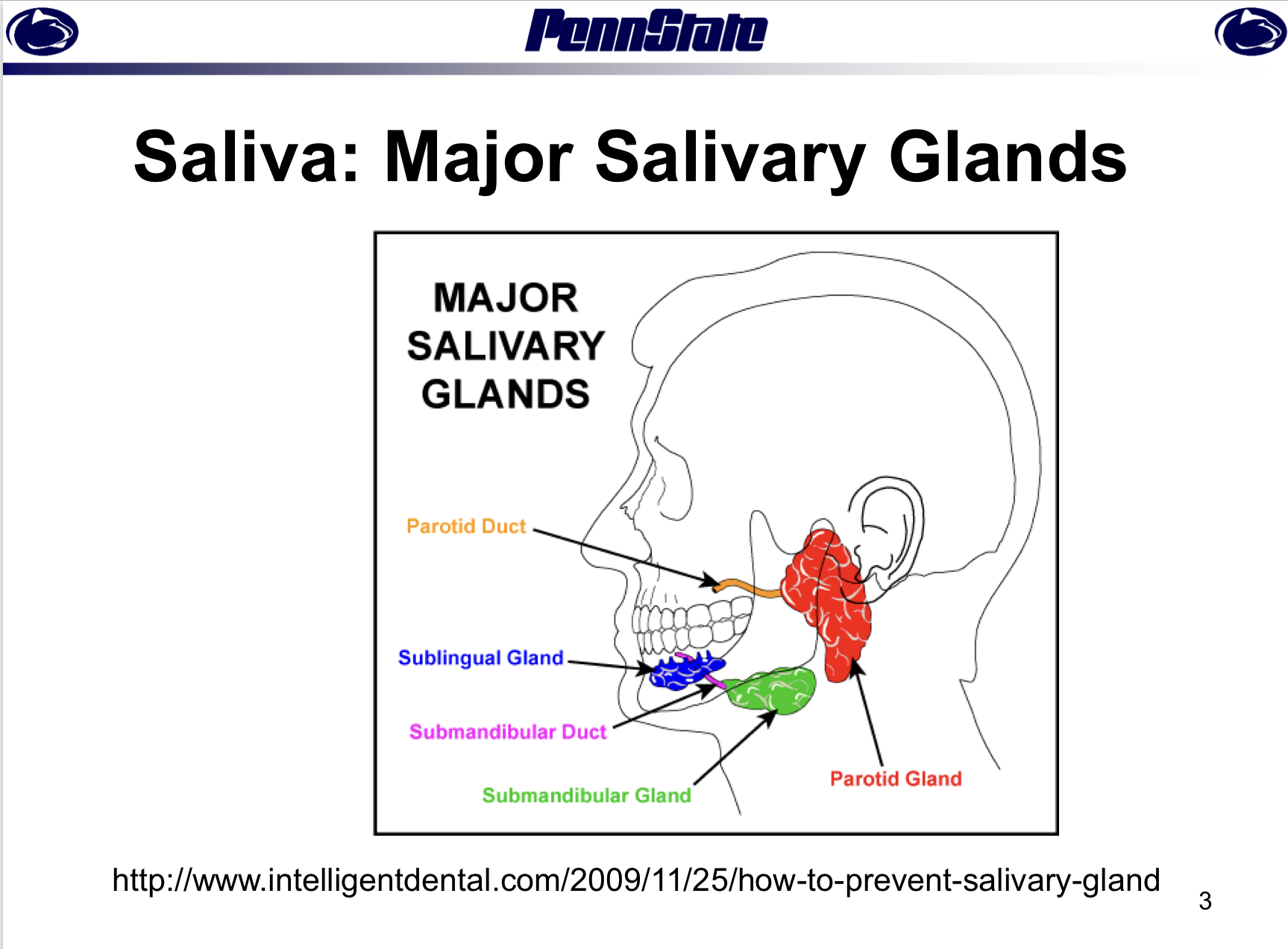
3 glands
sublingual, submandibular (submaxillary), parotid
3
New cards
saliva contains?
- blood group substance (BGS) (secretors)
- 99.4% water, two thirds of solid (~0.6%) is organic matter - primarily mucin and amylase (amylase concentration allows for detection of saliva)
- 99.4% water, two thirds of solid (~0.6%) is organic matter - primarily mucin and amylase (amylase concentration allows for detection of saliva)
4
New cards
what's in saliva?
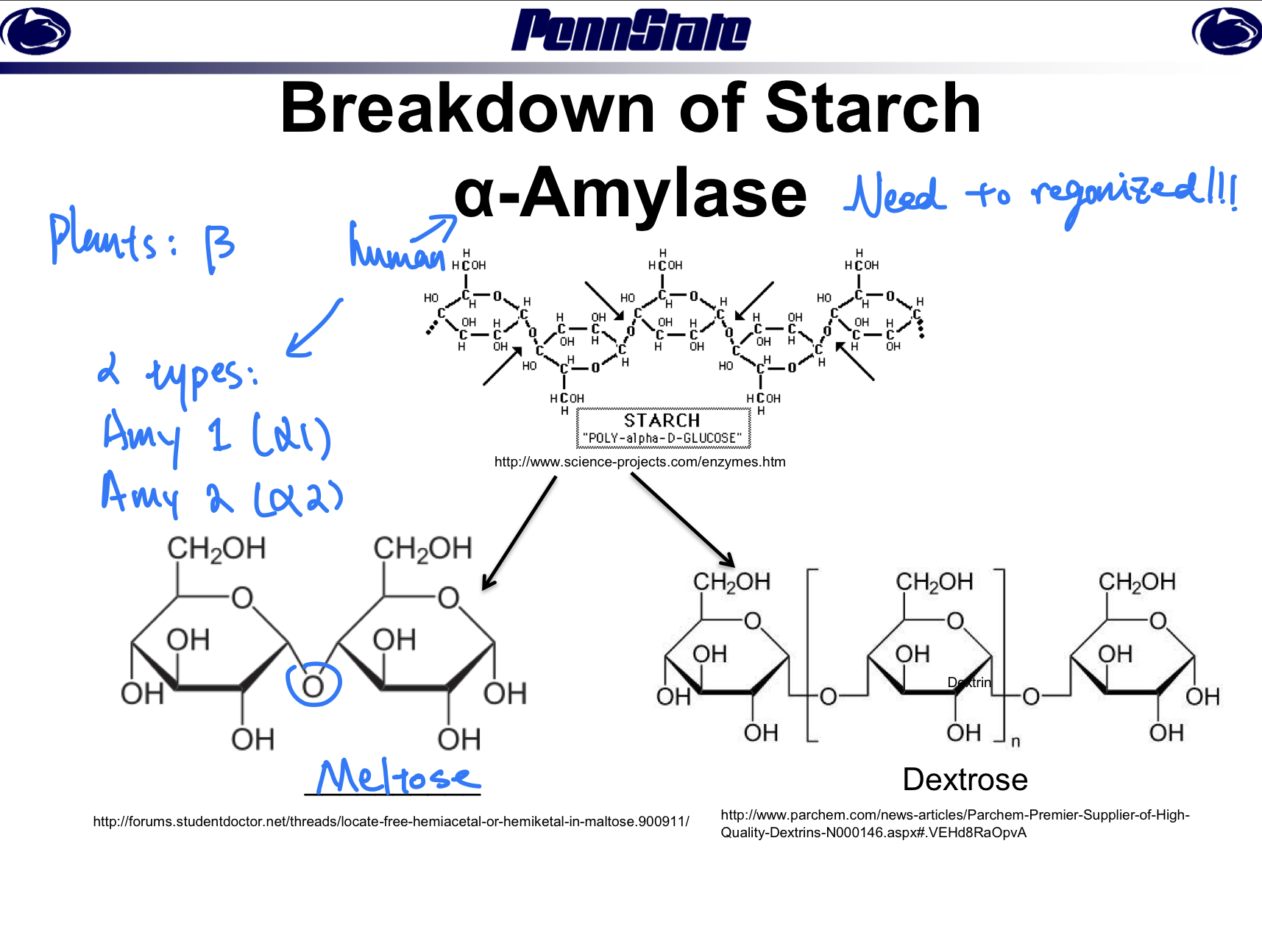
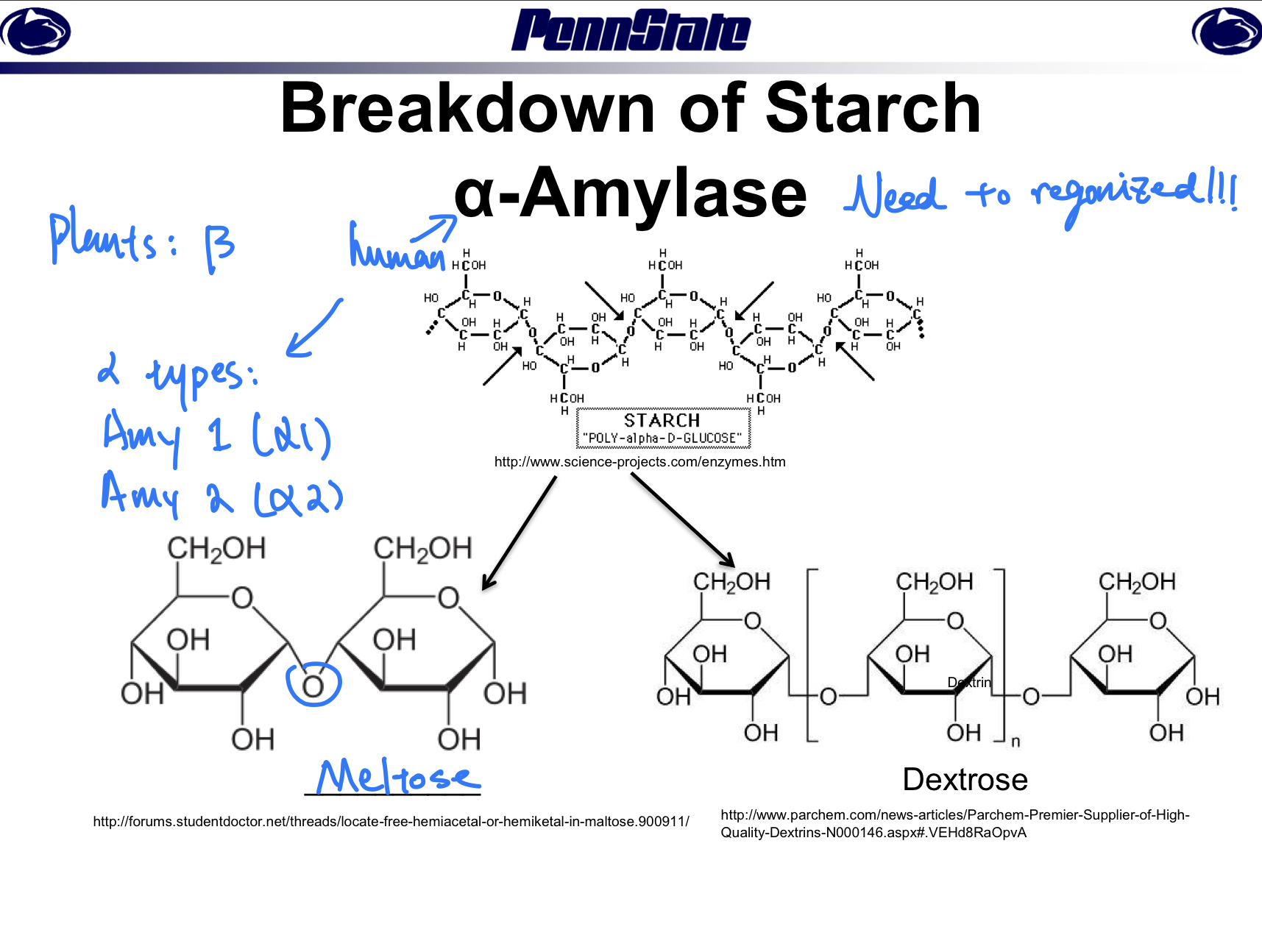
- enzymes: salivary amylase (diastase or ptyalin) hydrolyzes starch to maltose and dextrins; alkaline phosphatase-hydrolyzes monoesters; lysozyme (muramidase)
- proteins such as glycoproteins, mucin
- buccal squamous epithelial cells
- inorganic constituents such as nitrite and thiocyanate
- proteins such as glycoproteins, mucin
- buccal squamous epithelial cells
- inorganic constituents such as nitrite and thiocyanate
5
New cards
excretion of saliva
in mammals: exocrine glands produce saliva
in insects: salivary glands are often used to produce biologically important proteins such as silk or glues
in insects: salivary glands are often used to produce biologically important proteins such as silk or glues
6
New cards
exocrine glands
glands that secretes externally through a duct; examples of external glands: sweat, saliva, digestive glands
7
New cards
endocrine glands
release their products directly into the circulatory system via the capillary network (hormones: ductless glands)
8
New cards
9
New cards
function of parotid
person awake: the parotid secrete up to 20-50% of the saliva output (largest gland in pairs; facilitate mastication and swallowing and begin the digestion of starches)
10
New cards
function of submandibular
asleep: the parotid contributes almost no saliva; most of the nocturnal output is provided by the submandibular glands; smaller than parotid but produce serous fluid and mucus; ~65-70% of saliva in the oral cavity
secretes a mixture of serous and mucin
secretes a mixture of serous and mucin
11
New cards
function of sublingual
mucous; ~5% of saliva in oral cavity; the parotid gland secrets mostly serous fluid that makes for the watery characteristics of saliva, while the sublingual glands produce mucin, saliva's viscous component
12
New cards
xerostomia
dry mouth
13
New cards
causes of xerostomia
radiation therapy (can be permanent) and chemotherapy (temporary) can cause hyposalivation
14
New cards
function of saliva
- digestion
- protection: considered part of the mucosal immune system; plasma cells within the salivary glands produce immunoglobulin A (IgA) antibodies
- maintenance of teeth: buffering capacity of saliva protects tooth enamel and contributes to dental health
- protection: considered part of the mucosal immune system; plasma cells within the salivary glands produce immunoglobulin A (IgA) antibodies
- maintenance of teeth: buffering capacity of saliva protects tooth enamel and contributes to dental health
15
New cards
significance of saliva forensic cases
- critical investigation tool: saliva found at a crime scene is a possible source of DNA
- saliva is commonly identified on evidence samples such as: cigarette butts, bite marks, eating and drinking utensils
- saliva is commonly identified on evidence samples such as: cigarette butts, bite marks, eating and drinking utensils
16
New cards
need to recognize
...
17
New cards
production of saliva
adult produces between ~750 and 1500 mL of saliva per day; men have higher overall salivary flow rates than women
18
New cards
detection of saliva
saliva from the parotid glands contain salivary amylases, enzymes, which aids in the digestion of food (carbohydrates); most labs use amylase as the identification method - presumptive
19
New cards
amylase
ptyalin; amylase is found in high concentrations in the saliva of humans, pigs, rodents, and primates; amylase-hydrolase that starts the digestion of carbohydrates by breaking the alpha1-4 linkages of the glucose monomers in starch
20
New cards
In humans
2 types of alpha-amylases: AMY1 and AMY2 (two genetic loci); chromosome 1: code for two different amylases, both types break down starch and glycogen
21
New cards
Salivary variety (AMY1)
- breast milk
- perspiration
- amniotic fluid
- cervical mucus
- tears
- perspiration
- amniotic fluid
- cervical mucus
- tears
22
New cards
pancreatic variety (AMY2)
- pancreas
- vaginal secretions
- seminal plasma
- fecal material
- vaginal secretions
- seminal plasma
- fecal material
23
New cards
AMY1 & AMY2
both gene products also exist in serum, and in tissue homogenates of male and female reproductive tissue; amylase is reported in nasal secretion; therefore, finding amylase, even at a high concentration, is at best a presumptive test for saliva
24
New cards
Cells within saliva
NSEC (nuclear squamous epithelial cells); found natively in many places: exfoliated buccal epithelial cells, buccal cells, cheek cells; vaginal swabs or crotches of panties as NSEC's are native constituent of vaginal secretions; inside front of men's underwear and/or pants as tip on the penis (urethral meatus) can transfer small quantities of NSEC to the front of the underwear where the NSEC can accumulate
25
New cards
Cells within saliva
ASEC (anuclear squamous epithelial cells) - AKA skin cells, keratinized epithelial cells, and keratinocytes; both NSEC and ASEC are normal constituents of saliva: both keratinized and non-keratinized cells in oral cavity in different regions
26
New cards
identifying amylase in saliva
alpha amylase: humans; total breakdown of starch to maltose or glucose and dextrin: cleavage occurs in the middle, endo action
27
New cards
beta amylase
- plants: exo action; animal tissue do not contain this; microorganism in digestive tract may contain this
- analytical biochem: Todaka and Kanekatsu: stress on plants changes amylase activity; this is synthesized by bacteria, fungi, and plants; fruits ripen - this breaks starch into sugar, which gives the sweet flavor of fruits
- analytical biochem: Todaka and Kanekatsu: stress on plants changes amylase activity; this is synthesized by bacteria, fungi, and plants; fruits ripen - this breaks starch into sugar, which gives the sweet flavor of fruits
28
New cards
Conclusion: identifying saliva
identifying saliva is based on detection of high levels of amylase in the sample; amylase is not specific for saliva as amylase is found in other body fluids: serum, urine, sweat, semen, feces
29
New cards
identifying saliva
absence of amylase does not mean absence of saliva; UV light can aid in the detection and location of saliva stains; the intensity of the fluorescence can vary; concentration, age, other body fluid masking the stain, substrate, all can factor in the intensity of saliva under ALS; saliva doe not fluoresce as intensely as semen
30
New cards
persistence of amylase
inactivated by heat (boil); strong acids; strong bases; salivary amylase loses activity upon dying and rehydration; partial DNA profile of the suspect reported from a breast bite mark of the victim's breast after she has been in water for more than 5 hours; buccal NSEC survived also
31
New cards