AP Environmental Science Biomes, APES: The Living World Unit 1
0.0(0)
Studied by 5 people Call Kai
 Learn
Learn Practice Test
 Spaced Repetition
 Match
Match Flashcards
 Knowt Play
Card Sorting
1/120

Earn XP
Description and Tags
Last updated 12:06 AM on 11/16/22
Name | Mastery | Learn | Test | Matching | Spaced | Call with Kai |
|---|
No analytics yet
Send a link to your students to track their progress
121 Terms
1
New cards
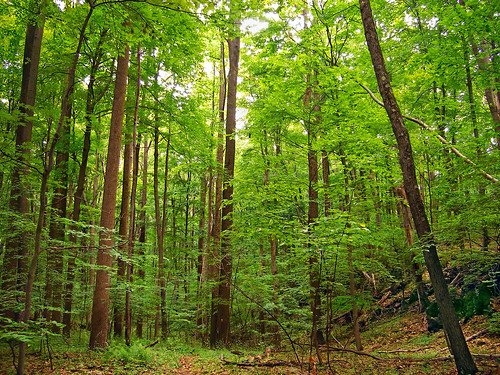
Temperate Deciduous Forest
-Cool Winters, Warm Summers (Seasonal Variation)
-Precipitation is relatively evenly spread throughout the year
-Deciduous Trees (Oak, Beech)
-Europe, China, Eastern North America
-Northern Hemisphere
-Good Soils
-US has largest Deciduous forest
-Precipitation is relatively evenly spread throughout the year
-Deciduous Trees (Oak, Beech)
-Europe, China, Eastern North America
-Northern Hemisphere
-Good Soils
-US has largest Deciduous forest
2
New cards
Old-growth forest
one that has never been cut; these forests have not been seriously disturbed for several hundred years. Ex. Alaska
3
New cards
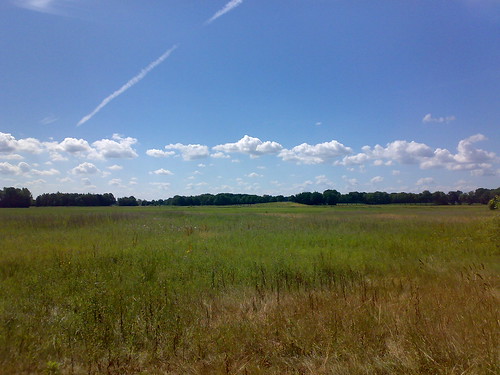
Temperate Grassland
-Cool Winters, Warm Summers (seasonal variation is more extreme than temperate deciduous forests)
-Limited amount of precipitation
-Frequent fires (no trees)
-Also called prairie or steppe
-Northern Hemisphere
-North America, Middle East, Europe, Asia
-Very fertile soils (used for agriculture)
-Limited amount of precipitation
-Frequent fires (no trees)
-Also called prairie or steppe
-Northern Hemisphere
-North America, Middle East, Europe, Asia
-Very fertile soils (used for agriculture)
4
New cards
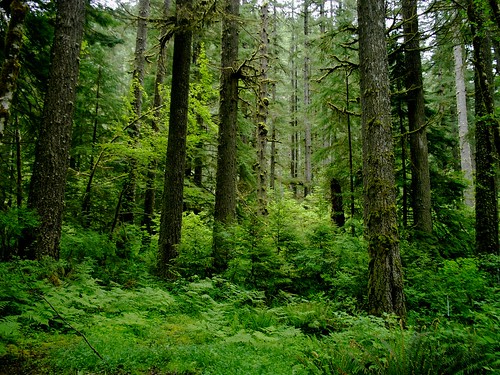
Temperate Rainforest
-Cool Winters, Warm Summers (Seasonal Variation)
-Large amount of precipitation (Less rain in winters)
-Coniferous Trees
-Provide lumber and paper
-Northern Hemisphere
-East coast of North America and Canada
-Fertile soils that are susceptible to land slides and erosion if forests are cleared
-Large amount of precipitation (Less rain in winters)
-Coniferous Trees
-Provide lumber and paper
-Northern Hemisphere
-East coast of North America and Canada
-Fertile soils that are susceptible to land slides and erosion if forests are cleared
5
New cards
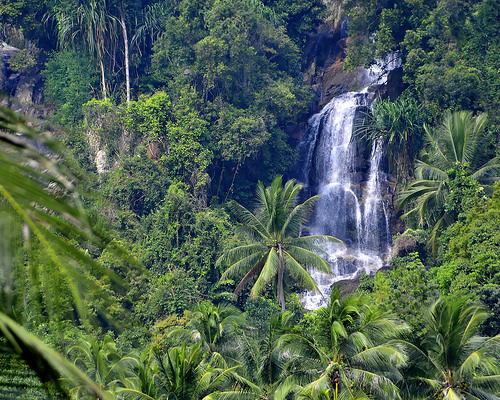
Tropical Rainforest
-Warm all year round
-Very high amount of precipitation (300-500 mm per month)
-Southern Hemisphere
-Central America, Africa, South America, Southeast Asia
-Great Biodiversity
-Poor, thin soils
-Very high amount of precipitation (300-500 mm per month)
-Southern Hemisphere
-Central America, Africa, South America, Southeast Asia
-Great Biodiversity
-Poor, thin soils
6
New cards
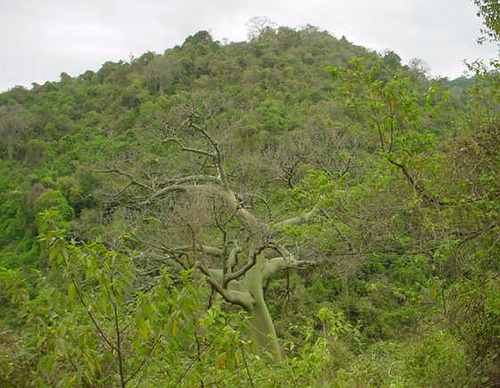
Tropical Dry Forest/Tropical Deciduous Forest
-Warm all year round
-Extreme wet and dry seasons
-Wet summer (October to April) and dry winter (May, June, July, August, September)
-Southern Hemisphere
-India, Africa, South America, northern Australia
-Erosion-prone soils
-Extreme wet and dry seasons
-Wet summer (October to April) and dry winter (May, June, July, August, September)
-Southern Hemisphere
-India, Africa, South America, northern Australia
-Erosion-prone soils
7
New cards
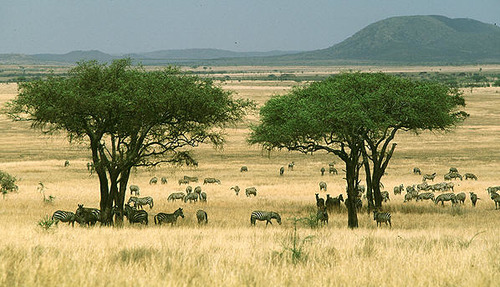
Savanna (Tropical Grasslands)
-Slight seasonal variation (warmer in summer)
-Extreme wet and dry seasons
-Wet Summer (not as wet as tropical dry forest)
-Southern Hemisphere
-Isolated Trees
-Africa, South America, India, Australia
-Zebras, Giraffes, Gazelles
-Extreme wet and dry seasons
-Wet Summer (not as wet as tropical dry forest)
-Southern Hemisphere
-Isolated Trees
-Africa, South America, India, Australia
-Zebras, Giraffes, Gazelles
8
New cards
Desert
-Driest Biome
-Barely an rainfall
-Slight seasonal variation
-Saline soils
-Little Vegetation
-Temperatures drop at night
-Northern Hemisphere
-Africa, Mexico, Middle East, Asia
-Barely an rainfall
-Slight seasonal variation
-Saline soils
-Little Vegetation
-Temperatures drop at night
-Northern Hemisphere
-Africa, Mexico, Middle East, Asia
9
New cards
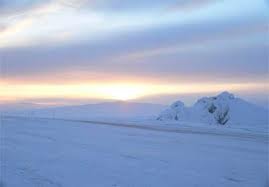
Tundra
-Coldest Biome
-Warmer in summers, but still cold (5 degrees celsius)
-Freezing in winters (-20 degrees celsius)
-Northern Hemisphere
-Dry
-Slightly wet summers
-Soil is permanently frozen (permafrost)
-Also occurs as alpine tundra at the tops of mountains
-Northern Europe, Northern Canada, Northern Asia, Greenland
-Warmer in summers, but still cold (5 degrees celsius)
-Freezing in winters (-20 degrees celsius)
-Northern Hemisphere
-Dry
-Slightly wet summers
-Soil is permanently frozen (permafrost)
-Also occurs as alpine tundra at the tops of mountains
-Northern Europe, Northern Canada, Northern Asia, Greenland
10
New cards
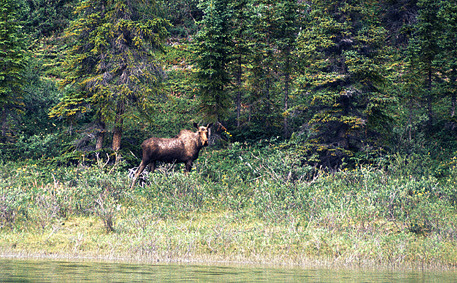
Boreal Forest/Taiga/Coniferous Forest
-Largest Biome
-Northern Hemisphere
-Coniferous Trees (Pinecones)
-Cold. Cooler in summers (never above 20 degrees Celsius)
-Moderate Precipitation
-More wet in summer than winter
-Poor soils
-Moose, Wolves, Lynx, Bears
-Northern Europe, Canada, Northern Asia
-Russia has the largest Boreal Forest biome
-Northern Hemisphere
-Coniferous Trees (Pinecones)
-Cold. Cooler in summers (never above 20 degrees Celsius)
-Moderate Precipitation
-More wet in summer than winter
-Poor soils
-Moose, Wolves, Lynx, Bears
-Northern Europe, Canada, Northern Asia
-Russia has the largest Boreal Forest biome
11
New cards
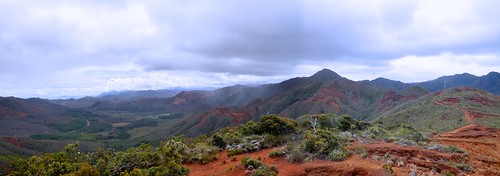
Chaparral
-Densely thicketed
-Highly seasonal
-Cool, wet winters and warm, dry summers
-Induced by oceanic influences
-Northern Hemisphere
-California, Chile, Australia
-Frequent fires
-Highly seasonal
-Cool, wet winters and warm, dry summers
-Induced by oceanic influences
-Northern Hemisphere
-California, Chile, Australia
-Frequent fires
12
New cards
Desertification causes
loss of topsoil, increased soil salinity, damaged vegetation, regional climate change, decline in biodiversity; Australia is the country with the greatest percentage of land area affected by desertification
13
New cards
Energy Flow
Sun--> Producers--> Primary Consumers --> Secondary Consumers-->Tertiary Consumers
14
New cards
Producers
Autotrophs. Produce food from photosynthesis.
15
New cards
Consumers
Heterotrophs. Use bodies of other organisms as a source of energy.
16
New cards
Primary Consumers
Herbivores. Only eat producers.
17
New cards
Secondary/ Tertiary Consumers
Carnivores.
18
New cards
Omnivores.
Eat plants and animals.
19
New cards
Detritus Feeders/Detritivores
Consumer that eats organic matter, such as carcasses, leaf litter, and feces.
-snails, clams, worms
-snails, clams, worms
20
New cards
Forms of Energy
1. Solar
2. Chemical
3. Radiant
4. Thermal
5. Nuclear
6. Electrical
2. Chemical
3. Radiant
4. Thermal
5. Nuclear
6. Electrical
21
New cards
Energy
Capacity or ability to do work.
-often expressed in kilojoules/kilocalories (Kcal)
-One Kcal raises H20 one degree celsius.
-often expressed in kilojoules/kilocalories (Kcal)
-One Kcal raises H20 one degree celsius.
22
New cards
Decomposers or Saprotrophs
microbial heterotrophs that break down dead organic material and use it as energy.
23
New cards
Food Chain
energy from food passes from one organism to the next.
24
New cards
Trophic Level
Organism's position in a food chain, determined by its feeding relationships.
25
New cards
Food Web
interlocking food chains that connect all organisms in an ecosystem.
26
New cards
How many directions does energy flow?
One.
27
New cards
Ecological Pyramids
Graphically represent the relative energy values of each trophic level.
-Pyramid of Numbers
-Pyramid of Biomass
-Pyramid of Energy
-Pyramid of Numbers
-Pyramid of Biomass
-Pyramid of Energy
28
New cards
Pyramid of Numbers
Shows number of organisms at each trophic level in a given ecosystem, with greater numbers illustrated by the larger of the pyramid.
29
New cards
Pyramid of Biomass
Total biomass (quantitive estimate of the total amount of living material) at each successive trophic level.
30
New cards
10% rule
Progressive reduction of biomass in succeeding trophic levels. 90% reduction per level in Biomass Pyramid.
31
New cards
Potential Energy
Stored Energy.
32
New cards
Kinetic Energy
Energy of Motion.
33
New cards
Pyramid of Energy
Expresses energy content as Kcals/square meter/year for each trophic level.
-Energy dissipates into the environment when going from one level to the next.
-Dramatic reduction in energy at each level explains why there are so few trophic levels.
-Energy dissipates into the environment when going from one level to the next.
-Dramatic reduction in energy at each level explains why there are so few trophic levels.
34
New cards
Gross Primary Productivity (GPP)
Rate at which energy is captured in Photosynthesis.
35
New cards
Net Primary Productivity (NPP)
Equal to gross productivity minus energy used by primary producers for respiration.
-Most energy is used for cellular respiration to move muscles, and maintain/repair cells.
Extra energy is used for growth and production of young.
-Most energy is used for cellular respiration to move muscles, and maintain/repair cells.
Extra energy is used for growth and production of young.
36
New cards
Energy per unit area of time
How GPP and NPP are expressed.
37
New cards
What is the Biome with the highest NPP?
Rainforest. Ecosystems differ in productivity.
38
New cards
What species consumes the most resources?
Humans. They use 32% of annual NPP of land-based ecosystems and only represent .5% or total biomass.
39
New cards
Evolution
Cumulative genetic changes that occur over time in a population of organisms. It explains many patterns observed in the natural world.
40
New cards
Adaptation
Evolutionary modernization that improves the changes of survival and reproductive success of a population.
41
New cards
Natural Selection
Proposed by Darwin in his "Origin Species" book. It made four observations about the world.
1. Overproduction
2. Variation
3. Limits on Population Growth/ Struggle for Existence
4. Differential Reproductive Success
1. Overproduction
2. Variation
3. Limits on Population Growth/ Struggle for Existence
4. Differential Reproductive Success
42
New cards
Overproduction
Each species produce more offspring than will survive to maturity.
43
New cards
Variation
Individuals of a population exhibit variation; unique traits that are inherited.
44
New cards
Limits on Population Growth/ Struggle for Existence
Resources are limited.
45
New cards
Differential Reproductive Success
those with favorable characteristics will survive, reproduce, and pass on their traits.
46
New cards
Galapagos
Where Darwin formulated his ideas of evolution while studding Finches.
47
New cards
Community
An association of different populations of organisms that live and interact together in the same place and same time.
-organisms interdependent: compete for resources and rely on one another
-organisms interdependent: compete for resources and rely on one another
48
New cards
Ecosystem
Biological community and its abiotic environment.
49
New cards
Succession
Stages of progress , the replacement of one type of community by another at a single location over a period of time.
-Once thought to lead to a stable and persistent community (Climax Community in a forest)
-Now believed that communities are in a constant state of disturbance.
-Once thought to lead to a stable and persistent community (Climax Community in a forest)
-Now believed that communities are in a constant state of disturbance.
50
New cards
Primary Succession
Begins in an environment not inhabited before.
-No soil
-Bare rock surfaces (lava/rock sculpted by glaciers)
-Begins with Lichens which secrete acid and help break rock apart.
-Lichens-->mosses-->grasses-->shrubs-->trees
-No soil
-Bare rock surfaces (lava/rock sculpted by glaciers)
-Begins with Lichens which secrete acid and help break rock apart.
-Lichens-->mosses-->grasses-->shrubs-->trees
51
New cards
Sand Dunes
Studied by Henry Cowles in 1880s. Example of Primary Succession.
52
New cards
Secondary Succession
Begins in an environment following destruction of or part of an earlier community.
-Fire, Old farmland, tornadoes, etc.
-Take more than 100 years.
-Fire, Old farmland, tornadoes, etc.
-Take more than 100 years.
53
New cards
Secondary Succession on and abandoned field would look like what?
Annual weeds-->annual perennials-->pine seedlings/saplings-->young pine forest/understory hard woods-->mature hardwoods.
Animals follow succession and changes in vegetation.
Animals follow succession and changes in vegetation.
54
New cards
Symbiosis
Individuals of one species live in or on individuals of another species.
55
New cards
Symbionts
Partners of symbiotic relationships.
56
New cards
Coevolution
Interdependent evolution of two or more interacting species
-Flower and its pollinator
-Three categories
1. Mutualism
2. Commensalism
3. Parasitism
-Flower and its pollinator
-Three categories
1. Mutualism
2. Commensalism
3. Parasitism
57
New cards
Mutualism
Both partners benefit.
-Clown Fish Anemone
-bacteria and legumes
-fungi and roots
-Clown Fish Anemone
-bacteria and legumes
-fungi and roots
58
New cards
Commensalism
One organism benefits the other is neither helped nor harmed.
-tropical tree and epiphytes
-tropical tree and epiphytes
59
New cards
Parasitism
One organism takes nourishment from the other. The parasite may weaken host, but rarely kills it (if it kills it, it is a pathogen).
-leech
-ticks
-tape worms
-leech
-ticks
-tape worms
60
New cards
Predation
Animals eating other animals or plants.
61
New cards
Adaptions
Predatory strategies: Pursuit and ambush.
Prey strategies: Plant and animal defenses
Prey strategies: Plant and animal defenses
62
New cards
Competition
Occurs when two or more individuals compete to use an essential resources.
-Intraspecific: competition with same species
-Interspecific: between different species.
-Intraspecific: competition with same species
-Interspecific: between different species.
63
New cards
Ecological Niche
An organisms role; totality of organisms adaptions, its use of resources, and lifestyle.
-Includes Habitat (local environment in which an organism lives)
-Includes Habitat (local environment in which an organism lives)
64
New cards
Fundamental Niche
The full range of conditions that a species can tolerate and resources it can use.
65
New cards
Realized Niche
The part of its fundamental niche a species actually occupies
-An organism may not fulfill its fundamental niche because it is forced out by an invasive species.
-An organism may not fulfill its fundamental niche because it is forced out by an invasive species.
66
New cards
What determines and Ecological Niche?
A species structural, physiological, and behavioral adaptations, along with limiting resources. Adaptions determine an organisms tolerance for environmental extremes, and a scare, limited resource restricts a niche.
67
New cards
Competitive Exclusion
Fundamental niches many overlap between species. No two species may indefinitely occupy the same niche in the same community because of competitive exclusion.
68
New cards
G.F Gause
Had a set of experiments that showed that competition between species determines an organisms realized niche.
-Two species of bacteria. Thrive apart, but together only one thrived.
-Conclusion: One set of conditions favor one species over another.
-Two species of bacteria. Thrive apart, but together only one thrived.
-Conclusion: One set of conditions favor one species over another.
69
New cards
Resource Partitioning
coexisting species niches' differ from one another; may include time of feeding, location, rest sites, etc.
70
New cards
Species Richness/Diversity
The number of different species in a community; varies from one community to the next.
-High in coral reefs and rain forests.
-Low in mountain tops and deserts.
-Determined by abundance of potential ecological niches, closeness to the margins of adjacent communities, geographical isolation, dominance of one species over another, geographical history and habitat stress.
-Fragmenting a large park into many smaller parks due to human interaction causes a decrease in species diversity
-High in coral reefs and rain forests.
-Low in mountain tops and deserts.
-Determined by abundance of potential ecological niches, closeness to the margins of adjacent communities, geographical isolation, dominance of one species over another, geographical history and habitat stress.
-Fragmenting a large park into many smaller parks due to human interaction causes a decrease in species diversity
71
New cards
crop plants
give higher yields; low diversity
are resistant to certain diseases
are resistant to certain insect pest damage
are hardier (so that they survive in harsher climates or are productive for longer periods of the year) ex. corn
have a better balance of nutrients in the crop
are resistant to certain diseases
are resistant to certain insect pest damage
are hardier (so that they survive in harsher climates or are productive for longer periods of the year) ex. corn
have a better balance of nutrients in the crop
72
New cards
Complex Community
Offers more niches than a simple one.
73
New cards
Ecotone
Transitional zone where two or more communities meet; contains all or most of the niches of the adjacent communities as well as niches specific to the ecotone.
74
New cards
Edge Effect
Change in species composition produced at ecotones.
75
New cards
Species richness is _________ related to isolation.
Inversely.
-Difficult to reach and colonize island
-Some species become extinct and are not readily replaced.
-Difficult to reach and colonize island
-Some species become extinct and are not readily replaced.
76
New cards
Species richness is ______ when one species has a large, disproportionate share of resources.
Reduced.
77
New cards
Species richness is ________ related to environmental stress.
Inversely.
-Species richness declines in a highly polluted stream.
-Species richness declines in a highly polluted stream.
78
New cards
The older an area of land, the _____ species richness. The younger an area of land, the ______ species richness.
more (example: rain forest), less (example: areas scoured by glaciers).
79
New cards
Ecosystem Services
Important environmental benefits and ecosystem provides. The greater species richness, the better supply of ecosystem services.
-clean H20 and air
-fertile soil
-clean H20 and air
-fertile soil
80
New cards
Community Stability
ability of a community to withstand environmental disturbances.
-community with more species richness is more stable
-community with more species richness is more stable
81
New cards
Biome
A major type of ecosystem with distinctive climates (temperature/rainfall), and organisms.
-Tundra
-Taiga
-Temperate Rain Forest
-Temperate Deciduous Forest
-Grassland
-Chaparral
-Desert
-Savannah
-Tropical Rainforest
-Tundra
-Taiga
-Temperate Rain Forest
-Temperate Deciduous Forest
-Grassland
-Chaparral
-Desert
-Savannah
-Tropical Rainforest
82
New cards
Tropical Rainforest
-sunlight year round
-little seasonal variation
-climate ideal for growing plants
-most species rich biome
-soil usually thin and poor
-many trees form above ground roots
-plants grow in layers (canopy and undergrowth)
-camouflaged animals are common
-Threatened by logging, and farming
-plants and animals have become extinct
-Used to cover 20% of earth, now only 7%
-Costa Rica=high rate of deforestation, working towards...
1. protecting national parks
2. sustainable agriculture
3. encouraging tourism
-American pharmaceutical sending money to protect.
-little seasonal variation
-climate ideal for growing plants
-most species rich biome
-soil usually thin and poor
-many trees form above ground roots
-plants grow in layers (canopy and undergrowth)
-camouflaged animals are common
-Threatened by logging, and farming
-plants and animals have become extinct
-Used to cover 20% of earth, now only 7%
-Costa Rica=high rate of deforestation, working towards...
1. protecting national parks
2. sustainable agriculture
3. encouraging tourism
-American pharmaceutical sending money to protect.
83
New cards
Temperate Forest
-North America Pacific NW, South America, Australia, and New Zealand
-Drop leaves each fall
-Soil rich and deep
-Plants grow in layers (canopy and undergrowth)
-Plants adapted to seasonal weather changes
-Cold winters warm summers
-Numerous habitats due to layers of vegetation
-Birds migrate out in the winter
-Bears and some other animals hibernate
-Drop leaves each fall
-Soil rich and deep
-Plants grow in layers (canopy and undergrowth)
-Plants adapted to seasonal weather changes
-Cold winters warm summers
-Numerous habitats due to layers of vegetation
-Birds migrate out in the winter
-Bears and some other animals hibernate
84
New cards
Taiga
-terrain rough
-forest floor sparsely vegetated
-just below Arctic Circle
-winters long and extremely cold
-frost free season can be as short as 50 days
-constant daylight in summer
-most precipitation falls as snow
-conifer trees; seeds grow cones and needles don't shed plus retain H2O
-needles are acidic and when they fall acidify the soil; most plants cannot grow in acidic soil=bare forest floor
-forest floor sparsely vegetated
-just below Arctic Circle
-winters long and extremely cold
-frost free season can be as short as 50 days
-constant daylight in summer
-most precipitation falls as snow
-conifer trees; seeds grow cones and needles don't shed plus retain H2O
-needles are acidic and when they fall acidify the soil; most plants cannot grow in acidic soil=bare forest floor
85
New cards
Tundra
-cold, wintery, dry
-Northern Hampshire, south of Polar Ice Caps; in Alaska, Canada, Greenland, Iceland, Norway, Asia
-one of largest biomes
-10% of earth
-few organisms, fragile ecosystem
-little precipitation, most falls as ice or snow
-summer days long and cool
-Active zone may be as thin as 8cm
-Frozen soil below (Permafrost)
-dense mat of grasses, mosses, and other plant life cover active zone during summer; helps insulate ground and keep permafrost from melting
-trees small; usually less than one meter
-short growing season (60 days) and low temps make for slow recovery time of vegetation in comparison to other biomes
-tracks from wagons 100 years ago still visible
-most animals are migratory
-few predators=good place for birds and caribou to raise young
-Arctic foxes, musk oxen, polar bears, and wolverine live year round
-Lichens, eaten by caribou, are pollution sensitive and declining over the years=decline in caribou
-Northern Hampshire, south of Polar Ice Caps; in Alaska, Canada, Greenland, Iceland, Norway, Asia
-one of largest biomes
-10% of earth
-few organisms, fragile ecosystem
-little precipitation, most falls as ice or snow
-summer days long and cool
-Active zone may be as thin as 8cm
-Frozen soil below (Permafrost)
-dense mat of grasses, mosses, and other plant life cover active zone during summer; helps insulate ground and keep permafrost from melting
-trees small; usually less than one meter
-short growing season (60 days) and low temps make for slow recovery time of vegetation in comparison to other biomes
-tracks from wagons 100 years ago still visible
-most animals are migratory
-few predators=good place for birds and caribou to raise young
-Arctic foxes, musk oxen, polar bears, and wolverine live year round
-Lichens, eaten by caribou, are pollution sensitive and declining over the years=decline in caribou
86
New cards
Desert
-lack of precipitation and extreme temps limit plant and animal life
-few, short thunderstorms are main source of precipitation
-desert pavement causes most rain to run off
-low moisture=great variation in temps.
-hot at day, cold at night
-plants need to absorb scare H2O from ground and retain it
-cactus spines retain H20, and are a source of H20 for animals
-plants have shallow roots and over wide area, or deep roots to reach H20
-insects and reptiles have outer coating that reduce H20 loss
-Rodents spend days underground, many are nocturnal
-few, short thunderstorms are main source of precipitation
-desert pavement causes most rain to run off
-low moisture=great variation in temps.
-hot at day, cold at night
-plants need to absorb scare H2O from ground and retain it
-cactus spines retain H20, and are a source of H20 for animals
-plants have shallow roots and over wide area, or deep roots to reach H20
-insects and reptiles have outer coating that reduce H20 loss
-Rodents spend days underground, many are nocturnal
87
New cards
Grassland
1. Savannah
a. Tropical
-west african plains
-Tropics, near the equator
-greatest collection of grazing animals in the world as well as predators
-little rain, few trees
-fires during dry season
-plants resistant to droughts, fires and grazing animals
-RUNNERS; long stems below the ground protect from fire
-TUFTS; large clumps of coarse grasses. Have thorns and sharp leaves to protect from animals
-plants grow rapidly
-animals take advantage of short rainy season
-large animals migrate looking for H20
-animals eat vegetation at different hight to cut down competition
b. Temperate
2. Grassland
a. Tropical
-closest to equator
-hot all year
b. Temperate
-further from equator
-hot summers, cold winters
-tall grass or short grass
-soil very fertile
-interiors of continents
-little rain for trees to grow
-begin at edge of desert biome and stretch to forest biome
-fire leave nutrients and minerals=more grass growth
-grazing animals (bison)
-burrowing animals aerate ground; helps H20 plus nutrients reach roots quickly
a. Tropical
-west african plains
-Tropics, near the equator
-greatest collection of grazing animals in the world as well as predators
-little rain, few trees
-fires during dry season
-plants resistant to droughts, fires and grazing animals
-RUNNERS; long stems below the ground protect from fire
-TUFTS; large clumps of coarse grasses. Have thorns and sharp leaves to protect from animals
-plants grow rapidly
-animals take advantage of short rainy season
-large animals migrate looking for H20
-animals eat vegetation at different hight to cut down competition
b. Temperate
2. Grassland
a. Tropical
-closest to equator
-hot all year
b. Temperate
-further from equator
-hot summers, cold winters
-tall grass or short grass
-soil very fertile
-interiors of continents
-little rain for trees to grow
-begin at edge of desert biome and stretch to forest biome
-fire leave nutrients and minerals=more grass growth
-grazing animals (bison)
-burrowing animals aerate ground; helps H20 plus nutrients reach roots quickly
88
New cards
What affects the size and texture of grass?
Water. Drier areas= thinner and finer leaves. Wetter areas have thick leave (bamboo).
89
New cards
Steeps vs. Prairies
Steeps:
-rain evaporates quickly
-short grass, mostly bunchgrass
-roots are shallow
Prairies:
-soil hold water well
-root form a mat of sod
-soil held together, resists erosion
-as grass dies layer of organic matter, or HUMUS is formed. Helps hold H20 and provides nutrients.
-rain evaporates quickly
-short grass, mostly bunchgrass
-roots are shallow
Prairies:
-soil hold water well
-root form a mat of sod
-soil held together, resists erosion
-as grass dies layer of organic matter, or HUMUS is formed. Helps hold H20 and provides nutrients.
90
New cards
Problems with Steeps and Prairies?
-Farming and Ranching
-Overgrazing, replacing of native grasses with those poorly adapted to the area (dust bowl)
-Native animals displaced (bison, wolves)
-Overgrazing, replacing of native grasses with those poorly adapted to the area (dust bowl)
-Native animals displaced (bison, wolves)
91
New cards
What does Photosynthesis do to carbon?
It removes CO2 from the air by plants and fixed into compounds such as sugar.
92
New cards
What does respiration do to carbon?
It returns CO2 into the atmosphere.
93
New cards
Molecules essential to life contain ________.
Carbon, Nitrogen, Oxygen, Hydrogen, Sulfur, Phosphorous
94
New cards
What forms are Carbon found in?
CO2,
CO3(2-),
HCO3(-)
CO3(2-),
HCO3(-)
95
New cards
What are some things that keep Carbon in biological molecules longer?
Large, old trees, and fossil fuels
96
New cards
The atmosphere is 78% _________.
Nitrogen. (N2)
97
New cards
Is N2 stable?
Yes. It will not readily bond with other elements. Must be broken apart first through the Nitrogen Cycle.
98
New cards
Nitrogen Cycle
1. Nitrogen Fixation
2. Nitrification
3. Assimilation
4. Ammonification
5. Denitrification
2. Nitrification
3. Assimilation
4. Ammonification
5. Denitrification
99
New cards
Nitrogen Fixation
N2--> NH3
-Combustion, volcanoes, lighting and industry supply enough energy to break apart N2
-bacteria in the soil (living in nodules or swellings of plant roots) can split N2 with the enzyme "nirtogenase" which only works in the absence of oxygen.
-Combustion, volcanoes, lighting and industry supply enough energy to break apart N2
-bacteria in the soil (living in nodules or swellings of plant roots) can split N2 with the enzyme "nirtogenase" which only works in the absence of oxygen.
100
New cards
Nitrification
NH3 or NH4--> NO3
1. Soil bacteria converts NH3 or NH4
2. Other soil bacteria oxidizes nitrite to nitrate
1. Soil bacteria converts NH3 or NH4
2. Other soil bacteria oxidizes nitrite to nitrate