adult/elder quiz one - chapter three
 Call Kai
 Learn
Learn Practice Test
 Spaced Repetition
 Match
Match Flashcards
 Knowt Play
1/49

There's no tags or description
Looks like no tags are added yet.
Name | Mastery | Learn | Test | Matching | Spaced | Call with Kai | Chat |
|---|
No analytics yet
Send a link to your students to track their progress
50 Terms
inflammation
the body’s response to cell injury; removes damaged/necrotic tissue, neutralize the cause of injury, create an environment for healing
local signs of inflammation
redness, heat, pain, swelling, loss of function
systemic signs of inflammation
fever, increased WBC count, malaise (discomfort), increased pulse/RR, nausea/anorexia
acute inflammation
short-term; usually resolves within 2-3 weeks; usually no residual damage
subacute inflammation
similar to acute inflammation; lasts longer
chronic inflammation
lasts weeks, months, or years
regeneration
lost cells/tissues are replaced with the same type of cells
repair
damaged tissue is replaced with new tissue and usually results in scar formation
healing - primary intention
wound edges are together (surgical incision)
healing - secondary intention
large tissue loss; edges cannot be brought together (might need to be filled); more exudate and granulation tissue
healing - tertiary intention
wound is closed later after granulation develops
nursing wound care
clean (remove dirt/debris), control infection (use infection-control measures), protect (prevent additional trauma)
pressure injuries
damage to the skin and/or the underlying tissue over a bony prominence, common with bed-ridden clients who are not turned adequately or from a medical device; most common areas: lower back, sacrum/coccyx, hip bones, shoulder area/elbows
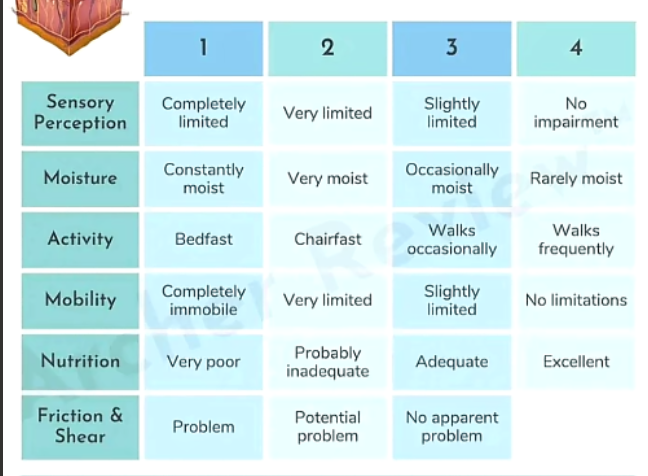
braden scale
tool to screen client’s risk of skin breakdown; SCORING: 15-16 = mild risk, 12-14 = moderate risk, <11 = severe risk

pressure injury: stage one
1 layer of damage (epidermis); red skin that is NON blanchable and NOT broken

pressure injury: stage two
2 layers of damage; open wound; affecting both the epidermic and dermis; wound bed is red/pink and shiny/dry
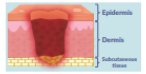
pressure injury: stage three
3 layers of damage (epidermis, dermis, and subcutaneous); full thickness skin loss into the subcutaneous fat; wound may tunnel under the edges of the wound bed

pressure injury: stage four
4 layers of damage; extends all the way down into muscle, bone, or tendon.
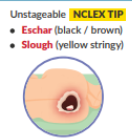
pressure injury: unstageable
eschar and slough; necrotic dead tissue that cannot be felt
pressure injury: deep tissue
the fatty tissue is injured below the skin (dark purple and sometimes open wound)
eschar
black/brown; dead necrotic tissue
slough
yellow stringy; skin of a chicken
infection pathogens
bacteria, viruses, fungi, protozoa
localized infection
one area of the body
disseminated
spreads to multiple areas
systematic
affects the body as a whole
incidence
NEW cases occurring during a specific time
prevalence
all existing cases at a given time
epidemic
increase in disease within an area
pandemic
disease spreads across large geographic areas/countries/world
standard precautions
used with all patients
transmission-based precautions
used for patients with specific infections
PPE
gloves, gown, facial protection, safe sharps disposal
nursing priorities
hand hygiene, appropriate PPE, safe handling of sharps, prevent transmission, recognize infection early
healthcare-associated infections (HAIs)
infection acquired through exposure to microorganisms in a healthcare setting
examples of HAIs
hospital care, procedures, devices, healthcare exposure
CAUTI
catheter-associated urinary tract infection: tracks infections linked to urinary catheter insertion and maintenance, reflecting nursing adherence to sterile protocols and timely catheter removal
CLABSI
central line-associated bloodstream infection: measures central venous catheter infections, indicating the quailty of line care, dressing cahnges, and maintenance hygiene
SSI
surgical site infection: evaluates post-operative infections and compliance with surgical prevention bundles
VAP
ventilator-associated pneumonia: monitors respiratory infections in ventilated patients related to oral care and positioning protocols
HIV
an RNA virus that uses its RNA to produce DNA, which becomes integrated into the human genome; damages and destroys CD4+ cells, weakening the immune system; vulneratble to opportunistic infections and cancers
HIV transmission
sexual contact with a person with a detectable viral load is the most common route
HIV infection requires contact with infected:
blood, semen, vaginal secretions, breast milk
blood tests
CD4 count, viral load, screening tests to detect HIV antibodies and/or antigens
acute HIV
2-4 weeks; flu-like signs, such as fever, rash, sore throat, fatigue, and swollen lymph nodes
asymptomatic HIV
usually no signs or feelings; may have generalized symptoms like fever, headache, fatigue
symptomatic HIV
occurs when the immune system is badly damaged; full-blown symptoms; the body cannot fight off basic germs
AIDS
developed after having HIV; CD4 fall below 200 cells
antiretroviral therapy (ART)
decrease viral load, maintain CD4 count, delay disease progression
nursing management
assess, promote, teach, encourage, help, support, address