UNIT 1 - Prehistory, Paleolithic and Neolithic Eras Diagram | Quizlet
 Call Kai
 Learn
Learn Practice Test
 Spaced Repetition
 Match
Match Flashcards
1/38

There's no tags or description
Looks like no tags are added yet.
Name | Mastery | Learn | Test | Matching | Spaced | Call with Kai | Chat |
|---|
No analytics yet
Send a link to your students to track their progress
39 Terms
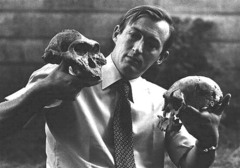
anthropologist
A scientist who studies human development and culture
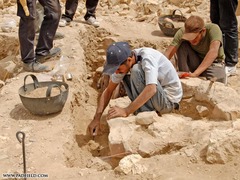
archaeologist
a scientist who learns about ancient people by studying the things they left behind
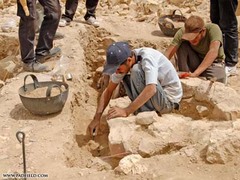
Archaeology
Study of the human past by examining artifacts and fossils.
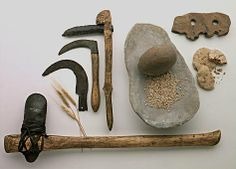
Artifact
An object made by humans.
Fossil
Solidified remains of living things.
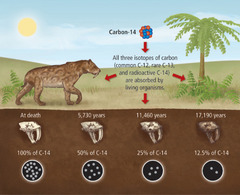
Carbon Dating
Scientific test used to determine the age of fossils.
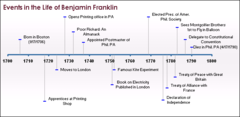
Chronology
Record of events in the order they happened.
Culture
System of beliefs, values, and ideas that guide behavior and are shared by a group of people.
Prehistory
The period of time in human history before the invention of writing.
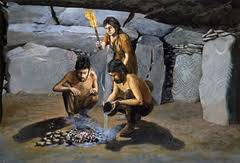
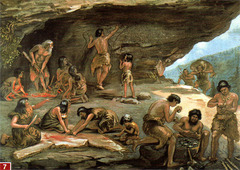
Paleolithic Era/Age
The Old Stone Age (a time in history when people used stone for tools).
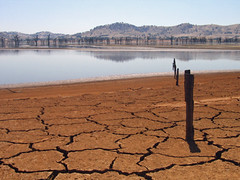
drought
A long period of dry weather
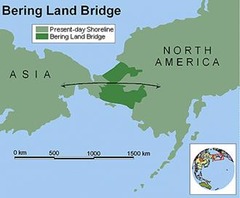
land bridge
a strip of land that connects two larger landmasses, enabling migration of plants and animals to new areas
Megafauna
the large mammals of a particular region, habitat, or geological period
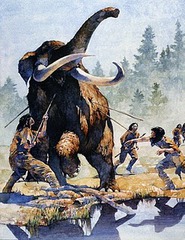
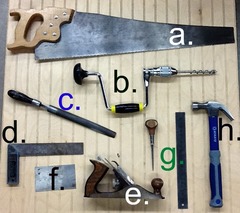
Tool
Something used to complete a task.
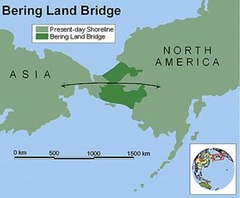
Beringia
land bridge that connected Asia and North America
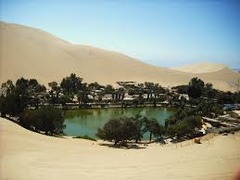
Oasis
A fertile place in a desert where there is water and vegetation
Technology
Developing tools to make life easier.

Migration
Permanently moving from one place to another.
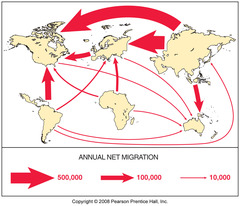
Homo sapiens
"Man who thinks"; scientific name for modern humans.
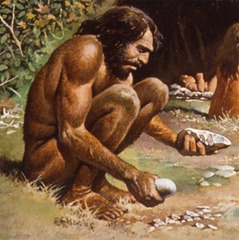
Hunter-gatherer
Someone who hunts animals and collects fruits, nuts, and grains for food
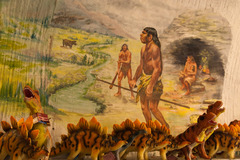
Clan
A group of 60-100 nomadic people.
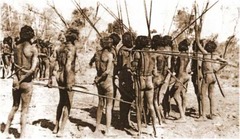
Nomad
A person with no permanent home, who moves in search of food.
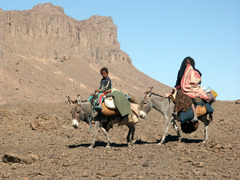
Ice Age
A period of extremely cold temperatures when part of the planet's surface was covered with massive ice sheets.
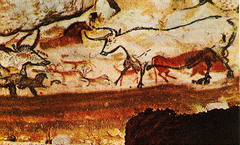
Lascaux Cave
A cave discovered in 1940 and containing exceptionally fine Paleolithic wall paintings and engravings
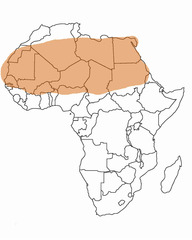
Sahara
A huge desert stretching across most of North Africa
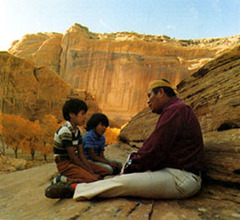
oral history
stories passed down from generation to generation
Neolithic Revolution/Age
Invention of farming (also known as the Agricultural Revolution).
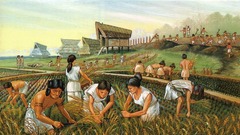
Agriculture
Farming
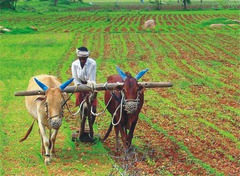
Domestication
Keeping and taming animals for work or food.
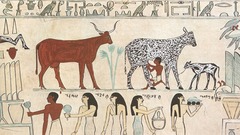
fertile
Able to produce good crops
Village
A place where a group of people live close together.
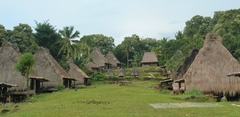
Surplus
Having more than what is needed or used.
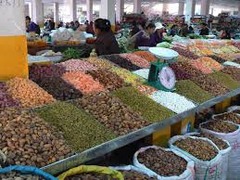
Trade
Buying, selling, or exchanging goods or services.
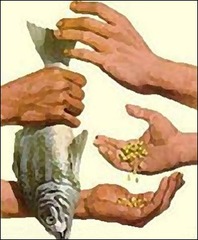
Specialization
The development of skills in a particular kind of work, such as trading or record keeping.
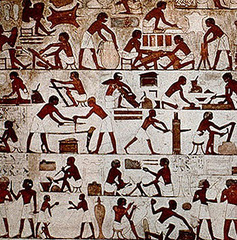
Artisan
A skilled worker who makes things by hand.
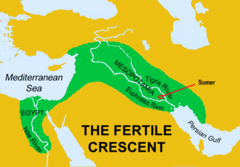
Fertile Crescent
an area of rich farmland in Southwest Asia where the first civilizations began
primary source
A document or physical object which was written or created during the time under study.

secondary source
Information gathered by someone who did not take part in or witness an event

Institution
a long-lasting pattern of organization in a community