A&P I Lab: Language of anatomy & Organ systems overview
 Call Kai
 Learn
Learn Practice Test
 Spaced Repetition
 Match
Match Flashcards
 Knowt Play
1/118

There's no tags or description
Looks like no tags are added yet.
Name | Mastery | Learn | Test | Matching | Spaced | Call with Kai | Chat |
|---|
No analytics yet
Send a link to your students to track their progress
119 Terms
superior (cranial)
closer to the head; towards the top; above

inferior (caudal)
away from the head; towards the bottom; below

anterior (ventral)
toward the front of the body; in front of

posterior (dorsal)
toward the back of the body; behind

medial
toward the midline of the body; on the inner side of

lateral
away from the midline of the body; on the outer side of
superficial
toward the surface of the body (skin, hair)

deep
away from the surface of the body (under the skin)

proximal
closer to the trunk (core) or part of attachment (shoulder/ hip) ONLY FOR ARMS AND LEGS

distal
away from the trunk (core) or part of attachment (fingers/ toes) ONLY FOR LEGS AND ARMS
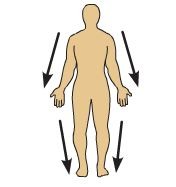
body erect, feet slight apart, palms facing forward (ONLY FOR HUMANS)
What is the standard anatomical body position?
it is a universal language that those in the medical field can use so that everyone is referring to the same thing
Why is the standard anatomical position important?
regional terms
there are special anatomical terms for every region of your body; these are different from the everyday terms. All mean "pertaining to" a specific body region
cephalic region
entire head
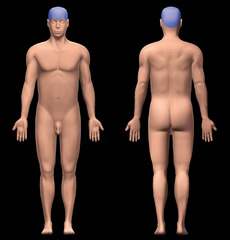
mental region
chin

cervical region
neck

thoracic region
chest

abdominal
the anterior body trunk region inferior to the ribs

antecubital
the anterior surface of the elbow

antebrachial
forearm

axillary
the armpit

brachial
the arm

buccal
the cheek
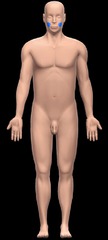
carpal
the wrist

coxal
the hip

crural
front of leg

digital (phalanges)
the fingers or toes

femoral
the thigh

fibular or peroneal
the side of the leg
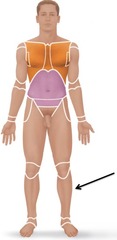
mammary
the breast

manus
the hand

palmar
palm

pollex
thumb

digital
fingers, toes (excluding big toe and thumb)

nasal region
the nose

oral
the mouth

orbital region
the bony eye socket (orbit)

patellar
the anterior knee (kneecap) region
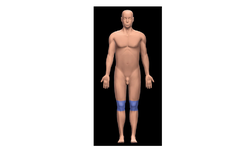
pelvic
the pelvis region

sternal region
the region of the breastbone

inguinal (groin)
below the pelvic region

pubic region
the genital region (below the blue highlight)

acromial
shoulder

metacarpal
back of hand (posterior position)

tarsal (ankle)
ankle

metatarsal
top of foot
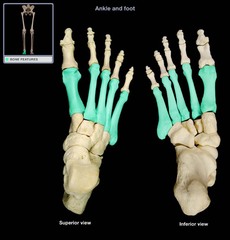
hallux
big toe

umbilical
the navel

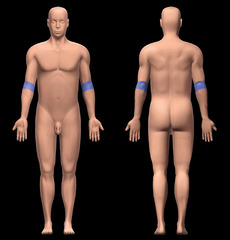
olecranal
back of elbow
gluteal
the buttocks or rump

perineal
region between the anus and external genitalia

lumbar region
the area of the back between the ribs and hips; the loin

occipital region
the posterior aspect of the head or base of the skull

otic
ear

popliteal
the back of the knee

sacral region
the area between the hips

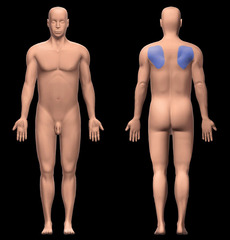
scapular
the scapula or shoulder blade area
sural
the calf or posterior surface of the leg

calcaneal
heel of foot

plantar
bottom (sole) of foot

vertebral region
the area of the spinal column

plane
imaginary flat surface or line along which body or structure is cut (sectioned) for anatomical study
sagittal plane
Divides body vertically into right and left parts
Produces a longitudinal section
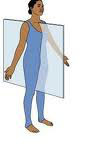
midsagittal (median) plane
lies on midline

parasagittal plane
not on midline

frontal (coronal) plane
divides body vertically into anterior and posterior parts.
produces a longitudinal section

transverse plane
divides body horizontally into superior and inferior parts.
produces a cross section

1. dorsal
2. ventral
what are the 2 major body cavities?
cranial cavity and vertebral cavity
what are the the subdivisions in the dorsal cavity?
nervous system
dorsal cavity protects...
brain
cranial cavity encases ?
spinal cord
vertebral cavity encases?
internal organs (viscera)
ventral cavity houses?
thoracic cavity, abdominal cavity, and pelvic cavity
what are the subdivisions of ventral cavity?
1. two pleural cavities
2. mediastinum
3. pericardial cavity
thoracic cavity subdivisions?
the lungs, one cavity for each lung
pleural cavities houses?
pericardial cavity, surrounds thoracic organs
mediastinum contains?
the heart
pericardial cavity encloses?
abdominal cavity and pelvic cavity
abdominopelvic cavity subdivisions?
stomach, intestines, spleen, and liver
abdominal cavity contains?
urinary bladder, reproductive organs, and rectum
pelvic cavity contains?
serous membrane (serosa)
thin, double-layered membrane separated by serous fluid
internal body walls
parietal serosa lines?
the internal organs
visceral serosa covers?
ventral body cavities

abdominopelvic regions

A. right hypochondriac region
B. Epigastric region
C. left hypochondriac region
D. right lumbar region
E. umbilical region
F. left lumbar region
G. right iliac (inguinal) region
H. hypogastric (pubic) region
I. left iliac (inguinal) region

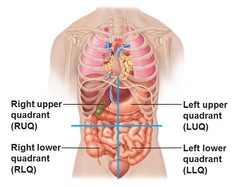
abdominopelvic quadrants
Divisions used primarily by medical personnel
oral and digestive cavities
cavity that contains tongue and teeth. it is continuous with the rest of the digestive tube, which opens to the exterior at the anus
nasal cavity
located within and posterior to the nose, it is part of the passages of the respiratory system
orbital cavities
the cavity in the skull that houses the eyes and present them in anterior position
middle ear cavities
the cavity that lies just medial to an eardrum and is carved into the bony skull; transmit sound vibrations to the hearing receptors in the inner ears
synovial cavities
joint cavities that are enclosed within fibrous capsules that surround the freely movable joints
1. Integumentary System
2. Skeletal System
3. Muscular System
4. Nervous System
5. Endocrine System
6. Cardiovascular System
7. Lymphatic System
8. Respiratory System
9. Digestive System
10. Urinary System
11. Reproductive System
name all 11 organs systems
hair, skin, nails
what are the organs in the Integumentary System?
-external body covering
-protects deeper tissues from injury
-synthesize vitamin D
what is the function of the integumentary system?
joints, and bones
what are the organs in the skeletal system?
-protects & supports body organ
-provides a framework the muscles use to cause movement
-blood cells are formed within bones
what is the function of the skeletal system
skeletal muscles
what are the organs in the muscular system?
-manipulation of enviroment
-locomotion
-facial expression
-maintain posture
-produces heat
what is the function of the muscular system?