MOD 3 NGN Case Study
 Call Kai
 Learn
Learn Practice Test
 Spaced Repetition
 Match
Match Flashcards
 Knowt Play
1/4

There's no tags or description
Looks like no tags are added yet.
Name | Mastery | Learn | Test | Matching | Spaced | Call with Kai | Chat |
|---|
No analytics yet
Send a link to your students to track their progress
5 Terms
A 58-year-old female client is brought to the emergency department by her spouse. She is experiencing agitation, loss of appetite, and poor hygiene. The spouse reports difficulty caring for the client, especially when the client experiences uncontrollable crying. Current medications include:
• Losartan 50 mg 1 tablet, once daily per mouth
• Semaglutide 7 mg tablet, once daily per mouth
• Acetaminophen 500 mg tablet, as needed every 4-6 hours for headaches
What data in this scenario should raise concern to the nurse? Select all that apply.
uncontrollable crying
loss of appetite
the client is taking multiple medications daily
agitation
spouse reports inability to care for client
uncontrollable crying
loss of appetite
agitation
spouse reports inability to care for client
(The client presenting with agitation, loss of appetite, uncontrollable crying, and husband unable to care for his wife are the greates concerns to the nurse. Taking multiple medications is common and an expected finding.)
The nurse assesses the client and documents in the nurse's notes. The health care provider orders magnetic resonance imaging (MRI), a complete blood count (CBC), complete metabolic panel (CMP), and hemoglobin A1c (HbA1c).
Which of the following assessment findings are priority indicators in this scenario for the nurse ? Select all that apply.
blood pressure
gait disturbance
neurologic exam results
heart rate
gait disturbance
neurologic exam results
(Gait disturbance and mini mental state exam results are abnormal and indicate the client could have a neurologic disorder. The clients blood pressure and heart rate are not of concern.)
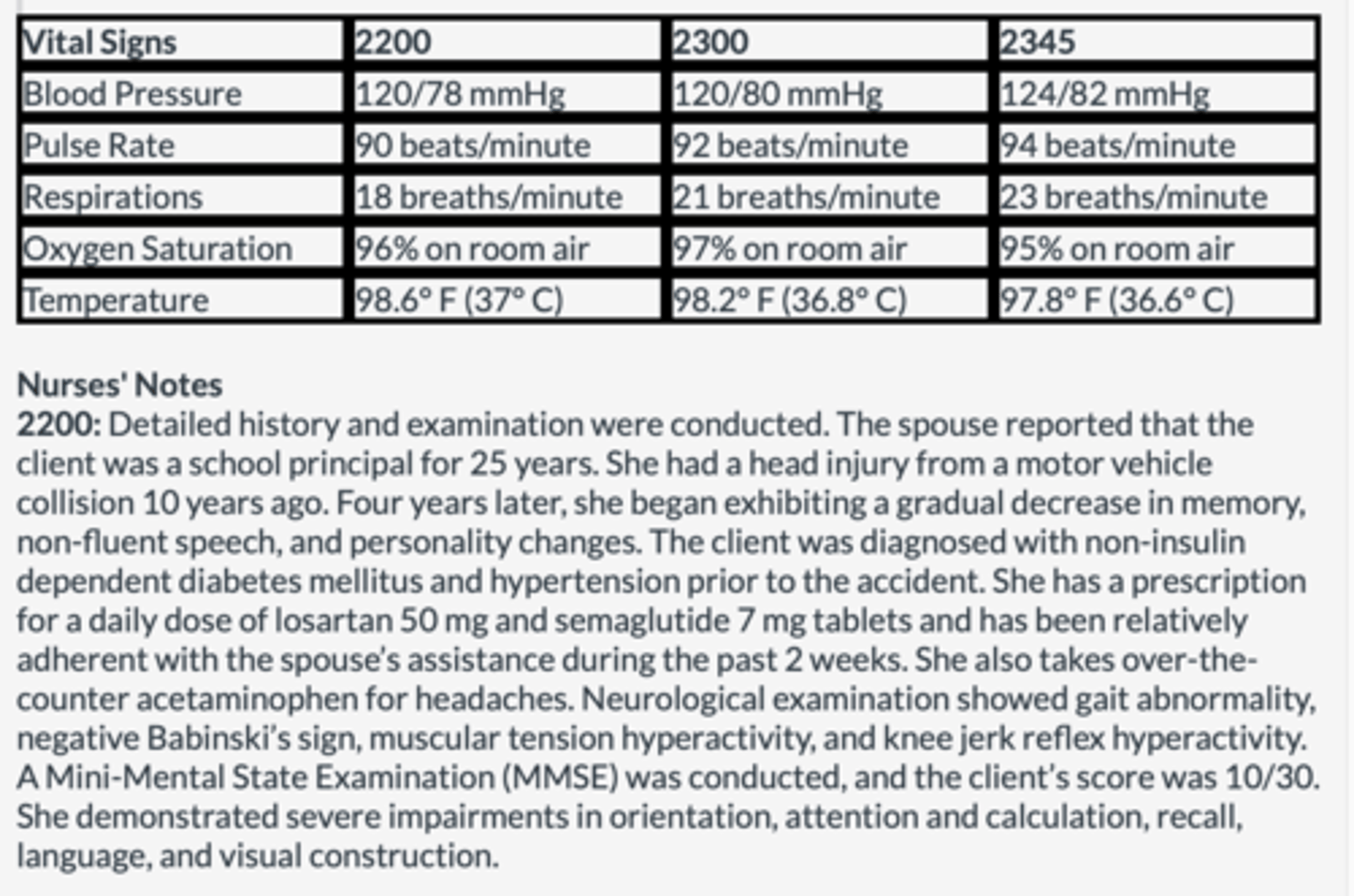
The husband is concerned about this diagnosis and wants to know what he can do to help his wife with this condition. The nurse plans to educate the spouse on the care of the patient and educates him on the importance of:
Select all that apply.
Understanding that Alzheimer's disease is marked by progressively worsening mental deterioration
Understanding that medications can alleviate the symptoms but are not curative
Understanding that medications are available to cure this condition
Limiting daily activity is important in managing the disease
Understanding that Alzheimer's disease is marked by progressively worsening mental deterioration
Understanding that medications can alleviate the symptoms but are not curative
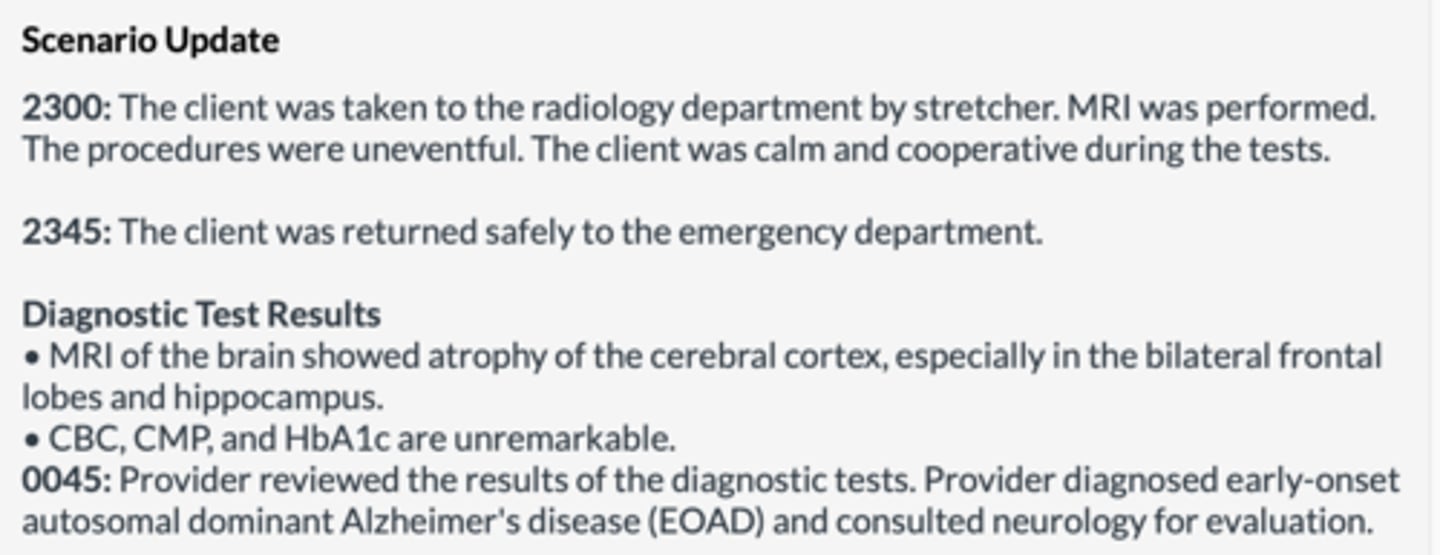
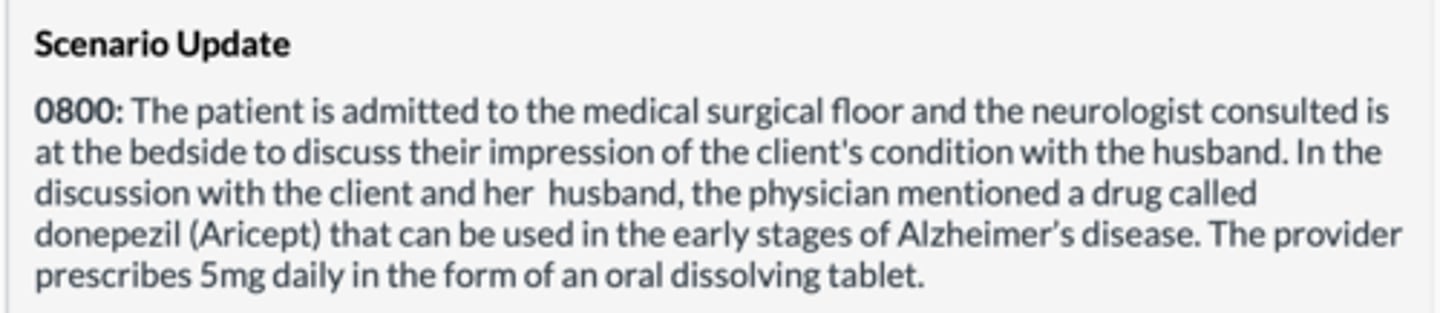
What should the nurse prioritize in their teaching plan to the client and spouse about taking this drug?
Select all that apply.
adverse effects that include severe GI disturbances such as nausea and vomiting
The client should avoid NSAIDS (non steroidal antiinflammatories drugs) while on this medication
The medication should be placed on the tongue and allowed to dissolve
the client will see immediate improvements in their condition
the client may need assistance ambulating after starting this medication
adverse effects that include severe GI disturbances such as nausea and vomiting
The client should avoid NSAIDS (non steroidal antiinflammatories drugs) while on this medication
The medication should be placed on the tongue and allowed to dissolve
The client may need assistance ambulating after starting this medication
The client is discharged home after stabilizing and is doing well.
Discharge Medications:
Losartan 50 mg 1 tablet, once daily per mouth
Semaglutide 7 mg tablet, once daily per mouth
Donepezil 5mg daily
On day 3 after discharge the husband notices some changes in his wife's condition. He calls the neurologist office to discuss his concerns. The provider's nurse calls the client back to ask about the client. The spouse reports that his wife appears flushed, gets very dizzy when standing and is complaining of abdominal cramps and nausea.
What is the patient most likely experiencing?
An allergic reaction to the drug
Early signs of a cholinergic crisis
Expected adverse effects
Late signs of a cholinergic crisis
Early signs of a cholinergic crisis
(Early signs of a cholinergic crisis include cramps, dizziness, increased salivation, lacrimation, muscular weakness, paralysis, muscular fasciculation, diarrhea, and blurry vision. The items listed are early signs of a cholinergic crisis, which can become more severe and lead to hypotension, circulatory collapse, bloody diarrhea, shock, and cardiac arrest )