Abstract Expressionism and Pop art
 Studied by 0 people
 Call with Kai
 Learn
Learn Practice Test
 Spaced Repetition
 Match
Match Flashcards
 Knowt Play
1/7

There's no tags or description
Looks like no tags are added yet.
Name | Mastery | Learn | Test | Matching | Spaced | Call with Kai |
|---|
No study sessions yet.
8 Terms
Abstract Expressionism
An American post-WWII movement that emphasized abstraction, emotional intensity, and the act of painting itself, rejecting representation and traditional composition.
Political & economic context
After World War II, New York replaces Paris as art capital
Linked to ideas of individualism and artistic freedom
Two main approaches
Colour Field Painting
Large canvases
Flat areas of color
Emotion through color, not gesture
Action Painting
Emphasis on process and movement
Gesture, speed, physical engagement
Canvas as an “arena of action”
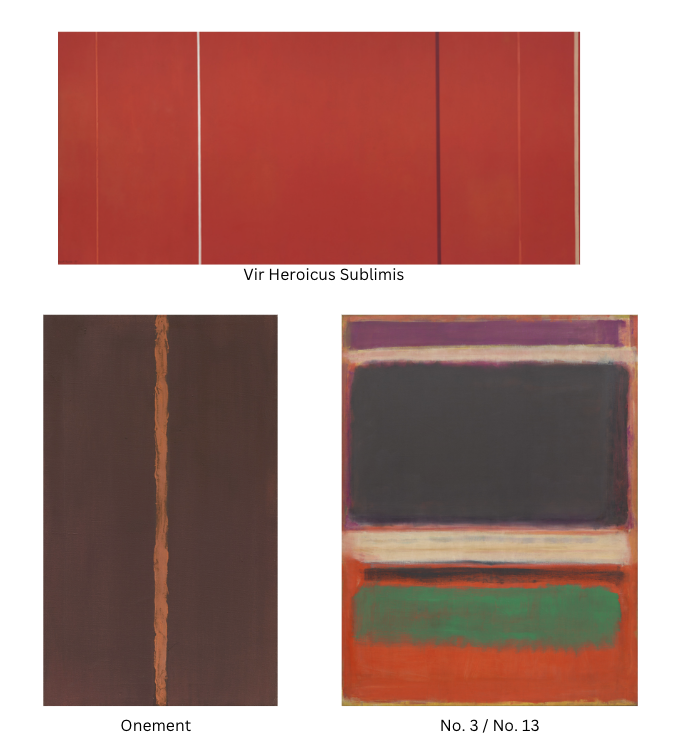
Colour Field Painting
Barnett Newman – Vir Heroicus Sublimis (1950–51)
Monumental red canvas
Sublime, spiritual experience
Viewer confronted by scale
Newman – Onement I (1948)
Creation through division
Minimal but symbolic
Foundations of Color Field painting
Mark Rothko – No. 3 / No. 13 (1949)
Soft edges, layered paint
Emotional and contemplative
Painting as psychological space
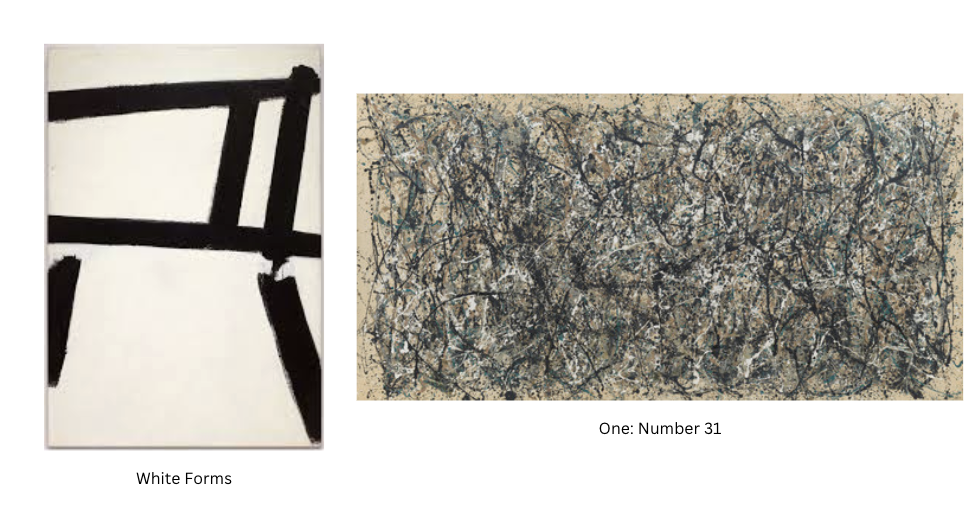
Action Painting
Kline – White Forms (1952)
Contrast and tension
Dynamic composition
Brushstroke as subject
Pollock – One: Number 31, 1950
Full body movement
Drip and pour technique
Painting as process
Peak of Action Painting
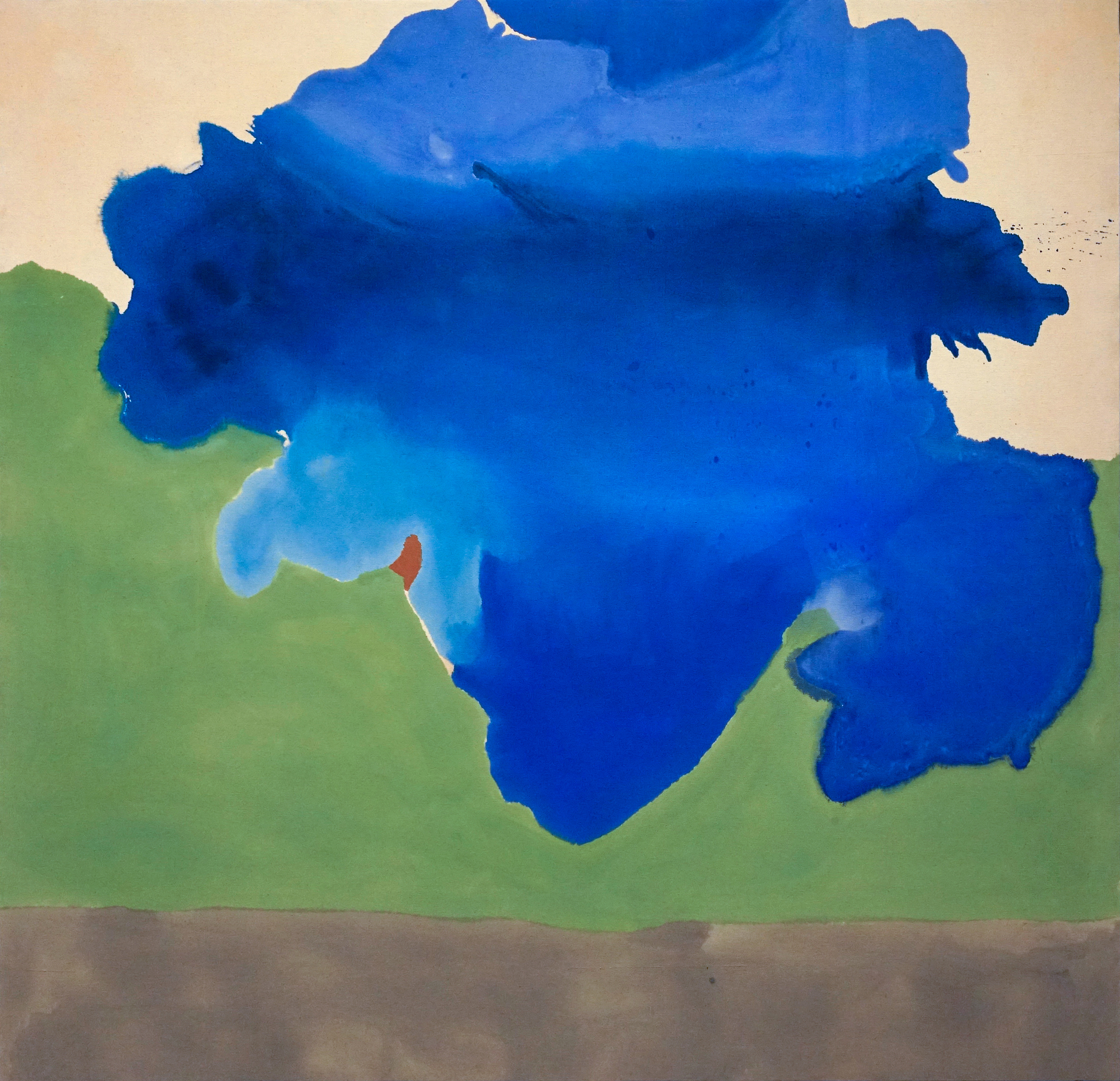
Second Generation Abstract Expressionism
Helen Frankenthaler – The Bay (1963)
Soak-stain technique
Thinned paint on raw canvas
Bridge to Color Field painting
Pop Art
A movement that embraced mass culture, consumer goods, advertising, and celebrity, reacting against Abstract Expressionism’s seriousness and individuality.
Flat, graphic style
Irony and detachment
Imagery from popular culture
Pop Art vs Abstract Expressionism
Abstract Expressionism: emotional, gestural, personal
Pop Art: impersonal, repetitive, commercial imagery
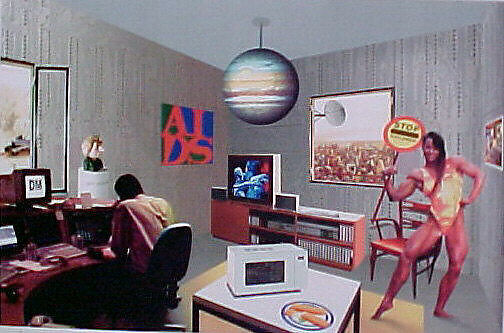
Early Pop Art
Richard Hamilton – Just what is it that makes today’s homes so different, so appealing? (1956)
Collage of consumer culture
Advertising imagery
Irony and critique
Birth of Pop Art
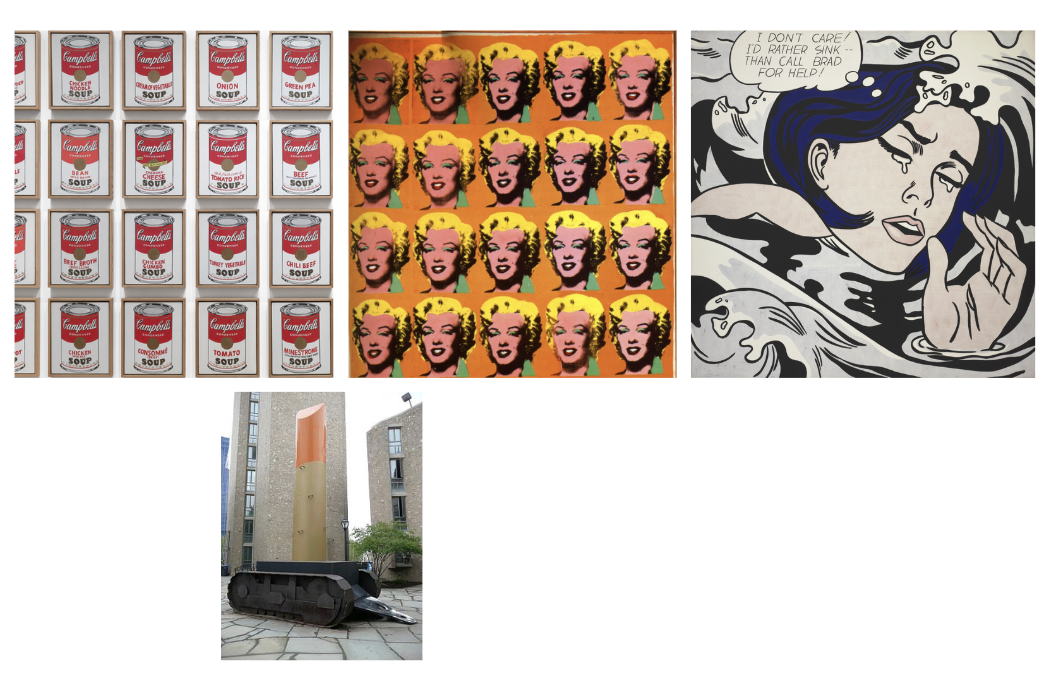
American Pop Art
Andy Warhol – 32 Campbell’s Soup Cans
Clearest definition of Pop Art
Mass production, consumer culture, everyday objects
Serial repetition + no visible “artist’s hand”
Perfect contrast with Abstract Expressionism
Andy Warhol – Marilyn Diptych (1962)
Repetition + silkscreen technique
Color vs black-and-white = fame vs death
Media saturation & loss of individuality
Roy Lichtenstein – Drowning Girl (1963)
Comic-book imagery = mass media
Benday dots & mechanical look
Irony: dramatic emotion but impersonal style