Cardiovascular System
 Call Kai
 Learn
Learn Practice Test
 Spaced Repetition
 Match
Match Flashcards
 Knowt Play
1/23

There's no tags or description
Looks like no tags are added yet.
Name | Mastery | Learn | Test | Matching | Spaced | Call with Kai | Chat |
|---|
No analytics yet
Send a link to your students to track their progress
24 Terms
The cardiovascular system consists of…
the heart, vessels, and blood
What does blood do?
The blood carries nutrients, oxygen, and waste products to and from the cells of the body.
What does the heart do?
The heart propels blood through the pulmonary and systemic circulations.
What do the vessels do?
The vessels distribute and return blood to and from the capillary beds where the exchange of oxygen, nutrients, waste products, and other substances with the extracellular fluid occurs.
Arteries vs. Veins
arteries = carries blood away from the heart
veins = carries blood to the heart
The large-caliber aorta of the systemic circulation…
efficiently conducts blood from the heart to a series of smaller vessels that branch from its surface.
Subsequent branching of these arteries…
distributes the blood via increasingly smaller vessels to the capillary beds of the body.
Arterioles
The smallest of the distributing vessels.
Venules
the smallest of the venous vessels
Blood from arterioles drains_____________. Blood within the capillary beds subsequently ______________
directly into the capillary beds; passes into venules and on to small veins
In the body, arteries __________, while small veins __________.
branch into smaller-caliber arteries; coalesce into larger veins as they approach the heart
Eventually all venous blood within the systemic system circulation (excluding coronary veins)…
drains to either the superior vena cava (SVC) or inferior vena cava (IVC), both of which drain directly into the heart.
the coronary veins…
return blood from the myocardium of the heart
A similar pattern of blood conduction, distribution, and return occurs in the…
pulmonary circulation
Explain the purpose and the differences of smooth muscle in veins and arteries
The amount of smooth muscle in the walls of arteries and veins varies.
Arteries have a thicker layer of smooth muscle that allows them to regulate blood flow and propel blood through the arterial system.
In veins the layer of smooth muscle is considerably thinner.
*Note: The variation in smooth muscle thickness of vessels is evident in the embalmed donor. The thick muscle layer of arteries allows these vessels to retain their shape when empty. In comparison, the thin walls of veins collapse when empty and appear flattened in the donor. Knowing these differences will help when distinguishing arteries and veins in the anatomy lab.
Anastomoses
Arteries are joined to one another via “anastomoses”.
These communications between different arteries provide for continued distribution of blood to distal tissues should one artery become obstructed due to pathology or surgical ligation.
Explain anastomoses in the cranial cavity
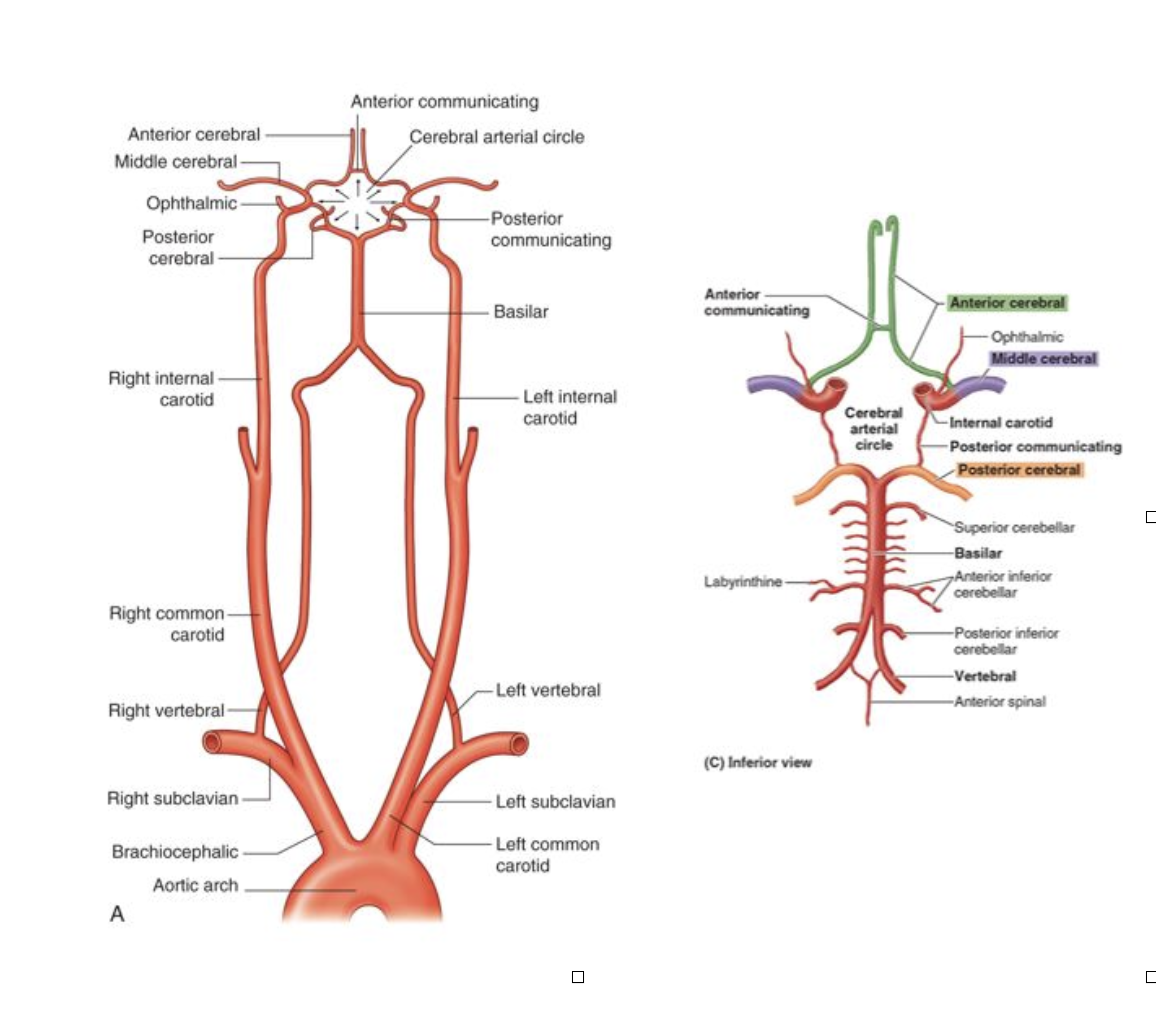
In the cranial cavity, anastomoses between the carotid and subclavian circulations (via “communicating branches”) ensure blood supply to the brain
Explain anastomoses in the abdomen
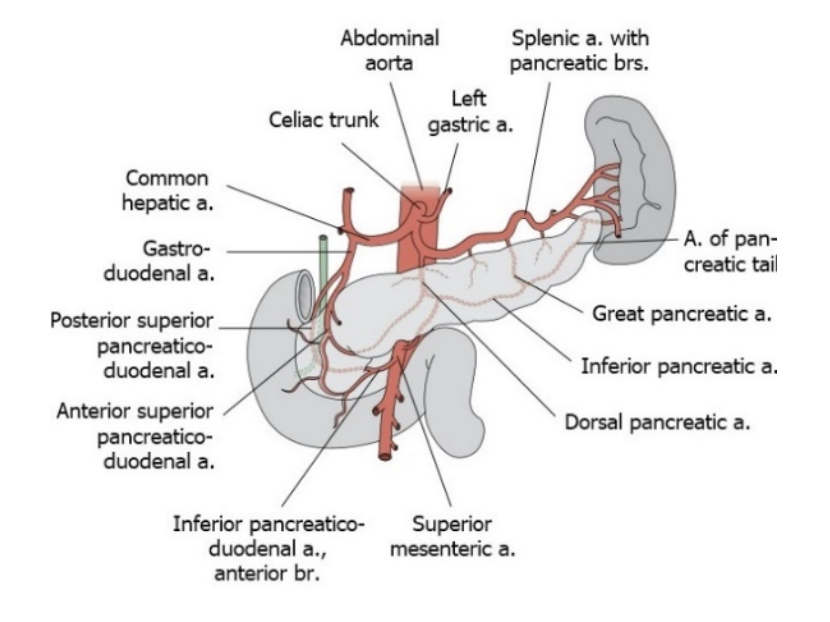
In the abdomen, anastomoses between branches of the celiac artery with branches of the superior mesenteric artery ensure blood supply to the duodenum and pancreas
Explain anastomoses in the limbs
In the limbs, anastomoses between arteries proximal and distal to a large joint or joint complex form collateral circulation routes around the joint, thus ensuring blood supply to the distal limb segment
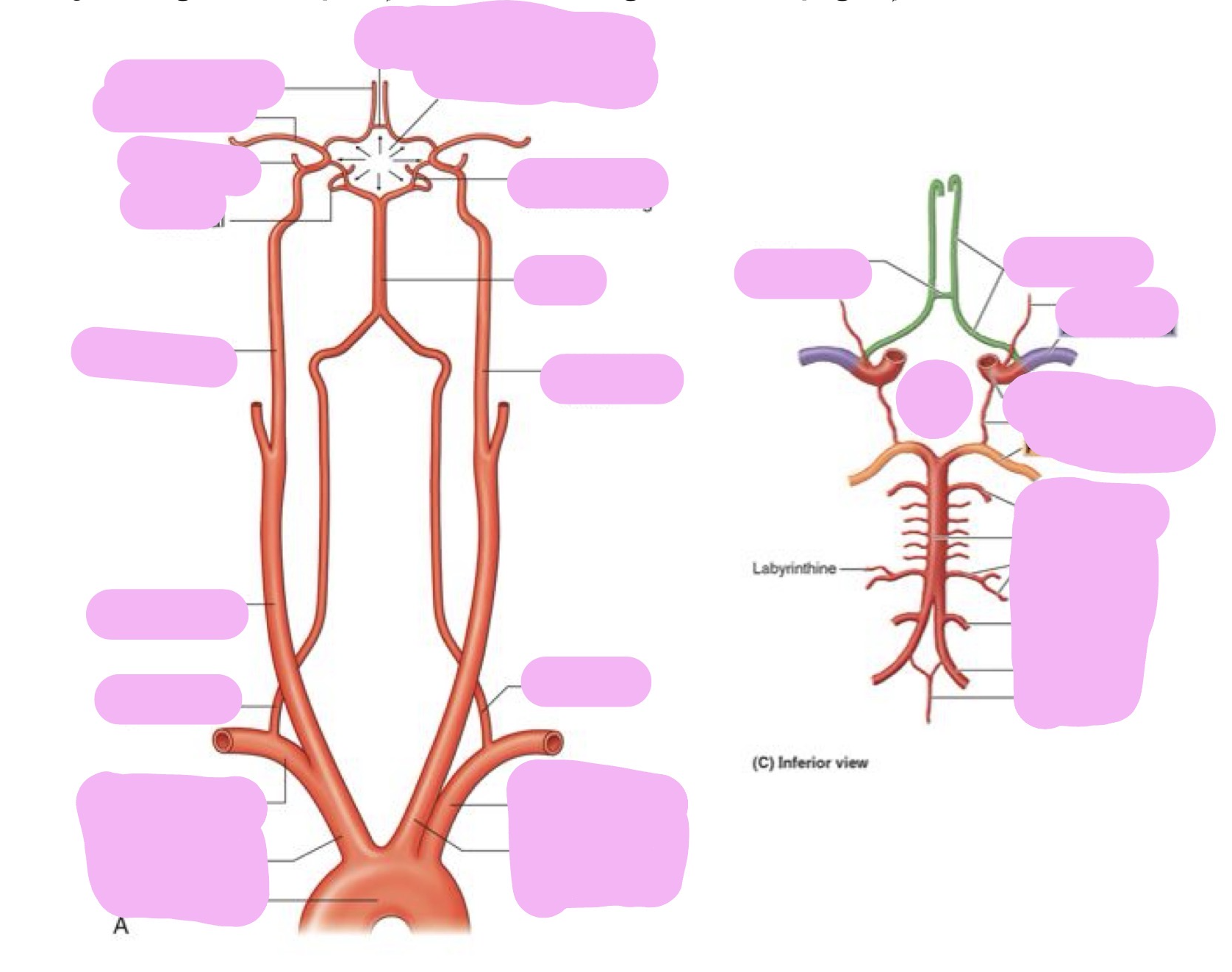
Anastomoses in the Cranial Cavity
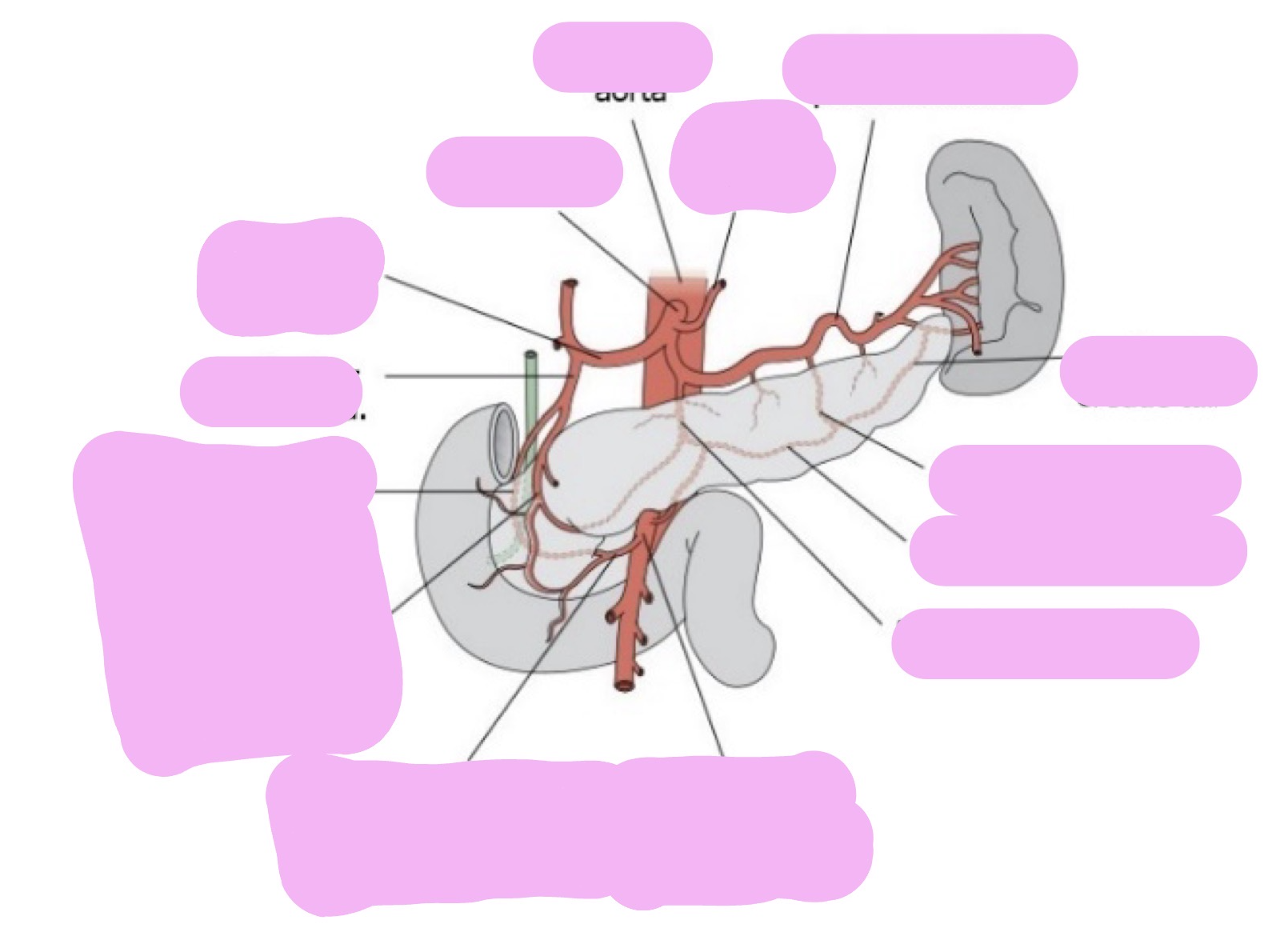
Anastomoses in the Abdomen
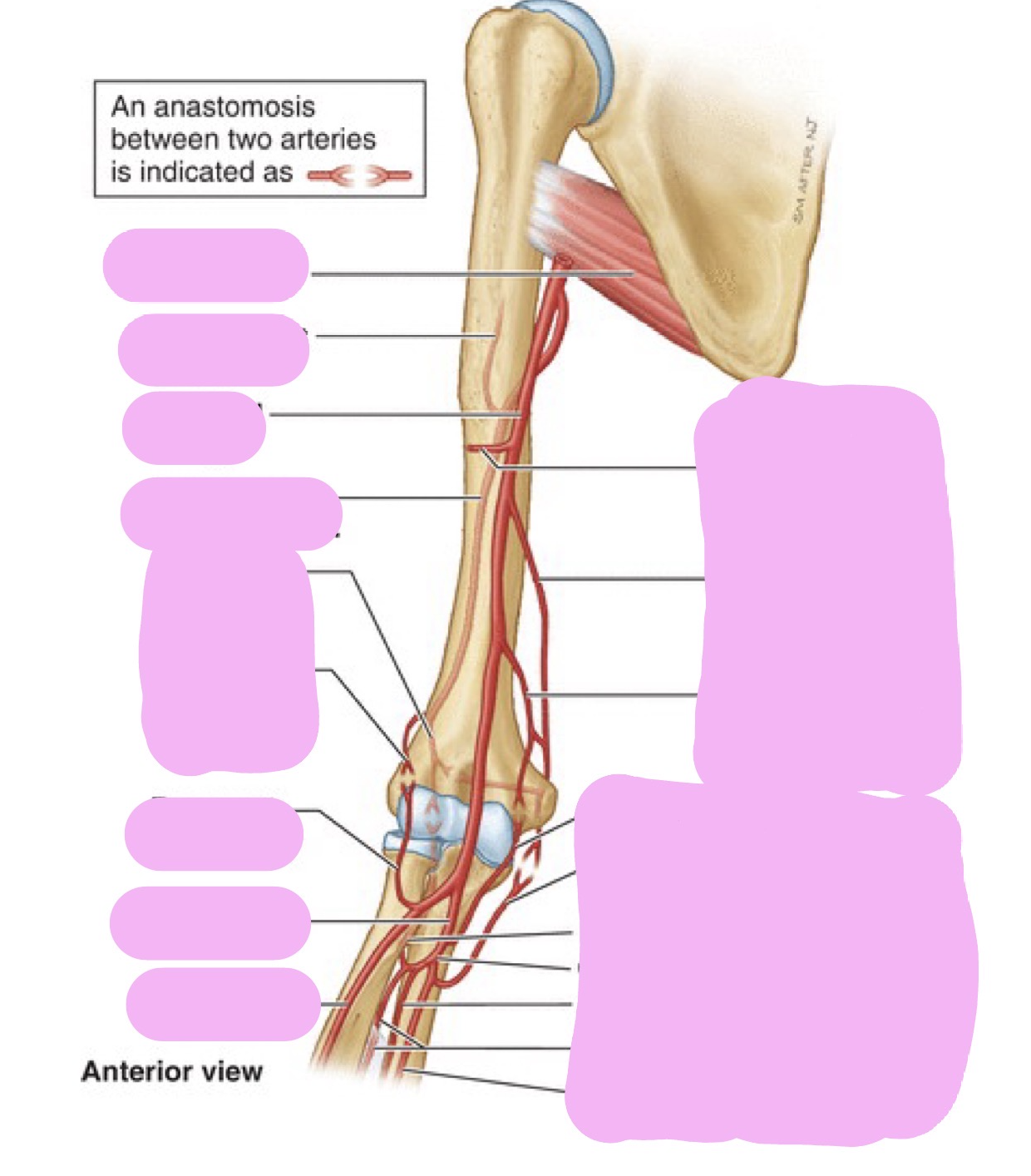
Anastomoses in the Limbs
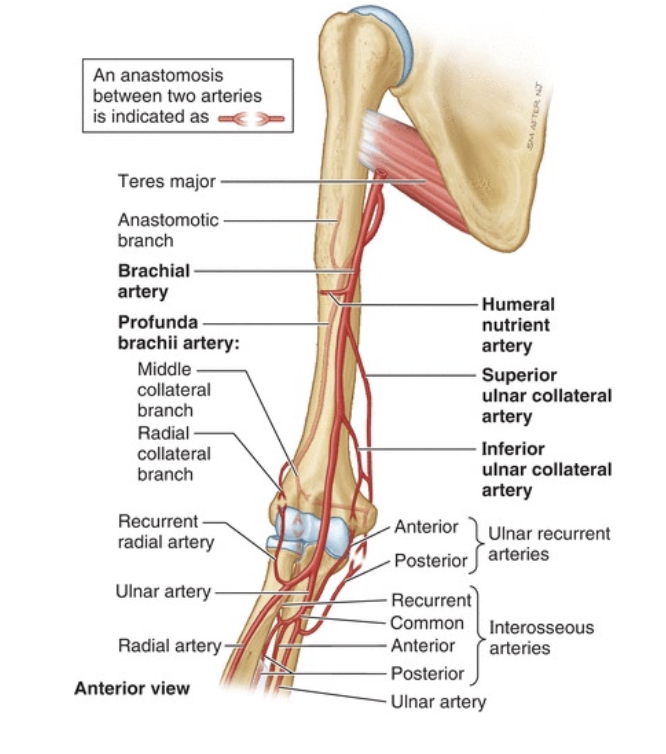
Discuss true (anatomical) and functional end arteries
True (anatomic) and functional “end arteries” exist in certain organs.
“True end arteries” have no anastomoses with other arteries – when obstructed, the blood supply to their target tissues is completely interrupted.
The retina of the eye is a tissue supplied by true end arteries.
Arteries with ineffectual anastomoses are termed “functional end arteries”. Functional end arteries supply regions of the brain, liver, kidneys, spleen, and intestines, and are thought to supply the heart as well.
Arteriovenous Anastomoses
Arteriovenous anastomoses are direct connections between arterioles and venules.
These connections, which serve to bypass the capillary beds, have an important role in the conservation of body heat. They are found in several regions, most notably the fingers and toes.