ASVAB Airithmetic Reasoning and Math Knowledge
 Call Kai
 Learn
Learn Practice Test
 Spaced Repetition
 Match
Match Flashcards
 Knowt Play
1/99

There's no tags or description
Looks like no tags are added yet.
Name | Mastery | Learn | Test | Matching | Spaced | Call with Kai | Chat |
|---|
No analytics yet
Send a link to your students to track their progress
100 Terms
What are integers?
Integers are positive and negative whole numbers, including zero.
Integers do not have decimal points or fractions.
Memory Trick
"Integers stay whole—they never split their soul!"
What numbers are integers?
-10
-5
-1
0
1
7
25
100
If it's a whole number (positive, negative, or zero), it's an integer.
What numbers are NOT integers?
Fractions → ½, ¾
Decimals → 2.5, -1.8
Mixed Numbers → 3½, -2¼
If a number has a fraction or decimal, it is not an integer.
What is a rational number?
Any number that can be written as a fraction (ab)\left(\frac{a}{b}\right)(ba), where b≠0b \neq 0b=0.
can be written as a fraction, even if they don't look like one.
They include integers, fractions, and many decimals.
"Rational = Ratio."
What types of numbers are rational numbers?
Integers
✅ Fractions
✅ Terminating decimals
✅ Repeating decimals
Examples
5
-12
¾
0.25
0.333...
If the number ends or repeats, it's rational.
What is a terminating decimal?
A decimal that ends after a certain number of digits.
0.5
2.75
14.125
Terminating decimals are what type of number?
Rational numbers because it can be written as a fraction.
"Terminate = Stop."
If the decimal stops, it's rational.
What is a repeating decimal?
A decimal in which one digit or a group of digits repeats forever.
Every repeating decimal is a rational number because it can be written as a fraction.
What is an irrational number?
a number that cannot be written as a fraction.
🔑 Key Points
Its decimal never ends.
Its decimal never repeats.
"Irrational = Infinite and Irregular."
How can you tell if a number is irrational?
Has a decimal that:
❌ Never ends.
❌ Never repeats.
If a decimal goes on forever without repeating a pattern, it is irrational.
No end. No pattern. Irrational."
Ends → Rational ✅
Repeats → Rational ✅
Never ends & never repeats → Irrational ✅
Is PI rational or irrational?
PI is a decimal, bit its irrational.
Rational numbers include integers, fractions, terminating decimals, and repeating decimals.
What is absolute value?
The distance a number is from zero on a number line, regardless of direction.
Do absolute values have negative answers?
NO.
Distance is always positive or zero.
Absolute value never has a negative answer.
What does the absolute value symbol ( | | ) mean?
The symbols | | tell you to find a number's absolute value (its distance from zero).
The | | symbols do not mean "make the number positive." They mean find the distance from zero.
"Bars = Distance Bars."
Why is |3| = |-3|?
Both 3 and -3 are 3 units away from 0 on a number line.
Distance from 0 to 3 = 3 units
Distance from 0 to -3 = 3 units
What is the absolute value of these numbers?
|7|
|-7|
|12|
|-12|
|0|
|7| = 7
|-7| = 7
|12| = 12
|-12| = 12
|0| = 0
Absolute value is how far a number is from 0, not whether it's positive or negative.
What is a factor?
a whole number that can divide another number evenly with no remainder.
The factors of 12 are:
1, 2, 3, 4, 6, and 12
Factors are numbers that multiply together to make another number.
What is a prime number?
A whole number greater than 1 that has exactly two factors:
The number 1
The number itself
How can you identify if a number is prime?
Make sure the number is greater than 1.
Find all of its factors.
Count the factors.
Exactly 2 factors → Prime ✅
More than 2 factors → Composite ❌
What is a composite number?
A whole number greater than 1 that has more than two factors.
🔑 Key Point
Composite numbers can be divided evenly by:
1
Itself
Other numbers
What is the difference between prime and composite numbers?
Prime Numbers | Composite Numbers |
|---|---|
Exactly 2 factors | More than 2 factors |
Only divisible by 1 and itself | Has extra factors |
Cannot be broken down further | Can be broken into smaller factors |
What is the order of operations?
The set of rules that tells you which mathematical operations to solve first.
"Order keeps math in order."
What does PEMDAS stand for?
P → Parentheses
E → Exponents
M → Multiplication
D → Division
A → Addition
S → Subtraction
ASVAB Tip
Multiplication and division are done left to right.
Addition and subtraction are also done left to right.
What is an exponent?
Tells you how many times to multiply a number by itself.
What does the exponent number tell you?
The exponent tells you how many times the base number is multiplied by itself.
3^5
3 = base
5 = exponent
What happens when a number is raised to the power of 1?
Any number raised to the power of 1 equals itself.
What happens when 1 is raised to any power?
The number 1 raised to any exponent always equals 1.
What happens when a number is raised to the power of 0?
Any nonzero number raised to the power of 0 equals 1.
How do you multiply powers with the same base?
Add the exponents
How do you divide powers with the same base?
Subtract the exponents
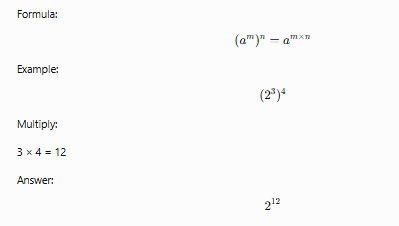
What happens when a power is raised to another power?
Multiply the exponents
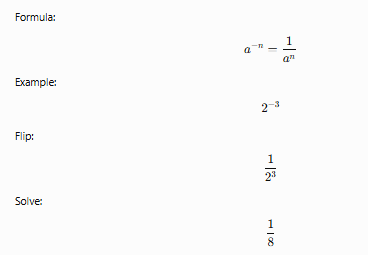
What does a negative exponent mean?
A negative exponent means take the reciprocal (flip the fraction).
What does the metric prefix kilo- mean?
Kilo- means one thousand (1,000).1 kilogram = 1,000 grams
1 kg=1000 g1 \text{ kg}=1000 \text{ g}
⭐ ASVAB Tip
Kilo is commonly seen in:
Kilometer (1,000 meters)
Kilogram (1,000 grams)
What does the metric prefix mega- mean?
Mega- means one million (1,000,000).
What does the metric prefix giga- mean?
Giga- means one billion (1,000,000,000).
What does the metric prefix deci- mean?
Deci- means one tenth (0.1).
Memory Trick
"Deci divides by ten."
What does the metric prefix centi- mean?
Centi- means one hundredth (0.01).
Example
1 centimeter = 0.01 meters
🧠 Memory Trick
"Centi has a hundredth sense."
What does the metric prefix milli- mean?
Milli- means one thousandth (0.001).
Example
1 milliliter = 0.001 liters
What does the metric prefix micro- mean?
Micro- means one millionth (0.000001).
Example
1 microgram = 0.000001 grams
What is a conversion factor?
A ratio equal to 1 that allows you to change units without changing the actual value.
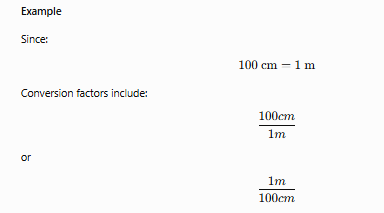
How do you convert square units?
When converting area, you must square the conversion factor.
Memory Trick
"Area has two dimensions, so conversions square the conditions."
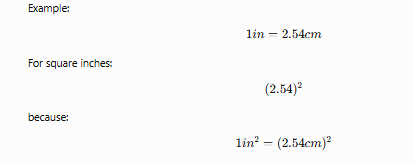
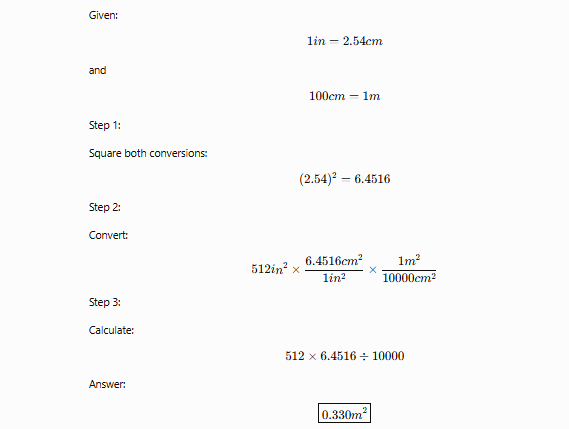
How do you convert 512 square inches to square meters?
⭐ ASVAB Tip
Area → square the conversion factor.
Volume → cube the conversion factor.
What is a common factor?
A number that divides evenly into two or more numbers.
Example
Factors of 12:
1, 2, 3, 4, 6, 12
Factors of 15:
1, 3, 5, 15
Common factors:
✅ 1 and 3
Memory Trick
"Common means shared."
What are multiples?
Numbers created by multiplying a number by whole numbers.
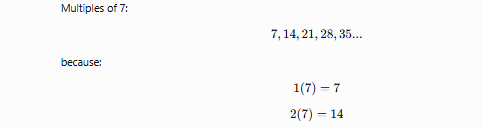
How do you identify multiples?
A number is a multiple if it can be divided evenly by the original number.
Example:
21 is a multiple of 7 because:
21÷7=321 \div 7=321÷7=3
3 is an integer.
🧠 Memory Trick
"No remainder? It's a member."
What is the greatest common factor (GCF)?
The largest number that divides evenly into two or more numbers.
What is the GCF of 15 and 35?
Back:
Factors of 15:
1, 3, 5, 15
Factors of 35:
1, 5, 7, 35
Common factors:
1 and 5
Largest common factor:
5\boxed{5}5
Answer:
GCF = 5
What is the least common multiple (LCM)?
The smallest number that is a multiple of two or more numbers.
What is the LCM of 3 and 5?
Multiples of 3:
3, 6, 9, 12, 15, 18...
Multiples of 5:
5, 10, 15, 20...
The first number they share is:
15\boxed{15}15
Answer:
LCM = 15
What does a fraction represent?
Represents a part of a whole or the quotient (division) of two numbers.
What is not allowed in a fraction?
A fraction cannot have zero as its denominator.
🔑 Why?
Division by zero is impossible.
What is a proper fraction?
a fraction where the:
numerator<denominator
Memory Trick
"Proper is smaller on top."
What is an improper fraction?
A fraction where the:
numerator>denominator
🔑 Key Point
Improper fractions have values greater than 1.
How do you add fractions?
Find a common denominator.
Add the numerators.
Keep the denominator the same.
How do you subtract fractions?
Find a common denominator.
Subtract the numerators.
Keep the denominator.
How do you multiply fractions?
Multiply:
Numerator × numerator
Denominator × denominator
How do you divide fractions?
To divide fractions:
Flip the second fraction (reciprocal).
Multiply.
What rule must you follow when adding and subtracting decimals?
Decimal points must always be aligned vertically.
🔑 Key Point
The decimal stays in the same column.
Memory Trick
"Line up the dots before adding lots."
How do you multiply decimals?
Ignore decimals and multiply like whole numbers.
Count total decimal places in both numbers.
Place decimal that many spaces from the right.
How do you divide decimals?
Move the divisor decimal until it becomes a whole number.
Move the dividend decimal the same amount.
Divide normally.
How do you convert a percentage into a fraction?
Put the percentage over 100.
Simplify.
How do you convert a percentage into a decimal?
Remove the percent sign and move the decimal two places left.
Example:
15%
15.0→0.15
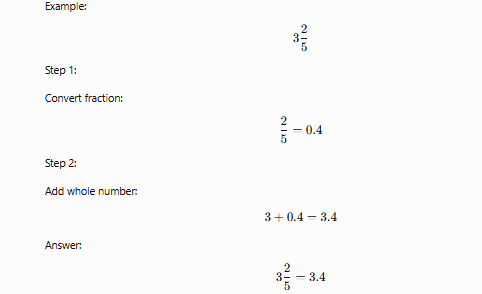
How do you convert a mixed number into a decimal?
How do you convert a decimal into a percentage?
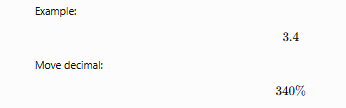
📖 Rule
Move decimal point two places right and add %.
What is a direct proportion?
A relationship where two quantities increase or decrease together.
Example:
More hours worked → more money earned
Memory Trick
"Direct means they move together."
What is an inverse proportion?
A relationship where one quantity increases while the other decreases.
Example:
Faster speed → less travel time
Memory Trick
"Inverse means opposite course."
What is a ratio?
Compares two quantities in a specific order.
Example:
3:5
means:
3 compared to 5
Memory Trick
"Ratio = relationship."
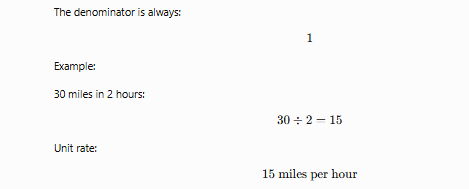
What is a unit rate?
Compares a quantity to one unit.
Memory Trick
"Unit rate means one denominator."
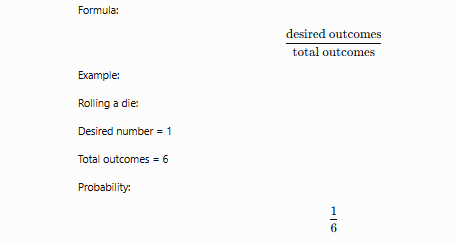
What is probability?
Measures the likelihood that something will happen.
What is the formula for slope?
Where:
m = slope
y = vertical change
x = horizontal change
Memory Trick
"Slope is rise over run."

What does a positive slope look like?
Rises from left to right.
As x increases, y increases.
Memory Trick
"Positive goes up."
What does a negative slope look like?
Falls from left to right.
As x increases, y decreases.
Memory Trick
"Negative goes down."
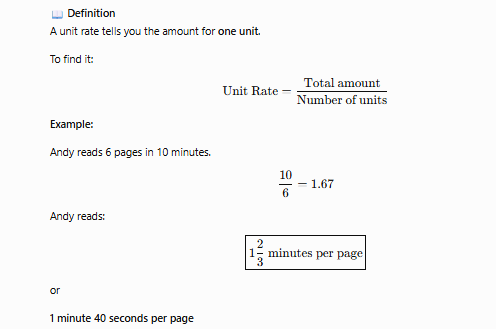
How do you find a unit rate in a word problem?
A unit rate tells you the amount for one unit.
Memory Trick
"Unit means one—divide to find the rate done."
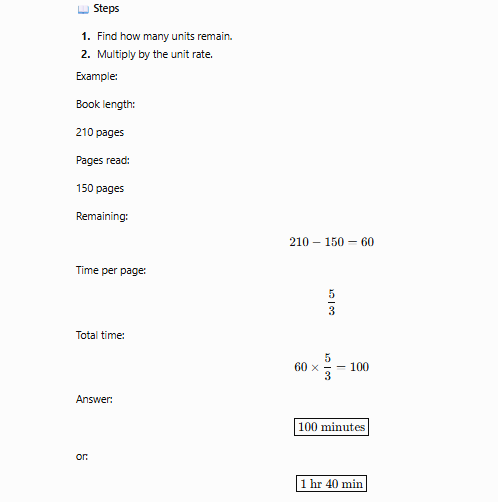
How do you find remaining time in a word problem?
Find how many units remain.
Multiply by the unit rate.
ASVAB Tip
Word problems usually require:
Find rate → Find remaining amount → Multiply
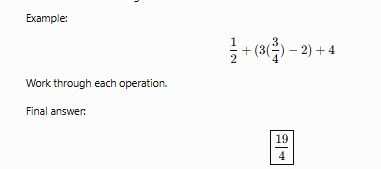
How do you simplify an expression?
Follow PEMDAS.
Solve parentheses first.
Combine remaining term.
ASVAB Tip
Do not solve left-to-right without following PEMDAS.
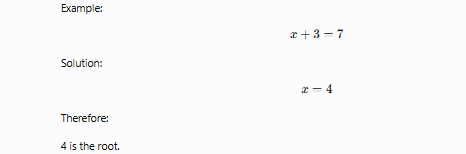
What is the root of a one-variable linear equation?
The solution that makes the equation true.
Memory Trick
"Root = the answer that makes it true."
What is point-slope form?
Where:
mmm = slope
(x1,y1)(x_1,y_1)(x1,y1) = a known point on the line
🔑 Purpose
Point-slope form shows:
The slope
One point on the line
Memory Trick
"Point-slope points out the point."

What does slope represent?
Measures how much a line changes vertically compared to horizontally.
Memory Trick
"Slope = rise over run."

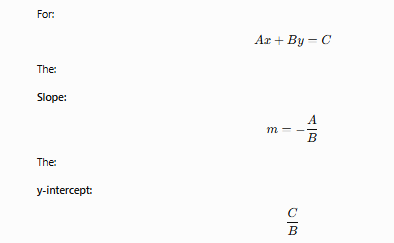
What is standard form of a linear equation?
Where:
A, B, and C are constants
x and y are variables
🔑 Key Point
Standard form is another way to write a linear equation.

What information can standard form provide?
Memory Trick
"Standard gives slope and where it hits Y."
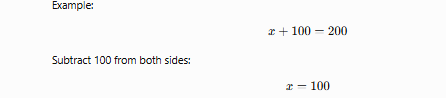
What is the rule for manipulating equations?
Whatever operation you perform on one side of an equation, you must perform on the other side.
Memory Trick
"Balance the equation, move in coordination."
What is slope-intercept form?
Where:
m = slope
b = y-intercept
🔑 Key Point
This form immediately shows:
How steep the line is
Where it crosses the y-axis
Memory Trick
"M makes the motion, B begins the line."

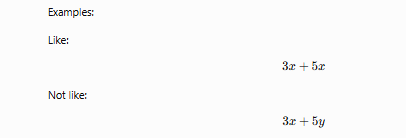
What are like terms?
Have the same variables raised to the same powers.
Key Point
Only like terms can be combined.
How do you solve equations with exponents?
Steps
Isolate the variable with the exponent.
Take the appropriate root of both sides.
Key Point
There may be more than one answer.
Memory Trick
"Exponent? Reverse with a root."

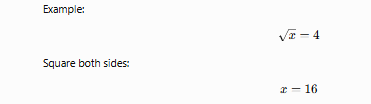
How do you solve equations involving roots?
Isolate the root.
Raise both sides to the power needed to remove it.
Memory Trick
"Undo roots with powers."
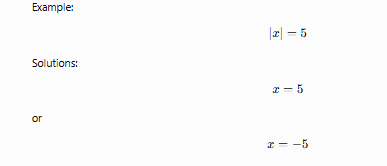
How do you solve absolute value equations?
Isolate the absolute value.
Create two equations:
Positive case
Negative case
Memory Trick
"Absolute value splits two ways."
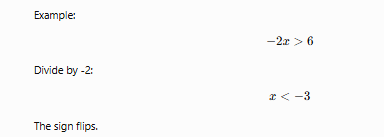
What rule changes when solving inequalities?
When multiplying or dividing an inequality by a negative number:
Flip the inequality sign.
Memory Trick
"Negative divide? Flip the side."
What is a compound inequality?
An inequality combines two inequalities using:
AND
OR
Example:
x>2 and x<5
🧠 Memory Trick
"Compound means combined."
What is the difference between AND and OR inequalities?
(Explain what AND refers to regarding inequalities)
Both conditions must be true.
Example:
2 < x< 5
Means numbers between 2 and 5.
What is the difference between AND and OR inequalities?
(Explain what OR refers to regarding inequalities)
Either condition can be true.
Example:
x<1 or x>5
Means outside the range.
Memory Trick
"AND = together. OR = either."
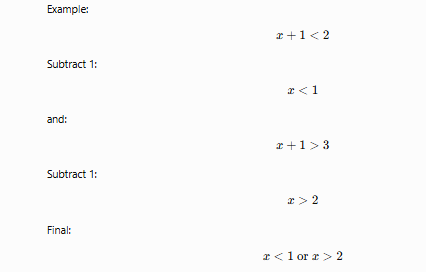
How do you solve compound inequalities?
Solve each inequality separately.
Combine answers using AND or OR.
How do you solve absolute value inequalities?
Steps
Isolate the absolute value.
Split into two cases.
Combine solutions.
Memory Trick
"Greater goes wide (OR), less stays inside (AND)."
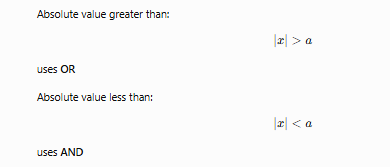
Absolute value greater than: ∣x∣ > a uses what?
Uses OR
Absolute value less than: ∣x∣ < a uses what?
Uses AND
What is an absolute value inequality?
an inequality that contains an absolute value expression and compares it to another value using inequality symbols.
The inequality symbols are:
< less than
> greater than
≤ less than or equal to
≥ greater than or equal to
Key Point
Absolute value inequalities describe a range of possible values instead of just one answer.
Memory Trick
"Absolute value inequality = distance with limits."
What is a monomial?
A single term made of:
A constant
A variable
A product of constants and variables
Memory Trick
"Mono means one, one term is done."
Examples of monomials
✅ 7
✅ x
✅ 2x
✅ x^3y
❌ x+5 (not a monomial because it has multiple terms)
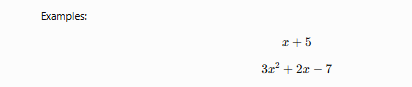
What is a polynomial?
An algebraic expression made by combining two or more monomials using addition or subtraction.
Key Point
A polynomial contains multiple terms.
Memory Trick
"Poly means many, many terms in plenty."
Example of polynomials
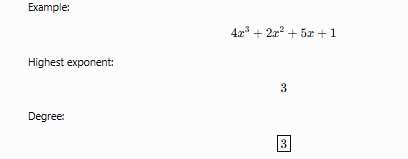
What is the degree of a polynomial?
The highest exponent of any term.