Lecture 2- Hgb, hematocrit, and RBC indicies
 Call Kai
 Learn
Learn Practice Test
 Spaced Repetition
 Match
Match Flashcards
 Knowt Play
1/17

There's no tags or description
Looks like no tags are added yet.
Name | Mastery | Learn | Test | Matching | Spaced | Call with Kai | Chat |
|---|
No analytics yet
Send a link to your students to track their progress
18 Terms
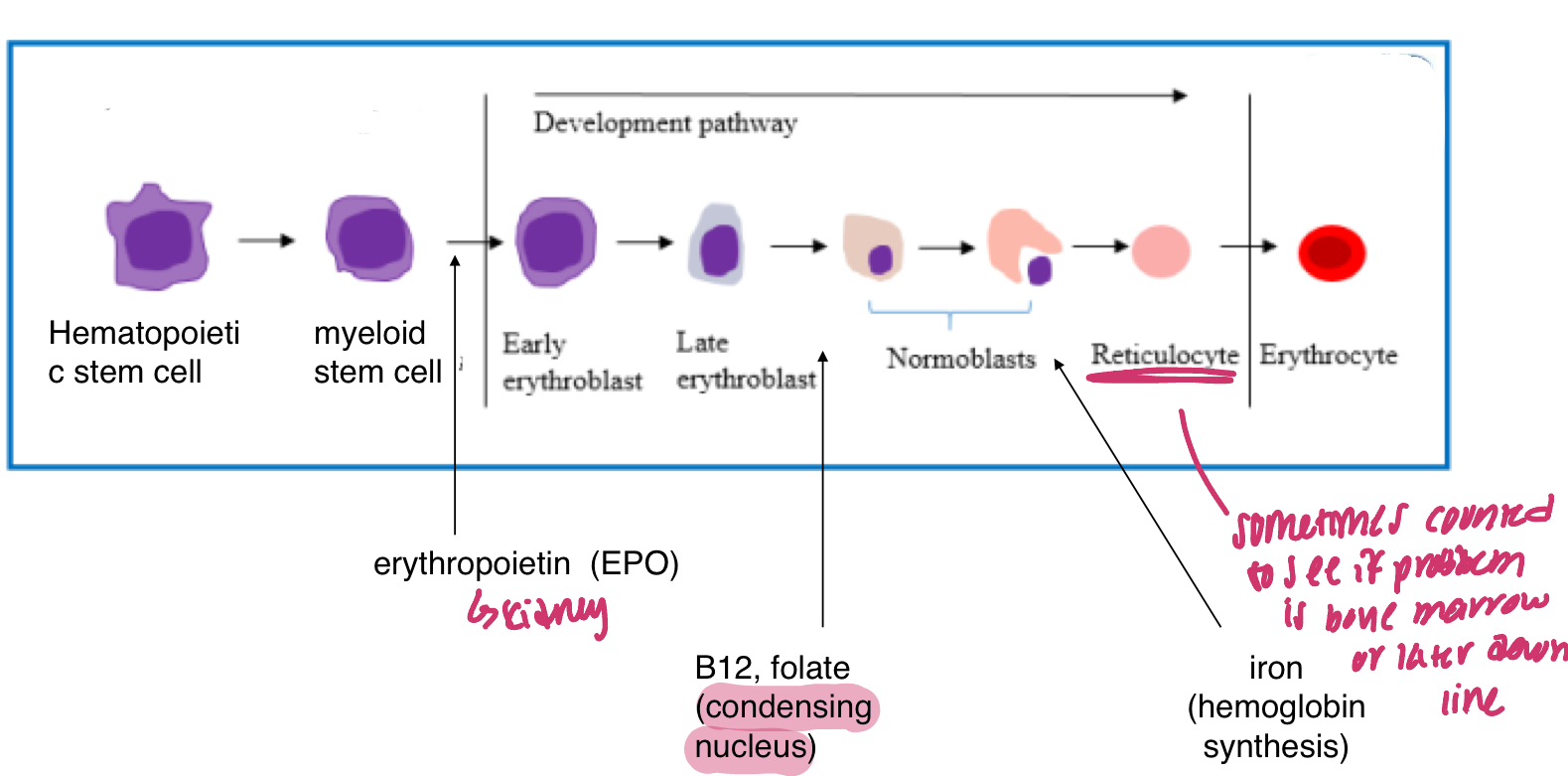
hematopoiesis
production of RBCs
increased under stress, illness, altitude, exercise, bleeding
erythropoiesis
hemoglobin structure
2 alpha and 2 beta chains
each subunit has a heme and iron group that bind O2
RBC lifecyle
100-120 days
olda damaged RBCs are removed from circulation and recycled
globin, heme, Fe
hematocrit
% of total sample composed of erythrocytes
mean corpuscular volume (MCV)
average volume/size of normal RBCs
help classify type of anemia alongside RDW
adult critical values hematocrit
<21%; >65%
critical values hemoglobin
<7% ; >21%
causes of erythrocytosis (increased RBCs, hgb, hct)
adrenal, brain, kidney, liver, cancer
anabolic steroids
congenital heart disease
dehydration
high altitude
COPD/smoking
medications- diuretics
polycythemia
sleep apnea
ex. prod more RBC sue to O2 deprivation
anemia
decreased OXYGEN carrying capacity of the blood
decrease in Hgb and/or Hct
sign of underlying disease or deficiency, rather than specific diagnosis
anemia secondary to ____
pathophysiology of anemia
1) decreased production
bone marrow damage (fibrosis, drugs)
decreased marrow stimulation (renal disease- decreased EPO, inflammation)
FE, folate, B12 deficiencies
2) destruction
healthy bone marrow cant keep up with blood loss of hemolysis
elevated MCV- macrocytic
>96
EtOH use disorder - normal RDW
folate deficiency - normal RDW
HYPOthyroidism
chronic liver disease (elevated RDW)
medications: methotrexate, imuran, hydroxyurea - normal RDW
multiple myeloma- elevated RDW
myelodysplastic syndrome- elevated RDW
pernicious anemia
B12 def- elevated RDW
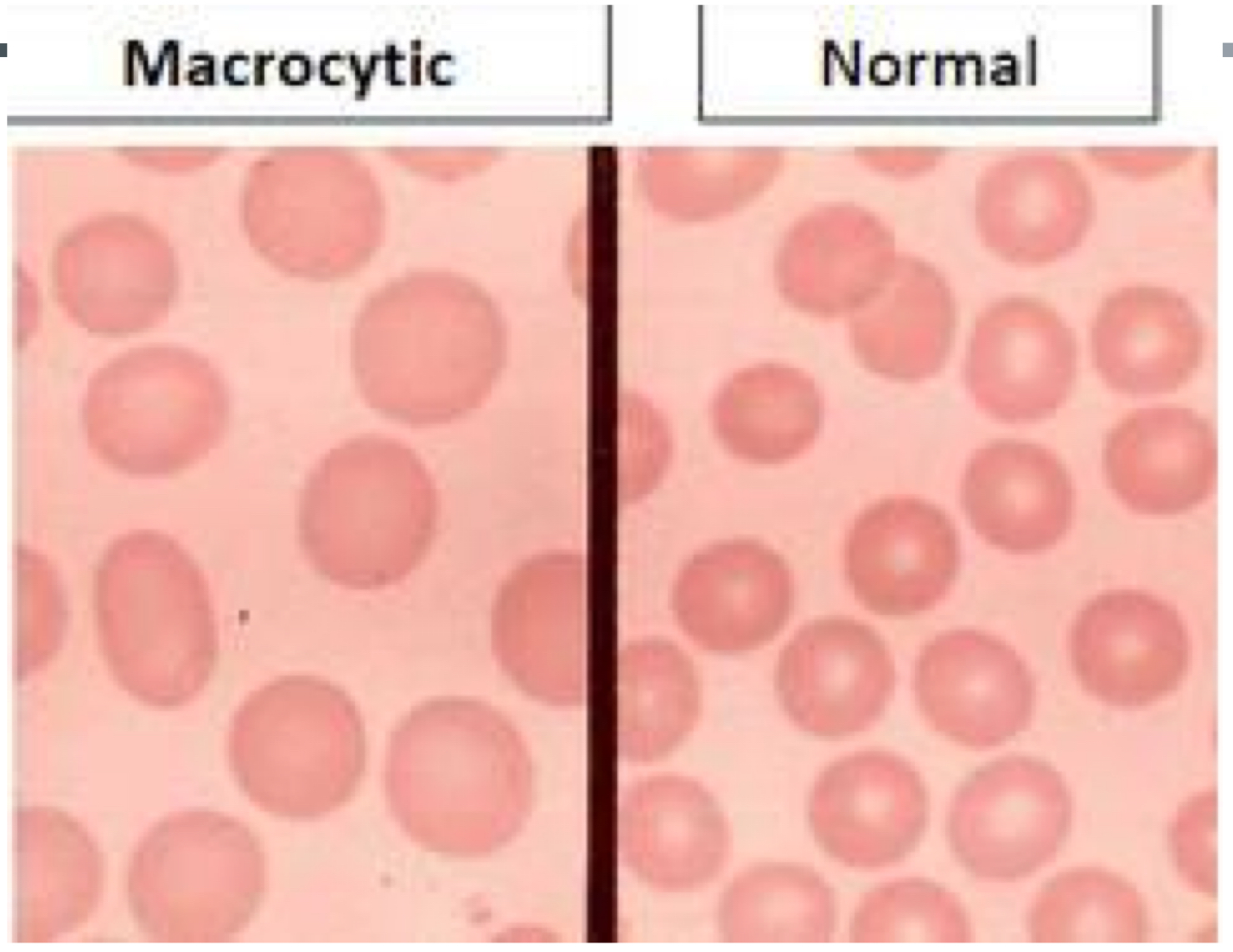
MCV- normocystic
80-90
low RBC but normal size
chronic disease - elevated RDW
early B12 and iron def or mixed def - elevated RDW
renal failure - elevated RDW
sickle cell anemia - elevated RDW
low MCV- microcytic
<80
iron def anemia - elevated RDW
toxins adn drugs - elevated RDW
thalassemia - elevated RDW
myelodysplastic syndrome - elevated RDW
mean corpuscular hemoglobin concentration (MCHC)
concentration of Hbg in RBCs
normal= normochromic
hemolytic anemia
decreased= hypochromic
microcystic
iron def
thalassemia
red blood cell distribution width (RDW)
indicates the variation in size or shape of RBCs
degree of ansiocytosis (RBCs of variable and abnormal size)
increase:
iron def anemia
B12 or folate def anemia
hemoglobinpathies- sickle cell
hemolytic anemia
post- hemorrhagic anemia
degenerative forms of RBCs
poikilocytosis: abnormal variation in shape
ex. sickle cell
anisosytosis: abnormal variation in size
macro, megal
factors that interfere with the accuracy of hgb/hct values and RBCs indicies
Hgb: slight diurnal variation, levels highest 8am, lowest 8pm
heavy smokers (chronic inflammation)
hemodilution (over hydration) affect Hgb/Hct
pregnancy= hemodilution, levels decreased due to increase in volume
high altitudes increase hgb/hct- physiologic response due to decreased O2 available
abnormal RBC size
higher Hct with larger RBCs take up grater % of total blood volume, RBC size affects MCH and MCHC
unreliable labs immediately after hemorrhage
% of total blood volume taken up by the RBC will not change until the blood volume id replaced with fluids
exremely elevated WBC
decreases Hct and falsely indicates anemia→ increase MCV and MCH
MEDICATIONS