Anatomy and Physiology - Exam 1
 Call Kai
 Learn
Learn Practice Test
 Spaced Repetition
 Match
Match Flashcards
 Knowt Play
1/91

There's no tags or description
Looks like no tags are added yet.
Name | Mastery | Learn | Test | Matching | Spaced | Call with Kai | Chat |
|---|
No analytics yet
Send a link to your students to track their progress
92 Terms
Homeostasis
keeping balance maintaining relative stable internal environment despite changing external enviornment
Negative feedback
Homeostatic
-response counteracts the stimulus shutting off the response loop
Positive feedback
Anti-homeostatic (protective)
-the response reinforces the stimulus sending the parameter farther from the setpoint
Homeostasis failing
-pathologies arise
-mechanisms that return body to homeostasis fail
Biomolecules
-4 classes
-always organic
-synthesized by living organisms
-”currency” of energy and growth
Carbohydrates
C,H, O always 1:2:1
-most abundant biomolecule
Monosaccharide
Basic “building block” unit
ex.) glucose
Disaccharide
2 monosaccharides
ex.) sucrose (table sugar)
Polysaccharide
3 or more monosaccharides
sugars can serve as cell-surface signaling molecules
ex.) starch, cellulose, glycogen
Glycogen
Primary short term energy storage for cells
-most important energy source
Lipids
Mostly C and H, and some O, N, P
usually nonpolar (doesn’t dissolve in water)
triglycerides, phospholipids, eicosanoids, steroids
Triglycerides
-3 fatty acid chain
-1 Glycerol
Long term storage of energy
can be free floating
Saturated “hydrogenated” Triglyceride
animal fats, thicker
no CH=CH double bond

Mono/Poly Unsaturated - Triglycerides
Vegetable fats (oils)
lower melting points

Trans-fat - Triglycerides
“partially hydrogenated”
artificially produced
lower melting point

Phospholipids
Diglyceride + phosphate group (PO4)
Amphipathic
important for cell membranes
Amphipathic
both hydrophobic and hydrophilic ends
Eicosanoids
modified fatty acids for intercellular communication
found in cells throughout body; diverse functions; very complex
can be removed from cell membrane and transfered
control diveristy of function
ex.) prostaglandins

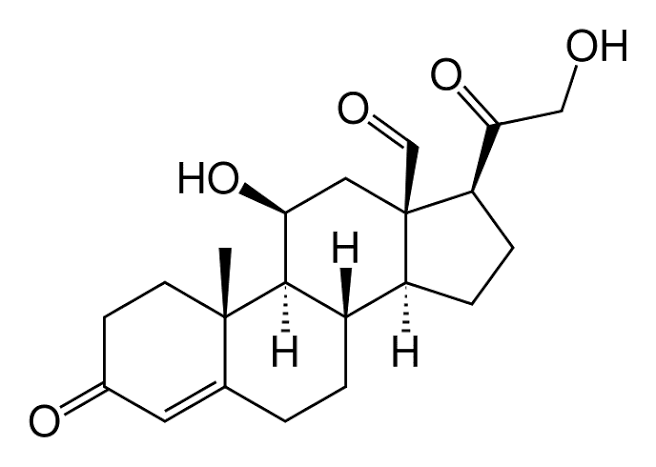
Steroids
Important in cell membrane and Vitamin D formation
cholesterol
Important hormones (testosterone, estrogen)
require carriers in bloodstream (lipoproteins) bc nonpolar
3 6-C rings + 1 5-C ring
Proteins
made of C,H,O, N in amino acids
diverse cell functions related to structure and shape
amine + carboxyl groups
largest chain (100+ AAs)
Oligopeptides
short amino acid chain (<10 AAs)
smallest
Polypeptides
longer amino acid chain (10-100 AAs)
medium
Fibrous proteins
structural role
ex.) collagen, acton
Globular proteins
enzyme role
Nucleotides
store and release energy (ADP-ATO)
-important for intracellular communication (cyclic AMP)
Nucleic Acids (nucleotide polymer)
contains genetic code
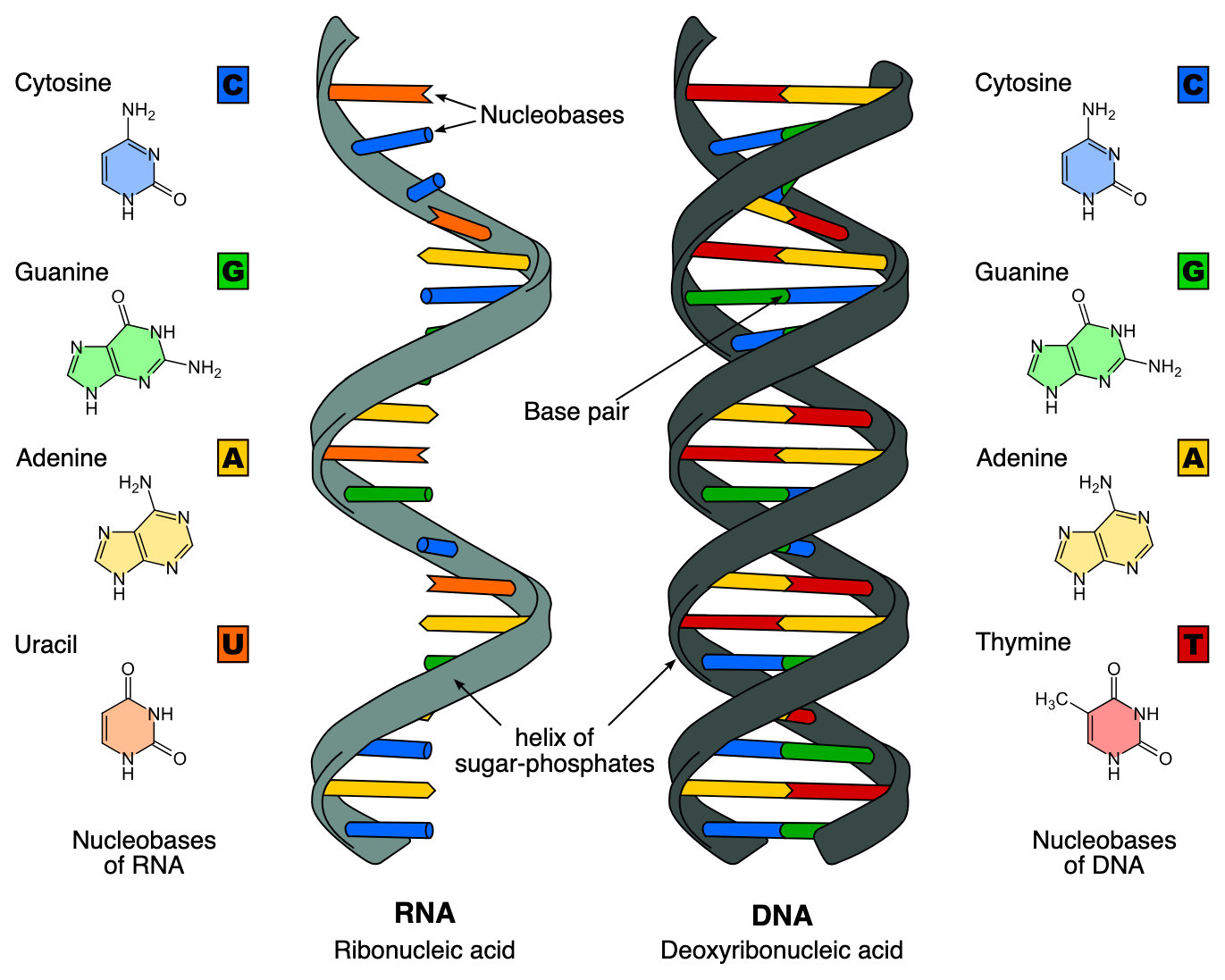
Nucleotide structure
Base + Sugar + Phosphate

Cell
-multicellularity leads to specialization
-diffusion is limitation
Main Tissue types
-Epithelial
-Nervous
-Muscular
-Connective
Epithelial Tissue
-Apical surface
-attached by basement membrane (basal lamina)
-commonly have microvilli or cilia
-regenerative
Epithelial Cell Shape
Squamous, cuboidal, columnar
Simple Squamous
Exchange Epithelium
-allow movement between cells (weak barriers)
-blood vessels
-alveoli

Simple Cuboidal
-kidneys
-exocrine (glands/ducts)

Simple columnar
Digestive system
oviducts
transport exchange and secretion
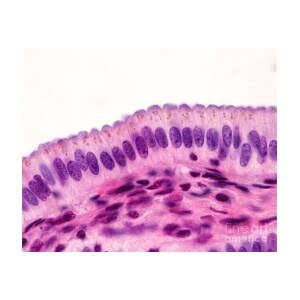
Stratified squamous
Keratonized - skin
Non-keratinized - insides mouth, vagina, vocal chords

Stratified cuboidal
ceratin ducts

Pseudostratified
All cells touching base membrane
-trachea and mucus

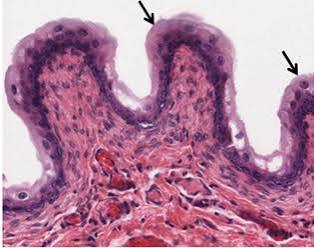
Transitional Epithelial
stratified cuboidal - stretchability
-urinary bladder
-umbrella like
Epithelioid Tissue
Lacks a free surface
-associated w endocrine function
Skeletal muscle
long cells - longest in leg
-striated
-multinucleate
-voluntary control (breathing)

Cardiac muscle
uninucleated
-branching
-involuntary control
-gap junctions

Gap junction
pore between cells that allow small substances to pass through freely
Ca²+ intracellular signaling molecule
Tight junction
restrict paracellular transport but doesn’t impact transcellular
Smooth muscle
uninucleate
capable of regeneration
gap junctions
involuntary control
Where smooth muscle is found
-digestive tract
-urinary tract
-uterus
-blood vessels
Cells (-blast)
creates tissue
Connective tissue funtion
support, anchor, link, other structures together
Cells (-clast)
Destroys tissue
Cells (-cyte)
Mature cells
Dense Regular Connective Tissue
tightly bound
-protein packing
-allow movement of white blood cells
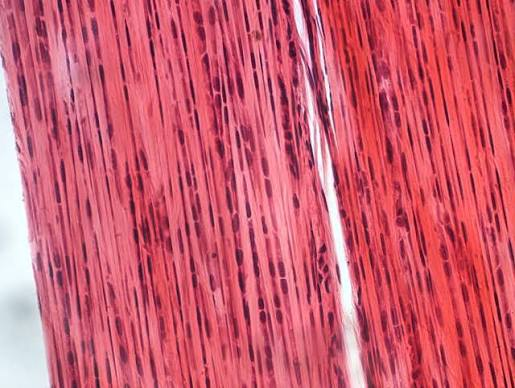
Dense Irregular Connective Tissue
Collagen fibers
-created by fibroblasts
-found in tendons

Loose areolar connective tissue
Spacious
upper dermis
allows for diffusion/movement

Avascular
reliant on diffusion; low capacity for repair
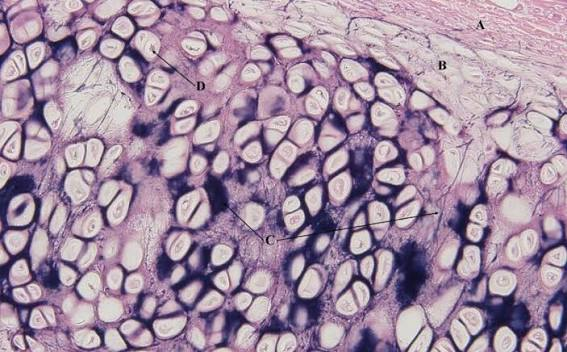
Cartilage Characteristics
Avascular
calcification
Reliant on diffusion
Cartilage Composition
Cells: Chondrocytes, Chondroblasts, Fibroblasts
ECM:
1.) Fibers: Collagen
2.) Ground substance: GAGs, Proteoglycans, Glycoproteins
Perichondrium
Growing layer of cartilage
Hyaline Cartilage
growth plates, tracheal rings, surface of joints
most rigid

Elastic Cartilage
pinna of external ear, larynx
high amount of elastic fibers
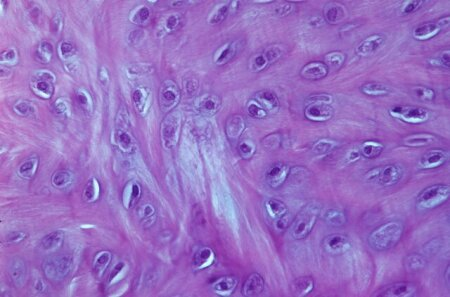
Fibrocartilage
intervertebral disc, pubic symphysis
Adipose Tissue (fat)
Provides protection
Long term energy storage
Hormone production leptin
Chemical work
building molecules
ex.) joining amino acids
Transport work
exchanging ions, molecules across membranes
ex.) electron transport chain
Mechanical work
movement (cilia, flagella, muscle)
Exergonic reactions
release energy - products have less energy than the reactant
Glycogen → glucose
ATP →ADP+PO4
Endergonic reactions
Some activation energy in products that have more free energy
ADP+PO4 →ATP
Glucose → glycogen
Chemical Reaction Rate
Speed with which a reaction occurs; reactants
consumed and products generated
-makes large phisiological difference
Enzymes
metabolic catalysts that increase reaction rate without being
changed themselves
Factors that effect Enzyme activity
-Affinity - enzyme isolation
-Enzyme concentration
-Substrate concentration
-physical conditions
Enzyme concentration
Metabolism
all chemical reactions that occur within an organism
Modulators
factors that affect enzyme activity
physical - pH, temperature (effect shape)
chemical - compete with substrate for binding site (eg. penecillin)
Allosteric inhibition
non active site inhibition
Cell membrane structure
Lipids, proteins, and carbohydrates
Cell transporters
Open channels (aquaporin) and Carriers (SGLT)
Cell communication
Receptor (insulin)
Structure of Cell Membrane
Membrane-spanning protein, cytoskeleton, peripheral protein
Muscular Dystropy
How muscle links to the cell membrane
-makes muscle contraction difficult
Simple diffusion
Passive - no energy
movement from high concentration to low concentration
Rules of Diffusion
related to temperature
through cell membrane depends on ability to dissolve lipids
rate across membrane proportional to surface area
Facilitated Diffusion
passive - no energy required
movement from high conc to low conc with help of integral proteins
Active Transport
Requires energy and carrier proteins
movement from ow conc to high conc
Primary Active Transport
ATP directly involved by carrier protein
Secondary Active Transport
ATP not used by carrier protein
Na-K-ATPase
Primary active transporter
pushing sodium OUT
pushing potassium IN
Na-Glucose Transporter
Secondary active transporter
energy of sodium moving in forces glucose to move against gradient