1. KINSOL 2Y03 - Terminology and the Body Plan
 Call Kai
 Learn
Learn Practice Test
 Spaced Repetition
 Match
Match Flashcards
 Knowt Play
1/37

There's no tags or description
Looks like no tags are added yet.
Name | Mastery | Learn | Test | Matching | Spaced | Call with Kai | Chat |
|---|
No analytics yet
Send a link to your students to track their progress
38 Terms
Anatomy
Investgating Body’s structure
Physiology
Processes/Fucntion of living things
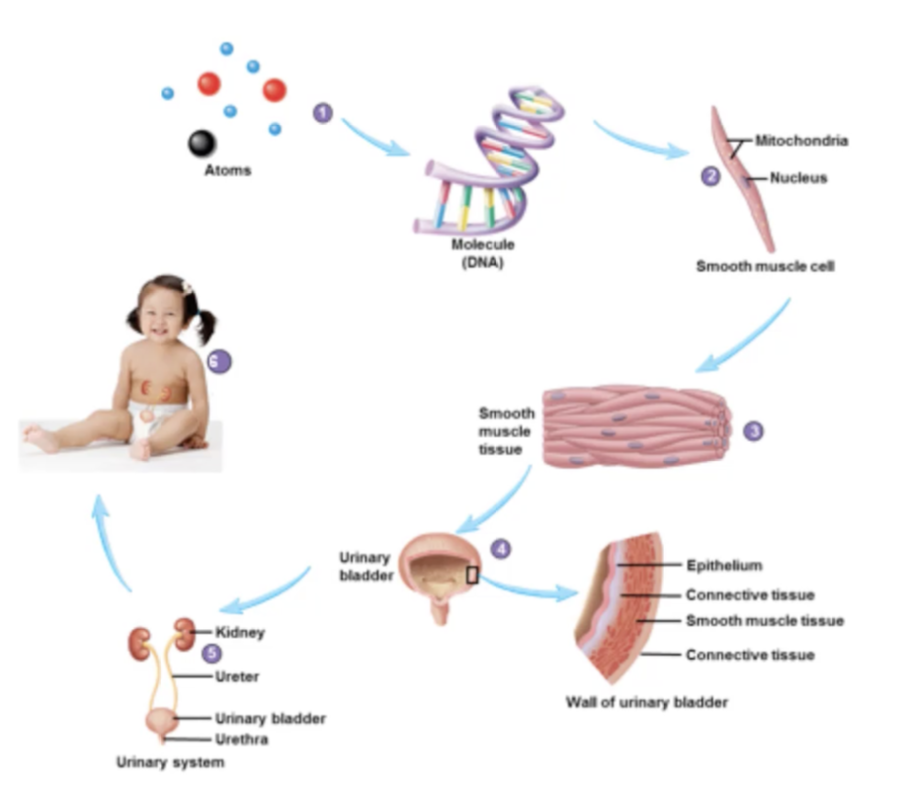
Levels of Organzation (small to big)
1.Chemical
interaction of atom
2. Cell
Structural and fucntional unit of living organisms
3. Tissue
groups of similar cells + materials surrounding them
4. Organ
2+ tissues functioning together
5. Organ System
Groups of organs functioning together
6. Organism
Any living thing
Anatomical Position
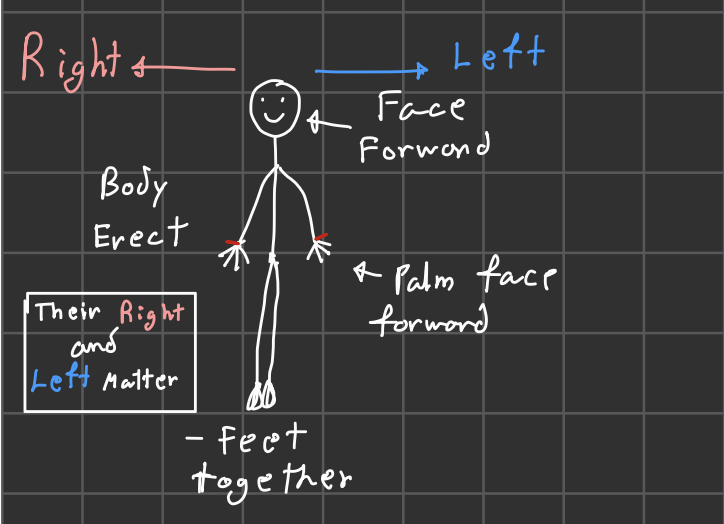
Body erect
Face Forward
Palm face forward
Feet Togeteher
(Thier left anf right matter)
Supine
Lying Face up (palms follow face)
Prone
Lying Face down (palms follow face)
Superior Vs Inferior
A.K.A. Cephalic Vs Caudal
Superior = Up to Head (cephalic)
Inferior = Down to Feet (caudal)
NOT USED IN LIMBS
Ways to remeber:
Super-man flies UP
Cauld-ron Sits on GROUND
Medial Vs Lateral
Middle Vs sides
(eyes are lateral nose) OR (nose is medial to eyes)
Proximal Vs Distal
-Refers to a attachment point (Ex: Shoulder)
Proximal = ON point
Distal = Away from point
Superficial Vs Deep
Relative to surface of body (middle = deep, front and back of body = superficial)
Anterior vs Posterior
AKA Ventral Vs Dorsal
Ventral/Anterior = front
Dorsal/Posterior = Back
ways to remeber:
Go “ANT” GO →
Close the “door”sal behide you ←
Parts of Head (top to bottom)
Frontal (Forehead)
Orbital (eye)
Ottic (ear) (LATERAL)
Nasal (Nose)
Buccal (Cheek
Oral(mouth)
Mental (chin)
Parts of Neck
Cervical (neck)
Collarbone
Clavicular
Thoracic (thorax)
Pectoral (chest)
Sternal (brestbone)
Mammary (breast)
Abdomen
Abdominal (Abdomen)
Umbillical (Navel)
Pelvis
Pelic (Pelvis)
Inguinal (Groin)
Pubic (Genital)
Upper Limb
Axillary (Armpit)
Brachial (Arm)
Antecubital (Front of elbow)
Antebrachial (Forearm)
Carpal (wrist)
Manual:
Palmar (palm)
Digital (fingers)
Lower Limb
Coxal (hip)
Femoral (Thigh)
Patellar (kneecap)
Crural (leg)
Pedal:
Talus (ankle)
Dorsum (top of foot)
Digital (toes)
Head (BACK VIEW)
Cranial (skull)
Occipital (base of skull)
Nucheal (back of neck)
Trunk (BACK VIEW)
Dorsal (back):
Scapular (shoulder blades)
Vertebral (spinal column)
Lumbar (loin)
Sacral (Between hips)
Gluteal (buttock)
Perineal (perineum)
Upper Limb (BACK VIEW)
Acromial (point of shoulder)
Olecranon (point of elbow)
Dorsum (back of hand)
Lower Limb (BACK VIEW)
Popiteal (holloww behind knee)
Sural (calf)
Plantar (sole)
Calcaneal (heel)
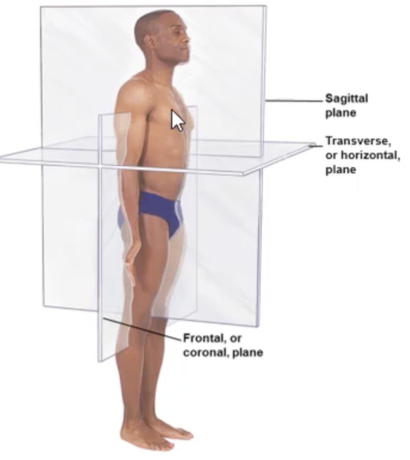
Body Planes
Oblique (other than at right angle)
Midsagittal Plane (thru middle)
Parsagaittal Plane (not thru middle)
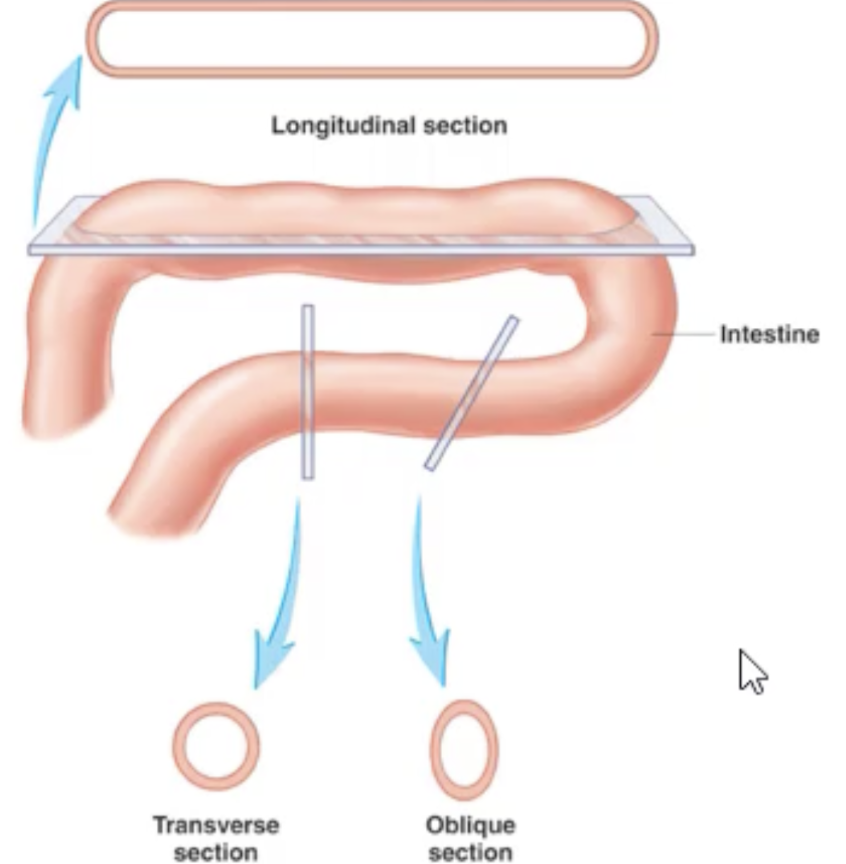
Planes through organ
Longitudinal Section/Plane
Cut along length
Cross/Transverse
Cut at right ankle to longitudinal section of length of organ
Oblique
Cut at any angle but right angle
Doral Body Cavity
Cranial cavity
Vertebral Canal
Holds CNS (Central Nervous System) (essentially)
Ventral Body Cavity
3 MAIN BODY CAVITIES
Divided by the diaphragm
Dome-shaped muscle inferior to the lungs
Aids in breathing

Thoracic Cavity
Part of the Ventral Body Cavity
Holds:
Lungs
Heart
Middle of Thoracic
Mediastinum
Contains all structures of the Thoracic Cavity except the lungs
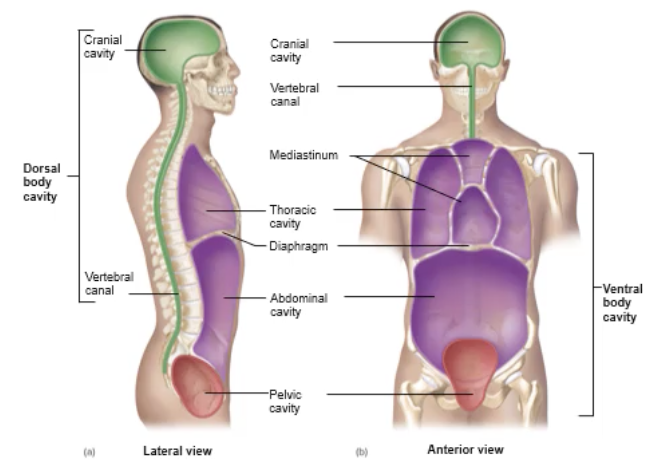
Abdominal Cavity
Part of the Ventral Body Cavity
Holds:
Stomach
Intestines
Liver
Spleen
Pancreas
Kidneys
(No Separation from the Pelvic cavity)

Pelvic Cavity
Holds:
Urinary Bladder
Part of the large intestine
Reproductive Organs
(No Separation from the Abdominal cavity)
Serous Membranes
Cover the organs of trunk cavities + lines the cavity
Thin layer of epitilial tissue
One big continous membrane that folds opon itself (forms double layer)
Ex: Water Balloon Analogy
inner wall of Serous Membrane
visceral
outer wall of Serous Membrane
Parietal
Cavity between Serous Membrane
Lubricating serous fluid
Produced by the membrane
Organs move while working (heart beating)
if not fuild = rubbing with ribs
Damage to organs
Cavity fluid reduces friction
Pericardium
serous memebrane around heart
Pleura
serous memebrane around Lungs
Peritonium
Serous membrane around organs of the abdominal cavity
Lots of organs
Connected by double membranes called peritoneal folds
Retroperoneal Organs
SIt outside serous membrane