Anatomy Lecture Introductory Flashcards
 Call Kai
 Learn
Learn Practice Test
 Spaced Repetition
 Match
Match Flashcards
 Knowt Play
1/35

There's no tags or description
Looks like no tags are added yet.
Name | Mastery | Learn | Test | Matching | Spaced | Call with Kai | Chat |
|---|
No analytics yet
Send a link to your students to track their progress
36 Terms
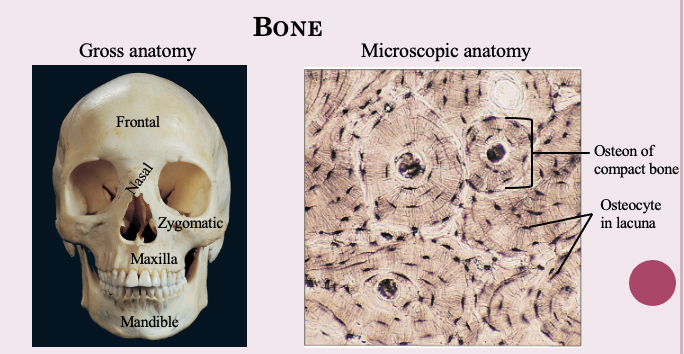
Define Anatomy and give examples
It is the study of the structure of the body parts and their relationship to one another
Gross anatomy —> macroscopic structures of the body that can be seen without microscope
Microscopic (histology) —> tissue and under microscope things
Define Physiology
The study of function of the body
It also integrates principles from other sciences (biology, chemistry, physics, anatomy)
What is the principle of Complementarity?
That structure determines function
There are 6 structures of organization, what are they?
Chemical level
Cellular level
Tissue level
Organ level
Organ system level
Organismal level
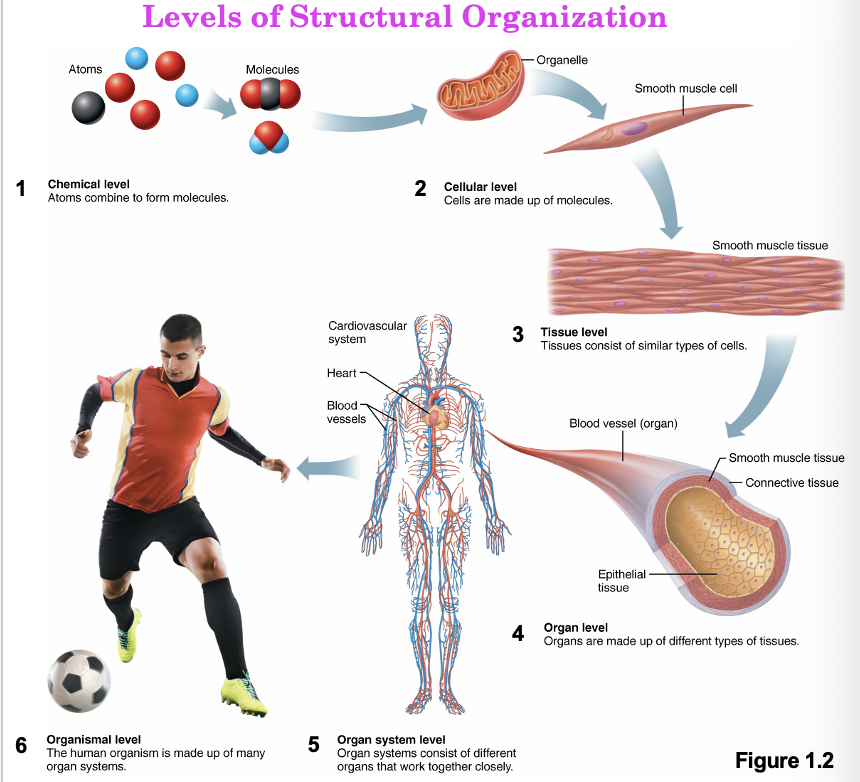
Chemical (molecular) Level is one of the 6 structural levels of organization, explain it.
Atoms combine to form molecules
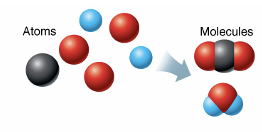
Cellular Level is one of the 6 structural levels of organization, explain it.
Cells are made up of molecules
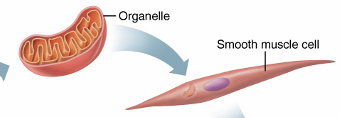
Tissue Level is one of the 6 structural levels of organization, explain it.
Tissues consist of similar types of cells

Organ Level is one of the 6 structural levels of organization, explain it.
Organs are made up of different types of tissues
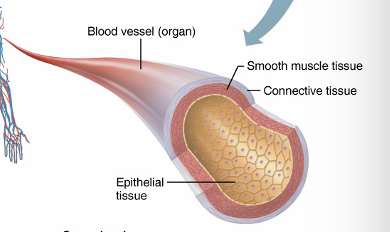
Organ System Level is one of the 6 structural levels of organization, explain it.
Organ systems consist of different organs that work together closely
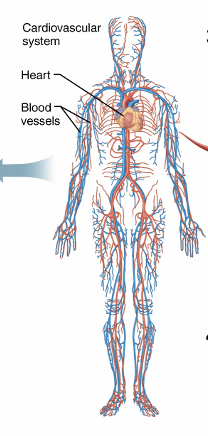
Organismal Level is one of the 6 structural levels of organization, explain it.
The human organism is made up of many organ systems


Lysosome
break down excess or worn-out cell parts, destroy invading viruses and bacteria, and help damaged cells self-destruct through apoptosis

Centrioles
they help organize microtubules
tube shaped
Peroxisomes
break down fatty acids, help detoxify harmful substances, and regulate hydrogen peroxide
What elements make up the cytoskeleton?
microtubules
intermediate filaments
What are the 4 basic tissues?
Nervous Tissue
Muscle Tissue
Epithelial Tissue
Connective Tissue
Explain the function of Nervous Tissues and organs involved.
Internal Communication
Brain
Spinal Cord
Nerves
Explain the function of Muscle Tissues and organs involved.
Contracts to cause movement
Muscles attached to bones (skeletal)
Muscles attached heart (cardiac)
Muscles of walls of hollow organs (smooth)
Explain the function of Epithelial Tissues and organs involved.
Form boundaries between different environments to protect, secret, absorb and filter
Skin surface (epidermis)
Lining of digestive tract organs and other hollow organs
Explain the function of Connective Tissues and organs involved.
Support, protect, and binds other tissues together
Bones
Tendons
Fat and other soft padding tissue
At the organ level, when 2+ different tissues group together what happens to the function?
It becomes more specific
Examples of interrelationships among body organ systems

What is Homeostasis? Examples?
The condition where the body’s internal environment is maintained within psychological limits —> boundaries necessary for survival
Optimum concentrations, blood pressure, heart rate, body temperature
What disturbs homeostasis?
Stress
What is required to occur to return to homeostasis? Example?
Compensation (feedback)
Nervous and Endocrine systems —> major regulators
Define compensation (feedback)
Compensation means the body makes a corrective response to a change (stress) in order to bring the internal environment back toward normal
usually through negative feedback
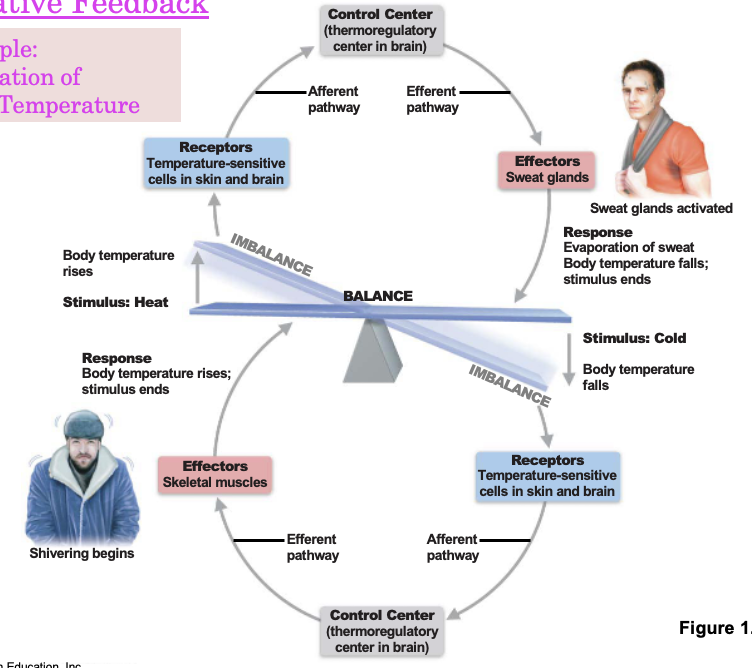
Body gets too hot → sweating → heat is lost → body temperature goes back toward normal
What are the 3 components of homeostasis?
Receptor
Effector
Control center
Function of Receptor?
Monitors the environment and responds to changes
Function of control center
Evaluates input provided from the receptor and generates an output
Function of Effector
Receives output and responds
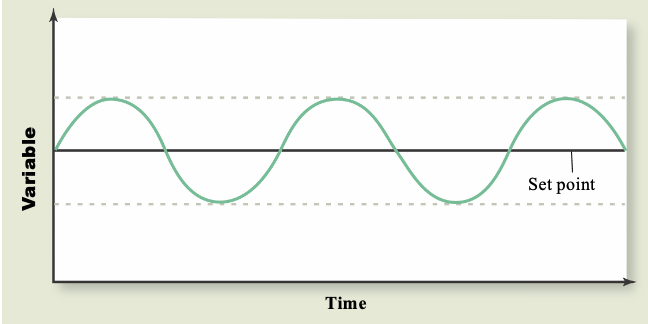
Negative Feedback
Negates the original stimulus (most)
The output is fed back in a way that reduces fluctuations and structures the system —> improve stability
counteracts/opposes the change
doesn’t like change

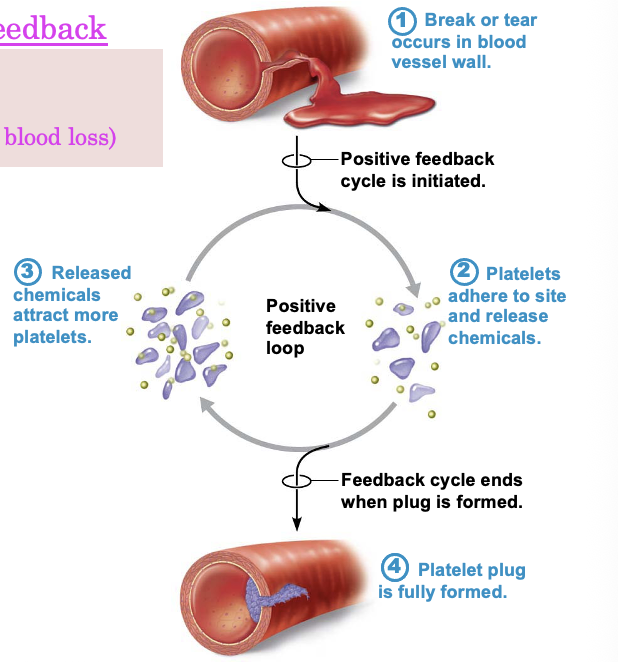
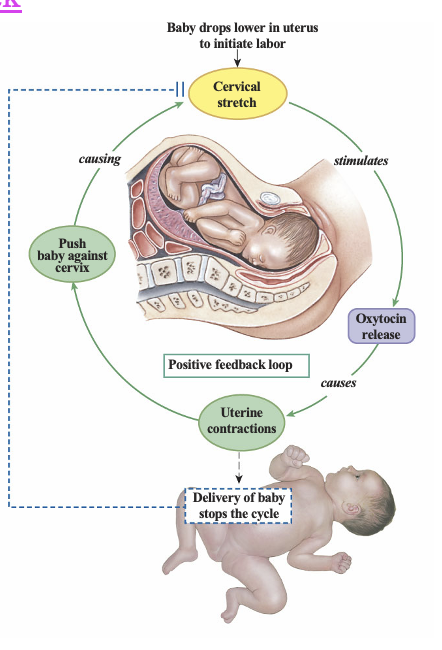
Positive Feedback
Enhances the original stimulus (few; Pathology)
amplifies the change, not reverse it
The output system amplifies/enhances the initial change (stimulus), increasing the effect
Feedback stops after body is successful with task
What is an example of Negative Feedback?
Regulation of Body Temperature
One example of positive feedback is Homeostasis (prevention of blood loss), explain.
Another example of Positive Feedback is Childbirth (expulsion of fetus), explain.
Efferent Pathways
A neural pathway that carries signals away from the central nervous system to effectors, such as muscles or glands, facilitating responses or actions
Control Center —> Effector
Afferent Pathways
The route taken by afferent neurons, which carry sensory information from sensory receptors in the body to the central nervous system
Receptor —> Control Center