ATI TEAS 7- Digestive System
 Call Kai
 Learn
Learn Practice Test
 Spaced Repetition
 Match
Match Flashcards
 Knowt Play
1/96

There's no tags or description
Looks like no tags are added yet.
Name | Mastery | Learn | Test | Matching | Spaced | Call with Kai | Chat |
|---|
No analytics yet
Send a link to your students to track their progress
97 Terms
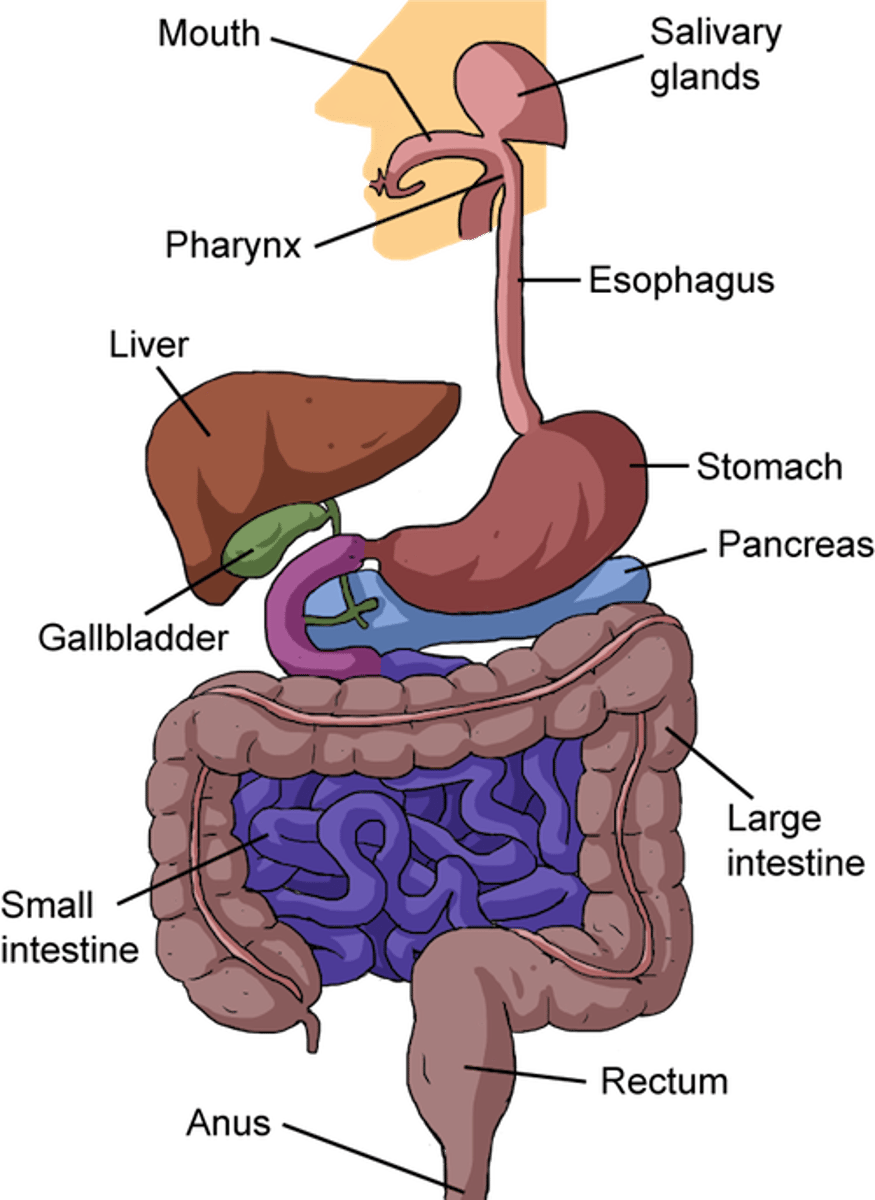
Salivary glands
Glands of the mouth that produce saliva, a digestive secretion.
Pharynx
Throat; passageway for food to the esophagus and air to the larynx
Oral Cavity
The part of the mouth behind the gums and teeth that is bounded above by the hard and soft palates and below by the tongue and by the mucous membrane connecting it with the inner part of the mandible.
Esophagus
A muscular tube that connects the mouth to the stomach.
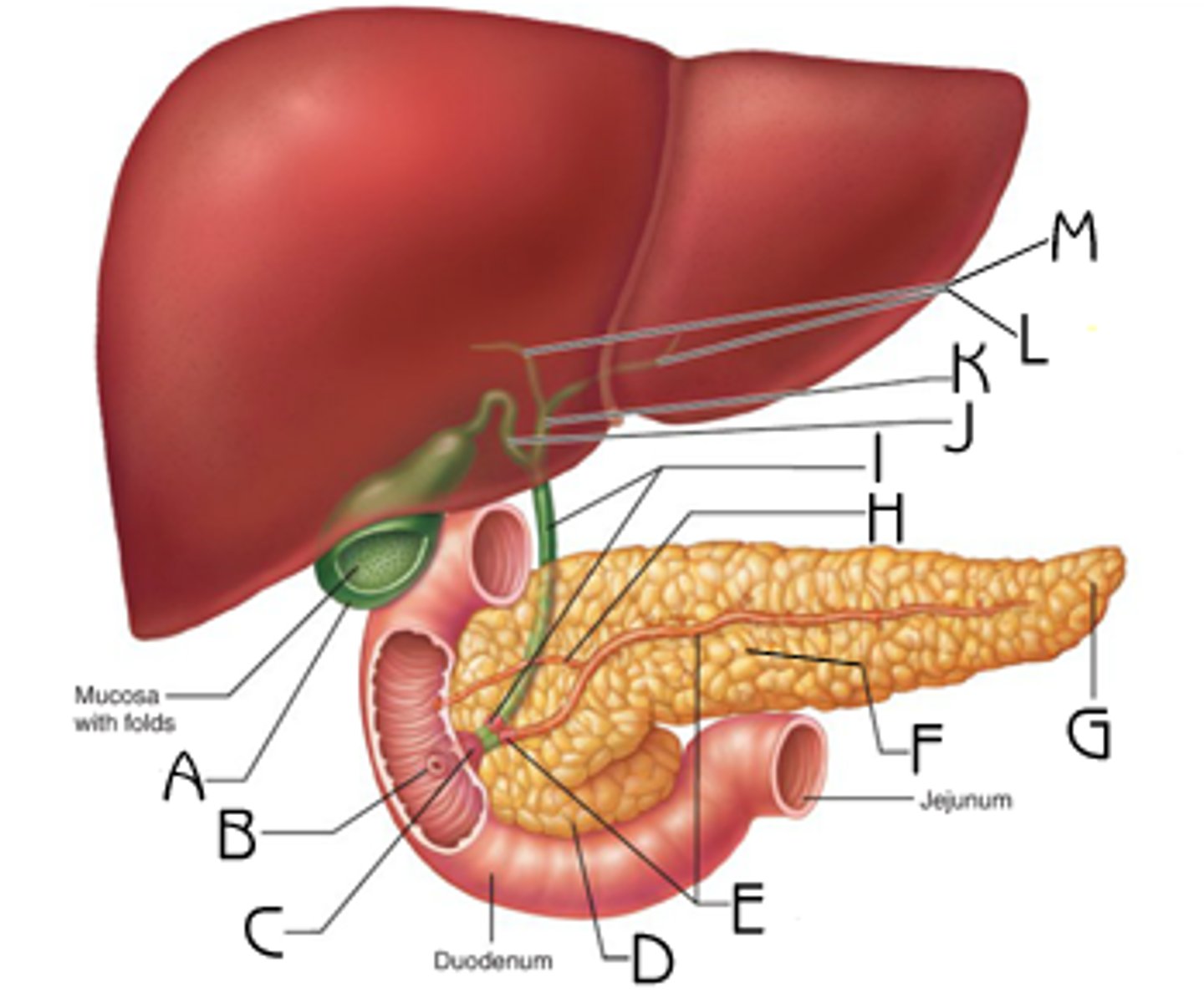
Liver
Directly affects digestion by producing bile.
Stomach
Large muscular sac that continues the mechanical and chemical digestion of food.
Gallbladder
Stores bile from the liver, releases it into the small intestine.
Common Bile Duct
Carries bile from the liver and gallbladder to the duodenum.
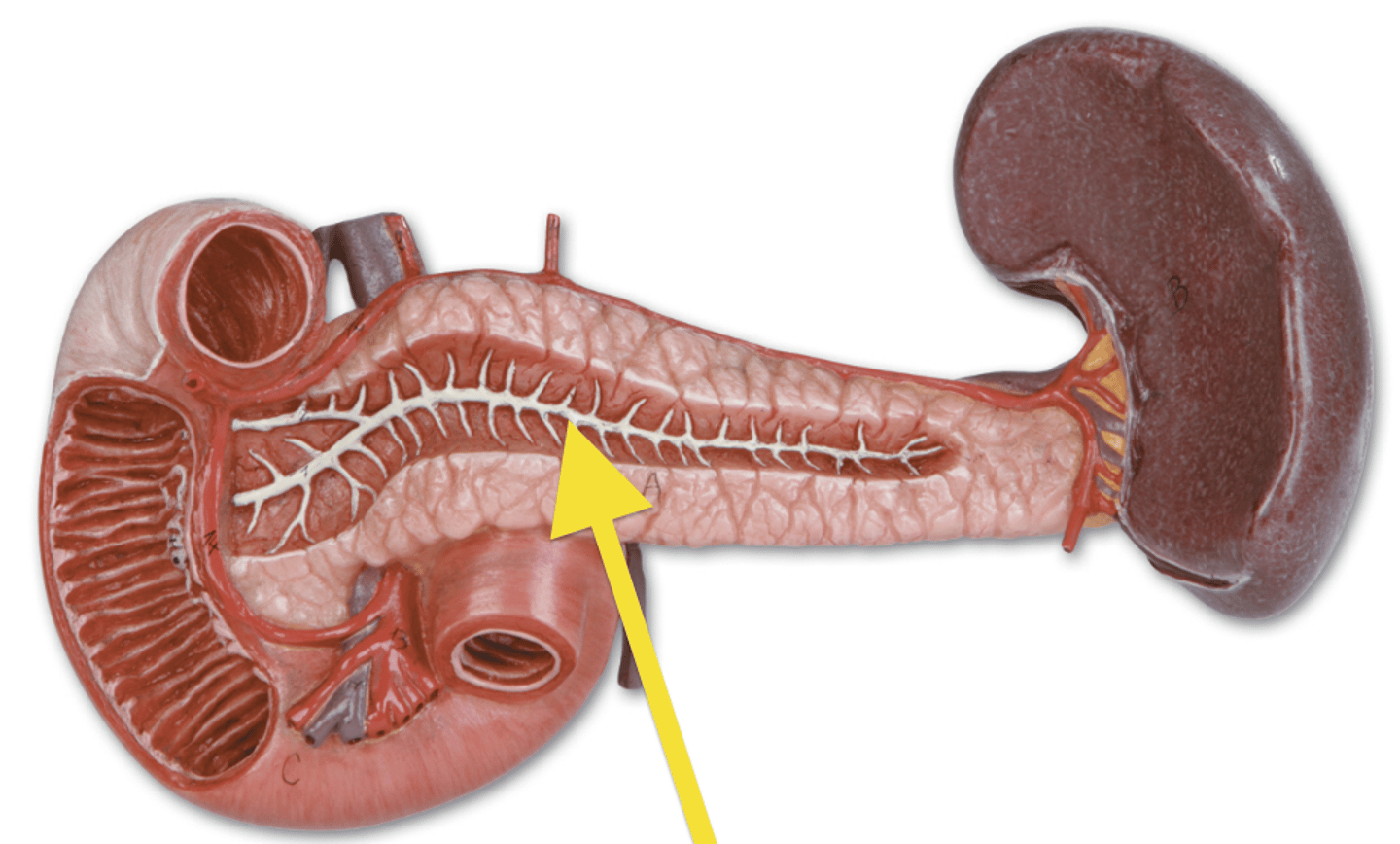
Pancreatic Duct
Conducts pancreatic juice from the pancreas to the small intestine.
Digestive System
Breaks down food into absorbable units that enter the blood for distribution to body cells.
Pancreas
Produces digestive enzymes to digest fats, carbohydrates and proteins. Regulates the level of sugar in the blood (insulin and glucagon).
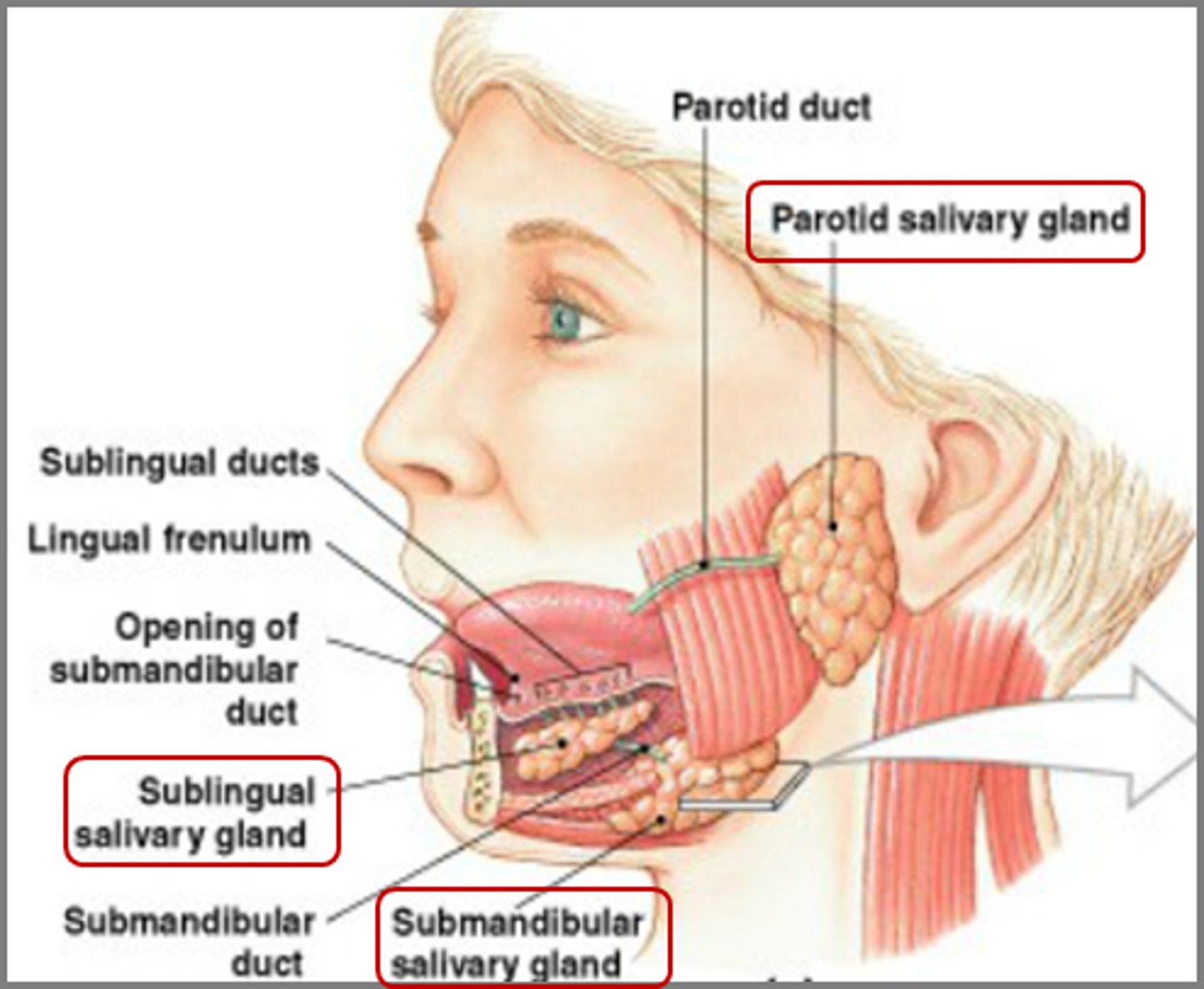
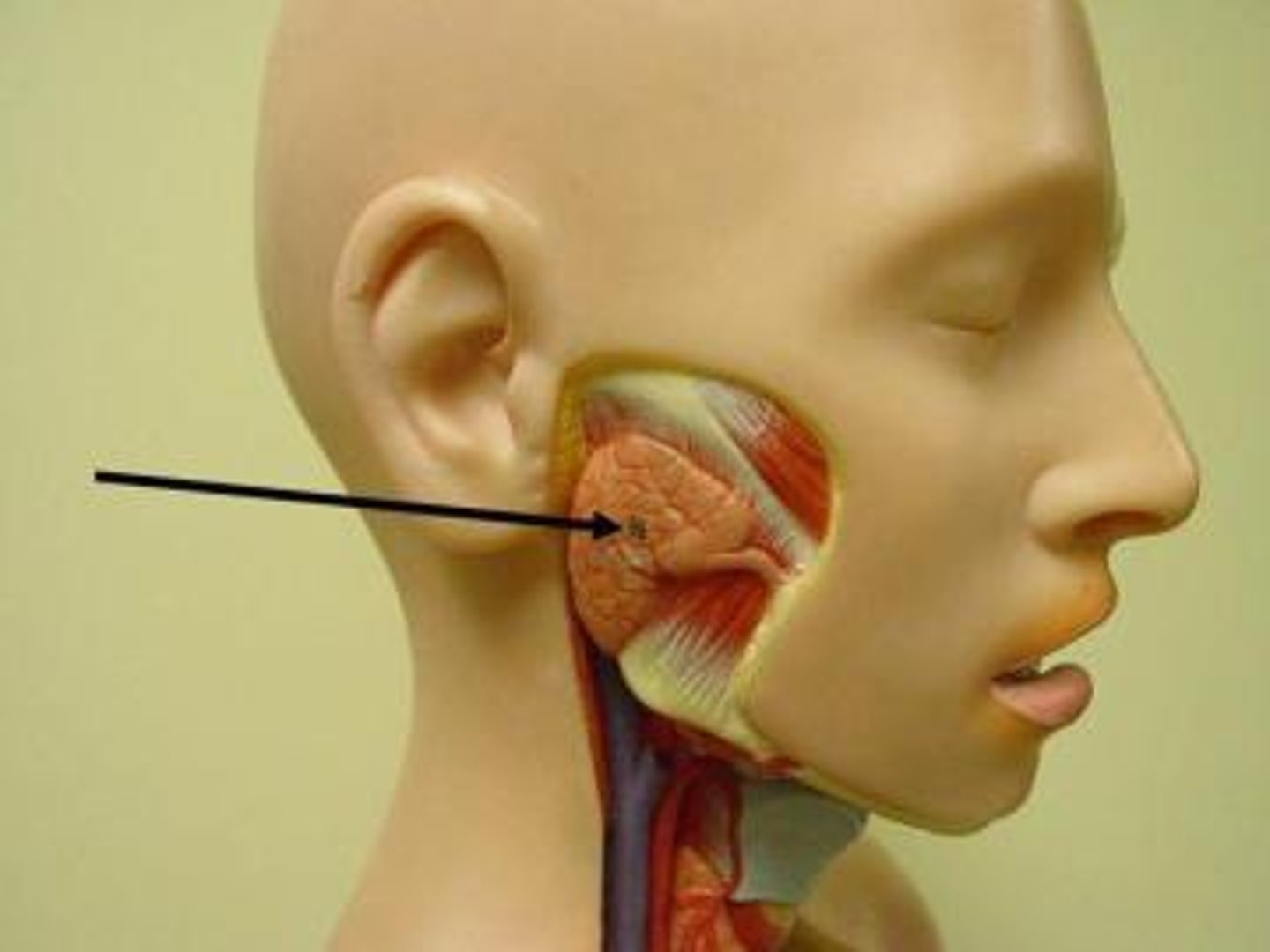
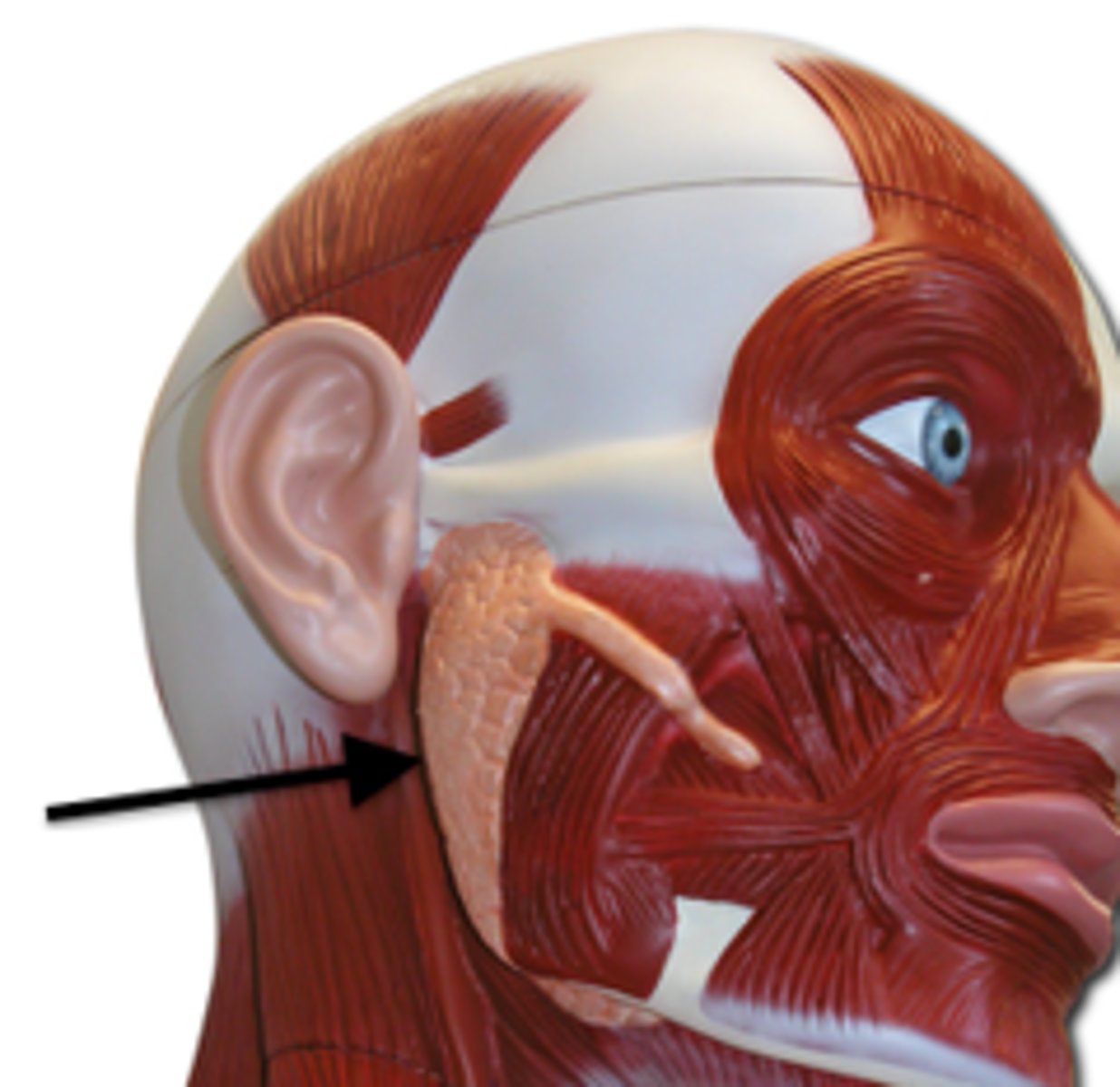
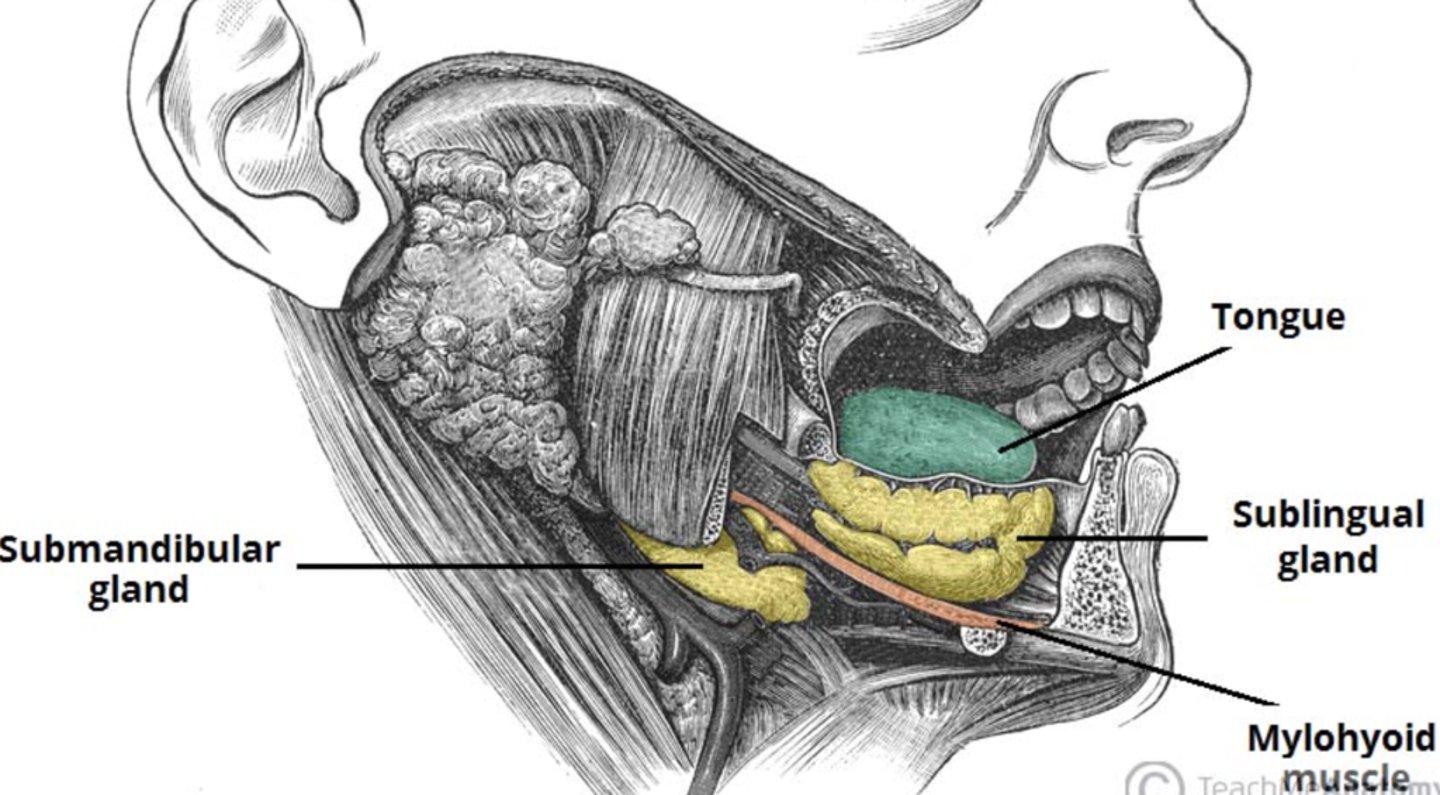
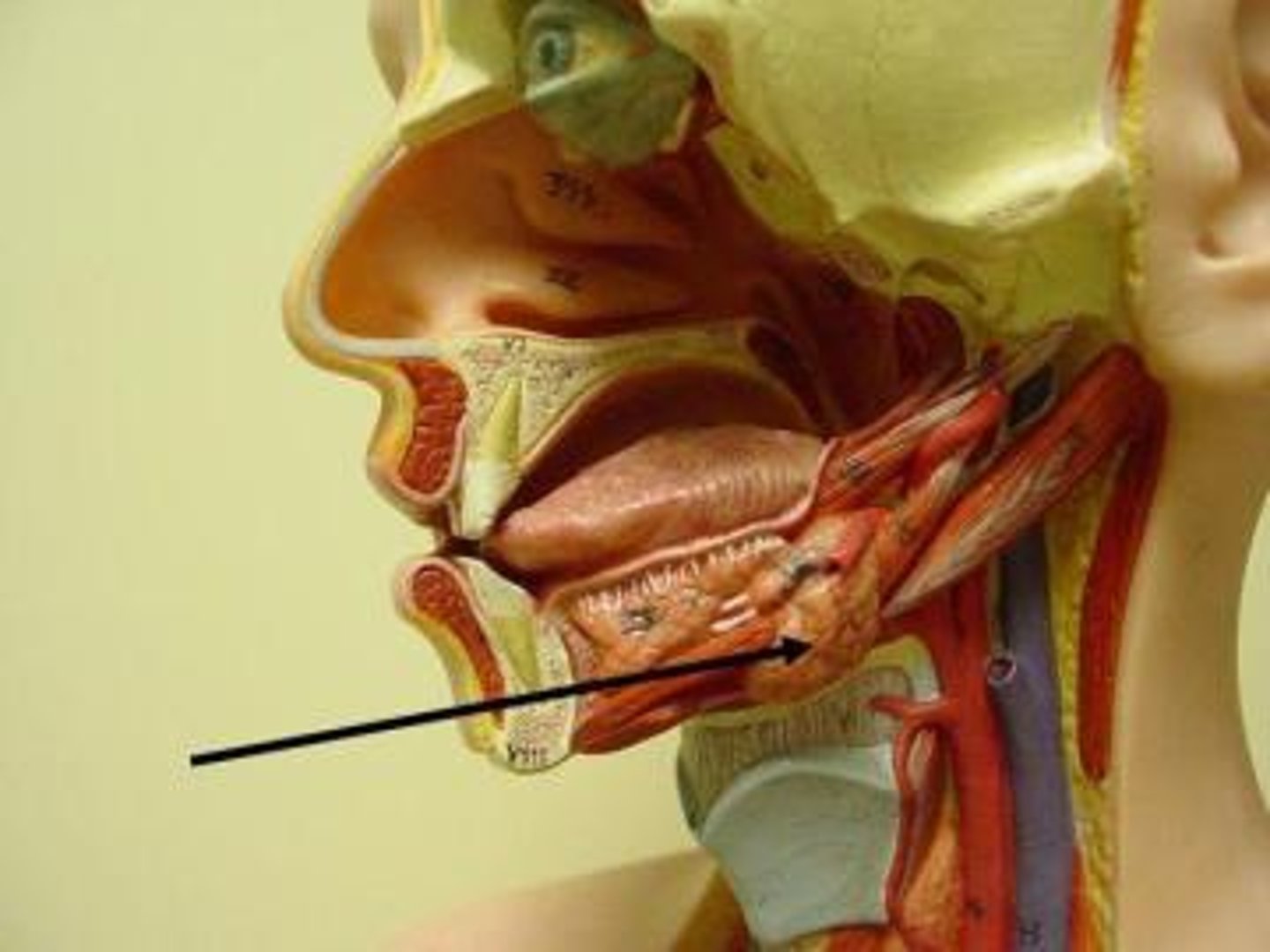
Which glands is Saliva is produced by?
The parotid (located near the masseter muscle), submandibular (located deep in the mandible), and sublingual (located under the tongue).
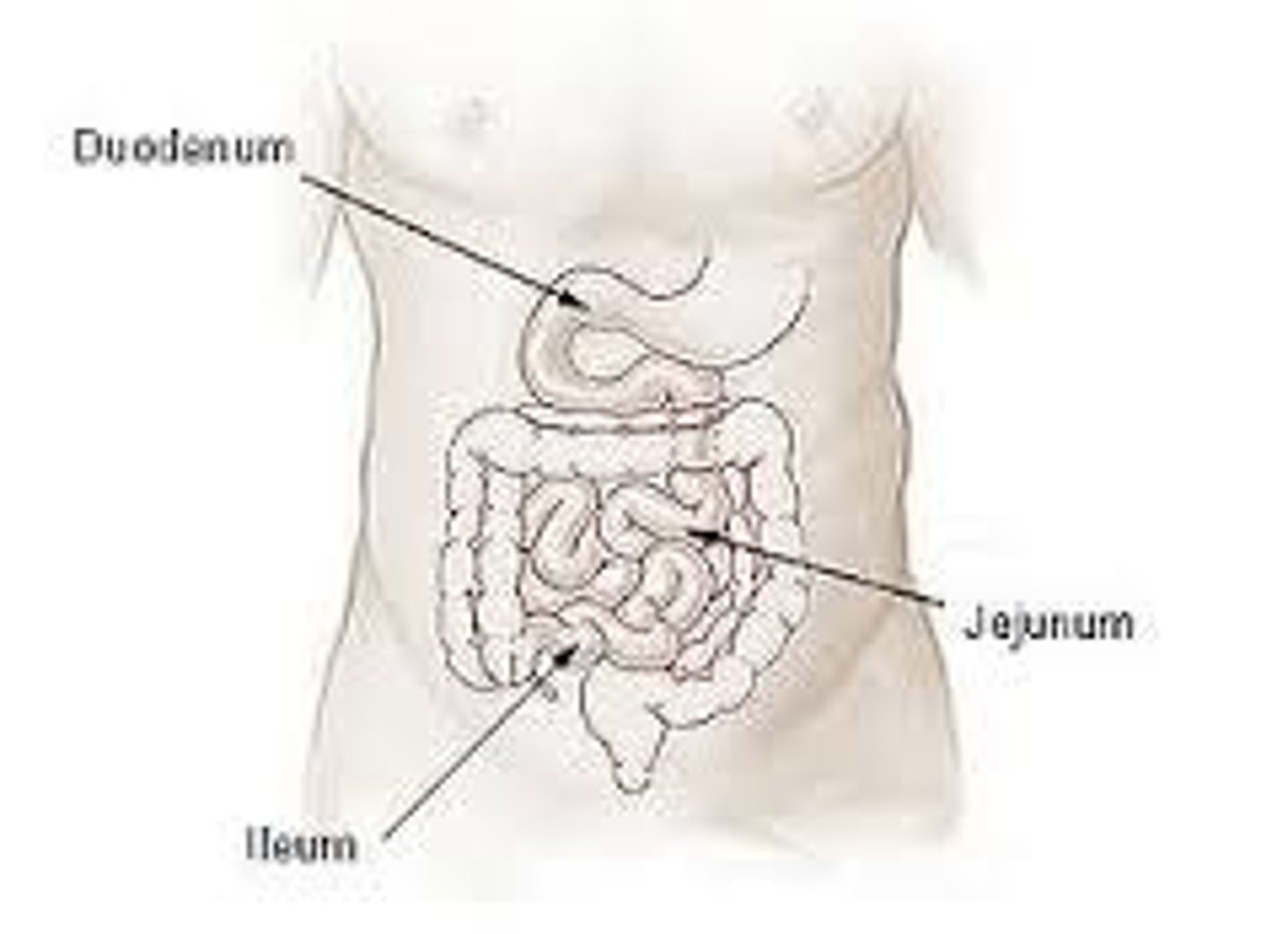
Small Intestine
The place where most chemical digestion and absorption of food takes place.
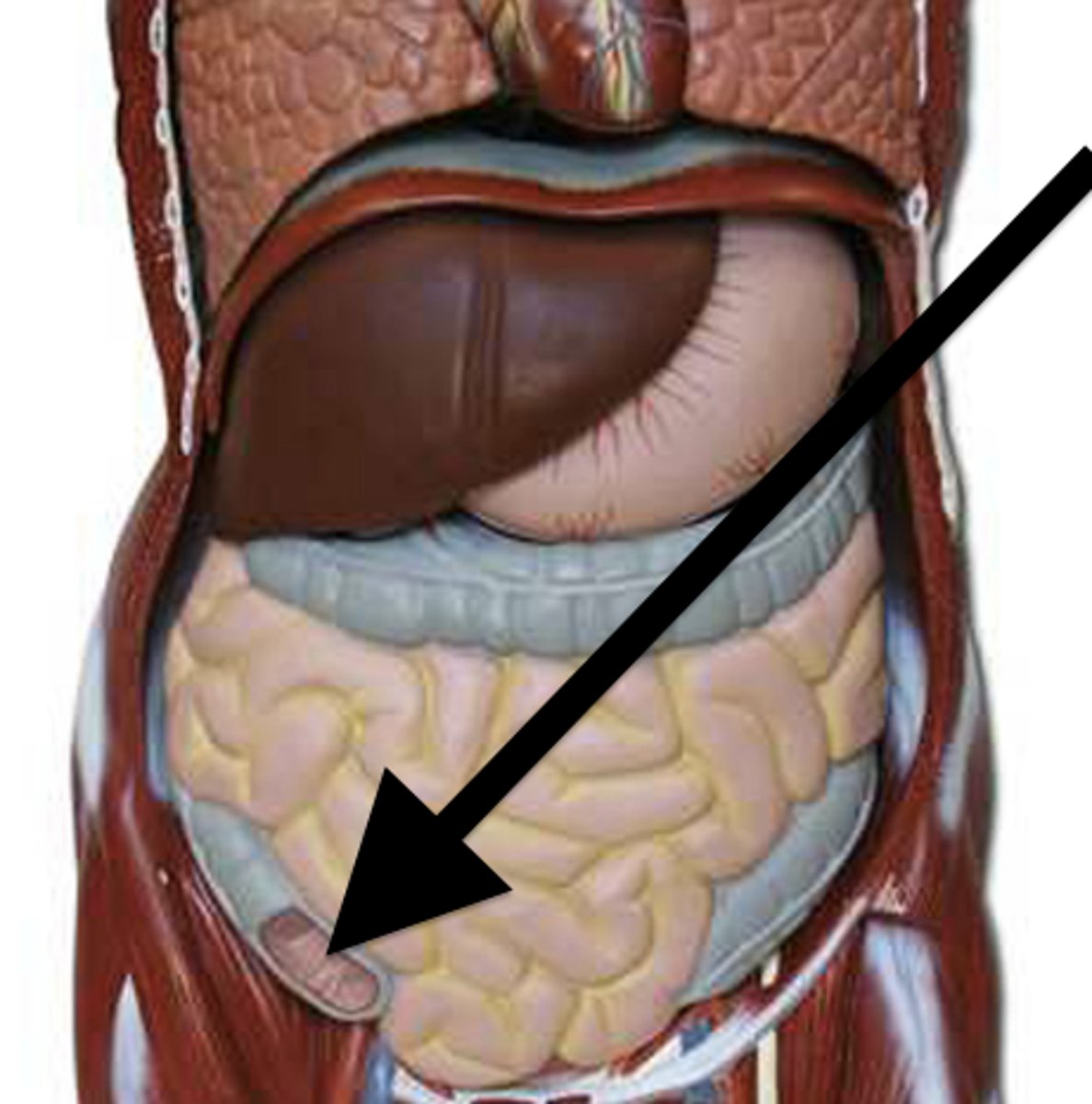
Cecum
A pouch connected to the junction of the small and large intestines.
Rectum
A short tube at the end of the large intestine where waste material is compressed into a solid form before being eliminated.
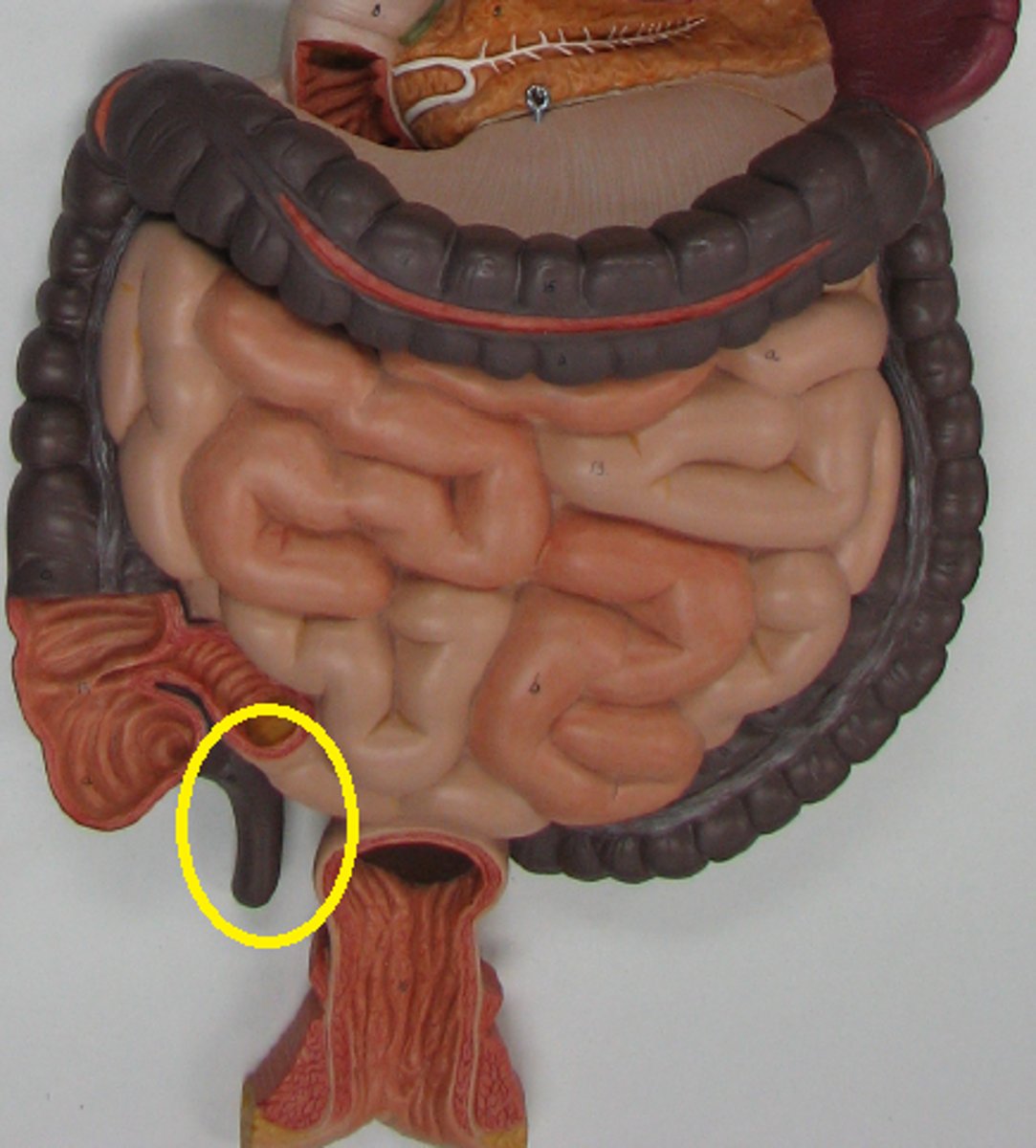
Appendix
A small pouch attached to the large intestine
Anus
A muscular opening at the end of the rectum through which waste material is eliminated from the body.
Amylase
Enzyme in saliva that breaks the chemical bonds in starches.
Lipase
Enzyme that breaks down fat
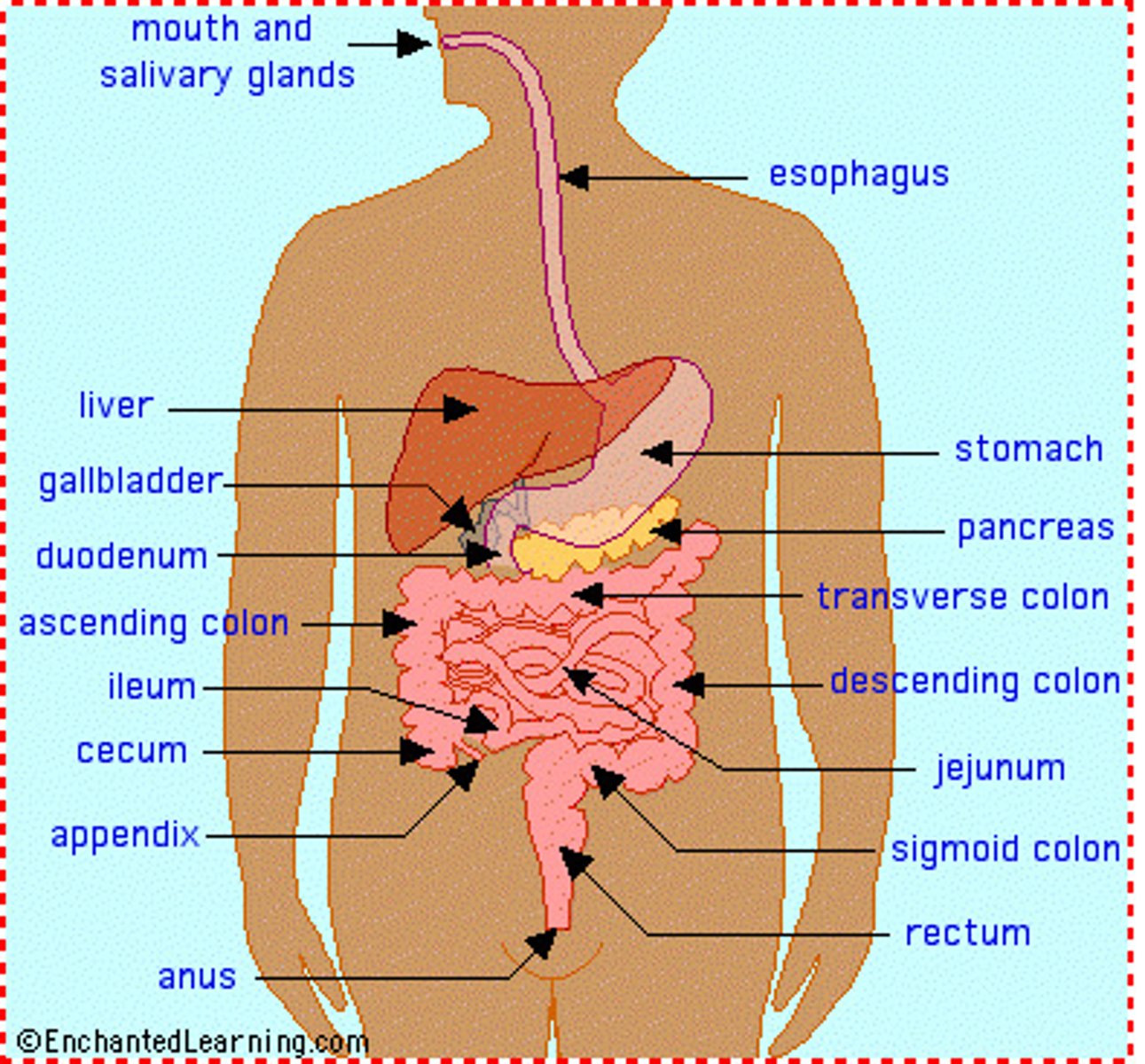
What are the organs of the Digestive system?
Mouth, tongue, pharynx, esophagus, stomach, liver, gall bladder, pancreas, small and large intestines, salivary glands
Human Digestion Steps
Indigestion, Propulsion, Mechanical Breakdown, Chemical Digestion, Absorption, and Defecation.
Ingestion
Intake of food.

Propulsion
The action of driving or pushing forward.
Mechanical Breakdown
The breakdown of food (physically) into smaller pieces, thus increasing its surface area.
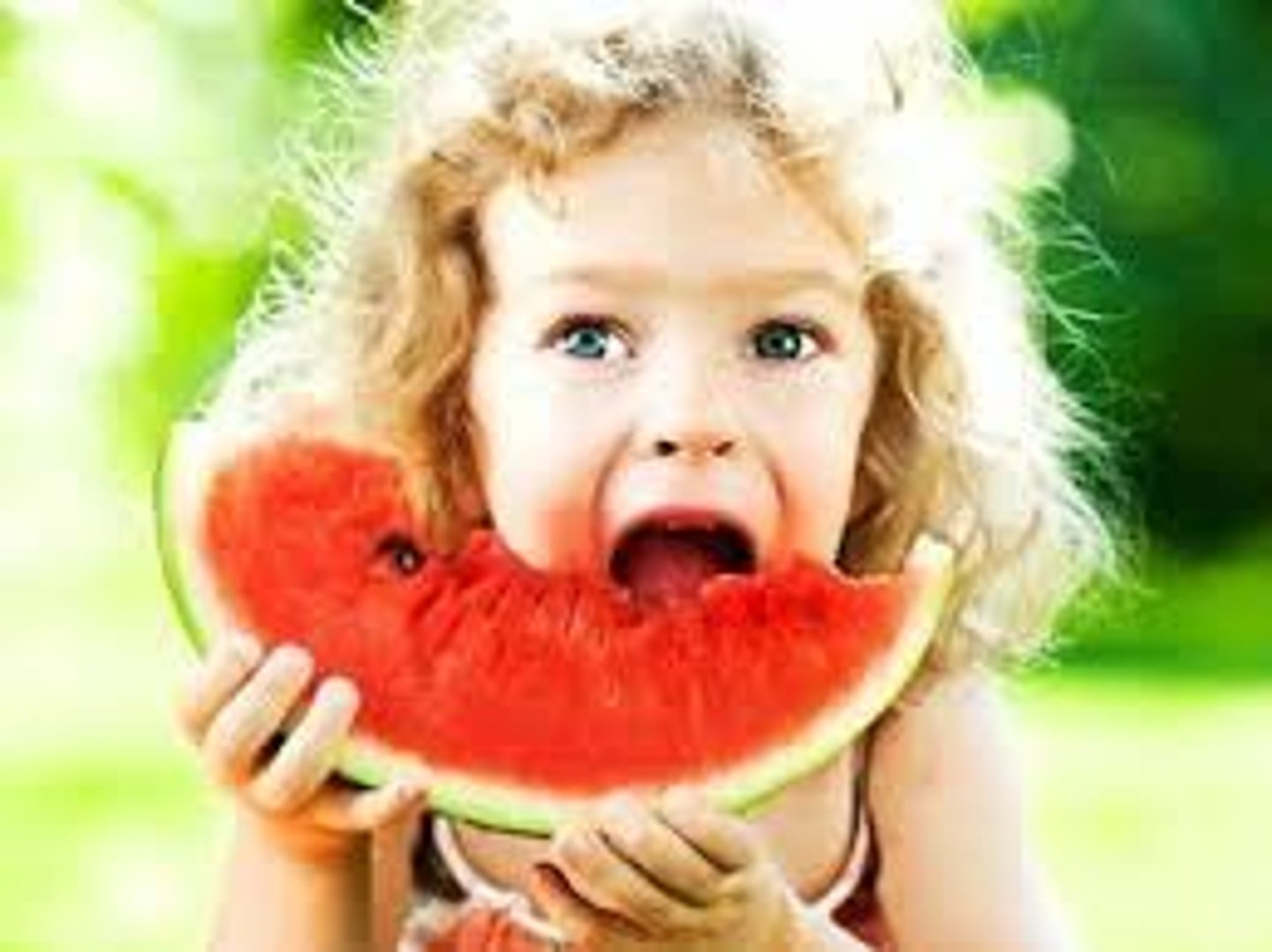
Chemical Digestion
The process by which enzymes break down food into small molecules the body can use.
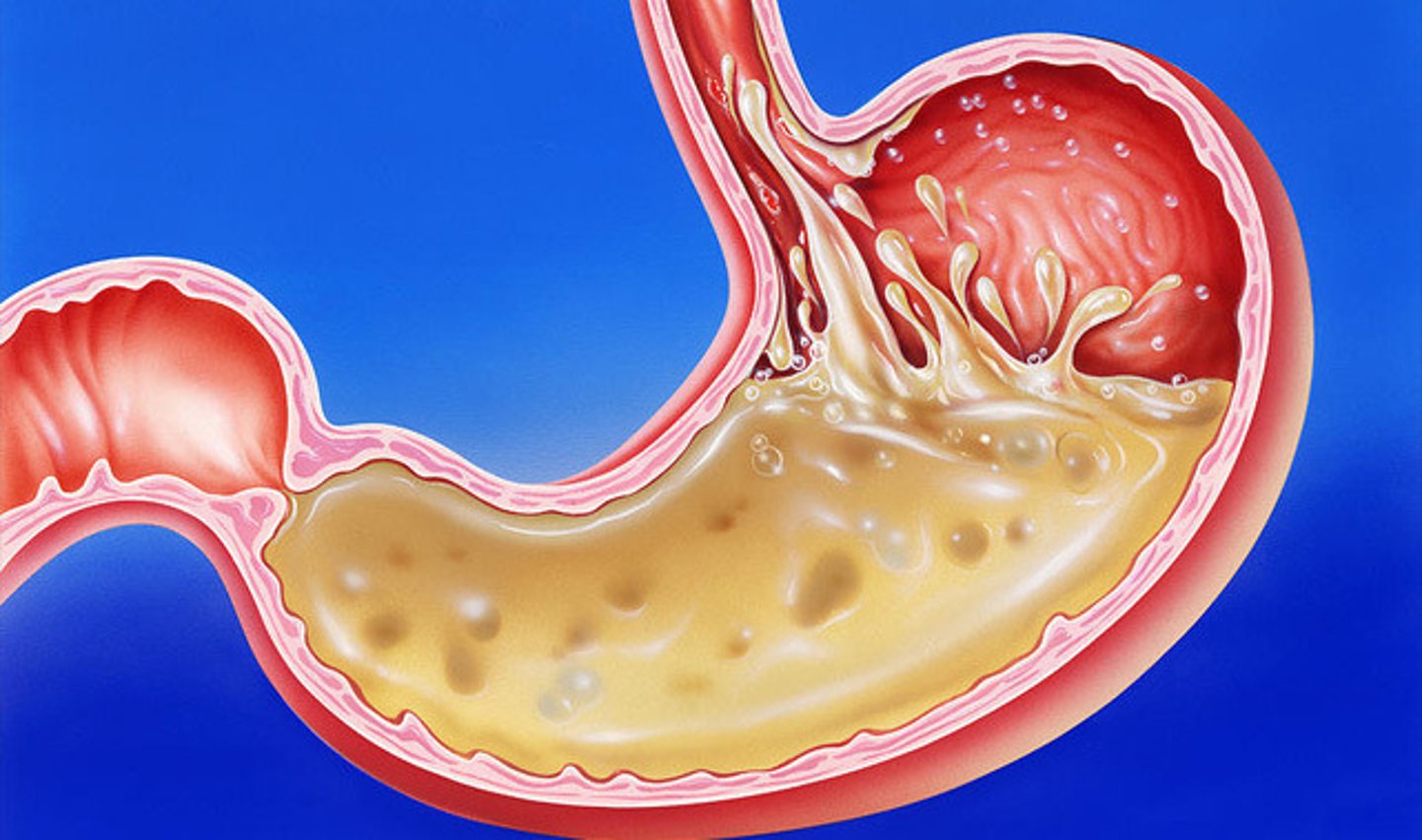
Absorption
The process by which nutrient molecules pass through the wall of the digestive system into the blood.
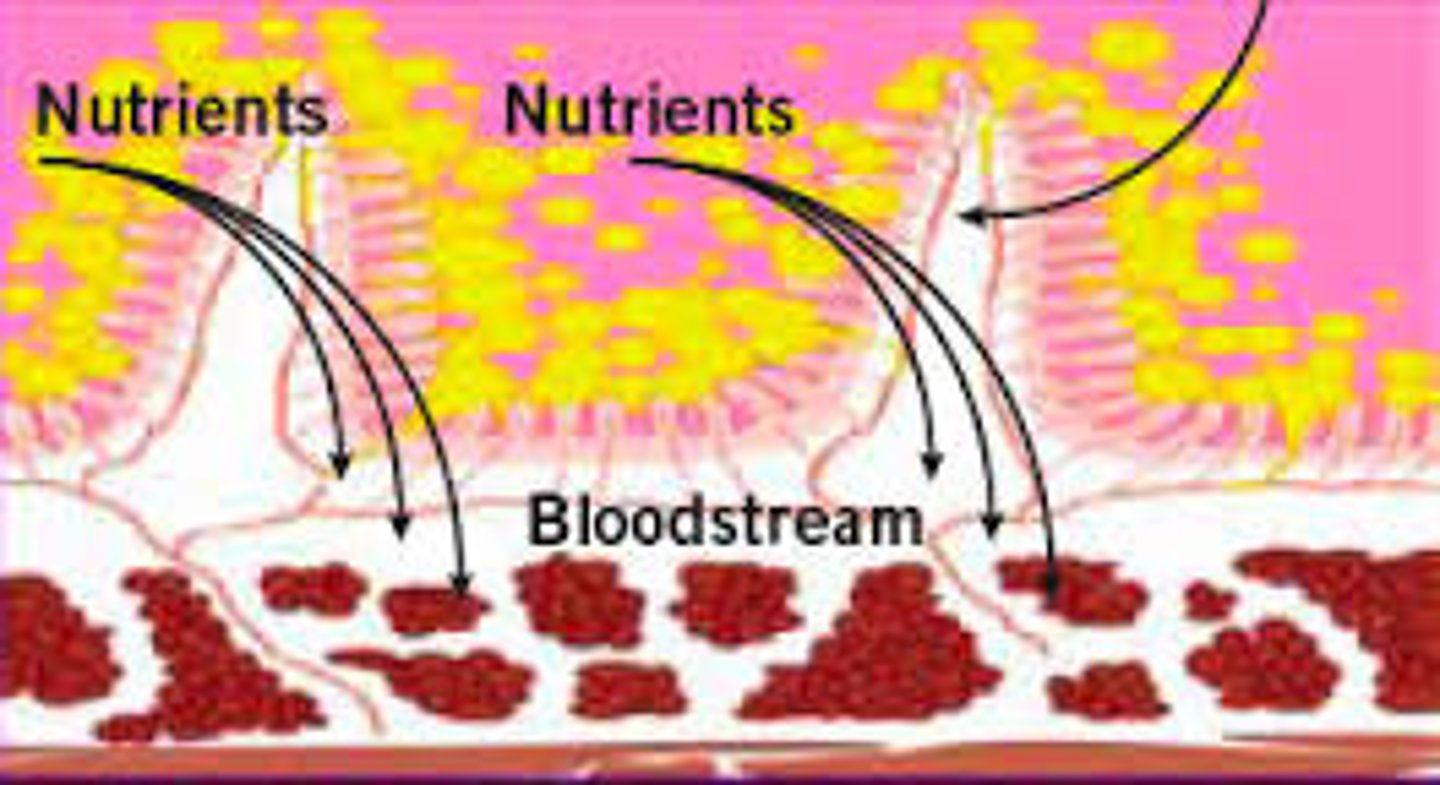
Defecation
Elimination of feces from the digestive tract through the anus.
The 4 Macromolecules
Carbohydrates, lipids, proteins, nucleic acids.
Digestive/Gastrointestinal Tract
The continuous pathway that food follows from the mouth to the anus.
Saliva Contains
Amylase
What does Amylase help break down?
Starch
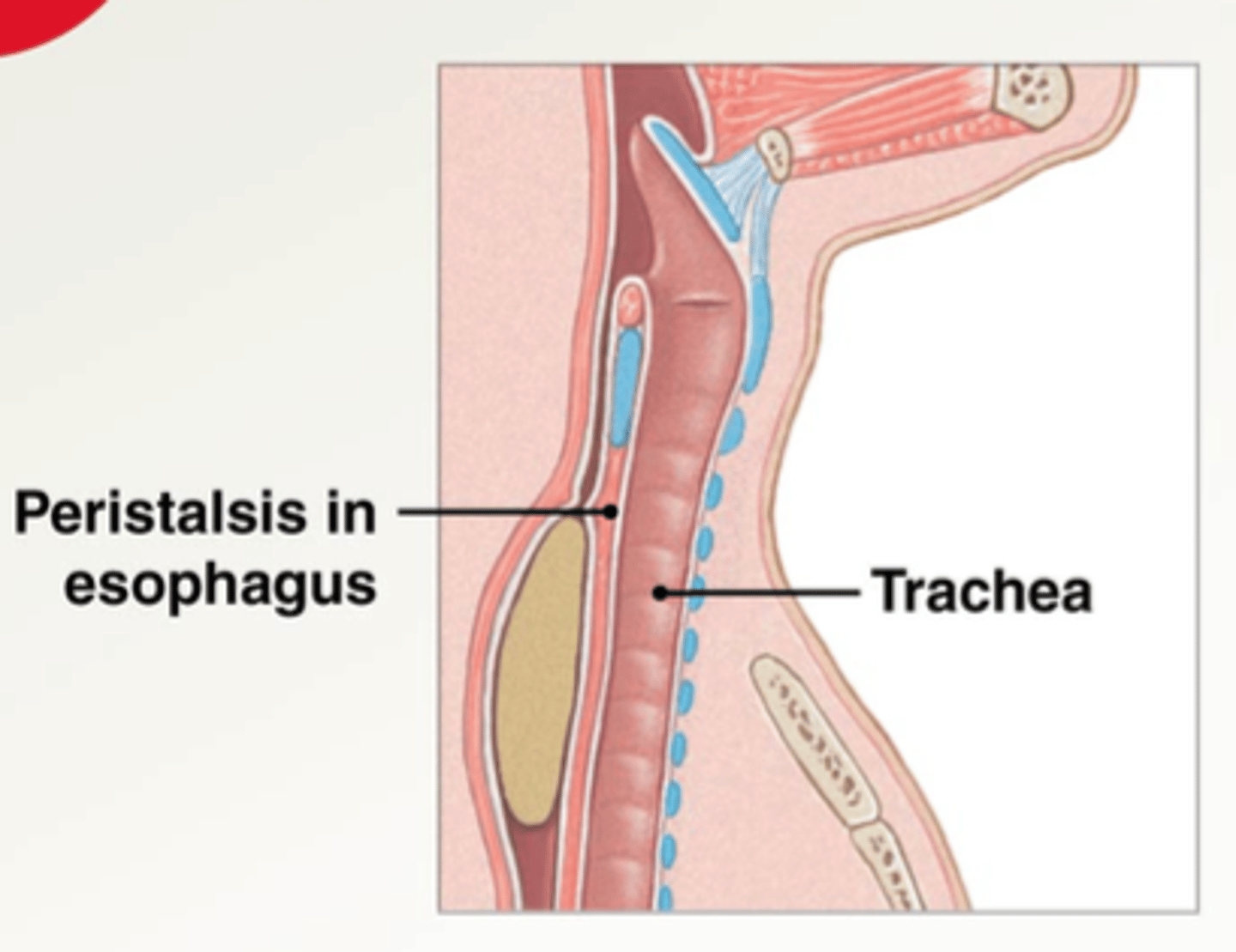
What is the muscle movement for the Esophagus called?
Peristalsis
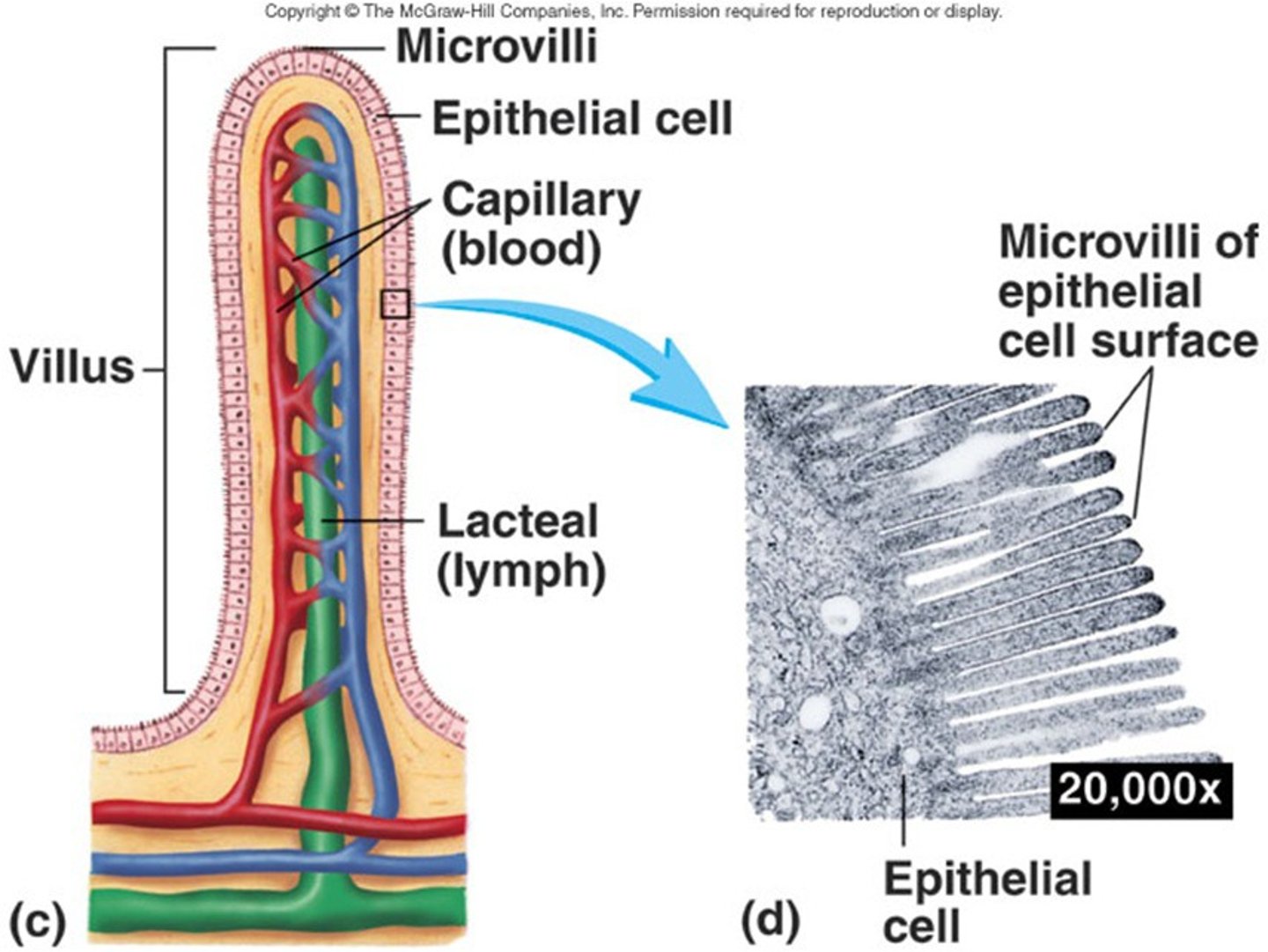
Villi
Fingerlike extensions of the intestinal mucosa increase the surface area for absorption.
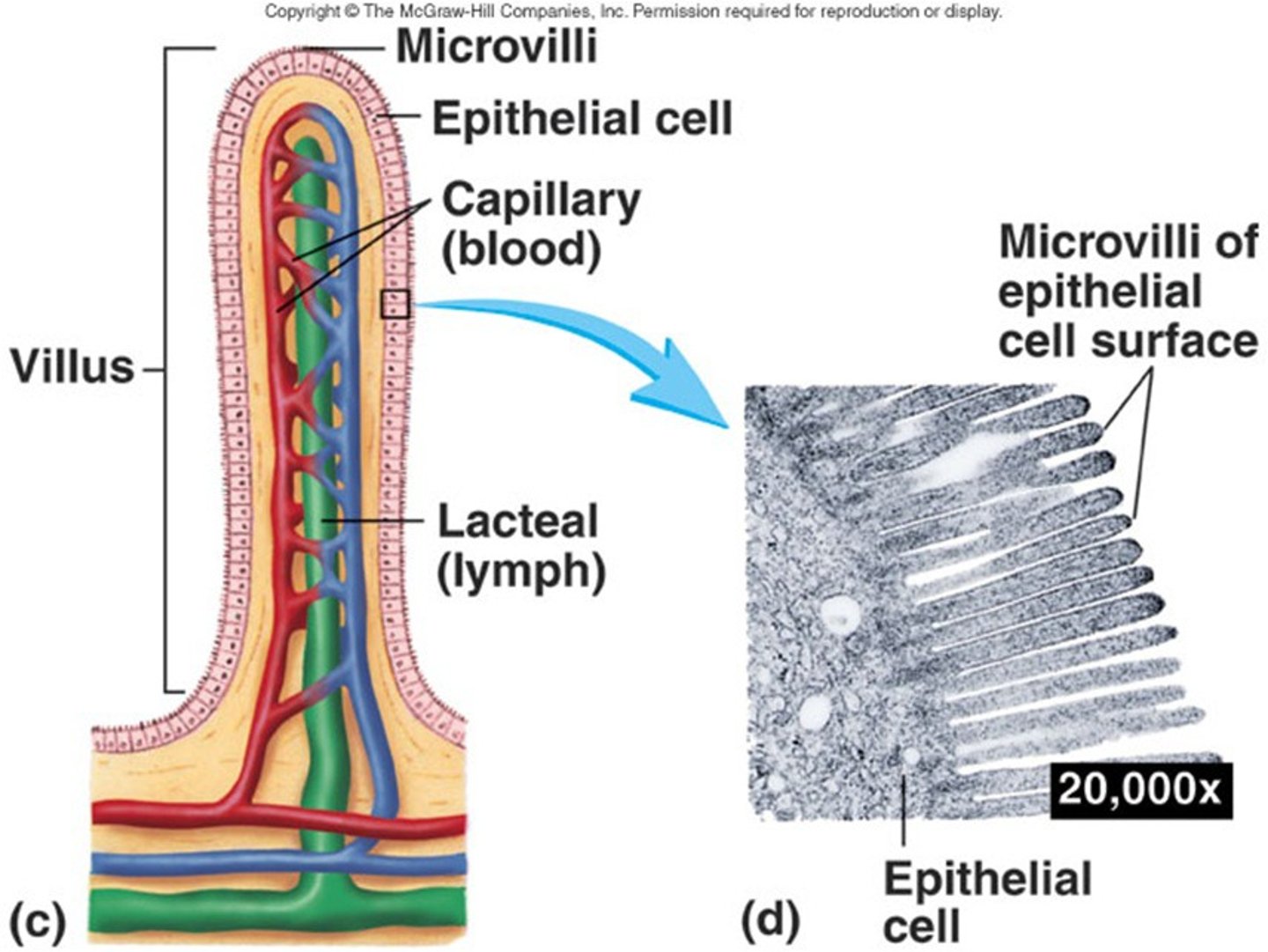
Microvilli
Fingerlike extensions of the plasma membrane of apical epithelial cells, increase surface area, aid in absorption, and exist on every moist epithelium, but are most dense in the small intestine and kidney.
Bile
a fluid that is made and released by the liver and stored in the gallbladder. A substance produced by the liver that breaks up fat particles.
Large Intestine
The last section of the digestive system, where water is absorbed from food and the remaining material is eliminated from the body.
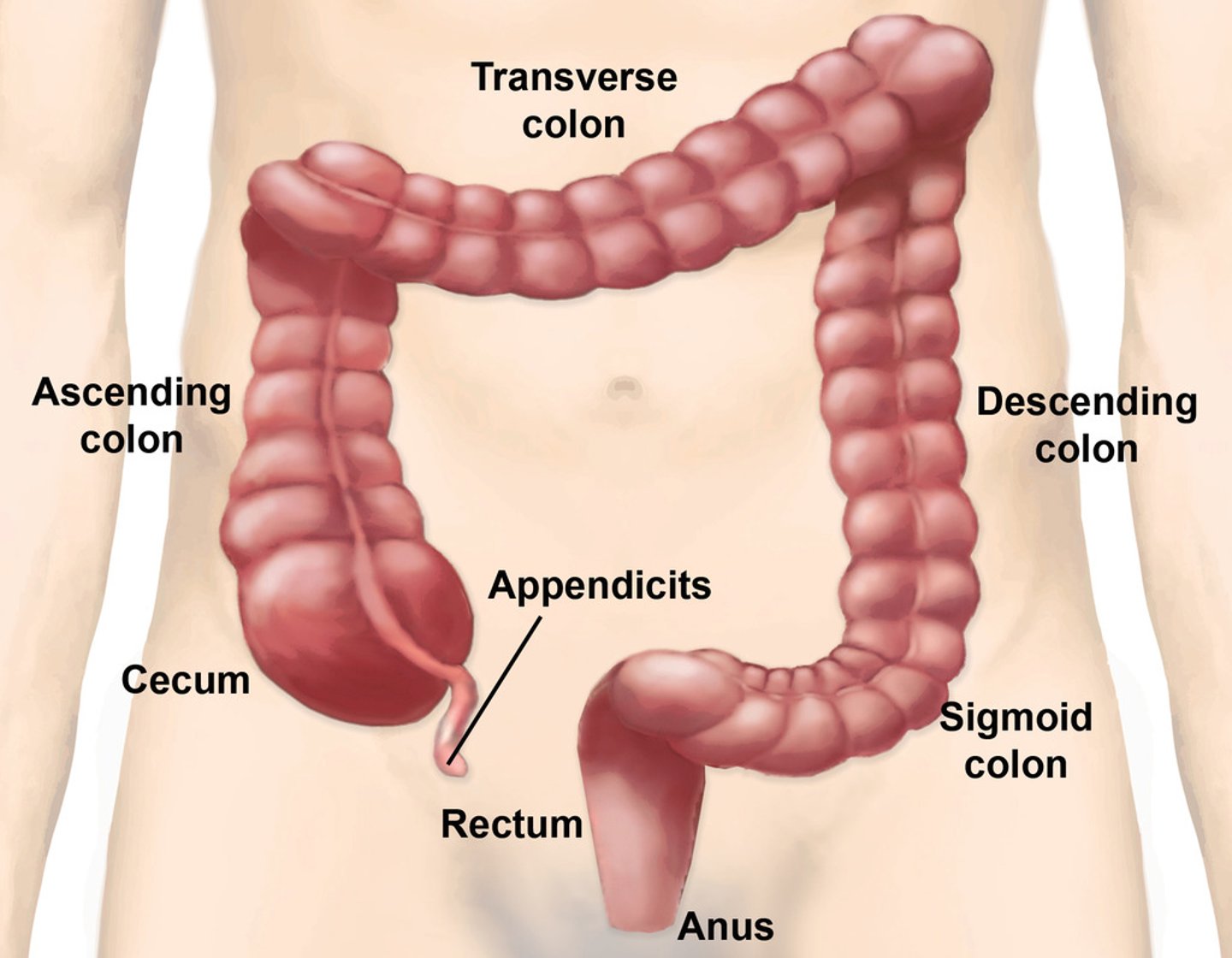
Which best maintains intestinal health?
Fiber
Secretion
A process by which substances, hormones, and enzymes are produced and discharged from a cell, gland, or organ for a particular function in the organism or for excretion.
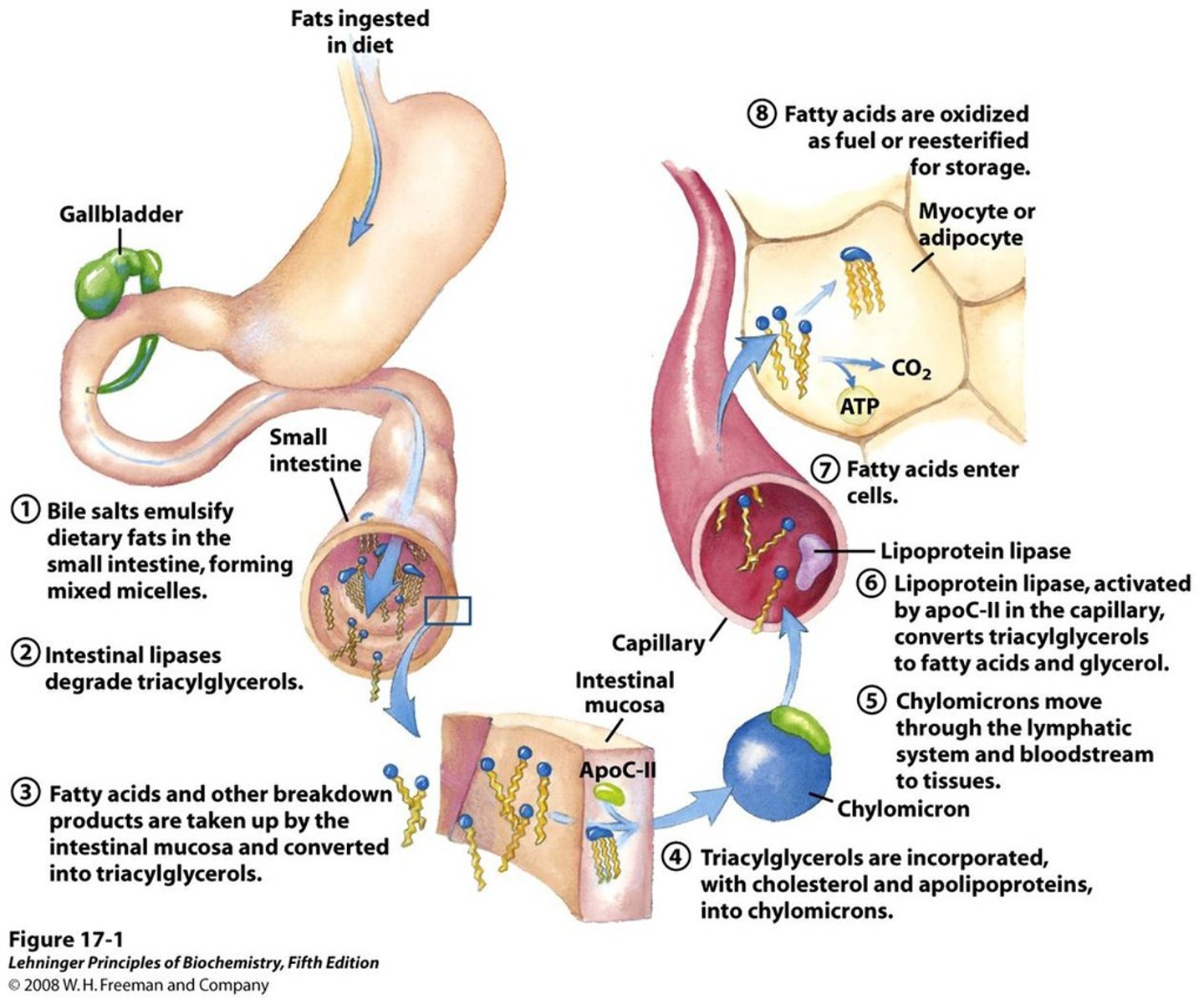
Lipids are broken down into
fatty acids and glycerol by enzymes called lipase.
Proteins are broken down into
Amino acids (peptides) or individual amino acids by enzymes called proteases.
Nucleic Acids
Broken down into nucleotides by enzymes called nucleases.
True/False: Vitamin K is absorbed in the small intestine.
True
Lysozyme
An enzyme that kills bacteria.
Buccal Cavity
Vestibule of the oral cavity; the space between the lips, gums, and teeth.

Accessory organs include:
The teeth and tongue, salivary glands, liver, gallbladder, and pancreas.
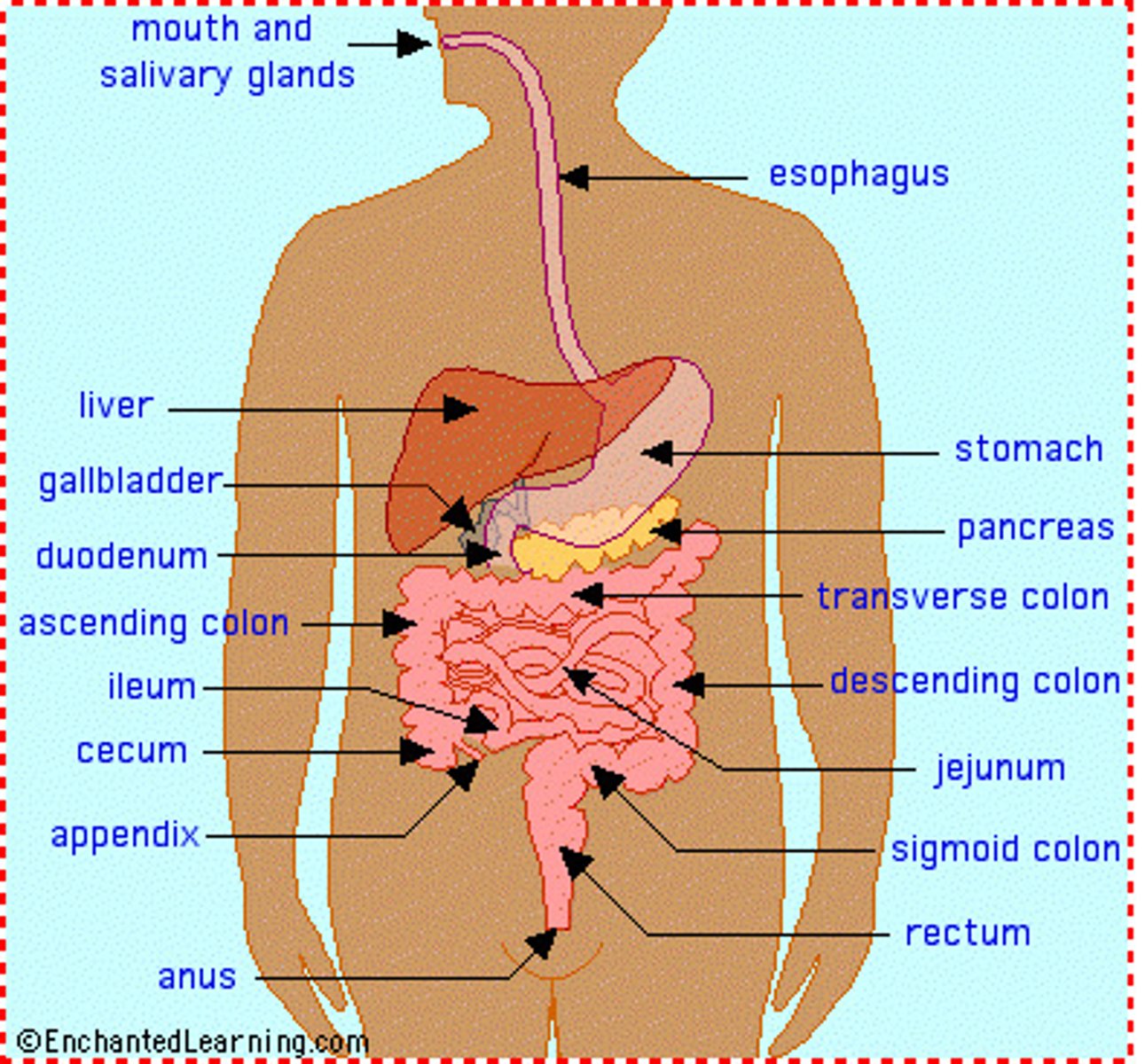
Chemical Digestion takes place in the
Stomach and Small intestine.
Esophageal phase
The upper esophageal sphincter opens and the bolus begins moving down the esophagus.
Buccal glands
Small glands are located on the mucosal membrane of the mouth.
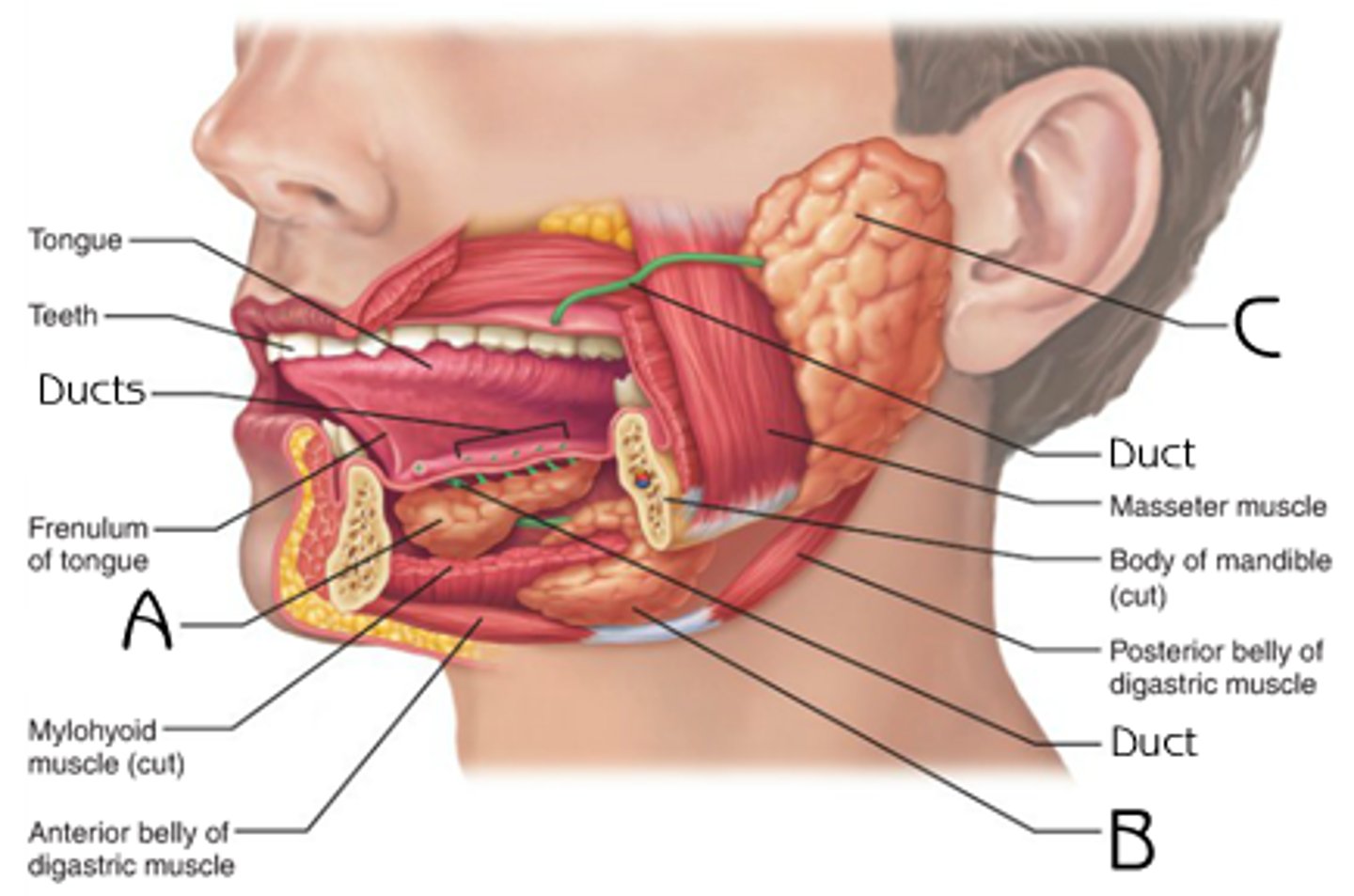
The mouth contains...
(Oral cavity, buccal cavity) is where food enters the digestive tract.
The inside of your mouth is lined with what general tissue type?
Stratified Squamous Epithelium.
Pepsinogen
A substance that is secreted by the stomach wall and converted into the enzyme pepsin by gastric acid.
Parotoid Glands
An external skin gland on the back, neck, and shoulder of toads and some frogs and salamanders. It can secrete a number of milky alkaloid substances (depending on the species) known collectively as bufotoxins, which act as neurotoxins to deter predation.
Sublingual Glands Function
Lie directly under the mucous membrane covering the floor of the mouth beneath the tongue.
Submandibular Gland
a salivary gland inside the lower jaw on either side that produces most of the nocturnal saliva
The Visceral peritoneum
The serous membrane that lines the stomach, large intestine, and small intestine.
The Parietal peritoneum
Lines the abdominopelvic cavity (abdominal and pelvic cavities).
The Abdominal cavity
Contains the stomach, small intestine, large intestine, liver, spleen, and pancreas.
The Pelvic cavity
Contains the urinary bladder, rectum, and internal reproductive organs.
Adventitia
Is the serous membrane that lines the muscular externa of the oral cavity, pharynx, esophagus, and rectum.
The Smooth Muscle
Is responsible for the movement of food by peristalsis and mechanical digestion by segmentation.
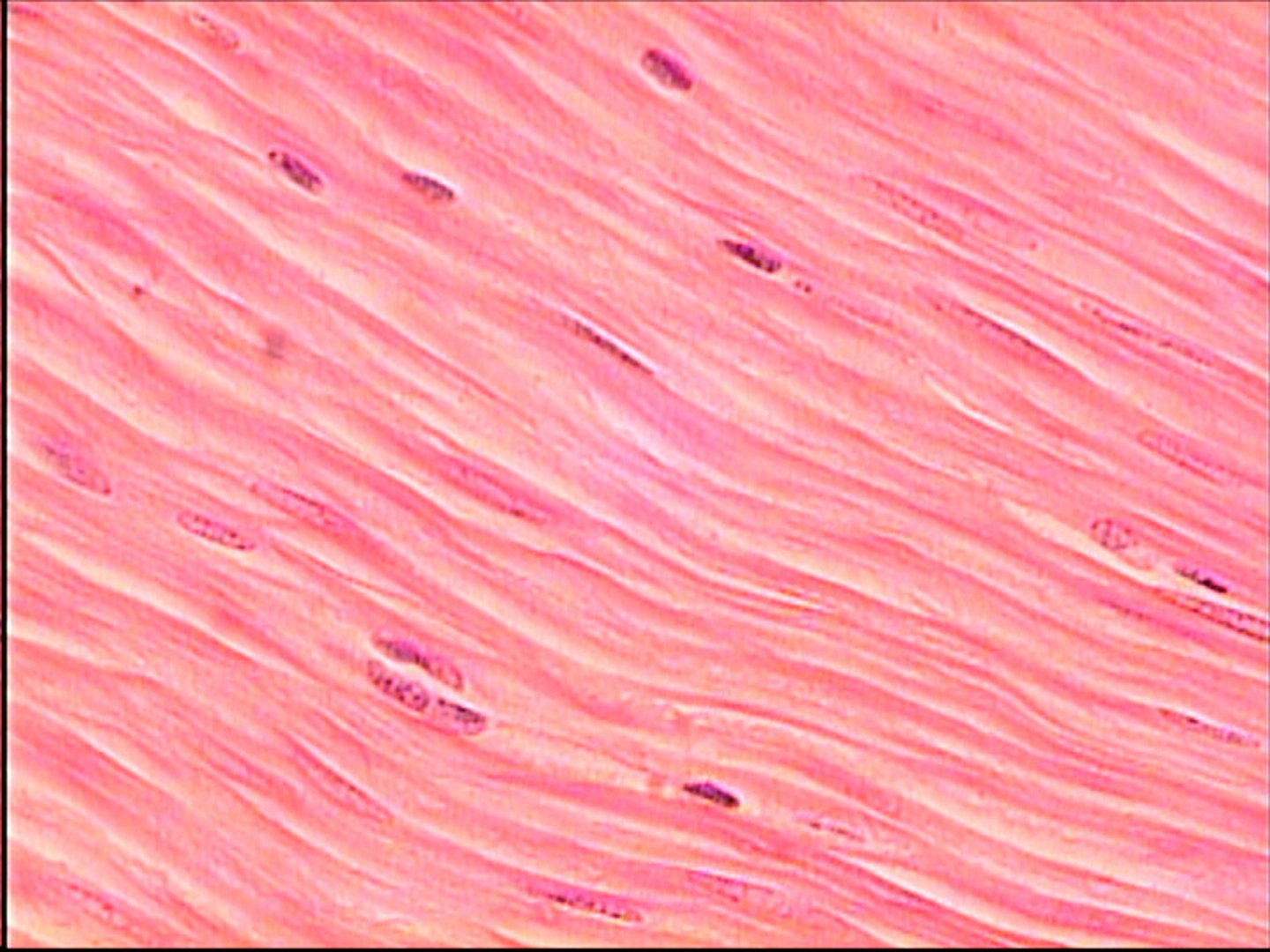
Epiglottis
A flap of cartilage tissue that seals off the windpipe and prevents food from entering.

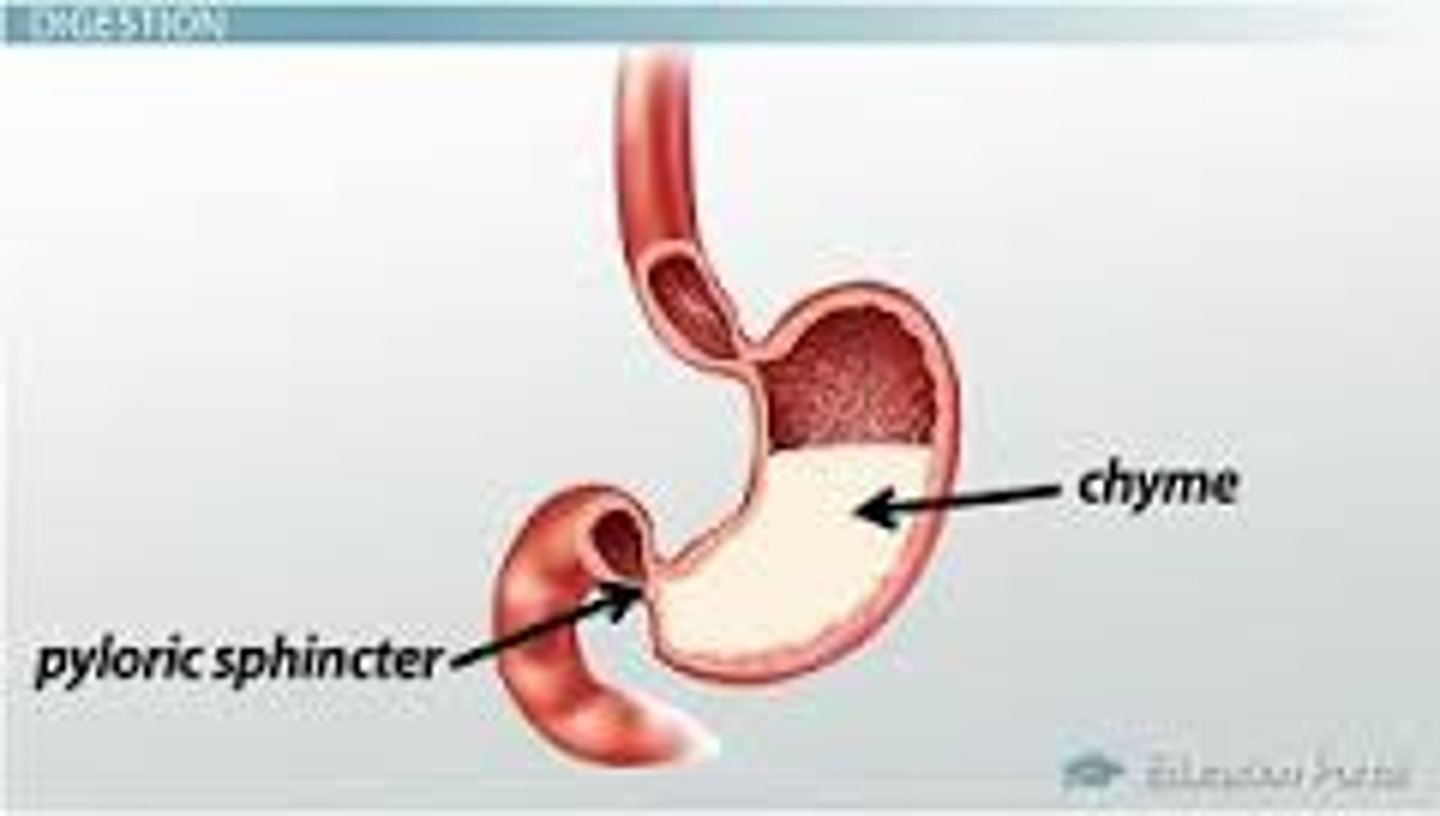
Chyme
Mixture of enzymes and partially-digested food
Chyme function
It increases the surface area of food by breaking it down into smaller components. It also stimulates digestive glands (gallbladder and pancreas) to secrete their respective solutions (bile, digestive enzymes, and bicarbonate)
Diarreha
When you have loose or watery poop. Can be caused by many things, including bacteria, but sometimes the cause is unknown.
Heartburn
Burning pain or discomfort in the upper chest and midchest, possibly involving the neck and throat, that may worsen when lying down.
Hemorrhoids
Swollen and inflamed veins in the rectum and anus that cause discomfort and bleeding.
Stomach Flu (Gastroenteritis)
An intestinal infection marked by diarrhea, cramps, nausea, vomiting, and fever.
Stomach Ulcer
A sore that develops on the lining of the esophagus, stomach, or small intestine.
Hepatitis
An inflammation of the liver.
Crohn's Disease
A type of inflammatory bowel disease (IBD).
Cirrhosis
A condition in which your liver is scarred and permanently damaged.
Irritable Bowel Syndrome (IBS)
An intestinal disorder causing pain in the belly, gas, diarrhea, and constipation. Affects the large intestine.
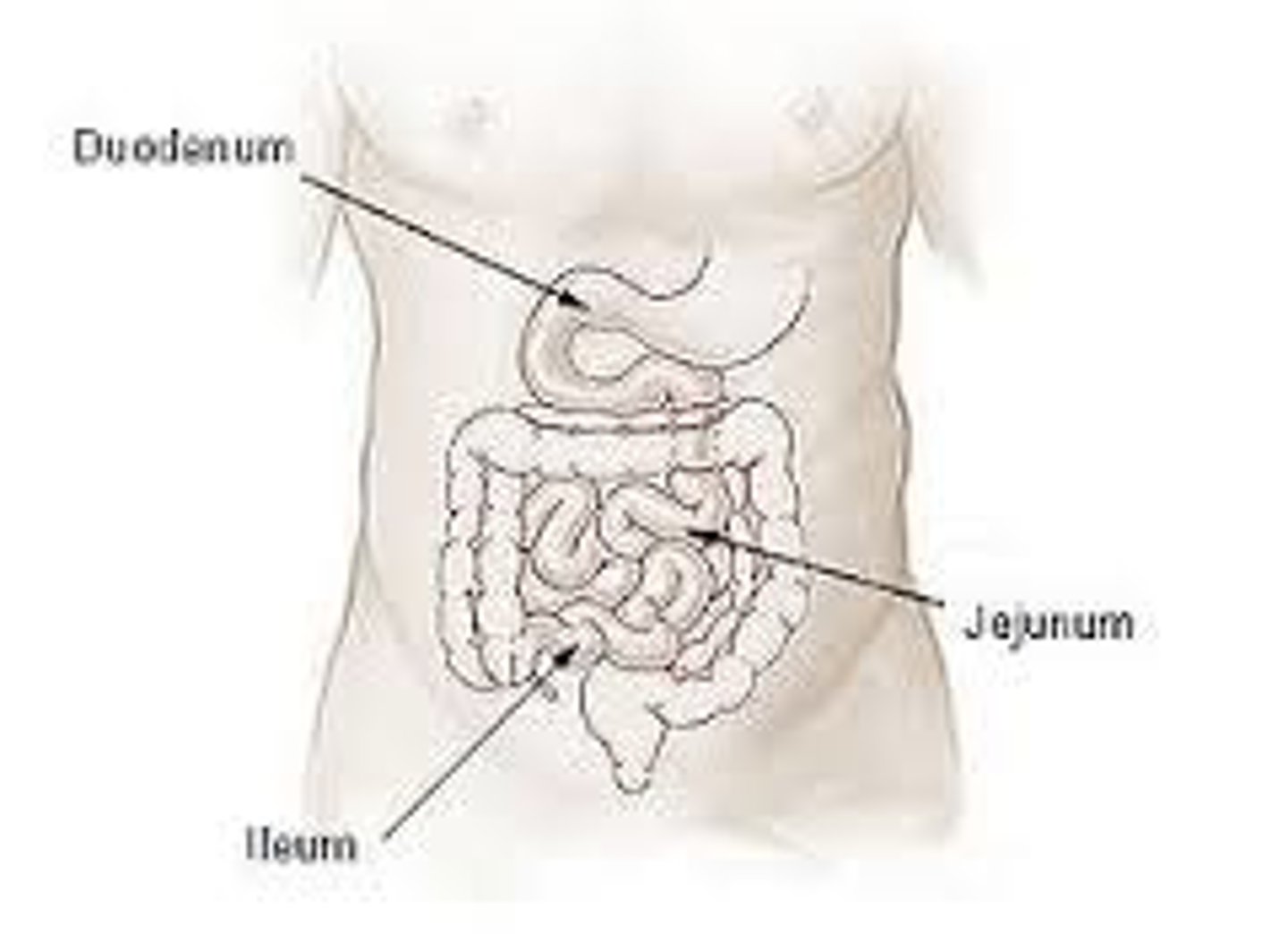
Duodenum
The first part of the small intestine. Most of the Chemical digestion happens here.

IIeum
Third and largest division of the small intestine. Absorbs important vitamins such like A, B12, E, D, and K.
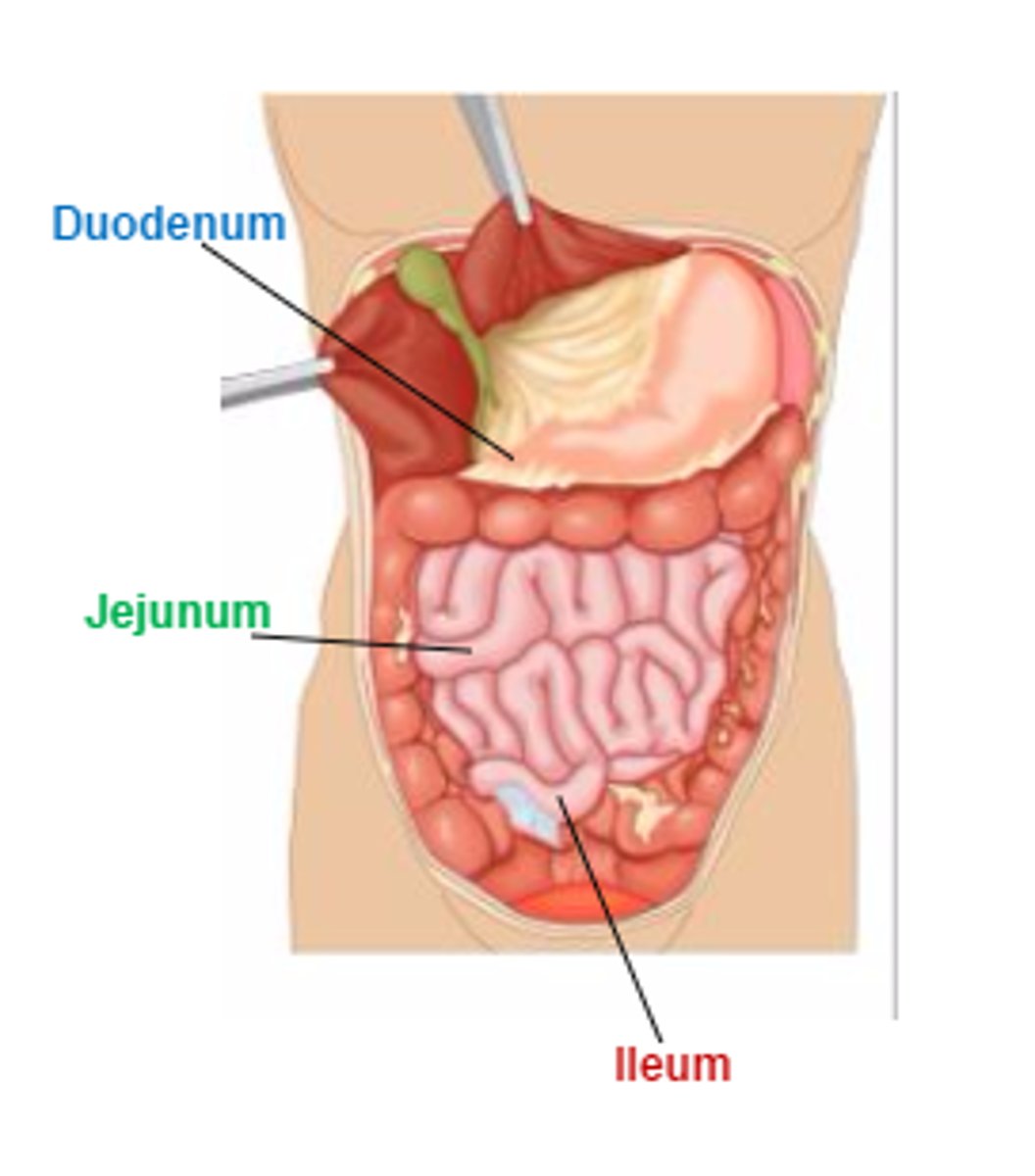
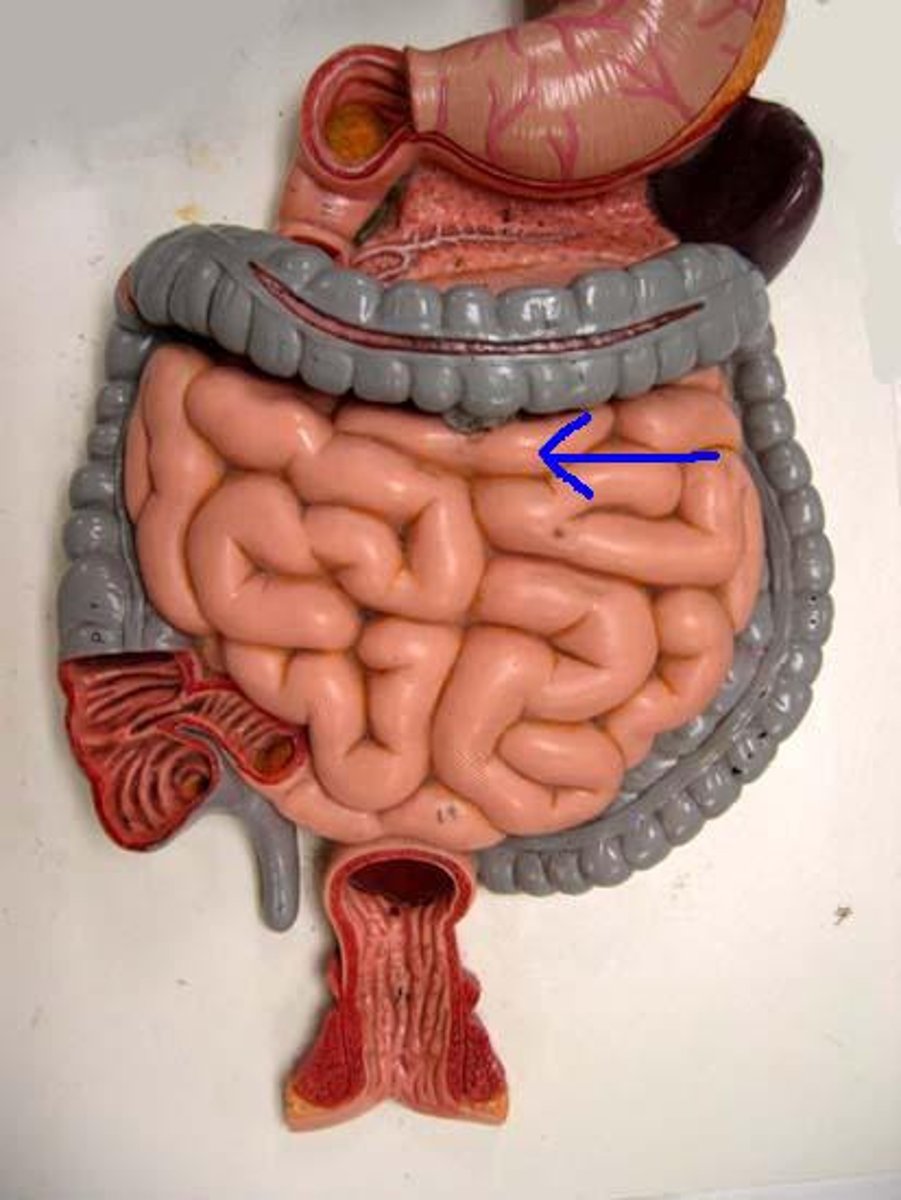
Jejunum
Middle portion of the small intestine. Most nutrient absorption takes place here.
Mouth Function
Breaks up food particles, assists in producing spoken language
Pharynx Function
Swallows. It carries air, food and fluid down from the nose and mouth
Salivary glands Function
Saliva moistens and lubricates food, amylase digests polysaccharides.
Esophagus Function
Transports food.
Stomach Function
-Stores and churns food
- Pepsin digest protein
- HCI activates enzymes, breaks up food, kills gems
- Mucus protects the stomach wall
- Limited absorption
Liver Function
-Breaks down and builds up many biological molecules,
- Stores vitamins and iron,
- Destroys old blood cells,
- Destroys poisons,
- Bile aids in digestion
Gallbladder Function
Stores and concentrates bile
Pancreas Function
- Hormones regulate blood glucose levels
- Bicarbonates neutralize stomach acid
- Trypsin and Chymotrypsin digest proteins
- Amylase digests polysaccharides
- Lipase digests lipids
Large Intestine Function
- Reabsorbs some water and ions
- Forms and stores feces
Small Intestine Function
- Completes digestion
- Mucus protects gut wall
- Absorbs nutrients, most water
- Peptidase digests proteins
- Sucrases digest sugars
- Amylase digests polysaccharides
Anus Function
Opening for elimination of feces
Rectum Function
Stores and expels feces
Endocrine Cells
Release their secretions directly into body fluids
Mucin
A protein that helps to form a gel-like coating that lubricates the bolus of food.
Parietal Cells
Secrete HCl (Hydrochloric Acid) and intrinsic factor
Carbohydrate Digestion begins in the...
Mouth with salivary amylase
Protein Digestion begins in the
Stomach by pepsin
Lipid/Fat Digestion begins in the
Small Intestine (needs bile)
Sucrases
Digests sugars
Trypsin
Breaks down proteins
Chymotrypsin
Breaks down proteins in the small intestine
Peptidase
Breaks down peptides into amino acids