Lab 5: Animal Diversity 1
 Call Kai
 Learn
Learn Practice Test
 Spaced Repetition
 Match
Match Flashcards
 Knowt Play
1/54

Earn XP
Description and Tags
Invertebrates Lacking True Body Cavities
Name | Mastery | Learn | Test | Matching | Spaced | Call with Kai | Chat |
|---|
No analytics yet
Send a link to your students to track their progress
55 Terms

What type of sponge is this? Is it simple, intermediate or complex?
Asconoid sponge; Simple (small, thin, and uncommon)
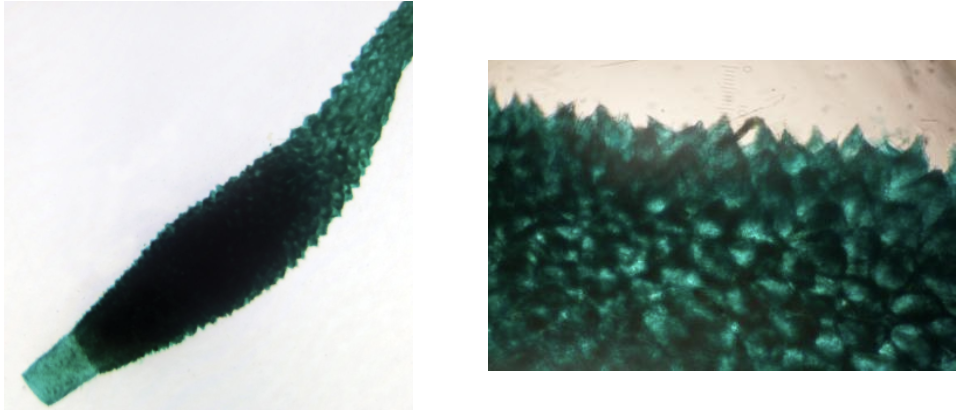
What type of sponge is this? Is it simple, intermediate or complex?
Syconoid; Intermediate (more surface area, still small but more opaque, thicker + bumpy)
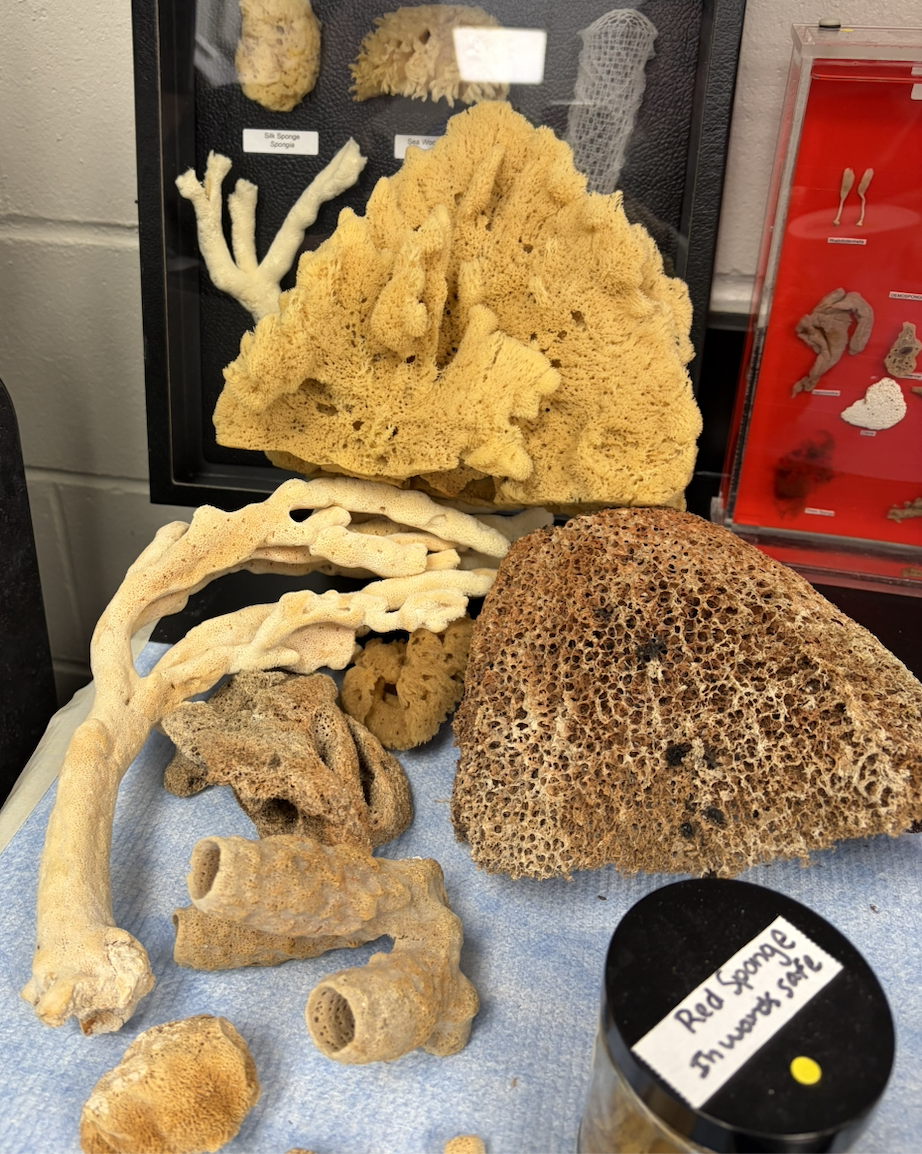
What type of sponges are these? Are they simple, intermediate or complex?
Leuconoids; Complex (best for filtering, most successful body plan, thick)

Is this in Porifera?
Yes
What are the two body shapes of Cnidarians?
Polyp (attached to substrate) and medusa (free/unattached)
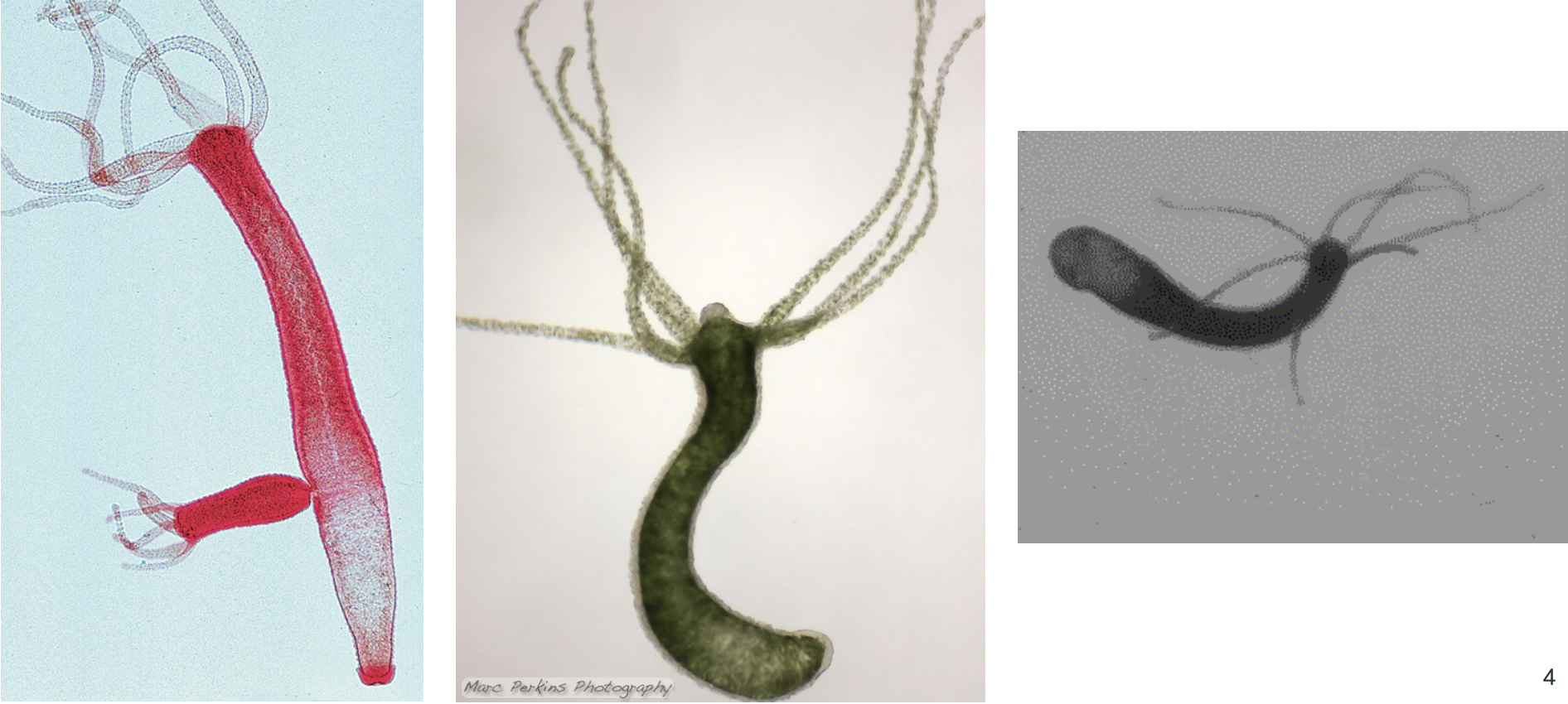
What are these? What do the tentacles do? What does the upper body column or top surface do?
Polyps
Tentacles = capture food & stun prey
Upper body column/top surface = produce medusae
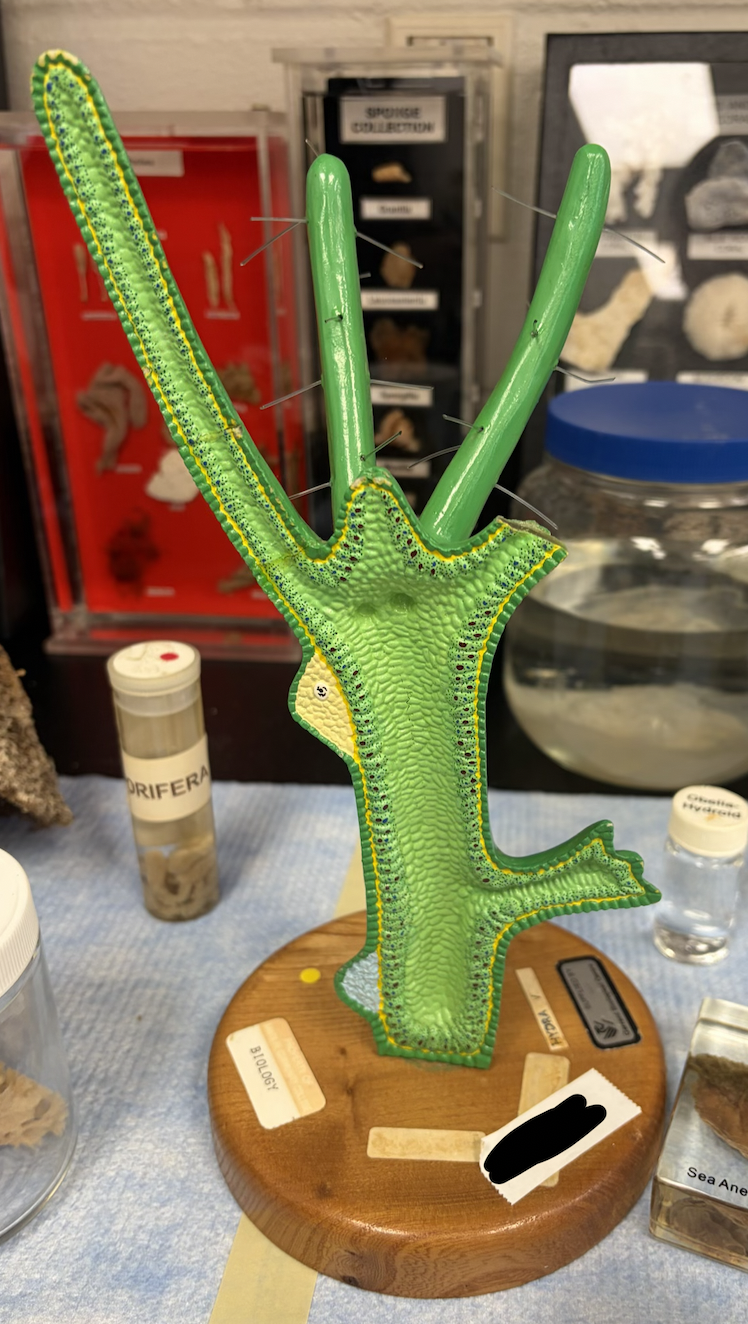
What is this?
A hydra/solitary polyp
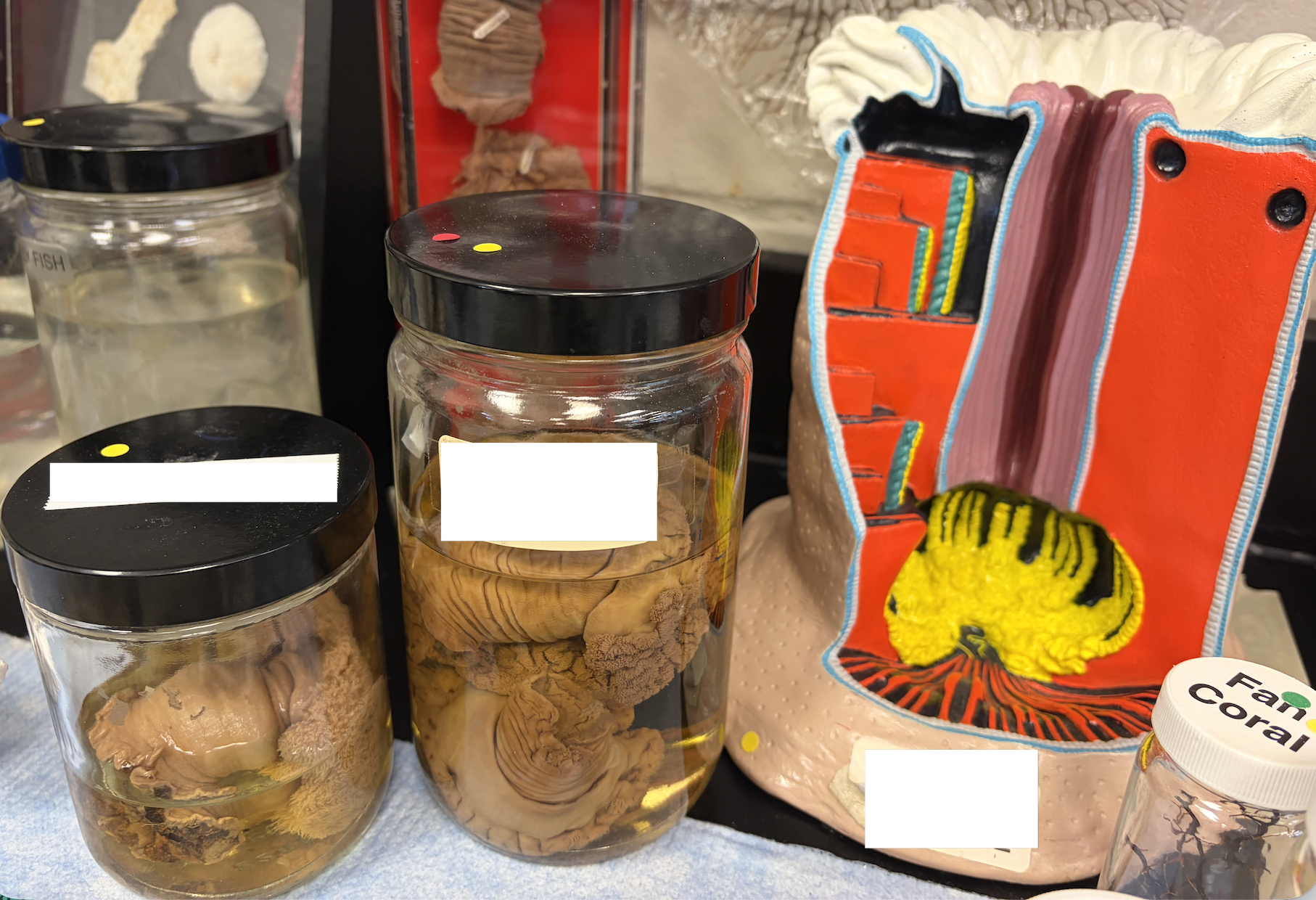
What are these? Are they polyps or medusa?
Sea anemones; Solitary polyps
Do colonies share a stomach?
Yes
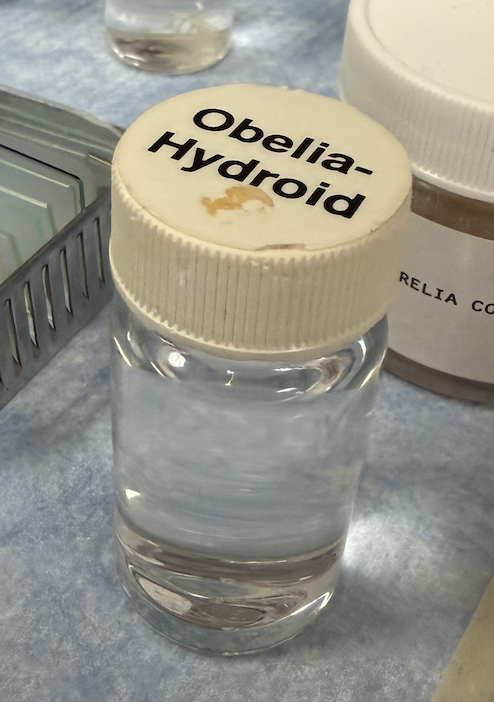
What is this?
A colony of polyps

What do the polyps in this colony with tentacles do? What about the ones without tentacles?
With tentacles = catch food
Without tentacles = Produce babies (medusas)

What is this?
Obelia hydroids (colony of polyps)

What do the polyps in this colony with tentacles do? What about the ones without tentacles?
With tentacles = catch food
Without tentacles = Produce babies (medusas)
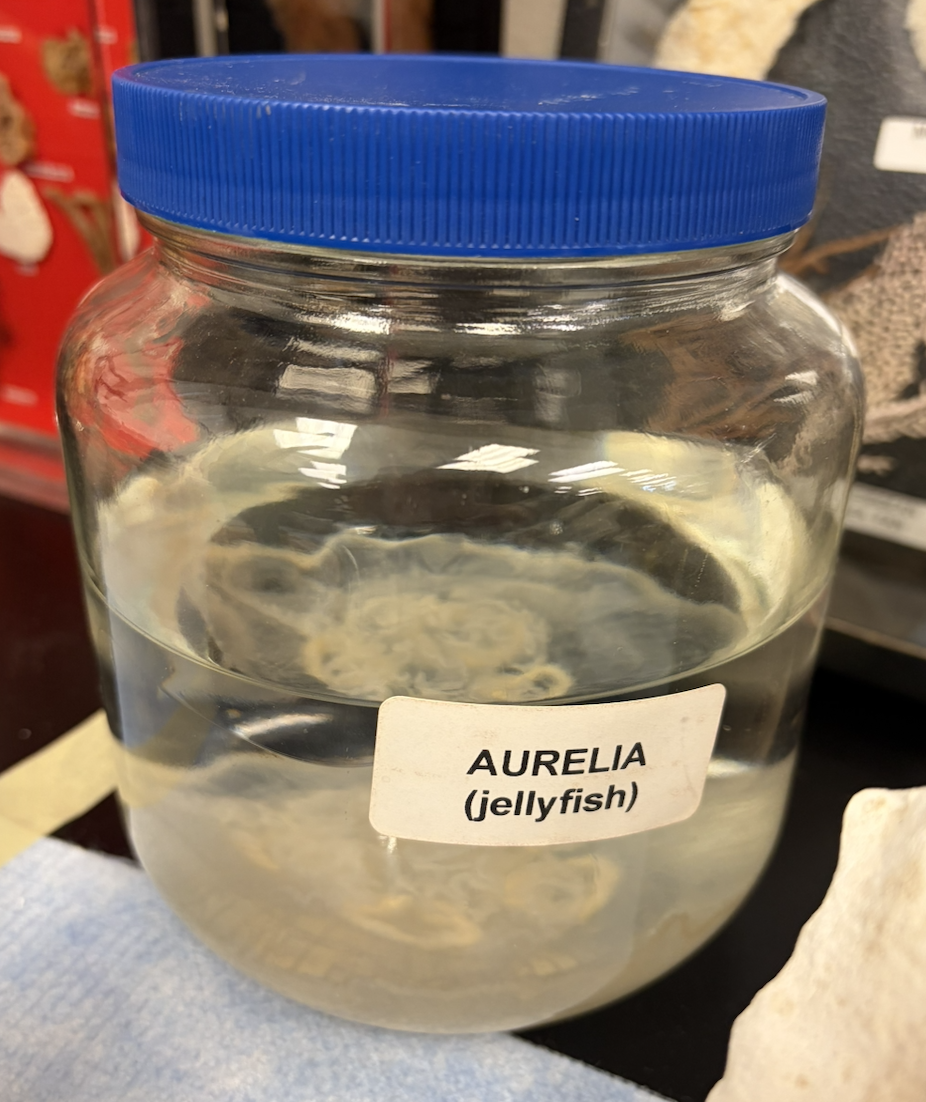
Is this moon jellyfish a medusa? How does it reproduce?
Yes, it is a medusa; Both asexually (medusa) and asexually (polyp)
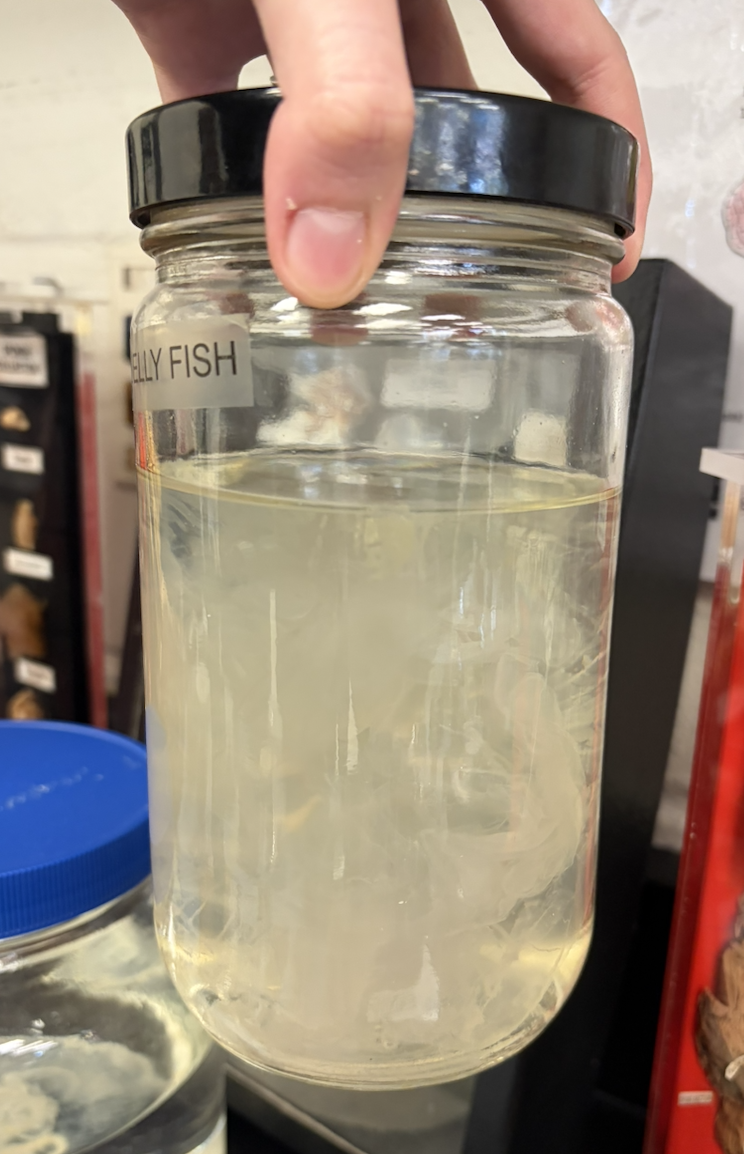
Is this a medusa or polyp?
Medusa
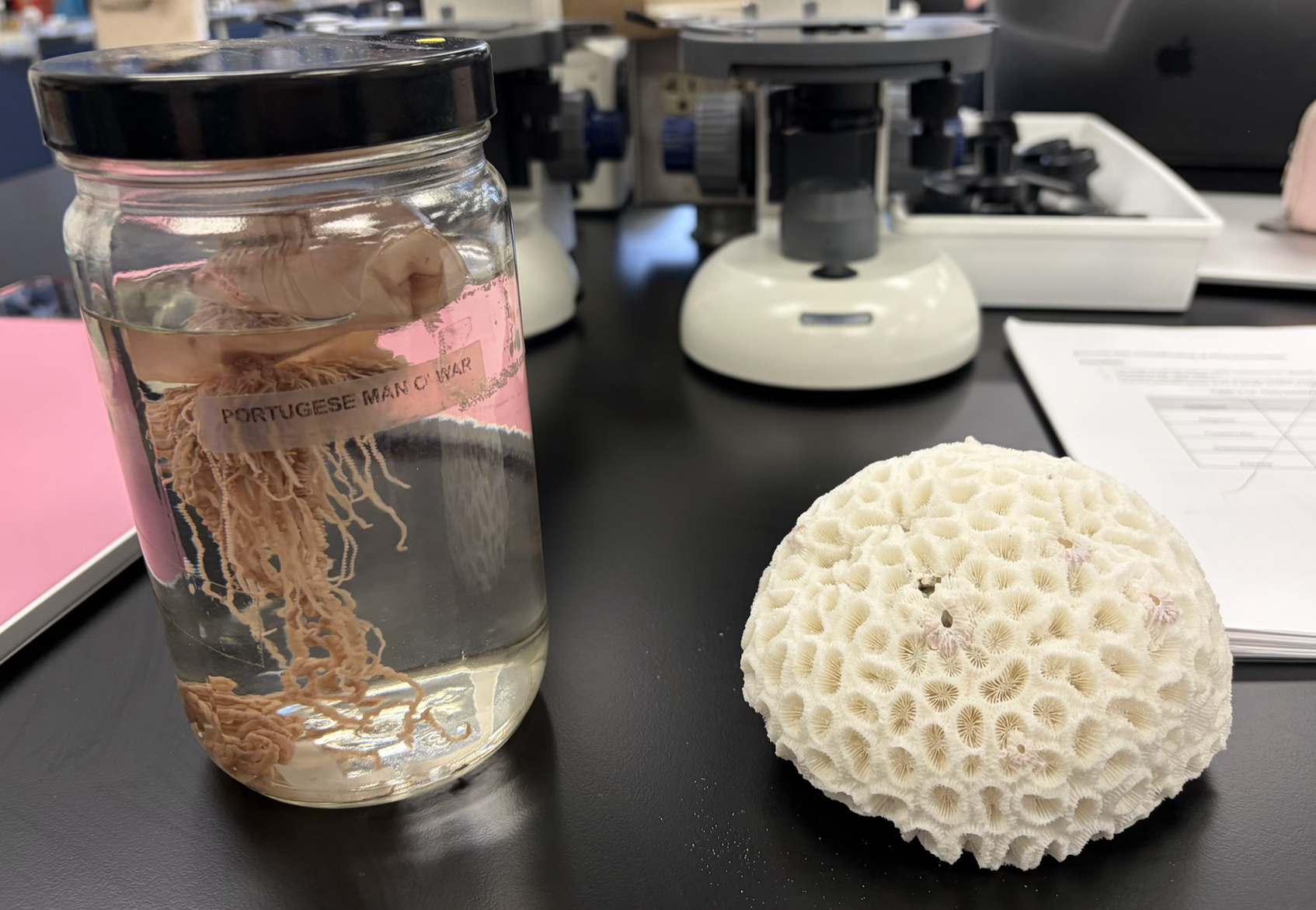
What are these?
Colonies of polyps
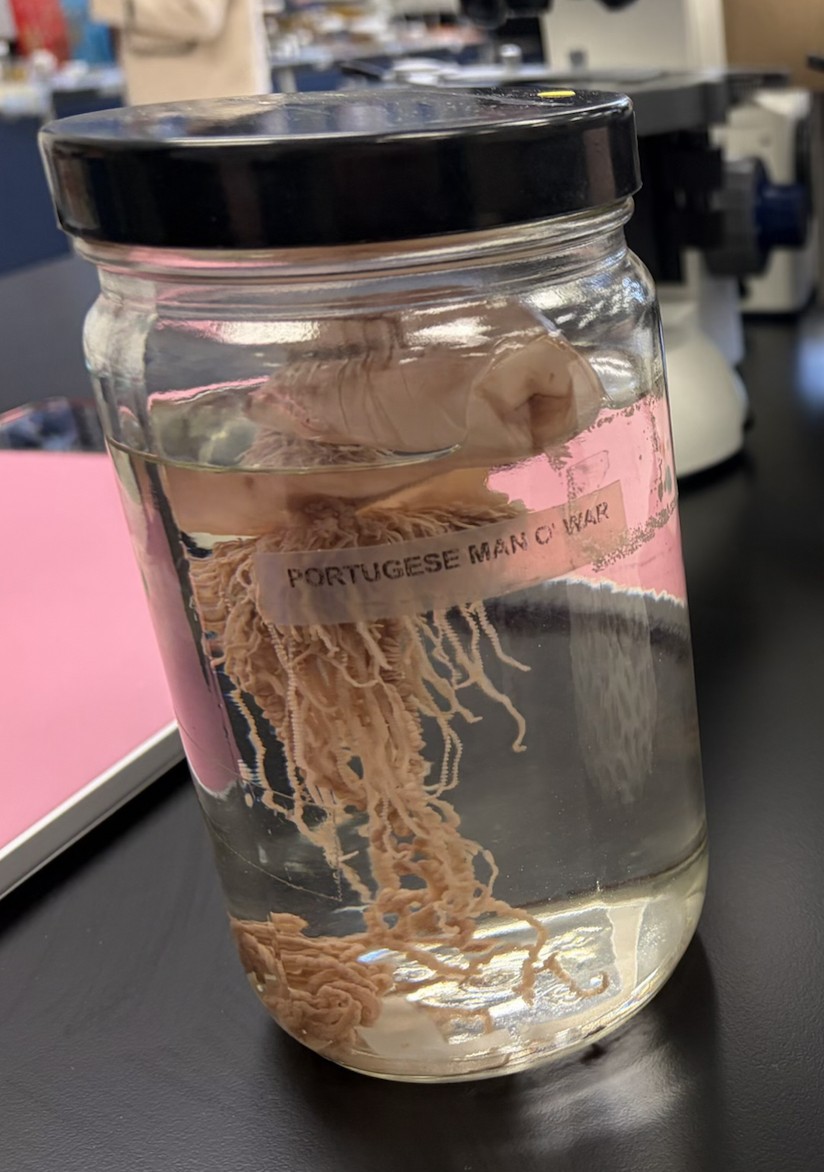
What is this Portugese Man of War?
A hydrozoa

What do the long tentacles do? What do the short ones do? What does the body do?
Long tentacles = paralyze and grasp prey
Short tentacles = bring prey to body
Body (looks like head) = digests prey
Are all flatworms acoelomates (lack a body cavity)?
Yes
Describe flatworms.
Simplest kind of worm, very flat, have necessary organs, and more surface area.

What are these? Are they parasitic? Why do they avoid light?
Planarians; No, they are free-living. They avoid intense light because it causes depigmentation and tissue lesions.

What is circled? What is their function?
Eyes; Detect the intensity and direction of light (photoreceptors)
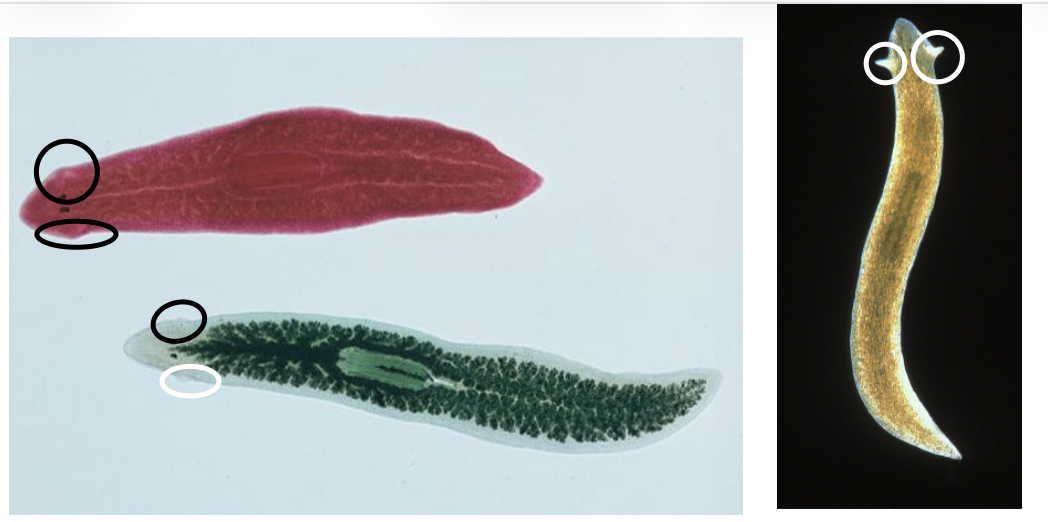
What is circled? What is their function?
“Ears”/Auricles; They detect/smell food (chemical receptors)
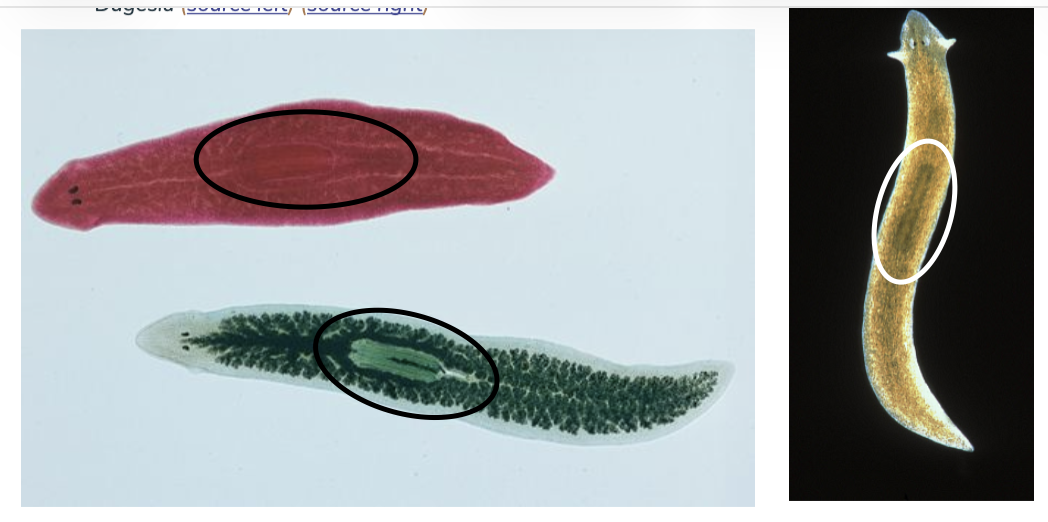
What is circled? What is its function?
Pharynx; The pharynx spits out a digestive enzyme, liquifies the food, and slurps it up (tube for food)
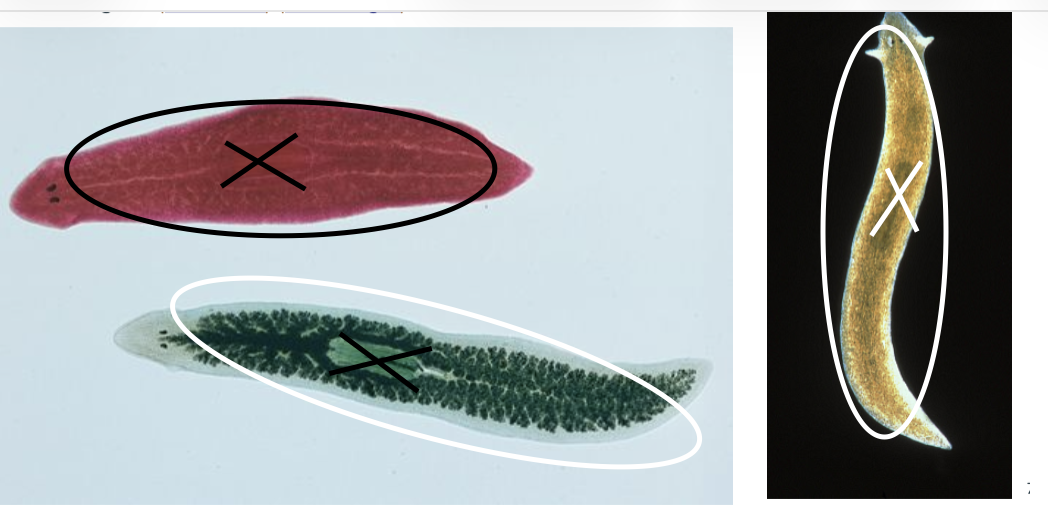
What is circled? What is its function?
Gastrovascular cavity (highly branched); Releases waste across the surface area

What is this? Is it parasitic
Fluke (flatworm); Yes, it is parasitic
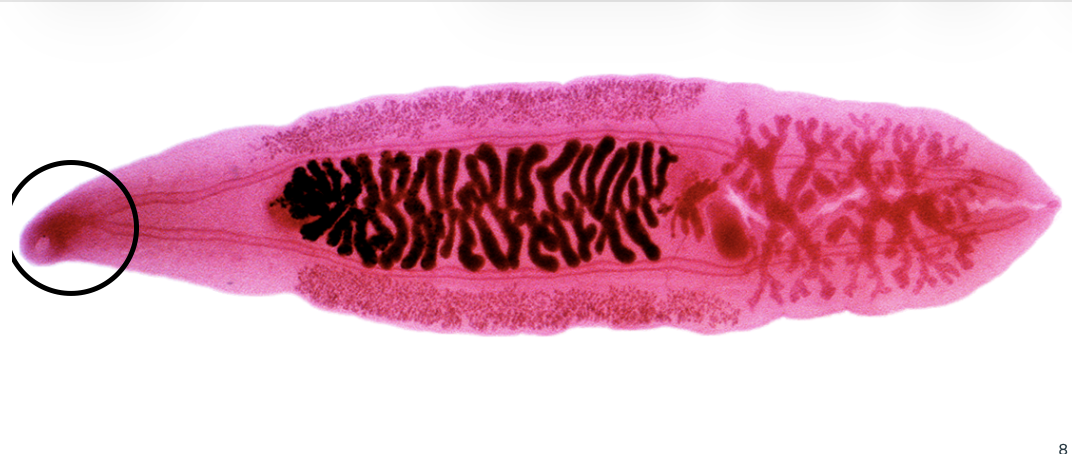
What is circled?
Mouth/oral sucker
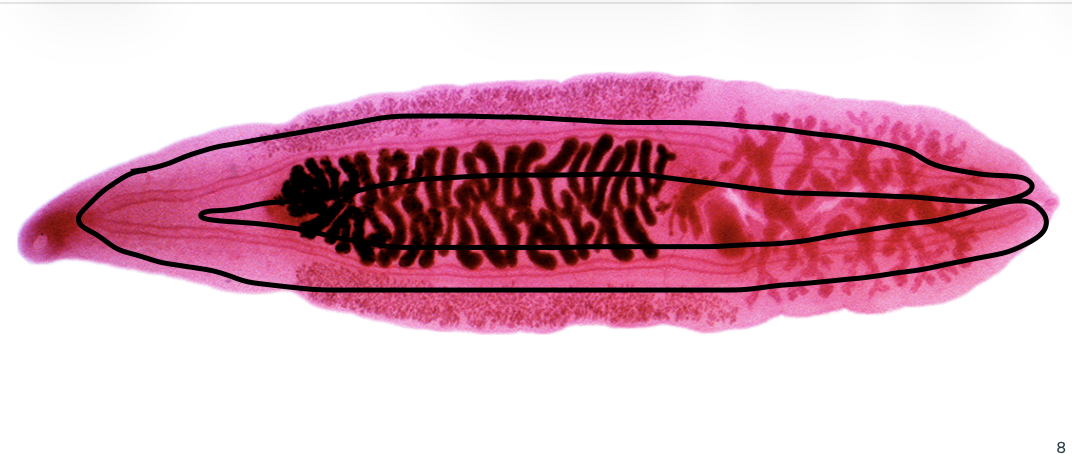
What is circled (Y shaped thing)?
Gastrovascular cavity
How are flatworms reproductive machines?
Due to their hermaphroditic nature, extreme regenerative abilities, and, in many species, the ability to engage in "penis fencing" to cross-fertilize. They are reproduce asexually and sexually.
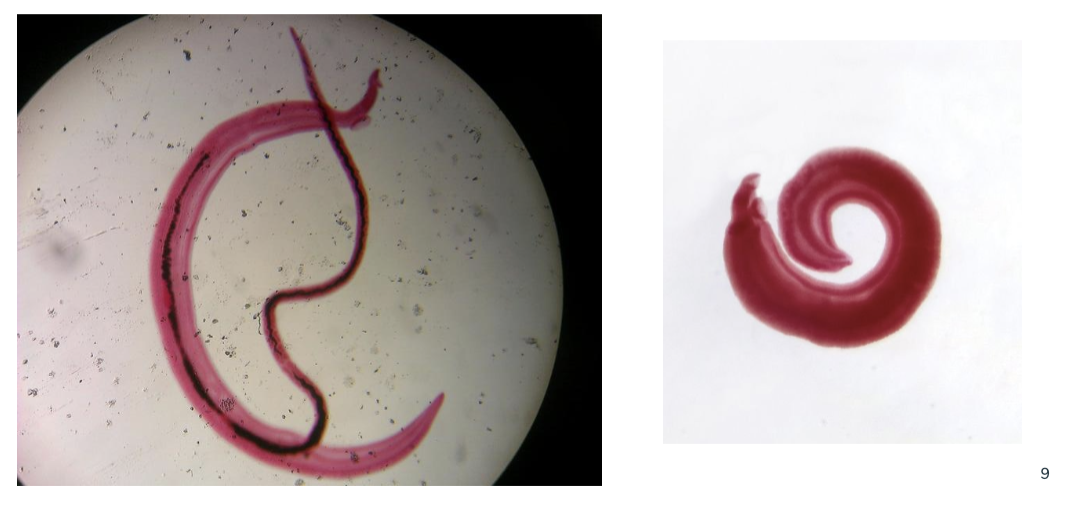
What is this?
Fluke (parasitic flatworm)

What is this? Where does it live?
Tapeworm; Small intestine

Does this have a mouth? How does it distribute nutrition?
No; Nutrition goes across surface
What part of a tapeworm attaches to the small intestine lining?
Scolex (head)

How does a tapeworm develop/grow?
Egg becomes scolex, then mitosis to make proglottids, colony of proglottids
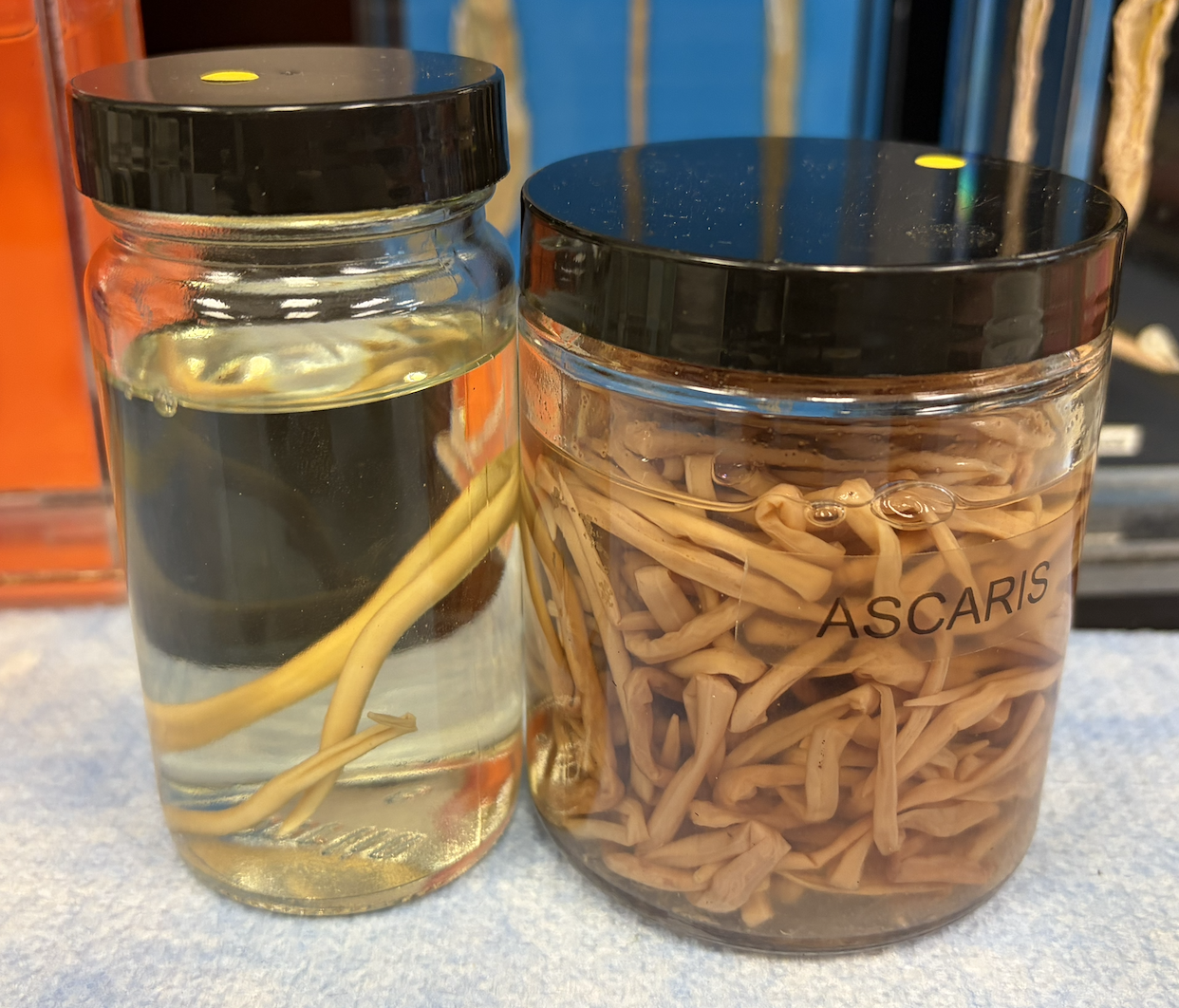
What phylum are these in? Where do they live?
Phylum Nematoda (roundworms); small intestine of mammals

What are these? Where do they live? What are their babies/offspring called? What is their vector to spread disease?
Heartworms; Heart, lungs, and associated blood vessels; Babies = microfilaria; Vector = mosquito
Nematodes/roundworms are ________.
Pseudocoelomates
What is a pseudocoelomate?
An invertebrate with a fluid-filled body cavity (pseudocoelom) located between the endoderm (gut) and mesoderm (muscle) layers, rather than fully lined by mesoderm.
They can still poop!
The pseudocoelom acts as a hydrostatic skeleton.
Describe Phylum Annelid.
Segmented, have coelom (came from earthworms), full muscle lining, coelom is beneficial for burrowing, complete digestive tract, can poop. Include earthworms, leeches, marine worms/polychaetes
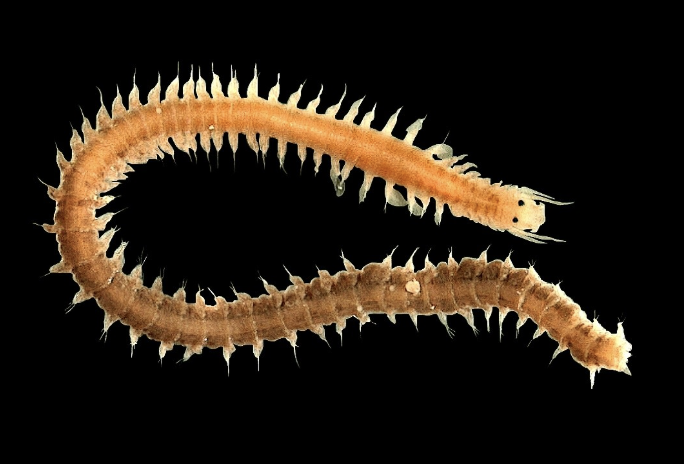
What is this? Is it segmented? What are the flaps? What do the flaps do?
Polychaete; Yes it is segmented; Flaps = parapodia; The flaps absorb oxygen

What is this?
Leech (note: not all are blood sucking parasites)
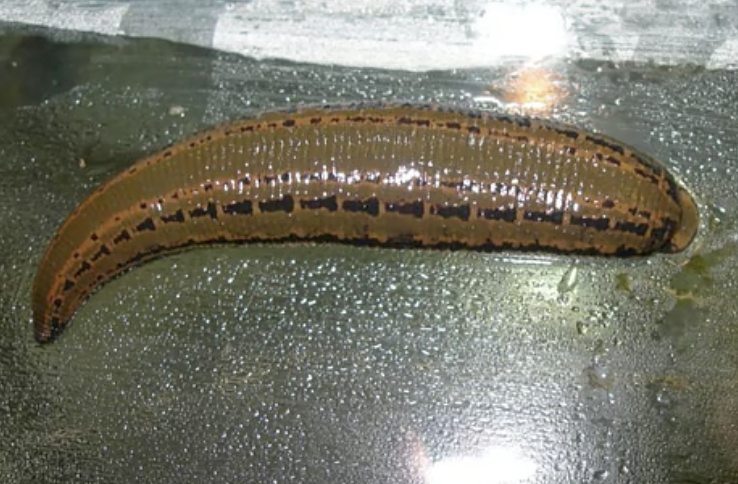
What is the front/anterior? What is the back/posterior
Left = front (skinny side); Right = back (thick side)
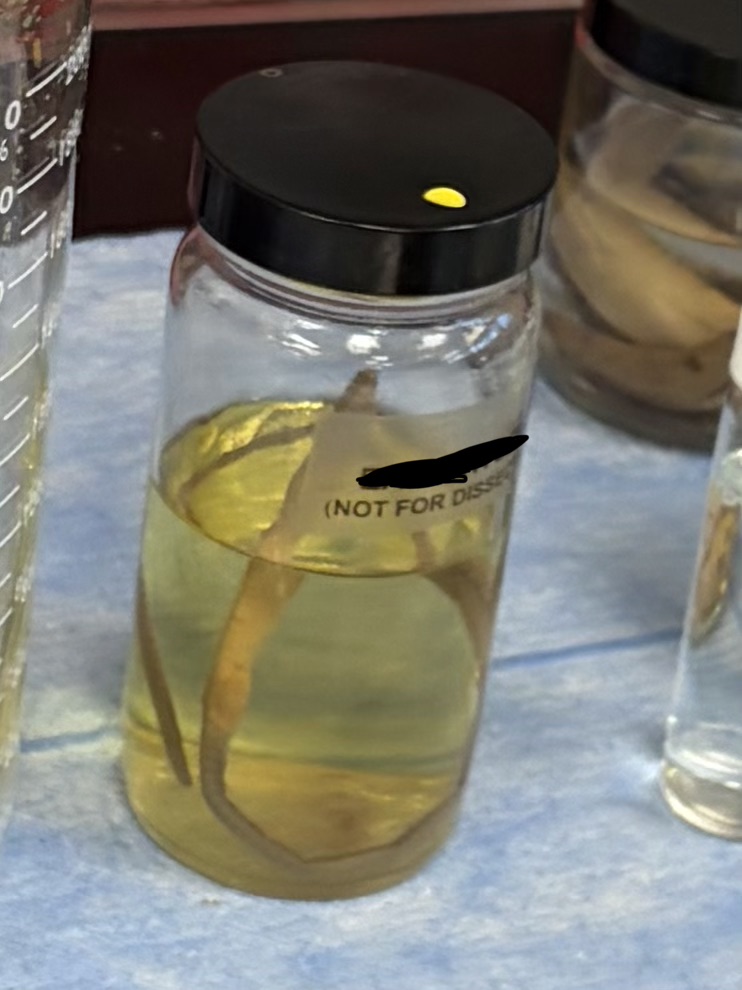
What is this?
Earthworm
Do earthworms have flaps/parapodia? Do they have hairlike bristles?
Yes and Yes
What reproductive parts does an earthworm have?
Male and female
How do earthworms reproduce?
They shoot sperm into each other (external fertilization)
Why do earthworms produce foam/mucus?
To create cocoons
Describe how earthworm reproduction is completed.
Earthworms produce a cocoon on the clitellum (band) that is pushed forward over the head, collecting eggs and previously stored sperm along the way to fertilize them.
What happens after earthworm reproduction?
The cocoon is left in the dirt, the egg and sperm combine, and then babies are released.
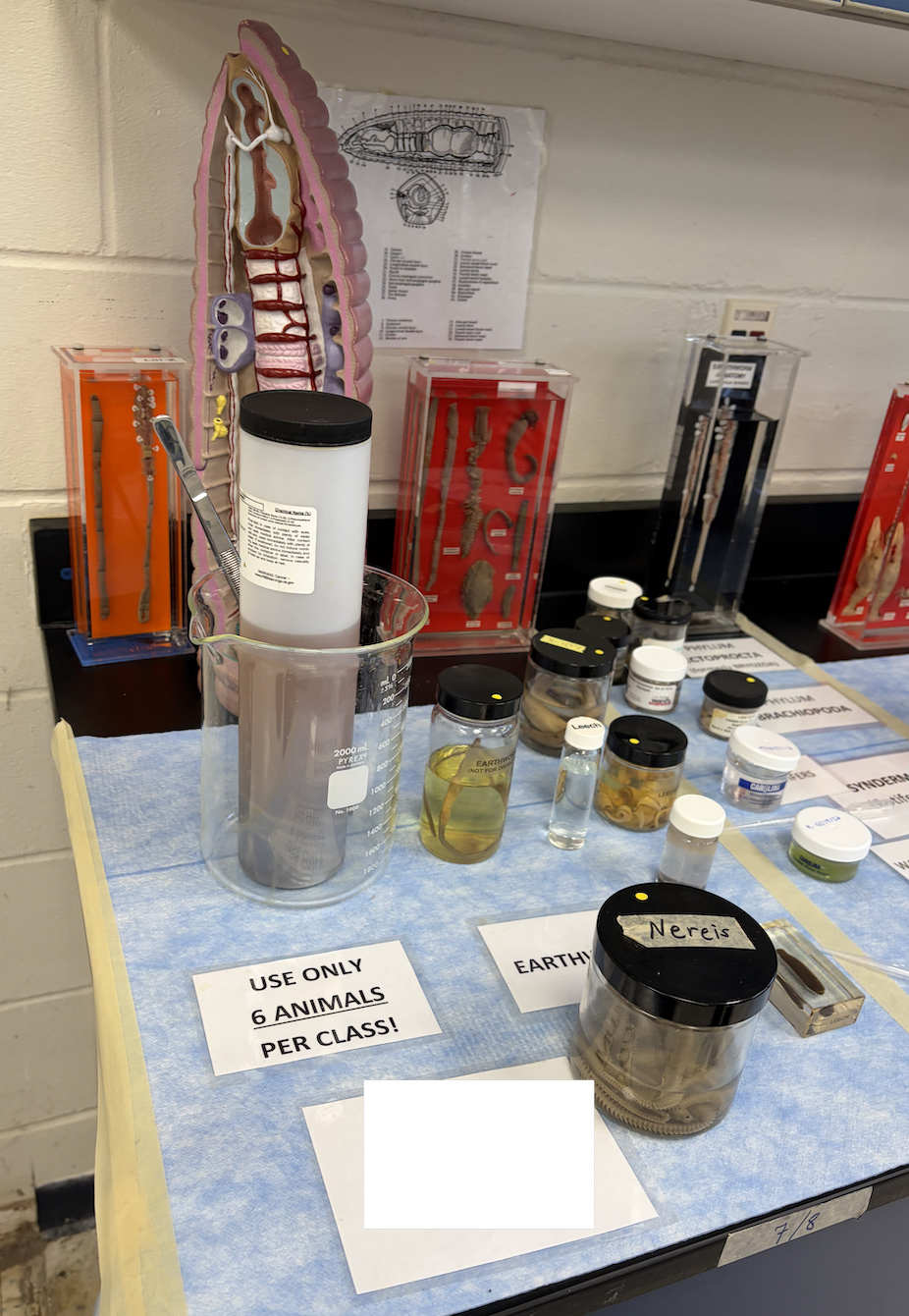
What phylum are these in?
Annelida
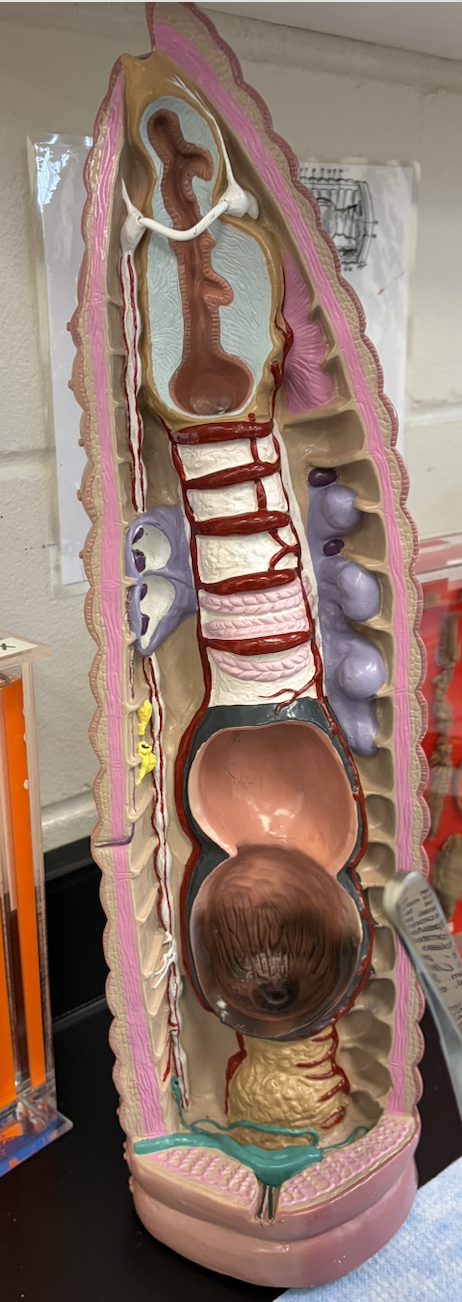
What is this a model of?
Earthworm
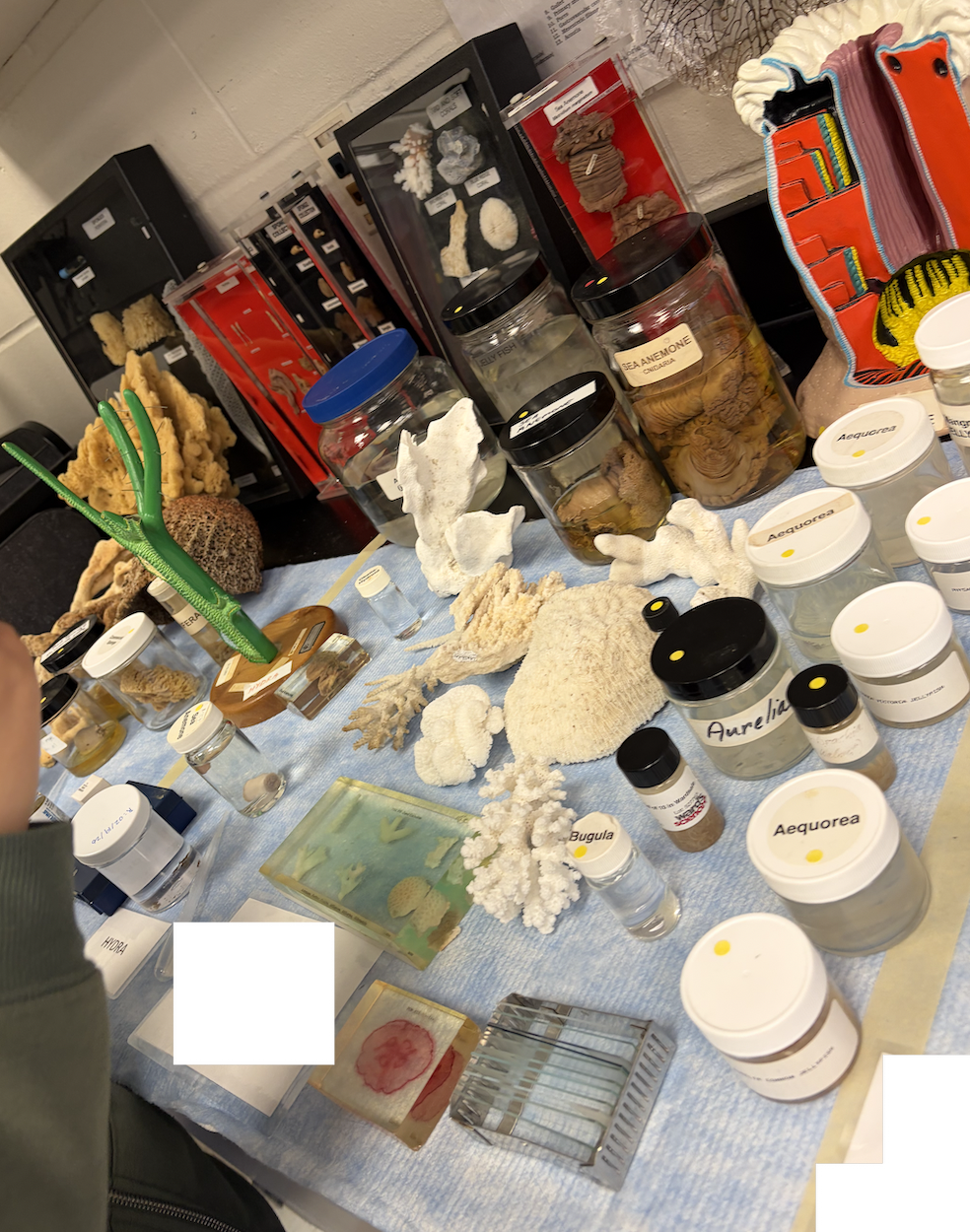
What phylum are these in?
Cnidaria
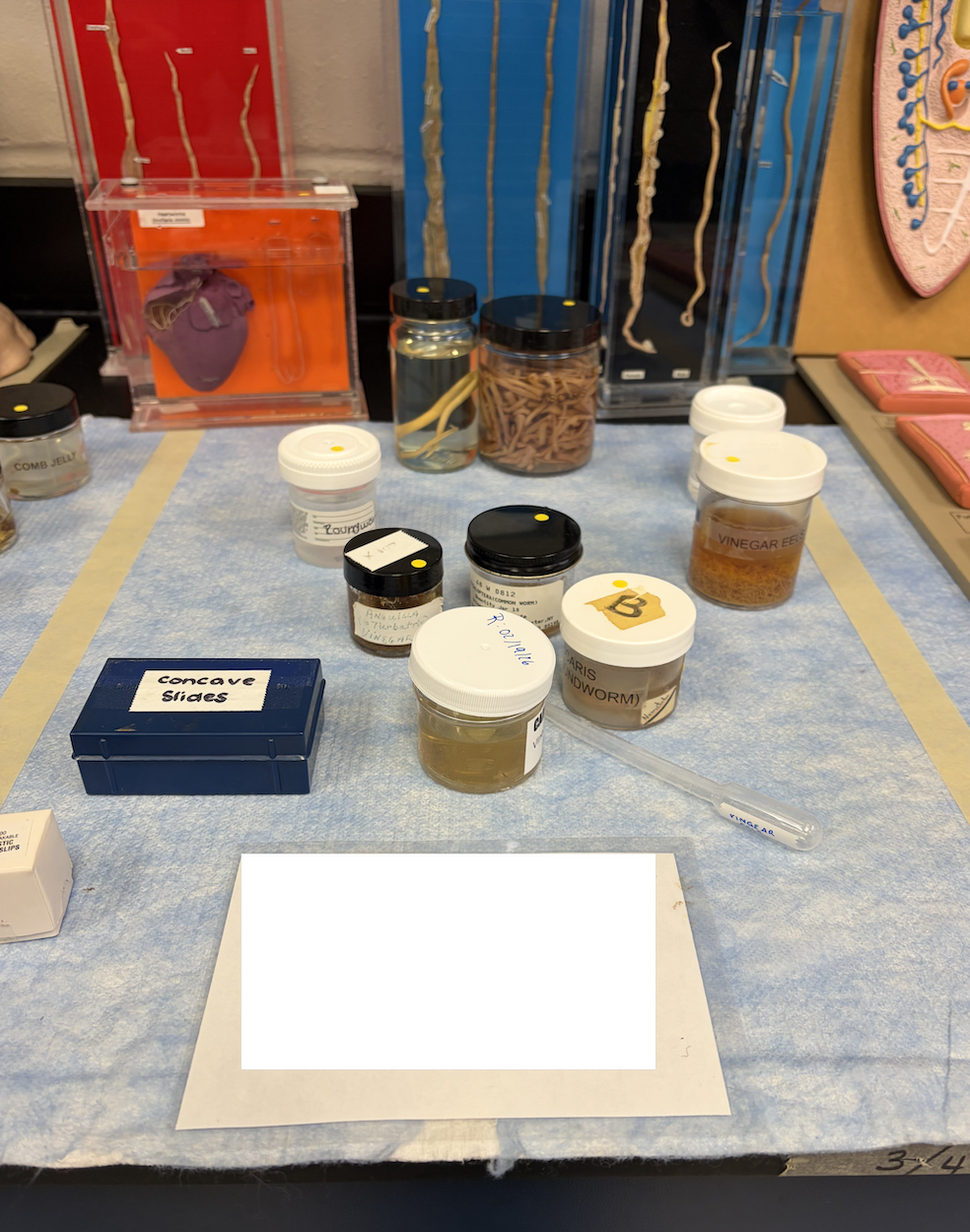
What phylum are these in?
Nematoda

What is the front/anterior and what is the back/posterior of this earthworm?
Front = left (closer to the band in the middle)
Back = right (further from the back)
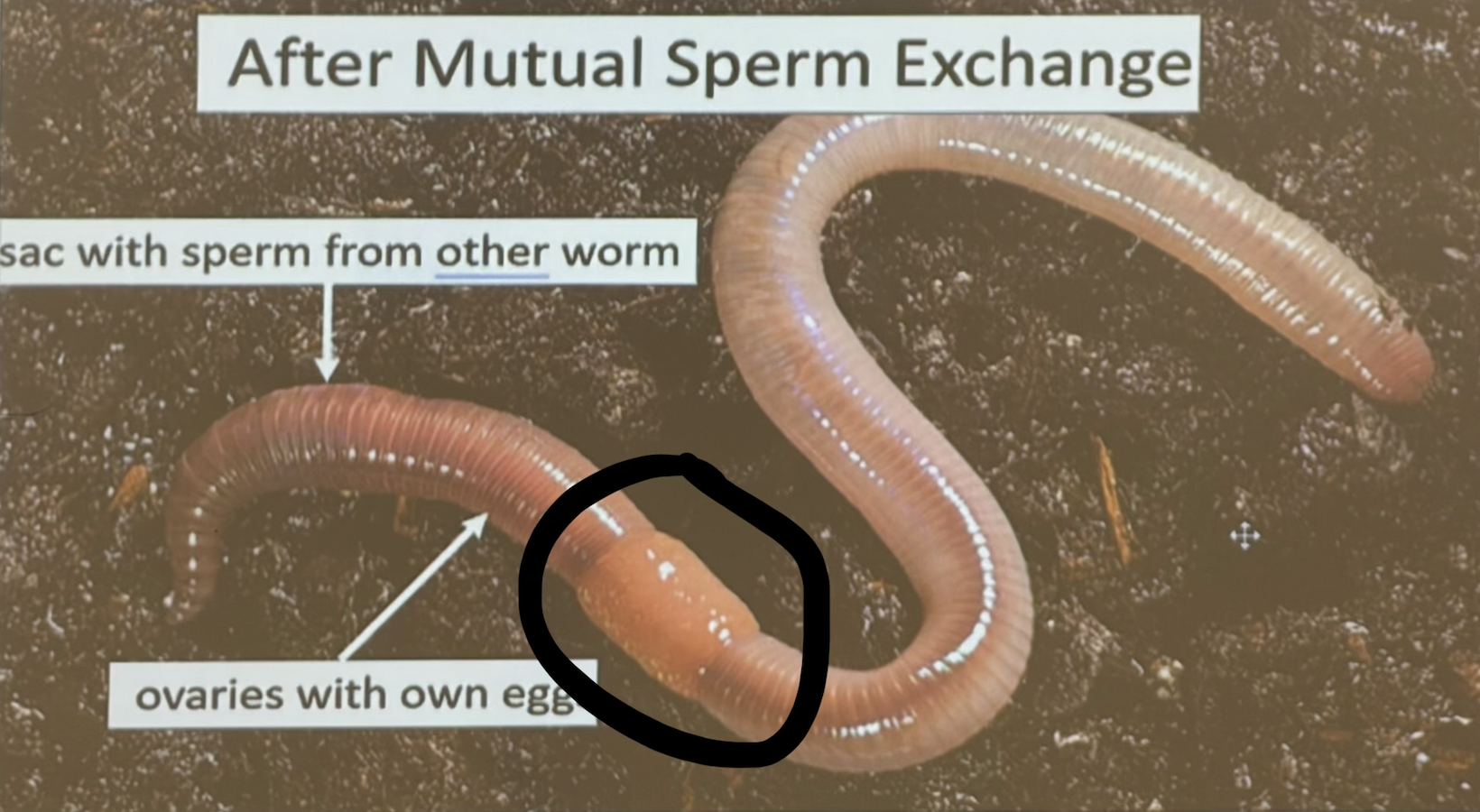
What is circled?
Clitellum (band; closest to anterior end/head)