DIGESTIVE SYSTEM FLASHCARDS
 Call Kai
 Learn
Learn Practice Test
 Spaced Repetition
 Match
Match Flashcards
 Knowt Play
1/24

There's no tags or description
Looks like no tags are added yet.
Name | Mastery | Learn | Test | Matching | Spaced | Call with Kai | Chat |
|---|
No analytics yet
Send a link to your students to track their progress
25 Terms
is pH an indicator of lipid digestion?
get because lipase breaks down triglycerides into
fatty acid
glycerol
therefore it can detect the presence of fatty acids, indicating lipid digestion. (lower pH)
what do bile salts do?
mechanical digestion
-normalize fat into smaller droplets, increasing surface area for lipase action.
can pH be used to detect carb digestion?
no because when carbs are broken down by amylase they become simple sugars (glucose, maltose, etc) and no acids are formed (pH stays the same)
enzyme changes environment to low pH
denatured
what is steak broken down into
proteins → amino acids (absorbed by the body)
body’s perfered energy source and biggest energy source (ATP)
prefered: carbs - quicker and easy to break down
biggest: lipids (fats)
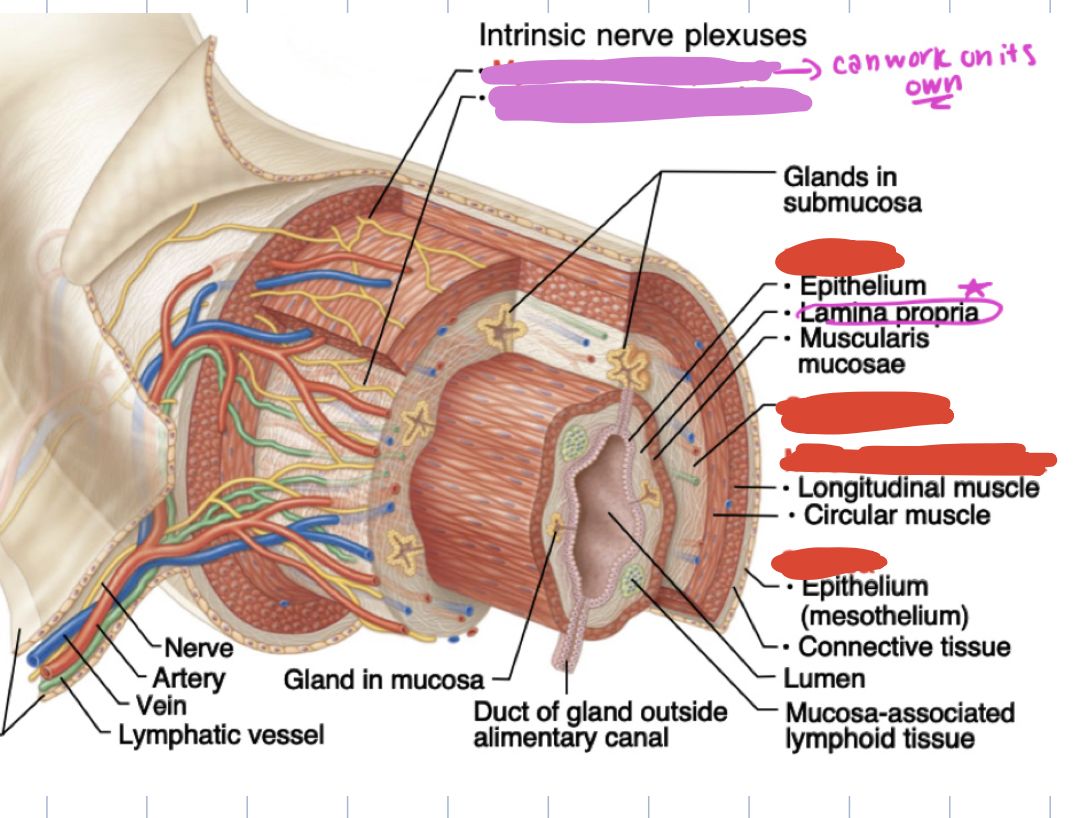
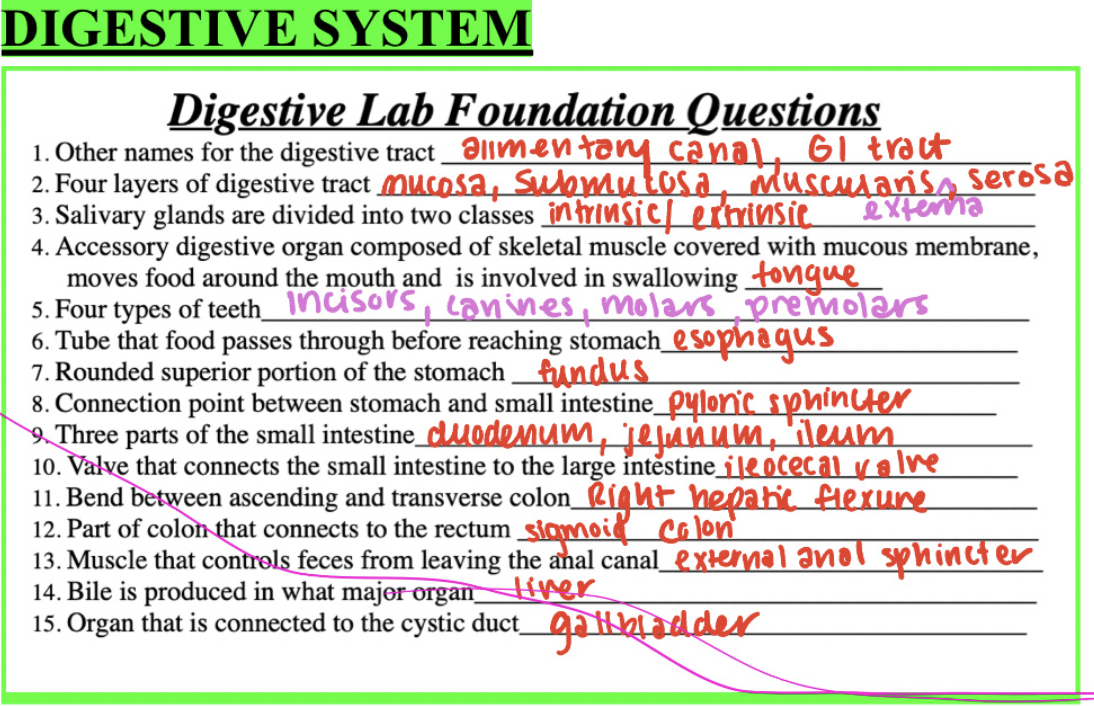
4 layers of GI tract (SM,SM) - SERIOUSLY MUSCLES SUB MUCOUS
SEROSA, muscularis externa (outer), submucosa, mucosa (inner)
The muscularis is responsible for peristalsis
submucosa contains blood vessels and nerves (secretion)
mucosa is the inner lining that absorbs nutrients.
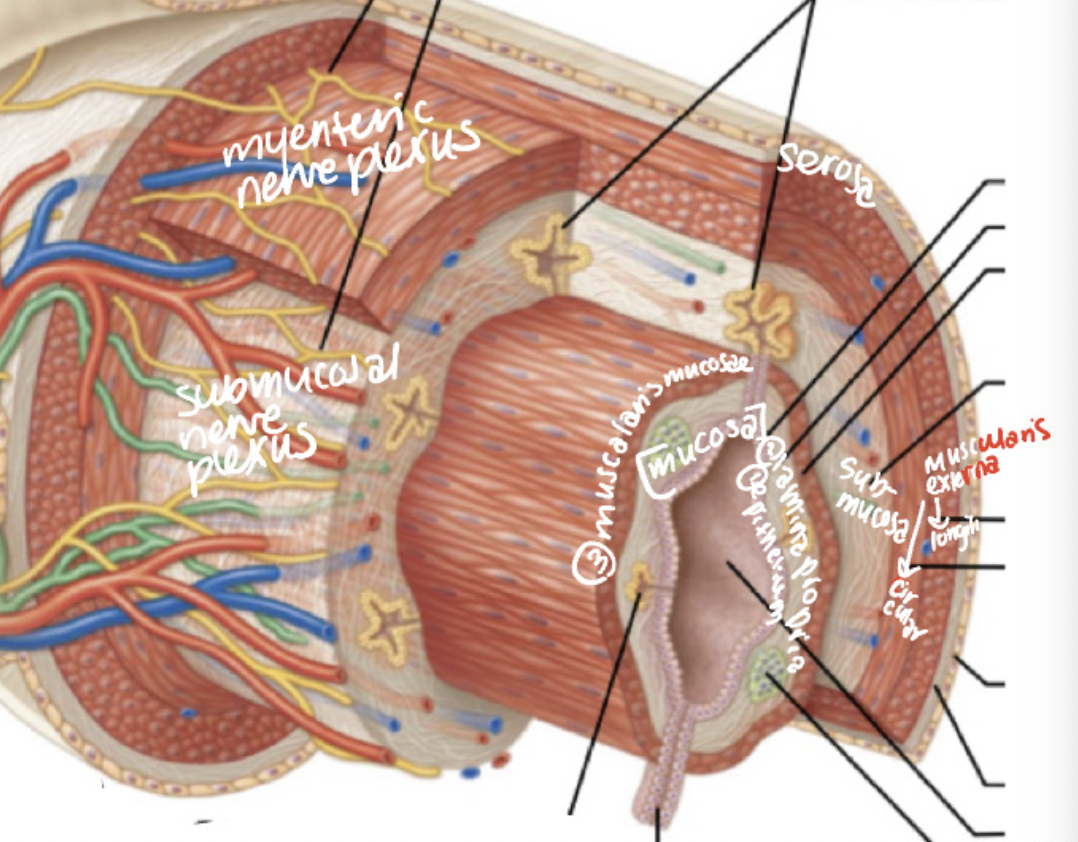
3 sublayers of mucosa
epithelium, lamina propria, muscularis mucosae
The epithelium is the innermost layer that comes into contact with digested food.
The lamina propria is a layer of connective tissue that supports the epithelium and contains blood vessels.
The muscularis mucosae is a thin layer of muscle that helps in the movement of the mucosa.
2 layers of muscularis externa
longitudinal
circular
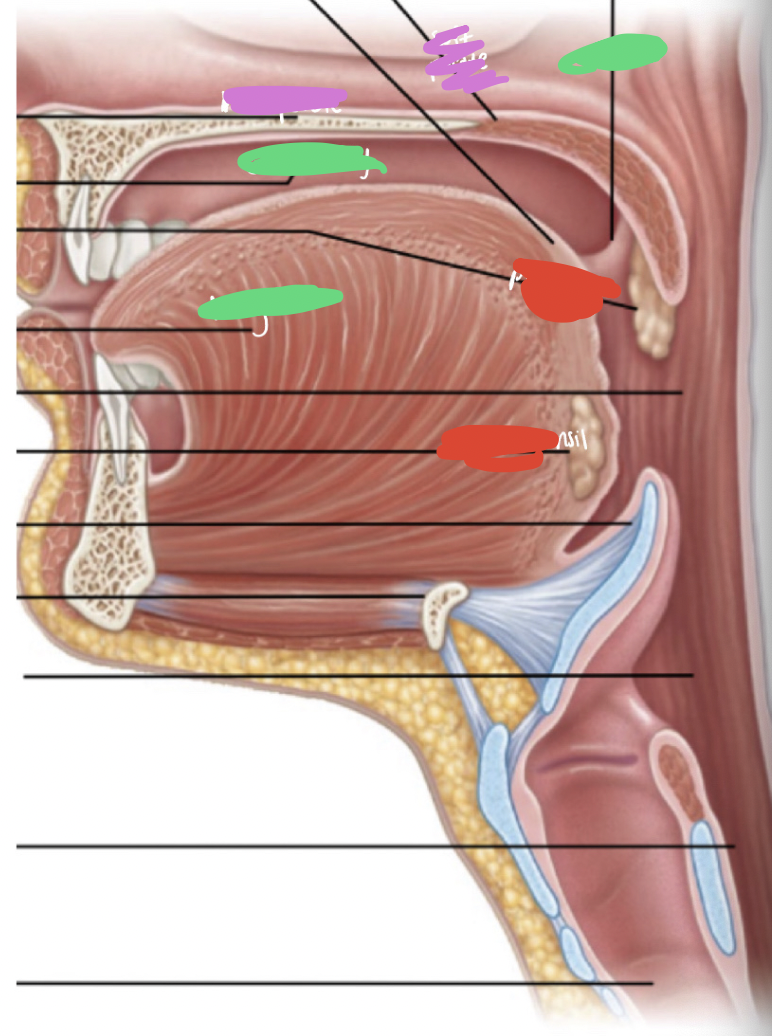
remember
PALATINE
LINGUAL for tonsils - first line of immunity
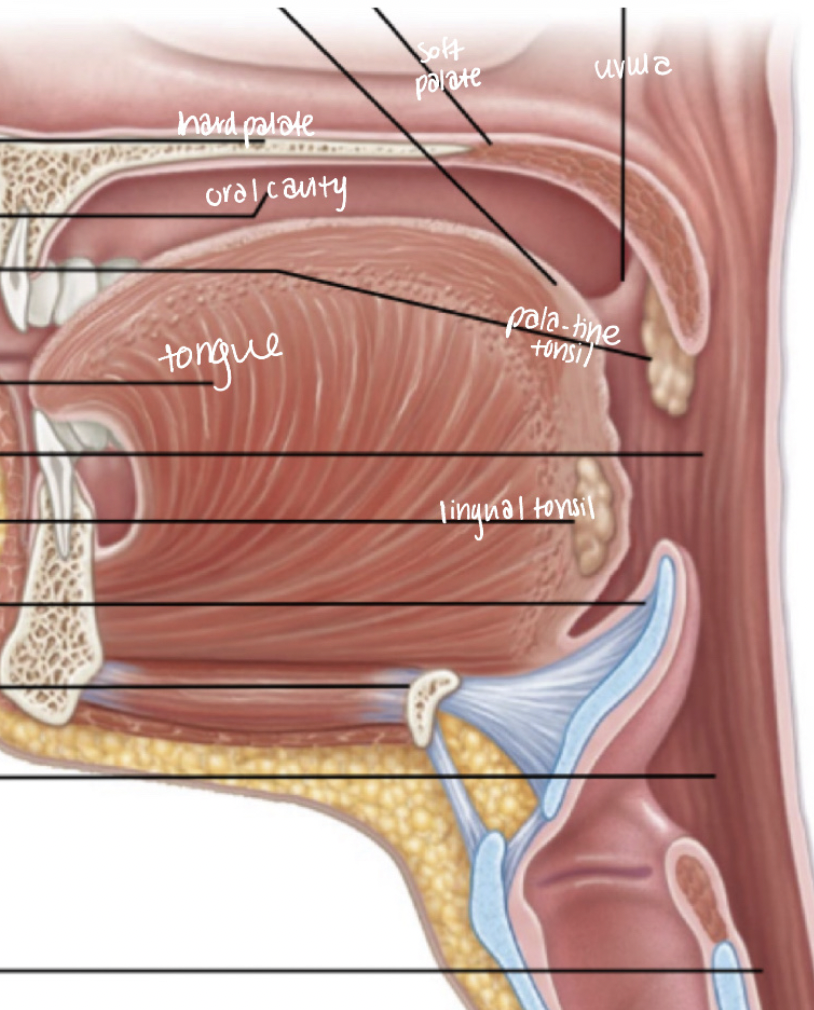
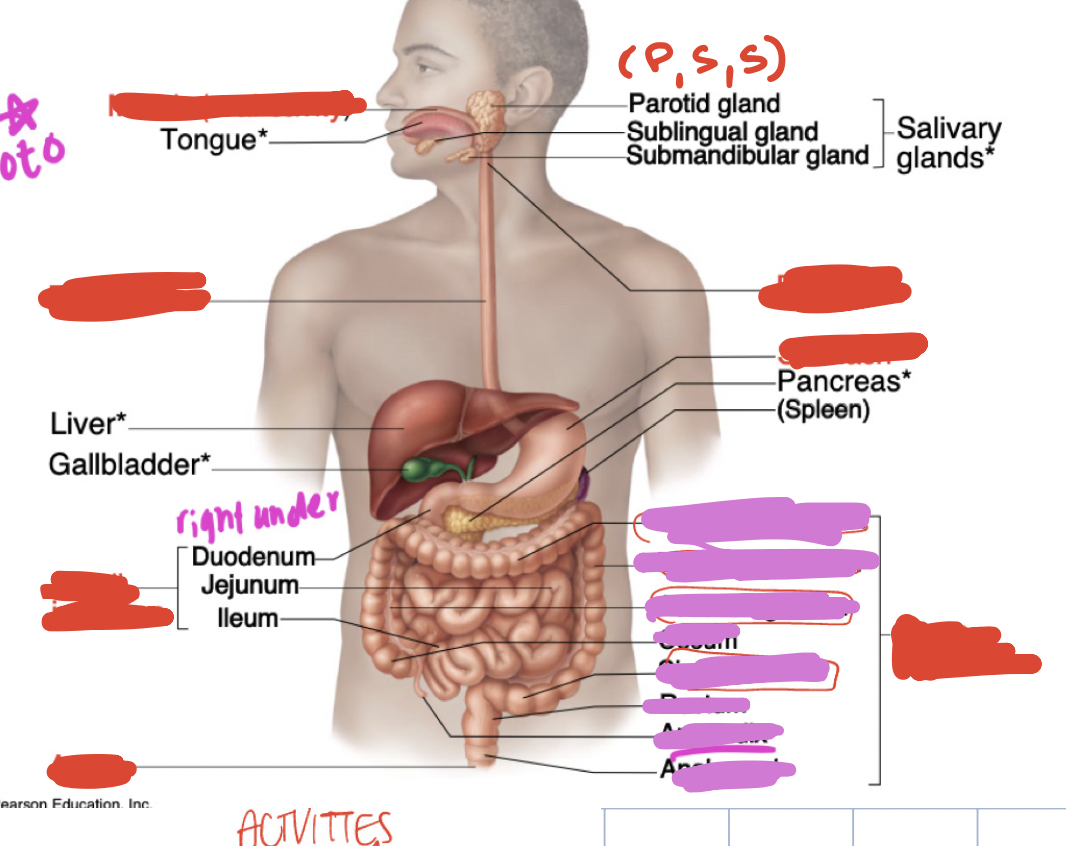
ID PHOTO 100%
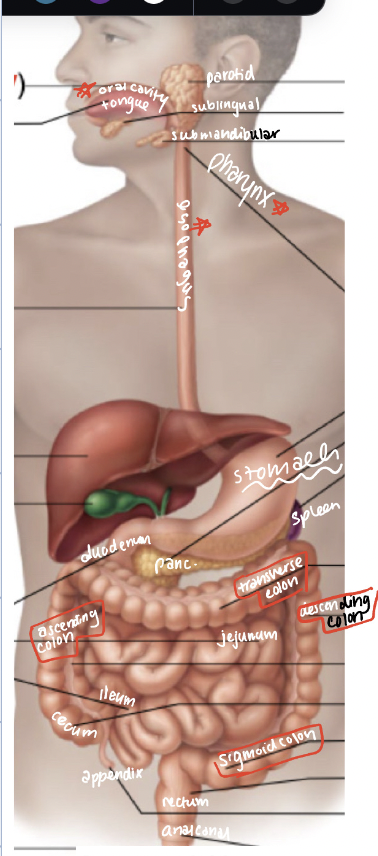
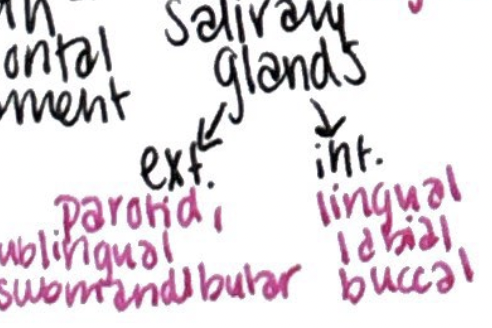
extrinsic vs intrinsic salivary glands
extrinsic
parotid
sublingual
submandibular
intrinsic
lingual
labial
buccal
main processes in digestion
ingestion
digestion
mechanical/chemical
absorption
defecation
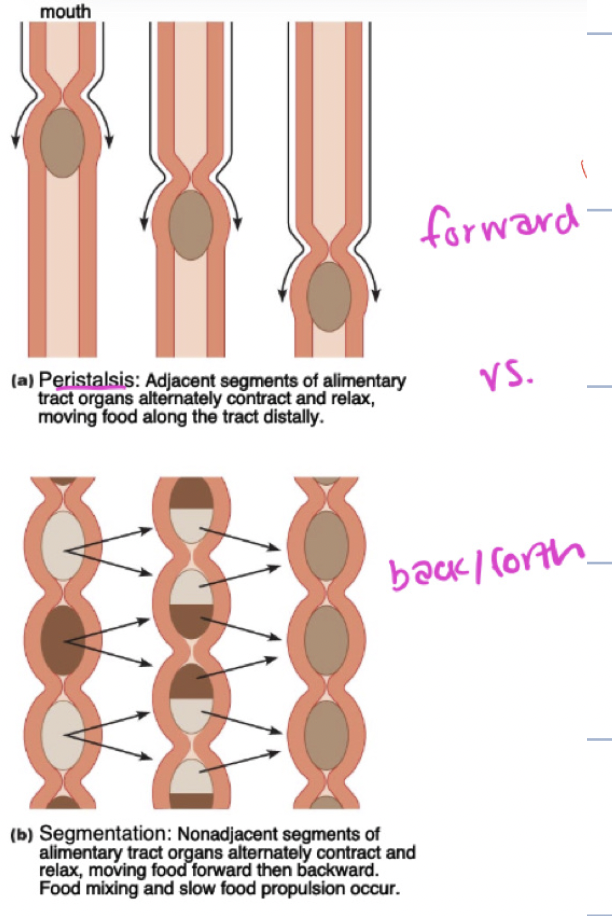
segmentation vs peristalsis
segmentation
mechanical
in small intestine
SWIRLING
peristalsis
toothpaste
propels forward
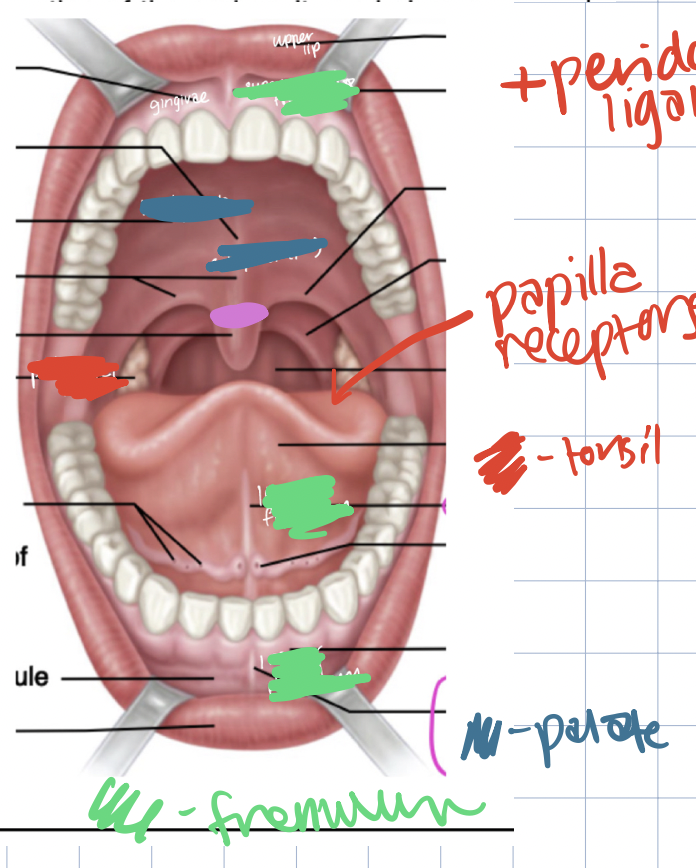
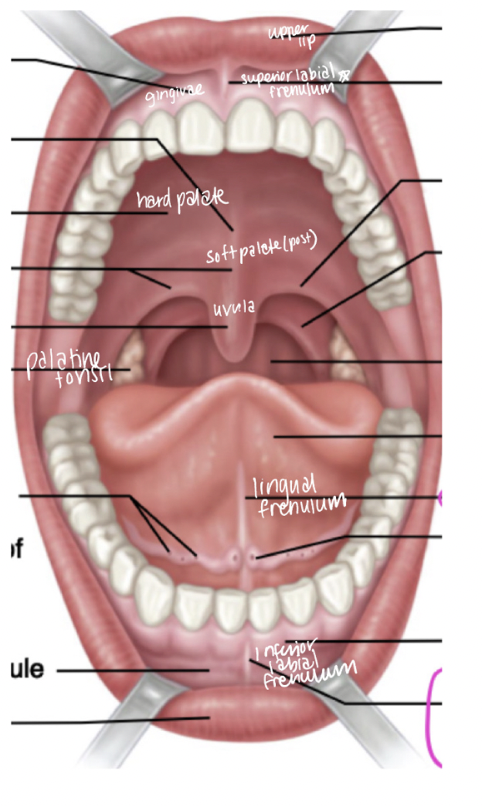
frenulum
lingual (tongue)
superior labial
inferior labial
uvula
palatine tonsil**
palate
soft
hard
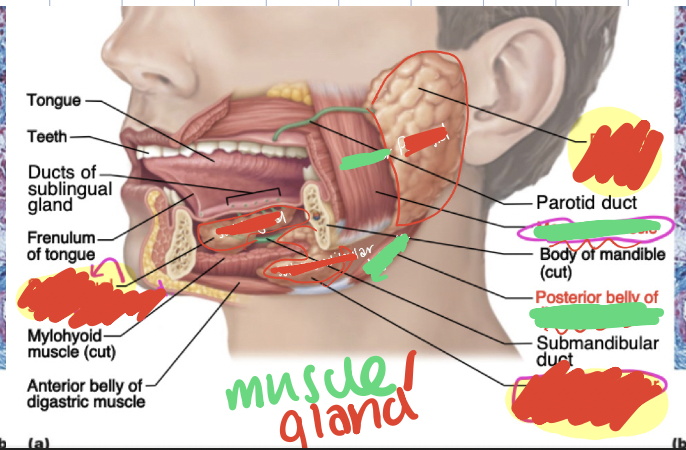
muscles and glands in mouth
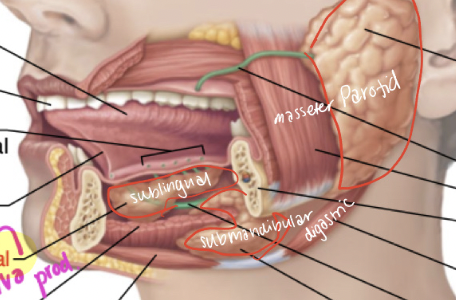
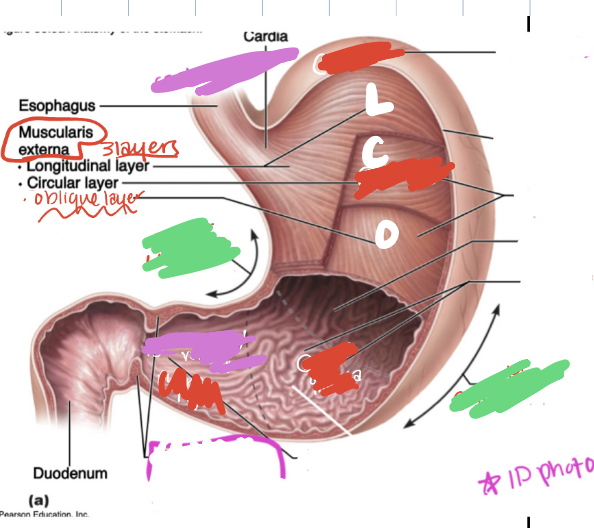
STTOMACH ID **
leads into duodenum
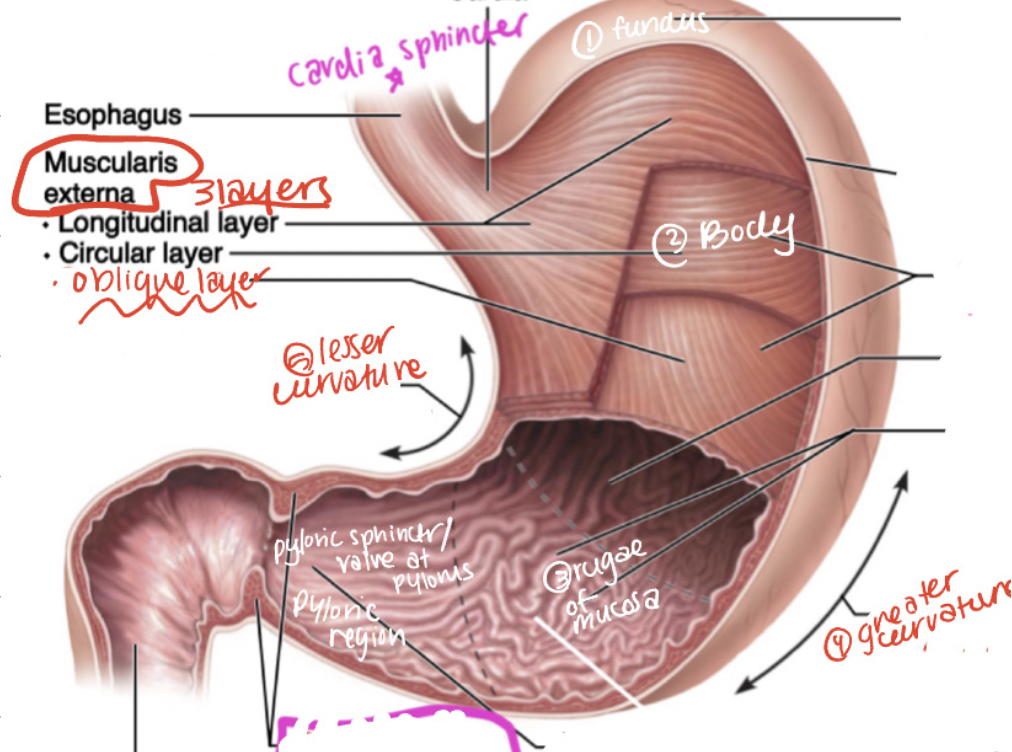
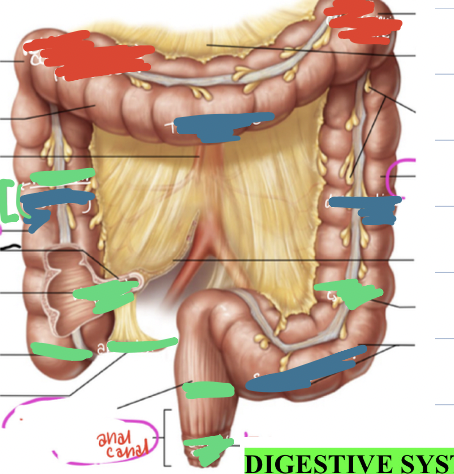
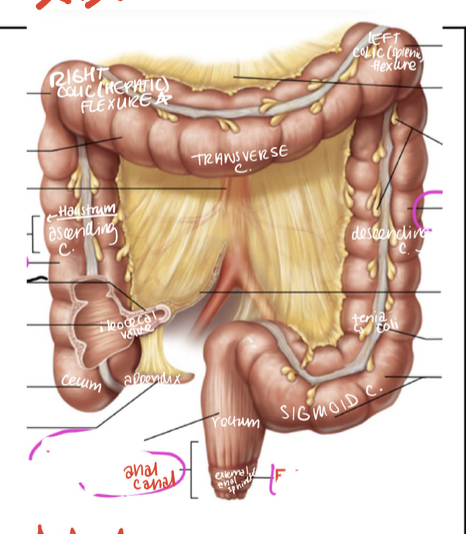
LARGE INTESTINE ID
remember COLIC FLEXURES
right colic (hepatic) flexure
left colic (splenic) flexure
HAUSTRUM
TENIA COLI
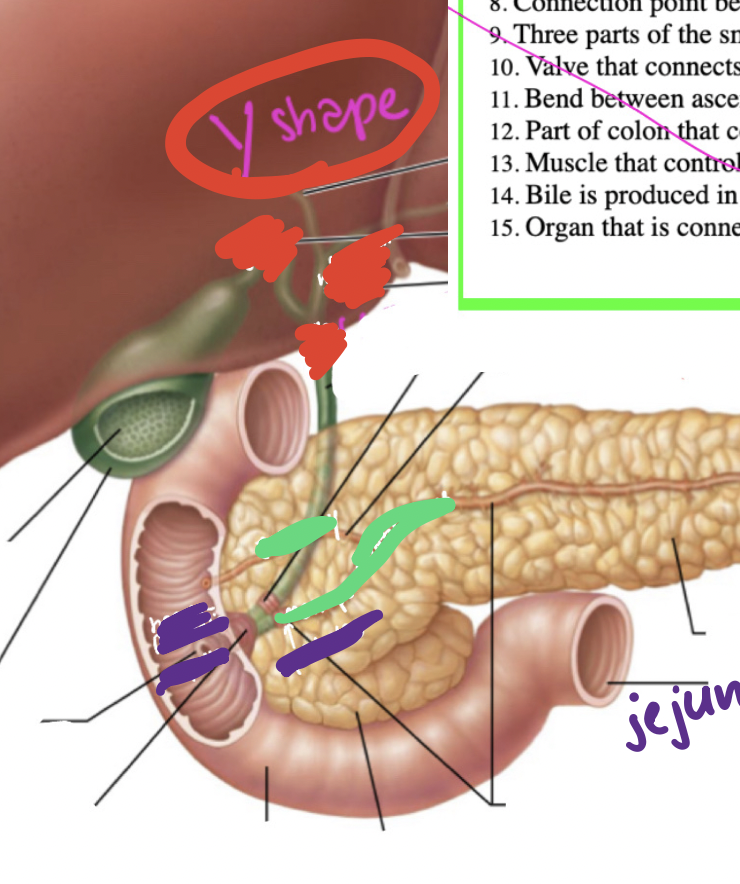
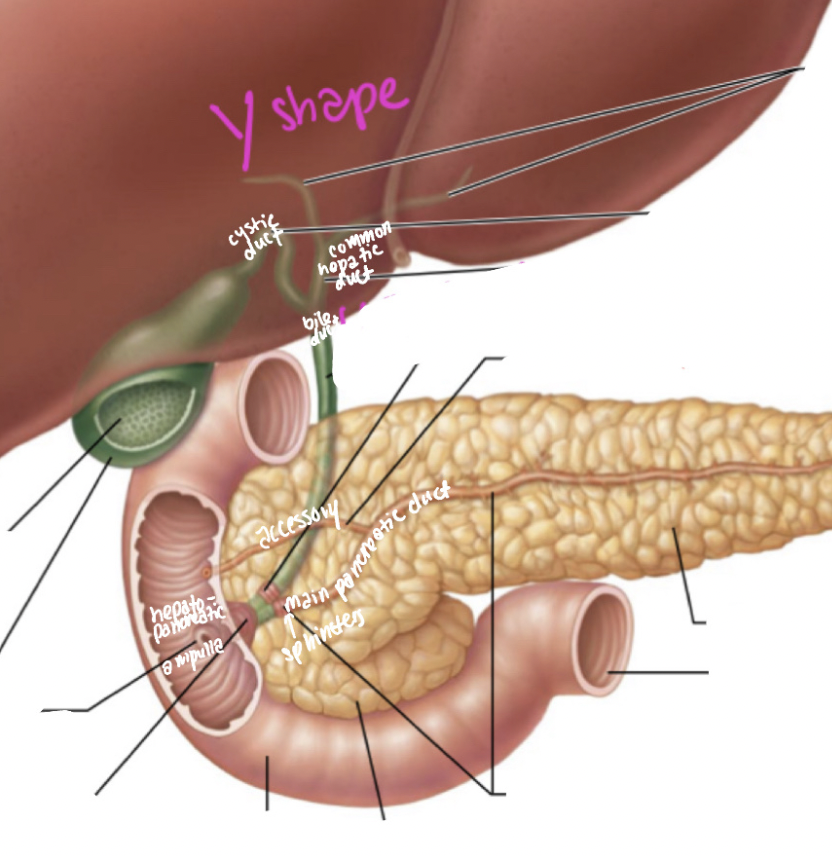
ducts ID
hepatopancreatic ampulla
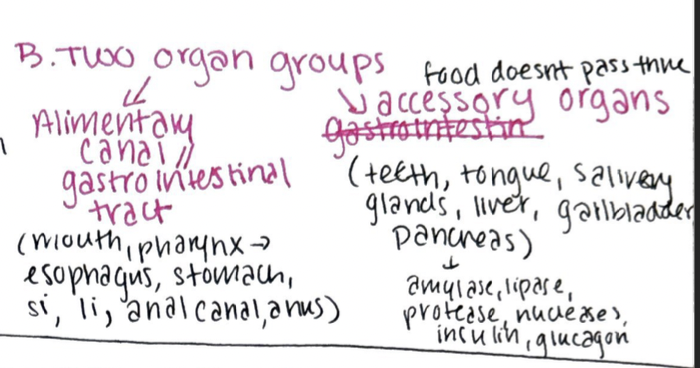
two organ groups in digestive
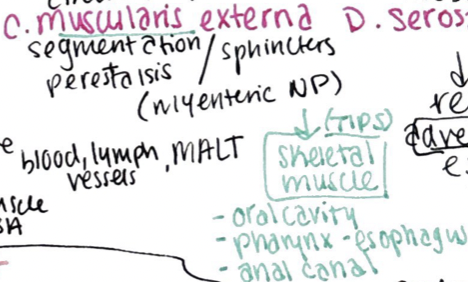
where is skeletal muscle in muscularis externa
found in the esophagus and anus. It allows for voluntary control over swallowing and defecation.
serosa gets replaced by what is esophagus and stomach?
adventitia
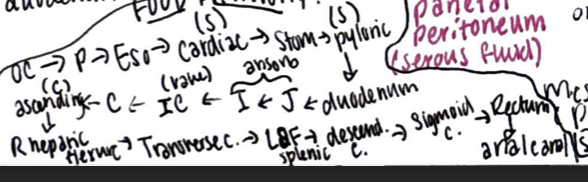
food pathway
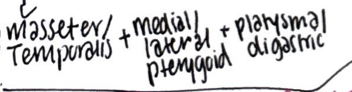
what are the chewing muscles?