Deep Back Muscles and Thorax
 Call Kai
 Learn
Learn Practice Test
 Spaced Repetition
 Match
Match Flashcards
 Knowt Play
1/19

There's no tags or description
Looks like no tags are added yet.
Name | Mastery | Learn | Test | Matching | Spaced | Call with Kai | Chat |
|---|
No analytics yet
Send a link to your students to track their progress
20 Terms
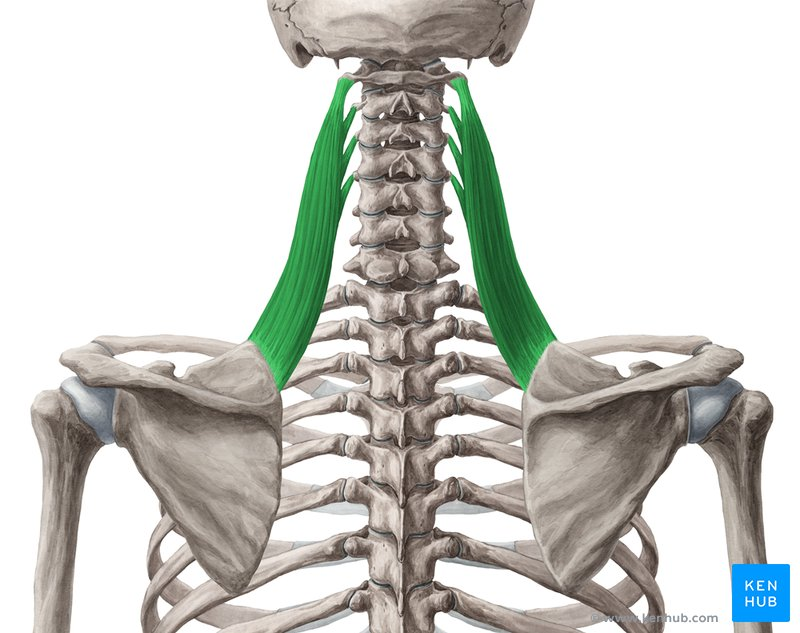
levator scapulae
origin: transverse processes of C1 to C4
insertion: superior angle of the scapula
action: elevates the scapula; rotates the scapula at the glenohumeral joint (raises the shoulder blade)
spinalis
origin: spinous processes of T11 to L2
insertion: spinous processes of T2 to T8
action: bilaterally extends the back and unilaterally flexes the back to the ipsilateral side

longissimus
origin: illiac crest, sacrum, and lumbar and sacral spinous processes
insertion: transverse processes at higher levels and the medial aspect of the ribs
action: bilaterally extends the back and unilaterally flexes the back to the ipsilateral side with more leverage than spinalis since its farther from the midline

iliocostalis
origin: illiac crest
insertion: angles of the ribs
action: bilaterally extends the back and unilaterally flexes the back to the ipsilateral side

erector spinae group
spinalis, longissimus, and iliocostalis (straightens the spine)

rotatores breves
origin: transverse processes
insertion: spinous process one level higher
action: bilaterally extends the spine and unilaterally rotates the spine to the contralateral side

rotatores longus
origin: transverse processes
insertion: spinous process 2 levels higher
action: bilaterally extends the spine and unilaterally rotates the spine to the contralateral side

multifidus
origin: transverse processes
insertion: spinous processes 2-4 levels higher
action: bilaterally extends the spine and unilaterally rotates the spine to the contralateral side

semispinalis
origin: transverse processes
insertion: spinous processes 4-6 levels higher
action: bilaterally extends the spine and unilaterally rotates the spine to the contralateral side
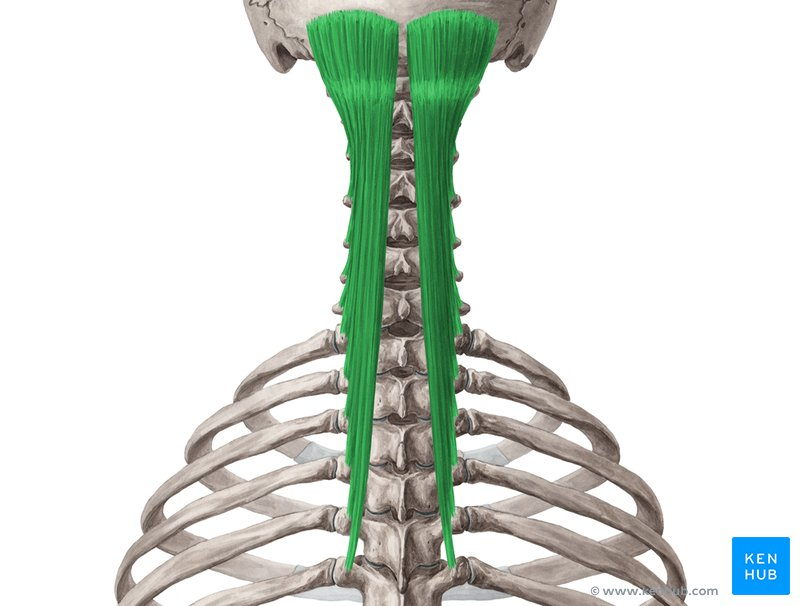
the transversospinalis group
rotatores breves, rotatores longus, multifidus, and semispinalis

right lung
two fissures (oblique and horizontal)
superior, middle, and inferior lobes
left lung
one fissure (oblique)
superior and inferior lobe
cardiac notch makes room for the heart
main bronchus
right is wider, shorter, and steeper than the left
left is narrower, longer, and more horizontal since it has to pass under the aortic arch

carina
ridge where the trachea splits into the 2 main bronchi

visceral pleura
the layer fused directly to the lung surface and can’t be peeled off the lung
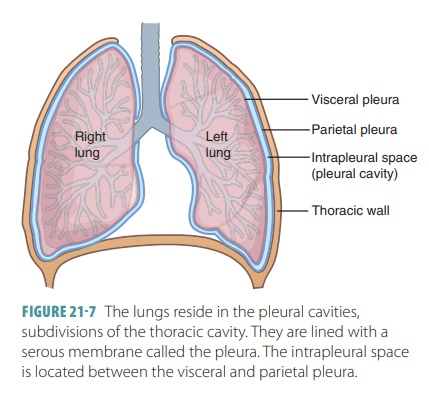
parietal pleura
the layer lining the thoracic wall, diaphragm, and mediastinum

pleural cavity
potential space between visceral and parietal pleura containing a thin film of serous fluid that lubricates lung movement and keeps the lung apposed to the chest wall
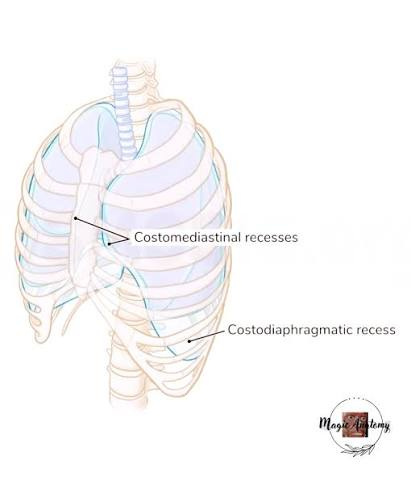
pleural recesses
extra potential space where the pleura fold back on itself in areas the lung doesn’t fully fill even on a deep breath
diaphragm
origin: inferior margins of the rib cage
insertion: central tendon of the diaphragm
action: contracts to flatten the dome and draw the central tendon inferiorly, increasing thoracic volume for respiration

serratus posterior inferior
origin: spinous processes of T11 to L2
insertion: ribs 8-12
action: depresses the ribs forcing air out during forceful exhalation
