Casts
 Call Kai
 Learn
Learn Practice Test
 Spaced Repetition
 Match
Match Flashcards
 Knowt Play
1/30

There's no tags or description
Looks like no tags are added yet.
Name | Mastery | Learn | Test | Matching | Spaced | Call with Kai | Chat |
|---|
No analytics yet
Send a link to your students to track their progress
31 Terms

Hyaline cast
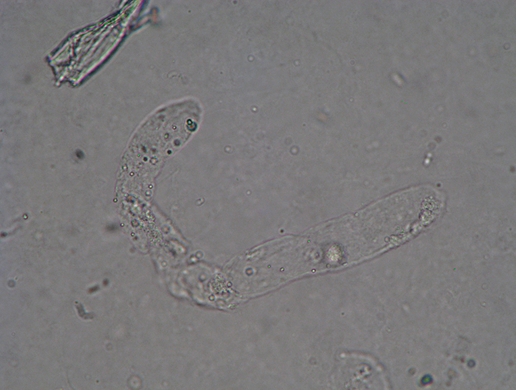
Hyaline cast, note refractile fiber in the top left corner

Hyaline cast, several RBCs present

Hyaline cast and numerous squamous epithelial cells

Cylindroid. One end resembles a cast; the other end resembles a mucus filament

Hemoglobin cast
Clinical significance of RBC casts
RBC casts are associated with damage to the glomerulus or glomerulonephritis, bleeding into the nephron, and lupus
Tips for describing RBC casts
Casts have parallel sides with rounded edges and are degenerated into a yellow-brown homogeneous structure

WBC cast
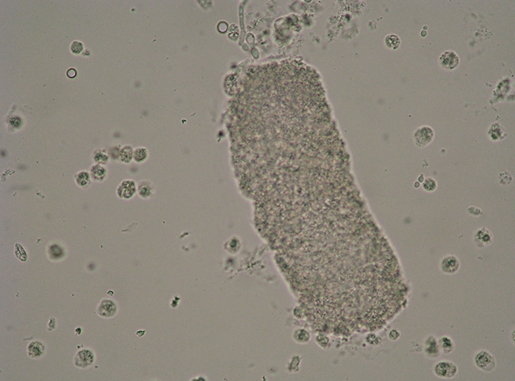
Broad WBC cast with many free-floating WBCs, two RBCs and budding yeast present

Degenerating WBC cast. WBCs, RBCs, a hyaline cast, a RTE, and artifact fibers are also present
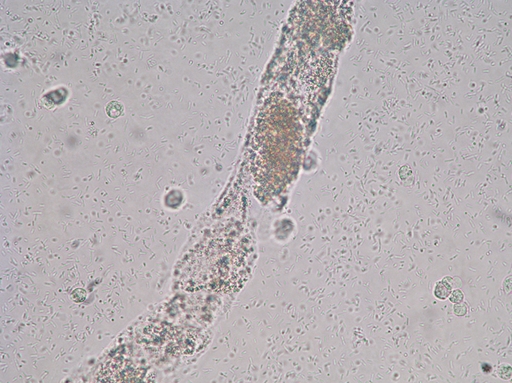
Bacterial cast. Mixed granular cast with bacteria embedded. Note bacteria surrounding the cast. These are uncom
Clinical significance of WBC casts
Can indicate renal inflammation, infection, acute pyelonephritis, or interstitial nephritis. The presence of casts can distinguish pyelonephritis (upper UTI) from cystitis (lower UTI)
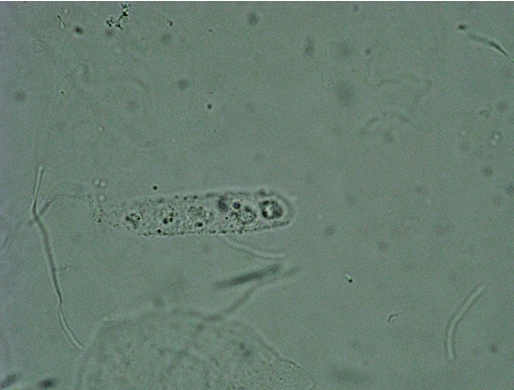
Renal epithelial cell cast

Cast with oval fat bodies
Clinical significance of Epithelial cell casts
Most associated with acute tubular necrosis, advanced tubular destruction, and heavy metal or drug toxicity

Granular cast

Granular cast with squamous epithelial cell and RBC

Granular cast. Note RBCs, WBCs, and bacteria

One granular cast. Numerous sperm present

One granular cast and two hyaline casts
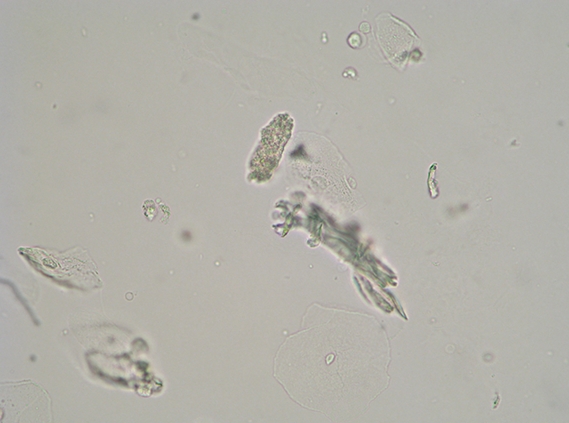
One granular cast with four squamous epithelial cells. Note highly refractile artifact
Clinical significance of granular casts
Can indicate urinary stasis, tubular disease, glomerulonephritis, pyelonephritis, or may be seen in stress or after exercise

Fatty cast. Note oval fat bodies within the matrix
Clinical significance of fatty casts
Maltese cross formations can be seen with cholesterol under polarization

Waxy cast located in the center with four granular casts to the side

Waxy cast

Waxy cast w fragmented end and notches on its side. WBCs are also present

Broad granular cast
Clinical significance of waxy cast
Indicate urinary stasis, chronic renal failure, or end-stage renal disease
Clinical significance of broad casts
Represent extreme urinary stasis and renal failure