Microstructure of the Endocrine System Pt. 1 - Pituitary Gland and Hypothalamus
 Call Kai
 Learn
Learn Practice Test
 Spaced Repetition
 Match
Match Flashcards
 Knowt Play
1/107

There's no tags or description
Looks like no tags are added yet.
Name | Mastery | Learn | Test | Matching | Spaced | Call with Kai | Chat |
|---|
No analytics yet
Send a link to your students to track their progress
108 Terms
a series of organs comprising a body control system that influences homeostatic processes
What is the endocrine system?
-salt & water balance
-metabolism
-growth
-circadian rhythms
-sexual function and reproduction
-behavior
What are 6 examples of homeostatic processes influenced by the endocrine system?
regulates cells via secretion of hormones into the bloodstream, which then travel to affect distant cells
What is the function of the endocrine system?
broadly similar to NS, but acts on a slower scale and elicits a more prolonged response
How does the endocrine system compare to the nervous system?
-paracrine -> diffuse locally
-autocrine -> act on cell that secreted it
-holocrine -> sebaceous gland cells that spill their contents into a duct (cell destroys itself)
What are 3 other examples of cell signaling, besides endocrine, and explain?

-vary over time (ex: melatonin highest at night)
-maintained in tight ranges (ex: picograms)
What are 2 characteristics of hormones in the blood?
an active feedback system -> hormone levels can act as positive (rarely) or negative (common) feedback regulators upon cells that synthesize them or cells that secrete them
What is required for tight control of hormone levels in the blood, and explain?
regulation of hormone levels in the blood:

-discrete endocrine organs
-individual cells or clusters of cells within other organs (ex: in the pancreas)
What 2 main structures do endocrine organs/cells consist of?
-pituitary gland and hypothalamus
-thyroid and parathyroid glands
-adrenal glands
-ovaries
-testes
-placenta
What are 6 examples of discrete endocrine organs?
Islets of Langerhans (insulin/glucagon)
What cluster of cells in the pancreas are considered endocrine cells?
endocrine organs and cells:

a pea-sized structure connected to the hypothalamus of the brain by the infundibular stalk
What is the pituitary gland, considering its structure?
the hypophysis
What is the pituitary gland also known as?
the sella turcica of the sphenoid bone
What structure is the pituitary gland located in?
regulates activities of many organs
What is the function of the pituitary gland?
the "master gland"
What is the pituitary gland often referred to as, due to its regulation of the activities of many organs?
connected both functionally and physically (via axons) with certain nuclei of the hypothalamus
How does the pituitary gland interact with the hypothalamus?
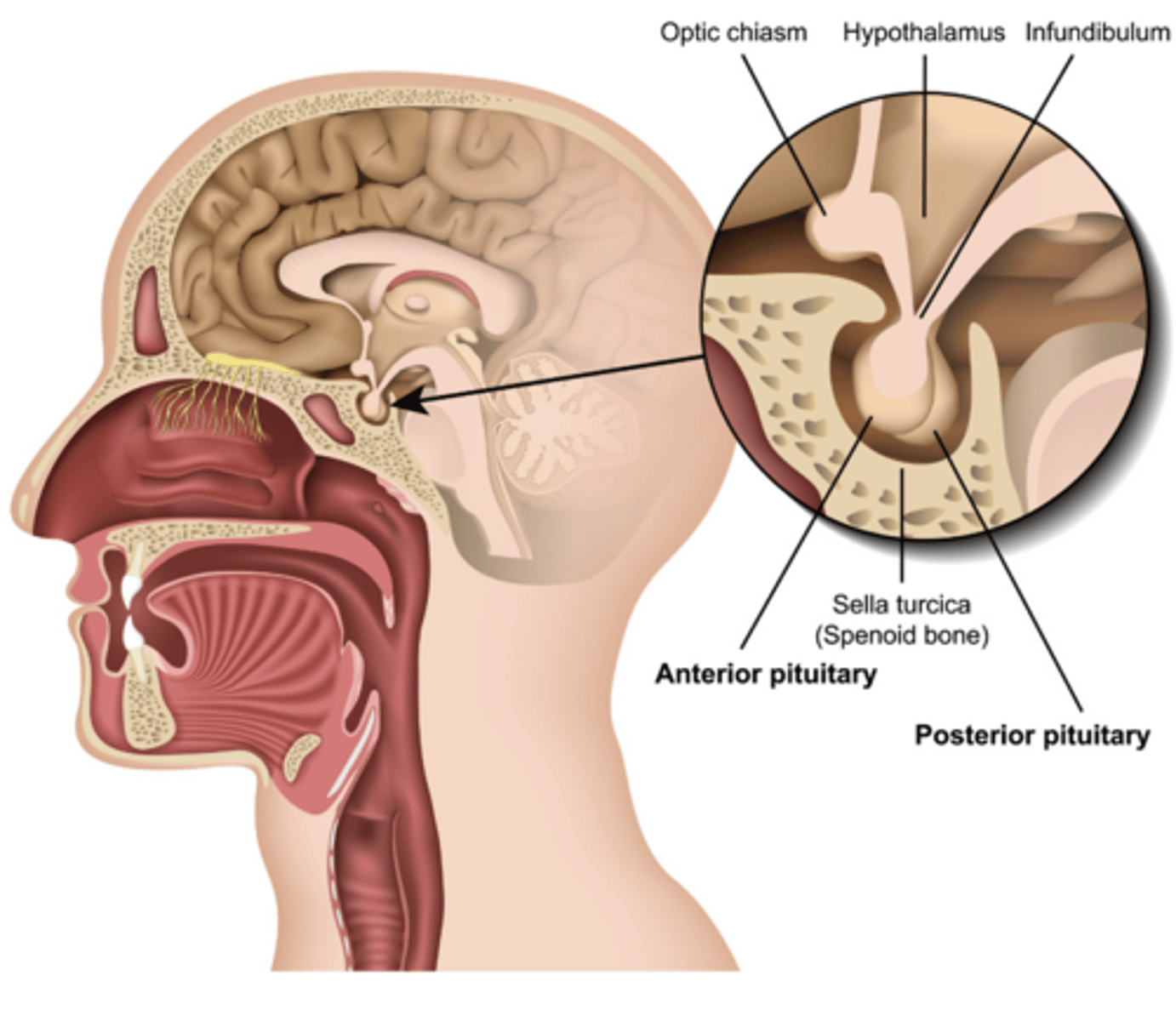
abnormal expansion of the pituitary, such as in the case of a pituitary adenoma, can cause vision problems
What is the clinical significance of the proximity of the optic chiasm to the pituitary?
-anterior pituitary (adenohypophysis)
-posterior pituitary (neurohypophysis)
What are the 2 main components of the pituitary gland?
anterior and posterior are derived from different embryonic origins
What is the origin of the pituitary gland like?
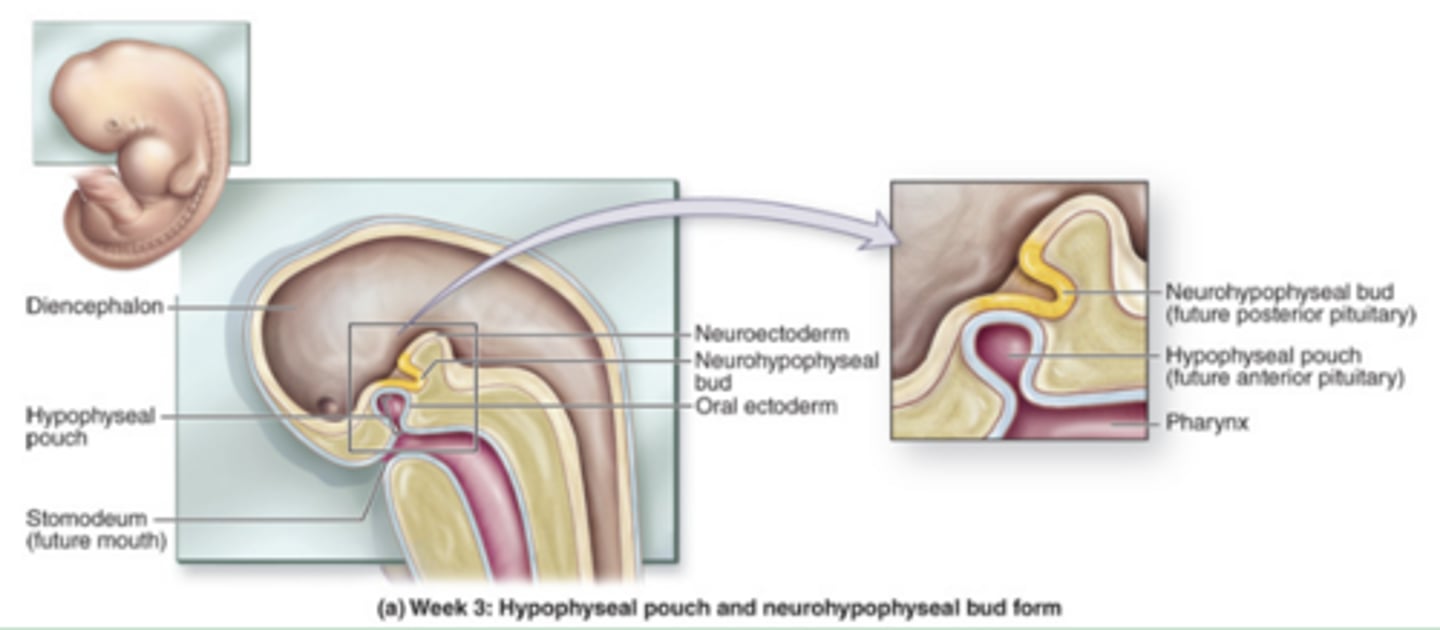
is an upgrowth of the oral ectoderm (hypophyseal pouch)
What is the embryonic origin of the adenohypophysis (anterior pituitary)?
glandular -> mainly synthesis of hormones
What is the composition of the adenohypophysis (anterior pituitary) like, and explain the result?
is a downgrowth of the future diencephalon (neurohypophyseal bud)
What is the embryonic origin of the neurohypophysis (posterior pituitary)?
neural (many axons) -> storage for hormones sent down from the hypothalamus
What is the composition of the neurohypophysis (posterior pituitary) like, and explain the result?
origins of pituitary:
the pars distalis
What is the anterior pituitary/adenohypophysis also known as?
the pars nervosa
What is the posterior pituitary/neurohypophysis also known as?
-anterior -> dark profile
-posterior -> light profile
How do the anterior and posterior pituitary glands compare histologically?
histo of pituitary:
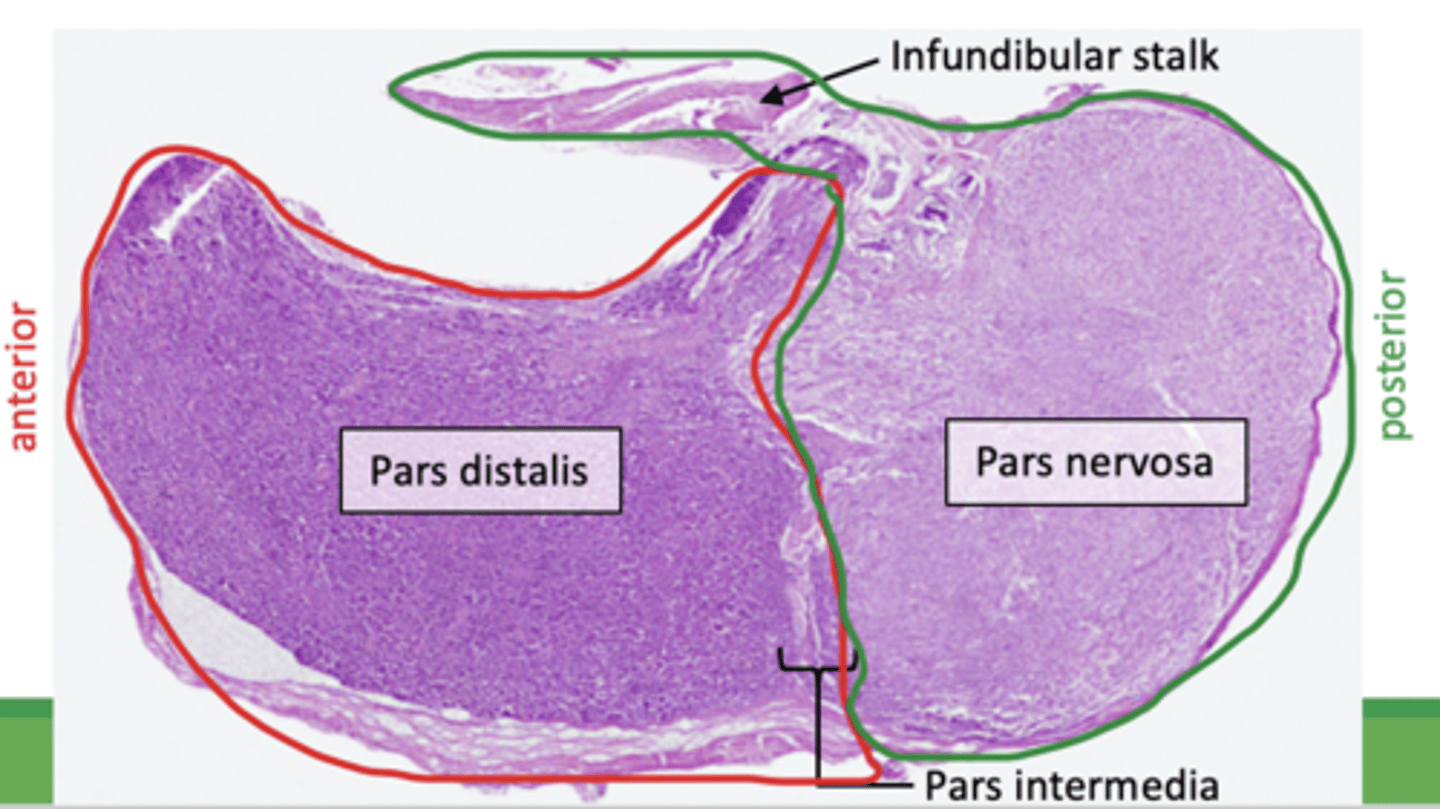
due to dual embryonic origins, the gland is 2 glands in 1 -> united structurally, but with differing characteristics
How does the structure/composition of the pituitary affect its function, and explain?

-synthesizes many hormones
-stains darkly in histo section (H&E)
What are 2 defining features of the anterior pituitary that differ from the posterior pituitary?
-stores and secretes hormones shipped from the hypothalamus, does not synthesize hormones
-stains lightly in histo section (H&E)
What are 2 defining features of the posterior pituitary that differ from the anterior pituitary?
it has 3 distinct areas
What is the composition of the anterior pituitary like?
-pars distalis (largest)
-pars intermedia
-pars tuberalis
What are the 3 distinct areas of the anterior pituitary?
area responsible for hormone synthesis
What is the function of the pars distalis of the anterior pituitary?
very cellular with cells arranged in "cords" wrapped in CT and many fenestrated capillaries (medium permeable capillaries that fxn to allow passage of proteins)
What is the structure/composition of the pars distalis of the anterior pituitary like?
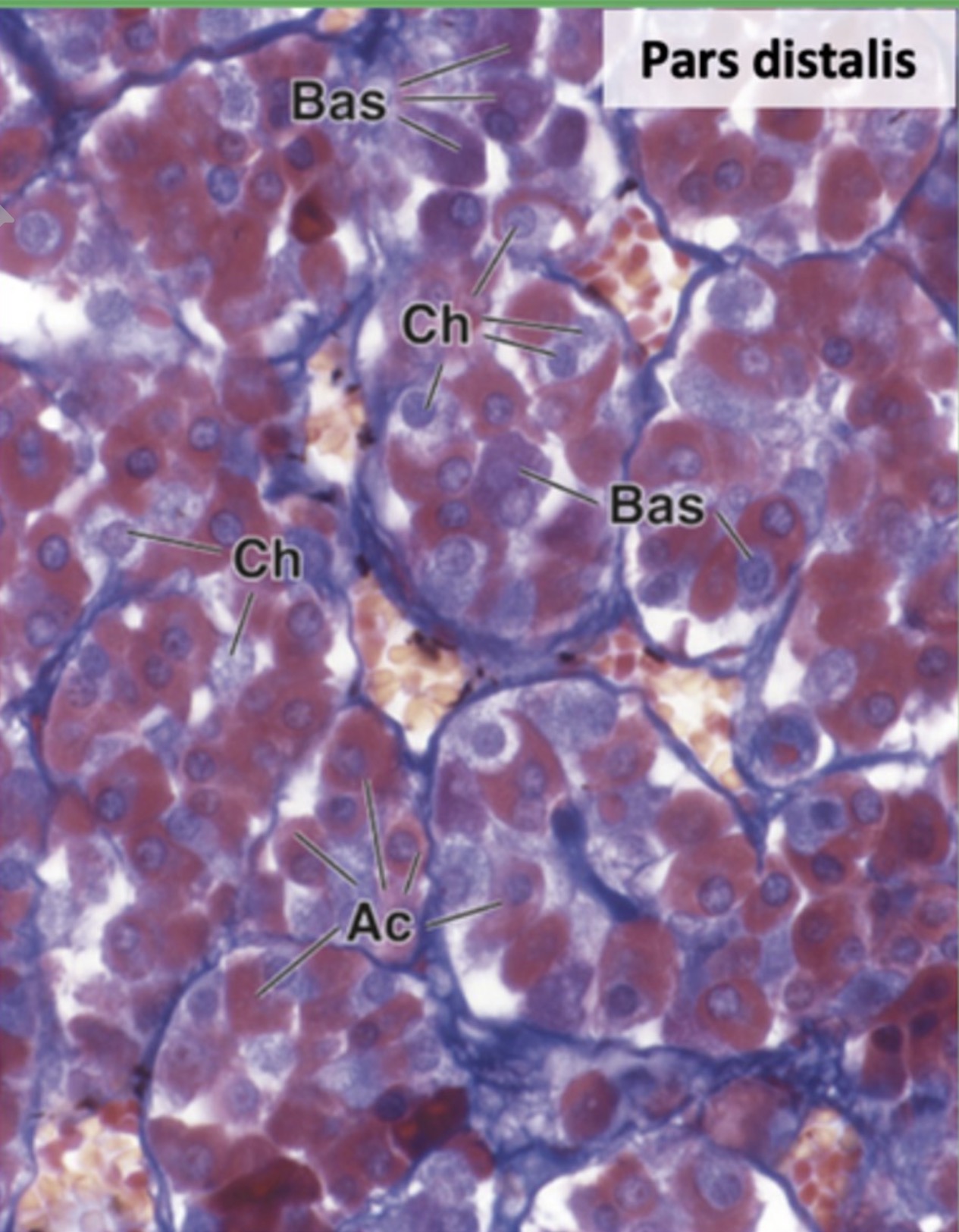
CT is seen as dark blue lines. Erythrocytes are yellow inside fenestrated capillaries. Cells of the pars distalis include acidophils (Ac) in red, basophils (Bas) in purple, and chromophobes (Ch) which are virtually unstained:
contains spaces filled with viscous fluid ("colloid cysts")
What is the structure/composition of the pars intermedia of the anterior pituitary like?
is a histological and embryologic landmark (between anterior and posterior pituitary), but functionally unimportant in adults
How does the significance of the pars intermedia compare histologically, embryologically, and functionally?
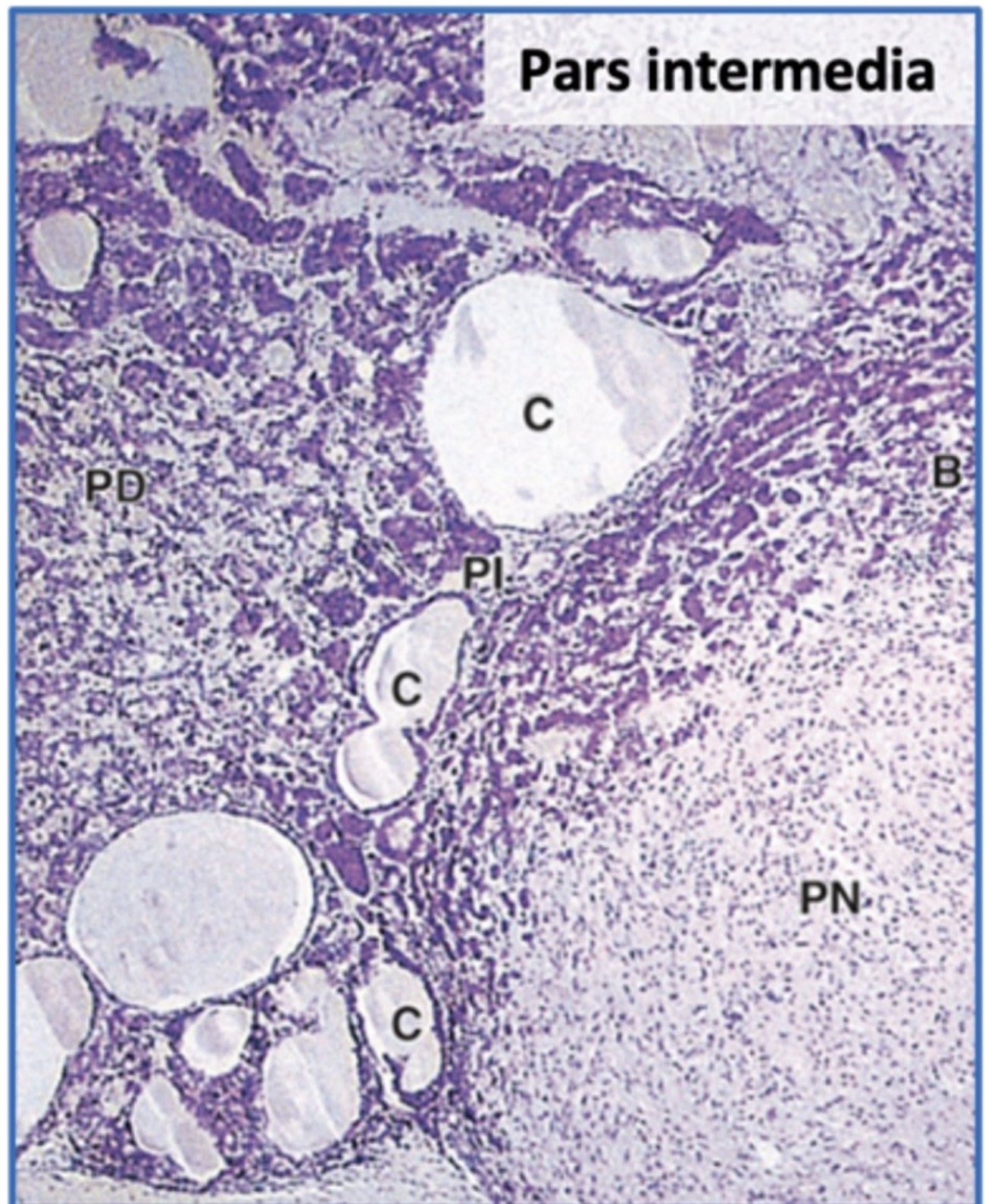
histo of pars intermedia, note colloid is a viscous fluid solution that contains large molecules:
structural element wrapped around the infundibular stalk that serves as a scaffold for capillaries of the hypophyseal portal system
What is the pars tuberalis?
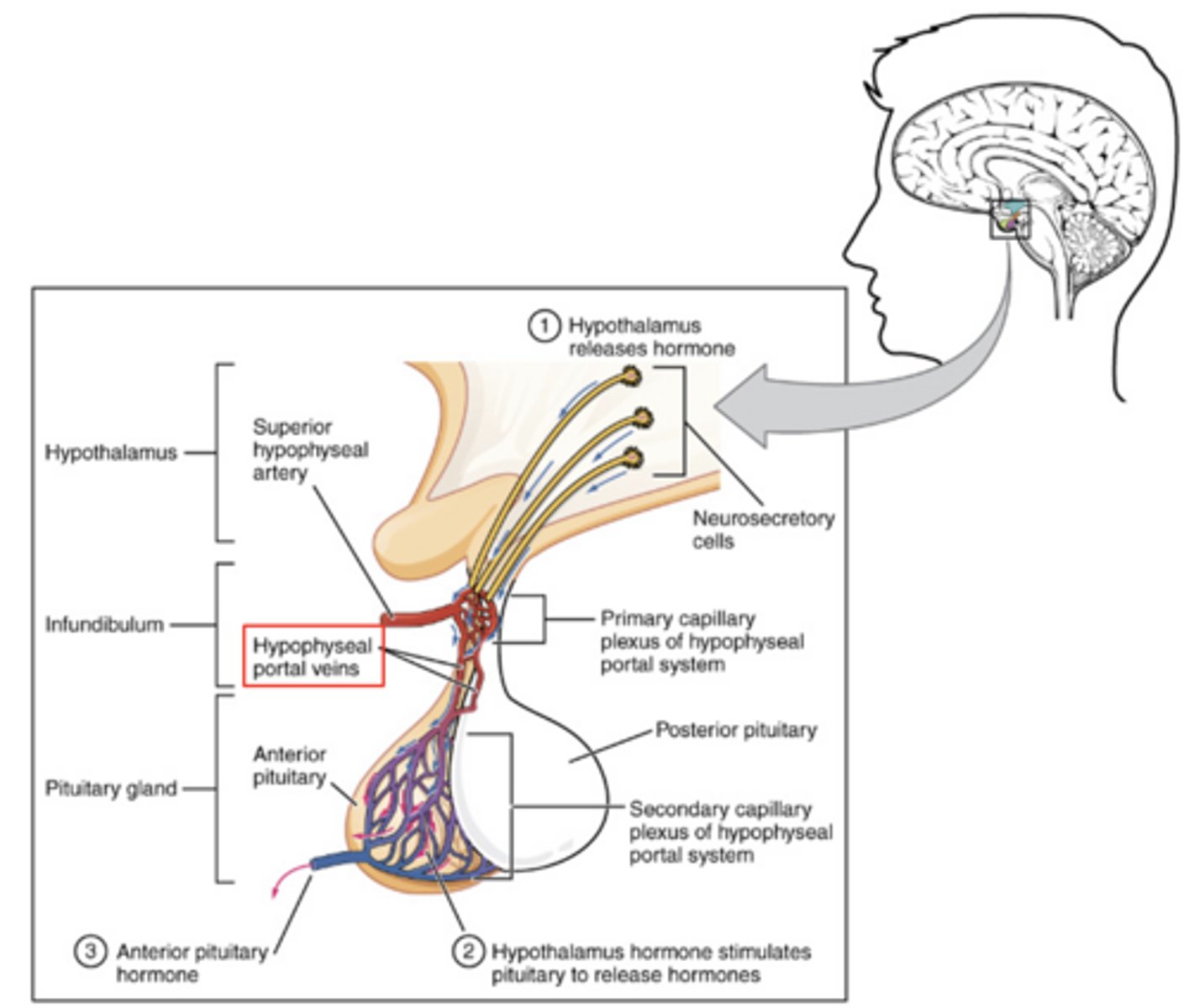
pathway for hormones to travel from the hypothalamus to the pituitary
What is the function of the hypophyseal portal system?
components of the anterior pituitary

highly cellular and well-vascularized
What is the cellularity and vascularization of the pars distalis of the anterior pituitary like?
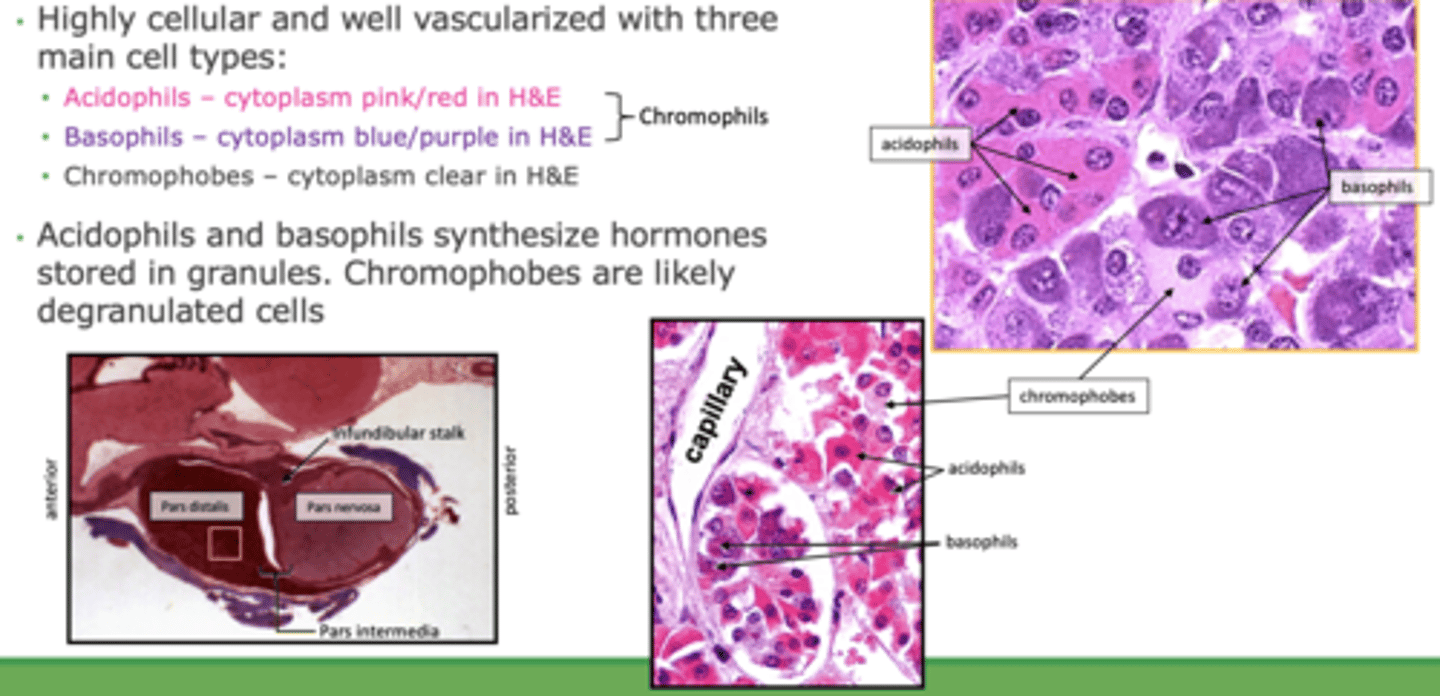
-acidophils -> cytoplasm pink/red in H&E (pick up acidic stain...eosin)
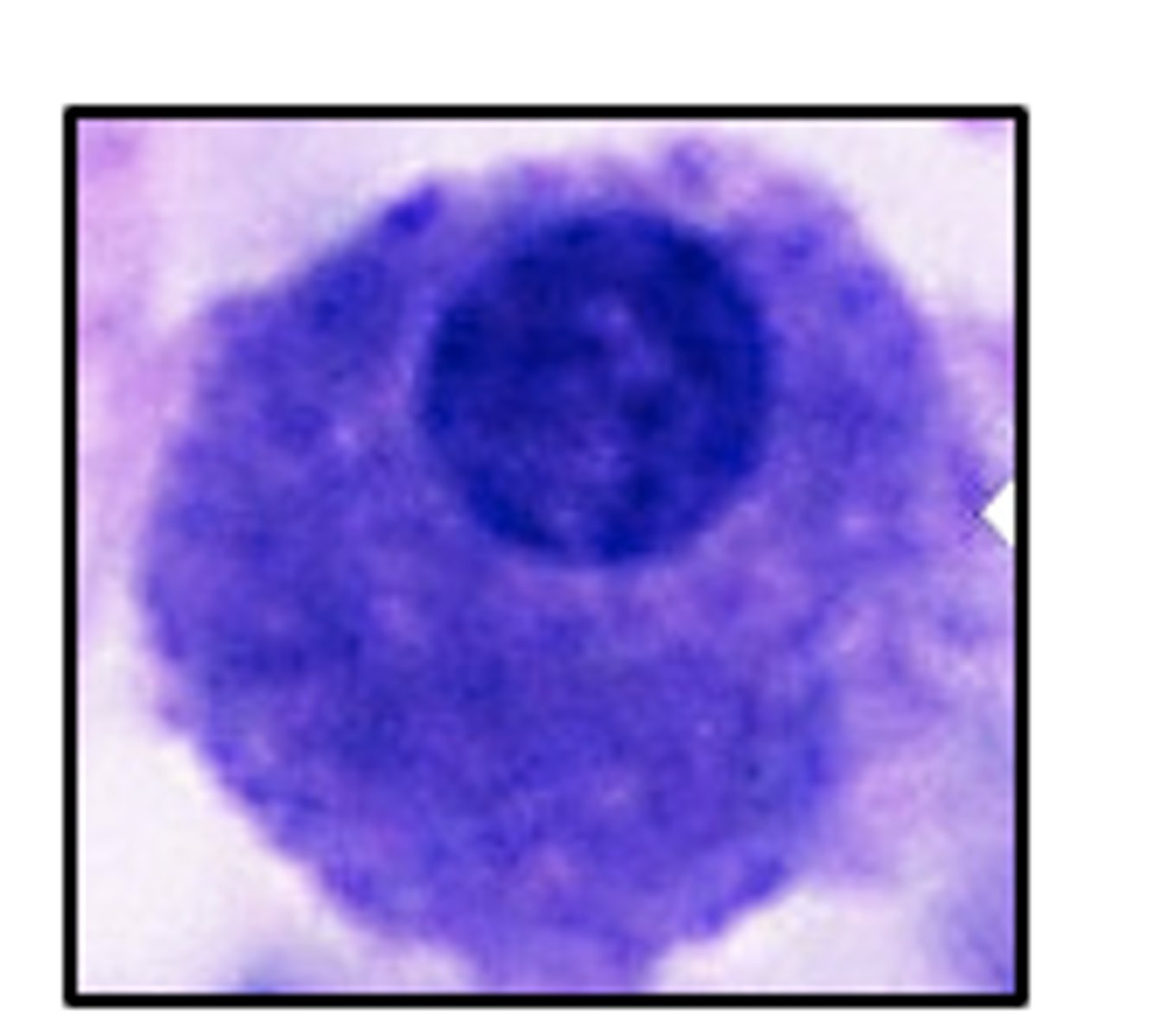
-basophils -> cytoplasm blue/purple in H&E (pick up basic stain...hemotoxylin)
-chromophobes -> cytoplasm clear in H&E (pick up no stain)
What are the 3 main cell types of the pars distalis of the anterior pituitary, and how do they appear on histo?
acidophils and basophils synthesize hormones stored in granules; chromophobes are likely degranulated cells
What is the function of acidophils and basophils, and how does this compare to chromophobes?
pars distalis of the anterior pituitary
*Follicle-stimulating hormone (FSH)
*Luteinizing hormone (LH)
*Adrenocorticotropic hormone (ACTH)
*Thyroid-stimulating hormone (TSH)
(FLAT)
What hormones are synthesized by basophils of the pars distalis of the anterior pituitary?
-Prolactin (PRL)
-Growth hormone (GH)
(PiG...pigs are pink)
What hormones are synthesized by acidophils of the pars distalis of the anterior pituitary?
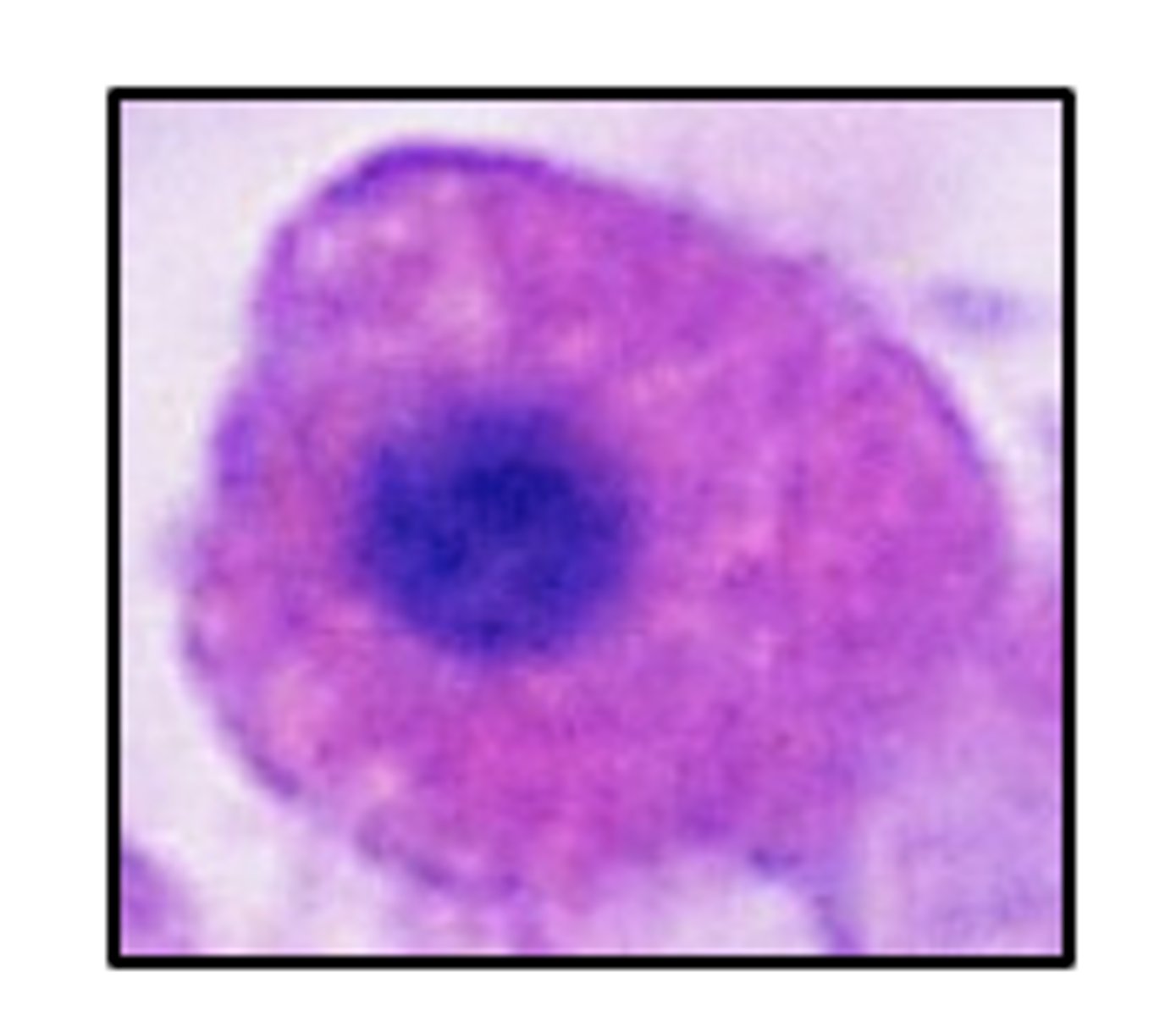
act on gonads (testes & ovaries) to stimulate development of gametes (sperm and oocyte), and release hormones
What is the function of FSH and LH, made by basophils?
acts on adrenal cortex to cause release of corticosteroids (ex: cortisol)
What is the function of ACTH, made by basophils?
stimulates thyroid gland to release TH
What is the function of TSH, made by basophils?
acts on mammary glands to stimulate milk production
What is the function of PRL, made by acidophils?
stimulates release of IGFs from the liver, which synergistically act on all body tissues, especially cartilage, bone, muscle, and adipose CT to stimulate growth
What is the function of GH, made by acidophils?
hormones produces by anterior pituitary (note that hypothalamus regulates hormone release from pituitary via releasing hormones):

the hypothalamus regulates hormone secretion via "releasing hormones"
How is hormone release in the pars distalis of the anterior pituitary regulated?
in the neurons of the hypothalamus
Where are releasing hormones synthesized?
they are transported to the pars distalis via the hypophyseal portal system
How do releasing hormones synthesized in the neurons of the hypothalamus act on the pars distalis of the anterior pituitary?
capillary beds of pars tuberalis -> hypophysseal portal vein -> capillary beds of the pars distalis
What is the pathway for transportation of releasing hormones, and explain?
allows for quick transport of hormones and avoids excessive dilution by the bloodstream
What is the function of the hypophyseal portal system?
via corticotropin-releasing hormone (CRH), synthesized by the hypothalamus
How is the release of adrenocorticotropic hormone (ACTH) from the pars distalis (basophils) stimulated?
regulation of hormone release in the pars distalis
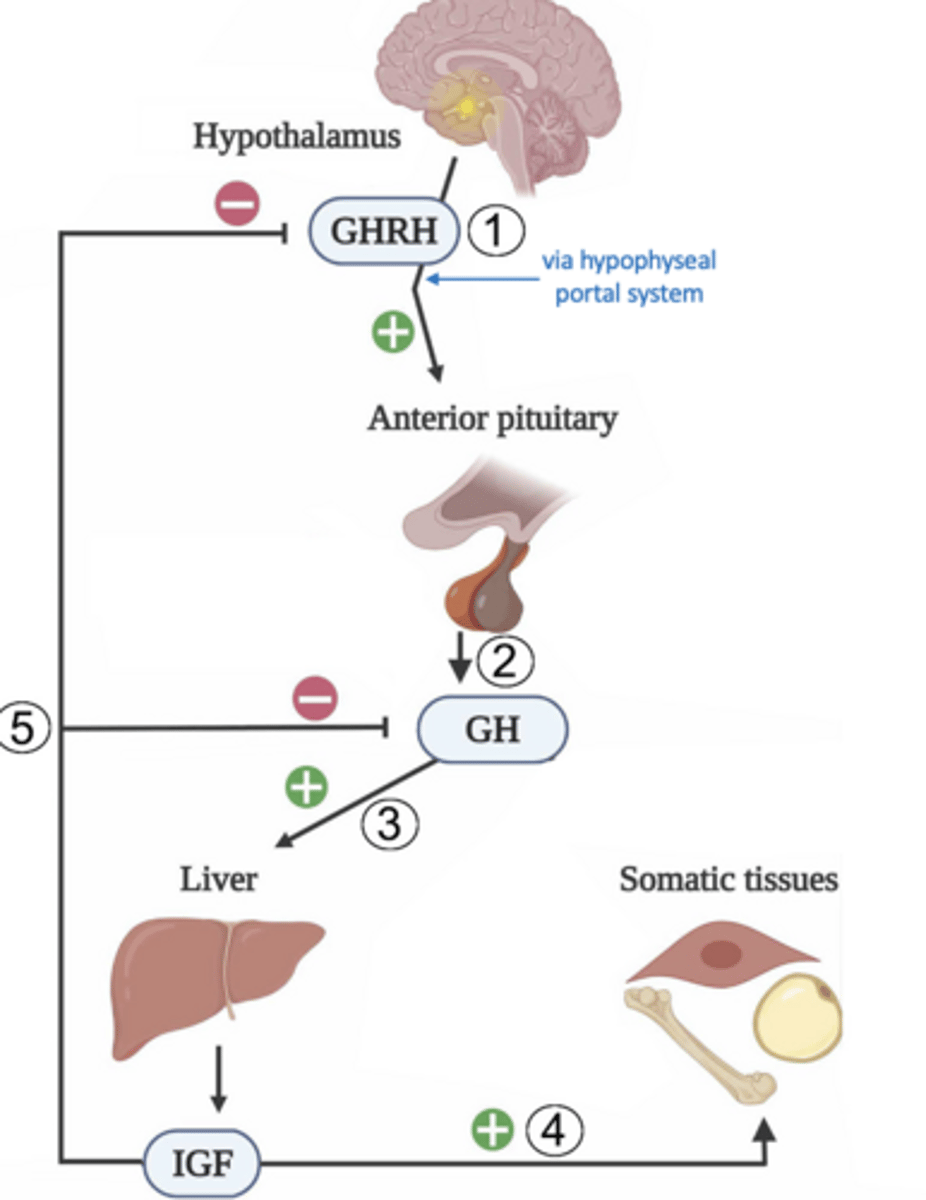
hypothalamic neurons synthesize GHRH and release it into the hypophyseal portal system (ex: during sleep or exercise)
How does the process of GH regulation/feedback begin?
GHRH is transported to the anterior pituitary via the hypophyseal portal system
What happens after hypothalamic neurons synthesize GHRH and release it into the hypophyseal portal system?
binds with receptors on acidophils and stimulates them to synthesize GH and release it into the bloodstream
What does GHRH do at the anterior pituitary?
it is transported via the bloodstream to the liver, where it stimulates cells to synthesize insulin-like growth factor (IGF)
What happens to GH synthesized by acidophils and released into the bloodstream?
it is transported via the bloodstream to various tissues to stimulate growth
What happens to IGF synthesized by the liver?
inhibits both synthesis of GH by acting on acidophils and synthesis of GHRH by acting on neurons of the hypothalamus
What is the result of high levels of IGF in the blood?
GH regulation and feedback
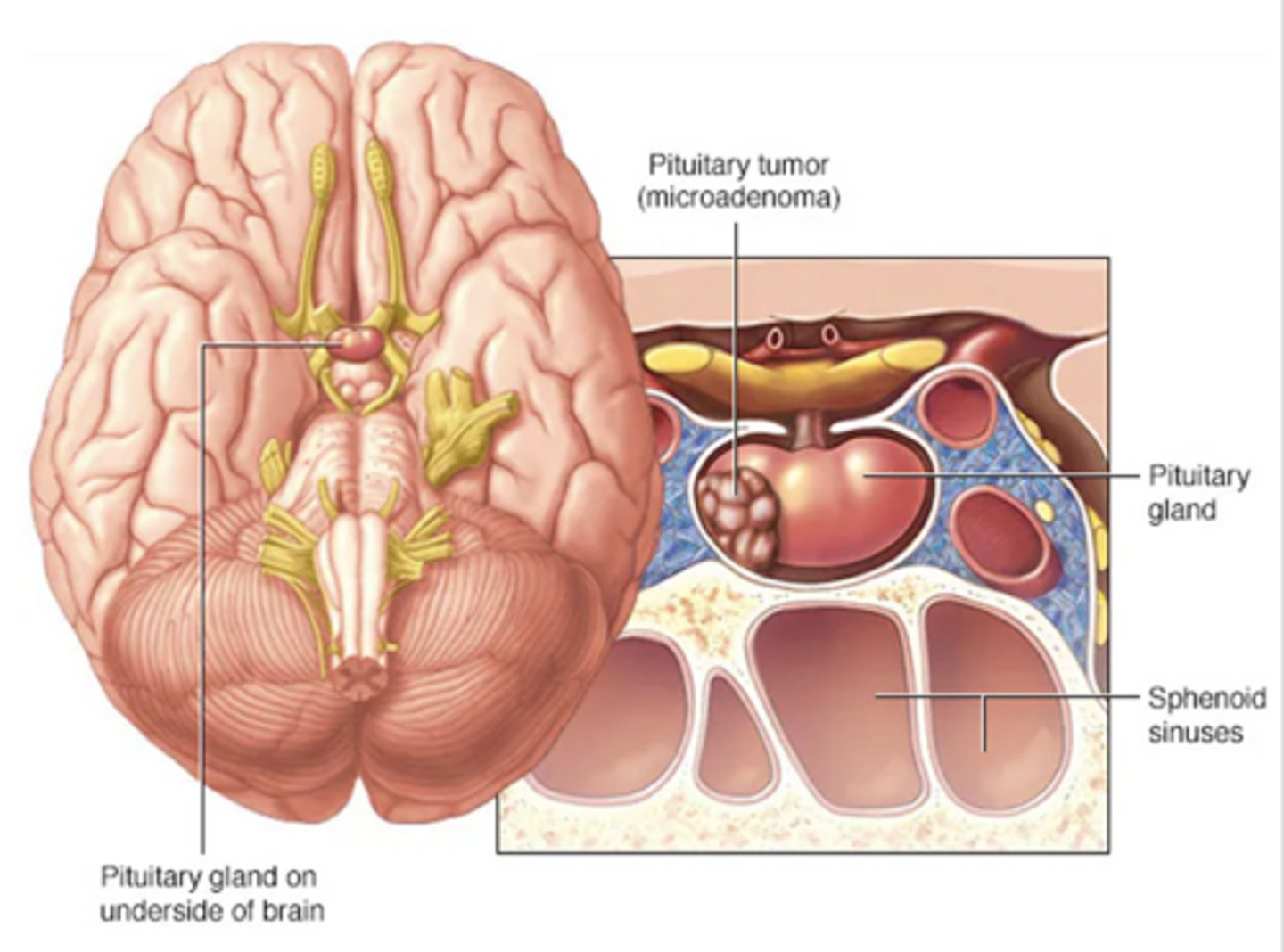
-hormone overproduction (common)
-hormone underproduction (common)
-altered response to hormones (less common)
What are the 3 main principles of endocrine diseases?
too much hormone produced, often due to overexpansion of the synthesizing cell -> ex: tumor made up of GH producing cells (acidophils) produces high levels of GH
What is the basis of endocrine diseases caused by hormone overproduction, and explain?
too little hormone produced, due to destruction of the tissue -> ex: an expanding tumor squashes nearby cells (mass effect) OR autoimmune targeting causes tissue destruction of anterior pituitary
What is the basis of endocrine diseases caused by hormone underproduction, and explain?
hormone underproduction due to tumor (mass effect)
cells do not function as expected -> ex: fat cells disrupt insulin pathways in obese individuals, causing less of a response to insulin (insulin resistance)
What is the basis of endocrine diseases caused by an altered response to hormones (less common), and explain?
excessive numbers of functional acidophils or basophils
What can pituitary adenomas (benign tumors) consist of?
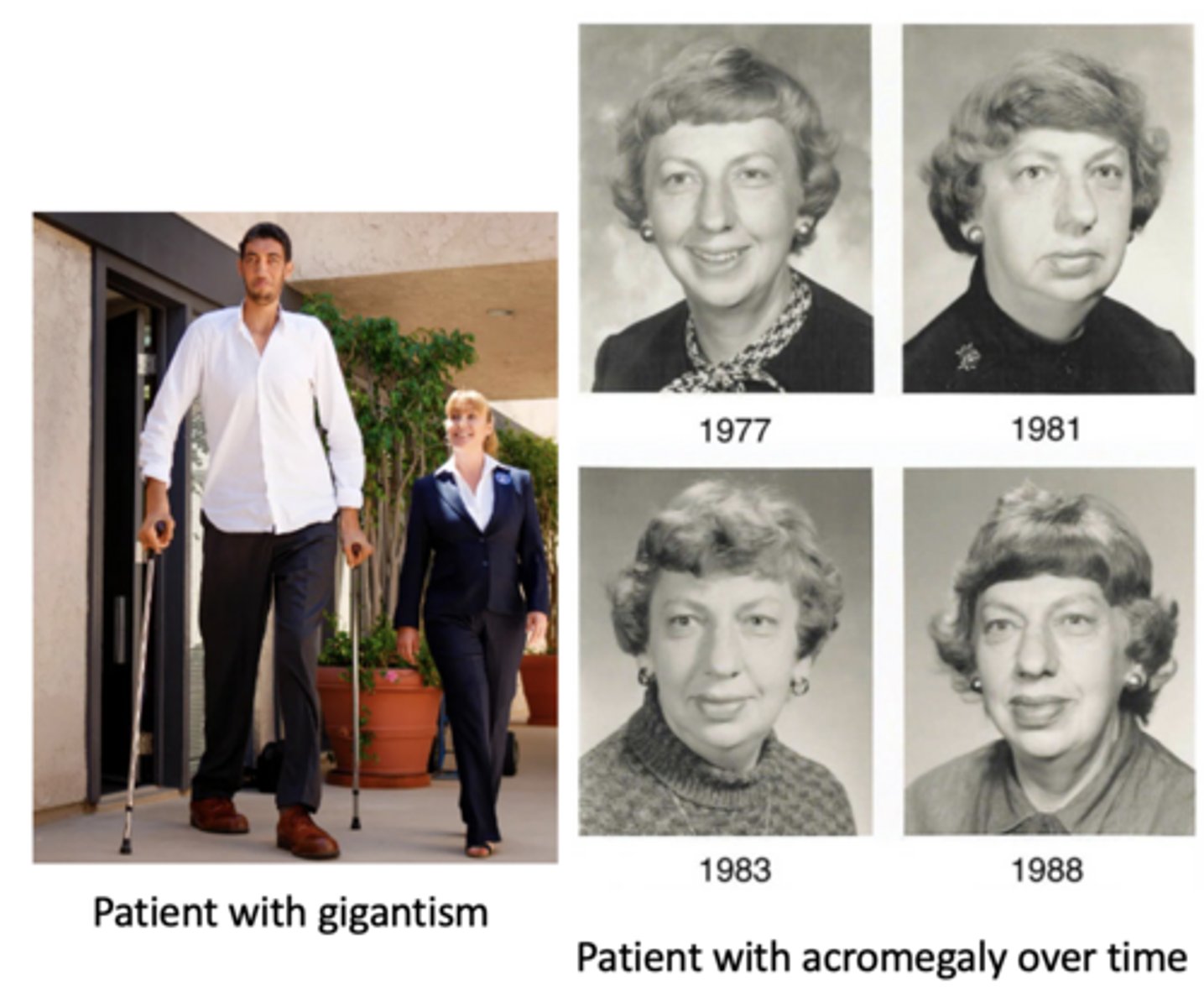
-gigantism
-acromegaly
What 2 conditions can pituitary adenomas (benign tumors) that consist of excessive numbers of functional acidophils that produce GH result in?
accelerated bone growth, very tall stature, large hands and feet, some organs larger -> in children, before epiphyseal plates have sealed
What happens in gigantism, and what population is affected?
coarsening facial features with aging, large tongue, larger hands and feet -> in adults
What happens in acromegaly, and what population is affected?
gigantism and acromegaly -> GH overproduction:
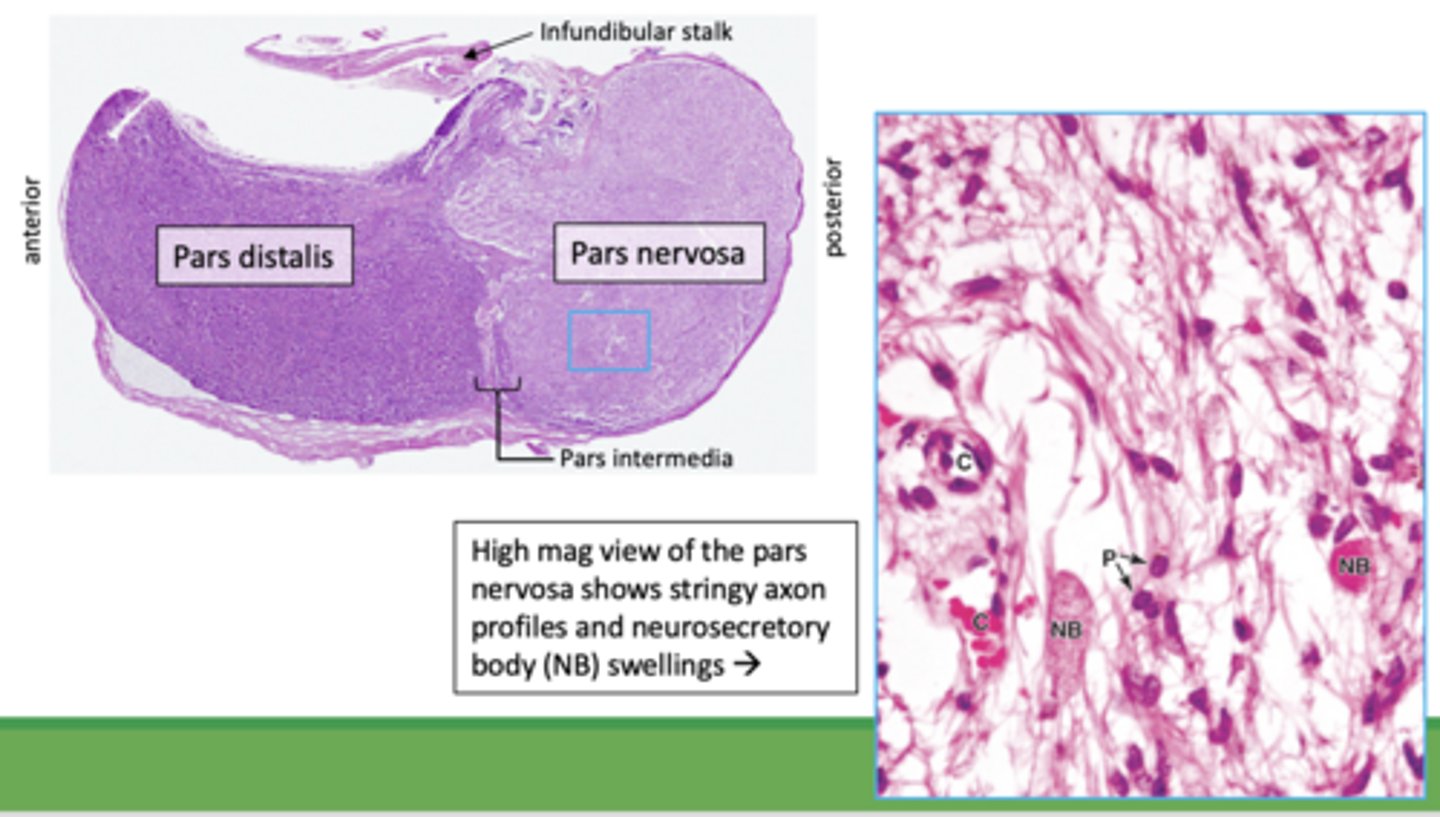
-pars nervosa
-infundibular stalk
Structurally, what are the 2 parts that comprise the posterior pituitary?
is physically connected to the hypothalamus -> axons of hypothalamic neurons run through the infundibular stalk and terminate in the pars nervosa of the posterior pituitary
How does the posterior pituitary interact with the hypothalamus, and explain?
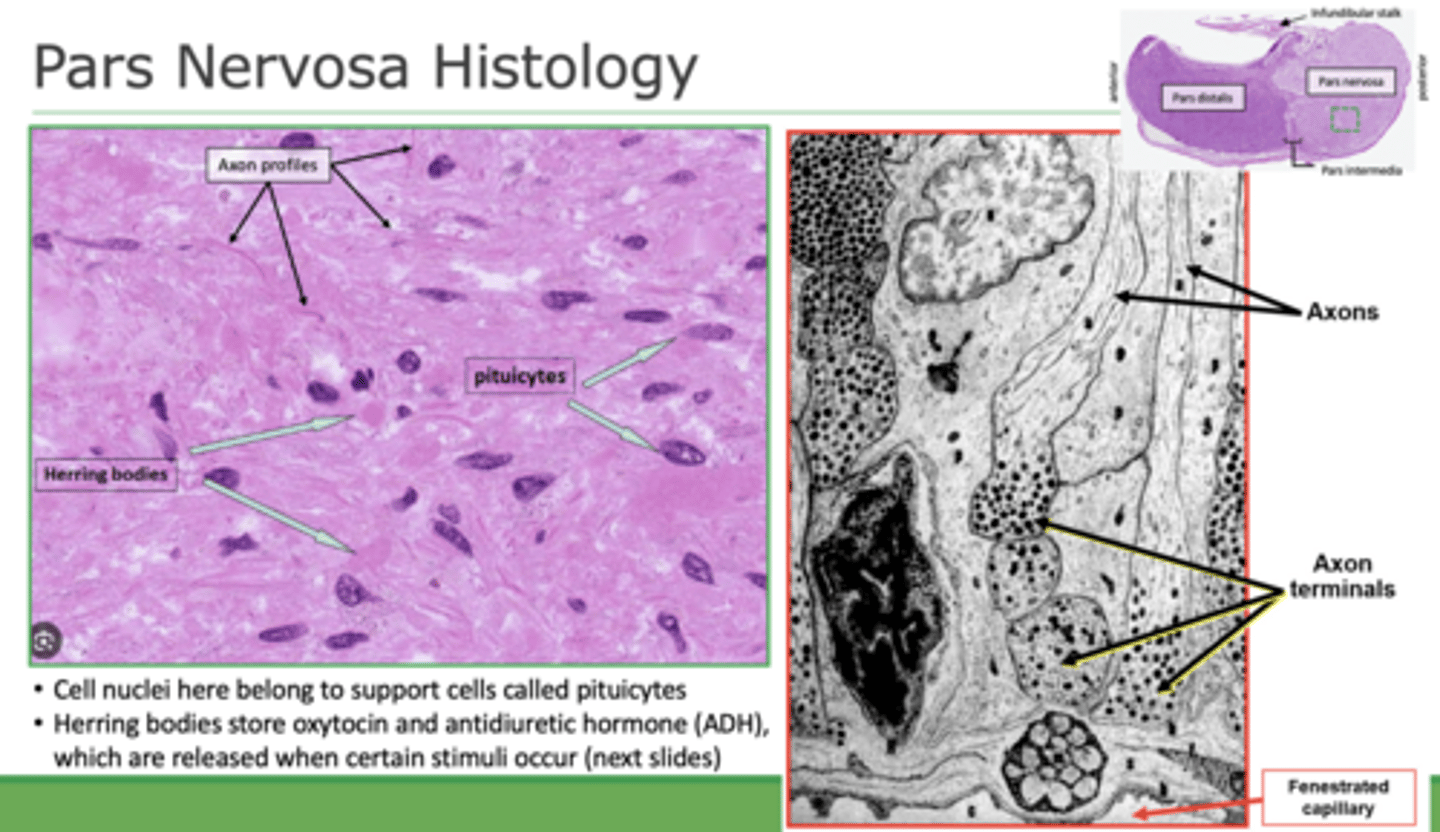
the cell bodies synthesize ADH and oxytocin and store them in the pars nervosa in neurosecretory bodies (NB, aka Herring bodies)
What is the function of the neurons that run from the hypothalamus to the pars nervosa of the posterior pituitary?
a lot of hypothalamus axons in posterior pituitary, C = capillaries, NB = neurosecretory bodies, P = pituicytes (support cells):
Herring body = neurosecretory body
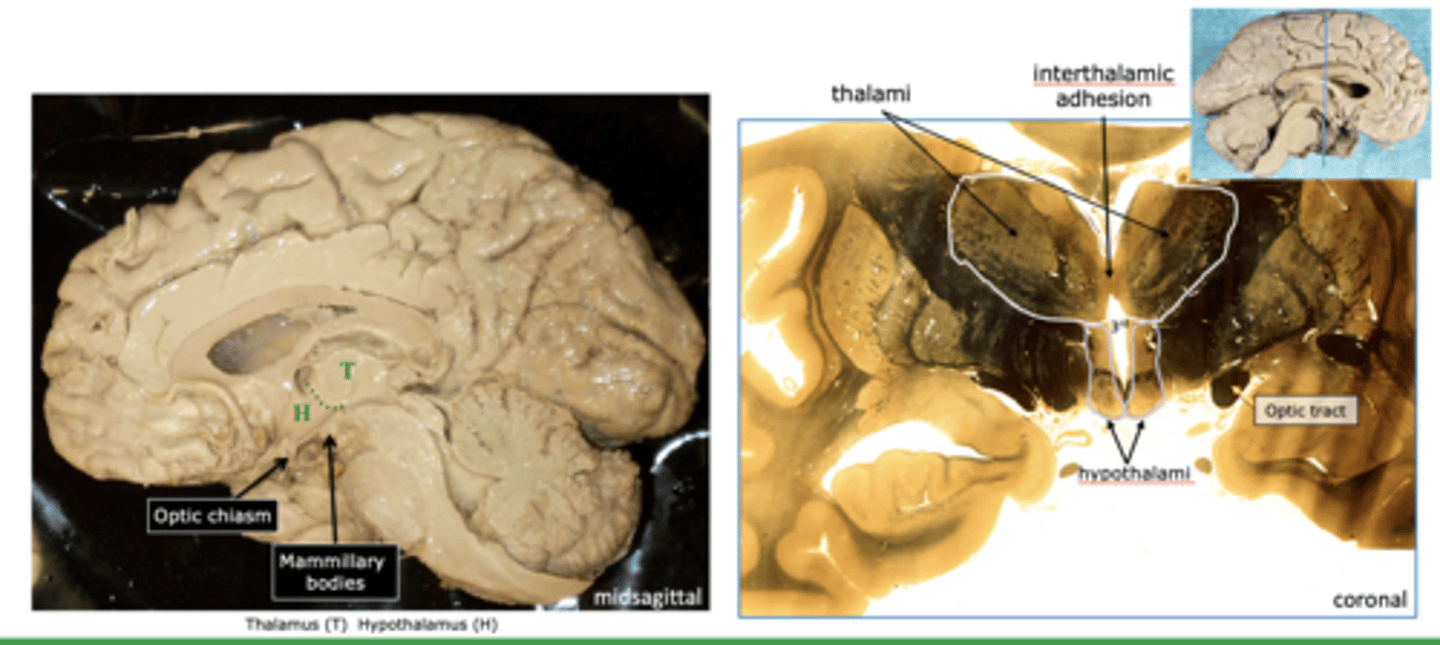
a cluster of nuclei which may influence the pituitary
What is the hypothalamus?
-thalamus
-optic chiasm
-mammillary bodies
What are 3 boundaries of the hypothalamus?
it is right near the 3rd ventricle!
How does the hypothalamus interact with ventricles?
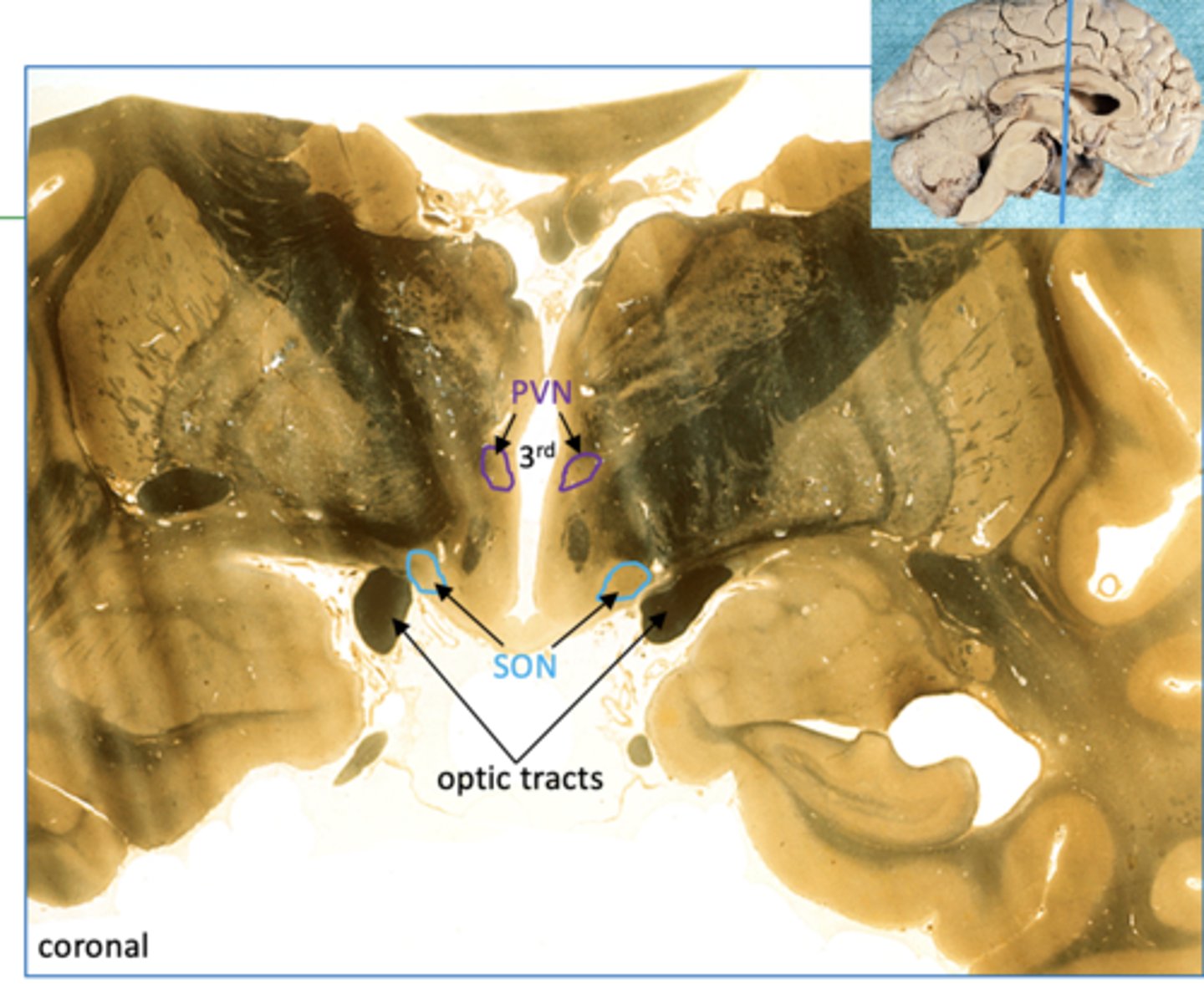
hypothalamus
-supraoptic nucleus (SON)
-paraventricular nucleus (PVN)
What are two nuclei located within the hypothalamus of the brain?
synthesize and transport hormones to the pars nervosa of the posterior pituitary
What is the function of neurons of the supraoptic nucleus (SON) and paraventricular nucleus (PVN) in the hypothalamus?
above the optic tract
Where is the supraoptic nucleus (SON) located?
mainly synthesizes ADH (aka arginine vasopressin, AVP) -> promotes reabsorption of water in the kidneys (maintain hydration)
What is the function of the supraoptic nucleus (SON), and explain?
-presence -> collecting duct permeable to H20, small volume of concentrated urine produced
-absence -> collecting duct not permeable to H20, large volume of dilute urine produced
What happens in the kidneys in the presence versus absence of ADH?
diseases such as diabetes insipidus, which is characterized by production of large volumes of dilute urine (polyuria) and related dehydration and extreme thirst (polydipsia)
What condition can diminished production of ADH lead to, and explain?
from the supraoptic nucleus (SON) of the hypothalamus:

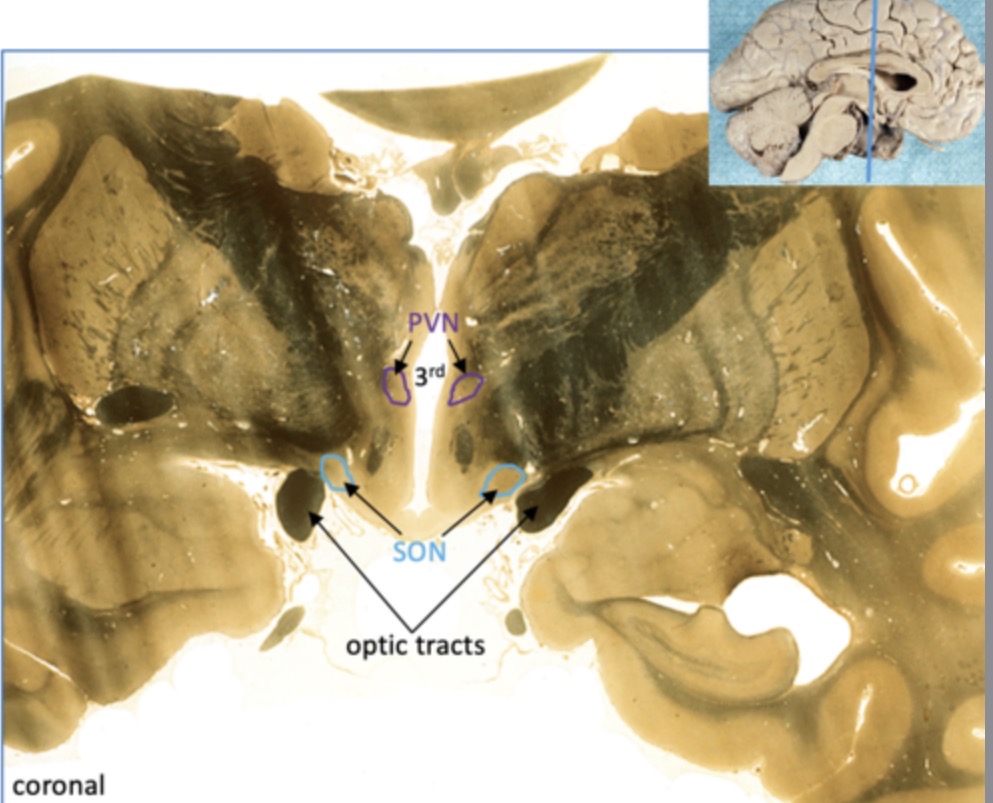
PVN = paraventricular nucleus
SON = supraoptic nucleus
3rd = 3rd ventricle
optic tracts
coronal section of the hypothalamus
neurons of the PVN synthesize oxytocin and transport it to the pars nervosa of the posterior pituitary
What is the function of neurons of the paraventricular nucleus (PVN) of the hypothalamus?
is a potent stimulator of smooth muscle in the uterus and breast -> promotes uterine contractions during labor and menstruation and stimulates myoepithelial cells of the mammary gland to eject milk during lactation
What is the function of oxytocin, synthesized by the PVN and transported to the pars nervosa of the posterior pituitary, and explain?
note the location of the PVN, next to the ventricles!