RAD 300: Intro to Radiology
 Call Kai
 Learn
Learn Practice Test
 Spaced Repetition
 Match
Match Flashcards
 Knowt Play
1/49

There's no tags or description
Looks like no tags are added yet.
Name | Mastery | Learn | Test | Matching | Spaced | Call with Kai | Chat |
|---|
No analytics yet
Send a link to your students to track their progress
50 Terms
energy
capacity or ability to do work
what are the major forms of energy? (5)
mechanical
electrical
heat
nuclear
electromagnetic
radiation
energy transmitted from one location
types of radiation (4)
electromagnetic radiation
acoustic radiation (sound)
partical radiation (alpha radiation)
gravitation radiation
electromagnetic radiation
type of energy that travels through space as waves of electric and magnetic fields.
frequency
number of times something occurs
wavelength
distance from one point to the next point
ionizing radiation
any radiation that has the ability to knock an electron out of order, creates anions and cations, lead to harmful effects causing biological changes, AKA radiation dose
electromagnetic spectrum
gamma, high energy ultraviolet, xray

non-ionizing radiation
any radiation that does not knock electron out of order
particulate radiation
alpha (severe damage but can’t pass through paper) and beta particles- come from nucleus, gamma radiation (gamma rays)- travels longest bust also the weakest, neutrons strongest do not travel far
where are protons located in an atom?
nucleus: positive charge
where are neutrons located in an atom?
nucleus
where are electrons found in an atom?
orbiting the nucleus (in motion)
what are the sources of radiation?
natural (background) and man-made (artificial)
sources for natural radiation (3)
terrestrial, cosmic, internal source of radionuclides
terrestrial radiation
long lived radioactive elements. EX: uranium 238, radium 226, thorium 232
8% common exposure except radium
radon
colorless, odorless, and heavy radioactive gas in air.
enters buildings through cracks in foundation or framework
second leading cause of lung cancer in smokers and leading cause of lung cancer in on smokers
55% of common exposure
cosmic and galactive radiation
result from nuclear inter actions in the sun and other stars (natural)
cosmic rays vary with altitude relative to earth’s surface, occurring at higher attitudes and lowest at sea level.
our atmosphere and magnetic field shield it from cosmic rays,
8% of common exposure
internal source of radiation
radioactive atoms that make up sm percentage of body’s tissue; tissues of human body contain many naturally radionuclides that have been ingested from food or inhaled as particles in the air, 11% of common exposure
radionuclides
unstable nucleus that emits one or more forms of ionizing radiation to achieve greater stability
types of man-made radiation (6)
consumer products containing radioactive material
medical radiation
air travel (plane)
nuclear fuel (generating power)
atmospheric fall out
nuclear power plant accidents
consumer products that contain radioactive materials
close and timepieces, gemstones, smoke detectors, exit signs, TSA
air travel
man-made radiation: plane encapsulates radiation energy to power plane
medical radiation
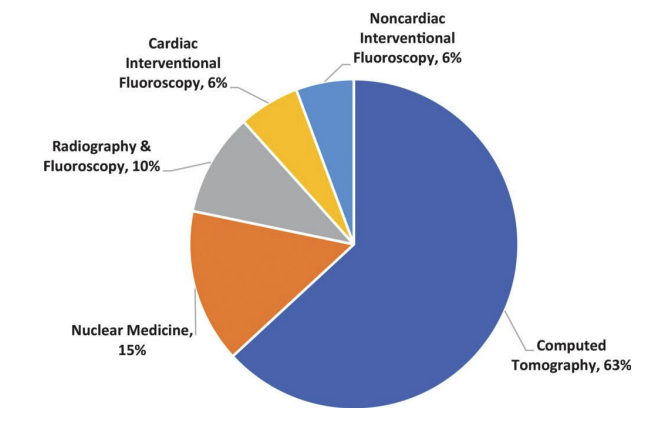
nuclear fuel
nuclear power plants use uranium-235 as fuel, atoms of isotope split apart in controlled chain reaction within the reacctor core
atmospheric fall out from nuclear weapons and nuclear power
like Oppenheimer (catastrophe)
measuring radiation in the air
what: ionization in air
measurement: Rotengen (R)
systems international: coulombs per kilogram (C/kg)
type of radiation that use this unit: xray and gamma ONLY
measure radiation in tissue
what: absorption fo radiation in matter (any object)
measurement: Radiation absorbed dose (RAD)
systems international: GRAY (Gy)
type of radiation that use this unit: any ionizing radiation
measure radiation biological effect
what: biological effects on body tissue
measurement: Radiation equivalent man (REM)
systems international: sievert (Sv); PER YR ONLY 50 miliSv
type of radiation that use this unit: any ionizing radiation
measure radioactivity
what: radioactivity and how fast a radionuclide disintegrates in seconds (cath lab); any object
measurement: Curie (Cu)
systems international: becquerel (Bq)
type of radiation that use this unit: radioactive particles/radioactivity
biological effects at 0.25 Sv=25 REM
blood changes; leukemia low WBC=decreased immune system
biological effects at 1.5 Sv= 150 REM
nausea & diarrhea
biological effects at 2.0 Sv= 200 REM
erythema= reddening of the skin
biological effects at 2.5 Sv= 250 REM
temporary sterelization
biological effects at 3.0 Sv= 300 REM
50% pass away in 30 days
biological effects at 6.0 Sv= 600 REM
death…
as low as reasonably achievable
ALARA
how safe is radiation?
cumulative, there is no threshold, no SAFE dose of radiation
dosimeters
device measure the quantity of radiation received based on the conditions which radiographer was placed
cardinal rules of radiation protection: time
for pt: minimize length of exposure in the exposure beam
for radiographer: minimize the length of exposure in room when radiation is active, FLUOROSCOPY
cardinal rules of radiation protection: distance
for pt: max distance to lessen enterance or skin dose; increase distance = increase technique(radiation exposure)
for radiographer: max distance between radiation source and me; 6ft away, never hold the pt
cardinal rules of radiation protection: shielding
for pt: collimation, gonadal shielding over gonad or reproductive organs
for radiographer: collimation; aprons an thyroid shield during Fluoroscopic studies, stand behind fixed and mobile barriers
fluoroscopy
dynamic imaging, live x-ray beam, for physiology
what is on the fluoro machine to protect the operator?
bucky slot shield at least 0.25mm lead
spot image device curtain at least 0.25mm lead
xray beam: primary radiation
emerges from tube directed toward pt
xray beam; attenuated radiation
radiation that bases though matter to be absorbed or scattered
xray beam: absorbed radiation
absorbed radiation that cease to exist, deposited within the material, cumulative exposure, causes biological damage
xray beam: scattered radiation
change in original direction (random), no longer traveling in straight path, dangerous bc unpredictable
xray beam: exit remnant radiation
attenuated x-ray beam that emerges from the patient and travels towards the image receptor; less intense compared to primary beam.