L1: Intro to Psychopharmacology
 Call Kai
 Learn
Learn Practice Test
 Spaced Repetition
 Match
Match Flashcards
 Knowt Play
1/41

There's no tags or description
Looks like no tags are added yet.
Name | Mastery | Learn | Test | Matching | Spaced | Call with Kai | Chat |
|---|
No analytics yet
Send a link to your students to track their progress
42 Terms
Psychopharmacology
The medical study of how medications are used to treat mental disorders.
Principles of psychopharmacology
Pharmacokinetics
Pharmacodynamics
Pharmacokinetics
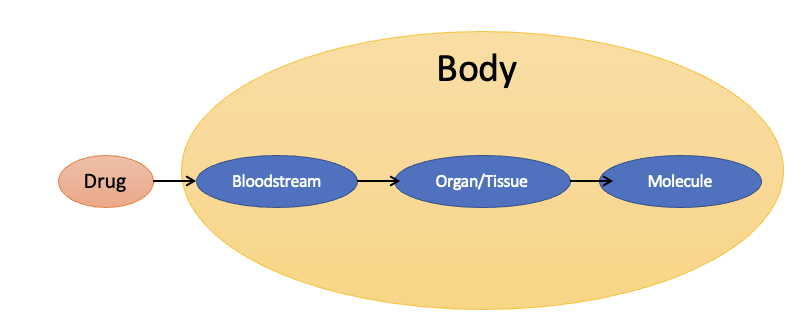
The scientific study of what the body does to medication.
Pharmacodynamics
The scientific study of how drugs affect the body.
Focuses on the biochemical and physiological changes that result from drug administration.
Examines the mechanisms through which drugs induce their effects, including how they interact with specific receptors on cells.
Factors that significantly influence the strength and duration of a drug’s effects
Dosage
Presence of other substances
Individual characteristics (e.g., age)
Routes of administration
The path by which a drug or other substance is taken into the body.
Drug effect
The changes a drug produces in an animal’s physiological processes and behavior.
Sites of action
The locations at which molecules of drugs interact with molecules located on or in cells of the body, thus affecting some biochemical processes of these cells.
Effects of repeated administration
Tolerance
Sensitization
Withdrawal symptom
Placebo
Tolerance
A decrease in the effectiveness of a drug that is administered repeatedly.
Sensitization
An increase in the effectiveness of a drug that is administered repeatedly.
Withdrawal symptom
The appearance of symptoms opposite to those produced by a drug when the drug is administered repeatedly and then suddenly no longer taken.
Placebo
An inert substance that is given to an organism in lieu of a physiologically active drug.
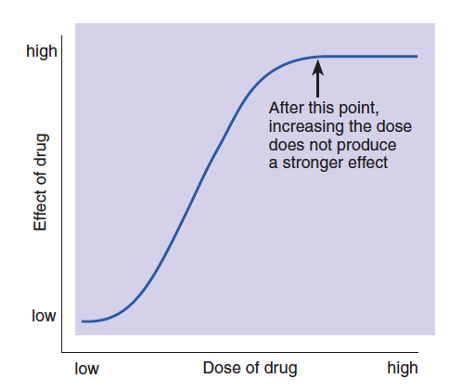
Dose-Response Curve
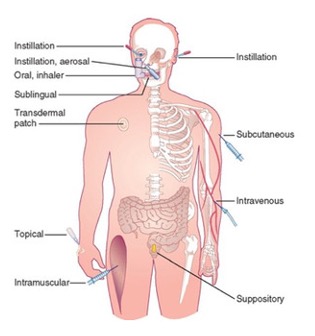
Routes of administration (list)
Intravenous (IV) injection
Intraperitoneal (IP) injection
Intramuscular (IM) injection
Subcutaneous (SC)
Oral administration
Sublingual administration
Intrarectal administration
Inhalation
Topical administration
Intracerebral administration
Intracerebroventricular (ICV) administration
Intravenous (IV) injection
Injection of a substance directly into a vein.
Intraperitoneal (IP) injection
Injection of a substance into the peritoneal cavity (the space that surrounds the stomach, intestines, liver, and other abdominal organs).
Intramuscular (IM) injection
Injection of a substance into a muscle.
Subcutaneous (SC)
Injection of a substance into the space beneath the skin.
Oral administration
Administration of a substance into the mouth so that it is swallowed.
Sublingual administration
Administration of a substance by placing it beneath the tongue.
Intrarectal administration
Administration of a substance into the rectum.
Inhalation
Administration of a vaporous substance into the lungs.
Topical administration
Administration of a substance directly onto the skin or mucous membrane.
Intracerebral administration
Administration of a substance directly into the brain.
Intracerebroventricular (ICV) administration
Administration of a substance into one of the cerebral ventricles.
The Blood-Brain Barrier
The sites of most behavior-affecting drugs are located on or in particular cells in the central nervous system.
To reach these cells, drugs must cross the blood-brain barrier – a highly selective semi-permeable border that only allows glucose and oxygen to pass.
The most important factor that determines the rate at which a drug in the bloodstream reaches sites of action within the brain is lipid solubility. The blood–brain barrier is a barrier only for water-soluble molecules.
Molecules that are soluble in lipids pass through the cells that line the capillaries in the central nervous system, and they rapidly distribute themselves throughout the brain.

Drug action
Antagonist
Agonist
Antagonist
A drug that opposes or inhibits the effects of a particular neurotransmitter.
Agonist
A drug that facilitates the effects of a particular neurotransmitter.
Effects on production of neurotransmitters
Increases or decreases production
Effects on storage and release of neurotransmitters
Increases or decreases storage and release
Effects on receptors
Increases or decreases the number of receptors, receptor sensitivity
Effects on re-uptake or destruction of neurotransmitters
Increases or decreases re-uptake or deactivates the chemicals
Drug effects on synaptic transmission
Serves as a precursor (e.g. L-DOPA)
Inactivates synthetic enzyme; inhibits synthesis of NT (e.g. PCPA – serotonin)
Prevents storage of NT in vesicles (e.g. reserpine – monoamines)
Stimulates release of NT (e.g. black widow spider venom – ACh)
Inhibits release of NT (e.g. botulinum toxic – ACh)
Stimulates postsynaptic receptors (e.g. nicotine, muscarine – ACh)
Blocks postsynaptic receptors (e.g. curare, atropine – ACh)
Stimulates autoreceptors; inhibits synthesis/release of NT (e.g. apomorphine – dopamine)
Blocks autoreceptors; increases synthesis/release of NT (e.g. idazoxan – norepinerphine)
Blocks reuptake (e.g. cocaine – dopamine)
Inactivates acetylcholinesterase (e.g. physostigmine – Ach)

Types of neurotransmitters
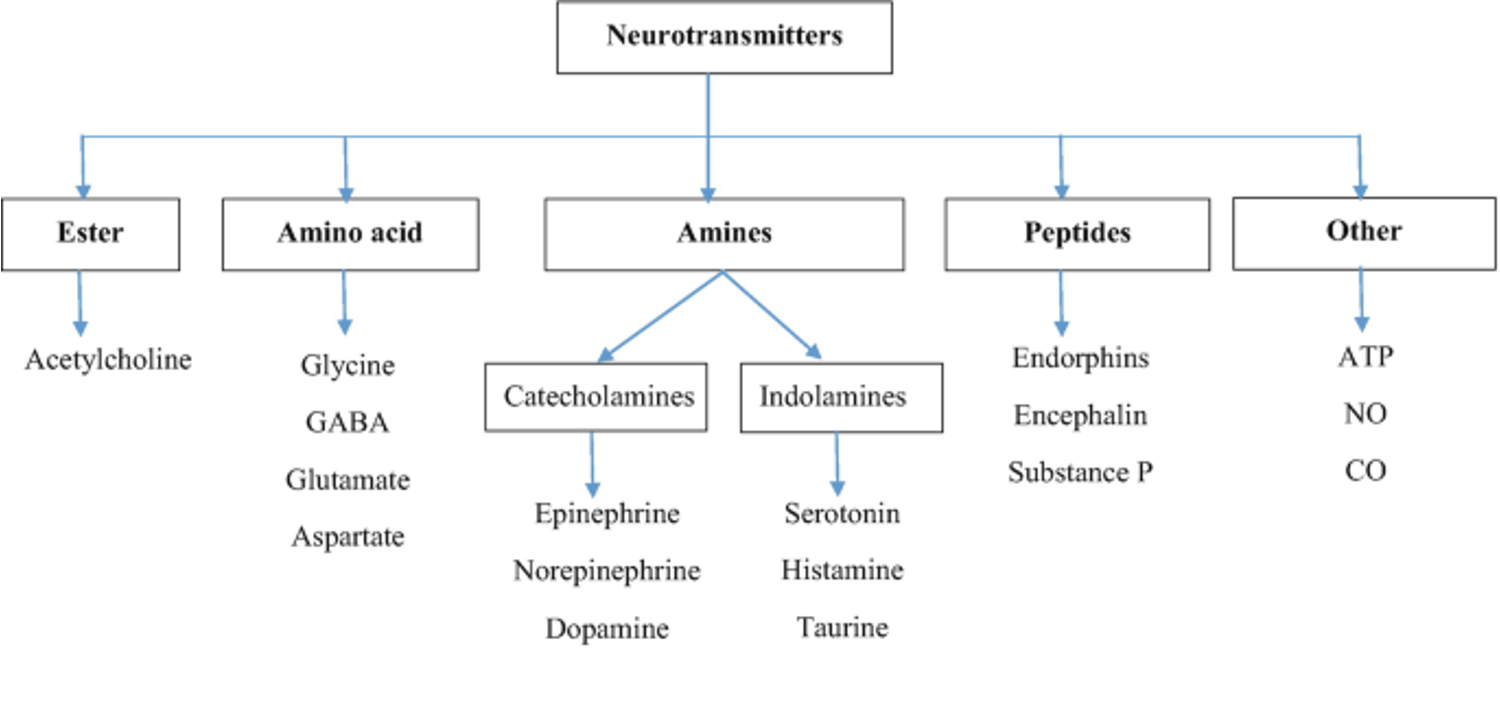
Neurotransmitters classification, receptors, and functions

Drug characteristics
Efficacy
Potency
Half-life
Side effects
Efficacy
The maximum power or peak effect a drug can produce, no matter how much you increase the dose.
Potency
The amount of a drug (the dose) needed to get a specific effect.
Half-life
The time it takes for the concentration of a medication in your blood plasma to decrease by exactly 50%.
Side effects
An unintended secondary reaction caused by a medication, occurring in addition to its main therapeutic goal.
These effects are usually predictable.
They can be neutral, harmful, or occasionally beneficial.