Organic Chemistry Functional Groups
 Call Kai
 Learn
Learn Practice Test
 Spaced Repetition
 Match
Match Flashcards
 Knowt Play
1/40

There's no tags or description
Looks like no tags are added yet.
Name | Mastery | Learn | Test | Matching | Spaced | Call with Kai | Chat |
|---|
No analytics yet
Send a link to your students to track their progress
41 Terms
Alcohol

Aldehyde

Alkane

Alkene

Halide

Alkyne

Amide

Amine

Aromatic Compound (arene)

Carboxylic Acid

Ester

Ether

Ketone

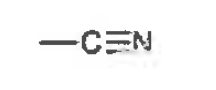
Nitrile
Sulfide

Thiol

(Carboxylic) Acid Anhydride

Acid Halides

Constitutional Isomers
Same molecular formula, different connectivity (can be drawn differently)
Bronsted Acid
Donates/gives away H⁺ → turns into conjugate base
Bronsted Base
Accepts H⁺ → turns into conjugate acid
Lewis Acid
Accepts electron pair
Lewis Base
Donates electron pair (think Nitrogen with lone pair when neutral)
Strong acid
Substance able to dissociate 100% in water (break apart into ions) → weaker bonds → how easily a H⁺ is given away
Primary (1st degree)
Attached to 1 carbon
Secondary (2nd degree)
Attached to 2 carbons
Tertiary (3rd degree)
Attached to 3 carbons
Quaternary
Attached to 4 carbons
Methyl
CH₃
Methylene
CH₂
Methine
CH
Anti
Groups (ends) are 180 degrees apart from each other (most stable/less energy than gauche).
Gauche
Groups (ends) are 60 degrees apart from each other (less stable/more energy than anti).
Eclipsed
Groups (ends) are 0 degrees apart from each other (less stable than gauche/more energy).
Steric Strain/Hinderance
destabilization of molecule when atoms are too close to each other.
Torsional Strain
strain present between atoms in eclipsed conformation
Cis
Both substituents are on the same side (both up or both down).
Trans
They are on opposite sides (one up, one down).
Erythro
Like substituents are on the same side (Fischer Projection)
Threo
Like substituents are on opposite sides (Fischer Projection)
Meso compounds
Has multiple chirality centers, but molecule is achiral as they cancel out symmetrically