General Anatomy and Radiographic Positioning
 Call Kai
 Learn
Learn Practice Test
 Spaced Repetition
 Match
Match Flashcards
 Knowt Play
1/40

There's no tags or description
Looks like no tags are added yet.
Name | Mastery | Learn | Test | Matching | Spaced | Call with Kai | Chat |
|---|
No analytics yet
Send a link to your students to track their progress
41 Terms
Osteology
The study of bones.
Axial and appendicular skeleton
The two primary structural divisions of the skeleton.
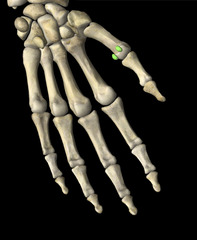
Sesamoid bones
Small bones sometimes found in tendons near joints.
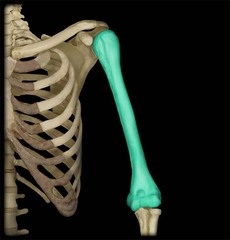
Long bones
Bones with a body and two articular ends, found exclusively in the appendicular skeleton.
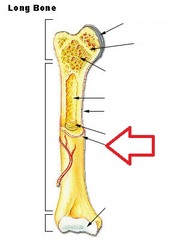
Periosteum
A dense fibrous membrane covering bones.
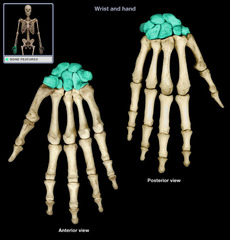
Short bones
Cuboidal bones composed mainly of cancellous tissue, found in wrists and ankles.
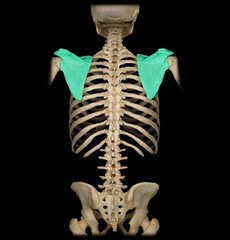
Flat bones
Bones made of two plates of compact bone, such as the calvarium, sternum, ribs, and scapula.
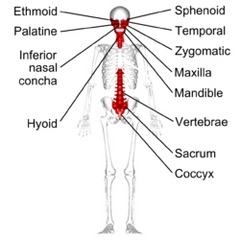
Irregular bones
Bones with peculiar shapes, such as vertebrae, facial bones, and pelvic bones.
Ossification
The process of bone formation, beginning in embryonic development and continuing until adulthood.
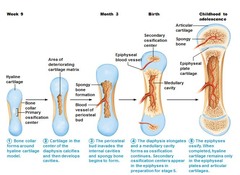
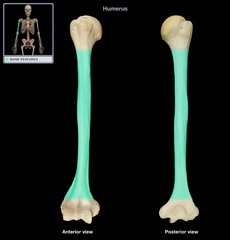
Diaphysis
The primary center of ossification located at the body of a bone.
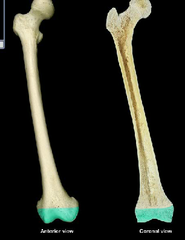
Epiphysis
The secondary center of ossification located at the ends of a bone.
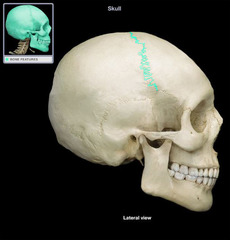
Synarthrosis
A functional joint classification describing an immovable joint.
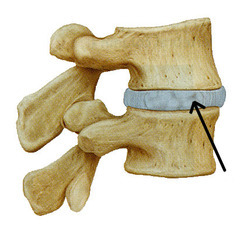
Amphiarthrosis
A functional joint classification describing a joint with limited movement.
Diarthrosis
A functional joint classification describing a freely moveable joint.
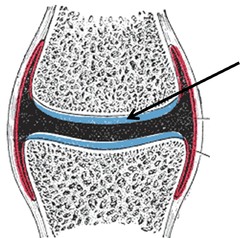
Synovial joint
A freely moveable joint featuring a fibrous capsule containing synovial fluid.
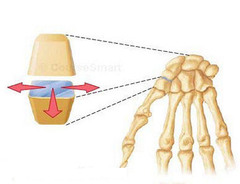
Plane (gliding) joint
A synovial joint with the least amount of movement, such as intercarpal joints.
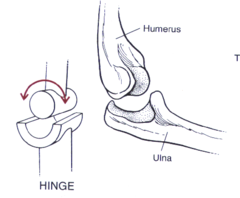
Ginglymus (hinge) joint
A synovial joint permitting only flexion or extension, such as the elbow or knee.
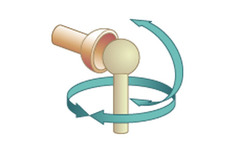
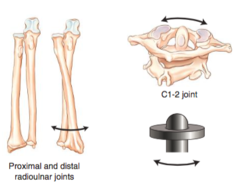
Trochoid (pivot) joint
A synovial joint allowing rotation around a single axis, such as the radioulnar joint.
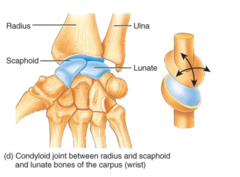
Ellipsoid (condyloid) joint
A joint allowing flexion, extension, adduction, and abduction, such as the wrist.
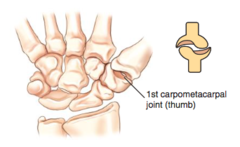
Sellar (saddle) joint
A joint named for its saddle appearance, found at the first carpometacarpal joint.
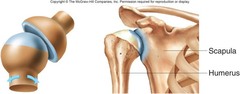
Sphenoid (ball and socket) joint
A joint with the highest freedom of motion, found in the hip and shoulder.
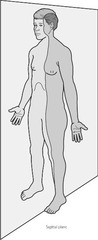
Sagittal (midsagittal) plane
A body plane that divides the body into left and right parts.
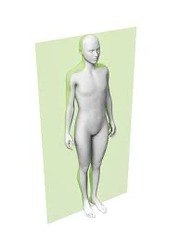
Coronal (midcoronal) plane
A body plane that divides the body into anterior and posterior parts.
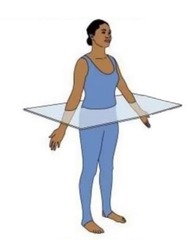
Horizontal axial plane
A transverse plane dividing the body into superior and inferior parts.
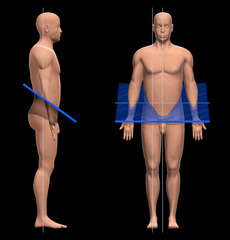
Oblique plane
A longitudinal or transverse plane that is angled.
Anterior (ventral) surface
The front half of the body, top of feet, and palms of hands.
Posterior (dorsal) surface
The back half of the body, bottom of feet, and back of hands.
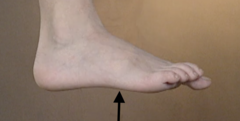
Plantar surface
The sole or posterior surface of the foot.
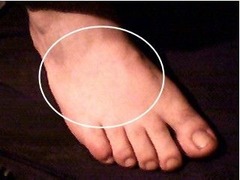
Dorsum pedis
The top or anterior surface of the foot.
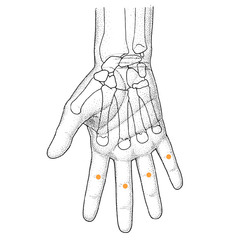
Palmar surface
The palm of the hand.
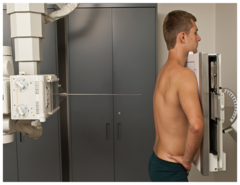
Posteroanterior (PA) projection
X-ray beam enters the posterior surface and exits the anterior.
Anteroposterior (AP) projection
X-ray beam enters the anterior surface and exits the posterior.
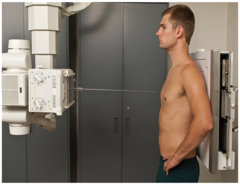
Axial radiographic projection
Implies a central ray angulation greater than 10° along the long axis of the body.
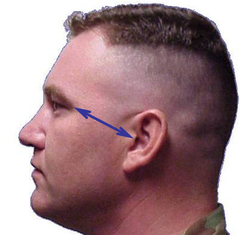
Tangential projection
Skimming a body part to project it in profile.
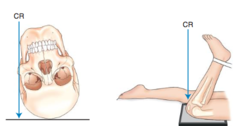
Supine position
Lying on the back.
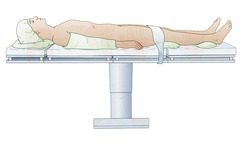
Prone position
Lying on the stomach.
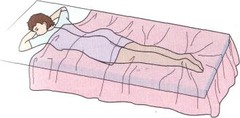
Trendelenburg position
A recumbent position with the body tilted so the feet are above the head.
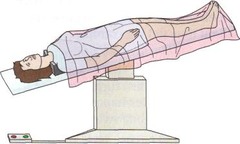
Fowler's position
A recumbent position with the head above the feet.
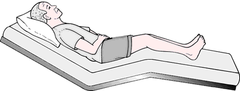
Sims position
A recumbent oblique position lying on the left anterior side with the top leg crossed.
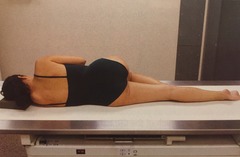
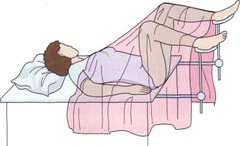
Lithotomy
recumbent with knees and hips flexed
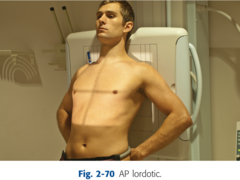
Lordotic
Patient is upright and leaning backwards into the IR