Physiology Lab Module 3
 Call Kai
 Learn
Learn Practice Test
 Spaced Repetition
 Match
Match Flashcards
 Knowt Play
1/33

There's no tags or description
Looks like no tags are added yet.
Name | Mastery | Learn | Test | Matching | Spaced | Call with Kai | Chat |
|---|
No analytics yet
Send a link to your students to track their progress
34 Terms
endocrine system
system of glands in the body that secrete hormones and regulate many body functions
lipid soluble hormones
-enter the cell by passing through cell membrane
-bind to a receptor inside the cell
-hormone + receptor enter the nucleus and activate genes
-released by ovary into blood
water soluble hormones
-cannot pass cell membrane
-hormone binds to receptor on the surface of the cell
-causes activation of enzymes inside of the cell
-released by pancreas into blood
hypothalamus
control center for the endocrine system and homeostasis
-sends hormone to the pituitary gland
pituitary gland
regulates all other endocrine glands
anterior pituitary gland
produces and releases hormones based on the hormone recieved from hypothalamus
anterior pituitary gland hormones
-prolactin
-growth hormone
-thyroid stimulating hormone
-adrenocorticotropic hormone
-gonadotropins
posterior pituitary gland
-hypothalamus produces oxytocin and antidiuretic hormone
-hormones sent to posterior pituitary, which releases these hormones as needed
pineal gland
small gland found in the brain
-produces melatonin
adrenal gland
gland found on top of the kidneys
-zona glomerulosa, zona fasciculata, zona reticularis
zona glomerulosa
produces aldosterone
zona fasciculata
produces cortisol
zona reticularis
produces androgens (sex steroids)
pancreas
gland that regulates glucose levels in the body
-also has a role in digestive system
insulin
decreases blood sugar levels
-made by beta cells of pancreas
glucagon
increases blood sugar levels
-made by alpha cells of pancreas
hypoglycemia
insulin shock (slow movements)
somatostatin
regulates alpha and beta cells
-produces by delta cells of the pancreas
thyroid gland
-found above the trachea
-produces hormones that regulate metabolism and body temperature and regulate calcium levels in blood
thyroid stimulating hormone (TSH)
-produced by anterior pituitary
-sent to thyroid to produce T3 and T4, which increase metabolism and body temperature
hyperthyroidism (Grave’s Disease)
disease caused by overactive thyroid
-high metabolism causes weight loss, rapid heartbeat, sweating, nervousness
sarcolemma
cell membrane of muscle
sarcoplasmic reticulum
stores calcium (Ca2+)
sarcomere
where contraction occurs, structural unit of skeletal muscle
myofibril
strands of proteins found in muscle cell
thick filament
contains myosin
thin filament
contains actin, troponin, tropomyosin
muscle contraction
-ACh neurotransmitter binds to muscle cell
-sarcoplasmic reticulum releases Ca2+
-Ca2+ binds to troponin
-sarcomere contracts
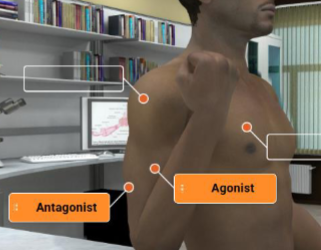
flexion at elbow
agonist is brachialis
antagonist is triceps brachii
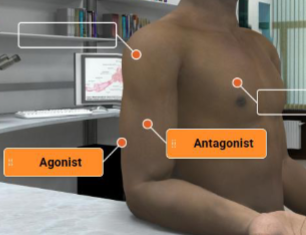
extension at elbow
agonist is triceps brachii
antagonist is brachialis
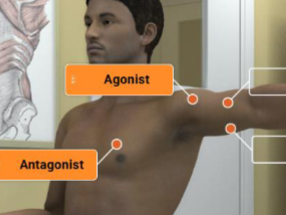
abduction at shoulder
agonist is deltoid
antagonist is pectoralis major
adduction at shoulder
agonist is pectoralis major
antagonist is deltoid
electromyogram (EMG)
measures the action potential from a muscle contraction
-applied force, number of active motor units, frequency of motor units
motor units
a single neuron connects to multiple muscle cells
-low strength = fewer active