Depressive and Bipolar Disorders: Symptoms, Causes, and Treatments
 Call Kai
 Learn
Learn Practice Test
 Spaced Repetition
 Match
Match Flashcards
 Knowt Play
1/28

There's no tags or description
Looks like no tags are added yet.
Name | Mastery | Learn | Test | Matching | Spaced | Call with Kai | Chat |
|---|
No analytics yet
Send a link to your students to track their progress
29 Terms
What is Major Depressive Disorder (MDD)?
A condition where a person experiences two or more weeks with five or more symptoms, including either depressed mood or loss of interest or pleasure.
What characterizes Persistent Depressive Disorder?
A mildly depressed mood occurring more often than not for at least 2 years, along with at least two other symptoms.
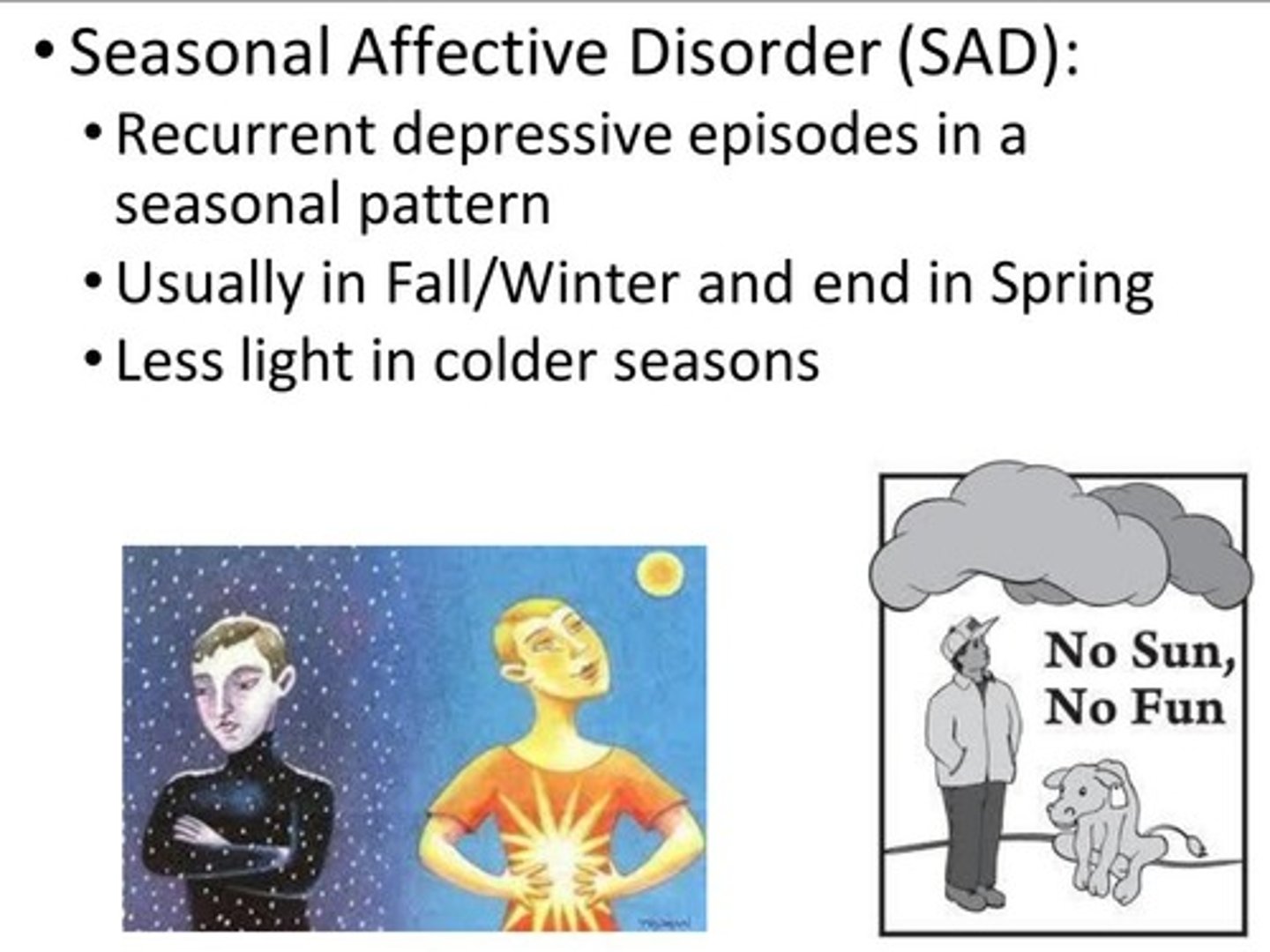
What does SAD stand for in the context of depressive disorders?
Seasonal Affective Disorder, a type of depression that occurs at certain times of the year.
What is Bipolar Disorder?
A disorder characterized by alternating periods of depression and mania, formerly known as manic-depressive disorder.
What is Mania?
A hyperactive, wildly optimistic state often associated with poor judgment.
What is a potent predictor of suicide in individuals?
Bipolar disorder, as it is often more dysfunctional than Major Depressive Disorder.
What are some behavioral and cognitive changes that accompany depression?
Depression is widespread and often preceded by stressful events related to work, marriage, and relationships.
What is the estimated heritability of major depression according to twin studies?
37 percent.
How does brain activity change during depression?
Brain activity slows, with less activity in the left frontal lobe and declines in norepinephrine and serotonin levels.
What nutritional factors are associated with a lower risk of depression?
A Mediterranean diet rich in vegetables, fish, and olive oil.
What is learned helplessness in the context of depression?
A condition where individuals feel unable to control their situation, leading to passive behavior.
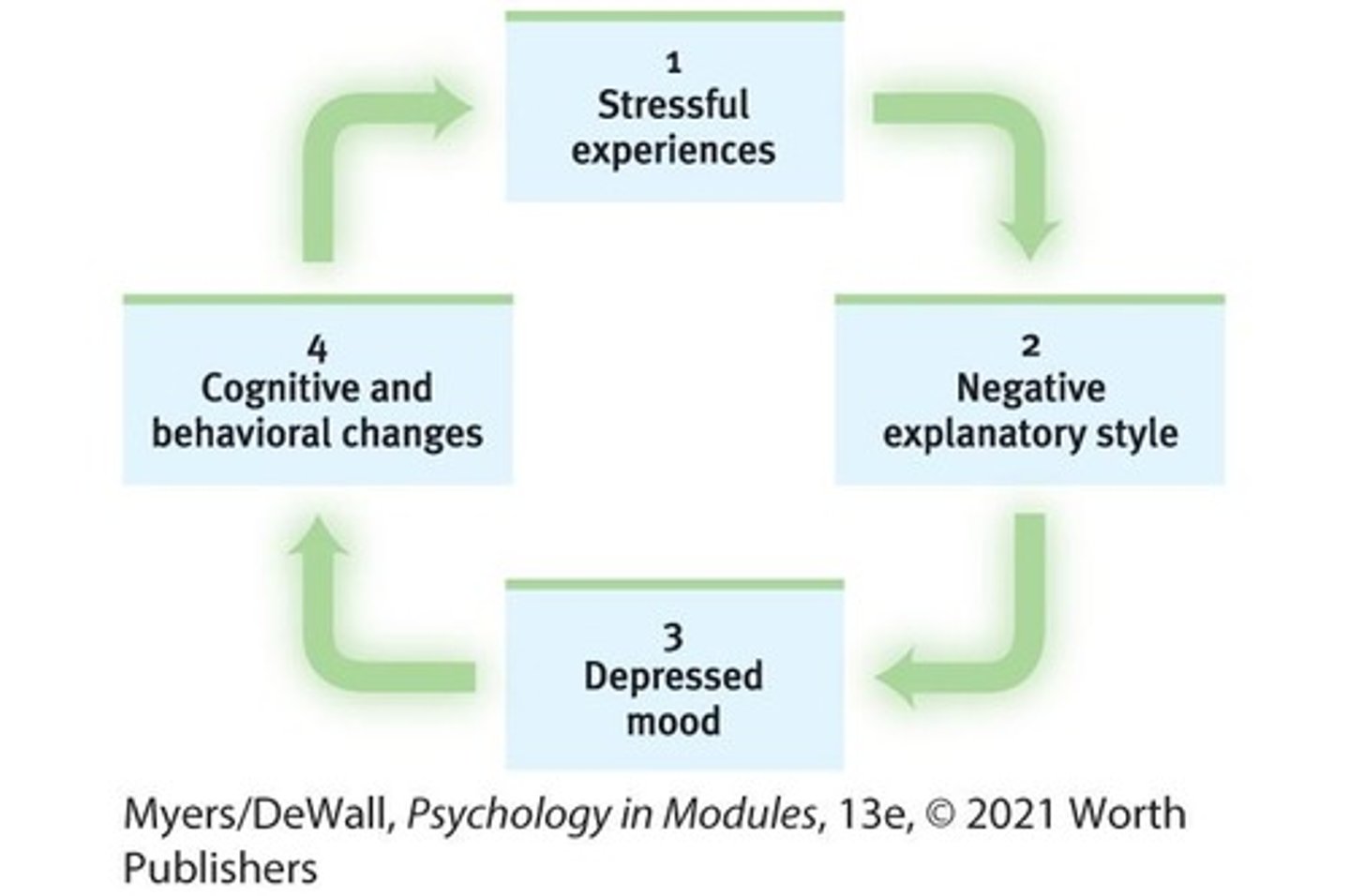
What is the social-cognitive perspective on depression?
It explores how people's assumptions and expectations influence their perceptions and contribute to the cycle of depression.
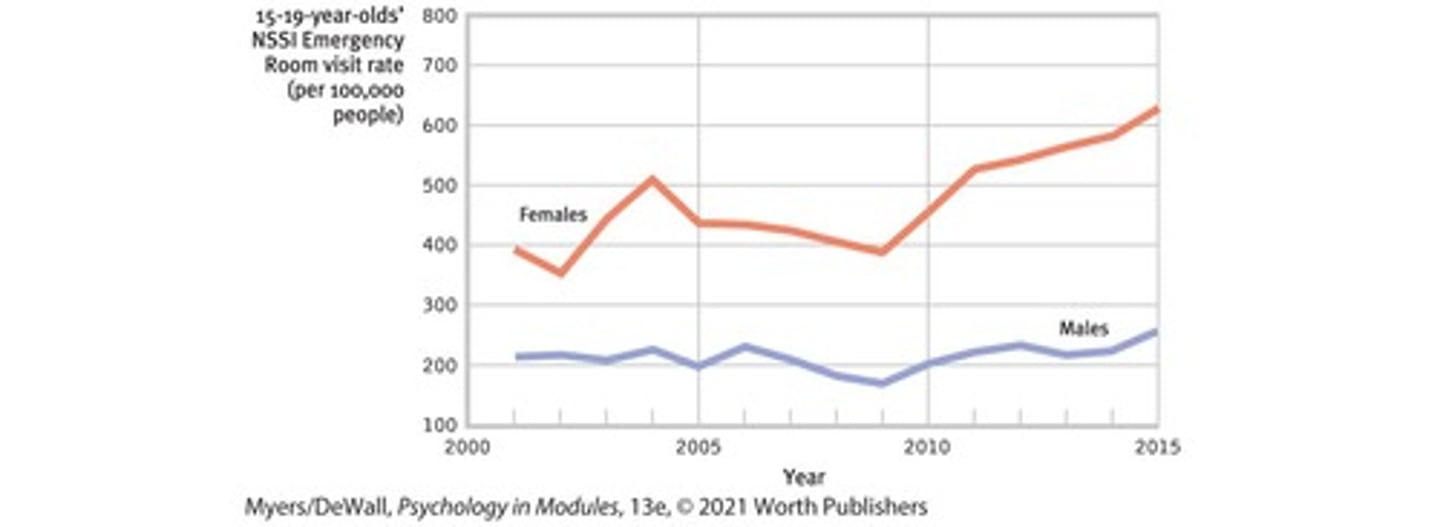
What are some reasons people engage in nonsuicidal self-injury (NSSI)?
To gain relief from negative thoughts, ask for help, relieve guilt, or fit in with a peer group.
What is the prevalence of suicide worldwide?
Affects 1 million people globally, with higher risks associated with depression.
What is Anorexia Nervosa?
An eating disorder characterized by an intense fear of gaining weight and a distorted body image.
What are common health hazards associated with Anorexia?
Slowed thyroid function, irregular heart rhythm, low blood pressure, and dehydration.
What defines Bulimia Nervosa?
Characterized by binge-purge episodes, lack of control over eating, and compensatory behaviors to avoid weight gain.
What are the health hazards of Bulimia?
Laxative dependence, damaged teeth, esophagus bleeding, and anemia.
What psychological factors are associated with eating disorders?
High achievement, competitive family dynamics, and poor conflict resolution.
What is Dissociative Identity Disorder (DID)?
A rare disorder where a person exhibits two or more distinct and alternating personalities.
What are some sociocultural factors influencing eating disorders?
Social roles and cultural ideals, including media portrayals of ultrathin celebrities.
What is the role of the hypothalamic-pituitary-adrenocortical (HPAC) system in eating disorders?
Abnormalities in the HPAC system are linked to eating disorders and may involve hormonal imbalances.
What is the significance of the term 'vicious cycle' in depression?
It refers to the ongoing cycle of negative experiences, beliefs, and moods that perpetuate depression.
What are compensatory behaviors in Bulimia Nervosa?
Behaviors such as purging, fasting, or excessive exercise aimed at undoing the effects of binge eating.
What is the impact of excessive alcohol use on depression?
It is correlated with an increased risk of developing depression.
What attitudes do individuals with Anorexia often hold?
They may believe they must be perfect and can avoid guilt by not eating.

What are the characteristics of binge episodes in Bulimia?
Involves consuming large amounts of food rapidly, often in secret, followed by feelings of guilt and self-blame.
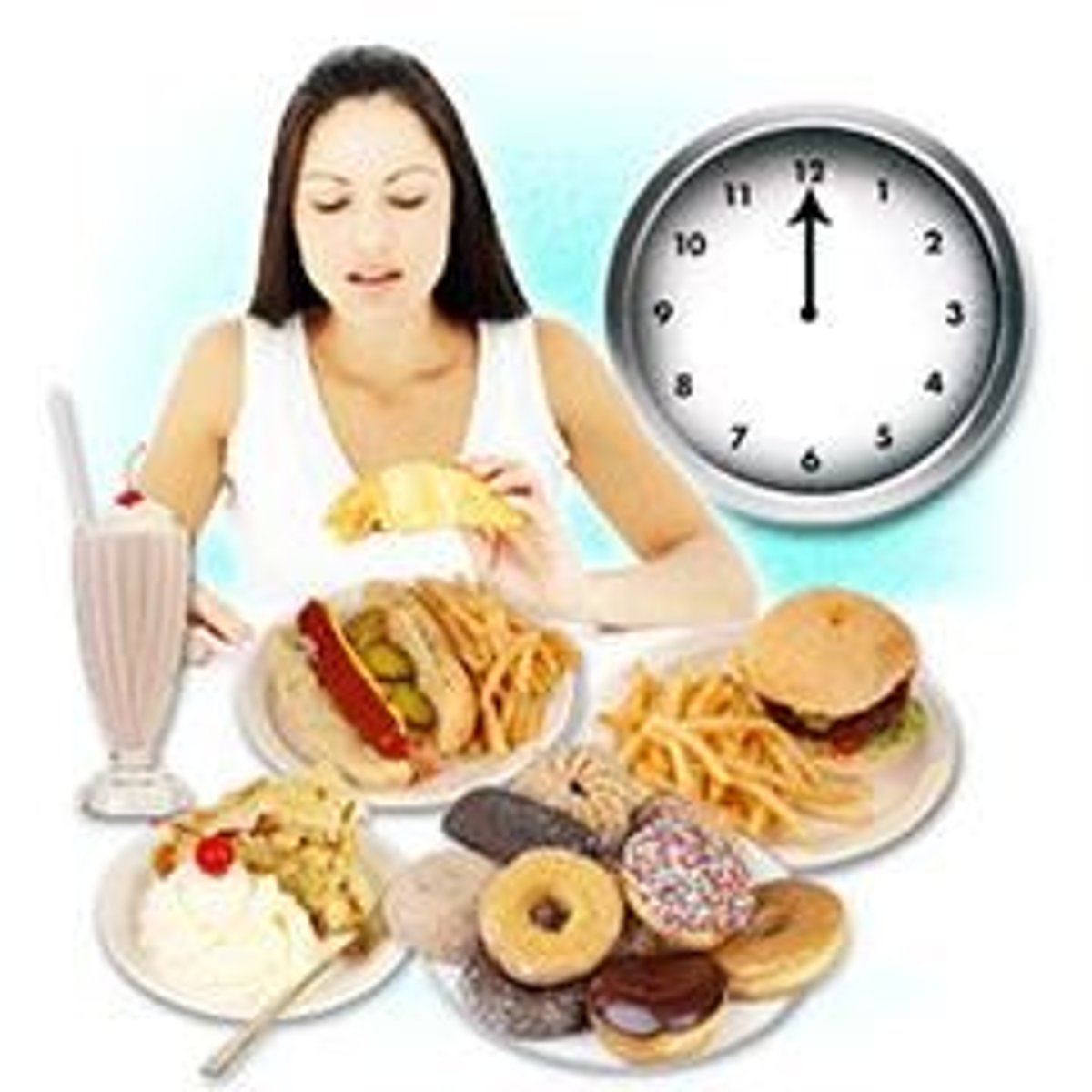
What is the relationship between stress and the onset of binge-purge cycles in Bulimia?
Stress, especially conflict with others, can trigger binge-purge cycles.
What is the effect of rumination in depression?
It contributes to negative thinking patterns and can exacerbate depressive symptoms.