Pharm - Depression and Bipolar Disorder
 Call Kai
 Learn
Learn Practice Test
 Spaced Repetition
 Match
Match Flashcards
 Knowt Play
1/126

There's no tags or description
Looks like no tags are added yet.
Name | Mastery | Learn | Test | Matching | Spaced | Call with Kai | Chat |
|---|
No analytics yet
Send a link to your students to track their progress
127 Terms
What was the level 1 treatment in the STAR-D trial?
All patients were started on citalopram for up to 14 weeks.
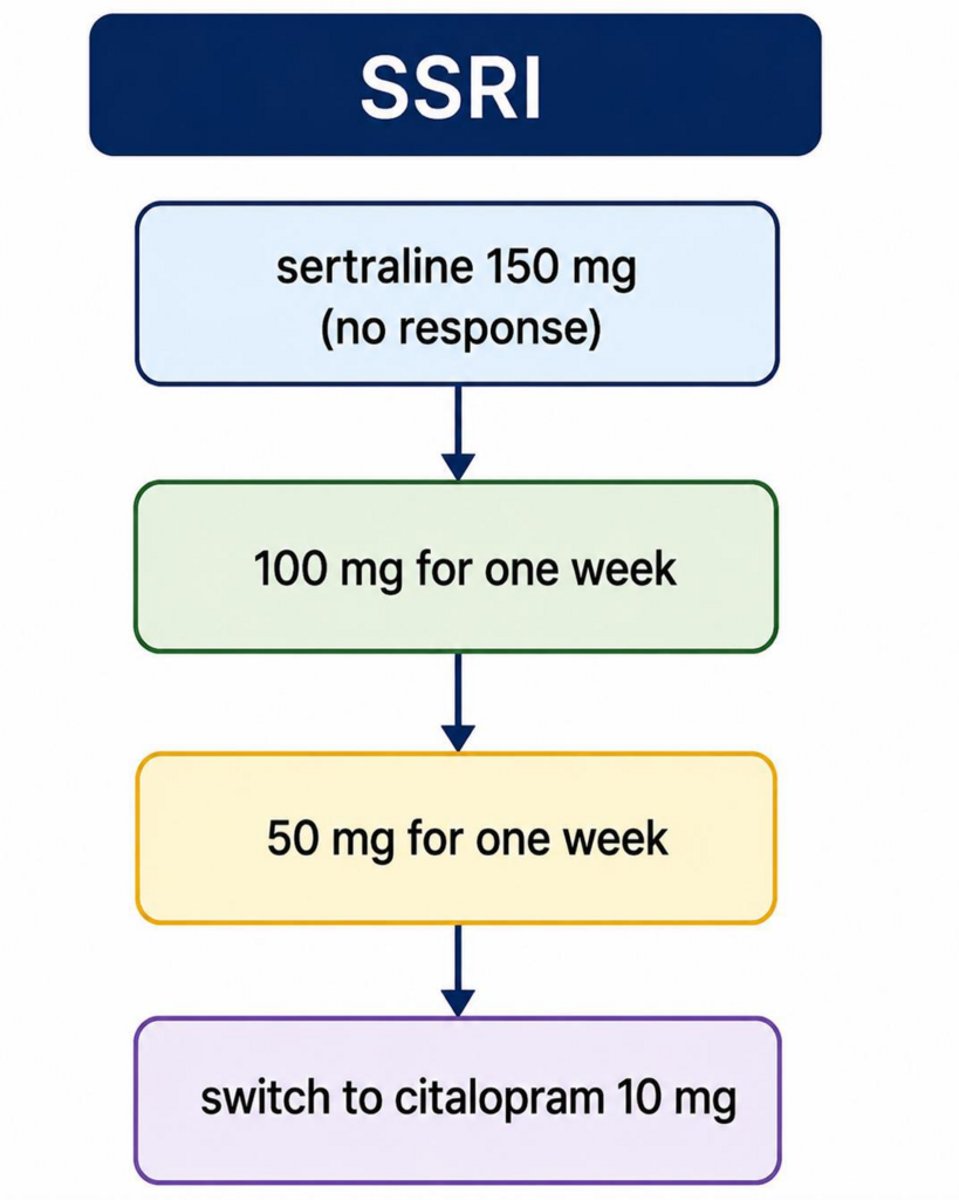
What were the level 2 options in the STAR-D trial?
Switch to sertraline, bupropion, or venlafaxine; or augment citalopram with bupropion, buspirone, or CBT.
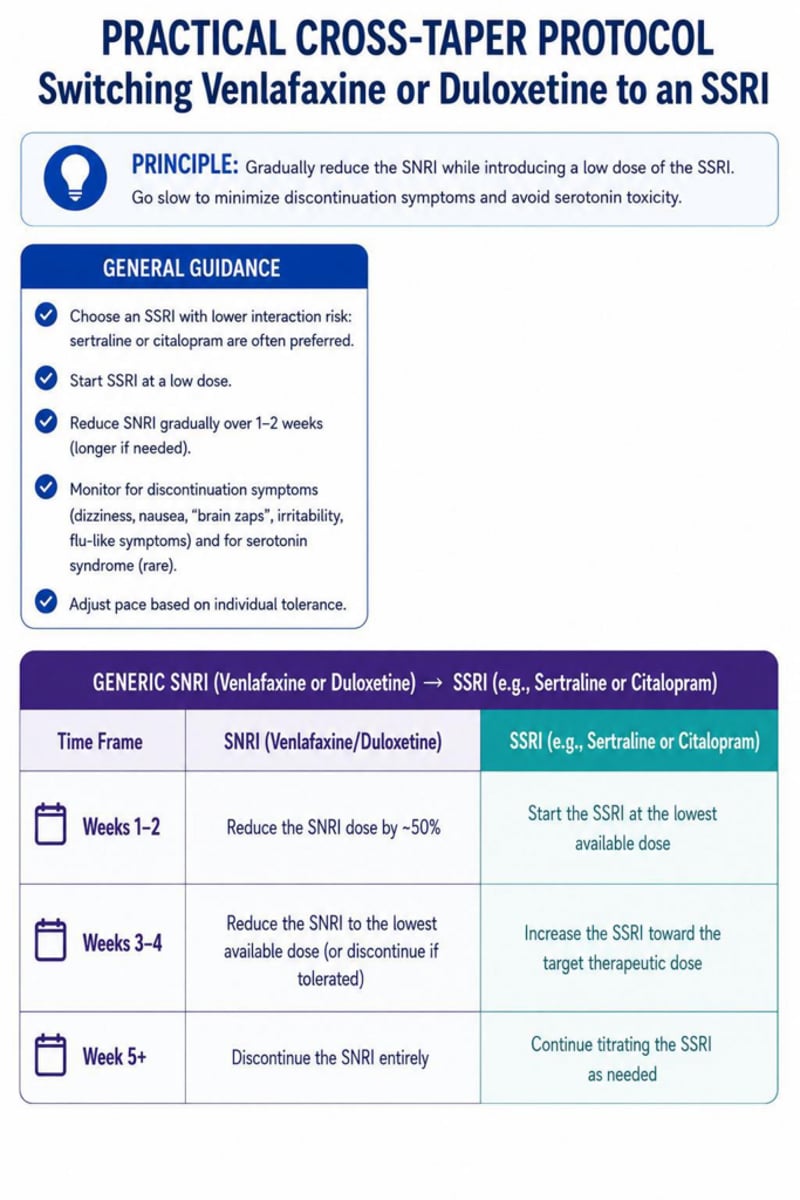
What were the level 3 options in the STAR-D trial?
Switch to mirtazapine or nortriptyline; or augment with lithium or thyroid hormone (T3).
What were the level 4 options in the STAR-D trial?
Switch to tranylcypromine (MAOI) or venlafaxine-XR plus mirtazapine.
What was a major finding of the STAR-D trial regarding remission rates?
Remission rates declined with each successive treatment step.
Did the STAR-D trial find any single antidepressant to be superior?
No antidepressant was clearly superior at any treatment level.
What are the four steps for managing treatment if initial therapy is ineffective?
1. Increase dose; 2. Switch within class; 3. Switch class; 4. Add second drug.
What is the recommended first-line drug class for starting depression treatment?
An SSRI, specifically sertraline, citalopram, or escitalopram.
When is an SNRI preferred over an SSRI as initial therapy?
When the patient has comorbid pain (e.g., diabetic neuropathy) or severe GAD.
When is bupropion preferred as a first-line antidepressant?
When the patient is depressed and wants to lose weight or avoid sexual dysfunction.
What are two approaches to cross-tapering antidepressants?
1. Lower current drug dose quickly before switching; 2. Direct switch to similar half-life drug.
What does the FINISH mnemonic stand for in antidepressant discontinuation syndrome?
Flu-like symptoms, Insomnia, Nausea, Imbalance, Sensory disturbances, Hyperarousal.
Why should ferritin levels be checked before initiating antidepressants?
Iron is a cofactor in the rate-limiting step of serotonin and dopamine synthesis.
Why should folic acid/MTHFR levels be checked in treatment-resistant depression?
Folic acid cannot cross the BBB and must be converted to L-methylfolate to synthesize neurotransmitters. Some people can't do this.
What are the three treatment phases of major depressive disorder and their durations?
Acute (8-16 weeks), Continuation (4-9 months), and Maintenance (6-12 months or longer).
Which timeframe carries the highest risk of depression relapse?
The first 6 months of the continuation phase.
What are the 6 common classes of antidepressants?
SSRIs, SNRIs, MAOIs, TCA, Serotonin Modulators, and Misc.
What is the MOA of SSRIs (selective serotonin reuptake inhibitors)?
Increase serotonin levels in the brain by blocking its reuptake.
Which drugs are included in the SSRI class?
Fluoxetine, Sertraline, Citalopram, Escitalopram, Paroxetine, Fluvoxamine.
What is the MOA of SNRIs (serotonin-norepi reuptake inhibitors)?
Increase levels of serotonin and norepi by blocking their reuptake.
Which drugs are included in the SNRI class?
Venlafaxine, Duloxetine, Desvenlafaxine, Milnacipran, Levomilnacipran.
What is the MOA of the MAOi (monoamine oxidase inhibitor) class?
Prevent the breakdown of serotonin, norepi, and dopamine by inhibiting the MAO enzyme.
Which drugs are included in the MAOi class?
Phenelzine, Tranylcypromine, Isocarboxazid, Selegiline, Rasagiline.
What is the MOA of the TCA (tricyclic antidepressant) class?
Increase level of serotonin and norepi by blocking their reuptake.
Which drugs are included in the TCA class?
Amitriptyline, Nortriptyline, Imipramine, Desipramine, Doxepin, Clomipramine.
What the MOA of the serotonin modulator class?
Modulate serotonin activity in different ways, either by antagonizing certain receptors or enhacing release.
Which drugs are included in the serotonin modulator class?
Trazodone, Nefazodone, Mirtazapine, Vortioxetine, and Vilazodone.
Which drugs are included in the misc. class of antidepressants?
Bupropion, Bupropion with Dextromethorphan, Mirtazepine, Gepirone and Esketamine.
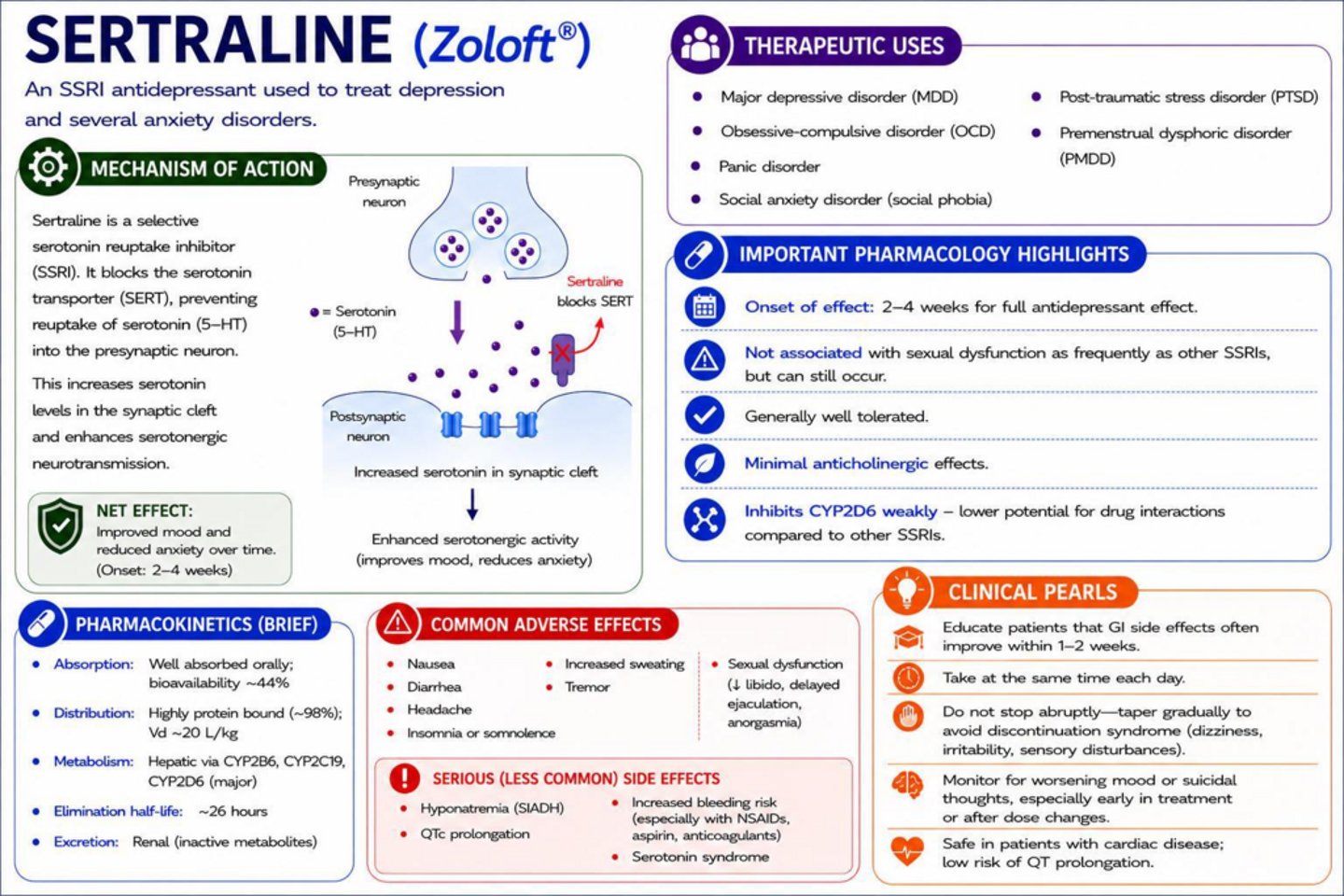
What is the MOA of Sertraline?
Blocks serotonin transporter (SERT), preventing re-uptake of serotonin. Increasing serotonin levels in the synaptic cleft and enhances serotonergic neurotransmission.
What is the net effect of Sertraline?
Improved mood and reduced anxiety over time (onset: 2-4 weeks)
What is the absorption of Sertraline?
Well absorbed orally; bioavailability ~44%
How is Sertraline metabolized?
Hepatic via CYP2B6, CYP2C19, CYP2D6 (major)
What is the half-life of Sertraline?
~26 hours
What are the important highlights of Sertraline?
Onset 2-4 weeks, not associated with sexual dysfunction as much as other SSRIs (but can still happen), generally well tolerated, minimal anticholinergic effects, inhibits CYP2D6 weakly (minimizes DDI)
What are the serious (less common) side effects of Sertraline?
Hyponatremia, QTc prolongation, increased bleeding risk, serotonin syndrome.
What are the clinical pearls of Sertraline?
GI side effects improve within 1-2 weeks
Take at the same time each day
Do not stop abruptly
Monitor for worsening wood or suicidal thoughts
Safe in patients with cardiac disease; low risk of QT prolongation!!!!
How do SSRIs cause hyponatremia (SIADH)?
Serotonin stimulates vasopressin release, leading to inappropriate water reabsorption. Will only happen IF patient ingests enough free water to exceed renal diluting capacity (don't be too hydrated)
Which demographic is at highest risk for SSRI-induced hyponatremia?
Older (>65 years), underweight women, usually within the first few weeks.
How do SSRIs increase the risk of bleeding?
They block SERT on platelets, depleting platelet serotonin stores needed for activation.
What drugs double the risk of upper GI bleeding when combined with SSRIs?
NSAIDs, anticoagulants, or antiplatelets.
What is the classic triad of clinical features in Serotonin Syndrome?
Altered mental status, autonomic hyperactivity, and neuromuscular hyperactivity.
Why should paroxetine generally be avoided unless it worked previously?
Short half-life causes severe withdrawal, causes erectile dysfunction, inhibits CYP2D6 and more weight gain. Avoid unless it worked well in the past!!!!
Which drug is FDA approved for GAD, PTSD, OCD, and others?
Paroxetine.
Why should fluoxetine generally be avoided unless it worked previously?
Very long half-life (4-6 days) takes weeks to clear or reach steady state.
What is the clinical use of the combination olanzapine/fluoxetine (Symbyax)?
Treatment-resistant MDD and acute treatment of depressive episodes in Bipolar I disorder.
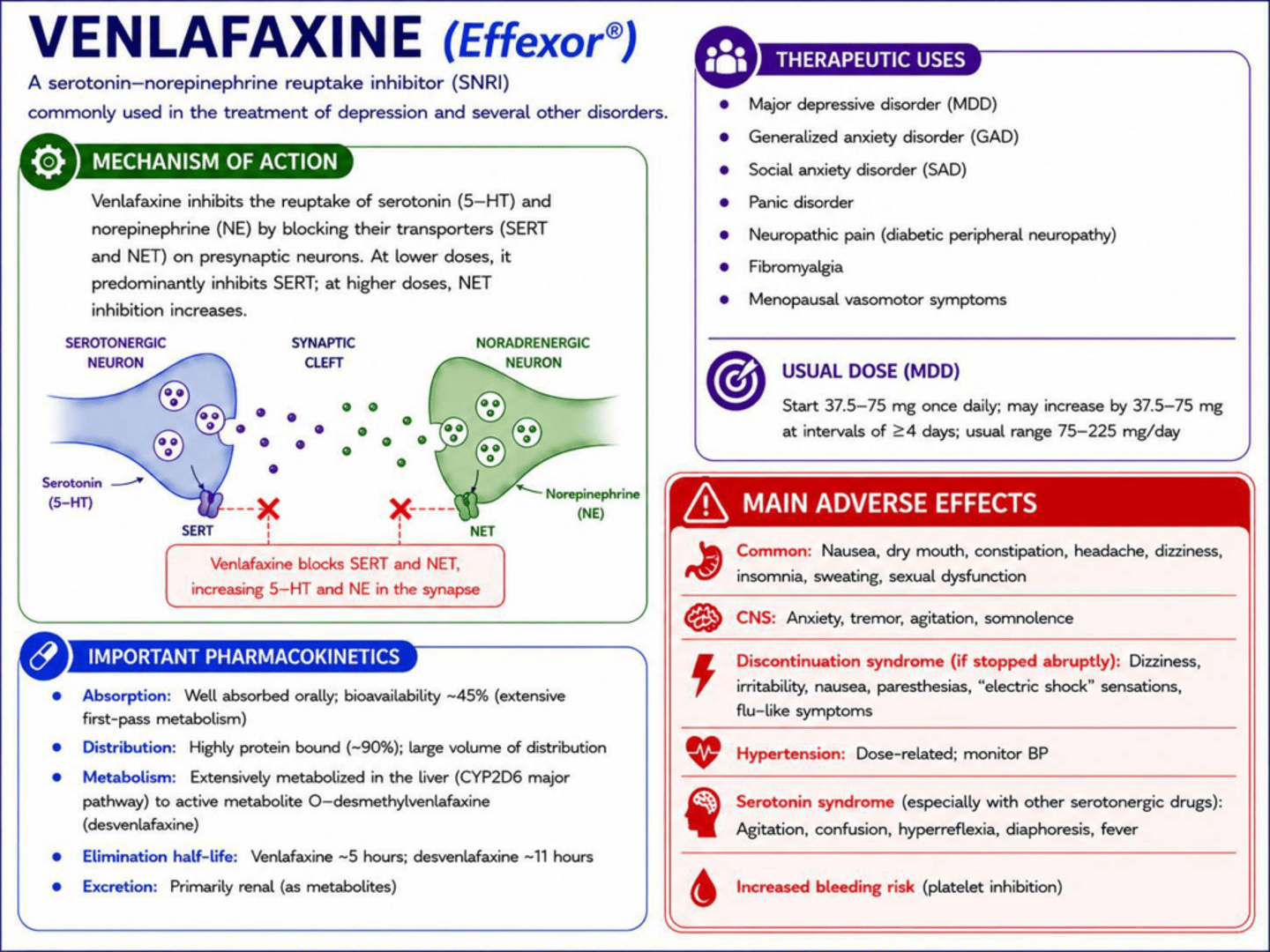
What is the general mechanism of action of Venlafaxine?
Inhibits reuptake of serotonin and norepi by blocking their transporters. At lower doses, it inhibits SERT; at higher doses, NET inhibition increases.
How is Venlafaxine absorbed?
Well absorbed orally; bioavailability ~45% (extensive first pass metabolism)
How is Venlafaxine metabolized?
Extensively metabolized in the liver. (CYP2D6 major pathway) to active metabolite O-desmethylvenlafaxine.
What is the half life of Venlafaxine and desvenlafaxine?
Venlafaxine: ~5 hours
Desvenlafaxine: ~11 hours
How is Venlafaxine excreted?
Primarily renal.
What are some therapeutic uses for Venlafaxine?
MDD, GAD, neuropathic pain (diabetic peripheral neuropathy), menopausal vasomotor symptoms.
What are the main adverse effects of Venlafaxine?
Common: nausea, dry mouth, sexual dysfunction
CNS: anxiety, tremor, agitation
D/c sx (if stopped abruptly): Dizziness, irritability, electric shock sensations
HTN: dose-related
Serotonin syndrome
Increased bleeding risk
What is the general mechanism of action of Amitriptyline?
Inhibit NE and 5-HT reuptake, and block histamine, cholinergic, and alpha-1 receptors.
How is Amitriptyline metabolized?
Hepatic via CYP2D6 and CYP2C19 to active metabolite nortriptyline.
What is the half-life of Amitriptyline?
~10-28 hours.
What are therapeutic uses for Amitriptyline?
MDD, neuropathic pain, fibromyalgia, insomnia (short term use).
What are the main adverse effects of Amitriptyline?
Anticholinergic
CNS: sedation, dizziness, confusion
CV: orthostatic hypotension, conduction abnormalities, arrhythmias
Other: weight gain, sexual dysfunction.
What are the clinical pearls of Amitriptyline?
Overdose can be life-threatening!!
Avoid or use caution in: cardiac disease, glaucoma, BPH and older adults
Many DDI
Give at bedtime due to sedating properties.
What are the two types of monoamine oxidase (MAO) and their substrates?
MAO-A (inactivates NE and 5-HT) and MAO-B (inactivates dopamine). All MAOis used for depression are non-selective.
How long does it take for MAO activity to recover after stopping irreversible MAOIs?
All current MAOIs cause irreversible inhibition. About 2 weeks, which is the time required to synthesize new enzymes. Inhibited MAO enzyme persists in the body for 2 weeks.
What is the MOA of Phenelzine?
Irreversibly inhibits MOA-A and MOA-B. Prevents breakdown of monoamines: serotonin, norepi and dopamine, resulting in increased storage and release into the synaptic cleft and enhanced neurotransmission.
How do tyramine rich foods and MAO interact?
MAO in the gut and nerve terminals breaks down tyramine. When MAO is irreversibly inhibited by Phenelzine, tyramine is not metabolized, leading to severe hypertension.
What are some tyramine rich foods to avoid when taking Phenelzine?
Aged cheese, cured/processed meats, pickled foods, tap beer, red wine, overripe fruits.
How long should you wait after stopping Phenelzine to start another type of antidepressant?
At least 14 days
How long should you wait after stopping another antidepressant to start Phenelzine?
At least 5 days
What are the main adverse effects of Phenelzine?
Common: Orthostatic hypotension, dizziness, dry mouth
CNS: anxiety, agitation, tremor
Hypertensive crisis: Severe headache, chest pain
Serotonin syndrome
Hepatotoxicity
Blood dyscrasias: rare agranulocytosis,
Why is there an asymmetry in washout periods for different antidepressants?
MAO enzyme inactivation persists long after the drug is eliminated. Other classes exert their effects only while the drug is present in the body. Most SSRIs have a short 1/2 life, and drugs are typically cleared in 4-5 half lives. So longer half life longer time needed to get out of the body, so longer washout period for some drugs.
How long of a washout period is required when switching from fluoxetine to an MAOI?
Five weeks, due to the extremely long half-life of fluoxetine and its active metabolite.
What is the false neurotransmitter mechanism behind MAOI-induced orthostatic hypotension?
Octopamine accumulates and displaces NE, blunting normal sympathetic vasoconstriction.
What causes a hypertensive crisis ('cheese reaction') in patients taking MAOIs?
Inhibited intestinal MAO allows dietary tyramine to enter systemic circulation and displace NE.
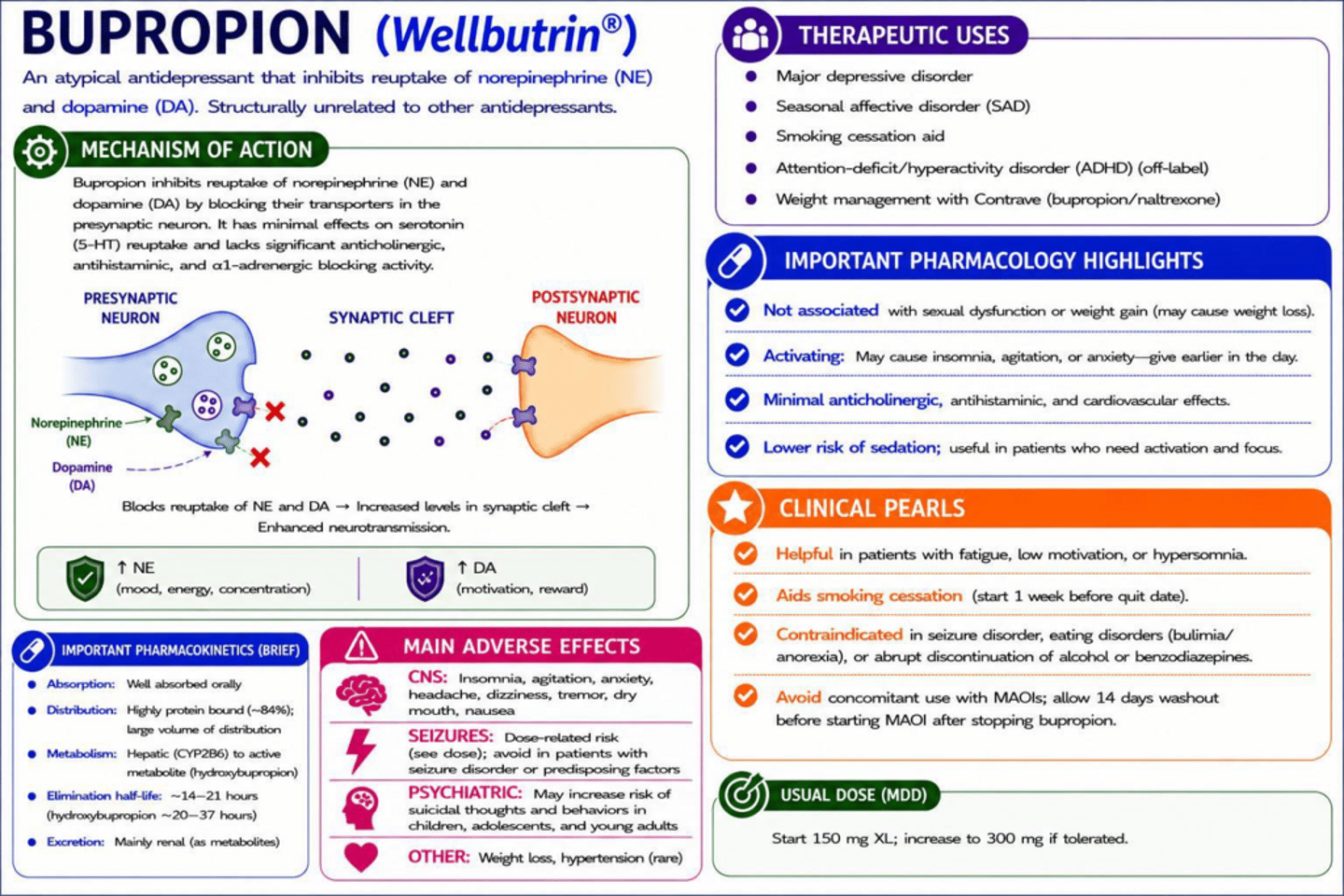
What is the mechanism of action of Bupropion?
Inhibits dopamine and norepinephrine reuptake (NDRI) with no serotonergic activity.
How is Bupropion metabolized?
Hepatic via CYP2B6 to active metabolite hydroxybupropion.
What is the half life of Bupropion?
Bupropion: ~14-21 hours
Hydroxybupropion: ~20-37 hours
What are the main adverse effects of Bupropion?
CNS: insomnia, agitation, anxiety
Seizures: dose related risk, avoid in patients with seizure disorder
Psychiatric: may increase risk of suicidal thoughts in young people
Other: weight loss, HTN
What are the primary clinical advantages of Bupropion?
No sexual side effects, aids in weight loss, lower risk of sedation, minimal anticholinergic, antihistaminic and CV effects, and helps with smoking cessation.
What is the net effect of Trazodone?
Increase serotonin activity via weak SERT inhibition and blockade of 5-HT2a and alpha 1 receptors.
How is Trazodone used at low doses?
Effective for sleep initiation and maintenance. Benefits within hours to days. Non-benzo option. Short-term use.
What is the typical dose of Trazodone for sleep?
25-100 mg at bedtime.
How is Trazodone used at therapeutic doses?
Antidepressant with modest effect. Requires higher doses, often used when sedation is desired. Onset 1-2 weeks.
What are the main adverse effects of Trazodone?
Sedation, priapism, orthostatic hypotension.
What is the net effect of Mirtazapine?
Disinhibition of Norepi and 5-HT release, and blockade of 5-HT2a, 5-HT3 and H1 receptors.
How is Mirtazapine used at low doses?
As a sleep aid, effective for sleep initiation and maintenance. Benefits within days. Improves sleep with mood support if needed.
What is the typical dose of Mirtazapine for sleep aid?
7.5-15 mg at bedtime (lower dose = more sedating due to greater H1 effect)
How is Mirtazapine used at therapeutic doses?
Antidepressant with moderate to strong effect. Good option for patients with depression, poor appetite, weight loss or insomnia. Typical dose is 15-45 mg at bedtime. Onset 2-4 weeks
What are the main adverse effects of Mirtazapine?
Weight gain, increased appetite. Dry mouth. Increased cholesterol and TG.
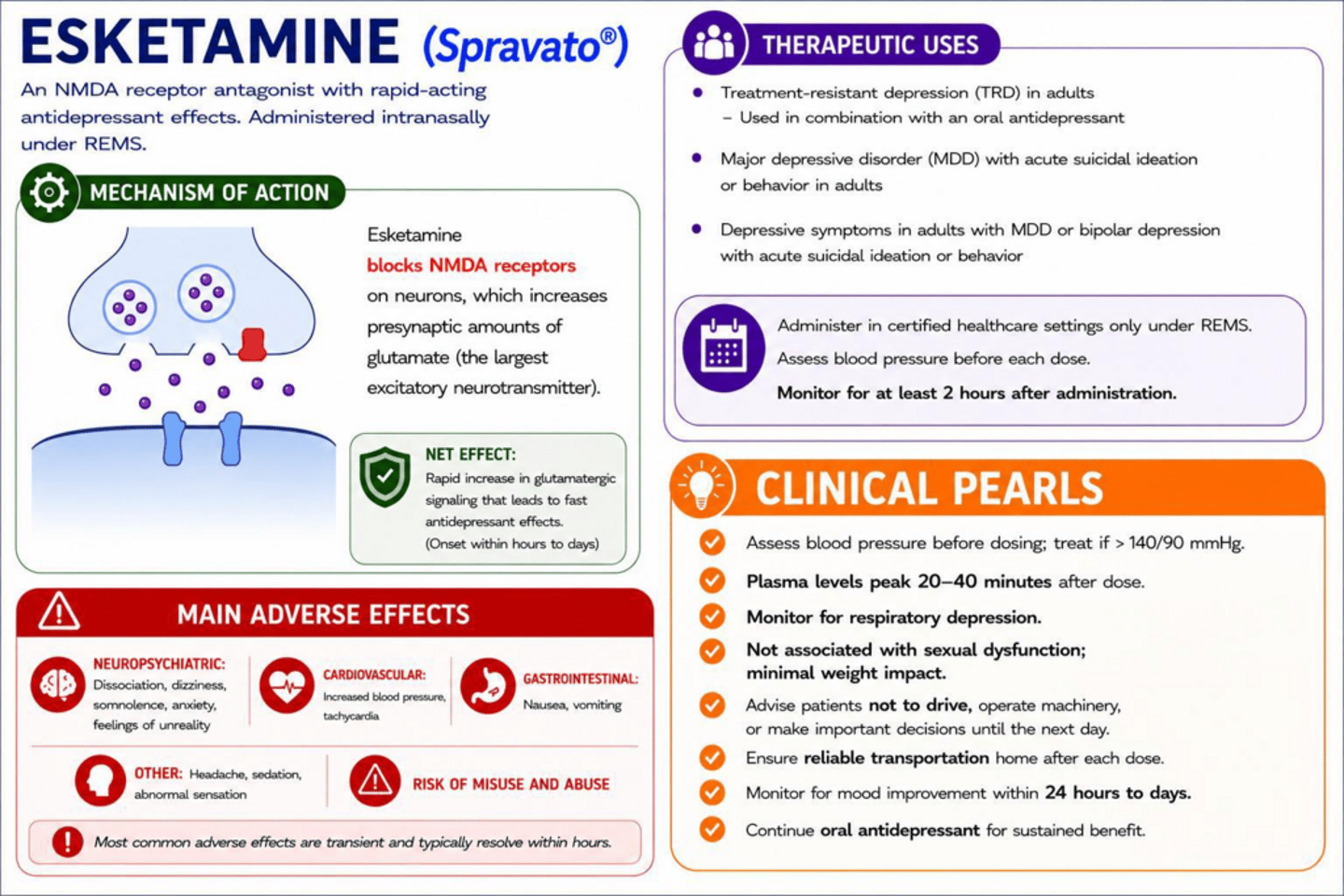
What is the mechanism of action and administration route of Esketamine?
NMDA receptor antagonist administered as a nasal spray for treatment-resistant depression.
What is the net effect of Esketamine?
Rapid increase in glutamatergic signaling that leads to fast antidepressant effect (onset within hours to days)
What are the main adverse effects of Esketamine?
Neuropsychiatric: dissociation, dizziness
CV: increased BP, tachy
GI: N/V
Other: Headache, sedation
Risk of misuse and abuse!!!
What are the therapeutic uses of Esketamine?
Treatment resistant depression in adults, used in combo with PO antidepressant.
What are the clinical pearls of Esketamine?
Assess blood pressure before dosing
Plasma levels peak 20-40 minutes after dose
Monitor for respiratory depression
Not associated with sexual dysfunction, minimal weight impact
Advise patients not to drive until the next day
Monitor mood for 24 hours to days
Continue PO antidepressant for sustained benefits.
What is the preferred SSRI for treating depression during pregnancy?
Sertraline is generally considered the drug of choice.
What is Zuranolone (Zurzuvae) and what is its indication?
An oral neuroactive steroid GABA-A modulator approved for postpartum depression. Mimics allopregnanolone.
What adjunctive therapies can be added to an SSRI for cognitive dysfunction or fatigue?
Bupropion can be added to improve cognition, energy, and reduce metabolic issues.
What adjunctive therapies can be added to an SSRI for sexual dysfunction?
Sildenafil/tadalafil or Bupropion.
What adjunctive therapies can be added to an SSRI for depression AND anxiety?
Buspirone or bupropion.
What are the three categories of medications used to treat Bipolar Disorder?
Mood stabilizers, antipsychotics and antidepressants.
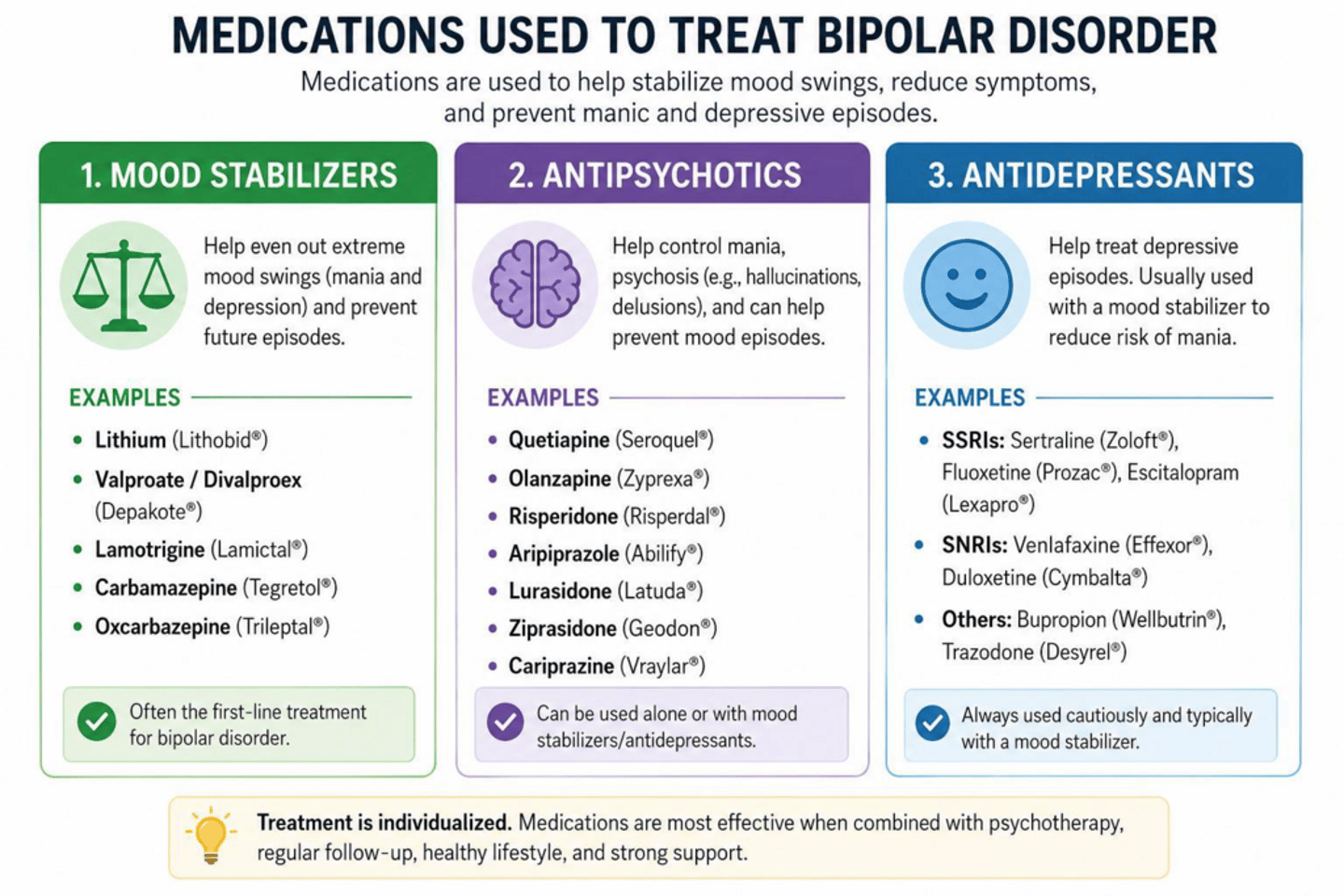
How do mood stabilizers help in BPD?
Help even out extreme mood swings (mania and depression) and prevent future episodes. Often 1st line in BPD treatment
Which drugs are highlighted as mood stabilizers?
Lithium, Valproate/Divalproex, Lamotrigine, Carbamazepine, Oxcarbazepine
How do antipsychotics help with BPD?
Help control mania, psychosis, and can help prevent mood episodes.
Which drugs are highlighted as antipsychotics?
Quetiapine, Olanzapine, Risperidone, Aripiprazole, Lurasidone, Ziprasidone, and Cariprazine.