Calc 3 Chapter 11
 Call Kai
 Learn
Learn Practice Test
 Spaced Repetition
 Match
Match Flashcards
 Knowt Play
1/27

There's no tags or description
Looks like no tags are added yet.
Name | Mastery | Learn | Test | Matching | Spaced | Call with Kai | Chat |
|---|
No analytics yet
Send a link to your students to track their progress
28 Terms

(Set notation example): define ∈, ℝ2, :
∈ “in/is an element of”
ℝ2 “in a 2D plane/all ordered pairs of all real numbers”
: “such that” (can also use |)
easy factor method with an A and B value to get c & what does it factor to
c = (a/2)²
[ x - (a/2) ]²
recall that midpt formula given xyz coordinate is
(.5(x-x1), .5(y-y1), .5(z-z1))
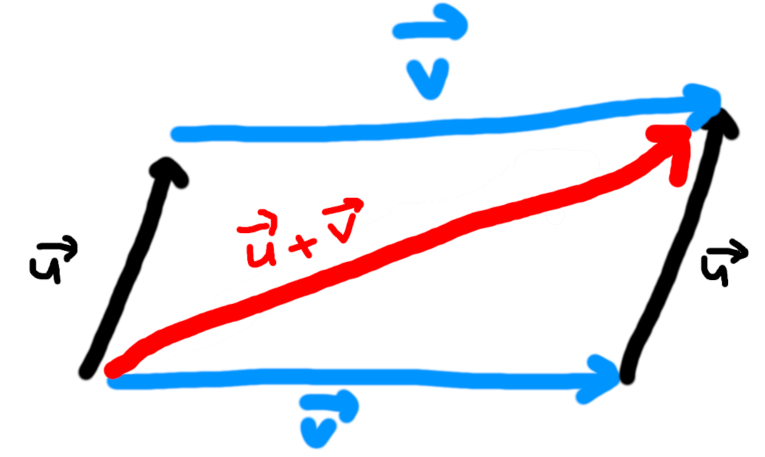
tip to tail addition

parallelogram rule for addition
means you can shift vectors in space
unit vectors î ĵ k̂ & equations such as 5i-3j
i = (1,0,0); j = (0,1,0), k = (0,0,1)
equations can be written like the one above. For the example above,
(5,0,0) (0,-3,0) (0,0,0)
*last is 0,0,0 bc there is no k in the equation
The length (norm) of a vector u→ = (a,b,c) in the element of a 3D plane is ||u→|| =
aka this formula shows u how to get the length of a vector
√ ( a2 + b2 + c2 )
the length of a unit vector is always =
1
given that P and Q are points,
(PQ)→ =
(PQ)→ = Q - P
note that it is backwards
normalizing a vector formula (scaling it into a unit vector so that it has a length of 1)

scalar dotted w/ a vector
|| c • (u→) || =
|c| • || (u→) || for any c ∈ ℝ
triangle inequality of vectors (norm of vectors u + v…)
|| (u→) + (v→) || ≤
|| (u→) || + || (v→) ||
note the less than or equal to sign
dot product of vectors a and b (non geometric defn) & what does it get you?
a = (a1 , a2)
b = (b1, b2)
(a→) • (b→) =
a1*b1 + a2*b2
this value shows how much the two vectors point in the same direction
just multiply each x by the other x, each y by the other y, …, add the result of each
dot product (geometric defn)
(a→) • (b→) =
||(a→)|| * ||(b→)|| * cosθ
note: 0 ≤ θ ≤ π is ALWAYS assumed
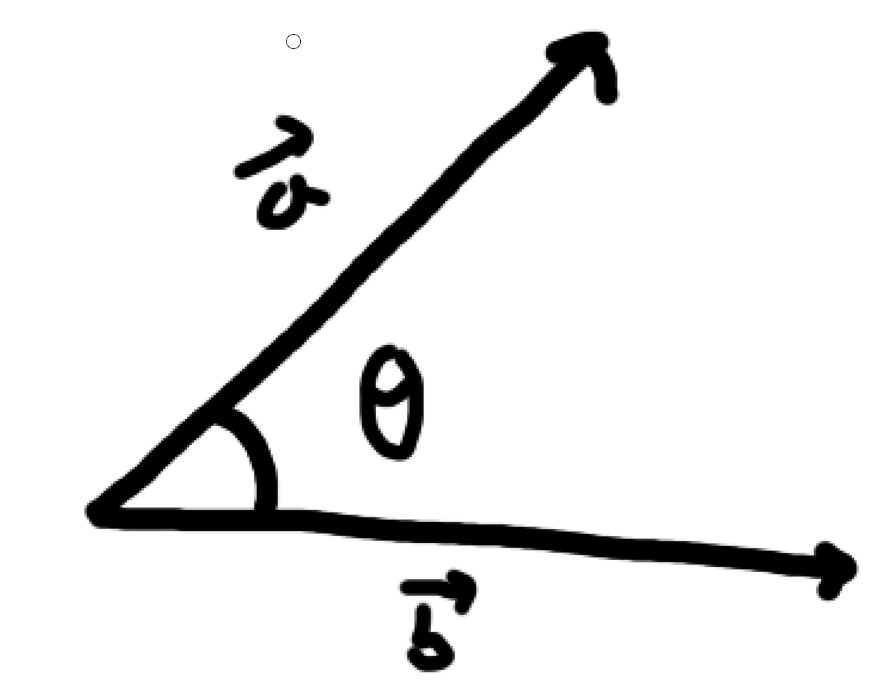
Two vectors (a and b) are perpendicular (orthogonal) if the angle between them is π/2 IFF (a→) • (b→) = 0
Two vectors (a and b) are perpendicular (orthogonal) if the angle between them is π/2 IFF (a→) • (b→) = 0
what does the output from a dot product tell you about two vectors? (+, 0, -)
pos # means angle between the vectors is <90 (they point in same general direction)
0 means the vectors are perpendicular
neg # means the angle between the vectors is >90 (they point in different directions)
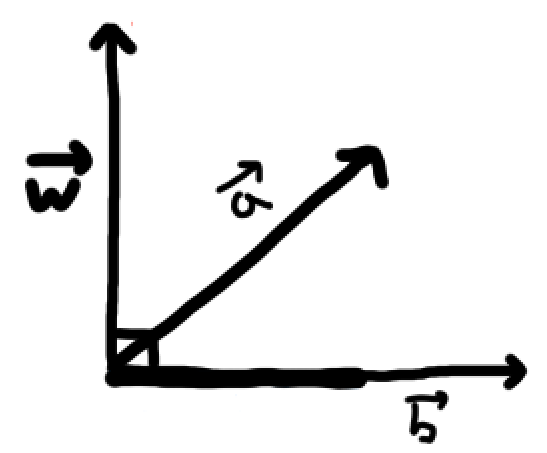
projections: how to think of it + what 3 things can u gather from the picture
“if we drop vector a on top of vector b, how much is pointing in the same direction?”
projections are only dependent on direction of vector not length

projection of vector a onto vector b formula
prb→a→ =
note that the divisor has the norm squared of vector b. vector a is the one being projected onto vector b

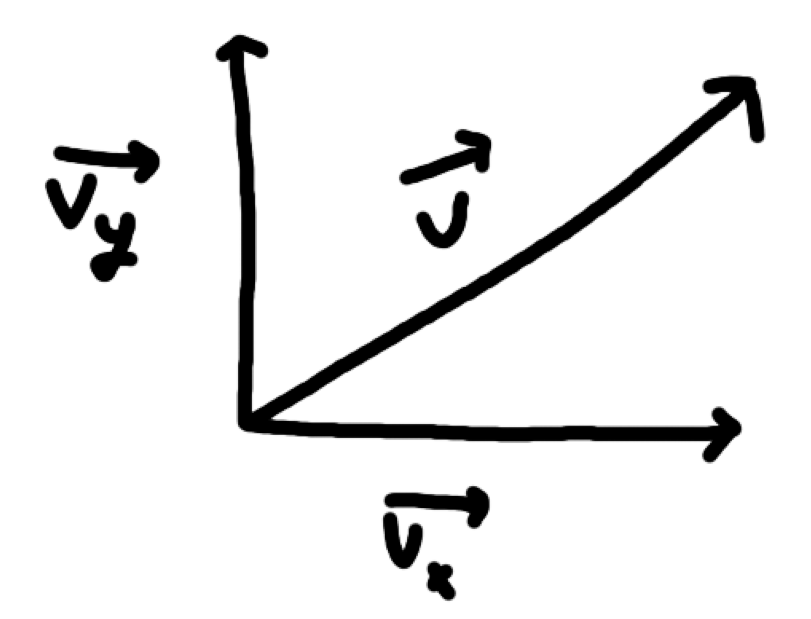
how vector addition relates to projections (formula)
given that they are all vectors,
v = prvxv + prvyv
norm of cross product given vectors a and b
|| a→ × b→ || =
|| a→ || * || b→ || * sinθ
a→ × b→ =
-b→ × a→
a→ × a→ =
0 for all a→

determinants for cross product
ad-bc
multiply the diagonals then subtract


cross product: visual representation and important to note that cross product only works in ____ space
a→ × b→ is a vector perpendicular to a→ and b→
cross product only works in 3D space
right hand rule: what is it and what is it used for
gives you direction of a vector cross product

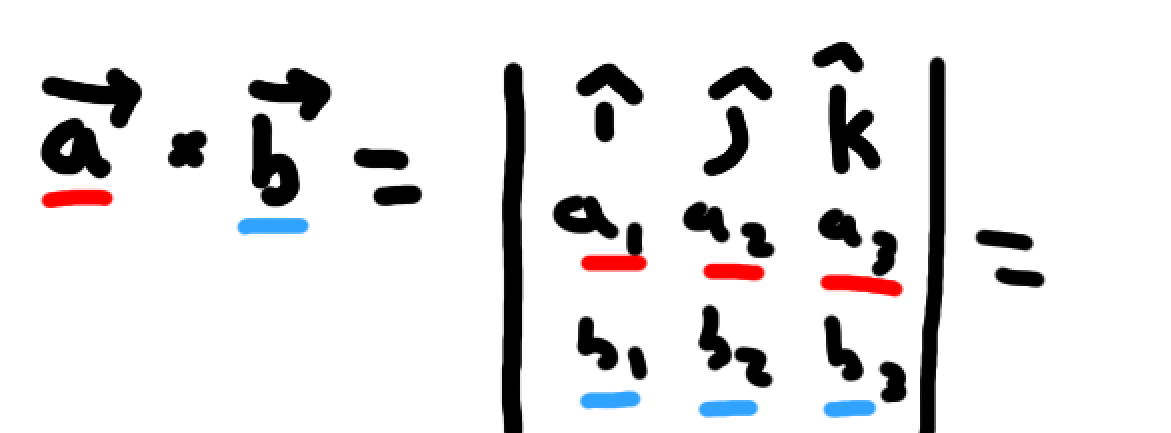
cross product done mathematically
note the -j
note how when you move to the next column, you only take values from all the other columns

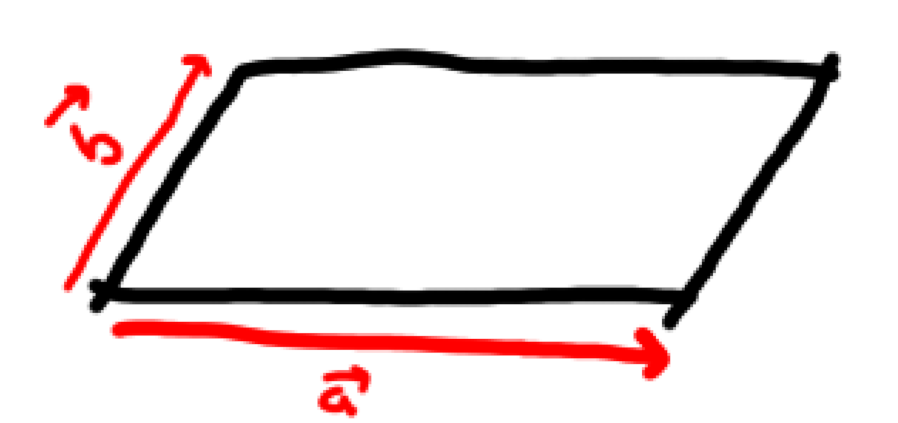
area of a parallelogram
area = || a→ × b→ ||

volume of a parallelepiped
vector a dotted with the result of crossing vectors b and c
volume = | a→ • (b→ × c→) |
order of vectors a, b, and c doesn’t matter