MH Exam 3 Part 2
 Call Kai
 Learn
Learn Practice Test
 Spaced Repetition
 Match
Match Flashcards
 Knowt Play
1/39

There's no tags or description
Looks like no tags are added yet.
Name | Mastery | Learn | Test | Matching | Spaced | Call with Kai | Chat |
|---|
No analytics yet
Send a link to your students to track their progress
40 Terms
Cluster A traits and behaviors
Traits: odd, eccentric, peculiar
Behaviors
Paranoid - distrust and suspicious of others, grudges
Schizoid - detachment from social relationships, flat affect
Schizotypal - odd beliefs, social anxiety, lack of relationships
Cluster B traits and behaviors
Traits: dramatic, emotional, erratic
Behaviors:
Antisocial - deceitful, lie steal cheat, no rules, disregard to safety of themselves or others
Borderline - suicide risk, don't want to be alone, impulsive, intense anger
Histrionic - center of attention, follower, lots of friends, thinks relationships are closer than they are
Narcissistic - they are special, no one is like them, lacks empathy, doesn't care for others
Cluster C traits and behaviors
Traits: anxious, fearful
Behaviors:
Avoidant - dependent on others, low self esteem, fearful of criticism
Dependent - can't make decisions, doesn't express disagreement, feels uncomfortable alone, needs a relationship
OCD - inflexible, detailed, doesn't spend money
Cluster A therapeutic presence and care planning
Help process feelings and emotions they cant share with others, not too nice but matter of fact
Find and maintain interpersonal relationships
Cluster B therapeutic presence and care planning
Nurse needs to set boundaries
Safety, emotional regulation and set limits on dramatic and inappropriate behaviors
Cluster C therapeutic presence and care planning
Reassure, suggest coping skills, empower
Decrease anxiety
Depression
symptom and disorder
symptoms can be present throughout the lifespan triggered by stressors
diagnosis is DSM by symptoms on a spectrum overtime
Mania
symp - overactivity, not sleeping, talking quickly, sexual, unsafe
Hypomania
mild version of mania, not depression, not as severe as mania
Bipolar I
major depression and mania
Bipolar II
hypomania and depression
Cyclothymia
alternates between mania and mild to moderate depression for at least 2 years, not as severe as bipolar I or II
Risk factors and warning signs for suicide
SAD PERSONS
sex, age (
Suicide (plan) assessment
- develop before discharge
- what to do if thoughts return (multiple steps and options)
- give numbers/resources -> coping skills -> counselor -> ER
- have them sign safety plan to be committed and hold themselves accountable
Community and societal increased risks for suicide
barriers to access healthcare, cultural beliefs (noble resolution), community cluster, stigma, access to meds or weapons, media portrayals
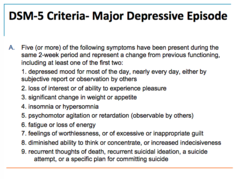
DSM criteria for MDD
SNRI indications, risks, side effects, med names
Names: xine, tine, pran
Indications: ADHD and depression
Risks: serotonin syndrome, suicide risk, high BP
Side effects: N/V, dizziness, headaches, LOA, dry mouth, diaphoresis
TCA indications, risks, side effects, med names
Names: end in -tyline or -mine
Indications: Antidepressant
Risks: likely to die if overdose, long QT interval, dont mix with other CNS depressants
Side effects: Anticholinergic effects (dry mouth, blurred vision, constipation), drowsiness, weight gain
Adverse Effects off Antipsychotic Meds
1st - lower WBC (agranulocytosis), infection, fever, cough, not healing, respiratory issues
2nd - no WBC problems, wt gain, insulin resistance, inc waist circumference, increase in triglycerides
Nurses Role in ECT
- monitor client status and respond to emergencies
- NPO 6-8hrs before
- discontinue benzos
- give anesthetic and muscle paralyzer before
- blood pressure cuff on lower legs
Different types of brain stim treatments
ECT, Vagus nerve stimulation, repetitive transcranial magnetic stimulation, deep brain stimulation
Contraband, unsafe materials, and milieu
- scissors, knitting needles, belts, lighters, spiral notebooks
- safe and therapeutic environment
Unit checks, monitoring and responsibility of the nurse
- check for safety, suicide risk patients always have eyes on
Analyzing cues - safety first
- check for suicide risk and harm to others
- giving away possessions, dont allow in personal room during group, observed at all times
Nursing interventions for client with mania
Inpatient - high calorie, high quality finger foods, unit is quiet at night and designated quiet periods, make sure client is not roaming unit during evening, low stimuli, scheduled meds
Outpatient - high calorie, high quality finger foods, good sleep hygiene
"take action" intervention for client with depression
Inpatient - body slows down, need structured plan for daily activities, BM may be slowed so allow walking, fiber in diet, extra fluids, stool softener, monitor for suicide risk
Outpatient - need case management to coordinate both med management and psychotherapy
Expected outcomes for clients with mood disorders
Short term - free of injury, ability to care for self, alterations in thought processes, ability to function and heal in outpatient setting, mood stability, knowledge of disorder, absence of suicidal ideations
Long term - adherence with meds and treatment, lack of suicidality, functional in relationships and life
Components of mental status exam
- Observation (appearance, speech, eye contact, motor activity, affect)
- Mood
- Cognition (orientation, memory, attention)
- Perception (hallucinations, derealization/depersonalization)
- Thoughts (suicide or homicide)
- Behavior
- Insight
- Judgement
Diagnosis, first episode "psychotic break"
- Diagnosed as brief psychotic disorder when symptoms last 1 day to 1 month
Risks to client with schizophrenia
- early mortality, suicide risk, challenges in daily functioning, personal relationships, employment, more stigma, discrimination, and social isolation
Environmental RF for schizophrenia
- cannabis use, living in populated city, poverty, ACES, discrimination
Positive/negative/cognitive manifestations
Positive - hallucinations, paranoia, delusions, disorganized speech
Negative - alogia (lack of speech), anergia (lack of energy), anhedonia (lack of pleasure)
Cognitive - poor concentration, slow thinking, poor memory
Types of Delusions and therapeutic communication
Persecutory delusions (believing one is being targeted or harmed)
Grandiose delusions (believing one has great power or importance)
Somatic delusions (false beliefs about the body)
Reference delusions (believing random events are directed at oneself)
Erotomanic delusions (believing someone is in love with them)
Nihilistic delusions (believing a catastrophe will occur or that one is dead/nonexistent)
Therapeutic communication - listen actively, do not argue or reinforce delusion, focus on feelings and safety
Catonia
extreme withdrawal or unusual movements and behaviors. It can present as immobility, rigidity, or purposeless agitation
Tardive dyskinesia
involuntary and repetitive movements
Pseudoparkinsonism
medication induced slumped posture, shuffling gait, drooling, tremors, and 'pill-rolling' finger movements
Therapeutic Communication techniques and tips
- affirmations, reflection, summarizing, open ended questions
Clients with delusions nursing considerations
- safety
- be aware of meds that may cause delusions
- avoid arguing, use clear and non confrontational language, acknowledge client feelings
- dont reinforce delusion but gently redirect to reality
Clients with hallucinations nursing considerations
- stay calm, use clear and simple language
- acknowledge their feelings without reinforcing hallucination ("i understand this might feel frightening)
- encourage reality reorientation
- ensure safety
Client/Family Teaching
- Educate clients and families on medications, including their purpose, dosage, and side effects during hospitalization, outpatient visits, and at discharge.
- Discuss the nature of the mental disorder, expected behaviors, and ways to respond effectively.
- Include signs of relapse and steps to take for prevention.
- Reinforce concepts learned in therapy and provide ongoing support.