C&C Quiz One- Prehistoric art and ancient near east
 Call Kai
 Learn
Learn Practice Test
 Spaced Repetition
 Match
Match Flashcards
 Knowt Play
1/34

There's no tags or description
Looks like no tags are added yet.
Name | Mastery | Learn | Test | Matching | Spaced | Call with Kai | Chat |
|---|
No analytics yet
Send a link to your students to track their progress
35 Terms

Chauvet, cave, France, c. 30,000 BCE Bear in the “recess of the bears”

Bison, cave paintings Altamira, Spain c. 15,000-10,000 BCE

Lascaux, France (c. 15,000 BCE; discovered in 1940)
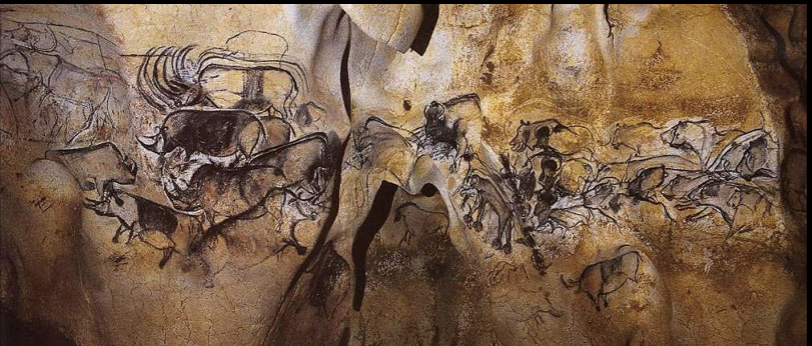
Chauvet, France (c. 32,000-30,000 BCE)

Chauvet Cave: horses, lions, mastodons, woolly rhinoceros c. 32,000-30,000 BCE

Pech-Merle Cave Dordogne, France Spotted horses, c. 25,000-24,000 BCE AND
Hands, c. 15,000 BCE

Lascaux Cave, Dordogne, France, c. 15,000-13,000 BCE: Hall of the BullS

Altamira Cave, Spain c. 15,000-c. 11,000 BCE: Detail of a herd of bison

Le Tuc d’Audoubert Cave, Ariege, France c. 13,000 BCE: Two bison modeled from clay

Horse from Vogelherd Cave, Germany, c. 28,000 BCE, mammoth ivory

Woman from Willendorf, Austria, c. 28,000-25,000 BCE, limestone

Woman from Brassempouy, France, c. 22,000 BCE, ivory

Hybrid figure (terianthrope) with human body Germany, c. 30,000 BCE, mammoth ivory
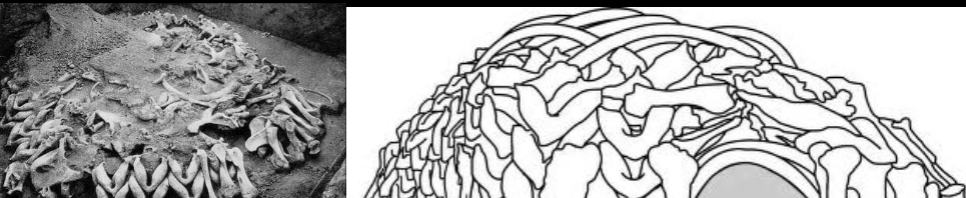
House made from mammoth bones, Mezhirich, Ukraine, c. 16,000-10,000 BCE

Çatal Hüjük, Anatolia (modern-Turkey), c. 6,000 BCE

Newgrange, Ireland, passage grave c. 3,000-2,500 BCE
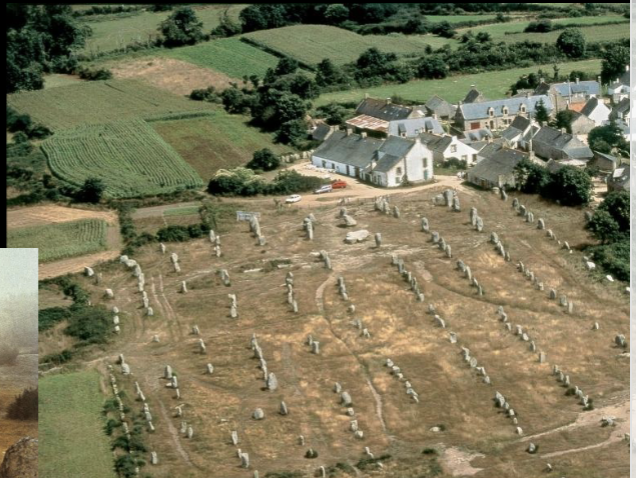
Carnac, Brittany, France, menhir alignments, c. 4,250-3,750 BCE

Stonehenge, Wiltshire, England, c. 3,000-c. 2,100 BCE

Babylonian deed of sale c. 1,750 BCE

Uruk (Warka), White Temple and ziggurat 3,300-3,000 BCE

Mosaic Stone Temple Uruk. c. 3300 – 3000 BCE

Ur, c. 2,100 BCE The Great Ziggurat of King Urnammu
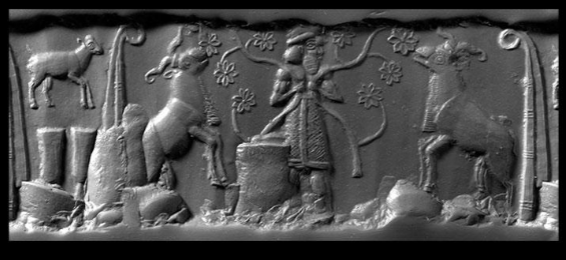
Mesopotamian cylinder seals, invented c. 3,500 BCE

The Warka Head – Mesopotamia c. 3,200-3,000 BCE

The Warka Vase / The Uruk Vase, c. 3,300-3,000 BCE

Bull lyres of Ur, wood with gold, silver, lapis lazuli, bitumen, and shell c. 2,550-2,400 BCE,
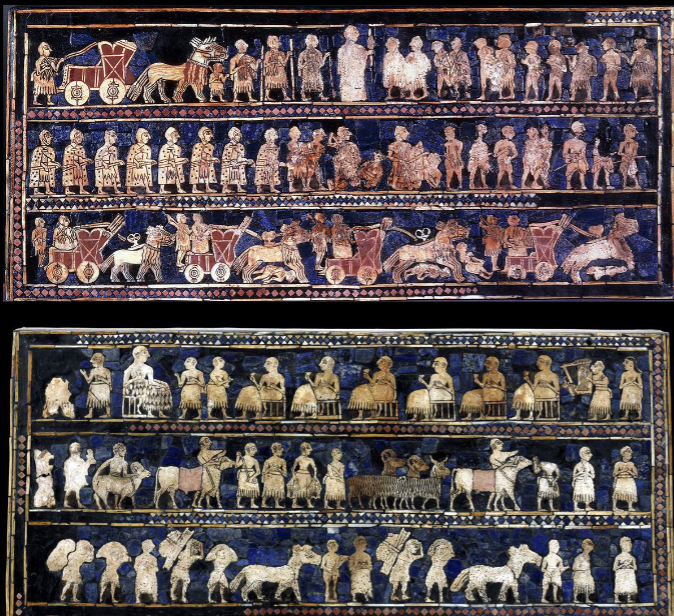
The ‘Royal Standard’ of Ur, c. 2,600 BCE

Head of an Akkadian ruler, from Nineveh c. 2,350 – 2,250 BCE,

The Victory Stele of Naram-Sin, pink limestone, ca. 2254 – 2218 BCE, found at Susa.

Tell Asmar Statues, Limestone, alabaster, gypsum, 2,900-2,600 BCE